


Cut Enoki in Dumpling Fillings: Water Control and Strand Length
Oct 20, 2026
Leave a message

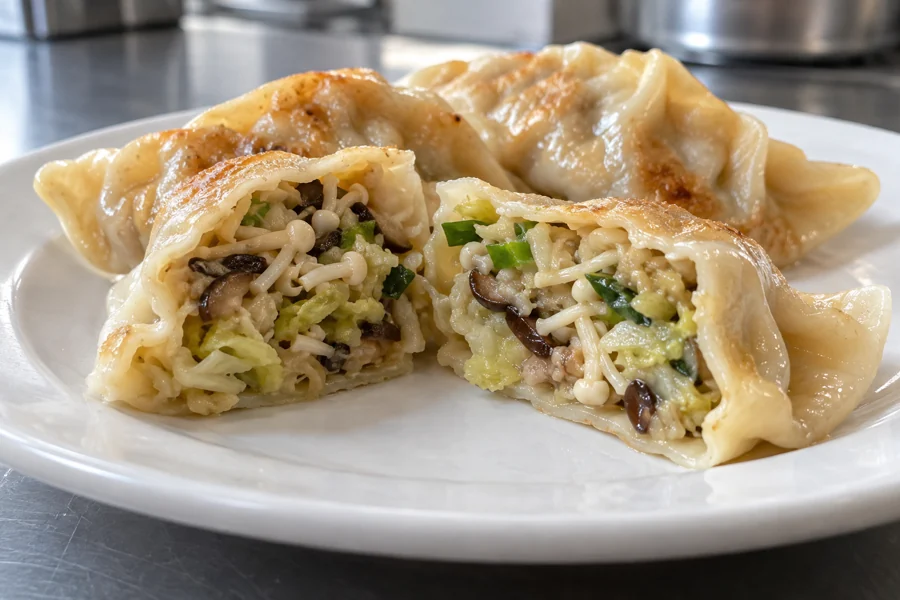
For a factory buying frozen enoki, the first discussion should therefore include the filling recipe, wrapper size, forming equipment and intended cooking method. We can review a requested enoki form against those inputs, while the finished dumpling requires its own application and safety validation. The trial approach below is a proposed development method; the examples are not reported GreenLand production results.
Specify the strand before changing the recipe
Enoki brings a different structure to filling from a diced button mushroom. A piece may be a single fine stem, several stems still joined near the base, or a cap-bearing section. Those shapes occupy space and move through a filling pipe differently. An order described only as chopped mushrooms leaves the receiving team with little basis for deciding whether a delivery matches the successful development sample. Start by naming the required enoki material and what has been removed before cutting.
The photograph of our listed enoki material shows pale stems with small caps and grouped strands. It helps identify the product form, but it does not demonstrate a particular cut tolerance, drainage yield, microbiological status or performance in a dumpling machine. Request a representative sample and a written description of the offered process. Confirm whether the sample is raw, blanched or otherwise heat treated, because those histories influence how it should be handled and compared.

Listed enoki material shows pale stems, tiny caps and grouped strands. The photograph establishes form, not frozen state or a cut tolerance.
A useful incoming description includes the target length range, the proportion of long strands allowed outside it, the acceptable amount of joined basal material and the amount of fines. Define how each will be assessed. A ruler measurement of twenty attractive pieces from the top of a bag will miss a small but troublesome population of long tails. Spread a representative sample without pulling bundles apart more aggressively than the production process will, then examine material from several positions in the pack.
Decide whether the supplier or the dumpling plant will make the final cut. Supplier cutting may reduce handling at the customer site, but it also places more importance on a shared sampling method and the condition of pieces after transit. Cutting at the dumpling plant gives direct control over a machine-specific dimension, while adding equipment, labour, sanitation and yield considerations. Neither arrangement guarantees a better filling. Compare the actual total operation and the responsibility for an out-of-specification lot.
Frozen condition also belongs in this description. Note whether the intended process uses separated frozen pieces, a controlled thaw, or a prepared cooked mushroom component. A sample that has partially thawed in a delivery box should not be quietly used to approve a fully frozen process. Record its condition and obtain a representative replacement where necessary. If free flow is required, agree a practical observation method that uses the same handling force and product temperature each time.
Our frozen enoki supply page is the appropriate starting point for the product enquiry. The purchase specification should then narrow the available form to the filling requirement. Keep commercial descriptions such as premium or tender subordinate to measurable identity, preparation and acceptance details. A buyer and supplier can resolve a deviation more effectively when they share an actual sample and a defined test.
Measure water through preparation and holding
Water enters the filling from more than the mushroom's internal moisture. Ice attached to frozen pieces, water used during preparation, liquid retained between grouped stems and water released during holding can all affect the mix. Other ingredients contribute their own liquid. To understand a wet filling, follow the mushroom through the chosen preparation route before changing starch or reducing all recipe water. Otherwise a correction may hide an inconsistent input and create a different texture problem in the next batch.
Use a mass record with explicit stages. Weigh the received sample under the defined frozen condition, record any removed material, weigh the prepared mushroom after the agreed drainage procedure, and weigh the portion actually added to the mixer. Collect visible drainage separately if the method permits it. The difference between two masses may include discarded solids or material left on equipment, so describe it as preparation loss until its components are understood. It is not automatically pure water.
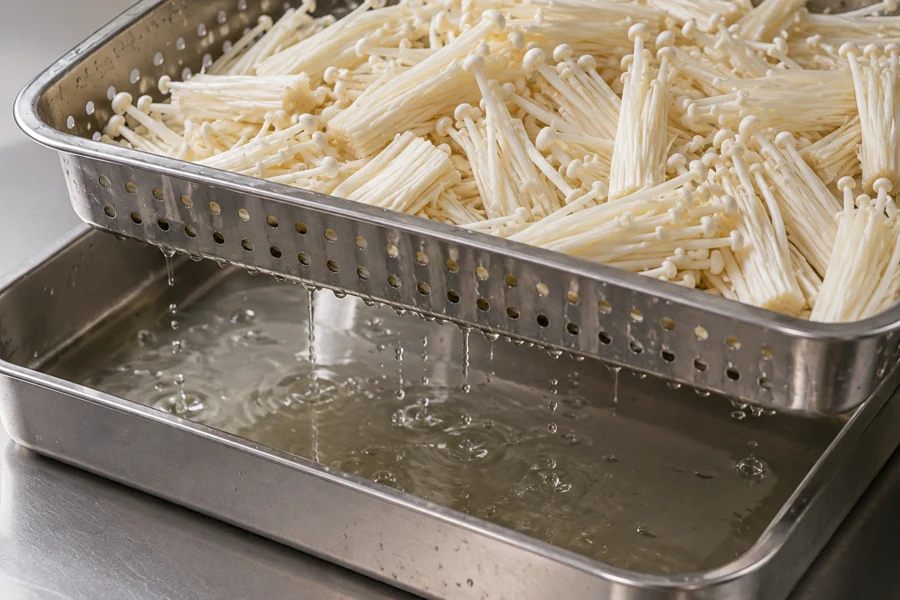
A perforated support allows released liquid to be collected separately. The preparation method and endpoint must be defined for a real comparison.
Drainage needs a reproducible endpoint. Specify the tray or sieve, load depth, product temperature, holding duration and whether pressure is applied. A shallow layer on a perforated tray will not behave like a deep bucket. Hand squeezing is especially difficult to reproduce between operators. If pressing is part of the commercial process, define the apparatus and operating conditions, then assess whether it damages the strand texture that made enoki desirable in the first place.
The staged drainage image illustrates the relationship between mushrooms, a perforated support and collected liquid. It cannot establish a yield or a required drain time. During development, photograph the actual prepared sample and retain the measured record alongside it. Comparing two suppliers using different drainage procedures can reward the test method rather than the ingredient. Use the same method for both, and record any route-specific change that is necessary to handle a materially different product.
Holding after preparation matters because a sample that initially looks dry may release liquid in the filling bowl. Set a trial hold that reflects the operation's approved time and temperature controls. Inspect and weigh any separated liquid at the start and end of that interval. Keep the hold within the food safety plan; leaving samples warm until they separate is not a suitable way to establish a production limit. Include the beginning and end of normal mixer or hopper residence.
An illustrative calculation shows why the denominator must remain visible. If 1,000 grams of frozen input produces 820 grams of prepared material under a defined procedure, the retained mass is 82 percent. That result does not say the remaining 180 grams was all water, and it does not establish an acceptable yield. It gives the team a repeatable basis for comparing preparation cost and recipe inclusion. Repeat the measurement across independently prepared samples before using an average in a purchasing decision.
Choose a cut that seals and portions cleanly
There is no universal best enoki length for dumplings. A larger wrapper with a hand-placed filling tolerates a different strand structure from a small product formed through a narrow pipe. The strand must fit inside the portion, travel through the equipment and remain clear of the sealing surface. Start with the actual wrapper and filling path, then choose a short set of candidate cuts that the available cutting process can deliver consistently.
For an exploratory trial, a team might compare nominal cuts around 5, 10 and 15 millimetres. These are illustrative development levels, not recommended supplier tolerances or guaranteed machine limits. Keep the same mushroom lot, preparation route and recipe for the first comparison. Measure the resulting length distribution instead of assuming the cutter setting describes every piece. A few much longer stems can dominate seal faults even when most of the sample meets the nominal setting.
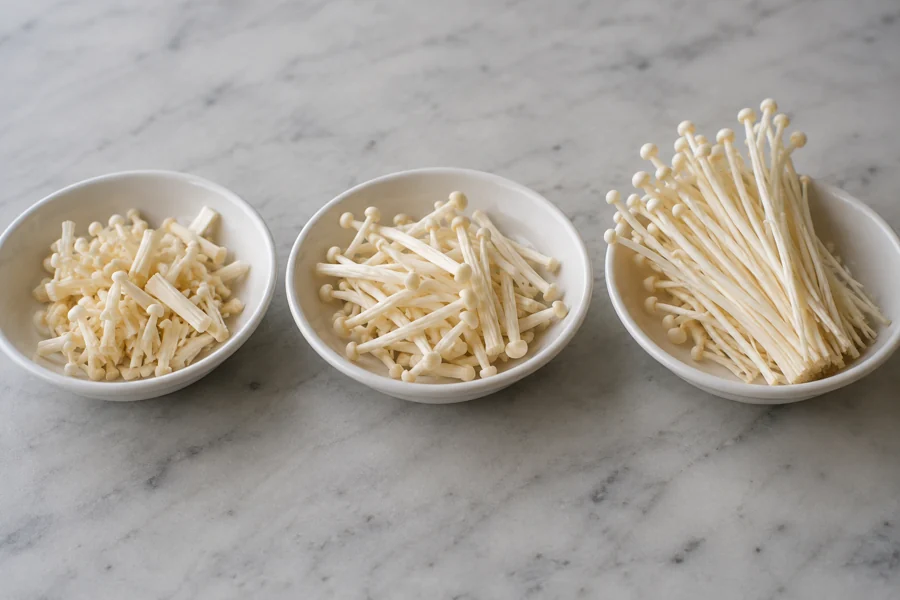
Short, intermediate and longer stem preparations retain different amounts of visible strand structure; the photograph carries no measured length claim.
Shortening the material may improve portion separation, but extensive cutting can reduce visible strand identity and generate fines. Longer pieces may provide a more recognizable bite while increasing bridging or tailing in a particular filling system. Evaluate both mechanical behaviour and eating quality. A preparation that runs perfectly but disappears into an indistinct paste may fail the product brief; a visually attractive filling that repeatedly contaminates the seal is equally difficult to commercialize.
Compare the cuts against the same attributes: visible strand character after cooking, consistency of discharged portion, stem tails at the cut-off point, filling on the wrapper rim, and the proportion of properly sealed dumplings. Record the observation method and the number examined. Use photographs to illustrate the actual defect categories before the trial. That helps two inspectors distinguish a harmless visible strand inside the wrapper from a stem crossing the seam.
Avoid changing the cut, drain procedure and binder level in the same first comparison. If the shortest cut receives additional drainage and the longest receives extra starch, the result cannot identify the effect of length. Once a workable range emerges, test its interaction with the preparation route and recipe. This staged approach uses development time more efficiently because each comparison answers a specific question, while the final combined trial checks the complete proposed process.
The equipment supplier should participate when the filling behaves inconsistently. ANKO's vegetarian dumpling case describes extrusion difficulties with fibrous, low-fat fillings, which is useful equipment context. It does not establish a successful setting for this enoki recipe. Ask the machinery team to review the complete filling composition, temperature and discharge behaviour. Do not infer an allowable strand length from the pipe diameter alone; joined stems, cohesion and the cut-off mechanism also matter.
Balance the filling around the actual retained mass
Write the recipe in terms of the ingredient state that reaches the mixer. A formula calling for ten kilograms of mushrooms is ambiguous if one operator weighs them frozen and another weighs them after cooking and drainage. The apparent mushroom percentage then changes with preparation loss. Specify both the purchased input and the prepared inclusion where needed, with the conversion based on the controlled trial. This allows purchasing and production to discuss the same material without confusing recipe mass with invoice mass.
In a meat filling, changes in added water, salt, mixing and protein development can affect binding. In a vegetable filling, cabbage, tofu, noodles or other components may carry substantial moisture and behave differently during holding. Enoki should be assessed inside the real recipe rather than blamed whenever the bowl becomes wet. Prepare a control batch with the established ingredients and compare it with the proposed enoki version under the same approved handling conditions.
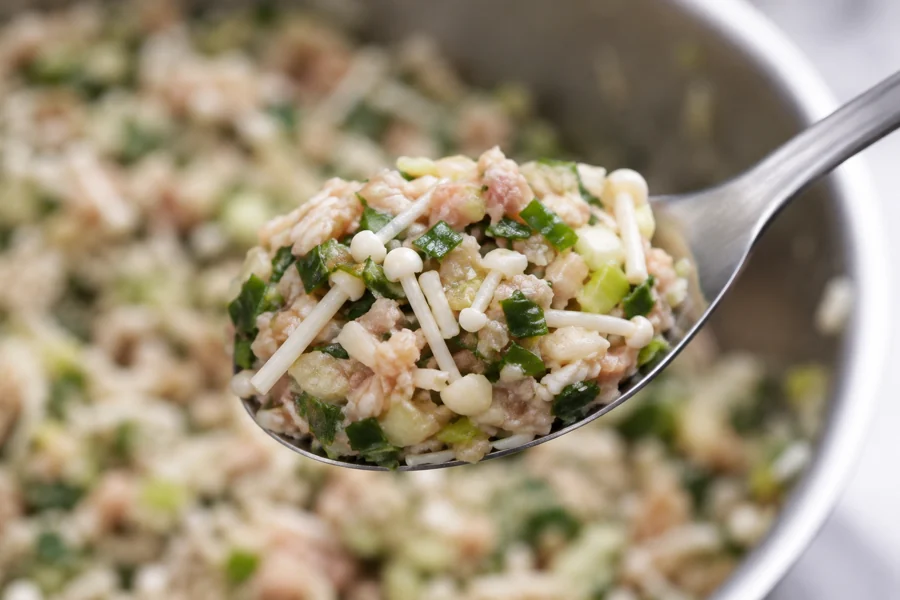
Inspect how short enoki pieces disperse through the filling, then assess the cooked product under the intended method.
A binder adjustment deserves its own reason. More starch may make the uncooked filling look easier to handle while producing a pasty cooked texture or altering the ingredient declaration. A lower mushroom inclusion may reduce leakage while weakening the product's intended identity. Describe the defect first: free liquid, poor cohesion, stringing at discharge or a wet wrapper surface. Then test the smallest relevant formulation change and judge the cooked product as well as the uncooked mix.
Mixing order can change what reaches the depositor. If a prepared mushroom component is added early and receives prolonged mixing, the final length distribution may differ from the incoming cut. If it is added late with too little mixing, portions may vary in mushroom content. Observe the mix at several locations and sample through the discharge sequence. A visually uniform surface is insufficient when denser or wetter material collects elsewhere in the bowl.
The spoon image shows the kind of visible distribution a development team can examine: small strands dispersed through a cohesive filling. It provides no measured viscosity or acceptance standard. For a real trial, agree whether the product needs a distinct fibrous bite, a subtle mushroom contribution or both. Taste cooked samples using the same preparation and serving interval, and keep evaluators unaware of supplier identity where practical. Record specific differences rather than a general description such as better quality.
Assess recipe changes against cost per acceptable dumpling. A lower-priced mushroom input may require more preparation, cause additional wrapper waste or reduce line availability. A higher retained mass is useful only if the extra liquid is compatible with the filling. Include the cost of purchased material, preparation loss, labour, energy, rejected pieces and any additional ingredient. Keep assumptions visible so procurement can update the comparison when pack size or order volume changes.
Run a filling and forming trial with useful comparisons
A bench sample establishes whether the idea is worth pursuing; a line trial establishes whether the chosen combination remains workable during production. Use the same approved recipe, filling temperature, wrapper dimensions, target portion and machine settings for each initial ingredient comparison. Record the actual settings rather than a familiar machine programme name alone. If an adjustment becomes necessary, record when it occurred and retain results from before and after the change separately.
Build the trial around the failures that would make the product expensive or unacceptable. Useful observations include portion mass variation, interrupted discharge, long strands at cut-off, filling on the seam, open seals, wrapper tears and material left in the hopper. Choose a sampling interval that covers the full run. Looking only at the first neat tray can miss a filling that becomes wetter or separates after a normal period in the system.
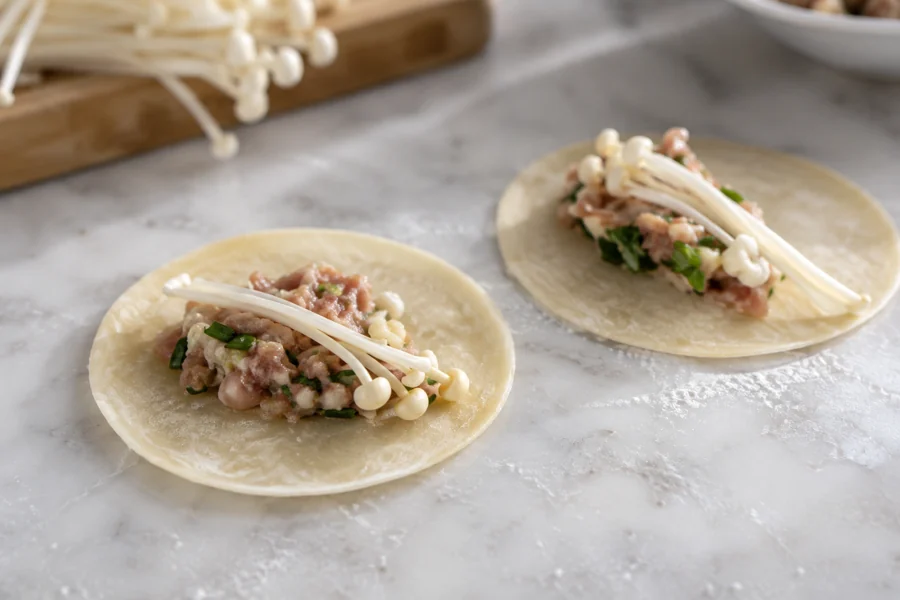
The wrapper rim needs clear space for sealing. Long stems near the edge deserve a defined inspection category.
For a modest exploratory run, a team could collect consecutive pieces at the beginning, middle and end, then record both individual weights and defect counts. The number of samples should reflect the decision and the operation's quality system. Ten attractive pieces cannot establish a reliable defect rate. Keep the full inspection denominator, including rejected products, and distinguish repeated measurements of one batch from independent preparations made on separate occasions.
One useful comparison is between two cut candidates under the same drain method. A second can compare two preparation methods at the selected cut. The combined candidate then needs confirmation against the established filling and the intended production speed. Run order can influence the outcome if equipment warms or the filling waits. Alternate or randomize the comparison sequence where practical, while maintaining the approved handling controls and documenting cleaning between incompatible formulations.
The sealing illustration shows why a long stem on the wrapper rim deserves its own defect category. A machine may deliver the correct mass while a strand interrupts the seam. Conversely, a short cut may improve seal clearance but change the cooked bite. Preserve both observations in the decision record. A single total score can conceal a critical failure if excellent taste compensates numerically for unacceptable sealing performance.
Freeze and cook representative dumplings through the intended finished-product route before approval. Evaluate pack handling, breakage, cooking loss, seam integrity and eating quality after the relevant storage interval. A freshly made dumpling and a frozen commercial product are different test conditions. Use the actual packaging and expected distribution conditions where required for validation. Approval should identify precisely which recipe, ingredient specification, process and package were assessed, so later changes trigger an appropriate review.
Validate cooking and protect the prepared filling
Enoki requires deliberate food safety control. The CDC enoki advice calls for thorough cooking and separation of raw mushrooms from foods that will be eaten without cooking. A soft stem, a browned wrapper or a dumpling floating in water does not measure the temperature inside its filling. The finished product needs instructions and process controls appropriate to its ingredients, size, starting condition and cooking equipment.
Freezing is not a Listeria kill step. USDA freezing guidance explains that microorganisms can become active again after thawing. A frozen label therefore cannot establish ready-to-eat status. Confirm the supplier's processing description, intended use and relevant food safety documentation. Where the mushrooms are blanched or cooked before filling, obtain evidence for the specific treatment rather than assuming the terminology establishes a validated lethal process.
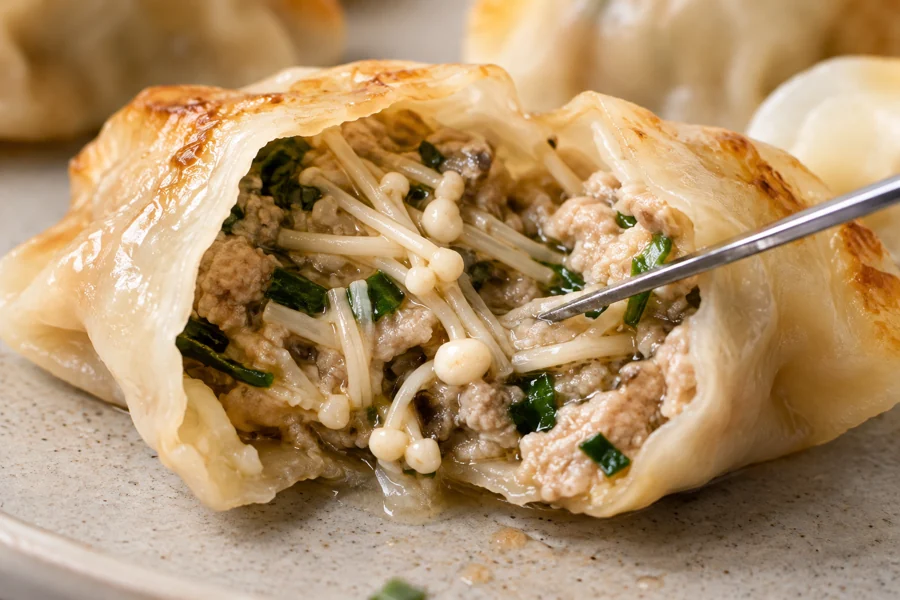
This cutaway locates the filling and a probe. Actual thermal validation uses the intact product and a documented measurement method.
The formulation and assembled-food classification change the thermal question. A dumpling should not simply inherit a ground-meat temperature from a consumer chart. The 2026 FDA Food Code, a model for retail and foodservice adoption, specifies 74°C or 165°F throughout stuffed pasta, reached for less than one second. A qualified food safety team should confirm the applicable classification, locally adopted requirements and process for the actual dumpling. This category provision does not supply a universal enoki cooking time or validate a commercial frozen-dumpling process.
Temperature measurement must reach the location that heats most slowly under the defined conditions. Very small products may need appropriate fine probes and a documented method to avoid disturbing the filling or obtaining a misleading surface reading. Test representative variation in filling mass, wrapper thickness and frozen starting temperature. If consumers have several permitted cooking methods, each needs suitable evidence and clear instructions. A time copied from a household recipe cannot cover all those conditions.
Prepared mushroom handling needs equal attention before the final cook. Keep raw preparation equipment and materials separated from cooked components and ready-to-eat areas. Control cooling, storage and the interval before mixing under the plant's approved procedures. Record the batch identity when components are combined, including rework where it is permitted. A successful cooking step cannot compensate for uncontrolled handling after it, and a quality trial should never override a safety deviation.
The cutaway photograph locates the filling and a probe; it is not a validation measurement. An actual temperature study uses intact dumplings and a documented placement method. In production, use calibrated equipment suitable for the task and retain the actual records. The FDA specialty mushroom prevention strategy provides broader contamination and supplier-control context. Translate that context into documented responsibilities among ingredient supplier, dumpling manufacturer and importer rather than treating an attractive finished sample as evidence of safety.
Convert the trial into a purchasing specification
The specification should preserve the conditions that made the trial meaningful. Identify the enoki form, processing state, target cut and sampling method, together with the acceptable distribution of long strands, joined material and fines. Include the preparation or drainage method where retained mass is part of acceptance. A tolerance without a test method invites disagreement, particularly when one team measures frozen pieces and another measures softened material after handling.
Keep ingredient acceptance and finished-dumpling acceptance connected but distinct. The supplier can be responsible for an agreed incoming cut or pack condition; the customer controls its own recipe and forming line. If a line result forms part of the commercial agreement, define the controlled conditions and who conducts the test. Avoid a vague guarantee that the ingredient will work on any machine. A change in wrapper, inclusion rate or forming speed can require another application review.
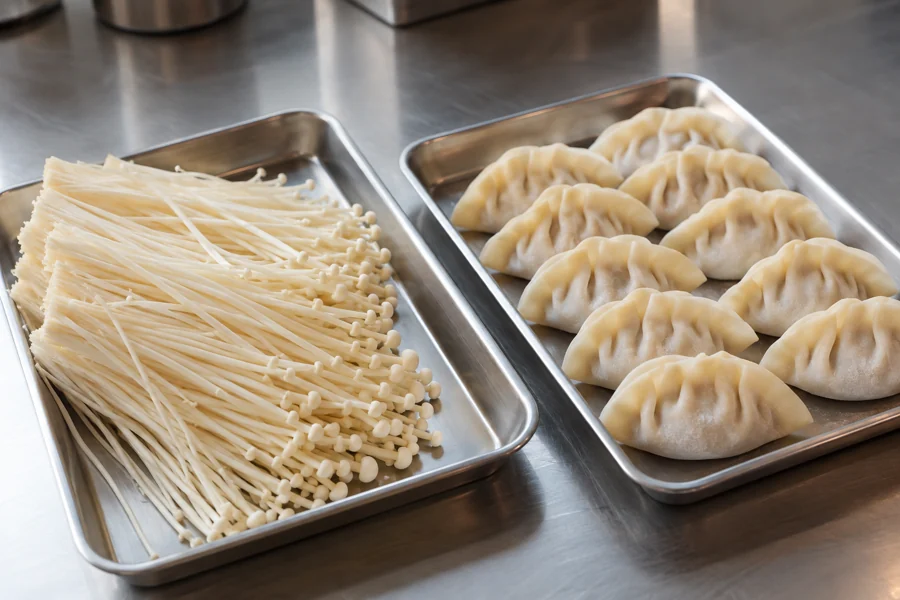
Retain a defined incoming ingredient reference alongside the finished-dumpling acceptance record.
Request samples that represent the offered production, and state the quantity needed for independent preparations and the line run. Ask how the sample's process and pack compare with the proposed order. Retain an approved reference where the quality system supports it, with its storage and replacement rules. Photographs can document appearance, but they cannot preserve texture, microbial condition or drainage behaviour indefinitely. Use them alongside records rather than as the whole standard.
Packing should suit the amount opened for each production batch. A large bulk bag may reduce packaging cost while increasing partial-pack handling; smaller inner packs may improve allocation but add cost and material. Confirm liner suitability, seal integrity, net quantity, carton protection and frozen storage requirements. Agree lot identification and the remaining shelf life required at receipt. The ingredient's labelled life does not automatically become the shelf life of the finished dumpling.
For commercial planning, confirm order quantity, production lead time, shipping basis and destination documentation for the actual enquiry. Do not infer year-round availability, a particular certification, a fixed minimum order or a guaranteed cut capability from a general article. We need the requested specification and application to review those points. If a proposed tolerance cannot be supported consistently, a sample discussion should expose that before a purchase order is issued.
Finally, define the response to a changed lot. Record who receives the deviation, what sample and photographs are retained, and whether material remains on hold while the cause is assessed. A wet filling may originate in the mushroom, another ingredient or handling, so keep enough traceability to investigate the sequence. The strongest buying decision is a repeatable connection between the supplied cut, the prepared mass and an acceptable dumpling under your own validated process.
Discuss your frozen enoki specification
GreenLand-food is a professional frozen enoki mushrooms supplier and manufacturer in China, providing factory-direct wholesale supply for importers, food manufacturers and foodservice buyers.
Send your product form, cut or bundle specification, packing, quantity, dumpling filling application and forming method, destination, private-label needs and requested documents. We will review the requested supply against the application and confirm available options.