


What Do Enoki Mushrooms Taste Like?
Sep 08, 2026
Leave a message
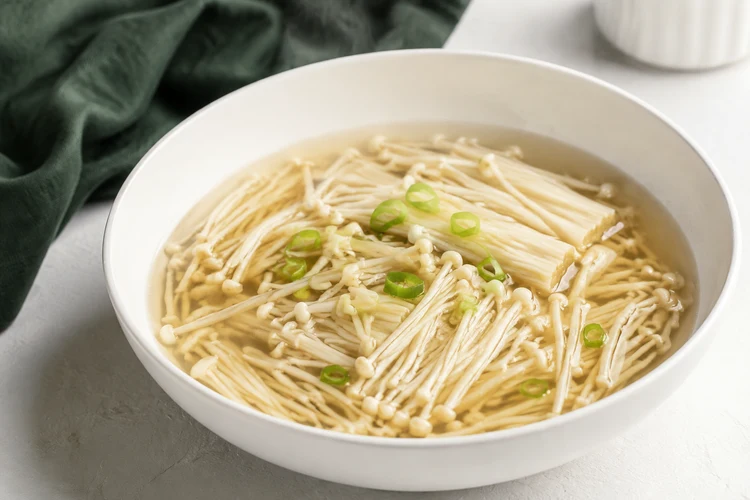
Enoki is usually less assertive in flavour than dried shiitake or strongly browned mushrooms. It readily takes on the character of the broth, sauce and seasonings around it. A bowl described as spicy enoki may therefore taste mainly of chilli, garlic or sauce, with enoki contributing much of the texture.
Taste enoki only after thorough cooking. Advice to use it raw as a garnish is inappropriate given the food safety concerns associated with this product. This guide discusses the flavour of cooked enoki and shows how buyers can assess its texture, portion shape and performance in a finished dish.
Describe mild flavour separately from the stem texture
Flavour and texture are often mixed together in enoki descriptions. Words such as crunchy, delicate and stringy describe how the mushroom feels, while sweet, earthy and savoury describe different aspects of flavour. Separating them makes the answer more useful, especially when a buyer needs to explain why enoki belongs in a mixed product.
The flavour of a simply cooked portion is generally gentle. It can have a light sweetness and a restrained mushroom aroma without the deep intensity associated with dried shiitake. The impression changes with the growing product, storage condition, cooking method and serving temperature. These are sensory descriptions, not fixed chemical measurements or promises for every batch.
The stems provide much of the distinctive eating experience. Long, narrow stems can remain noticeable even when the caps are tender. A loose small portion may feel pleasantly springy, while a large tangled bundle can seem more resistant or awkward to bite through. Portion size therefore affects what a diner means by chewy.
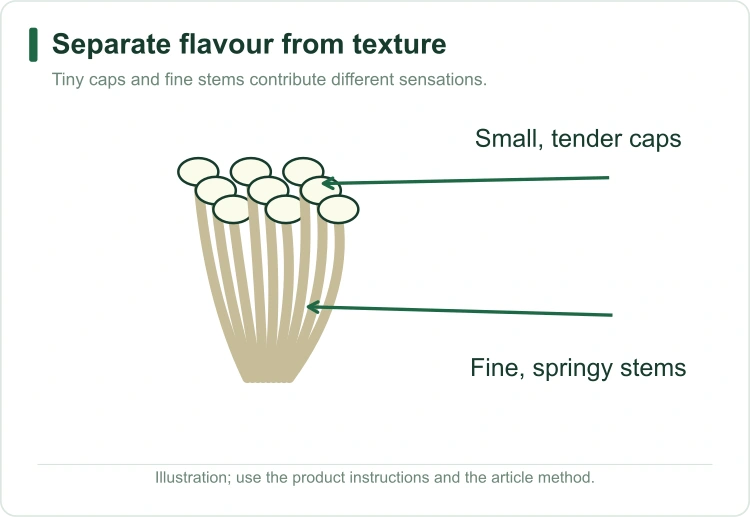
The small caps and fine stems contribute different sensations. Describe flavour intensity separately from stem resistance, tenderness and the way the cooked portion separates.
The Just One Cookbook enoki ingredient guide provides culinary context for the mushroom's mild character and common applications. Any older suggestion of raw use should be set aside in favour of current food safety guidance. For a meaningful sensory comparison, prepare the product thoroughly before tasting.
It helps to use ordinary reference words during a trial. Record whether the mushroom tastes mild or pronounced, whether the stem is tender or resistant, and whether the portion separates easily. Avoid assigning an unsupported numerical flavour intensity, such as twice as much umami as another mushroom, unless a defined test actually supports it.
A small amount in a broth may be noticed mainly as fine strands among noodles and vegetables. A larger portion served in a concentrated sauce becomes a more prominent texture element. The mushroom is the same, but the eating experience differs because its proportion and surroundings have changed.
For procurement, ask which characteristic the product is meant to contribute. If the recipe needs a strong mushroom aroma, enoki alone may not deliver the desired effect. If the objective is a distinctive fine-stem texture and visual variety, it can be worth testing. That purpose should guide the sample evaluation and the final cut specification.
Taste enoki after thorough cooking in a simple preparation
Start a sensory trial with correctly identified, sound enoki from a reliable supplier. Check the pack instructions and storage condition. Trim the attached growing base as directed and separate the mushrooms into manageable portions. A large compact bundle can heat unevenly and is less useful for a controlled tasting.
Prepare the first sample in a simple broth or another method that allows thorough cooking without heavy seasoning. Follow the product's cooking instructions and the food operation's established controls. The purpose is to understand the mushroom itself, so keep the quantities of salt, oil and other ingredients consistent between samples.
Hong Kong's Centre for Food Safety guidance on enoki and Listeria emphasises cooking food that is not ready to eat all the way through. Washing or briefly dipping a bundle into hot liquid should not be assumed to achieve that. Raw appearance and fresh smell are not proof of microbiological safety.
Let the cooked sample reach a comfortable, consistent tasting temperature. Very hot broth can make subtle flavour differences difficult to judge. Evaluate a small amount of mushroom separately, then taste it with the broth. This helps distinguish the ingredient's own character from flavours extracted into or added through the liquid.
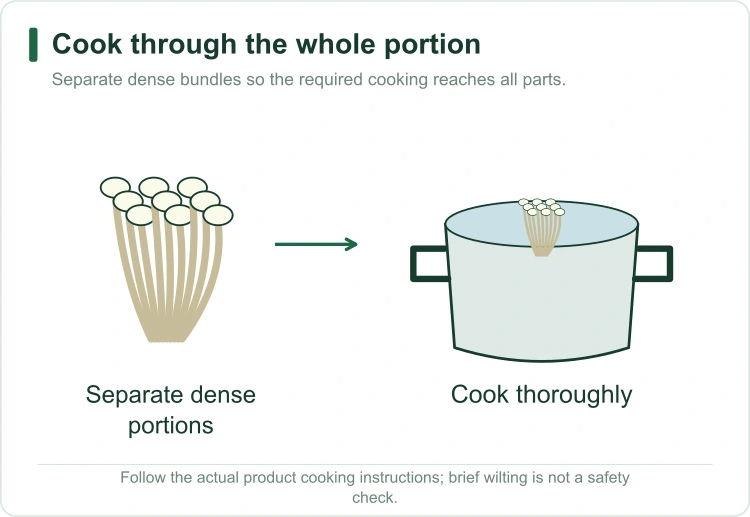
Dense bundles should be divided into manageable portions for the required cooking. Brief wilting or an attractive raw appearance cannot establish that the product is ready to taste.
Use a simple observation sheet rather than a vague approval. Note cap tenderness, stem resistance, ease of separation, aroma and any undesirable aftertaste. Record the preparation method and product batch. If the sample is compared with another supplier's enoki, both should receive equivalent treatment appropriate to their instructions.
Repeat the trial in the intended recipe once the baseline is understood. A spicy sauce, miso broth or rich stock can change the perceived flavour substantially. The second trial answers whether the mushroom fits the dish; the first helps explain why. Both observations can be useful when a formulation needs adjustment.
Do not use undercooking as a way to preserve a preferred crunch. The safe cooking requirement comes first, and texture should be managed through the product, cut, portion and process. If the required preparation produces an unsuitable bite, choose a different format or mushroom rather than weakening the cooking step.
Compare enoki with other mushrooms in a blend
Enoki contributes a different shape from sliced buttons, broad oyster mushrooms or shiitake caps. In a mixed product, that contrast can be as important as flavour. The fine stems may create visible variety, while another mushroom provides a fuller cap texture or stronger aroma.
White or brown button mushrooms offer a familiar rounded slice or whole-piece form. Their cooked texture is generally more cap-led, whereas enoki is dominated by slender stems. A blend containing both can feel more varied than one containing only different sizes of button slices, but the cooking behaviour needs to be compatible.
Shiitake can provide a more pronounced mushroom character, especially in dried and rehydrated form. Comparing it with enoki requires care because drying itself changes flavour. A dried shiitake sample and a fresh enoki sample differ in both species and processing. State those differences instead of attributing the entire result to species alone.
Oyster mushrooms can contribute broad, tender pieces with their own texture. Cut size matters: a large oyster strip and a short enoki portion create a different eating experience from finely chopped versions of both. The blend should be designed around the portion in the finished dish, not only the appearance of the uncooked ingredients.
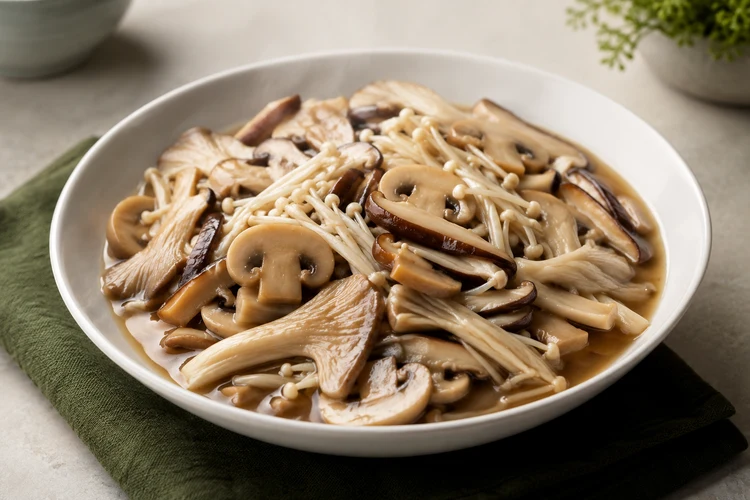
Enoki provides fine strands among broader cap pieces. A blend trial should assess the distribution and cooked texture of each component in a normal serving.
| Component to compare | Useful contribution to assess | Possible blend issue |
|---|---|---|
| Enoki | Fine stems and mild flavour | Tangling or uneven distribution |
| Button mushrooms | Familiar cap pieces | Size differences may change cooking rate |
| Shiitake | More pronounced mushroom character | Strong flavour may dominate |
| Oyster mushrooms | Broad pieces and contrasting bite | Large strips may need separate preparation |
| A dried component | Concentrated aroma and cooking liquid | Hydration changes the process and weight basis |
Use weight percentages defined on the supplied basis when designing a frozen blend. A dried ingredient percentage and a hydrated ingredient percentage are not interchangeable. If components release different amounts of water during cooking, their share of the finished dish can also differ from their starting share.
At GreenLand-food, we review frozen mushroom enquiries against the intended application and required composition. For an enoki-containing blend, the species, portion form and process need confirmation. We should not assume availability or equivalence from a generic mixed mushroom description.
A good blend trial assesses a normal serving after the full cooking process. Check whether each component remains recognisable, whether the flavour is balanced and whether portions contain an acceptable distribution. A visually attractive sample spread on a tray does not establish how the blend will scoop from a bag or eat in a bowl.
Match stem length and portion shape to the dish
Enoki's long stems can look attractive in a bowl, but length also affects eating. A whole bundle may be easy to lift with chopsticks and awkward to divide with a spoon. A shorter cut can distribute more comfortably through soup or a filling. Choose the form according to how the finished food will be served.
For a noodle soup, separate small portions so that the mushrooms mix with the noodles without becoming one dense knot. The portion must still receive thorough cooking. Keeping a bundle intact for appearance should not prevent heat from reaching all of it. Follow the preparation method established for the actual product.
For a stir-fried or sauced dish, shorter portions may mix more evenly. Long stems can wrap around other ingredients or cling together, leaving some servings with many mushrooms and others with very few. Portioning before cooking can be easier to control than trying to separate a tangled cooked mass.
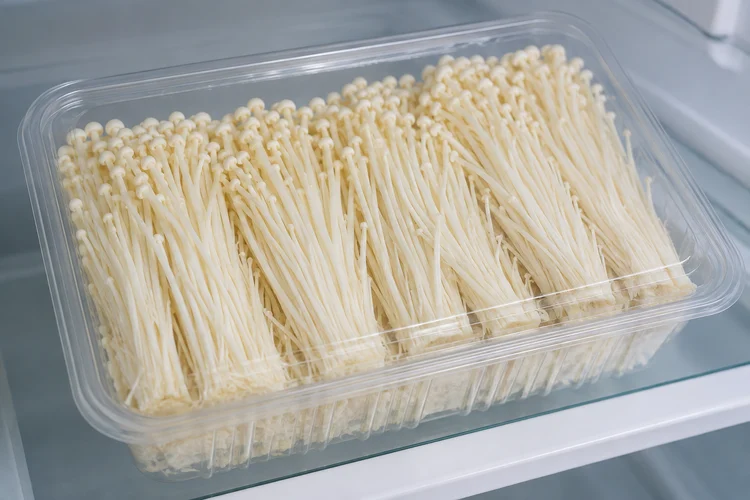
Fine stems sit closely together within an enoki bundle, so portion shape affects separation and eating texture. This generated illustration shows the structure before cooking; test the selected stem length and bundle size in the finished dish after thorough cooking.
For a dumpling or fine filling, a chopped form may be more practical, provided the resulting texture is what the recipe needs. The cut reduces the distinctive long-stem appearance, so the reason for choosing enoki should be reconsidered. If visual strands were the main objective, chopping them finely removes that feature.
Trim yield should be measured. A product supplied with a substantial attached base requires more preparation than one supplied as trimmed portions. Compare the usable weight after the agreed trim and cooking process. A lower purchase price per kilogram can be offset by labour and material that do not enter the finished dish.
In a commercial specification, use an agreed stem-length range or portion description where that feature is important. Include a reference photograph of the prepared form and explain how broken or shortened pieces are assessed. A term such as whole enoki is not enough to define base removal, cluster size and loose-piece tolerance.
For a plated dish, review appearance from the diner's perspective after the sauce is added. Fine pale stems may disappear in a thick coating or darken in a strongly coloured broth. The most useful image is the finished portion prepared consistently, rather than a raw cluster photographed in isolation.
Account for broth, sauce and holding time
Enoki has a mild flavour that can be strongly influenced by its surroundings. A clear broth lets the mushroom remain relatively distinct. A rich stock, chilli sauce or garlic-heavy preparation can dominate the taste while leaving the stem texture noticeable. Neither result is wrong; it depends on what the dish is intended to deliver.
Salt level affects perception too. A lightly seasoned sample may seem delicate, while a more concentrated sauce makes the same mushroom taste more savoury. For a fair comparison, measure the seasoning and use the same broth base. Otherwise the tasting may reveal differences in the recipe rather than in the mushroom.
Liquid concentration changes during cooking. A small uncovered pan can reduce broth faster than a large covered vessel, making the final sauce stronger. Record the finished liquid quantity or recipe yield when sensory consistency matters. A time and temperature alone may not explain why one batch tastes more intense.
Holding affects texture. Enoki left in a hot liquid can continue to soften, while stems may remain more resistant than caps. The acceptable result immediately after cooking may differ from the result after the planned service period. Evaluate both stages if the dish is intended for a buffet, meal delivery or central kitchen.
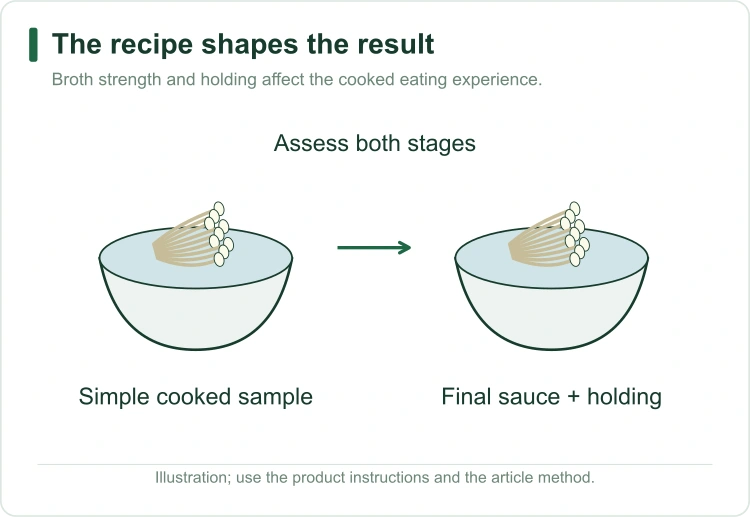
A baseline preparation reveals the mushroom's character, while the final sauce and holding stage show whether that character fits the finished dish.
For a chilled prepared meal, reheating adds another stage. Fine stems can compact in the container or mix unevenly when the customer stirs the meal. Test the labelled reheating method and the actual portion depth. A sample cooked in a development saucepan may not represent a sealed meal tray.
A useful trial varies one factor at a time. Compare two portion lengths in the same broth, or the same portion in two sauce strengths. Do not change the species mix, seasoning, cooking method and holding period simultaneously if you need to understand the cause of the result.
Record the observations in practical terms: stems remain easy to separate, caps retain an acceptable appearance, broth has the desired mushroom note, and no portion feels excessively tangled. These are decisions a kitchen can act on. Broad descriptions such as restaurant quality offer less help when the next batch needs adjustment.
Evaluate frozen enoki in the actual cooking process
Frozen enoki should be assessed as a frozen product with its own processing history and instructions. Freezing can affect the fine structure, and the product may release liquid or separate differently during cooking. It should not be assumed to reproduce the exact bite of a freshly prepared cluster.
Confirm whether the product is supplied as whole clusters, trimmed portions, loose stems or a component in a blend. Ask about any pre-freezing heat treatment and the intended cooking use. These details influence how the sample should be prepared and what a buyer can reasonably expect from it.
Our article on frozen enoki handling and performance provides related discussion of the frozen format. For a new purchase, use the actual supplier specification and sample to confirm performance. An article cannot establish the process, availability or shelf life of an individual offered product.
Cook the sample according to the instructions, then observe how it behaves in the intended dish. For broth, assess separation and bite after the full cooking and holding period. For a filling, assess chopped distribution and moisture. For a blend, check whether enoki remains evenly represented in normal portions.

The long stems and small caps of the enoki product are visible in these compact bundles. A frozen sample still needs evaluation after the intended cooking process, including strand separation, tenderness, moisture release and how evenly portions distribute through the dish.
Record clumping before cooking and the handling needed to portion the product. A frozen block may be workable for a large kettle but inconvenient for small kitchen batches. Free-flowing pieces can simplify portioning, while some cluster retention may be desirable for presentation. The specification should make that preference explicit.
Do not infer ready-to-eat status from freezing or a brief pre-treatment. Enoki should follow the labelled cooking requirement, and the tasting stage should occur after the required preparation. Product safety and desired texture need to be achieved together through a suitable process.
For cost comparisons, include usable cooked yield and preparation labour. A pre-trimmed frozen format may reduce base removal, but the actual cut and liquid release still matter. The useful measure is the quantity of acceptable mushroom in the served recipe, accompanied by the flavour and stem texture the buyer wants.
Set up a useful sensory and sourcing specification
Begin the specification with the role of enoki in the dish. Is it intended to provide fine strands in a soup, a distinct texture in a mixed mushroom side or a chopped component in a filling? That purpose determines which dimensions and sensory observations deserve the closest attention.
Identify the product accurately, using the supplier's scientific and common names consistently. Commercial white enoki is commonly identified as Flammulina filiformis in current food safety references. If documents use another taxonomic name, resolve the identity with the supplier rather than relying on a casual spelling match.
Define the supplied form, base trimming and portion size. Add the storage condition, packing and cooking instructions. For a blend, record every component and its proportion on the correct weight basis. A sensory approval is easier to maintain when the physical product being approved is also clearly described.
Use a reference cooking method that reflects the customer process. Record input weight, liquid or sauce quantity, equipment and the point at which the sample is assessed. Include the relevant holding or reheating stage. This prevents later comparisons from being distorted by different preparation.
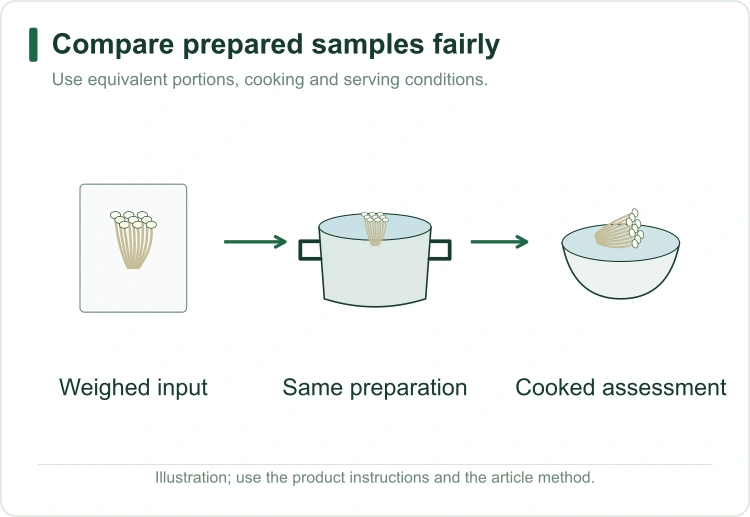
Compare samples under equivalent preparation and serving conditions. Record cap tenderness, stem bite, flavour, separation and appearance without presenting invented laboratory scores.
A concise sensory record can cover five observations: flavour intensity, cap tenderness, stem bite, ease of separation and appearance in the dish. Add specific acceptance notes where required. Avoid presenting an invented numerical score as though it came from a trained panel or a measured laboratory method.
For an enquiry to GreenLand-food, share the destination, intended application, species or blend composition, required portion form, pack size and expected volume. We will review the requested frozen format and the information needed for a representative sample. Any product-specific availability or processing claim should be confirmed for that enquiry.
Retain photographs of both the supplied portion and the finished serving with the sensory notes. The first shows the trim and stem length; the second shows what remains visible after cooking and sauce addition. When a customer asks for a change, those two views help identify whether the issue is the raw format, the preparation or the final presentation.
For a blend approval, take several ordinary portions from the prepared batch rather than selecting an especially attractive bowl. Check whether enoki appears consistently and separates comfortably in each serving. If the stems gather into a few dense portions, adjust the supplied cut or mixing method and repeat the trial. That observation is more useful for a buying decision than a general claim that the mushroom adds crunch.
Review a mushroom blend for its cooked texture
GreenLand-food is a professional frozen mushrooms supplier and manufacturer in China, providing factory-direct wholesale supply for importers, food manufacturers, foodservice distributors and private-label programmes.
Share the required species or blend, proportions, portion form, pack size, destination and volume. Include the broth, sauce or filling application and its cooking method. For an enoki request, we will review the actual product availability and preparation information before discussing a representative sample.
Use the product range and downloadable catalogue to review the wider selection, then send the specification and order details that matter to your application.