


How to Cook Fava Beans: Frozen, Peeled and Skin-On Forms
Oct 19, 2026
Leave a message
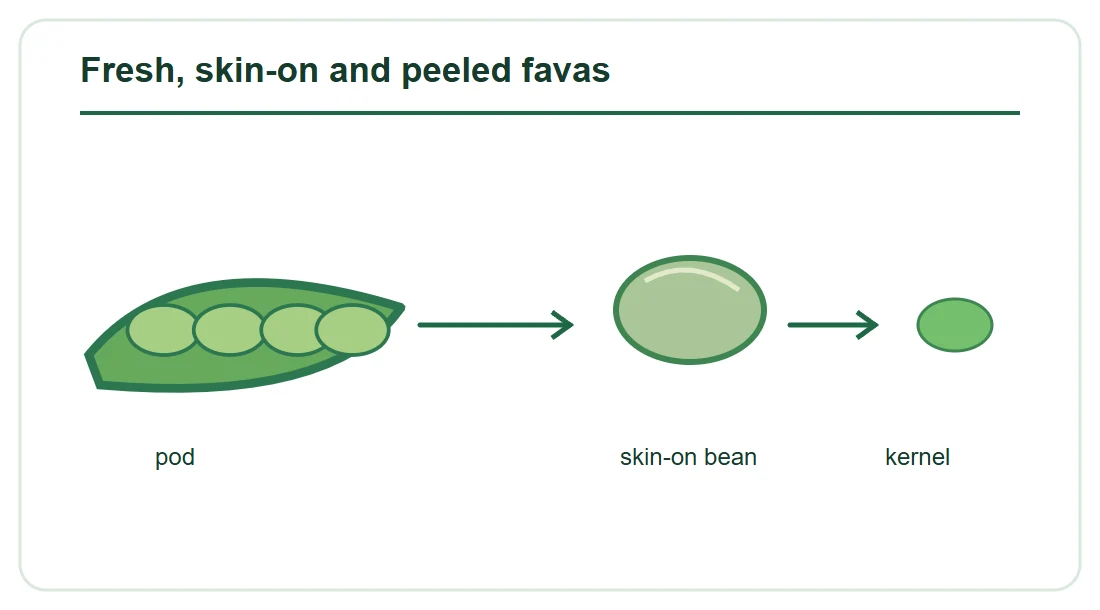
A frozen product can be shelled and skin-on, or shelled, peeled and possibly blanched. Those forms need different preparation. Boil or steam fresh shelled skin-on beans until the inner skin loosens, cool enough to handle, then peel if the dish needs the vivid green tender kernel. A peeled frozen bean usually needs only the supplier's specified final heat and a taste check. Never apply a dried-bean soaking method to a frozen green fava bean.
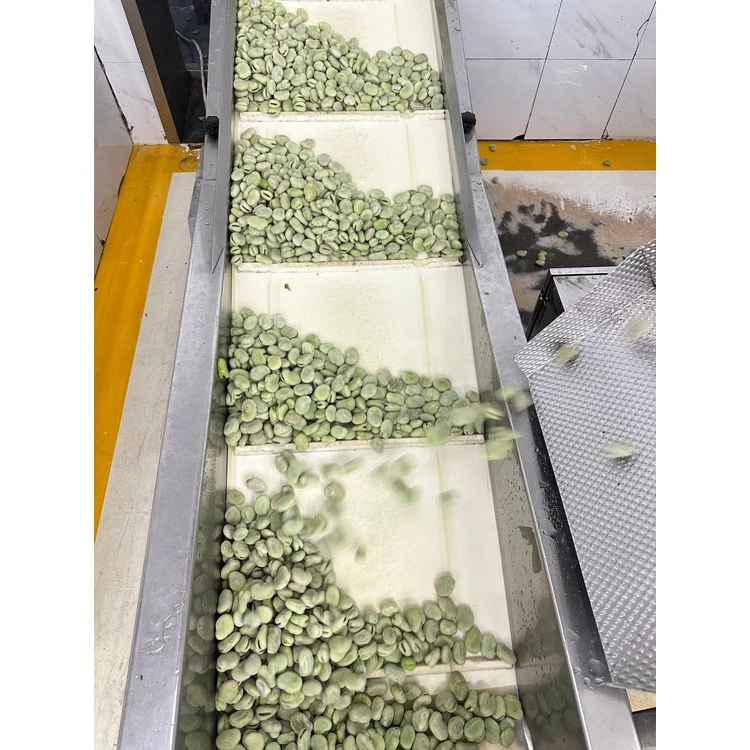
Fava and broad bean are two names for Vicia faba. The practical confusion is less about the name than about whether a bag contains pods, skin-on beans or peeled kernels. GreenLand-food's frozen broad beans page shows shelled skin-on beans in a lined carton and a separate handling view on a conveyor. Those photographs tell the buyer what form is shown; they do not establish a universal cooking time or indicate that all GreenLand offers are peeled or ready to eat.
- Identify pod, skin-on bean or peeled kernel before cooking.
- A brief peel-assisting heat is different from the final cook of a peeled frozen bean.
- Compare usable cooked yield and eating texture, not gross bag price alone.
First identify the fava form in front of you
Place the beans on a clean tray and read the label before heating the pan. Fresh pods are long green cases with several beans inside. Shelling removes the pod but leaves an individual skin around each bean. A peeled kernel is brighter green and smoother. Frozen skin-on beans often look paler, because their inner skins cover the green center. These visual checks are useful, but the supplier's specification must state the offered form and any prior heat treatment.
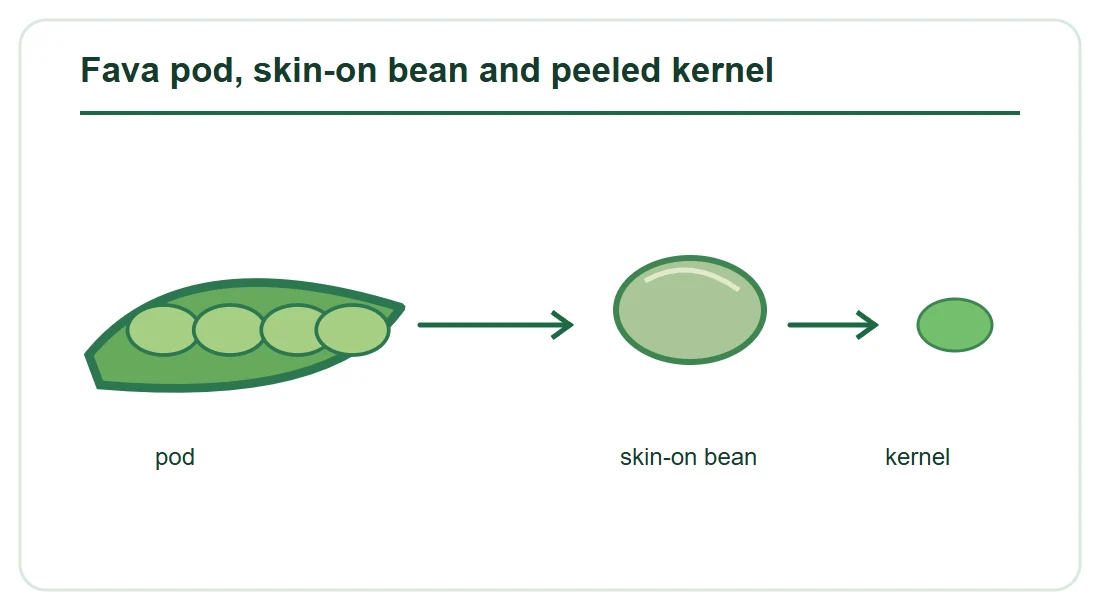
Fava pod, skin-on bean and peeled kernel. Original schematic illustration.
The distinction determines labor as well as taste. A chef preparing a small seasonal salad may happily double-pod fresh beans by hand. A ready-meal line feeding thousands of portions cannot casually add that labor after delivery. If the final dish wants a creamy, bright kernel, buying peeled frozen favas may make sense. If it wants a rustic whole bean or will be mashed, a skin-on bean may be suitable after the actual cook test. The least expensive-looking input is not necessarily the least costly finished ingredient.
Do not confuse frozen green favas with dried favas. Dried whole or split beans are shelf-stable ingredients with soaking and long cooking demands. They make excellent purées and stews, but they do not behave like a frozen green bean dropped into a hot risotto. A recipe saying "fava beans" without specifying form can lead a purchasing team to buy an ingredient that makes the stated method impossible.
As a quick receiving description, write one of three phrases: fresh pods, frozen shelled skin-on beans, or frozen shelled peeled kernels. Add "blanched" only when the supplier confirms that treatment. Then record whether the product is intended for further cooking. A photograph of the exact accepted sample belongs with the description, especially when a sales sheet uses "peeled" ambiguously.
Pod, inner skin and kernel are three different layers
The pod is the outer case. For most standard fava dishes, open it and remove the beans. Each bean's inner skin is a separate pale membrane. Peeling that membrane exposes a green kernel with a softer, creamier bite. Some young beans have tender skins that can be eaten in a cooked dish; older or larger beans may have a tougher or bitter skin. Whether to peel is therefore a dish decision, not a moral rule about proper favas.
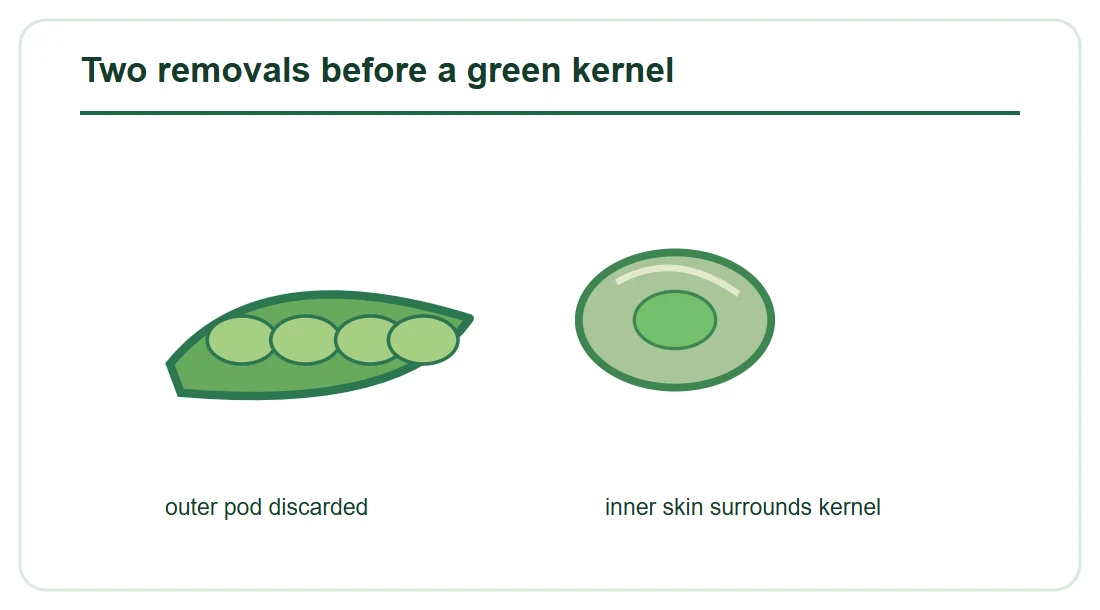
Two removals before a green kernel. Original schematic illustration.
BBC Good Food calls removal of both pod and bean casing "double-podding." Its guide suggests a brief hot-water step to loosen the casing, followed by cooling and squeezing out the green center. The British Dietetic Association's recipe similarly uses a short boil of fresh or frozen beans followed by cooling and peeling. These are particular kitchen protocols for those recipes. They are not evidence that an already peeled, blanched IQF ingredient should be boiled for the same time again.
Open a few beans after cooking to see what the diner will meet. If a salad relies on bright green color and smooth texture, a skin-on bean can look dull and feel papery even when the center is tender. If the dish is a deeply seasoned stew or a purée, the skin may be less noticeable, though a gritty texture still deserves attention. Do not try to solve a tough skin merely by extending the boil until the center turns to mush. Peel or select a different supplied form.
Martha Stewart's fava guide notes that removing the inner skin is a common but optional step in home cooking. The operative word is optional for a given recipe. For a packaged food with a declared visual standard, the choice must be fixed. A mixed bag of peeled and unpeeled kernels can cook unevenly and make the pack look inconsistent, even if both are edible.
Cook fresh shelled, skin-on favas
For a fresh-pod dish, open the pods and remove the beans first. Bring a pot of water to a steady boil, add a manageable quantity of beans, and blanch only long enough to loosen the inner skins for the recipe you are following. Drain and cool promptly so they can be handled without continuing to soften. Pinch one end of each bean and slide the green kernel free. Then give the peeled kernels the brief final cook needed for the salad, pasta or side dish. The goal is a tender center, not a fixed clock reading detached from bean size and age.
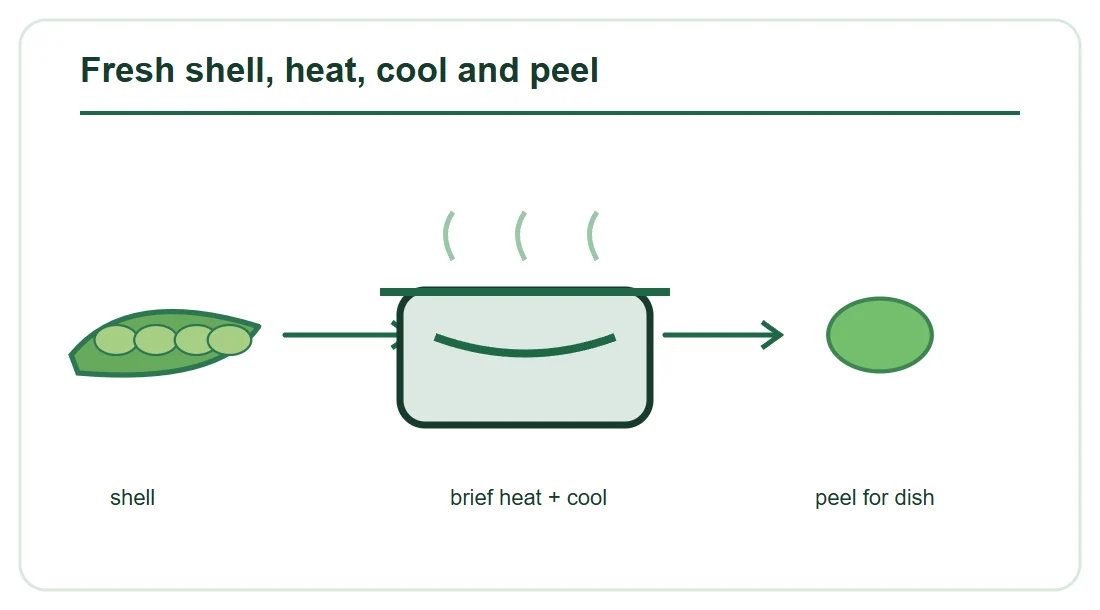
Fresh shell, heat, cool and peel. Original schematic illustration.
- Open the fresh pods and remove the beans. Rinse the shelled beans, then bring a pot of water to a steady boil.
- Blanch a manageable batch just long enough for the chosen recipe's skin-removal step; the BBC Good Food example uses about two minutes, while other fresh-bean methods are shorter.
- Drain and cool promptly. Pinch one end of a bean and slide out the green kernel; check a larger bean for skin that still clings.
- Give the peeled kernels the final heat the actual salad, pasta or side dish needs. Taste a large kernel at serving temperature rather than treating the first blanch as proof the final dish is done.
Two current culinary sources illustrate variation. BBC Good Food's kitchen method uses about two minutes before cooling and peeling; The Kitchn describes a shorter blanch for a particular fresh bean preparation. That difference does not mean one source is universally wrong. Bean maturity, water load, whether the first heat is only for peeling and the final dish all matter. Follow the selected recipe as written for its own circumstances, then check the kernel. Do not present either home number as the validated GreenLand factory process.
If you choose to leave tender inner skins on, boil or steam the shelled beans and taste a large one. It should be fully cooked according to the recipe, with a skin that does not distract from the dish. If the skin feels leathery while the center is already soft, peeling is the corrective step. Adding more heat can split the kernel and dull the color. In a small restaurant batch, the cook can decide by tasting; in a food plant, that choice belongs in the accepted ingredient and finished-food specification.
Finish with seasonings that let you judge the bean. Lemon, olive oil and herbs highlight a sweet, grassy kernel. Heavy sauce can hide a skin issue at first bite but not necessarily after cooling or reheating. For a cold salad, evaluate the bean chilled, because a membrane that seems tender when warm may feel firmer on the plate. This is a practical reason to test at serving temperature.
Cook frozen skin-on beans by sample endpoint
Frozen skin-on broad beans are already shelled but still carry the individual casing. Check the supplier's treatment and cooking instructions before selecting a method. For a hot side, add a measured frozen portion to boiling water or a steamer, allow the system to recover heat, then sample the largest beans until their centers meet the desired tenderness. Cool and peel if the finished dish requires the green kernel. If skins are meant to remain, taste the full bean under the planned seasoning and service condition.
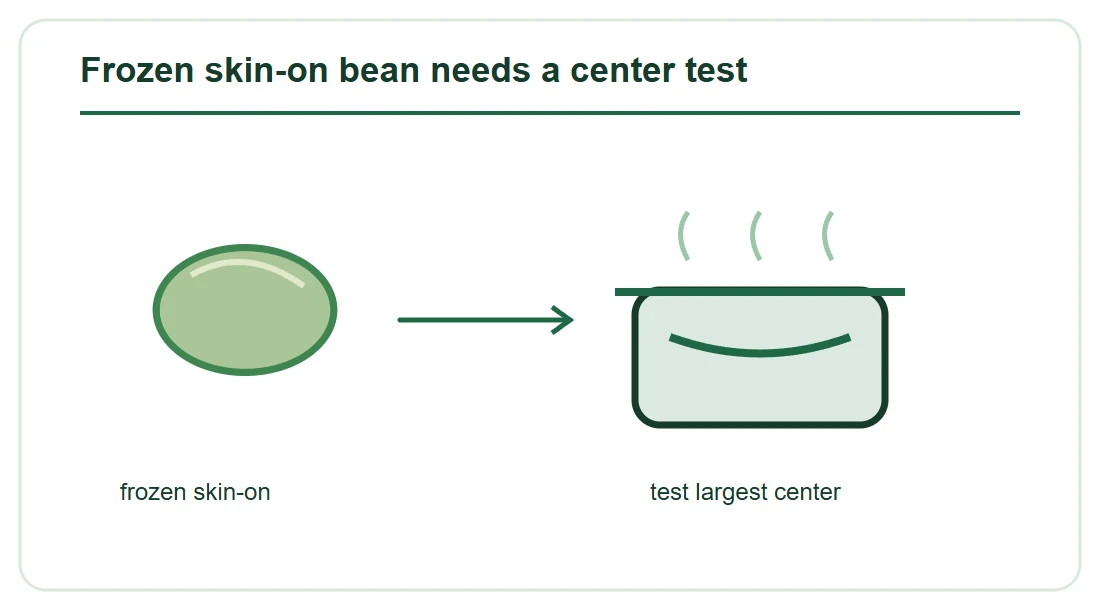
Frozen skin-on bean needs a center test. Original schematic illustration.
A frozen bean changes the pot temperature and can bring surface ice or loose frost. A small domestic saucepan and a large commercial kettle recover heat differently. Start the trial record at the moment the water returns to its normal boil or at the equipment's defined heat state, then record the actual sensory result. The number is useful for that cut, load and machine. It should not be copied across unknown frozen products.
For a sauté, pre-cooking may be necessary to bring the center through before the pan dries or burns the skin. A peeled, blanched IQF kernel may need far less heat. Put both candidates through the same finished recipe rather than judging them by raw bag appearance. A skin-on bean may have an advantage in a robust stew, while a peeled kernel often gives a cleaner salad appearance. The correct form is the one that performs in the target dish at acceptable labor and yield.
Do not assume a pale skin-on bean is a defect. It may be exactly the offered form. Conversely, do not accept uncontrolled skin fragments in a product ordered as peeled kernels. Count and photograph the form difference in a representative sample so the purchase agreement can describe what the line can handle.
Use peeled frozen beans without overcooking
A peeled frozen fava has already lost the protective individual skin. If the supplier also blanched it, the kernel may have had a heat step before freezing. Read the actual label and specification: "peeled" tells you a layer has been removed, but it does not by itself prove the product is fully cooked or suitable for cold use. Follow the supplied handling directions and the customer's food-safety plan.
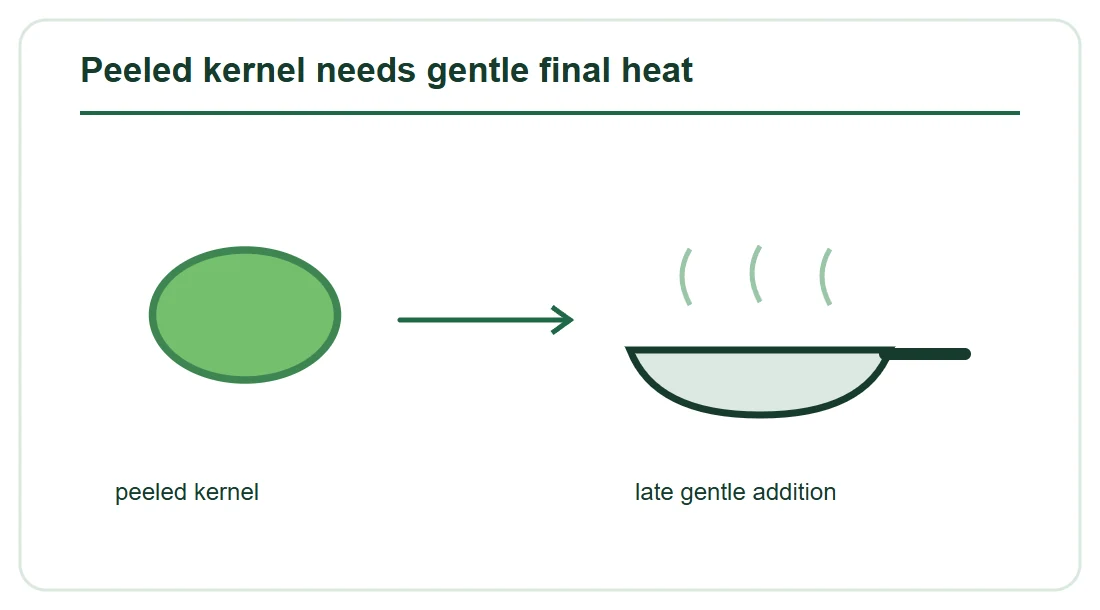
Peeled kernel needs gentle final heat. Original schematic illustration.
For a hot pasta or risotto, add a measured portion late enough to keep the green kernels whole while still completing the required cook. Stir gently. A vigorous long simmer can break a peeled kernel into the sauce, which may be desirable for a purée but disappointing in a dish that promises whole beans. Taste at service, not just immediately after the addition. If the beans will be cooled and reheated in a ready meal, check the second heat cycle too.
A commercial White Toque product sheet for its own peeled, blanched IQF favas suggests a short simmer and discusses salad, dip and sauté uses. That information applies to its labelled product, not to every peeled fava in the market. It illustrates why a buyer must distinguish a processed ready-to-use offer from a raw frozen bean and read the supplier-specific instruction. Do not transpose another brand's minute count onto GreenLand-food's skin-on photo or an unconfirmed SKU.
Peeled kernels often command attention for color and intactness. Spread a small portion before cooking to note broken kernels and fines; repeat after cooking. If the customer blends a dip, a higher broken share may be harmless. If the beans top a salad, appearance is central. These are different specifications for the same botanical ingredient.
Choose a form for salads, dips and hot meals
For a cold salad, the diner sees and feels each bean. A peeled kernel gives a bright green presentation and usually a more even tender bite. Its handling and any cooking requirement must still be confirmed; do not infer ready-to-eat status from a sales photo. Dress a trial portion after cooling, then inspect it again after the expected display period. Acid, salt and time can change the bean's perceived firmness and color.
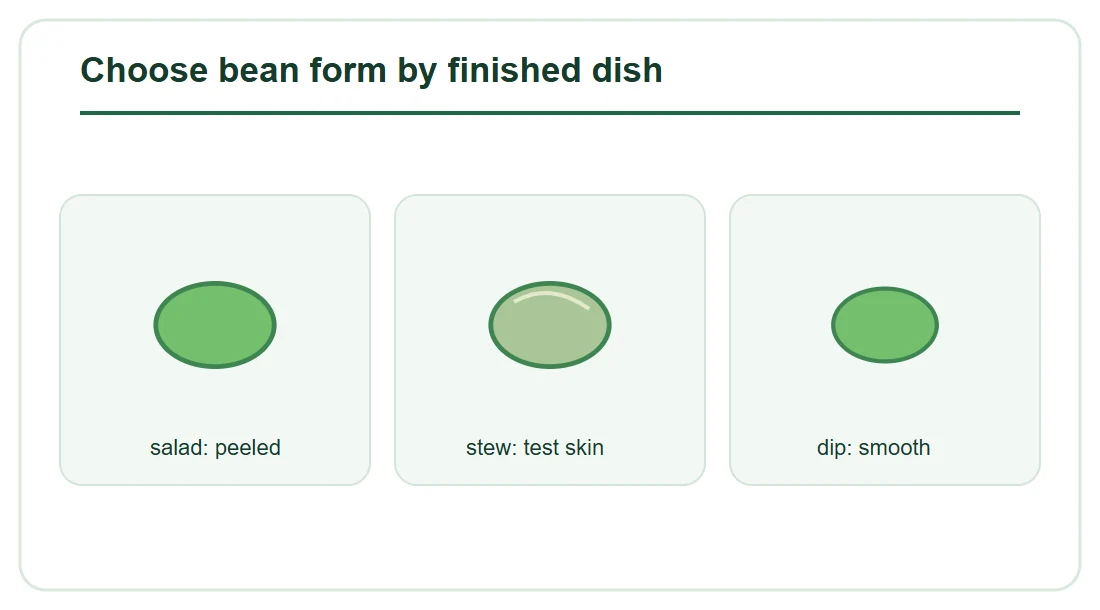
Choose bean form by finished dish. Original schematic illustration.
For a dip or mash, exact whole-bean appearance matters less. A skin-on bean might be acceptable if the skins soften and the finished purée remains smooth, but some recipes require peeling to avoid flecks or roughness. Compare the two forms at equal cooked solids rather than equal frozen weight if water and discarded skins differ. Note the yield of usable purée. That simple yield comparison can overturn an apparent purchase-price advantage.
For hot prepared meals, consider how long the bean stays in heat. A peeled bean added late can stay green and distinct; a skin-on bean may tolerate a longer simmer but look less vivid. A casserole that will be chilled and reheated needs a two-stage test. Choose the form with the final consumer experience in mind and write the addition point into the recipe so another kitchen does not accidentally cook an accepted sample into paste.
Fresh pods also produce substantial preparation waste. A chef may enjoy shelling them for a seasonal menu, where that labor is part of the culinary choice. A production buyer comparing fresh pods with frozen shelled beans should calculate usable bean weight after pod removal and, if relevant, inner-skin removal. Compare that usable amount with the frozen product's cooked yield. A price per gross kilogram of pods and a price per kilogram of peeled kernel describe different quantities. The calculation does not demand one form; it prevents a false comparison that ignores who performs the shelling.
The same distinction matters for menus that alternate between rustic and refined dishes. A robust bean stew may welcome the look of a larger skin-on bean, whereas a fine green purée may need a peeled kernel and a tighter color standard. Rather than forcing one SKU into both, test each recipe with the candidate form and record which layer is present. A supplier can then quote the appropriate offer, and the kitchen knows whether peeling remains its own task.
There is also a safety boundary that a recipe cannot fix: fava beans can trigger hemolysis in people with G6PD deficiency, according to the U.S. National Library of Medicine's MedlinePlus. Cooking or peeling should not be presented as removing that risk. Product developers and label owners should handle ingredient naming and any applicable food information with qualified advice for their market. This is relevant to serving decisions without turning a cooking guide into medical treatment advice.
Discuss the frozen ingredient for your production
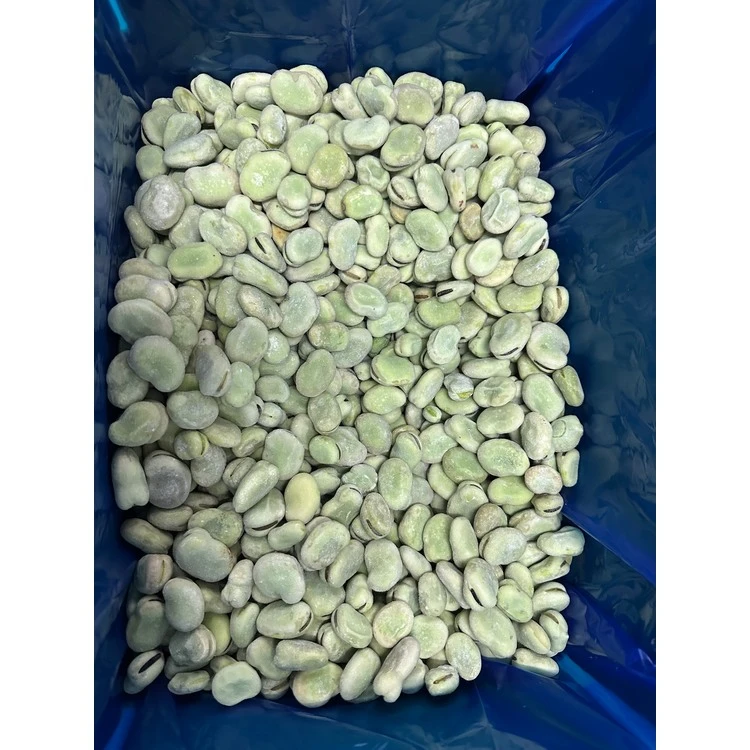
Frozen Broad Beans
Cooked dips, salads and hot dishes.
Confirm for your order: Skin-on or peeled sample identity; bean size, cooked yield and pack.
View product & supply detailsFor a commercial trial, send your required form, application, pack, quantity and destination. We can discuss the offered sample and the order specification with you.
Request Specifications & QuoteProtect color, texture and intact-bean yield
Color is easiest to judge next to an approved reference cooked the same way. Frozen skin-on beans look naturally paler than peeled green centers. Comparing the two forms without identifying them can create a false rejection. For a specified form, note dulling, browning or unusual spots after the intended cook. A large pot held hot for too long can dull a perfectly reasonable input, so identify process effects before blaming the lot.
Shelled broad beans in a lined carton.
Texture should be assessed through the whole bean and the kernel. Bite one of the largest pieces. A tough skin over a soft center calls for a peeling or form decision. A hard center calls for more appropriate heat. A broken, mushy kernel after a long hold calls for less heat or later addition. These observations are more useful than a statement that the beans were "overcooked" without identifying which layer failed.
Count intact beans only where the application values them. A ready-meal side with visible favas may need a high intact share and few loose skins. A dip can use a broken share but may reject skins that make it gritty. A warehouse can inspect frozen integrity, yet the final application trial shows whether those pieces survive equipment, mixing and reheating. Record both stages when qualifying a product.
One simple comparison can guide improvement: photograph a measured frozen tray, cook a measured portion under the proposed method, then photograph the drained result and the final plated dish. Use the same lighting and sample size for the reference and candidate. That sequence shows whether the problem began as broken frozen product, emerged during cooking or appeared only after a hot hold.
If color matters strongly, do not compare a just-cooked sample with an older reference left on a warm counter. Prepare both at the same time and observe them at the same delay after cooking. If the meal will be sold chilled, compare again after chilling and normal reheating. That repeat observation tells the development team whether the bean choice itself or the dish's holding path needs to change.
Approve a commercial broad-bean specification
Start the order description with "frozen broad beans, shelled, skin-on" if that is the demonstrated form. If peeled kernels are required, state that separately and obtain a sample of that exact offer. Record whether blanching or another heat treatment is confirmed, the proposed pack and the intended final cooking use. A grade name alone cannot replace these form statements.
Broad beans packed in transparent bags.
GreenLand-food can use the customer's application and sample observations to discuss an offered cut or grade, packing, quantity and destination documentation. The broad-bean category's two real photographs show a carton lot and a conveyor handling view. They are evidence of the depicted bean form and processing context, not proof that the photographed lot has the same size, peel status or treatment as every future quotation. Ask for a current representative sample and the corresponding specification before approval.
Keep the acceptance question application-specific. For a salad line, check peeled-kernel color, membrane remnants and intactness after the required preparation. For a hot casserole, check skin bite and whole-bean presence after reheating. For a purée, check smoothness and yield after any peel loss. Once the customer approves the result, preserve the sample reference and the cooking method used to judge it. A later lot can then be assessed against a known food outcome instead of a generic list of carton observations.
The buyer should also distinguish an incoming-lot check from the finished-food release. A bag can match the agreed frozen description while a new recipe or cook setting produces an unacceptable plate. Conversely, a cook can partly hide a marginal lot with extra processing. Keep the supplier claim narrow and the customer's process validation separate. That division makes a corrective discussion specific and fair.
Questions about peeling and cooking
Are fava beans and broad beans the same? Yes, these common names refer to Vicia faba. Check whether the product is fresh pods, frozen shelled skin-on beans, peeled kernels or dried beans; those forms drive preparation.
Do you have to remove the inner skin? Not always. Young tender skin can work in some cooked dishes, while a salad or smooth purée may need peeled green kernels. Taste the actual bean and fix the choice in a repeatable recipe or product specification.
Can frozen favas be cooked directly from frozen? Often a recipe can be designed that way, but follow the exact supplier's handling and required cooking instructions. A peeled, blanched kernel and a skin-on frozen bean do not share one universal cook time. Check the largest bean and the final dish endpoint.
Can cooking make fava beans safe for someone with G6PD deficiency? Do not make that assumption. MedlinePlus identifies fava beans as a potential trigger for people with G6PD deficiency. People with that condition should follow their clinician's advice; food businesses should clearly identify the ingredient and seek appropriate market-specific labeling guidance.
Compare a smaller green legume with a different skin and heat path.
Understand why a cooked chickpea is unlike a frozen green fava.
Source frozen broad beans with GreenLand-food
GreenLand-food is a professional frozen broad beans supplier and manufacturer in China, providing factory-direct wholesale supply for importers, food manufacturers, foodservice distributors and private-label programs.
Send us the product form, specification, packing, quantity, application, destination, private-label needs and requested documents.