


Can You Freeze Papaya? Ripeness, Chunks and Uses After Thawing
Oct 19, 2026
Leave a message
For a home freezer, peel the fruit, remove the seeds and the pale cavity membrane, cut or puree the flesh, pack it in usable portions and freeze promptly. The University of Hawaiʻi's papaya leaflet specifically cautions against freezing a whole papaya because flavour and texture deteriorate, while allowing frozen puree. That is a useful answer to the common question: it is the prepared flesh and its later use that make freezing worthwhile.
A ripe papaya and a green papaya are different ingredients. The first supplies orange, sweet fruit for smoothies and fruit preparations; the second is often shredded or cooked as a vegetable. Freezing an unripe fruit will not turn it into ripe dessert papaya. Likewise, a carton of commercial frozen dice and a cup of homemade puree should not be judged by the same appearance test. We describe a small home method, explain the limits of thawed texture, and then show how a processor could test a frozen cut in its own recipe. Published freezer guidance gives starting conditions; it does not prove a particular GreenLand lot, commercial shelf life or treatment.
- Freeze clean, ripe prepared flesh in labelled chunks or puree; whole fruit is a poor home freezer choice.
- Use chunks frozen-first in smoothies or expect softer texture and some liquid after thawing.
- A historic syrup-dice bulletin is a different formulated product from plain fruit.
Can papaya be frozen and what will change?
Freezing holds ripe flesh for a later recipe. The useful question is whether that recipe needs a distinct cube or simply papaya flavour and colour. Water in the cells becomes ice, and the thawed flesh commonly releases liquid and softens. A piece that looked neatly cut when frozen can slump after a full thaw. For a smoothie, puree, ice or sauce, that loss of firmness is usually tolerable. For an uncooked fruit platter in which each cube must remain plump and firm, it matters immediately. Put the finished use before the freezer method: frozen-first blending asks less of the fruit than a fresh-looking garnish.
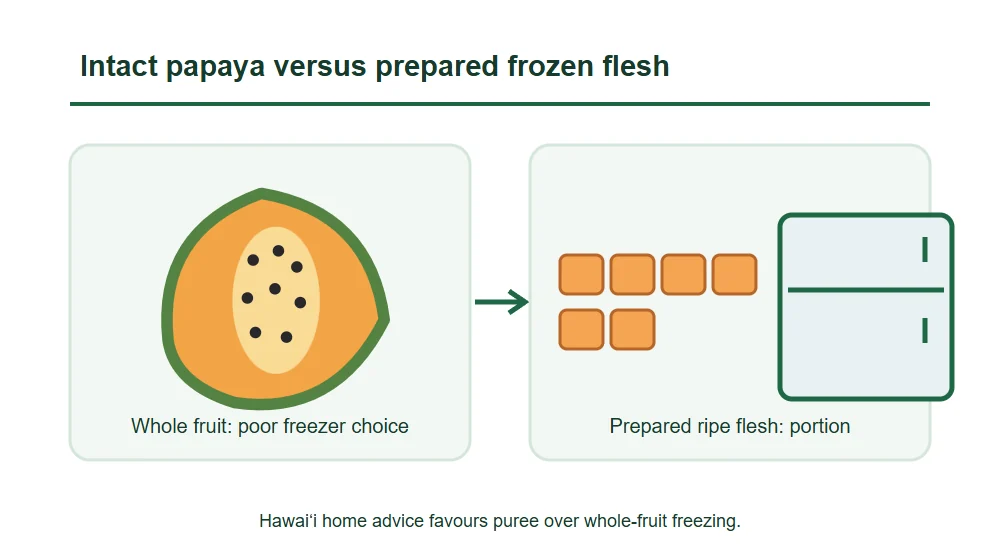
The University of Hawaiʻi papaya leaflet says not to freeze the whole fruit because of flavour and texture deterioration and suggests freezing puree instead. The wording concerns home use and an intact papaya. It does not mean that no prepared papaya piece can ever be frozen: another Hawaiʻi processing bulletin describes a formulated, quick-frozen diced product. That published industrial example contains syrup and acid and is not a dry-pack home cube recipe. The two sources answer different questions, and neither supports the claim that a thawed plain cube is equivalent to fresh fruit.
Freeze fruit that is sound at the start. Cold storage slows changes; it does not repair bruising, fermentation or an unpleasant odour. The University of Minnesota Extension fruit-freezing guide advises proper washing, quick freezing and suitable moisture- and vapour-resistant containers. It also points out that freezing does not kill bacteria already on the fruit. This is why the knife, board, hands and container matter as much as the freezer setting. A clean, date-labelled pack is easier to use before quality declines than an anonymous bag pushed behind other food.
Choose ripe fruit for the intended use
For a sweet fruit application, start with an edible-ripe papaya. The Hawaiʻi CTAHR crop information describes eating-stage fruit as partly to fully yellow and slightly soft. That is a ripeness cue, not a guarantee that every cultivar or fruit of a given colour tastes the same. Cut one fruit and taste it before preparing a large freezer batch. Its sweetness, aroma and texture are more useful than judging the skin from a photograph. If it is still hard and green, allow appropriate ripening before using it as dessert fruit. If it is leaking, moldy or fermenting, freezing should not be used to salvage it.
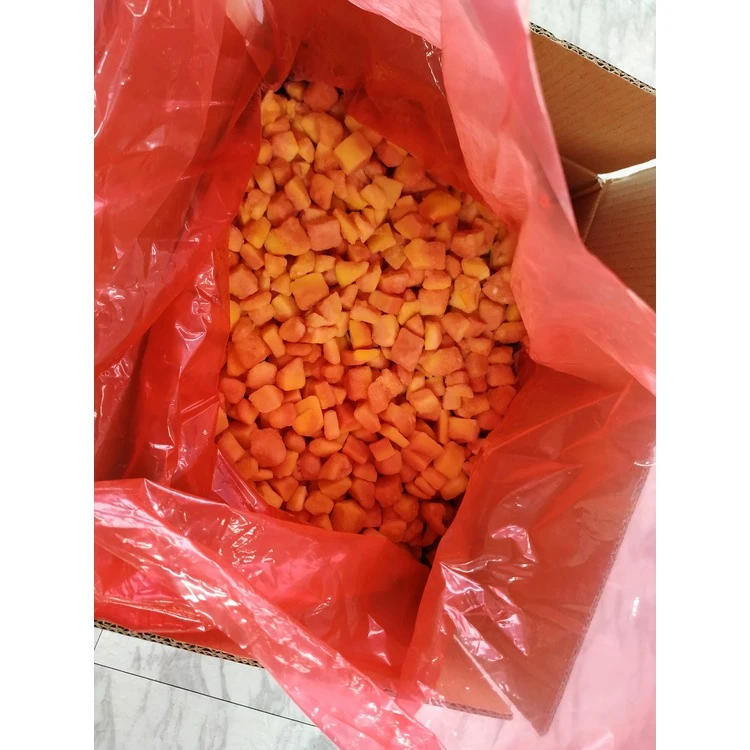
Orange frozen papaya dice in a red lined carton.
For a smoothie or puree, a sound, fully ripe fruit may be acceptable even if it would be too soft for a neat fruit salad. Do not confuse soft ripeness with deterioration. Slice away no questionable area as a shortcut to rescuing a spoiled fruit; select sound raw material. For dice that must stay identifiable in a fruit preparation, choose a sound fruit with enough firmness to cut a clean face. That distinction can be tested with two fruit samples: cut ten pieces from each, note how many keep an edge during handling, then make the same smoothie or fruit cup with both. This is a kitchen comparison, not a published standard or a promise about shelf life.
Green papaya has a savoury use and a different taste. A frozen ripe-papaya product should not be substituted into a shredded green-papaya salad merely because the plant name matches. A buyer specifying a frozen fruit component should name ripe orange flesh, the intended cut and whether seed-cavity membrane or black seed fragments are unacceptable. A processor might also name the intended sweetness and colour range, but those figures should come from its actual recipe and sample testing, not from an assumed universal papaya number. In a finished drink, papaya concentration and other fruit acids can change perception more than a minor cube-size difference.
Peel, seed and portion the flesh
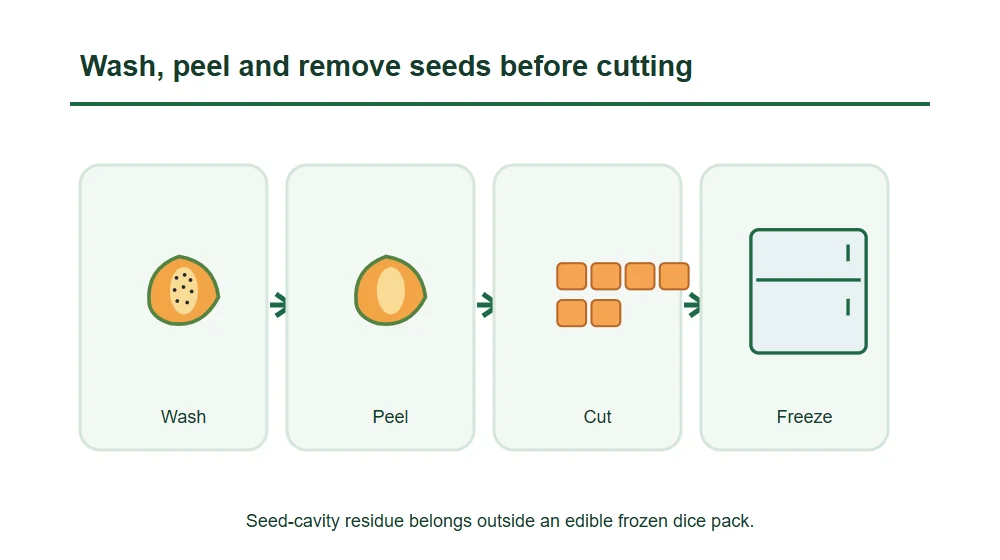
Wash the outside before cutting so a knife does not carry surface soil into the flesh. Work on a clean board and cut the papaya lengthwise. Scoop out the black seeds and remove any loose, pale material from the cavity. Peel the halves, then decide whether you need cubes, slices or puree. A spoon can lift flesh for blending; a knife gives more regular pieces for a tray pack. Keep the pieces reasonably similar in thickness so they freeze and later portion more evenly. A person making a smoothie need not spend time creating presentation dice; a bakery that wants visible fruit will care about the cut face and how much flesh breaks on thawing.
Spread the work into short batches if the fruit is very ripe. Leaving peeled flesh on the counter while trimming several more fruits gives it time to warm and leak juice. Record the prepared weight, including only usable flesh, if you want to compare yield between fruit or suppliers: usable-flesh yield equals prepared flesh mass divided by whole-fruit mass, times 100. A simple example is 720 g of prepared flesh from a 1,000 g whole fruit, or 72%; that is an illustrative kitchen calculation, not a GreenLand performance claim. The fraction changes with fruit size, peel thickness, seed cavity and trim decisions.
For a home pack, choose portions you will use in one operation. A shallow 250 g bag may make sense for a smoothie; a larger puree tub may fit a family dessert. Label each pack with fruit, form, date and any added ingredient. Add sugar, juice or acid only if the recipe calls for it and label that addition: a processor expecting unsweetened papaya should not receive a sweetened syrup pack. Keep plain prepared fruit and formulated fruit separate on the work surface to prevent an accidental change to sweetness or ingredient declaration.
Tray-freeze chunks for separate portions
If you want to remove a small number of pieces later, put drained papaya chunks in a single layer on a clean tray that fits the freezer. Leave space between pieces. Freeze until solid, then transfer them promptly to a freezer-suitable, moisture- and vapour-resistant container, press out excess air where the pack permits, seal and label. Do not leave uncovered pieces for long storage: the tray stage makes separation possible; the final package protects the fruit. The Minnesota Extension guide describes tray and dry fruit packs as general methods and recommends freezing promptly in modest package sizes so cold air can reach the food. Its 8–12 month statement is general best-quality guidance for frozen fruit, not a validated papaya shelf-life figure.
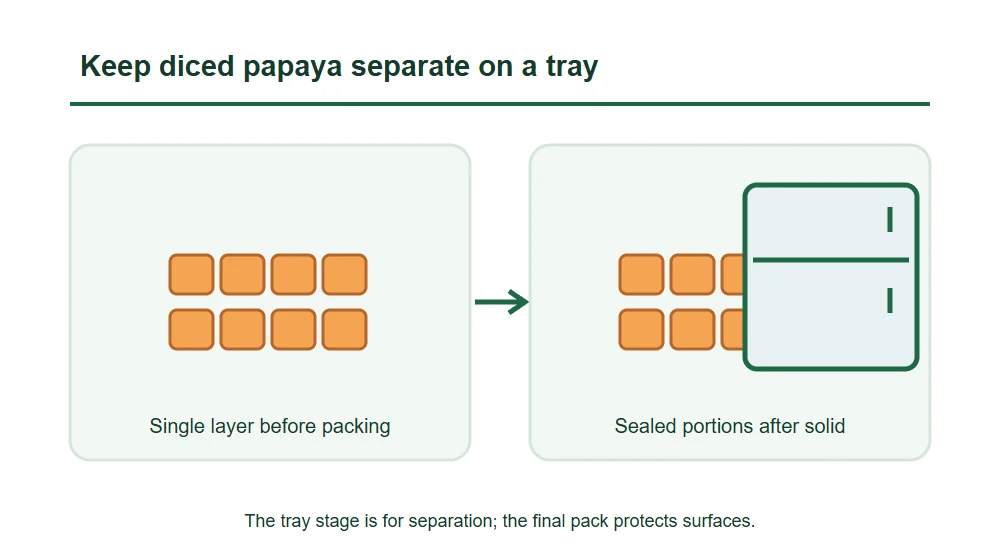
If the cubes stick together after transfer, their surfaces may have been wet, the tray pieces may have touched, or the bag may have warmed during packing. Breakage and clumping are different failures. A clump of otherwise sound fruit may still blend well; bruised or compressed pieces may make a poor visible-fruit topping. Put one small trial pack through the entire path and see whether the portion you need separates without thawing the whole bag. This tells you more than an idealised photograph of freshly frozen dice.
Do not overfill the home freezer with a large mass of warm fruit at once. Divide the preparation, use shallow packs, and leave room for air circulation during initial freezing. A thermometer can help you confirm that the freezer is holding its set point; the Minnesota Extension fruit guidance discusses a freezer at 0°F or lower and notes that freezing stops bacterial growth without sterilising the fruit. This is a household operating condition, not evidence that every piece freezes at an identical rate or that an industrial IQF system is equivalent.
Freeze puree when shape is unimportant
Puree is the most direct route when the later food will be smooth. Put clean, ripe prepared flesh into a blender or food processor and blend to the texture your intended recipe needs. Some drinks tolerate small pulp particles; a fine dessert base may need a smoother sieve. Pour into small freezer-safe containers or moulds with room for expansion, cover, label and freeze. A flexible small portion is convenient for one smoothie; a weighed larger pack is easier when repeating a sauce or dessert formula. The Hawaiʻi home leaflet recommends puree as a way to preserve papaya when whole-fruit freezing would give poor texture.
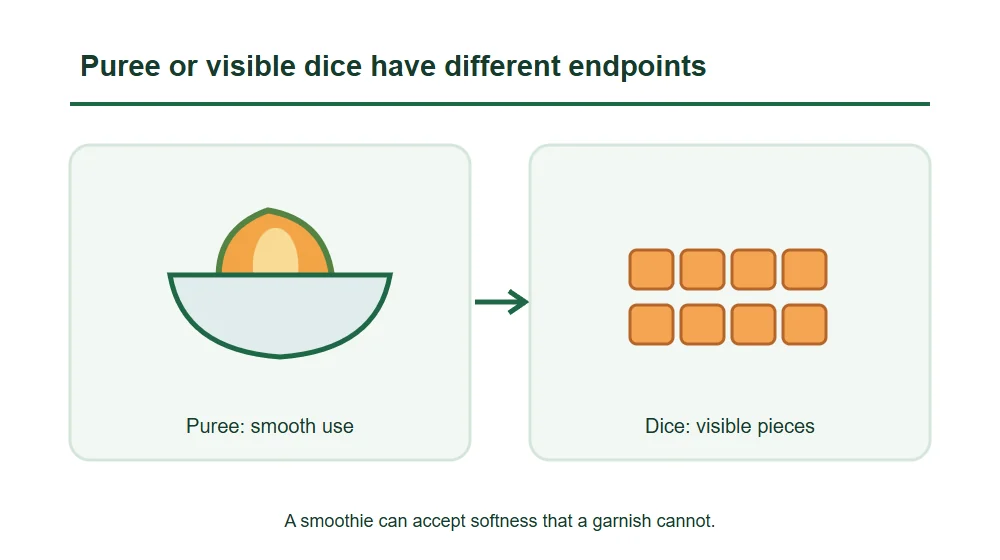
Before freezing all the fruit, taste a small portion of the puree. Blending makes the flavour of an entire fruit uniform, including any bland or off-tasting area that was not noticed in a cube. Keep ingredient additions deliberate. Lemon or another acid can change taste and colour, while sugar can alter sweetness and later recipe balance. Record exactly what went in rather than telling a later cook that the puree is plain. In a commercial formulation, acid and sugar may also affect labelling and process validation; a home mixture should not be described as a finished industrial ingredient.
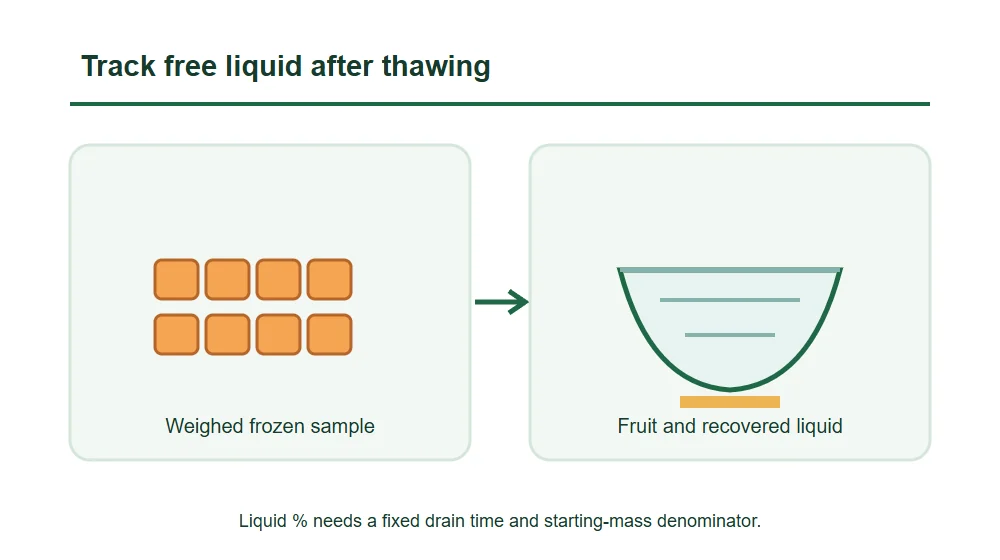
The practical measure after thawing is not whether the puree looks as thick as fresh fruit. It is whether its flavour, colour, free liquid and consistency still suit the dish. Thaw a small portion under refrigeration, stir it once and compare it with a retained fresh portion if available. For a drink, weigh the papaya and the other liquids and note whether the same blend produces the desired viscosity. For a baked filling, look for excess free water before assuming it can replace fresh pulp at the same mass. These are recipe trials: the observations belong to those conditions and cannot be turned into universal thaw-loss or brix specifications.
Thaw and use papaya without promising fresh texture
For a smoothie, add frozen chunks directly to the blender in portions the equipment can handle. This makes the colder, softer-after-thaw behaviour useful: the fruit cools the drink and is broken down before texture becomes a concern. For a cooked sauce, fruit preparation or bakery filling, thaw in the refrigerator if the recipe needs a measured liquid balance, collect the juice, and decide whether the juice belongs in the final formula. Do not discard it automatically; it carries flavour and soluble material. Equally, do not pour it all into a pastry filling if that would make the crust wet. Record the mass of fruit and the mass of liquid recovered when comparing two pack styles.
The NCHFP thawing guidance instructs safe defrosting rather than leaving food at room temperature. Treat thawed papaya as a perishable prepared food. A cold fruit cup can use partly thawed pieces if the recipe accepts a softer bite, but a thawed plain cube is a poor substitute for freshly cut papaya where shape and snap are central. That is a quality judgment about the dish, not a claim that freezing made the fruit unsafe. Good packaging reduces drying and freezer odours; it cannot reconstruct the original tissue.
If a dessert uses gelatin, verify the exact formulation. The Hawaiʻi papaya leaflet notes that fresh papaya contains a protein-splitting enzyme that can interfere with gelatin desserts. It does not provide a universal heat-treatment condition for every papaya ingredient. A frozen product may be raw, blanched or otherwise processed according to its actual specification. Never assume that simply freezing the fruit has disabled that enzyme. For a gelatin dessert trial, ask the supplier about heat history or test the intended formulation with the actual batch and follow the dessert manufacturer's instructions.
The same separation of questions helps with dairy desserts. Papaya flavour may suit yogurt or an ice-cream base, but acidity, enzyme activity, sweetness and fruit water each affect a different part of the recipe. Fold a thawed puree into a small, weighed portion of the intended base and compare it after the same chilling or freezing cycle as a control without fruit. Watch for watery pockets and graininess as well as flavour. If a finished sample separates, changing only the papaya cube size is unlikely to solve a formulation problem. This is a development check for the actual dairy system, not a claim that all frozen papaya reacts alike.
A published syrup-dice process is a separate formulation
One Hawaiʻi tropical-fruit processing bulletin describes a frozen papaya-in-syrup formula with 60 parts diced fruit, 39.82 parts 40°Brix syrup and 0.18 part citric acid. It starts from mature, firm fruit, peeled, halved, deseeded and cut into one-inch dice. The historical procedure also specifies container filling, vacuum closure, quick-freezing and storage at 0°F; the ingredient ratio alone is not an executable process. This is a historical formulated-product example. It is useful because it shows how a processor defined fruit size, sugar phase and acid together. It is not a home dry-pack method, a modern GreenLand specification, or proof that plain frozen papaya chunks thaw with the same texture as syrup-protected dice.
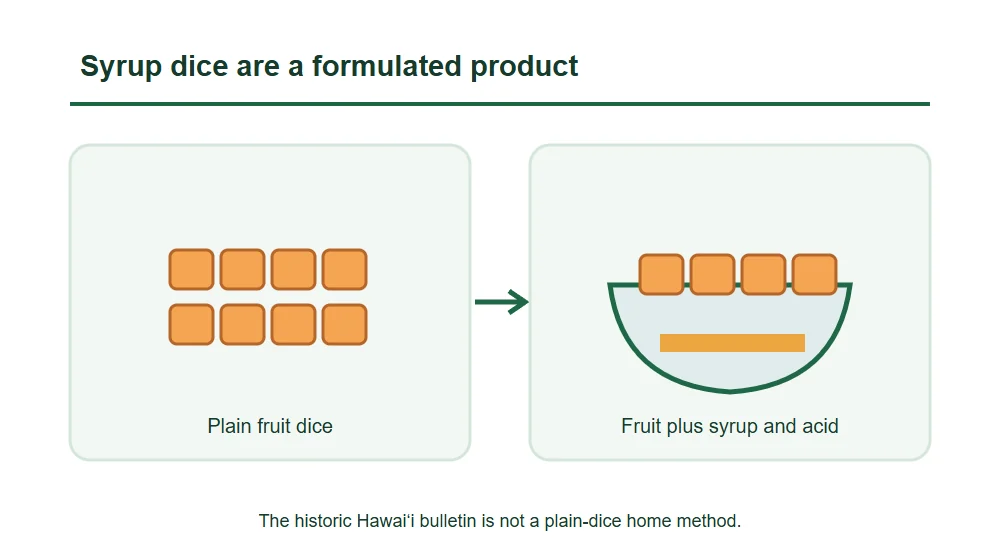
If you compare that route with unsweetened IQF-style fruit, compare like with like at the point of use. A 100 g scoop of syrup pack is not 100 g of papaya flesh; the fruit share in that cited formula is 60 parts by mass. The added syrup will also change a smoothie or filling's sweetness and liquid balance. A processor could make two small batches with equal actual papaya-flesh mass, then adjust the rest of the recipe and taste blindly after identical handling. Record the version, exact ingredient weights and intended label before deciding which form works. Do not present a trial's sensory outcome as a regulatory or safety validation.
For a food manufacturer considering frozen dice, write down the properties it actually needs: unsweetened or formulated, target cut, seed and membrane tolerance, colour, pack size, and whether the pieces will be blended, baked or displayed. The commercial page shows papaya dice and a size reference, but a photograph cannot establish measured cut distribution, ripeness, microbial condition or a thermal history. We can discuss a product sample and agreed specification; we should not promise a universal 40°Brix option or claim our routine production follows the bulletin without an actual product record.
How to trial frozen papaya in a recipe
Choose one specific recipe and write its endpoint before you open the test packs. For a smoothie, the endpoint could be drink thickness, perceived papaya flavour and whether seed or fibre particles remain after a fixed blending cycle. For a fruit preparation, it could be visible piece survival and the amount of free liquid after mixing. For a baked filling, it could be water left under the finished pastry after cooling. A frozen cube that fails the topping test may be excellent for blending, so an undifferentiated pass/fail label wastes useful information.
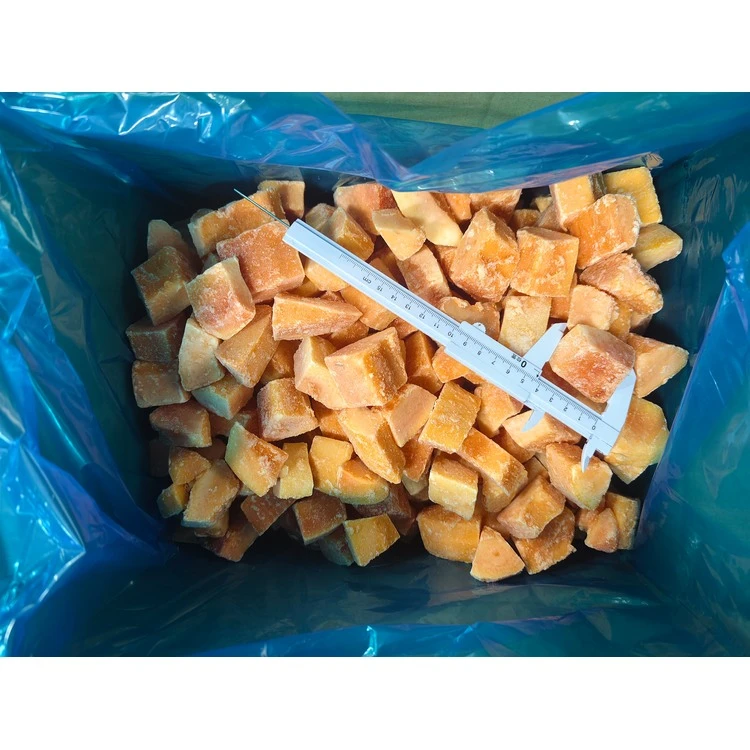
Larger frozen papaya pieces with a caliper in a blue lined carton.
Make a small comparison with a known starting mass, such as 500 g of each candidate form. This is a proposed test amount, not a legal sampling rule. Weigh the still-frozen sample, note pack temperature and visible ice or clumping, then handle each sample by the same method. If thawing is required, use a labelled covered container under refrigeration, separate and weigh drained liquid, and calculate released liquid as drained mass divided by initial frozen sample mass, times 100. For example, 45 g collected from a 500 g sample is 9% by this defined procedure. The illustrative 9% is not a company result or a threshold; it is meaningless without thaw time, drain method and fruit cut.
Use the customer's equipment for the final judgement. A blender with a strong motor and a narrow jar may process hard cubes differently from a small domestic machine. A fruit-preparation mixer may crush pieces that survive hand stirring. Record equipment, batch size, mixing time, temperature, fruit-to-other-ingredient ratio and the observed defect. When two samples differ, repeat the preparation before assigning the cause to the supplier: ripeness, pack history, cut and recipe all matter. For an inquiry, our role is to confirm the requested frozen papaya form and specification against what can actually be supplied and documented, and to keep any deviation or lot release tied to those agreed records rather than to a general article.
Discuss the frozen ingredient for your production
Frozen Papaya
Fruit preparations and recipe development.
Confirm for your order: Maturity, offered cut and ingredient statement; thawing performance, intended use and pack.
View product & supply detailsFor a commercial trial, send your required form, application, pack, quantity and destination. We can discuss the offered sample and the order specification with you.
Request Specifications & QuoteQuestions about whole fruit, ripeness and storage
Can I freeze a whole papaya? The Hawaiʻi home leaflet advises against freezing it whole because flavour and texture deteriorate. Prepare sound ripe flesh as portions or puree for a later use. If a seller offers a whole frozen papaya, judge that specific product in the intended recipe; the home warning is not a universal ban on any commercial form.
Does papaya ripen after it has been frozen? Freezing is a preservation step, not a substitute for choosing edible-ripe fruit. Select ripeness for the final dish before preparing the pack. A green papaya intended for a savoury recipe is a different material from orange dessert flesh.
How long can I keep home-frozen papaya? Minnesota Extension gives 8–12 months as general best-quality guidance for frozen fresh fruit when correctly packaged and held cold. Use the labelled pack while quality is good; that broad range is not a papaya-specific or GreenLand commercial shelf-life claim. Discard a pack if it has evidence of spoilage or unsafe handling.
Can I use thawed chunks in a salad? You can try a small, partly thawed portion, but expect a softer piece and some released liquid. Where a crisp, neat fruit cube is essential, fresh papaya is the better starting form. For smoothies, sauces and purees, the texture change is far less troublesome.
Place frozen papaya in a measured drink rather than judging it as fresh fruit.
Consider other dishes that tolerate softened fruit.
Compare fruit ingredient forms for a wider portfolio.
Source frozen papaya with GreenLand-food
GreenLand-food is a professional frozen papaya supplier and manufacturer in China, providing factory-direct wholesale supply for importers, food manufacturers, foodservice distributors and private-label programs.
Send us the product form, specification, packing, quantity, application, destination, private-label needs and requested documents.