


How to Cook Chayote Squash: Cuts, Timing and Frozen-Ingredient Uses
Oct 19, 2026
Leave a message
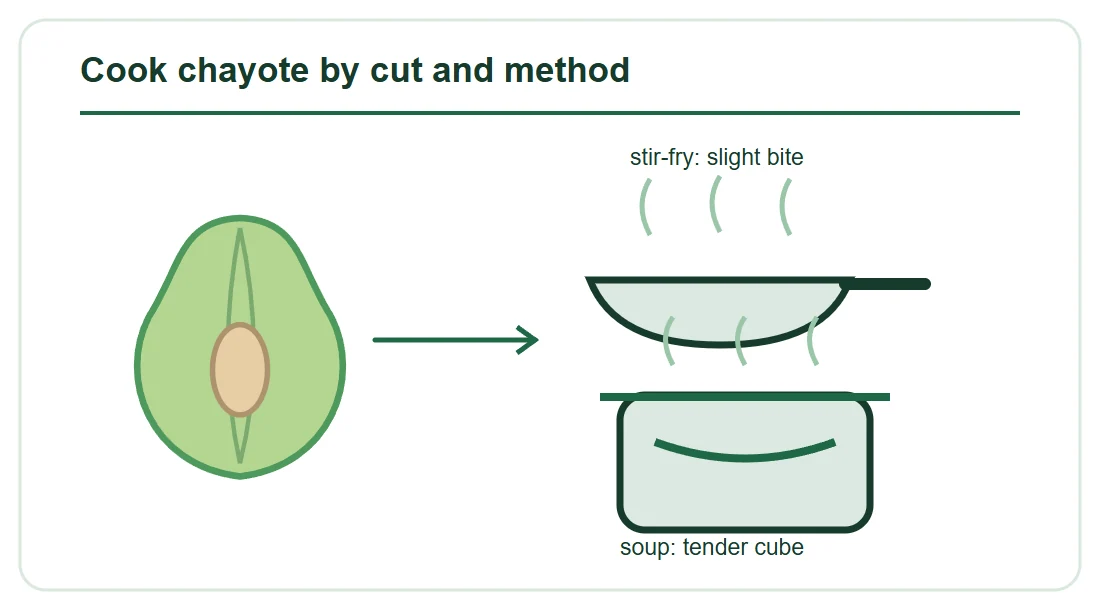
Cubes can simmer in broth until a fork enters without resistance but the edges still hold. Frozen chayote needs its own trial because the water it releases changes the pan or sauce. A time printed for a fresh home recipe is a starting example, not a universal setting for every frozen cut or commercial line.
Chayote is also sold as vegetable pear or mirliton. Its restrained flavor is useful when a dish relies on aromatics, broth or sauce. The point is to make the flesh tender enough for the intended bite without cooking away its shape. GreenLand-food's frozen chayote category shows peeled strips, a useful commercial form for cooked applications. This guide gives the kitchen steps first, then shows how to judge that frozen cut in a repeatable product test.
- Cut chayote for the dish: thin strips for hot pans, dice for broth and slices for trays.
- Cook to the intended bite; a fresh recipe minute count is only a method-specific example.
- Test frozen strips for water release in the real recipe.
Choose the dish before cutting the chayote
The first decision is whether chayote should remain visible and slightly crisp or soften into a larger dish. A stir-fry benefits from thin, fairly even strips because they heat quickly and pick up a light coating of sauce. Soup can use spoon-sized dice or short strips that fit the bowl. A gratin or casserole can take a larger cut if it is pre-cooked or has enough time in the oven. Those choices explain why a single answer to "how long to cook chayote?" is not very useful without a cut and method.
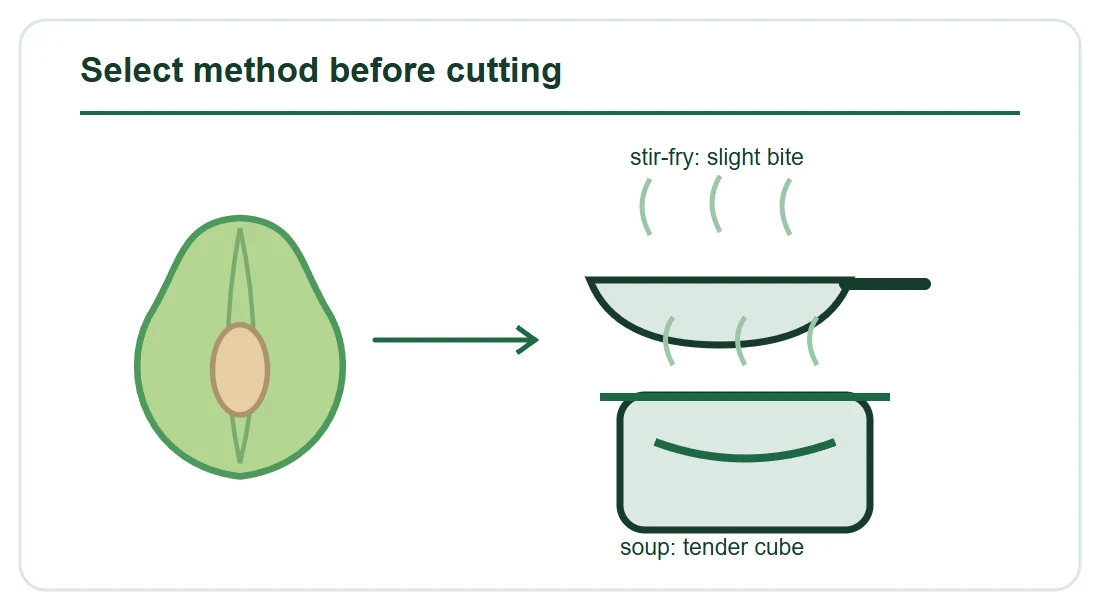
Select method before cutting. Original schematic illustration.
The National Center for Home Food Preservation describes chayote as Sechium edule with a crisp raw texture and mild flavor. It notes that peeled cubes with the central seed area removed can be steamed, stir-fried, baked, mashed or used in casseroles. A University of Hawaii vegetable cookbook gives a simple household benchmark for peeled, seeded dice or slices in boiling water: cook to tender but not mushy. These sources are cooking context, not a frozen factory specification.
If the dish depends on a firm bite, plan to stop earlier than you would for a purée. A wok side dish can retain slight resistance at the center. A smooth soup or mashed filling can go further. Decide the endpoint with the diner in mind and record it in sensory terms: the strip bends but does not collapse, the cube can be pierced, or the flesh mashes without hard centers. That wording is more transferable across kitchens than an isolated minute count.
Chayote absorbs surrounding flavors, so seasonings change the impression of doneness. A sharp ginger and garlic stir-fry can feel lively with a firmer strip; a mild cream sauce may expose a watery or underseasoned piece. Taste the flesh, not only the sauce. If the final dish is frozen and reheated, include that reheating step in the trial because an attractive first cook may become too soft after a second heat cycle.
Wash, peel and remove the center seed
Rinse the whole fruit before the knife enters, even when you plan to peel it. Set it on a stable board, trim the ends if needed, then halve it along its long axis. The center contains one broad, soft seed and a denser seed area. Remove that portion when the recipe calls for a uniform strip or cube. A small tender seed may be edible in some home preparations, but a commercial cut needs one consistent rule rather than random seed pieces among finished portions.
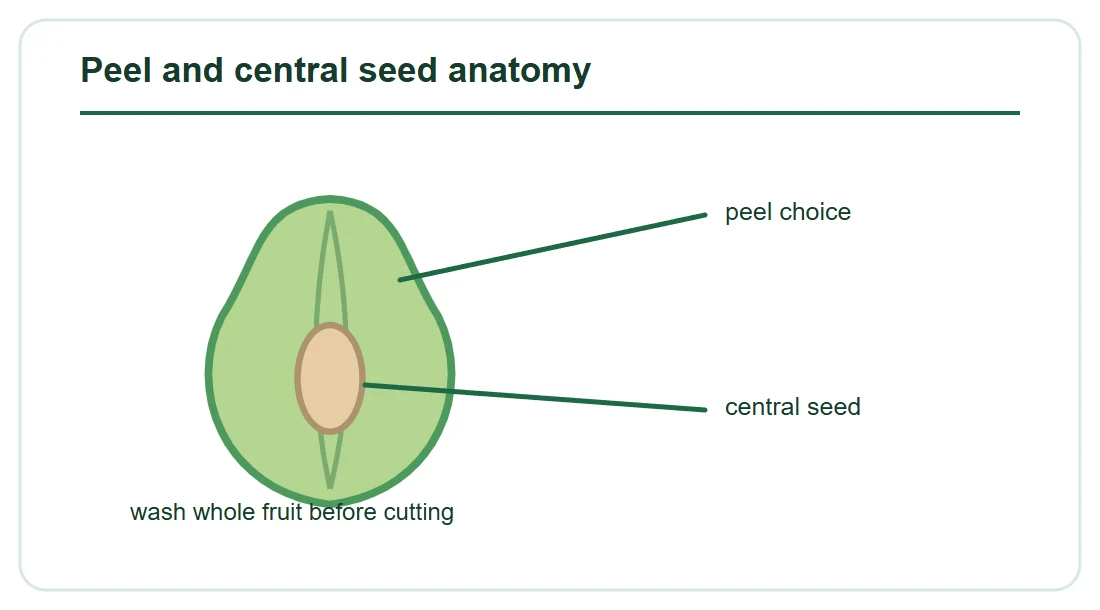
Peel and central seed anatomy. Original schematic illustration.
Peeling is a texture decision. Young, thin skin can be edible; many cooks peel to keep a smooth, pale, uniform result. An older or tougher peel can remain noticeable after a brief sauté. For a mixed vegetable stir-fry, leaving attractive thin skin may be acceptable after a trial. For a light soup, peeled flesh makes the result easier to control visually. Describe the actual cut ordered, because "chayote strips" does not tell a customer whether peel or seed remnants are present.
The NCHFP advises gloves when peeling and handling chayote because the sap that appears during cutting can irritate skin. A cook can also work under running water if that fits the station, but the core point is to protect skin and keep the board and knife controlled. After peeling, rinse away surface sap if it interferes with handling, then cut to the intended shape. Keep the pieces similar in thickness; an uneven mixture produces soft thin strips beside hard thick ones.
For a home stir-fry, quarter the peeled halves and remove the seed area before slicing into matchsticks or thin half-moons. For soup, turn the halves into even cubes or short strips that will sit on a spoon. For roasting, cut slightly larger pieces because thin strips can dry or burn at the edges before the center browns. The exact dimension is less important than uniformity and the method that follows.
Match strips, dice or slices to the heat path
Thin strips are the most flexible quick-cook shape. Their surface area is large enough to take a little seasoning, and their narrow center heats promptly. They can, however, shed visible water into a crowded pan. Start with a hot surface, cook in a batch the pan can accommodate, and leave room for steam to escape. A thick sauce added too early can turn the pan into a simmer and make strips softer than planned.
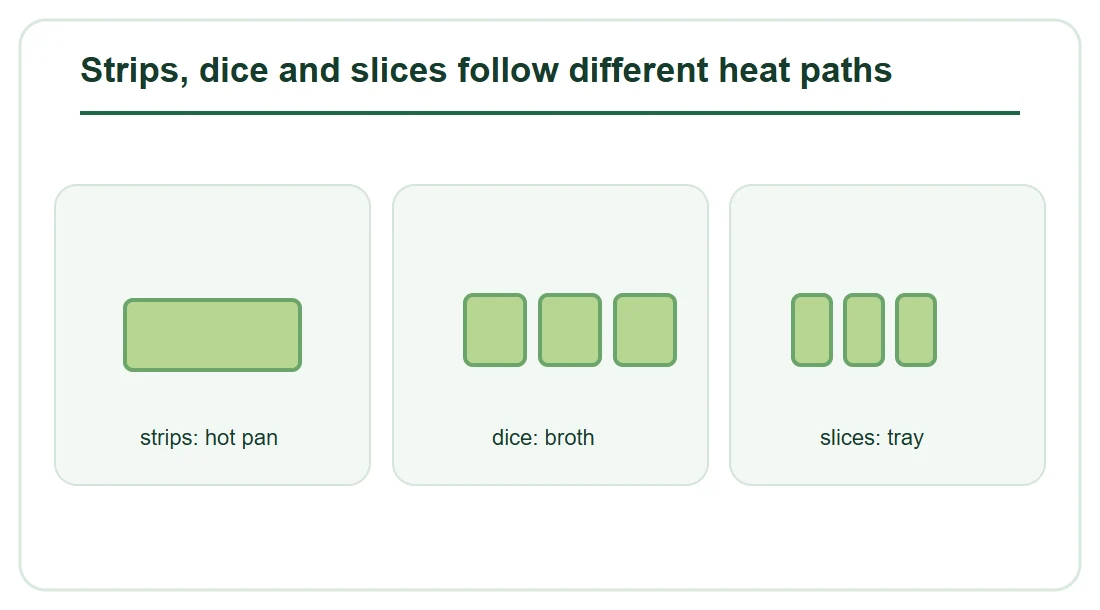
Strips, dice and slices follow different heat paths. Original schematic illustration.
Dice suit broth, stews and casseroles because they distribute evenly and survive stirring. Put them in while there is still time for the centers to soften, then check one of the larger pieces. If the soup will be held hot, remove the pot from strong heat once the chayote is near its desired bite; the holding period continues to soften it. A frozen dice can also lower the broth temperature, so judge the simmer after addition rather than using a timer started before the pot returns to heat.
Slices can be used for shallow sautéing or a tray bake. Cut thickness determines whether the surface colors before the center softens. A thin slice in a hot pan cooks differently from a large wedge in a full oven tray. If a recipe specifies a slice, do not quietly buy long frozen strips and expect the same plate appearance. They may have the same botanical ingredient yet look and behave differently after cooking.
GreenLand's page photographs show pale, peeled chayote strips. They are real cut-product views, not finished stir-fry photographs. Their value here is that a buyer can see the offered shape and compare it with a recipe that calls for strips. A receiving team should confirm the delivered sample and actual dimension with GreenLand-food; the category image alone does not establish an order tolerance or a cooked result.
Stir fry chayote while it still holds its shape
Set out the ingredients before heating the pan. Cut fresh chayote into consistent thin strips, prepare the aromatics, and mix any sauce so the pan does not sit idle while you assemble it. Heat a wok or broad skillet, add oil and aromatics, then add a modest load of chayote. Turn the pieces so their surfaces contact the heat and stir until they are tender with a slight bite. Add sauce near the end, toss to coat, and serve promptly. If the pan fills with liquid, pause additions, increase exposed surface by cooking in smaller batches, and let the water reduce before adding more sauce.
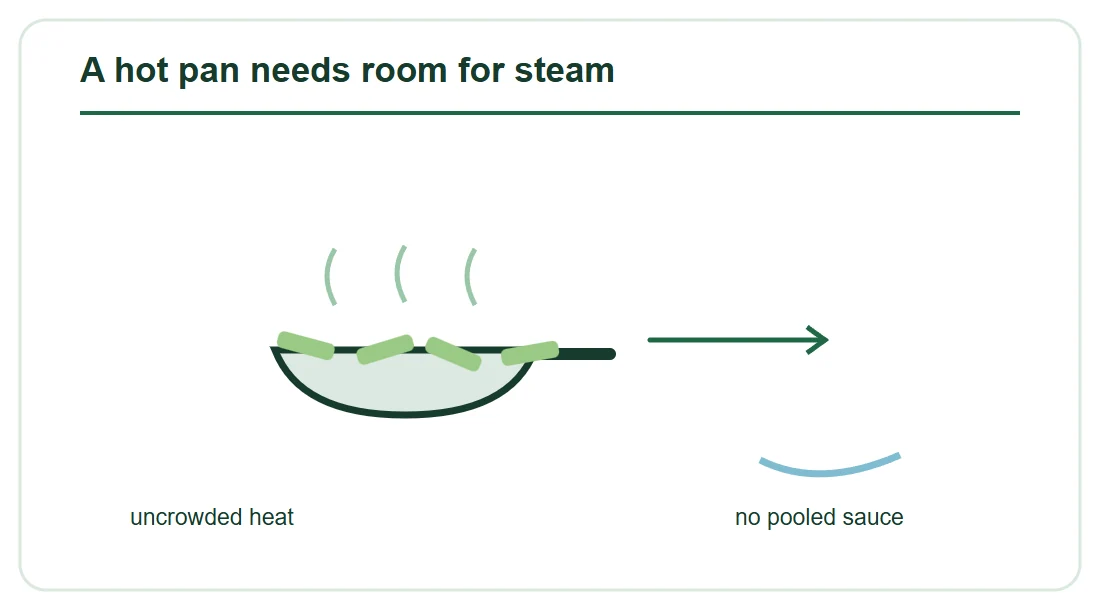
A hot pan needs room for steam. Original schematic illustration.
- Wash the fruit, peel if the recipe needs a smooth pale result, remove the central seed area and slice the flesh into even thin strips.
- Heat a broad pan with oil and the prepared aromatics. Add only enough strips to leave exposed pan surface for steam to escape.
- Turn the strips until a large representative piece is hot and tender with a slight bite. If liquid pools, finish a smaller batch before adding the sauce.
- Add the sauce near the end, toss to coat and serve. For frozen strips, repeat the trial from frozen and confirm the supplier's required cooking treatment.
Two opened recipe sources show why cook times have context. Food Network's chayote stir-fry uses thin slices and a brief high-heat stir with carrot and onion, then a small amount of stock. Second Harvest's recipe cooks until fork-tender but still slightly crisp. These are examples of fresh household preparation, with different ingredients and pan loads; their listed minutes should not be copied onto an industrial kettle or a frozen-strip SKU. The portable endpoint is the controlled bite and the absence of a pooled watery sauce.
For a frozen strip, start by testing a weighed portion directly from frozen in the same pan and sauce. If the strip is supplied as an ingredient requiring cooking, follow that instruction. Watch for the temperature drop after addition. Let the pieces separate before stirring aggressively; rough handling can break softened edges. If direct addition floods the pan, try a smaller batch or a planned drain step in a second trial. Compare cooked yield and appearance under the method the customer can actually run at scale.
Taste a piece from the center of the pan and one from the edge. A small sample can look evenly cooked while the bulk has cold or soft zones. A stir-fry is finished when the largest representative pieces reach the desired texture, the sauce coats them and the pan has not become a bowl of dilution. Record those cues with the cut and pan load so a later cook can reproduce the result.
Steam, simmer or roast to a clear endpoint
Steaming suits a side dish that needs clean chayote flavor and little added fat. Cut into similar pieces, place above actively steaming water and check the largest piece periodically. Stop when a fork enters with the resistance wanted for service. Drain condensation before adding dressing or sauce. If the pieces will go into a second hot preparation, leave them slightly firmer at the steaming stage and judge the final endpoint after that second heat.
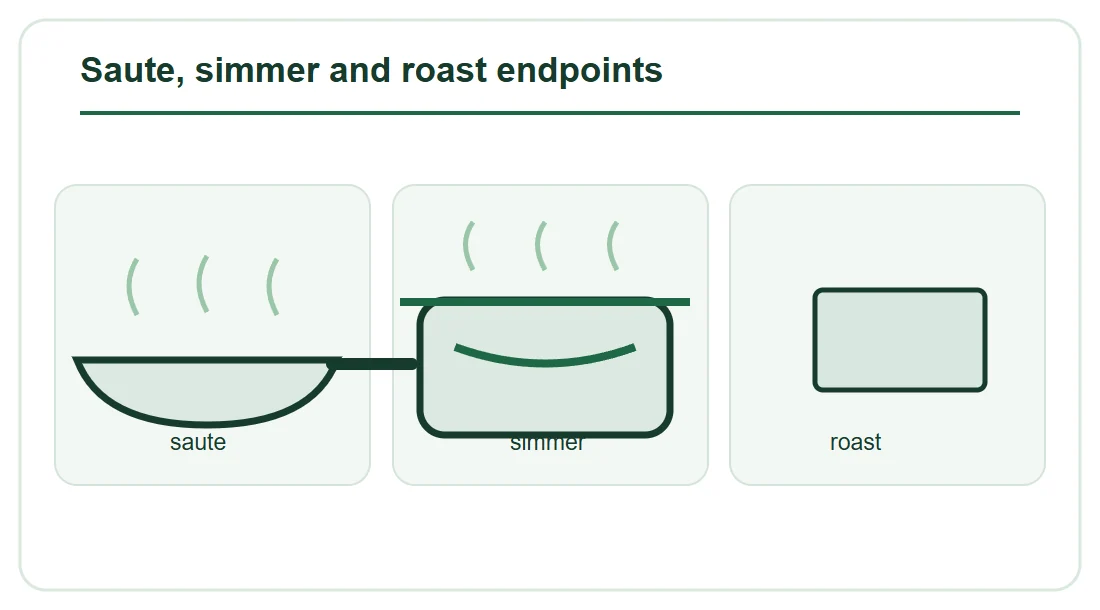
Saute, simmer and roast endpoints. Original schematic illustration.
For soup, bring broth to a steady simmer, add firm chayote dice or strips with enough time to cook through, then add fragile greens or herbs later. This order keeps the chayote from being raw while the greens turn dull. Taste the broth after the chayote cooks; the mild flesh takes seasoning but can also release water and dilute a tightly balanced soup. Adjust seasoning after the addition, not only before it. In a held soup, check texture at the expected service time as well as immediately after cooking.
Roasting is useful when browned edges matter, but chayote is moist. Dry cut surfaces, give the pieces space on a hot tray and avoid piling them. A thin strip on an overcrowded tray steams. A larger cube has more time to develop edge color before its center collapses. Utah State University Extension publishes illustrative summer-squash cooking ranges and a chayote sauté example; those numbers vary by form and method. Use them only as context for a fresh home trial, and finish according to the observed cut rather than assuming an oven or pan is identical to the source's.
University of Hawaii's older cookbook also describes a peeled, seeded, diced chayote cooked until tender but not mushy. That phrase is an unusually useful endpoint because it tells the cook what failure looks like. For a purée, the target changes: complete softness may be welcome. Write the intended endpoint on the recipe sheet instead of arguing over one universal chayote time.
Adapt a frozen chayote cut for hot dishes
Frozen peeled strips do not begin with the same crisp structure as a fresh cut. They can work well in cooked vegetable blends, soups or ready meals, but the kitchen must account for the water that emerges as they heat. Decide whether direct-from-frozen addition, a controlled thaw and drain, or a short pre-cook best fits the recipe. Compare the finished dish, not merely the appearance of a cold bag.
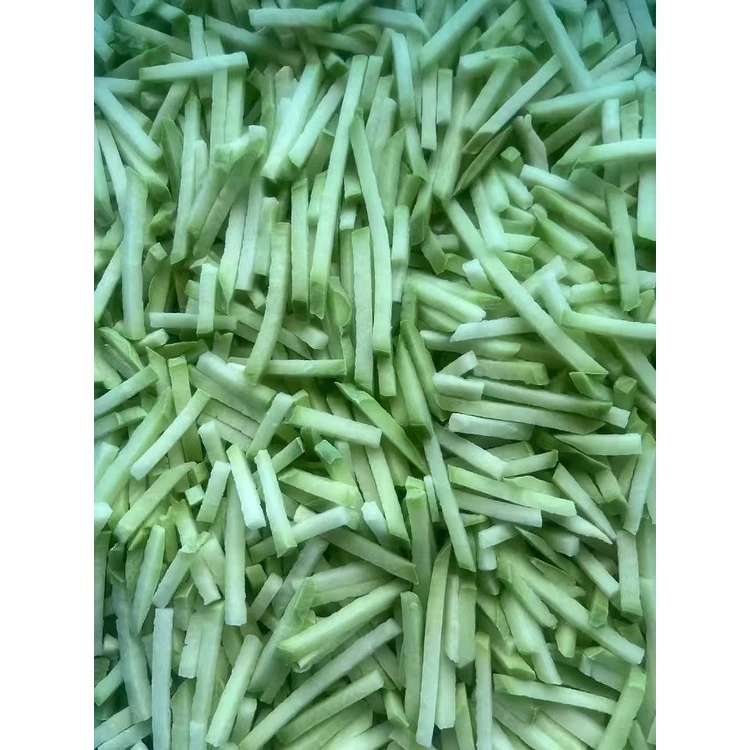
Cut chayote strips in a bulk product sample.
Direct addition can simplify handling in a hot soup. Add a measured amount while the broth is simmering, wait for the system to return to its normal heat, and check the thickest strip before service. The broth can absorb the released water more gracefully than a dry pan, although the seasoning may need adjustment. If the soup relies on a concentrated base, calculate that contribution during recipe development rather than compensating randomly at service.
A stir-fry has less tolerance for free liquid. Test a moderate frozen batch in a sufficiently hot pan. If the pan temperature falls and the pieces steam in their own water, reduce the load or use a planned drain. Do not promise that every frozen strip will behave like a raw julienne; ask whether the final product needs crispness, a tender bite or simply a recognizable pale vegetable. For a frozen ready meal that will be reheated, choose the cut and first-cook endpoint with the second cook in mind.
Record how the product was handled between freezer and pan. Thawing overnight in a deep container produces a different water distribution from direct addition. A careless ambient hold can also create a food-safety problem. Use the supplier's handling directions and the customer's food-safety plan, and measure the method in the actual production setting. A good bench result is useful only if its handling can be repeated.
Discuss the frozen ingredient for your production
Frozen Chayote
Cooked vegetable dishes and prepared meals.
Confirm for your order: Offered cut and seed-core removal; cooked texture, draining and pack.
View product & supply detailsFor a commercial trial, send your required form, application, pack, quantity and destination. We can discuss the offered sample and the order specification with you.
Request Specifications & QuoteControl draining and sauce dilution
Chayote's high moisture is visible as a cooking issue before it becomes a purchasing issue. In a stir-fry, pooled liquid lowers surface temperature and prevents the light browning a cook expects. In a cream sauce, released water thins the coating. In soup, it may simply become part of the broth, but a strong stock can taste weaker. The correction depends on the dish: smaller pan loads, a drain step, a more concentrated base or a different addition point. None is automatically right for every application.
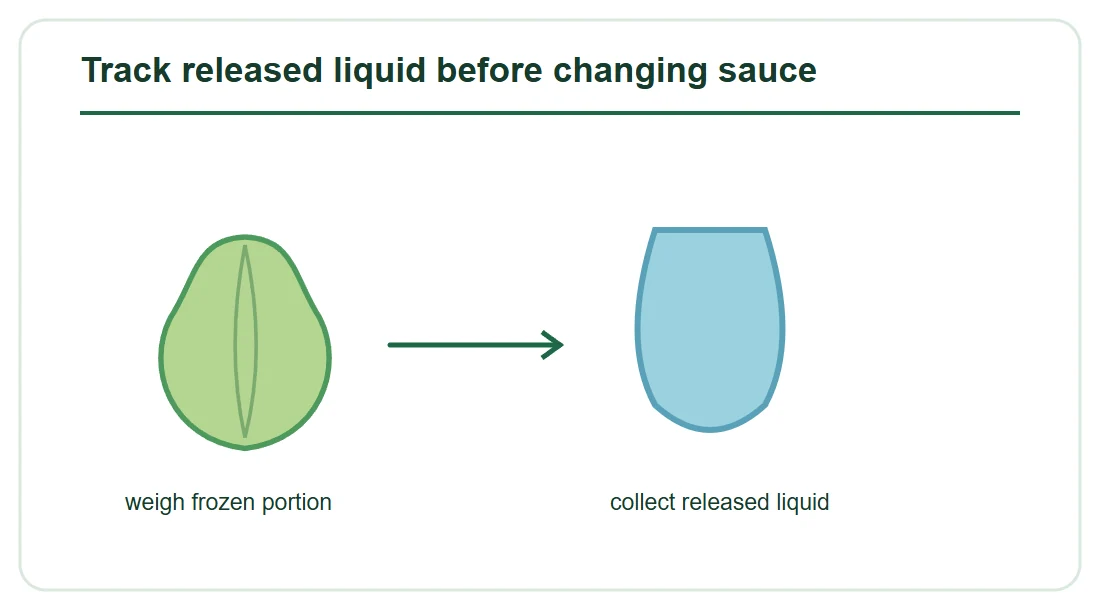
Track released liquid before changing sauce. Original schematic illustration.
Make a small mass-balance check during the recipe trial. Weigh a frozen portion, cook it under the intended method, and weigh the drained solids and free liquid separately if the process permits. Photograph the sauce or pan at the intended serving point. Then repeat with the proposed corrective step. The numbers are local observations, not an assumed universal drip-loss specification. They reveal whether the problem is ingredient water, a crowded pan, a long hot hold or an overly thin sauce from the outset.
Avoid draining without considering flavor and yield. A drain may remove soluble flavor and reduce the amount of chayote that reaches each portion. If the final dish has a sauce that can incorporate the juice, a recipe adjustment may preserve yield better. If the appearance depends on dry, separate strips, a controlled drain may be essential. Evaluate the dish at the customer's service or retail endpoint, including reheating where applicable.
The product form matters too. Long strips may trap more liquid between pieces than a uniform dice, and fines may disappear into the sauce. Compare two candidate cuts in the same recipe before adding a complicated process step. This is the main reason to define the frozen ingredient with an approved sample rather than a broad name such as "frozen chayote."
Trial a bulk cut against the actual recipe
For a food manufacturer, a useful sample test begins with the dish and its equipment. Record the offered cut, whether peel and seed are removed, the frozen condition, portion weight and intended addition point. Run the normal cook. Inspect pieces from several locations, not only the top of the kettle or tray. Observe free liquid, intact-piece share, bite and flavor after any hot hold or reheating. A small kitchen pan can establish a candidate; a line trial confirms that the result survives the real load and mixing action.
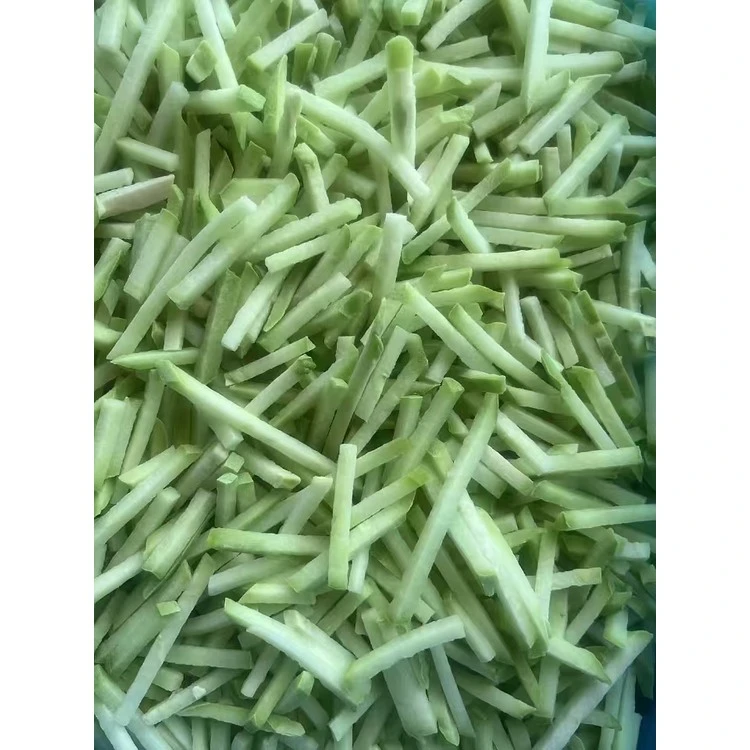
Close view of cut chayote strips.
GreenLand-food can discuss the cut, packing, availability and relevant order documents after the customer defines the application. The buyer should request a representative product sample and confirm the exact treatment and handling instructions for that offer. The category page shows peeled strips but does not set an invisible default for every quotation. Do not assume a thickness, cooking status or shelf-life limit from a marketing image.
Keep the purchasing note concise: "peeled, seed-area-removed frozen chayote strips for cooked stir-fry component," followed by the agreed cut range, visible-defect limits, packing and sample reference. If the target is soup dice, specify that instead. The order should also identify the destination and any private-label or document needs, but those administrative details should not crowd out the core sensory question: does this cut still work after the planned cook?
If a sample fails, describe the failure so the next trial can change one variable. "Too wet" might mean high free liquid, too much product in the pan, or sauce added before evaporation. "Too soft" might mean thin pieces, a long hold or a second reheating. A documented observation points toward a cut or process adjustment. A generic rejection does not help either the buyer or GreenLand-food make the next sample better.
For a central kitchen serving several meals, keep a separate evaluation for each preparation. The same strip may be acceptable in a broth, marginal in a sautéed side and unsuitable as a crisp raw substitute. Approval for one recipe should identify its cook and hold conditions. If a new menu needs a different cut or stronger texture, open a new trial rather than silently extending the first approval.
Questions about skin, seed and timing
Do you have to peel chayote before cooking? No universal rule applies. Tender skin can be edible, but peeling gives a smoother and more uniform result. Decide from the recipe and the fruit's condition; identify peeled or skin-on status explicitly for a frozen commercial cut.
Should the seed be removed? The central seed can be tender in some home preparations, but removing the seed area makes strips or dice more uniform. If a frozen ingredient is for an industrial recipe, specify whether any seed or core piece is allowed.
How long do you cook chayote? The answer depends on cut, fresh or frozen state, heat method and desired bite. Published fresh home examples range from short hot stir-frying to longer boiling or steaming. Start with a source that matches your method, then stop at an observed endpoint such as fork-tender but still distinct; validate a frozen cut in the actual recipe.
Can frozen chayote go straight into a pan or soup? It can be tested by direct addition when the supplied product's handling instructions permit it. A hot soup often accommodates released moisture; a stir-fry may need smaller batches or a drain. Cook according to the product and final-dish requirements and judge the finished result.
Compare pan-load and moisture decisions for other frozen cuts.
Choose complementary vegetables for a chayote soup.
Review the wider frozen-ingredient quality context.
Source frozen chayote with GreenLand-food
GreenLand-food is a professional frozen chayote supplier and manufacturer in China, providing factory-direct wholesale supply for importers, food manufacturers, foodservice distributors and private-label programs.
Send us the product form, specification, packing, quantity, application, destination, private-label needs and requested documents.