


How Do You Bake a Frozen Apple Pie? From-Freezer Time and Temperature
Sep 01, 2026
Leave a message
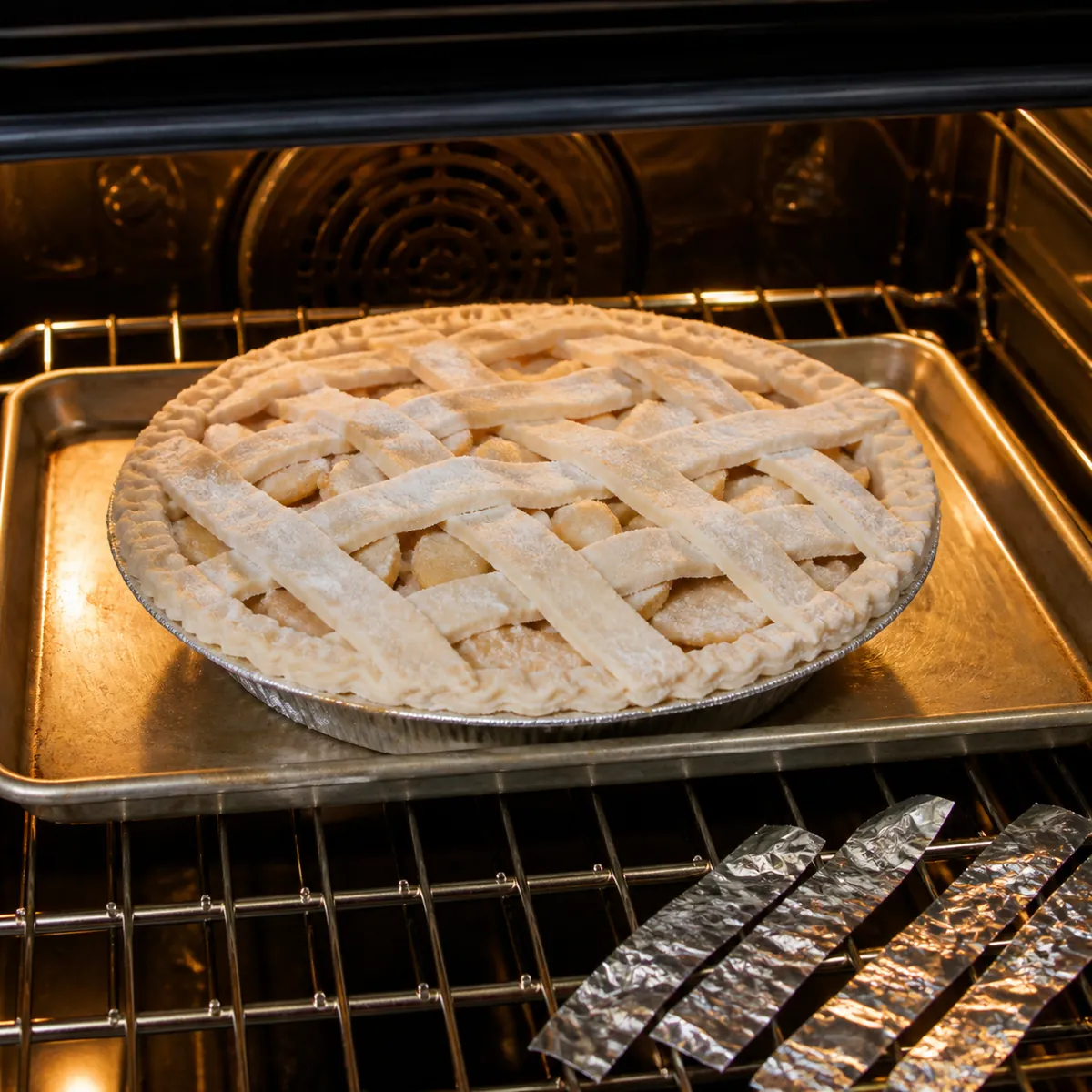
Bake an unbaked pie from frozen and judge the center
A useful starting pattern for a home-tested unbaked pie is a fully preheated oven around 425°F/220°C for the first 15–25 minutes, followed by about 375°F/190°C until the crust is golden, filling bubbles through center vents and a thin knife meets tender apples. Many pies need roughly another 40–60 minutes, but a deep, dense or heavily loaded pie can take longer.
This is a working framework, not a universal instruction. Follow the product label or the recipe that was used to freeze the pie. If the pie was fully baked before freezing, reheat it rather than using the raw-pie schedule. If only the filling is frozen, assemble and bake according to the filling and crust formula.
Key takeaways
First identify what is actually frozen
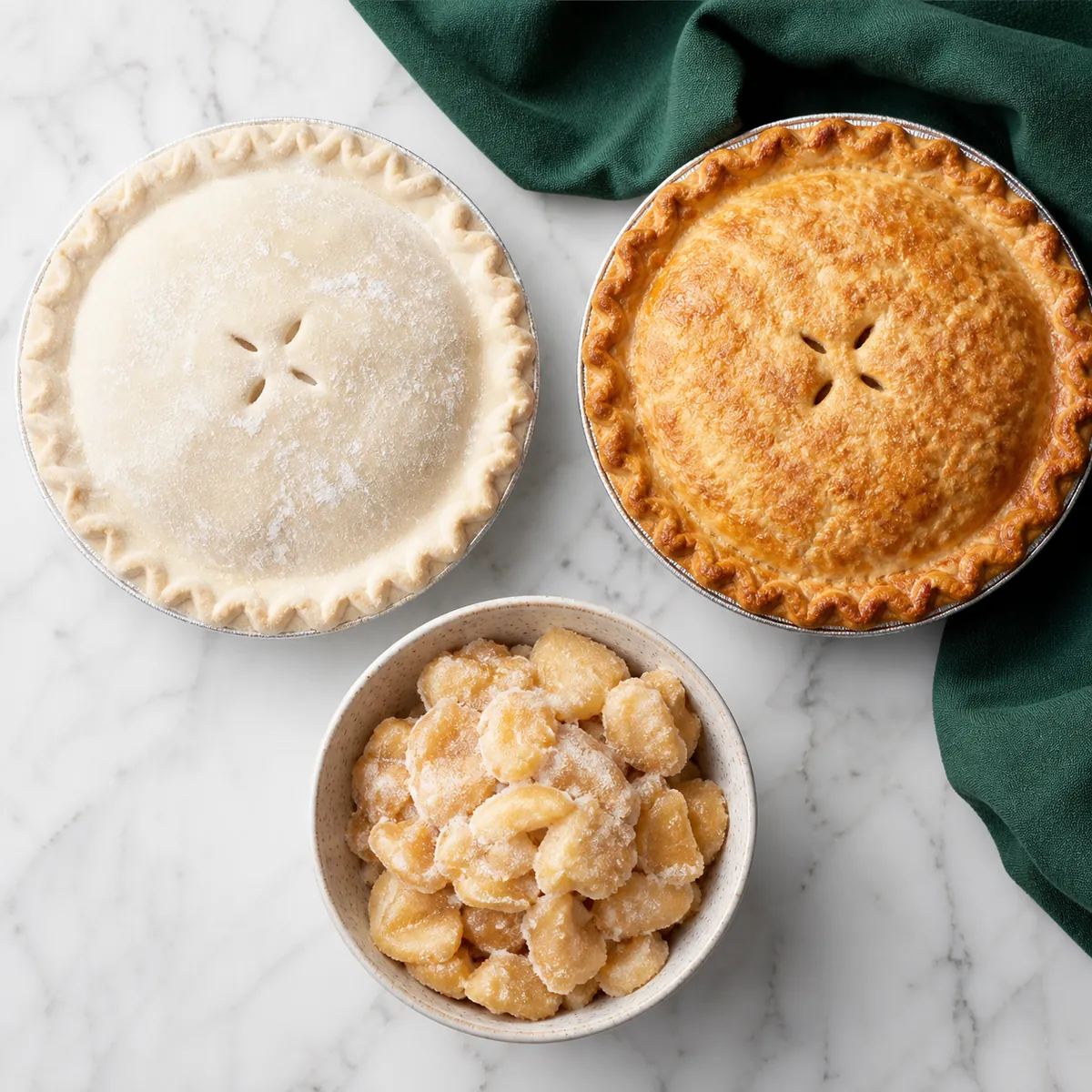
"Frozen apple pie" can describe three products with different heat requirements. Check the label, recipe record and visible state before turning on the oven.
| Frozen item | How it looks | Correct task | Main endpoint |
|---|---|---|---|
| Unbaked frozen pie | Pale raw dough; frozen raw filling | Bake through from frozen using a validated staged profile | Golden crust plus sustained center bubbling and tender fruit |
| Fully baked frozen pie | Already browned crust; filling previously cooked | Reheat and re-crisp without overbaking | Hot center and refreshed crust |
| Frozen filling only | Fruit mixture without crust | Thaw or use frozen as the specific filling formula directs, then assemble | The assembled pie's validated crust and filling endpoints |
Do not guess from the word "homemade." A pie may have been frozen raw, par-baked or fully baked. Mark freezer packages clearly. For purchased pies, the manufacturer's directions should override a general online schedule because the manufacturer knows the product mass, formula, pan and intended state.

The filling starts with the frozen apple form
Slice thickness, chunk size, cultivar firmness, treatment and storage history influence juice release and tenderness. A pie tested with medium slices may not behave the same with small dice or thick wedges. Frozen fruit is appropriate for this cooked application, but it cannot be treated as a neutral interchangeable commodity.
GreenLand's frozen apple supply page provides a starting form. Bakeries should match the offered cut and quality to their filling formula through a sample bake.
Set up the oven and pan before removing the pie
Preheat the oven completely. The first minutes help the dough set before melting fat can run and before the frozen filling releases much water. An oven that is still climbing to temperature extends this vulnerable period. If possible, allow additional time after the preheat signal so the oven walls and baking surface stabilize, especially with a heavy stone or steel.
Place a rack in the lower-middle area unless the validated recipe specifies another position. This helps the bottom crust receive energy while leaving enough distance from the lower heating element. Put a rimmed sheet pan beneath the pie to catch overflow. A preheated sheet can improve bottom heat, but only use it if the pie pan is designed for the thermal change and the method has been tested.
Pan safety matters. Metal generally tolerates freezer-to-oven use better than ordinary glass, but follow the pan manufacturer's instructions. Sudden temperature change can break unsuitable glass or ceramic. Never place a frozen glass dish into a hot oven unless it is expressly approved for that use.
Keep foil strips or a pie shield ready, but do not cover the pie before it has a chance to color unless your recipe says so. Shield the edges only when they are approaching the target color while the center still needs time.
A reliable method for an unbaked frozen apple pie
- Read the recipe or package. Confirm that the pie is unbaked and intended to go directly from freezer to oven. Note any required venting, glaze or topping step.
- Preheat fully. A common tested pattern begins near 425°F/220°C, but use the stated temperature. Arrange the rack and sheet pan before retrieving the pie.
- Remove only external wrapping. Take off plastic, cardboard and any lid not designed for baking. Keep the pie frozen. Cut vents if the top crust was intentionally frozen without them.
- Place the pie on the protected rack. Center it on the rimmed sheet pan. Do not crowd it against another frozen product or the oven wall.
- Use the initial high-heat stage. Many recipes hold the higher temperature for about 15–25 minutes to start crust setting and browning. Avoid opening the door during this stage.
- Reduce to the recipe's moderate temperature. Around 375°F/190°C is common. Continue baking. Rotate once only if your oven has a known hot side and the crust is already set.
- Protect color without trapping the pie. If the rim browns early, apply a loose edge shield. If the whole top is darkening, tent it loosely; do not seal in steam.
- Check the center endpoint. Look for filling bubbling through a central vent, not only at the perimeter. Test an apple piece through a vent with a thin knife for tenderness.
- Cool on a rack. Allow the filling to settle and thicken before cutting. Use the recipe's cooling period; a deep pie may need several hours for a clean slice.
Doneness is a set of signals
A brown top can coexist with a cold, firm center. Edge bubbles can appear before the middle filling has heated enough to activate the thickener. Conversely, waiting for a rigid filling in the oven can overbake the pie because the final set develops as it cools.
Use crust color, central bubbling, fruit tenderness and an appropriate product-temperature check together. For commercial food safety or process validation, establish the required internal endpoint with qualified technical guidance rather than borrowing a number from an unrelated recipe.
Why the time can vary by 20 minutes or more
Pie mass and depth: a deep pie contains more frozen material and has a longer path to the center than a shallow pie of the same diameter. A high dome also changes crust exposure.
Pan material and color: dark metal absorbs heat differently from shiny metal, and ceramic has different thermal mass. These changes are particularly visible at the bottom crust. Standardize the pan during product development.
Oven behavior: home ovens cycle around the set point. Convection moves heat differently from still air. Opening the door causes heat loss, and a crowded oven recovers slowly. A display reading is not proof that the cavity matches it; verify troublesome ovens with an independent thermometer.
Apple cut and maturity: thin slices tenderize faster than thick wedges. Firm fruit holds structure longer than soft fruit. A blend may be intentional, but uncontrolled variation makes time unpredictable.
Filling formula: sugar draws juice, acid changes flavor and some thickeners need a particular heat exposure. A densely frozen prepared filling block may heat differently from loose slices distributed in a crust.
Starting temperature: "frozen" can mean a stable hard-frozen pie or a partly softened pie left on the counter. Do not shorten the method by intentional partial thawing unless it was validated. Besides changing bake behavior, uncontrolled holding creates avoidable food-safety risk.
Troubleshooting a frozen apple pie
| Problem | Likely causes | Next controlled adjustment |
|---|---|---|
| Dark edge, firm center | Edge exposure, deep cold filling or overly thick apple pieces | Shield the rim after initial color; continue at moderate heat; review cut and pie mass |
| Pale or soggy bottom | Weak bottom heat, wet filling or unsuitable pan | Use the validated lower rack and pan; control fruit drainage; consider a preheated sheet if safe |
| Filling boils over | Overfilled pan, small vent area, excess free liquid or formula imbalance | Standardize filling mass and headspace; review venting and fruit liquid |
| Filling is runny after cutting | Cut too hot, center underheated, weak or incompatible thickener | Confirm center bubbling, cool fully, then test the formula before adding more thickener |
| Apples turned to puree | Soft cultivar, thin pieces, long bake or prior thaw damage | Approve firmer fruit and a controlled cut; review cold chain and endpoint |

Consistency begins before the pie is assembled
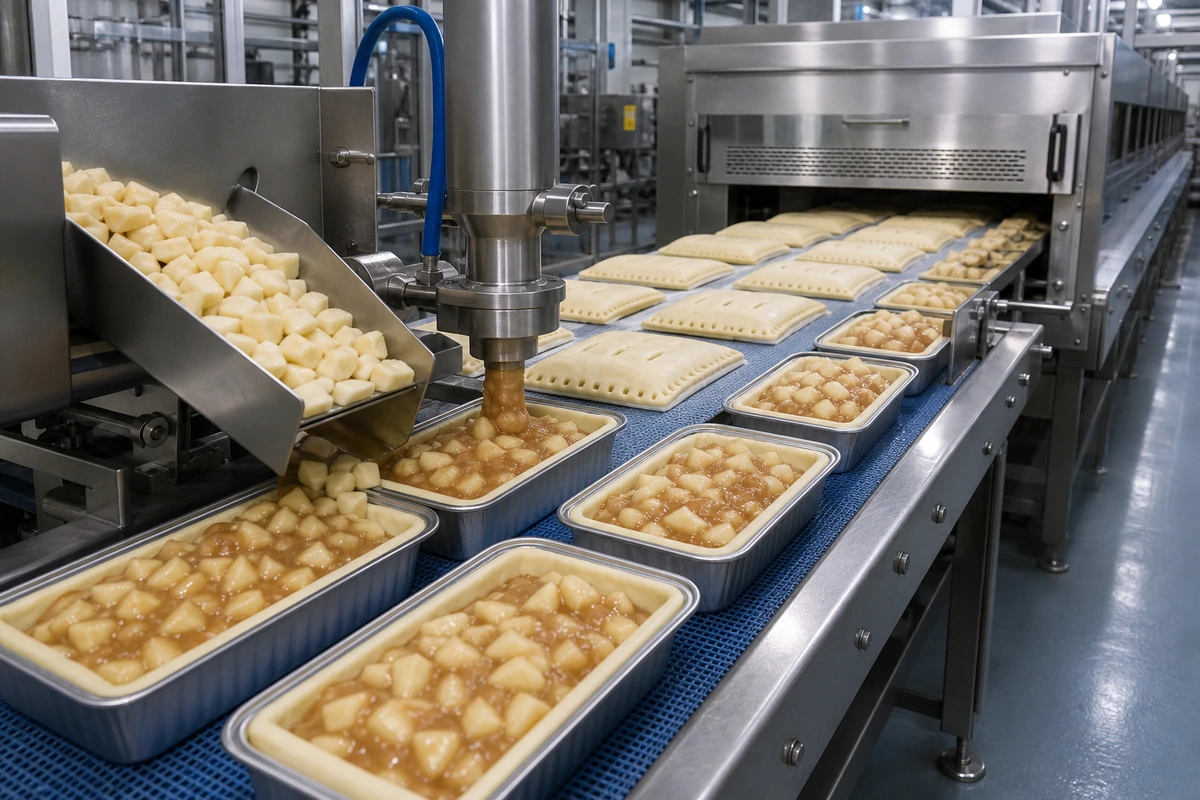
A bakery cannot correct every apple variation with oven time. Specify the frozen form, size distribution, peel and core condition, treatment, firmness, broken pieces, free-flow, clumping and pack weight. Then approve the ingredient in the actual filling.
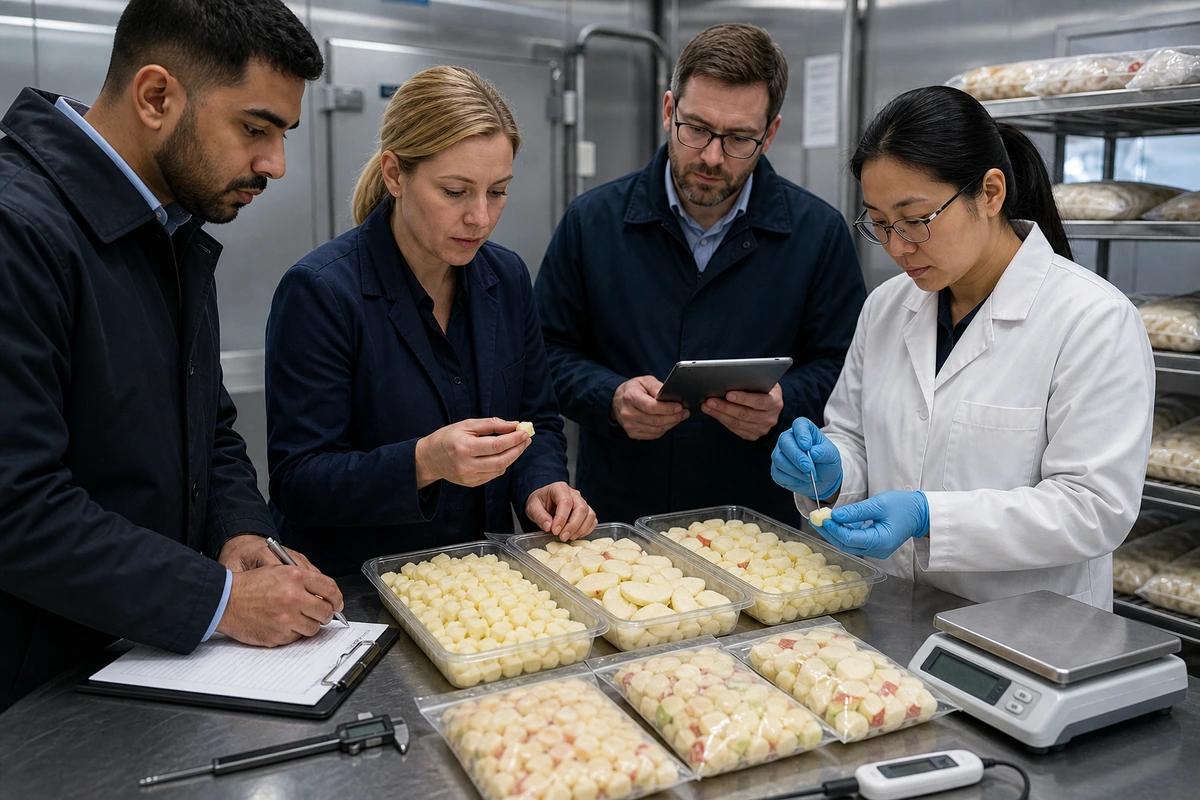
For each incoming lot, compare the frozen sample with the approved reference. Record temperature, package integrity, frost, color, odor and piece distribution. If the lot changes the recipe's behavior, investigate before adjusting the production schedule.
How to reheat a fully baked frozen apple pie
A fully baked pie needs enough gentle heat to warm the center and restore the crust without repeating the entire raw bake. Follow its label or tested reheating method. In general, a moderate oven is easier to control than the raw pie's initial high-temperature stage. Keep the pie covered loosely if the top is already at the desired color, then uncover near the end to refresh crispness.
Do not assume a browned frozen pie is fully baked merely from appearance. Mark production packages with bake status. If the pie was only par-baked, use its specific finish-bake process. Likewise, a slice reheats much faster than a whole pie and should not inherit the whole-pie schedule.
Microwave reheating can warm filling quickly but softens pastry. It may suit an individual portion when speed matters, followed by a brief crisping step if equipment and instructions allow. This is a service choice, not the same task as baking an unbaked frozen pie.
For bakeries, validate a range rather than one lucky pie
Run several pies across normal line conditions: first and last in the oven load, different rack positions and representative fruit lots. Define acceptable center tenderness, filling set, crust color, net weight and cooling time. A process is robust when it tolerates ordinary variation without hiding defects.
Keep the approved recipe version, ingredient specifications, pan, oven settings and photographs together. When complaints occur, collect lot codes, storage history, bake record and images before changing the formula.
How a bakery validates time and temperature instead of copying them
A bakery needs a process that works across expected production variation, not one attractive test pie. Begin with a controlled recipe and define every frozen unit: pan diameter and depth, crust and filling weights, apple form, vent pattern, frozen storage target and maximum storage age for the trial. Use calibrated scales and identify every test pie so results are not mixed.
Map the oven before changing the food. Confirm actual cavity temperatures and recovery after loading. A deck oven, rack oven, convection oven and home range transfer heat differently. Record rack position, fan setting, number of pies, gap between pans and whether a sheet pan or baking screen is used. If the first and last positions behave differently, the solution may be load pattern or rotation rather than a new filling.
Test a reasonable high and low condition around normal production. The frozen filling might arrive at the colder end of the approved storage range. Pie mass can vary within its legal and process tolerance. Apple pieces can be at the firm and soft ends of the ingredient specification. A robust profile should bring all approved conditions to safe, acceptable doneness without burning the most exposed crust.
Define observation points before the trial. Crust color can be evaluated against photographs or a color reference. Fruit tenderness can use a consistent penetration or sensory method. Filling set should be judged after the declared cooling time and at the intended serving temperature. Overflow, bottom color, shrinkage, slice height and syneresis can be scored. These checks turn "looks done" into a repeatable decision.
Food-safety endpoints must be established for the actual product and jurisdiction. A general article cannot set a critical limit for an unidentified commercial pie. Work with qualified food-safety personnel to determine the required internal process, monitoring, corrective action and records. The bubbling and tenderness cues in this guide are valuable quality checks, but they do not replace a validated safety plan.
After selecting the profile, run a confirmation batch at normal scale. Include more than one apple lot if possible. Record initial frozen temperature, oven loading, stage temperatures, time of any rotation or shielding, center observations and cooling. Inspect both central and edge portions because a pie can have a set rim and loose middle.
Package instructions should describe the tested state unambiguously. State whether the consumer removes wrapping, whether the pie remains frozen, what pan or support is retained, oven type, rack, temperature stages, approximate time range, doneness cues and cooling. A single number printed without endpoints invites both underbaking and burning when ovens differ.
Changes require review. A new apple cut, supplier, thickener, crust fat, pie weight, pan, freezer, storage period or oven can alter heat transfer and filling behavior. Use change control rather than assuming the old schedule automatically remains valid. A small purchasing change can appear later as a bake complaint.
When a customer reports a problem, collect evidence before prescribing more time. Ask for product lot, freezer history, oven type, whether it was preheated, pan handling, rack position, actual bake schedule, photographs and cooling time. A soggy bottom from partial thawing needs a different correction from firm apples caused by thick pieces.
Finally, compare cost on saleable pies, not minutes alone. A hotter or longer profile can increase energy and reduce throughput. A better controlled frozen apple cut or filling weight may shorten variation and lower rejects. The strongest program aligns ingredient specification, pie design, oven capacity and service quality instead of making the oven compensate for uncontrolled inputs.
Serving and storage complete the bake
Plan the bake backward from service. A pie that requires a long cooling period should leave the oven early enough to set before cutting. Holding it in a warm switched-off oven can continue cooking and dry the crust; cutting immediately can release filling that would otherwise set.
After cooling, store the pie according to its recipe, ingredients and food-safety plan. A commercial operation should define maximum ambient hold, refrigeration, packaging and reheat conditions. The presence of fruit and sugar does not make every finished pie shelf-stable.
For display, protect the crust from humidity and physical damage. Condensation inside packaging softens pastry. Packaging while the pie is too hot can trap steam; leaving it exposed too long can dry the cut edge and create contamination risk. Validate the pack timing as part of product development.
When reheating a slice for service, use a separate method from the full frozen bake. Control portion size, equipment and endpoint, and assess crust after holding. A successful whole-pie bake can still deliver a poor customer experience if the final slice is overheated or left under humid cover.
What to record in a frozen-pie bake test
Record the pie size, net weight, pan material, crust construction, filling temperature and freezer storage time before the bake. Note whether the test starts in a fully preheated oven and which rack position is used. These details explain differences that a time-and-temperature statement alone cannot.
During the bake, record the point at which the crust reaches the target color, when the filling bubbles in the center area and whether the rim needs shielding. After removal, measure the resting time before cutting. Score bottom-crust set, edge color, filling flow, apple texture and slice definition at the intended serving temperature.
Repeat the method with pies from different freezer positions or production lots. If one pie finishes early and another remains cold in the center, investigate weight, fruit cut, fill distribution, freezing rate and oven loading before simply extending every bake. A controlled test turns a general recipe into a reliable operating instruction.
For commercial instructions, validate the exact product and oven class. Clearly state that doneness evidence takes priority over an unverified universal minute count.
Frequently asked questions
Do you thaw a frozen apple pie before baking it?
Usually not when the pie was frozen unbaked under a recipe designed for direct baking. Thawing can wet the crust and changes timing. Follow the package or recipe; a baked frozen pie follows a reheating method instead.
For preparation details, see How to Freeze Apples for Pie: Slices, Treatment and Portioning.
How long does a frozen apple pie take at 375°F?
There is no universal time. Many methods use a hotter initial stage and then 375°F/190°C for roughly 40–60 additional minutes. Deep pies can need longer. Confirm center bubbling, tender apples and proper crust color.
How can you tell when the center is done?
Look for sustained bubbles through a central vent and test an apple piece for tenderness with a thin knife. Do not rely on edge bubbles or top color alone. Commercial processes may also require a validated internal-temperature endpoint.
Why is the bottom crust soggy?
Common causes include weak bottom heat, an unsuitable pan, excess fruit liquid, partial thawing and underbaking. Standardize the pan and rack, control the frozen apple form and use the tested sheet-pan method.
Can a glass pie dish go from freezer to a hot oven?
Only if the manufacturer explicitly approves that thermal change. Ordinary glass or ceramic can break. Use the pan specified by the recipe and its maker; metal is commonly selected for freezer-to-oven pies.
What frozen apple details should a bakery confirm?
Confirm cultivar or blend, cut, peel and core status, treatment, firmness, broken-piece tolerance, free-flow, pack weight, storage and documents. Approve the ingredient in the actual filling and bake profile.
Build a more repeatable frozen apple pie program
GreenLand-food is a frozen apple supplier and manufacturer supporting factory-direct and wholesale programs. Share your required cut, filling application, pack size, market and volume so we can review frozen apple supply and sample options.