


How to Freeze Apples for Pie: Slices, Treatment and Portioning
Sep 01, 2026
Leave a message
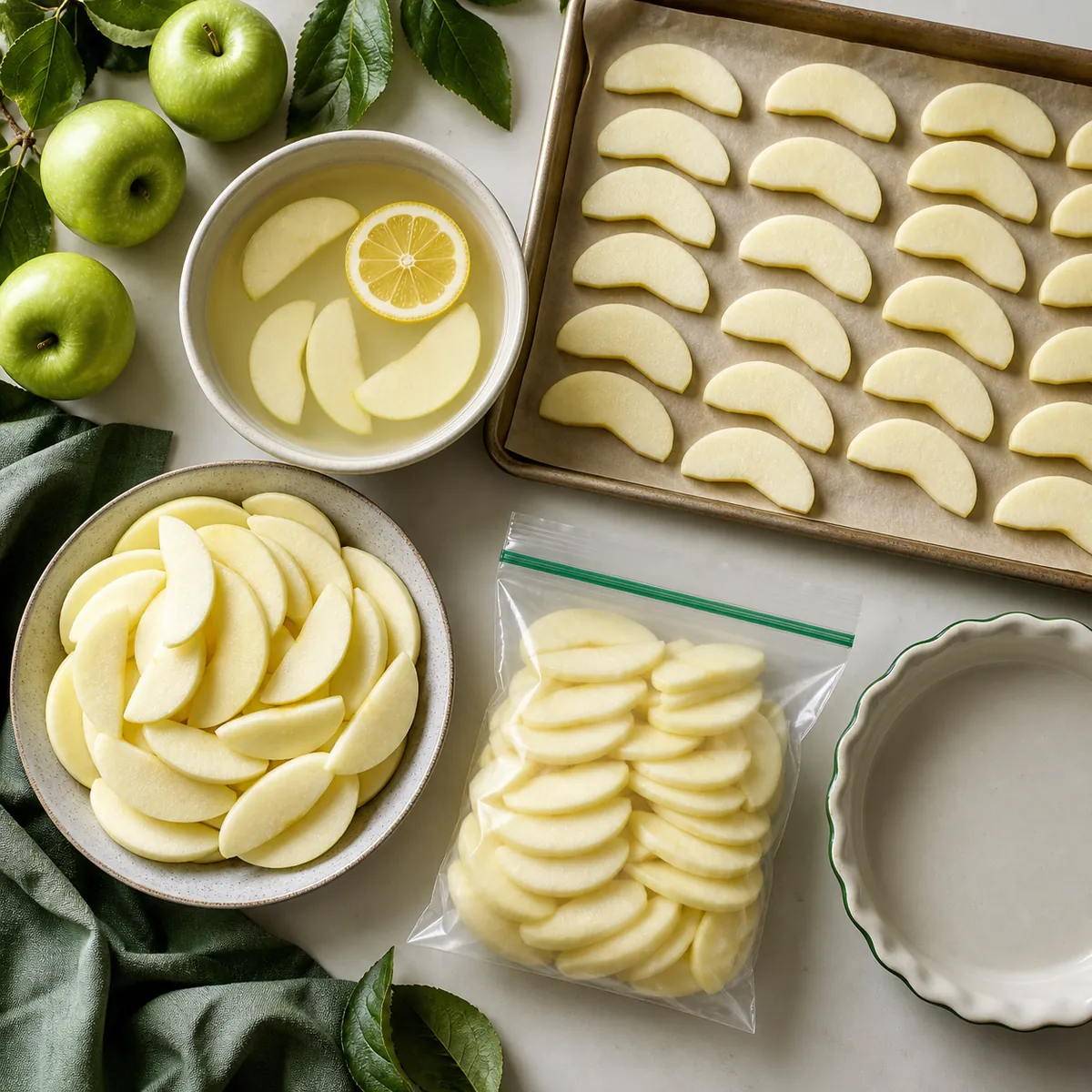
Prepare the apples for the pie you intend to bake
For a standard home pie, peel and core firm apples, cut them into even slices, dip briefly in an appropriate anti-browning solution, drain and dry well, then tray-freeze until firm. Pack the frozen slices in the exact weight used by your tested recipe, remove excess air and label the package. Use the frozen fruit in a cooked pie rather than expecting a fresh, crisp texture after thawing.
Do not treat a fixed number of apples as a reliable portion. Fruit size, trimming loss and slice thickness vary. Weighing the prepared slices gives a repeatable filling and prevents a package that is too small for one pie but too large to combine neatly with another.
For preparation details, see How Do You Bake a Frozen Apple Pie? From-Freezer Time and Temperature.
Key takeaways
Choose apples that can survive a cooked application
Freezing forms ice crystals inside apple tissue. When the slices thaw or heat, their cells release more juice and their texture becomes softer than fresh fruit. That change is not a failure when the destination is a pie, compote or sauce. It does mean that a very soft, mealy apple has little structural reserve. Start with sound, mature fruit that is firm enough to handle peeling, coring, slicing, freezing and baking without disappearing into puree.
Cultivar names can guide an initial trial, but they do not replace a cook test. Growing region, harvest maturity, storage history and lot condition affect firmness and acidity. A tart, firm apple can contribute structure and flavor; a sweeter aromatic apple can round the filling. Some bakers deliberately use a controlled blend. If you do, write the blend by percentage or weight rather than relying on a vague instruction such as "mixed apples."
Reject fruit with mold, fermentation odor, extensive internal browning or wet breakdown. Trimming a small pressure bruise may be reasonable for immediate home preparation, but commercial acceptance needs a written defect tolerance and representative inspection. Freezing pauses deterioration; it does not restore poor raw material.

Define the cut before you compare suppliers
"Sliced apple" is not a complete specification. Buyers should confirm peel status, core removal, slice thickness, arc length, maximum and minimum dimensions, broken pieces and permitted small fragments. Chunks or dice may work for hand pies and fillings where a distinct slice is unnecessary, but they create a different bite and juice-release pattern.
The GreenLand frozen apple chunks page is a useful supply starting point. A pie program should still confirm whether the offered form matches its approved filling and request the relevant cut, treatment and packing details.
Slice thickness changes the finished pie
There is no universal best thickness. The correct geometry is the one that reaches tenderness when the crust and thickener reach their own endpoints. The following framework helps organize trials.
| Form | Likely behavior | Useful application | Control point |
|---|---|---|---|
| Thin slices | Heat quickly and compact closely; overbaking can erase piece identity. | Shallow pies and fast bake profiles | Breakage and mushiness |
| Medium uniform slices | Balance tenderness, stacking and visible fruit definition. | Classic double-crust pies | Thickness tolerance and arc length |
| Thick wedges | Retain a substantial bite but may remain firm before the crust is done. | Deep pies with longer validated bakes | Center tenderness |
| Dice or chunks | Portion easily and suit small formats; do not create a layered slice appearance. | Hand pies, turnovers and mixed fillings | Cube range, fines and juice release |
Treat browning without loading the slices with water
Cut apples darken when enzymes in damaged tissue react with oxygen. Acidic treatments slow that reaction. A brief lemon-water or ascorbic-acid treatment can help a home batch look cleaner; commercial options may include declared antioxidants or acidulants selected for the product and market. Follow an authoritative preservation method or the ingredient supplier's validated directions rather than inventing a concentrated chemical dip.
Treatment strength is only half the decision. Contact time, fruit-to-solution ratio, solution temperature, carryover flavor and drainage all matter. A slice that leaves the dip dripping wet freezes with surface ice. That water later enters the pie, weakens flavor and asks the thickener to do work that was never included in the formula. Drain thoroughly and blot gently before tray freezing.
Some bakers use a dry sugar pack. Sugar draws juice from the fruit and can integrate smoothly with a filling formula, but it removes later flexibility because the package already contains a known or unknown sugar load. Record the exact sugar-to-fruit ratio. Plain treated slices are easier when several recipes use the same frozen apple.
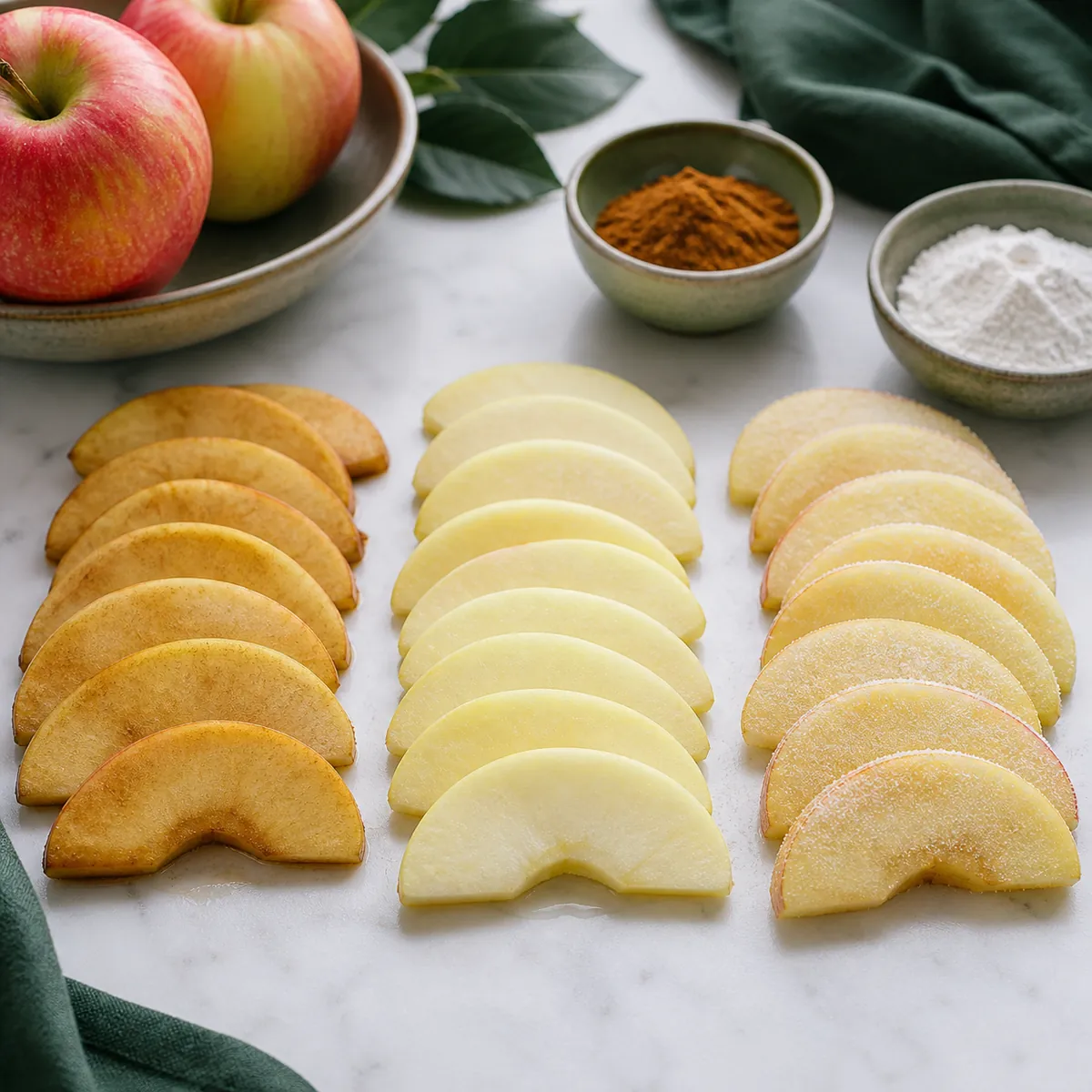
How to freeze apple slices for pie
- Select and chill sound apples. Use firm fruit without active decay. Keep the batch cool so peeling and cutting do not accelerate softening.
- Prepare the freezer and tools. Clear a flat shelf, line rimmed trays, prepare clean packaging and weigh an empty container if you will calculate net fruit weight.
- Peel, core and slice uniformly. Remove tough core tissue. Use a slicer or a consistent knife technique, and keep the slices within the geometry your recipe has tested.
- Apply the selected anti-browning treatment. Work in manageable batches so the earliest slices do not sit exposed while the rest are cut. Follow the chosen method's proportions and contact time.
- Drain and dry the surfaces. Let the slices drain fully, then blot without crushing. Surface moisture is a direct contributor to ice and watery filling.
- Measure one pie portion. Weigh the prepared fruit used by your tested recipe. If your formula is based on drained thawed weight, record that distinction; otherwise use the frozen net weight consistently.
- Pre-freeze in one layer. Spread slices without large piles. Freeze until firm so pieces remain easier to separate and the package does not become one slow-freezing block.
- Pack, seal and identify. Transfer one measured portion to moisture-resistant freezer packaging, remove excess air, seal and record fruit form, treatment, net weight and freeze date.
- Return the package to stable frozen storage. Do not leave it on the counter while assembling other batches. Protect it from temperature cycling and use an orderly first-in, first-out system.
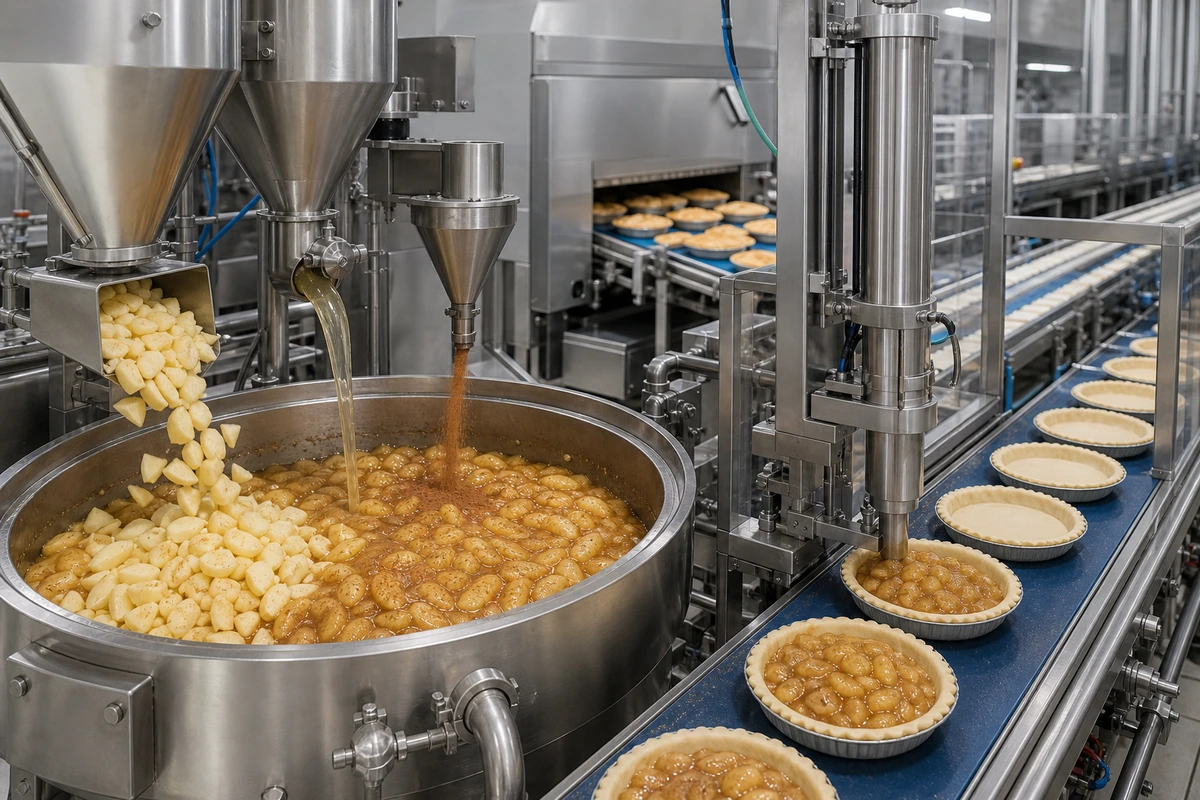
One pie portion is a formulation decision
The correct charge depends on pie diameter, pan depth, desired dome, crust design and expected fruit collapse. A nine-inch dish is not a sufficient formula because its usable volume changes with depth and side angle. Establish the target filling mass with an approved finished pie, then portion frozen apples to that formula.
For a bakery, record the permitted net-weight tolerance and check it during packing. The objective is not merely convenient bags; it is the same fruit-to-sugar-to-thickener ratio in every pie.
Plain slices, frozen filling or a shaped filling block?
| Format | Advantage | Tradeoff | Best control |
|---|---|---|---|
| Plain treated slices | Works across several recipes and lets the baker adjust sugar and spice. | More measuring at mix time; juice behavior must be understood. | Cut, treatment and net fruit weight |
| Complete frozen filling | Fast assembly and a fixed flavor system. | Thickener and spice cannot be changed easily; separation may appear after thawing. | Validated formula and finished bake |
| Pie-pan-shaped block | Drops quickly into a crust and supports standardized geometry. | Must fit the exact pan; dense blocks heat differently from loose slices. | Block mass, shape and bake validation |
Should frozen apple slices be thawed before filling the pie?
Either route can work, but the recipe must be designed for it. Adding slices while still frozen keeps preparation simple and reduces handling, yet the cold fruit delays heating and may release juice later in the bake. A direct-from-frozen formula may need a different bake time and thickener distribution than one developed with fresh fruit.
Thawing gives the baker a chance to measure released liquid. You can drain it, reduce it, reincorporate a controlled amount or include it in the thickener calculation. Each choice changes flavor concentration and yield. Draining without recording the loss can make one batch dry and another loose. If the recipe uses thawed fruit, define thaw temperature, maximum time, drain method and whether the stated portion is before or after drainage.
For food businesses, validate the selected route with actual frozen inventory, not a small fresh-fruit simulation. Evaluate pies after the intended cooling period because a filling that looks fluid at the oven door may set during cooling, while a weak system may continue to leak.
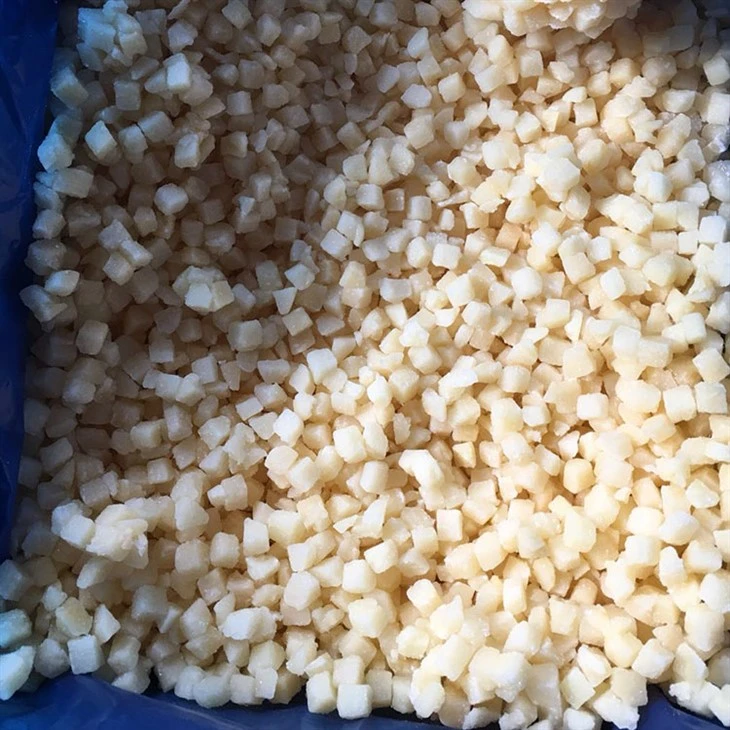
What a commercial frozen-apple specification should say
At minimum, confirm cultivar or approved blend, country of origin, peel and core status, cut dimensions and tolerance, anti-browning treatment and declaration, color, flavor, firmness, broken pieces, clumps, foreign material and pack format. Add microbiological, residue and documentation requirements appropriate to your market and application.
Do not copy another buyer's limits without checking your own filling. A visual retail pie may need strong slice identity, while a blended filling can accept more small pieces. The specification should control what affects safety, legality, yield and finished performance.
A practical sample-approval and receiving process
- Send the application brief. State pie format, target slice visibility, filling mass, direct-frozen or thawed use, and market declaration constraints.
- Review the written specification. Resolve ambiguous cut language, treatment, tolerance, packing and storage conditions before requesting a representative sample.
- Inspect the frozen sample. Check package integrity, temperature, clumping, frost, color, odor, piece distribution and net weight.
- Run the real filling and bake. Use the intended crust, pan, formula, oven and cooling period. Record fruit tenderness, slice identity, syneresis, flavor and cut-slice stability.
- Approve a reference. Retain photographs, measurements, formula version and an agreed sample or controlled description.
- Verify incoming lots. Use a defined sample plan and escalate material that falls outside the contract instead of compensating silently in production.
Packing and cold chain protect the work already done
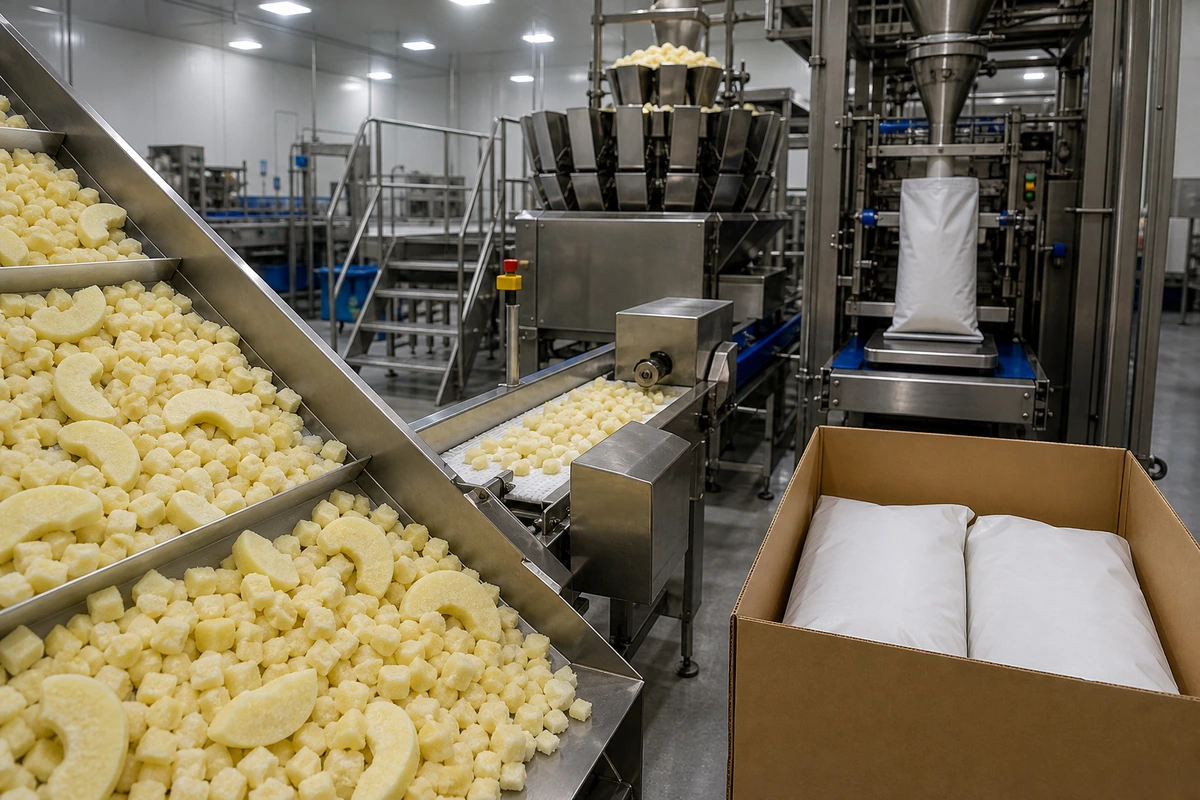
Choose inner and outer packing that fits the buyer's handling system. Small recipe-sized packs improve portion control; foodservice bags reduce packaging per kilogram but require disciplined resealing or full-bag use. Confirm net weight, carton strength, pallet pattern, label language and lot traceability.
Stable frozen storage limits recrystallization, clumping and additional tissue damage. Receiving teams should document product temperature, packaging condition and visible thaw-refreeze indicators, then move the load into frozen storage promptly.
How frozen slices change the rest of the pie formula
Apple preparation cannot be separated from the crust and filling system. Frozen slices bring a colder starting temperature and a different pattern of moisture release. If the same fresh-fruit recipe is used without a trial, the baker may solve one symptom by creating another: extra thickener can produce a pasty filling, extra oven time can dry the crust, and aggressive drainage can remove valuable apple flavor. A controlled test changes one variable at a time and evaluates the complete cooled pie.
Sugar affects more than sweetness
Sugar draws water from apple tissue and changes the liquid available to the thickener. It also influences browning and perceived acidity. A sweet cultivar may need less added sugar for flavor, but reducing sugar can also alter the physical behavior of a formula developed with a higher level. Commercial bakers should state whether fruit is unsweetened, sugar-packed or part of a prepared filling, and verify total sugar through the complete recipe rather than judging the fruit alone.
Acid controls flavor balance and treatment carryover
Lemon or ascorbic-acid treatment may leave a small sensory contribution. Apple cultivar and maturity add their own acid profile. A pie that tastes bright with one lot can seem flat or sharp with another if the formula assumes every apple is identical. When acid balance is critical, use measurable purchasing criteria and an approved sensory range. Do not increase an anti-browning dip merely to make the raw slice look whiter; excessive treatment can move the finished flavor away from the target.
Thickener must work after freezing and heating
Flour, starches and other thickeners differ in clarity, flavor release, freeze-thaw stability and the temperature at which they develop body. Follow a validated recipe for home freezing. In commercial development, test the exact thickener at the intended level, with the real fruit treatment and storage history. Judge the pie when fully cooled and again over its expected service window. A filling can appear stable at room temperature yet release liquid after chilled holding or reheating.
Crust protection should not hide an undercooked center
A frozen fruit charge holds the center cold while the exposed crust heats quickly. Foil or a pie shield can protect edges that color early, but the center still needs enough energy for the fruit to become tender and the thickener to activate. Use a rimmed sheet pan to contain accidental overflow, vent the upper crust appropriately and confirm that the pan material is safe for the chosen freezer-to-oven process. The related guide on baking a frozen apple pie covers this oven stage in detail; this article remains focused on preparing the apple ingredient.
Cooling is part of the process, not idle time
Cutting a pie immediately can make even a correctly formulated filling look loose. During cooling, steam redistributes, the thickener develops its final body and the crust sets. Establish a minimum cooling interval before the quality check. For a retail or foodservice program, also consider whether the customer serves the pie warm, at room temperature, chilled or reheated. The same filling can seem very different at those points.
Record the trial so the result can be repeated
A useful trial record includes apple lot, form, treatment, frozen net weight, storage duration, thaw or drain method, sugar, acid, spice, thickener, crust and pan, oven type, load, temperature stages, total bake time, center endpoint and cooling time. Add photographs of the frozen fruit, baked top and cut slice. Without that record, a successful pie is only an anecdote. With it, the team can identify why a later lot behaves differently and decide whether the fruit, formula or process needs adjustment.
A small batch record prevents the next pie from becoming guesswork
Even a household freezer benefits from a short label. Record apple variety or blend, slice form, treatment, prepared net weight and freeze date. If sugar or thickener is already included, write its exact amount. "Pie apples" does not tell you whether the package contains plain slices or a complete filling several months later.
Keep one package per tested pie unless the recipe deliberately uses another unit. Flat packages freeze and stack efficiently, while tray-frozen loose slices allow partial use. Choose the pack around the future task. Protect against crushed seals and keep strongly scented foods from transferring odor.
When you bake the first pie from a batch, note whether the fruit was used frozen or thawed, how much liquid appeared, when the center bubbled and how the cooled slice held. Adjust the next package only after identifying the cause. More thickener is not the automatic answer to every loose pie, and longer baking is not the answer to every firm slice.
For a commercial program, this simple record becomes lot traceability, formulation version, production date, frozen storage history and finished-product validation. The principle is the same: the fruit, formula and bake need to be linked so a result can be repeated.
Three final checks before the package enters the freezer
First, check uniformity. Spread the prepared slices and remove core fragments, peel pieces and unusually thin scraps that will cook much faster than the main portion. Uniformity at this point is easier to achieve than after the fruit is frozen into a package.
Second, verify net prepared fruit weight. Use the same scale and tare method as the recipe trial. If the package includes treatment liquid, sugar or a complete filling, identify that composition. A gross bag weight is not the same as usable apple weight.
Third, confirm the seal and freezer path. Air pockets, a weak closure and slow placement into an overloaded freezer can reduce quality. Lay the package where cold air can circulate, then restack after it is hard. These small controls protect the slice work and make the future pie more predictable.
Frequently asked questions
Can you freeze raw apple slices for pie?
Yes. Raw peeled and cored slices can be treated, drained, tray-frozen and packed for a cooked pie. Expect softer texture and more juice than fresh fruit, so test the filling formula.
Do apples have to be blanched before freezing?
Not every home apple-freezing method uses blanching. Follow a current authoritative preservation method for the pack you choose. For pie slices, many methods rely on an anti-browning treatment and prompt freezing.
For preparation details, see Can Apples Be Frozen?.
How do you keep frozen apples from turning brown?
Limit exposure after cutting, use an appropriate lemon or ascorbic-acid treatment, drain well, freeze promptly and use packaging that limits air. Treatment reduces browning; it does not make color permanent under poor storage.
Can you freeze complete apple pie filling?
Yes, but sugar, acid and thickener must tolerate freezing and baking together. Test the formula after frozen storage. A filling developed for fresh use may separate or set differently after freezing.
Should frozen apples be drained for pie?
Only if the tested recipe calls for it. If you drain, define the thaw and drain method and decide whether the discarded or reduced juice is part of the formula. Uncontrolled draining changes yield and flavor.
What should a frozen apple buyer put in an RFQ?
Include cut and size tolerance, peel and core status, treatment, cultivar or blend, quality limits, pack size, annual volume, delivery market, required documents and a request for a representative application sample.
Plan a frozen apple specification around your pie
GreenLand-food is a frozen apple supplier and manufacturer supporting factory-direct and wholesale programs. Share your required cut, treatment, packing, target market and annual demand so our team can review the frozen apple supply fit and sample requirements.