


How Long to Bake Bacon-Wrapped Asparagus
Sep 09, 2026
Leave a message
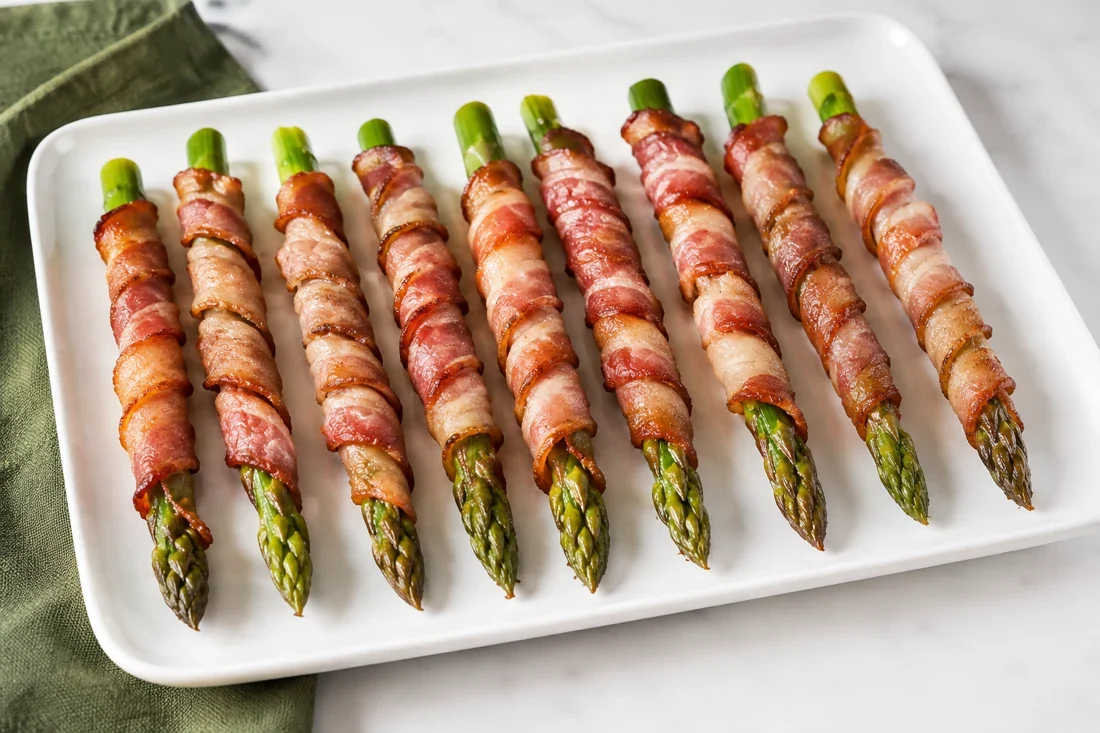
A clock alone cannot confirm both conditions.
The most reliable starting method uses fresh, dry spears of similar diameter, regular-cut bacon and a loose wrap with limited overlap. Thick bacon, tightly packed bundles and frozen spears change the balance between browning and vegetable tenderness. This guide explains how to choose a workable combination, what to watch in the oven, and how to approach a commercial frozen version without borrowing a cooking time from a different product.
Use 400°F and begin checking at 20 minutes
A 400°F oven is a useful starting point because several established versions of this dish use that temperature. Michigan Asparagus gives approximately 20–25 minutes for its bacon-wrapped preparation, while Well Plated's bundled version uses a somewhat longer range. These recipes support a practical timing window, not a universal finish time. The amount of asparagus under each wrap and the type of bacon are part of the method. Michigan Asparagus's recipe shows one specific assembly behind the estimate.
For a first trial, prepare a modest tray that is easy to inspect. Preheat the oven, trim the fresh asparagus, dry its surface and wrap it with a narrow spiral of bacon. Arrange the pieces with space between them on a suitable tray or rack set over a tray. The tray must contain rendered fat. Place the food in the oven only after the intended temperature is reached, then use the recipe's range as a reminder to inspect rather than as an instruction to remove unfinished food.
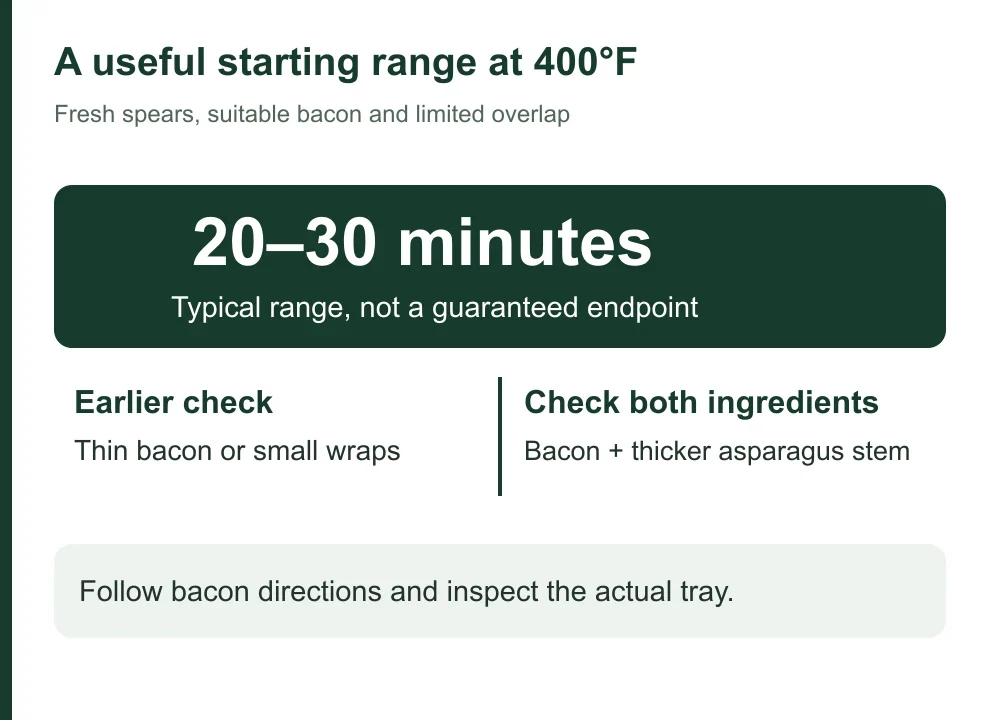
The time range is a starting point; inspect the actual assembly and follow bacon directions.
View larger diagramCheck earlier when using very thin bacon, narrow strips or small individual spears. Some published versions use shorter times because their wrap has less meat or less overlap. A tray of small wraps can dry out if it is left untouched until the upper end of a broad range. Conversely, a tightly wrapped bundle may still have soft, undercooked bacon where layers overlap. The useful observation is what the bacon and asparagus are doing in your assembly, not whether another recipe's minute count has elapsed.
Oven settings also need to be stated clearly. A conventional oven setting and a fan or convection setting are not automatically interchangeable, and appliances vary in how they deliver heat. Follow the appliance guidance when adapting a recipe and watch the first batch closely. The Celsius value of 200°C is a practical rounding of 400°F, not a promise that every oven calibrated to either display will behave identically. Tray material, shelf position and load can also affect browning.
Write down the result of the first successful batch if you expect to repeat it. Record the bacon cut, number of spears per wrap, approximate spear diameter, tray arrangement and actual cooking time. A note that only says asparagus, 25 minutes leaves out the conditions that made the result work. For a kitchen preparing the dish regularly, those few details are more valuable than repeatedly searching for an average time that may refer to a different assembly.
Match bacon thickness to asparagus diameter
The two ingredients cook at different rates. Asparagus can become tender before a thick or heavily overlapped bacon wrap is fully cooked. Regular-cut bacon is often an easier starting choice for individual spears because it reduces the amount of meat that must cook around a relatively quick-cooking vegetable. That does not make thick bacon unusable. It means a thicker cut belongs in a method designed and tested for it, rather than being exchanged without changing the rest of the preparation.
Spear diameter changes the vegetable side of the balance. Very thin asparagus can lose its pleasant bite while the bacon is still finishing. Larger spears or a small bundle may provide more tolerance for the longer cook, although the exact result depends on the assembly. Choose spears with reasonably similar diameters within one tray so that the same inspection point is useful for most pieces. A mixture of pencil-thin and much thicker spears creates avoidable variation before the oven is even involved.
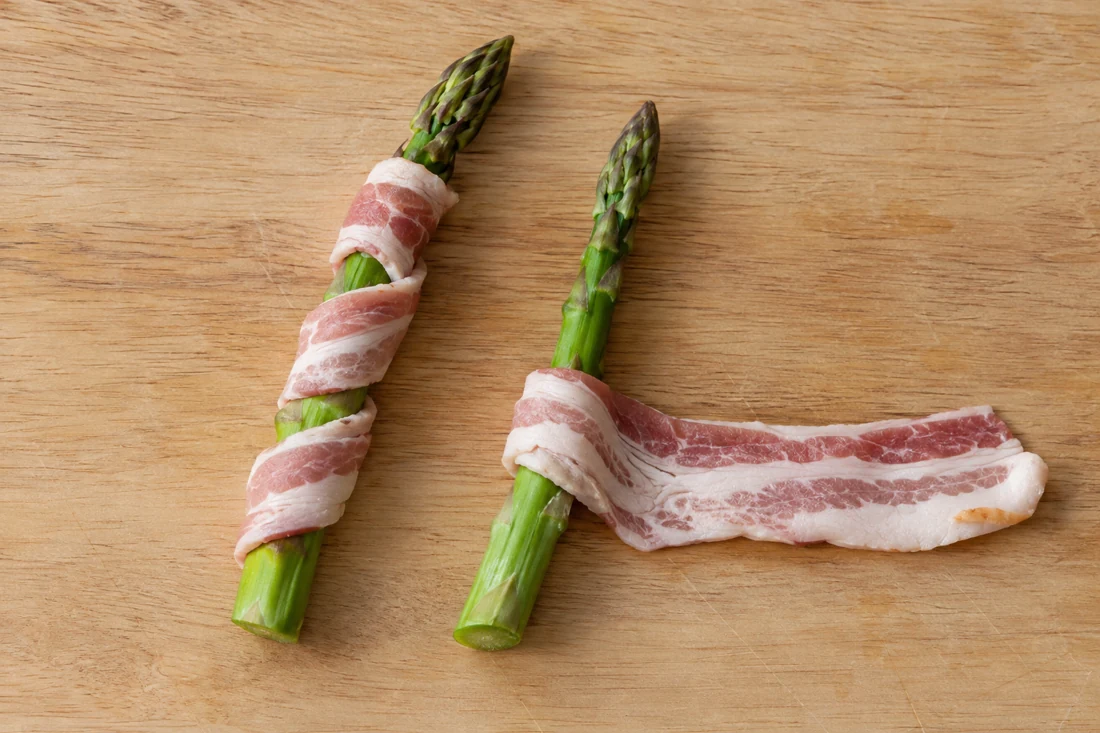
Bacon thickness changes how an asparagus wrap cooks. Illustration.
| Variable | Likely effect | First-trial response |
|---|---|---|
| Thicker bacon | More meat must cook around the vegetable | Use a complete method designed for that cut. |
| Thin asparagus | Less tolerance for a prolonged cook | Match spear size and bacon; inspect earlier. |
| Heavy overlap | Thicker areas may lag behind browned edges | Use a controlled narrow spiral. |
| Frozen spears | Different temperature and moisture behavior | Run a separate application trial. |
Bundling several spears changes the shape and moisture distribution under the bacon. The outside surfaces may brown while the center of the bundle behaves differently. Well Plated's recipe uses bundles and a specified bacon style, which helps explain why its timing cannot simply be copied onto a single thin spear with a narrow strip. The Well Plated preparation is an example of a complete method in which the ingredient combination and cooking range belong together.
Trimming also affects consistency. Remove unsuitable tough ends according to the condition of the asparagus and the intended portion. If some spears retain substantially more fibrous base than others, a tenderness check near the tip will not reveal the whole eating experience. For a plated dish, consistent usable length also makes the wraps easier to arrange. The aim is a portion that cooks and eats evenly, rather than preserving maximum raw length regardless of quality.
Season with the bacon in mind. Bacon already contributes salt and fat, and additional seasoning should suit the chosen product and recipe. A sweet glaze can alter browning and may darken before the interior of a thick wrap is ready. For the first timing trial, a simpler preparation makes the behavior easier to see. Once the basic assembly works, add a glaze or finishing sauce and check again, because the appearance and cooking balance may change.
Wrap and space the spears for even cooking
A loose spiral with limited overlap exposes more of the bacon surface to oven heat. A dense band wrapped repeatedly around the same point leaves thicker areas that can remain soft while exposed edges brown. Start the wrap securely and distribute it along the edible portion without covering every surface in multiple layers. If the recipe uses a narrow strip cut from a slice, keep that strip size consistent across the tray so the first completed piece is a meaningful reference for the rest.
One practical fresh-asparagus sequence is to preheat the oven, trim and dry the spears, make the chosen wraps, space them on a prepared tray, and bake until both ingredients are properly cooked. These actions should occur in that order so that wet asparagus is not wrapped and left waiting while the oven heats. Drying helps manage surface moisture; it does not replace cooking or establish food safety. Use clean preparation practices appropriate to handling raw bacon and vegetables together.
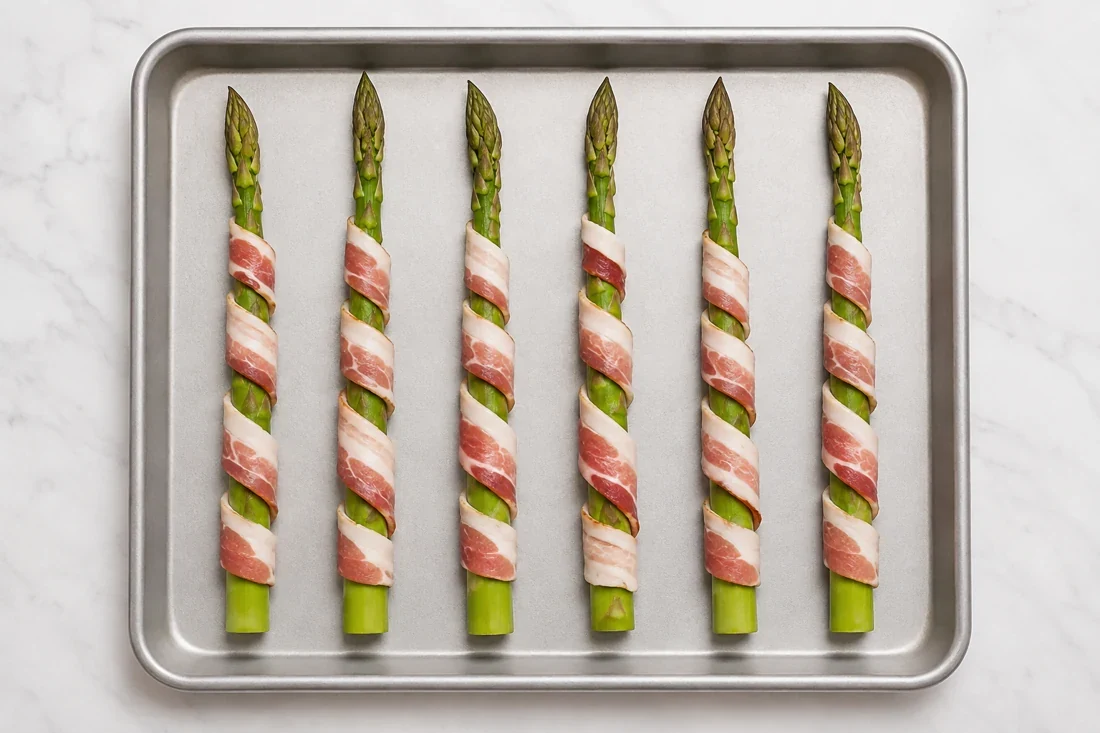
A narrow spiral and space between portions limit thick overlapping areas.
- Preheat the oven and trim fresh spears to a suitable, consistent edible length.
- Dry the spears, then wrap the chosen portion with bacon in a narrow spiral with limited overlap.
- Space the wraps on a suitable tray or rack over a tray that can contain rendered fat.
- Bake using the selected recipe range, inspecting both bacon and asparagus; check small or thin wraps earlier.
Leave gaps between wraps rather than pressing them into a single mass. Crowding makes it harder for moisture to escape and changes how exposed surfaces brown. A rack can allow fat to drain into a tray below, but the assembly must be stable and the tray suitable for the oven. Follow the selected recipe's tray arrangement for the first trial. Moving from a rack to a flat pan, or from one layer to a crowded tray, is a method change worth checking.
Turning may help some preparations brown more evenly, particularly where the underside stays pale. Wholesome Yum's individual-wrap method combines narrow bacon strips, spacing and a turn during cooking. Those details explain its result more usefully than the total time alone. The Wholesome Yum method offers an example of how a specific wrapping pattern is paired with a particular cooking sequence. Adapt it as a complete method rather than selecting only its shortest time.
If broiling is part of a tested recipe, treat it as a closely watched finishing step, not a way to disguise an unfinished thick wrap. Exposed bacon can darken quickly while an overlapped area remains insufficiently cooked. Keep the tray, rack and any liner within their manufacturer's heat limits and watch continuously. For a first attempt, a straightforward oven method with a suitable bacon cut is easier to assess than an improvised last-minute burst of intense heat.
Judge both the bacon and the asparagus
The asparagus and bacon need separate checks because either can look finished before the other is ready. Test the asparagus at a representative thicker point, including the lower edible stem, rather than judging only the delicate tip. It should have the texture intended for the dish without an unpleasantly tough base. For the bacon, inspect the thickest and most overlapped areas as well as the browned edges. The most attractive piece on the tray may not represent the slowest-cooking piece.
Bacon is a raw meat product unless its label says otherwise, and it needs appropriate cooking. Cured color can remain pink, so color by itself is not a reliable shortcut. USDA FSIS also notes the difficulty of measuring thin bacon with a conventional food thermometer. Follow the bacon package directions and a reliable complete recipe, and do not assume that crisp-looking edges establish the condition of a thick folded portion. FSIS's bacon safety guidance explains the handling issues specific to bacon.
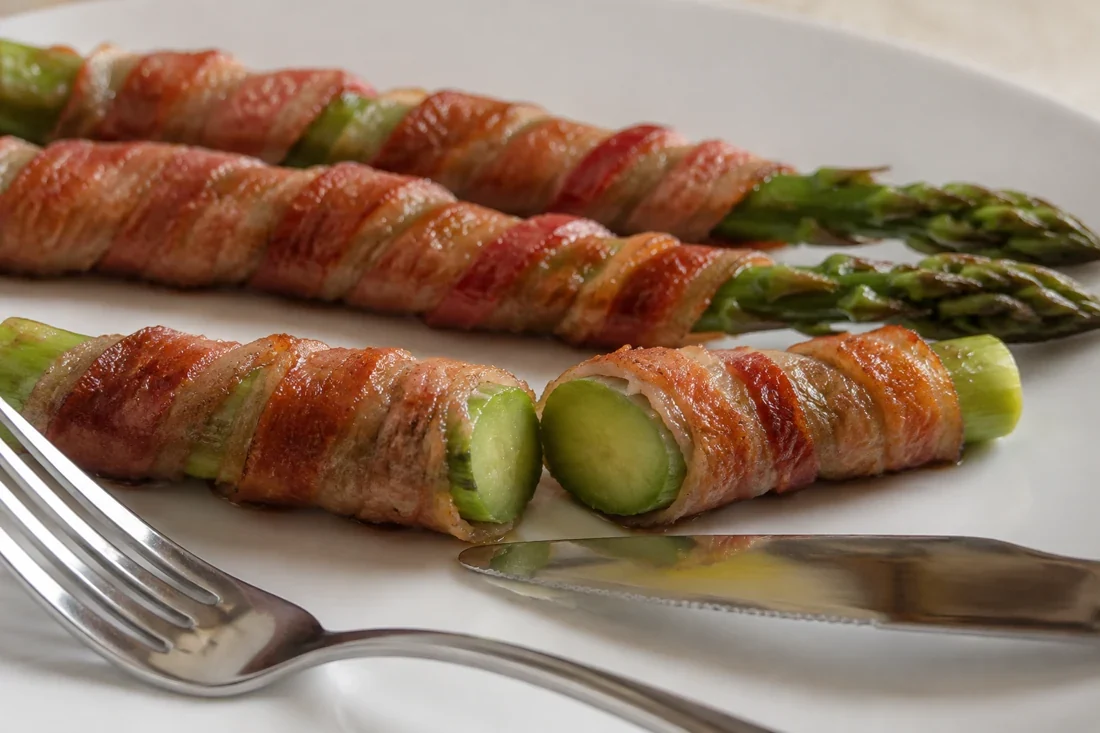
Check the stem and the thickest bacon areas rather than judging browned edges alone.
If the asparagus is becoming too soft while the bacon remains unfinished, the combination needs adjustment for the next batch. Use a thinner bacon cut, less overlap, a different bundle size or a method specifically designed for the chosen ingredients. Simply extending every future batch without changing the assembly may consistently overcook the vegetable. A good recipe balances the two components from the start rather than relying on one ingredient to tolerate whatever time the other requires.
If the bacon is well browned while the asparagus remains too firm, check the spear size, bundle density and oven behavior. A thick bunch under a tight wrap may need a different assembly from several separate spears. Again, the answer is not to assume that the vegetable must always be soft at a particular minute. The first trial should establish how the chosen portion cooks in the actual oven, and the record should capture any change that improves the balance.
Photographs can show a desired presentation, but they cannot verify the cooking state of your tray. A cut spear in an illustration helps explain where to inspect tenderness; it is not a food-safety measurement. For a household meal, use the actual food and the applicable directions to judge completion. For a commercial assembled product, the manufacturer needs a validated cooking and handling process appropriate to that product, rather than treating a web recipe's appearance or timing as a production control.
Adjust carefully when using frozen asparagus
Frozen asparagus introduces a different starting temperature and can release moisture as it heats. It may also have received blanching before freezing. Those differences affect wrapping, surface drying and the time balance with bacon. A recipe developed for fresh spears should therefore not be presented as a tested frozen method simply by changing one word in the ingredient list. The product's supplied state and preparation instructions are the first facts to establish before deciding how to assemble it.
Do not assume that frozen asparagus is already fully cooked or ready to eat. The label and supplier specification should state the intended preparation. If the product is intended to be cooked from frozen, a wrapping process that requires thawing needs its own review. If controlled thawing is permitted for the application, the resulting moisture and texture still need to be assessed. A vague instruction to thaw until flexible leaves too much uncertainty for a repeat commercial process.

Green asparagus spears held beside a lined container. Confirm the supplied processing state before testing a wrapped recipe.
For a development trial, record whether the spears begin frozen or are handled through an approved thawing step, then measure the finished result under consistent conditions. Note moisture in the tray, bacon browning, spear breakage and the texture after the complete cook. Test more than the best-looking portion. If the product will later be chilled, frozen again as an assembled item, or reheated by a customer, that full sequence belongs in the evaluation rather than only the first oven cook.
We supply frozen asparagus ingredient formats and can review spear dimensions and processing information for a proposed application. Our frozen asparagus spear page is a starting point for the ingredient discussion. It does not establish that a bacon-wrapped finished product has been developed or validated. A buyer planning that product should share the assembly, pack and final preparation requirements so the vegetable sample can be selected for a meaningful trial.
The broader freezing questions are covered in our guide to whether asparagus can be frozen. For this particular dish, the key limit is the interaction with bacon: the vegetable's starting state changes a two-ingredient timing problem. Fresh spears remain the clearer starting method for a general household recipe. A frozen commercial version can be investigated, but its final instructions should come from the actual product and process, not a borrowed fresh-asparagus estimate.
Prepare ahead and handle leftovers safely
Advance preparation should follow a defined cold-storage plan and the instructions for the ingredients used. Keep raw bacon and assembled uncooked wraps refrigerated as appropriate, and avoid leaving a prepared tray at room temperature while other work continues. Store it so raw meat handling does not contaminate ready-to-eat foods. Mark the preparation details needed by the kitchen's system. A tray that is visually neat still needs the same attention to time, temperature and separation as other foods assembled with raw meat.
Do not partially cook bacon, store it and assume a later finish is equivalent to a continuous cook. FSIS advises against that approach. If a recipe requires any preliminary cooking as part of immediate assembly and completion, follow the complete method without introducing an unplanned storage interval. For a repeat kitchen process, the simpler choice is often an assembly that can be cooked fully in one defined sequence, with any advance work limited to steps supported by the product directions and food-safety plan.
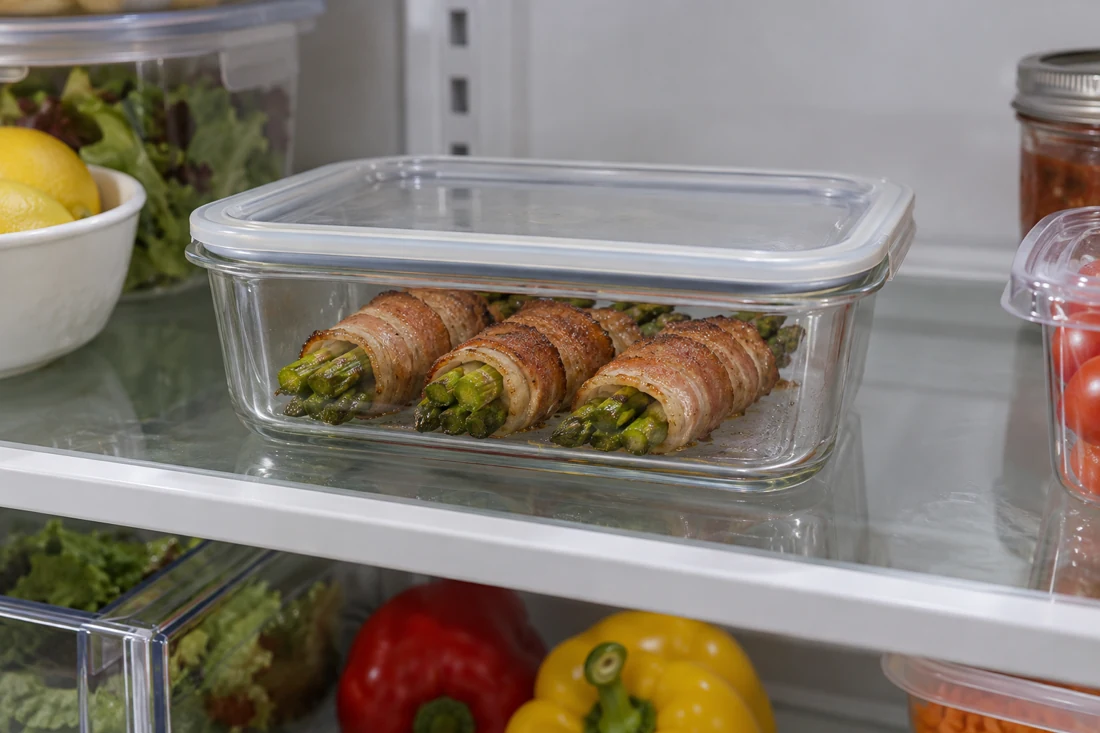
Cooked bacon-wrapped asparagus needs prompt chilled storage. Illustration.
For cooked leftovers, refrigerate promptly in shallow containers rather than leaving a large hot tray out for an extended period. University of Illinois Extension advises refrigerating or freezing leftovers within two hours, using refrigerated leftovers within three to four days, and reheating them to 165°F. These are general leftover rules; use any stricter applicable instructions for your setting. Illinois Extension's leftover guidance provides the handling basis for this short storage branch.
Quality after reheating is a separate concern from safe handling. Bacon may soften, asparagus may lose more bite and moisture may collect in a covered container. Test the reheated result if leftovers or prepared-ahead portions are part of the intended menu. A dish that is attractive straight from the oven may not provide the same experience after chilled storage and reheating. That does not justify unsafe holding; it indicates that the portion, method or service plan may need to change.
For foodservice, distinguish preparation for immediate service from chilled meal production or retail sale. Those uses can require different controls and instructions beyond a household recipe. A kitchen's established procedures should govern the process, and an assembled commercial product needs its own assessment. The article's timing range is useful for understanding the dish, but it does not replace the work required to establish safe preparation, storage and reheating directions for a business's actual product.
Validate the assembled product before scaling up
A small tray and a full oven load can behave differently. More product changes airflow, moisture release and the oven's recovery after loading. Tray position may create uneven results, especially when several shelves are used. Before scaling up, repeat the chosen assembly under the intended load and inspect representative positions. The objective is to find whether the successful small-batch method remains consistent, rather than assuming that multiplying ingredient quantities leaves the cooking process unchanged.
Define the component specifications that affect the result. For asparagus, include usable length, diameter range, format and starting state. For bacon, include the product type, cut thickness or portion weight and the amount used per wrap. Define the number of spears, overlap and spacing. These details help explain variation when a later batch cooks differently. A finished product described only as bacon-wrapped asparagus leaves too many of its important cooking characteristics open to interpretation.

An asparagus spear sample beside a handwritten size note. Keep the spear specification consistent when scaling the assembled product.
The evaluation should include both eating quality and the appropriate food-safety validation for the business. Record the slowest-cooking assembly or position identified by the process assessment, not only the average or most attractive portion. Review the final preparation instructions with the intended equipment and user in mind. A product sold frozen for consumer cooking needs instructions established for that starting state and pack, while a restaurant serving immediately from its own oven has a different operational brief.
At GreenLand-food, our role in this discussion is the frozen asparagus ingredient: we can review available cuts, sizes, packing and product information for the proposed order. We do not infer the performance of the finished bacon wrap from an asparagus specification alone. Buyers can share the intended assembly and trial observations so the next sample discussion focuses on the relevant vegetable characteristics. This keeps the ingredient selection connected to the finished dish without overstating what the supplier's sample approval demonstrates.
For a typical fresh-asparagus home version, 400°F and a first check around 20 minutes remain useful starting points, with earlier inspection for small or thin wraps. The finished result depends on matching the bacon and asparagus, leaving room for heat to reach the wrap, and checking both ingredients. Once a combination works, keep its details together. That complete method is what makes the next batch repeatable; the minute count is only one part of it.
Discuss frozen asparagus supply with GreenLand-food
GreenLand-food is a professional frozen asparagus supplier and manufacturer in China, providing factory-direct wholesale supply for importers, food manufacturers, foodservice distributors and private-label programs.
Discuss the frozen asparagus ingredient size, processing state and pack for your development trial, with expected volume and destination.