


When Is Asparagus in Season?
Sep 09, 2026
Leave a message
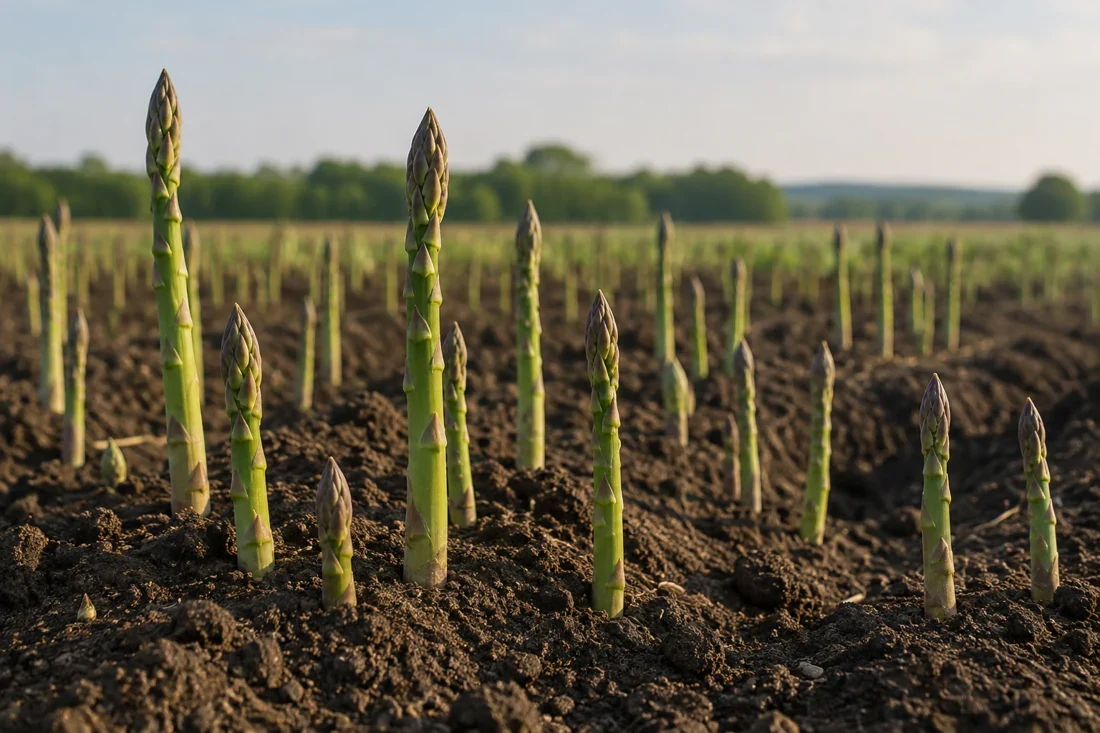
Weather, region and production practice can move those windows, so a calendar is a guide to local harvest rather than a guarantee that every farm starts and stops on the same dates.
Fresh asparagus on a shop shelf may have come from another growing region, while frozen asparagus may have been harvested and processed months earlier. These are three different kinds of availability: local crop season, fresh market supply and frozen inventory. Understanding the difference helps a home cook choose seasonal produce and helps a foodservice or manufacturing buyer plan a menu without assuming that year-round supply means year-round harvesting from the same field.
Asparagus season depends on the growing region
The familiar answer that asparagus is in season in spring is useful only when the location is clear. Northern and Southern Hemisphere spring occur at different times of year, and climates vary within each hemisphere. A warm growing district can begin before a cooler one. A cold spell can slow emergence during an otherwise normal season. For a practical purchase, pair any month range with the growing region and the current condition of the crop rather than treating spring as a worldwide delivery window.
British Asparagus uses the traditional dates of April 23 to June 21 to describe the British season, while recognizing the weather's influence on supply. Those dates provide a useful cultural and planning reference for British-grown asparagus. They do not describe the harvest calendar for every imported bunch sold in Britain. A retailer can stock asparagus outside that period from other origins, and a restaurant can use preserved product after the local fresh harvest has finished. British Asparagus gives the regional context for the traditional window.
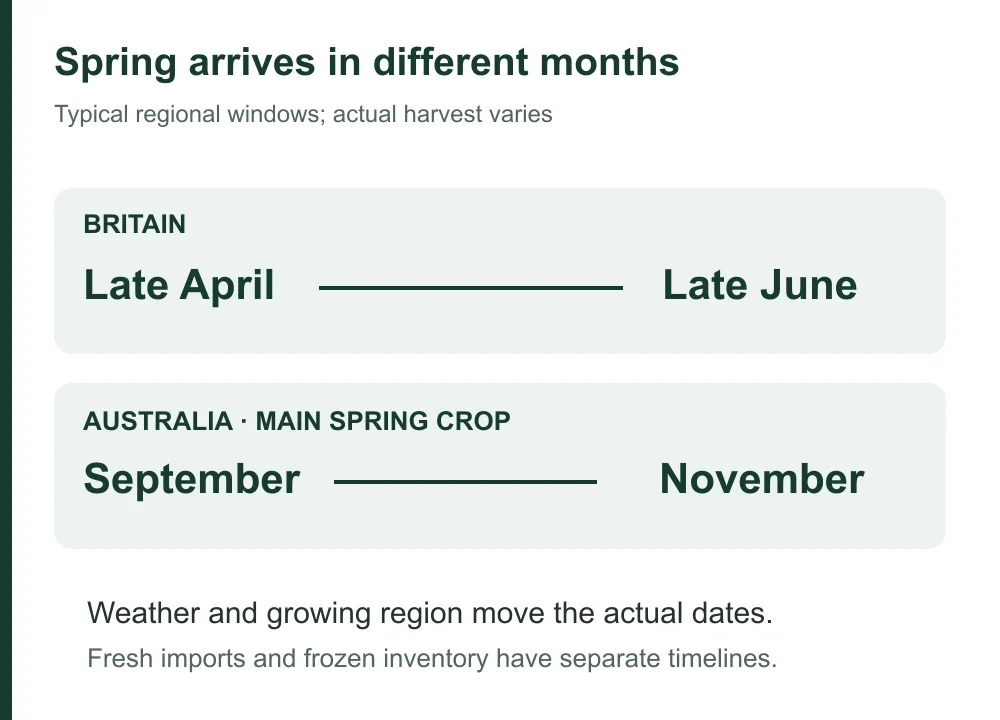
Britain and Australia illustrate opposite spring windows; weather can shift actual harvest dates.
View larger diagramAustralia's calendar illustrates why the location must travel with the dates. The Australian Asparagus Council describes the principal spring season as September to November, with some production extending into summer. This is not a contradiction of the British calendar; it reflects a different hemisphere and growing system. A buyer reading an international article should check which country the author means before translating a seasonal month into a purchasing deadline. The Australian Asparagus Council's crop overview explains its local supply pattern.
Within a large country, a single national date range can also be too broad for detailed procurement. Farm location, variety, field conditions and management affect the start and duration of harvest. If an order depends on the new crop, ask the supplier for the relevant growing and processing window rather than relying only on a generic national calendar. The answer may still be an estimate until the crop develops. A realistic estimate with an update point is more useful than a fixed date presented without context.
For seasonal menu writing, name the origin only when it is known. A spring asparagus dish can describe a culinary idea without claiming local harvest. If the menu specifically promises local or new-season asparagus, the purchasing record needs to support that statement. The same principle applies to a retail story about seasonal sourcing: the crop calendar helps explain the product, while the lot's actual origin and harvest or production information establish which story can accurately be told about the delivered food.
Spring harvest follows the asparagus crown's growth cycle
Asparagus is a perennial crop that produces new spears from an underground crown. The edible spear is a young shoot. If it is allowed to continue growing, it develops into a taller, branching plant with fine fern-like foliage. Harvest therefore takes some of the new growth during a managed period, while later growth is allowed to support the plant. A photograph of spears emerging from soil shows only one stage of a cycle that continues after the marketable harvest ends.
The crown and roots carry the plant through seasons, but repeated spear production is not an unlimited tap. Growers manage harvest duration in relation to plant age, vigor and local practice. The University of Minnesota describes a typical mature planting harvest period of about six to eight weeks in its regional guidance. That range is useful for understanding why a field is not harvested continuously throughout the year. It should not be converted into a universal rule for every climate or production system. Minnesota's asparagus harvesting guidance explains the local management context.
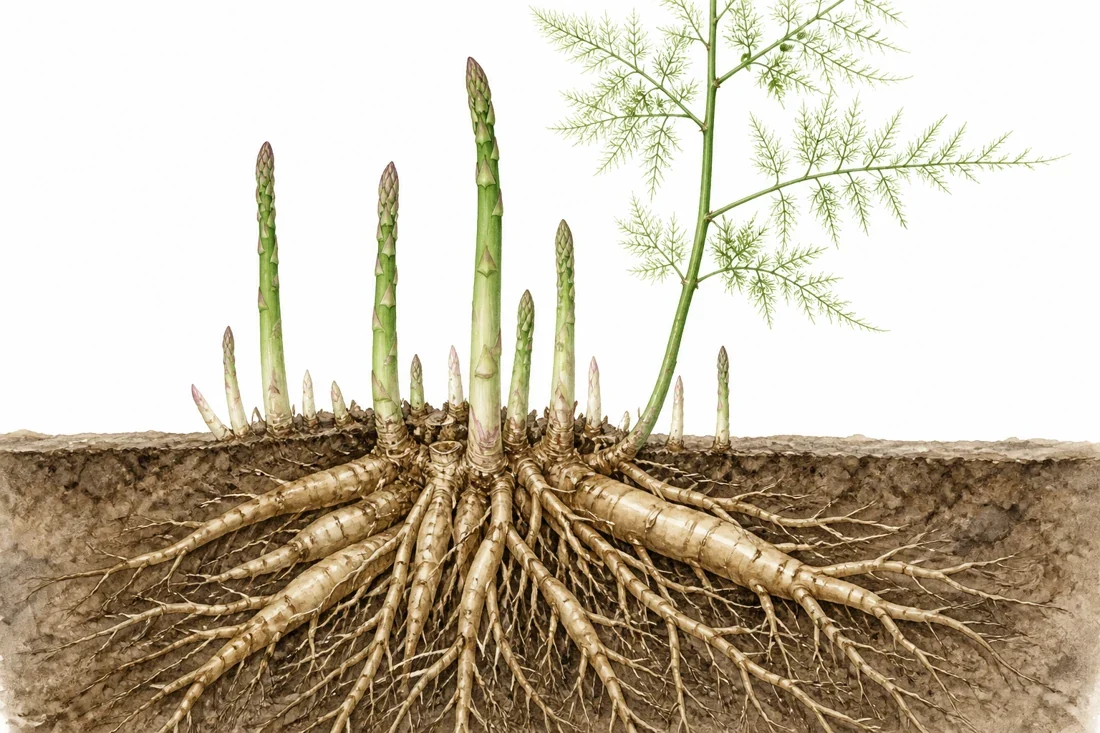
The crown produces spears that develop into fern growth when allowed to mature.
When the harvest period ends, remaining spears develop foliage. That above-ground growth supports the plant's continuing cycle rather than representing neglected marketable product. For someone accustomed to annual vegetables, the field may look as if harvesting could simply continue. In practice, the grower is managing the perennial plant as well as the current crop. The Australian Asparagus Council's growing information also connects spear harvest with the crown and subsequent fern growth. Its growing overview describes that relationship.
Temperature affects how quickly spears emerge and extend, which is one reason day-to-day supply can fluctuate within the season. A period described as peak season does not mean each day's harvest volume will be identical. Nor does a slow start necessarily establish the final crop outcome. Buyers whose production schedule depends on asparagus should distinguish a seasonal estimate from a confirmed released quantity. The crop's biological rhythm creates uncertainty that can be managed through communication and inventory planning, but not removed by a calendar label.
This growth cycle also clarifies what IQF supply can and cannot do. Freezing allows prepared spears or cuts from a harvest to be stored for later use. It does not make the crown produce a continuous fresh crop in the same location. When we discuss year-round frozen asparagus availability, the relevant support is planned production, suitable storage and available inventory. The field still has a growing cycle, and a particular size or format can become limited even while asparagus remains listed as a product category.
Fresh availability and local season describe different things
A supermarket can offer fresh asparagus outside the local season by sourcing from other regions. That makes fresh product available, but it does not make it locally harvested. The distinction is easy to miss when an online article answers the question using the author's own location. For a shopper, the origin label and condition of the bunch are more informative than assuming the display follows the local crop calendar. For a buyer, the supply contract should make any origin requirement explicit.
Fresh and frozen availability also involve different forms of time. A fresh bunch moves from harvest through packing, distribution and sale while its quality changes. A frozen lot is harvested and processed, then held under its specified frozen conditions before release and delivery. The production date matters in the frozen supply chain, but it does not need to coincide with the month of use. Neither model should be described as automatically superior in every dish; the application and handling determine the practical result.
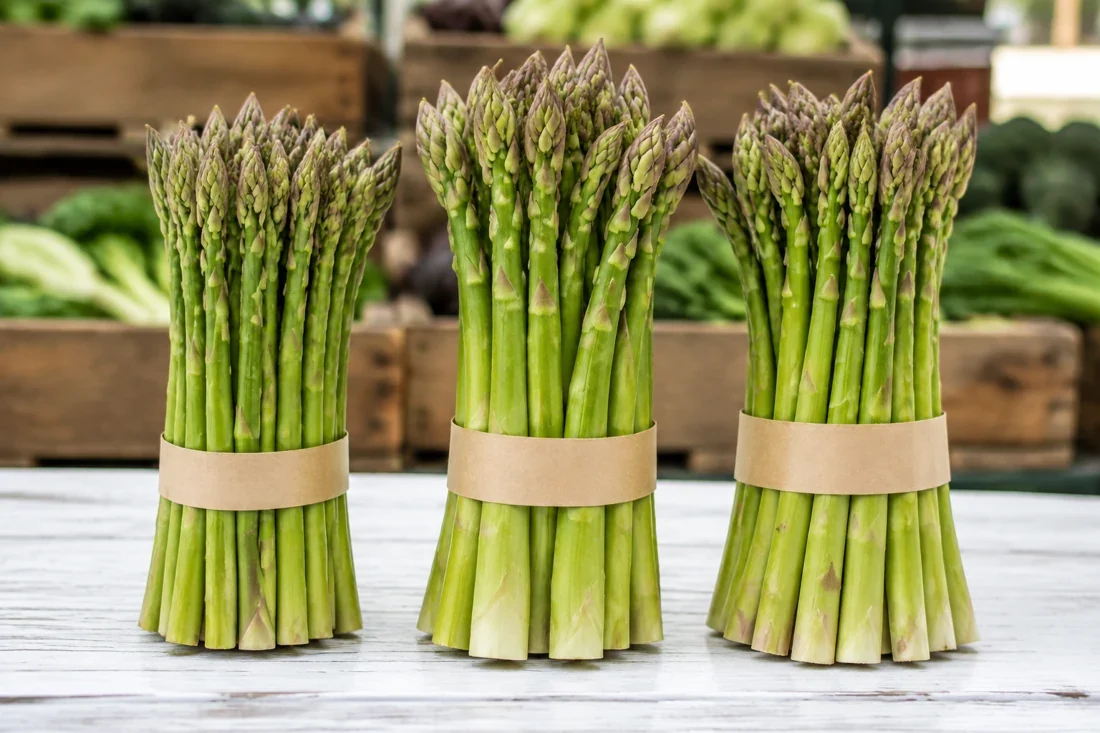
Fresh market supply may come from a different growing region than the shopper's local harvest.
| Availability | What it describes | Buyer check |
|---|---|---|
| Local fresh season | Harvest in the named local region | Origin and current crop condition. |
| Fresh market supply | Fresh produce offered through distribution | Actual growing origin and received quality. |
| Frozen inventory | Previously harvested and processed stock | Format, lot, remaining shelf life and release timing. |
Menus can benefit from keeping this distinction visible internally even when it does not appear in customer-facing copy. A restaurant may choose local fresh asparagus for a short seasonal special and use a suitable frozen format in soup or a prepared meal throughout the year. Those are different purchasing briefs. If the team quietly changes the source or format while keeping a specific origin promise on the menu, the wording can become inaccurate. A clear specification makes the change easier to review before service.
For manufacturers, continuity means having the right approved ingredient when production requires it. A general statement that asparagus is available all year does not confirm that the desired diameter, spear length, pack or crop lot is in stock. Ask which formats are available now, which depend on the next production window and what lead time applies to the proposed quantity. The answer should connect actual inventory with the customer's schedule rather than relying on the existence of a year-round category page.
At GreenLand-food, our frozen asparagus range supports discussions about spears, tips and cuts for different commercial uses. We review the format and order timing together because a menu requirement is more specific than the word asparagus. If a buyer needs a new-crop lot, a particular origin or a fixed release schedule, those requirements should be included at inquiry stage so the available supply can be checked against them before planning the final delivery.
Choose fresh spears by condition as well as the calendar
Seasonal produce still needs to be assessed when it arrives. For asparagus, look at the tips, stems and cut ends rather than using the month as a substitute for inspection. Tight tips and firm spears are generally desirable for a fresh purchase. Excessive wilting, wet deterioration or damaged pieces call for closer attention. A bunch can be locally in season and still have been handled poorly, while an imported bunch may be in good condition when received.
Diameter is a separate question from freshness. A thick spear is not automatically old, and a thin spear is not automatically the most tender choice. The variety, growing conditions and part of the spear all contribute to the eating result. Choose a size that fits the planned dish and cooking method, then assess its condition. For even cooking, a reasonably consistent diameter range within a batch can be more useful than a general preference for the thinnest spear on the shelf.
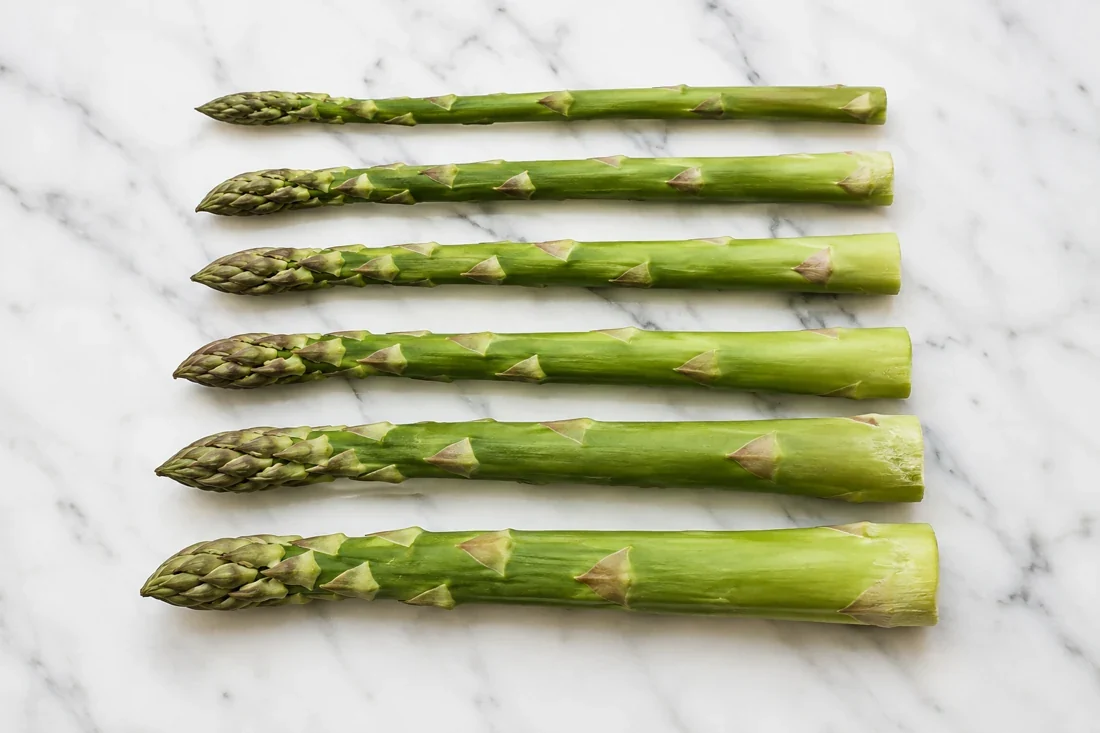
Inspect tip condition and stem quality separately from the chosen diameter range.
The cut ends deserve attention because the lower part may require trimming. A purchasing comparison based only on gross bunch weight can overlook the usable portion after preparation. If one delivery requires more trimming or contains more damaged tips, the usable yield and labor requirement change. A simple kitchen trial can record the received weight, trimmed weight and final portion result. This is a practical purchasing comparison, not a reason to promise a universal yield for every bunch or growing region.
Store and prepare fresh spears according to appropriate produce handling guidance and the condition of the purchase. Avoid treating a seasonal peak as permission for indefinite holding. The menu should use the most time-sensitive fresh stock deliberately, with later demand planned separately. In a busy kitchen, labeling receipt dates and reviewing the next few services can prevent a large seasonal purchase from becoming a quality problem. Buying more at a favorable moment only helps if the product can be used well.
For a frozen sample, the visual questions change. The pack should be evaluated under its labeled frozen handling conditions and then cooked using a consistent method suitable for the product. Comparing a thawed frozen spear with a raw fresh spear by hand does not show how each will perform in the final dish. Compare the finished application instead, including appearance, bite, breakage and usable portions. This keeps the seasonal fresh discussion connected to a fair assessment of the alternative format.
IQF asparagus carries a seasonal crop into later months
IQF means individually quick frozen. In practical terms, the aim is to produce separate frozen pieces that can be portioned for later preparation, subject to the product and pack. The process begins with suitable raw material and includes the preparation steps specified for the item. A frozen spear retains the identity of the harvested vegetable, but its handling and cooking requirements differ from those of a newly cut fresh spear. The label and specification should describe the supplied processing state.
Frozen supply can make a seasonal ingredient easier to plan for soups, sauces, ready meals and other repeat production. A kitchen can draw the quantity required from an appropriate pack without trimming a fresh bunch each time. That potential advantage still depends on the cut, pack size and storage arrangements. A large block or an unsuitable piece size may not offer the portioning convenience the buyer expects. Confirm the actual form rather than assuming every frozen asparagus item behaves identically.

Green asparagus spears showing their tips and cut stem ends. Confirm the processing state and storage instructions for the supplied asparagus.
Freezing should not be described as a pause that removes all future quality change. Product quality depends on the initial material, processing, packaging and maintenance of the specified cold chain. The relevant shelf life belongs to the particular product and its stated conditions. Buyers should ask for the production or packing date information needed for their system, the labeled storage temperature and the remaining shelf life at delivery. A generic month count from another product is not a substitute for those details.
The product's intended preparation also matters. Blanching or freezing does not automatically make an asparagus ingredient ready to eat. Follow the supplier's directions and assess the final cooking process for the dish. In a prepared meal, the asparagus may pass through assembly, freezing and consumer reheating, so its texture needs to be tested through that full sequence. A sample that tastes good after a single brief cook does not necessarily predict the result after several processing stages.
Our guide to whether asparagus can be frozen addresses the freezing question in more detail. For seasonal planning, the essential point is that IQF stock can bridge the time between harvest and use. The bridge is supported by actual inventory and handling controls. When a required size or pack is limited, another frozen format may be available, but the substitution should be reviewed against the recipe before it is treated as an equivalent supply.
Plan frozen orders around crop and inventory dates
Start with the dates on which the ingredient is needed for production or service, then work backward through delivery, order preparation and any required approval steps. A buyer who needs a new sample, private-label artwork and a customer sign-off has a different timeline from one reordering an approved bulk item. The crop window is one input in that schedule. It should sit alongside current stock availability and the actual lead time quoted for the order, rather than replacing them.
Ask whether the proposed supply will come from existing inventory or planned production. For existing stock, the questions concern format, quantity, lot age, remaining shelf life and release arrangements. For planned production, the questions include the expected processing window and the point at which quantity and timing can be confirmed. Both can be valid supply routes. The important difference is which facts are already established and which still depend on crop or production progress.

Green asparagus spears arranged on a metal surface. Match the required spear specification with the available lot and crop records.
Pack requirements can influence timing independently of harvest. A standard bulk carton, a foodservice bag and a private-label retail pack may require different preparation and approval work. If the asparagus format is available but the requested packaging is not yet approved, the order is not ready simply because the crop has been harvested. Give the supplier the intended pack, label language and destination requirements early enough to review them with the product, rather than adding them after the delivery date has been assumed.
Build a reasonable review point into longer planning horizons. Before committing a menu or production run to a particular format, confirm the current position on quantity, specification and timing. If a substitution becomes necessary, assess the effect on portion size, preparation and labeling. A change from whole spears to cuts may be acceptable in a soup but unsuitable for a plated side dish. A continuity plan is most useful when it defines which alternatives are acceptable and which require a new trial.
We will review an asparagus inquiry against the requested cut, pack and shipment timing, with the available product information used to confirm the proposed order. Buyers can make that review more efficient by sharing their expected volume and the part of the year they need to cover. A rolling requirement is different from a single seasonal promotion. Stating the pattern helps identify whether a one-time shipment, staged releases or another arrangement is appropriate for the commercial discussion.
Choose spear size and format for the planned menu
Whole spears are useful when the shape of asparagus is part of the presentation. Length and diameter determine how they fit on a plate, in a tray or within an assembled product. For a wrapped appetizer, consistency may matter more than an unusually long spear. For a side dish, the desired portion can guide both size and count. A specification should state the dimensions that affect the finished food, with any acceptable range confirmed rather than left to visual interpretation.
Tips emphasize the recognizable bud end and can suit applications where a shorter piece is desirable. Cuts distribute through soups, pasta, rice and mixed dishes without requiring the full spear shape. These formats have different value in the recipe, so a price comparison should account for usable function. A whole spear that must be chopped immediately may add no benefit to a filling, while irregular cuts cannot reproduce the presentation of evenly sized spears on a plated entrée.
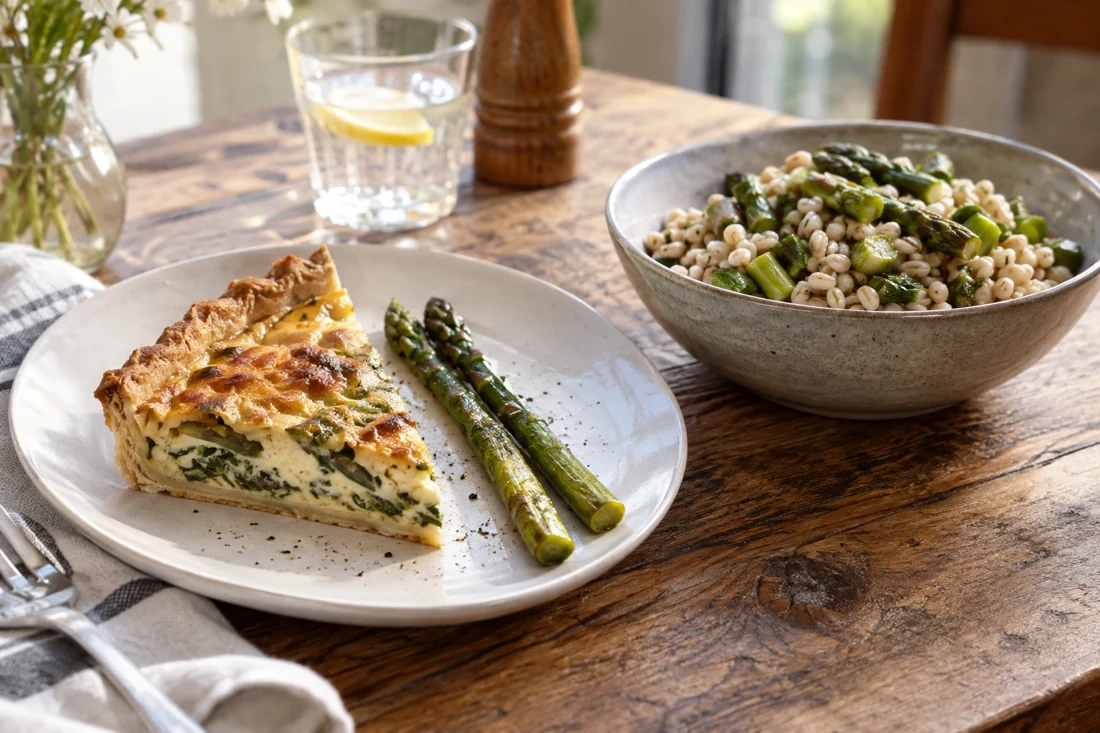
Whole spears and cut pieces serve different presentation needs. Illustration.
Our frozen asparagus spear information provides a basis for discussing available length and diameter options. The selected range should be confirmed for the order and evaluated in the customer's cooking process. Record the sample's size, starting state, method and final texture so a later comparison has a clear reference. Without those details, a difference in cooking can be mistaken for a difference in the supplied asparagus.
For a seasonal fresh special, the calendar and origin may be part of the appeal. For a year-round prepared dish, consistency of cut, pack and finished performance may carry more weight. Neither brief should be forced into the other. The useful purchasing decision is the one that supports the menu promise and the kitchen's actual process. Describing the application clearly allows the supplier to focus on the features that matter instead of offering a general asparagus specification with no connection to the dish.
Asparagus is in season when the relevant growing region is harvesting its spring crop, with local variation around that broad pattern. Fresh market availability and frozen inventory extend the ways it can be purchased beyond that window. For reliable planning, keep those three facts separate and then connect them through the order: origin when required, crop or production timing when relevant, and a confirmed format that performs well in the finished food.
Discuss frozen asparagus supply with GreenLand-food
GreenLand-food is a professional frozen asparagus supplier and manufacturer in China, providing factory-direct wholesale supply for importers, food manufacturers, foodservice distributors and private-label programs.
Share the asparagus format, size range, seasonal demand, pack and required delivery period so we can review available supply.