


Garlic Chives vs Regular Chives: Flavor, Shape and Frozen Forms
Oct 19, 2026
Leave a message
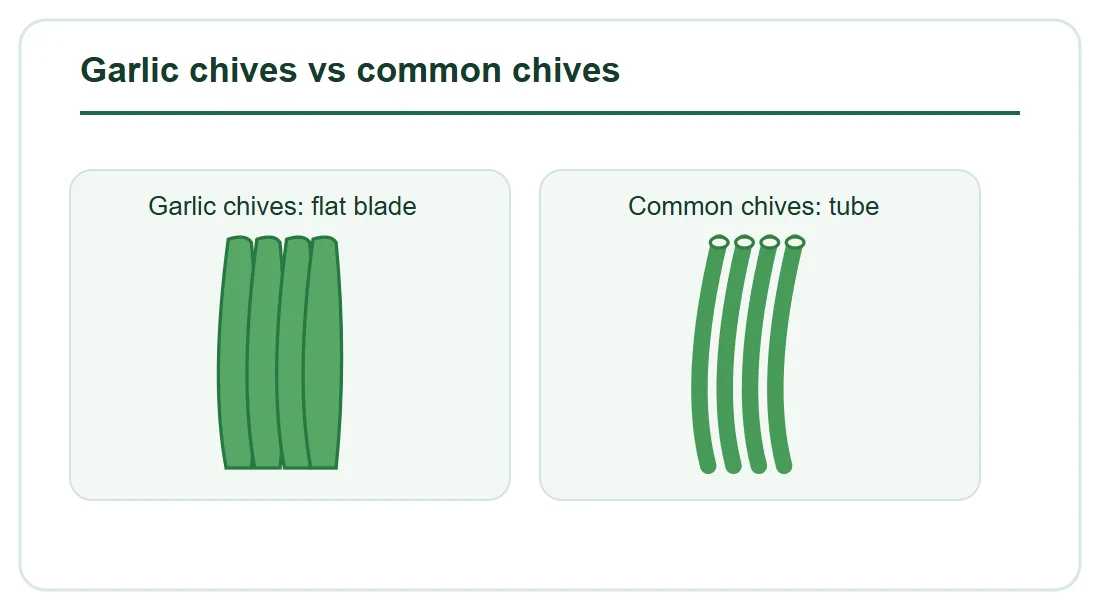
Regular or onion chives are Allium schoenoprasum: their leaves are slender, hollow tubes with a mild onion character. If a recipe uses chives as a last-minute garnish, either may be possible after a taste adjustment. If the leaves are a recognizable part of a dumpling filling or a hot stir-fry, the choice changes the dish. A purchasing description should name the plant and the cut, because "chives" alone does not reliably identify either ingredient.
That comparison remains useful when the leaves are frozen. Freezing preserves a supply of a defined cut, but thawed leaves cannot be judged as if they were freshly cut garnish. The relevant test is the aroma and texture after the intended cooking process. GreenLand-food's frozen Chinese chives page shows a short leafy cut and an actual sorting step. Those photographs show a commercial ingredient form; they do not show that a particular customer's filling or sauce has already passed a formulation trial.
- Garlic chives have flat leaves and a garlic note; common chives have hollow leaves and an onion note.
- A frozen chopped leaf belongs in a cooked-use trial before substitution.
- Name Allium tuberosum and the accepted cut on a Chinese-chive order.
Which chive is which?
The names are the first trap. In a North American herb recipe, "chives" usually means common chives, A. schoenoprasum. "Garlic chives," "Chinese chives," and often "Chinese leek" point to A. tuberosum. Regional names such as jiǔ cài, nira and buchu may appear on Asian recipes, but buyers should still confirm the botanical identity and the plant part in an international specification. A translated common name can describe a culinary tradition without guaranteeing which species is in a carton.
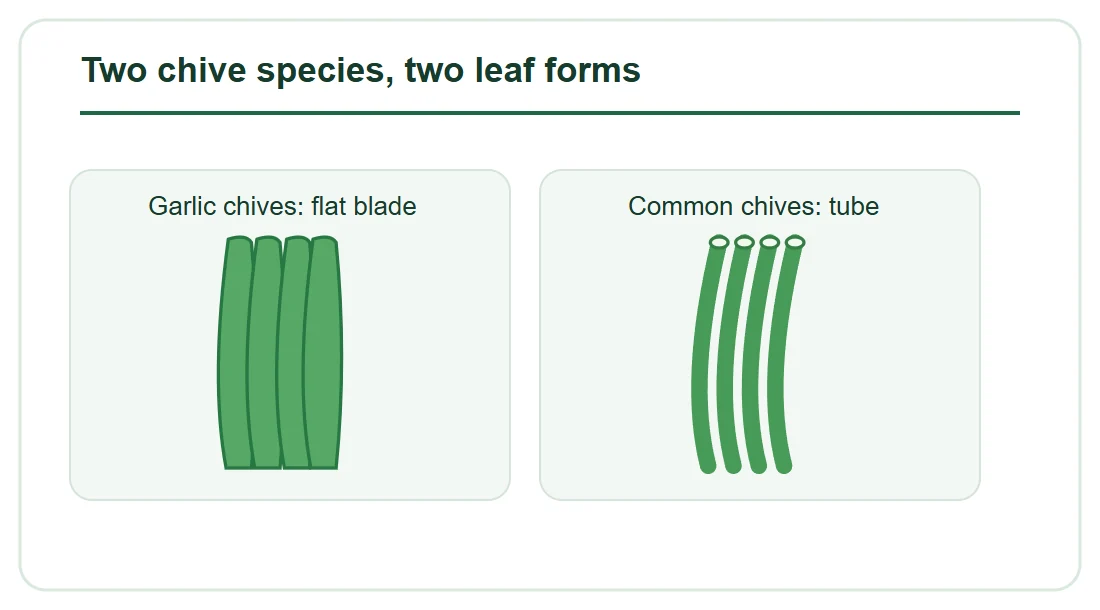
Two chive species, two leaf forms. Original schematic illustration.
The University of Wisconsin's horticulture entries describe the two species separately. Its garlic-chive entry identifies flattened, strap-like leaves and a subtle garlic flavor; its common-chive entry describes hollow tubular leaves and a mild onion flavor. UF/IFAS Extension adds the practical kitchen distinction: garlic-chive leaves tolerate some cooking, while tender common chives are often used as a finishing garnish. Those are useful identification and application guides, not a claim that every cultivar or lot has the same aroma strength.
Check the entire item named on an order. "Garlic chive" can mean green leaf, flowering stem, or another cut in trade conversation. A packet of short green pieces is not interchangeable with long stems selected for visual presence. For a recipe that needs a visible green leaf strip, specify leaf material and the range of cut lengths accepted. For a smooth sauce, finer pieces may be welcome; for a dumpling that should show the leaf when bitten, a very fine chop may lose that character. A photograph of the requested finished cut belongs with the words.
The answer is therefore a pair of decisions, not simply a dictionary entry. Identify the plant, then identify its delivered form. The two species share a family and both can taste pleasant with eggs or potatoes, yet a substitution should be tested in the completed dish. A label saying only "frozen chives" leaves too much room for an otherwise well-meaning supplier to offer the wrong leaf.
| Check | Garlic chives | Common chives |
|---|---|---|
| Botanical name | Allium tuberosum | Allium schoenoprasum |
| Leaf | Flat blade | Hollow tube |
| Typical flavor note | Mild garlic | Mild onion |
| Recipe starting point | Cooked fillings and stir-fries | Fresh finishing garnish |
Flat leaves, hollow tubes and the aroma test
Look at a fresh leaf cross-section before judging flavor. Common chives resemble narrow green straws. Cut one and the hollow center is usually evident. Garlic chives form flatter blades, sometimes slightly folded, with a solid-looking cut face. Flowers offer a second clue in the garden: common chives tend to show rounded purple flower heads, while garlic chives have clusters of small white flowers. A frozen chopped lot may contain no flowers at all, so leaf shape and documentation are more useful receiving checks than blossom color.
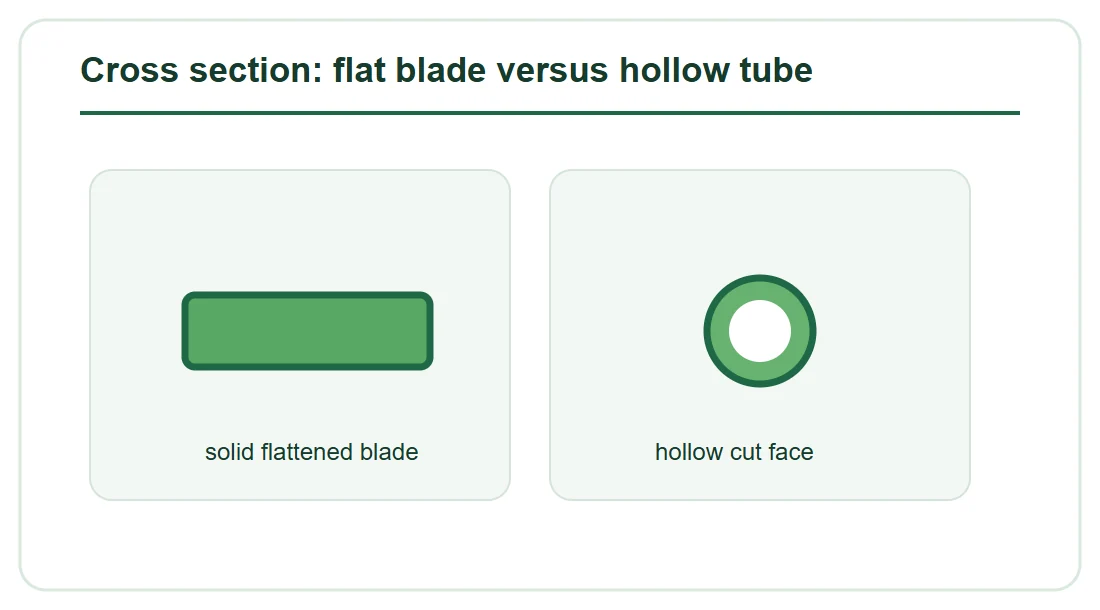
Cross section: flat blade versus hollow tube. Original schematic illustration.
Smell matters, but handle it carefully. Bruising a garlic-chive blade releases a garlic-like allium note; common chives read more onion-like. A cold, frozen sample often smells subdued. Open a representative sample under the intended handling conditions, then warm or cook a small controlled portion for comparison. If the customer already has an approved reference lot, prepare the reference and candidate side by side. The same pan, fat, salt and hold time keep the comparison about the leaf rather than the cook.
Aroma is not a single number that settles acceptance. A filling with ginger, garlic and meat can hide a difference that is obvious in plain scrambled egg. An egg garnish may expose a coarse cut that disappears inside a dumpling. If the intended application is a hot bakery filling, the flavor check should include the baked product after cooling, because the immediate pan smell is not necessarily the aroma a customer receives. Describe the result in ordinary terms: garlic note still identifiable, onion note dominant, grassy edge, or cooked leaf too tough.
Do not infer a botanical identity from green color alone. Green onions, leeks and garlic greens can all arrive as chopped green material. The buyer should request the declared species, plant part and product name on the specification, packing label and traceability record. The delivered pieces then provide a visual consistency check against that identity. A picture can reveal a mismatch; it cannot replace the underlying records.
What each plant contributes to a dish
Common chives work well when their light onion note can be noticed at the surface of a dish. Think of a spoonful over potatoes, a creamy dip, or an egg plate immediately before service. Their tender tubes lose much of the upright fresh-garnish appearance when cooked hard or held wet. That does not make them unusable in hot food, but it explains why a cook often adds them late. A customer buying for a chilled dressing should decide whether visible green specks or a clear onion aroma matters more.
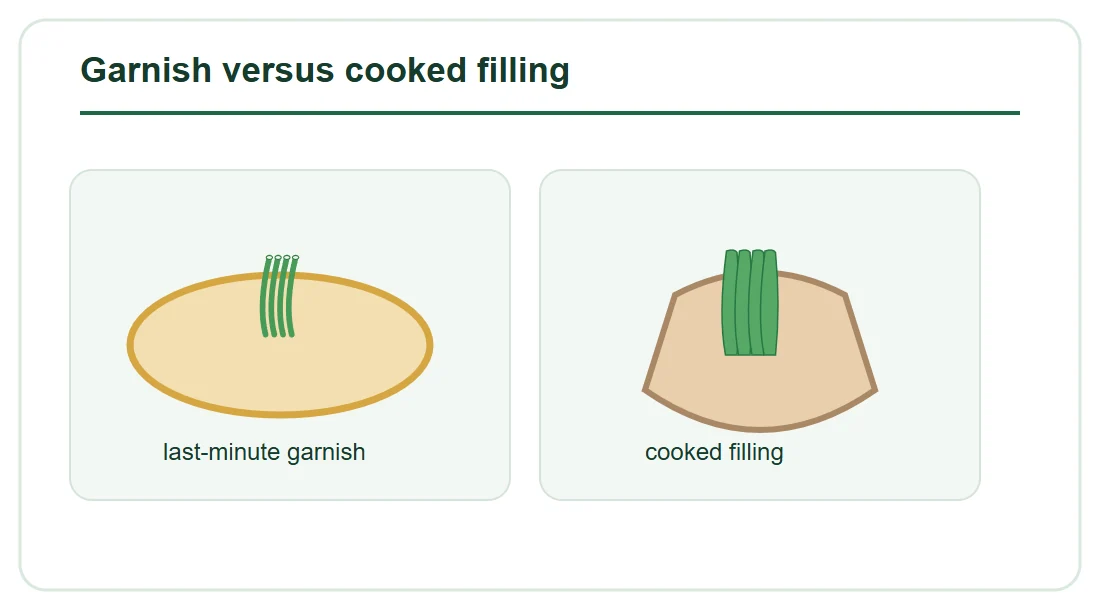
Garnish versus cooked filling. Original schematic illustration.
Garlic chives bring a different job to the kitchen. Duke Gardens documents their use in Chinese, Japanese and Korean cooking, including dumplings, pancakes, stir-fries, soups and eggs. Their flatter leaf can remain legible as a green strip after brief cooking. They add an allium note without requiring the bite of a chopped garlic clove. In a dumpling filling, that means the leaf can be part of the filling's texture; in a thin egg pancake, the pieces can be seen across the surface. Neither result follows from the species name alone; cut length and recipe heat still decide it.
Try a simple comparison in two applications. First, prepare equal weights of the two leaves in otherwise identical small egg portions, adding them at the same stage. Note whether the flavor reads as garlic or onion and whether the green pieces remain distinct. Then repeat in the actual commercial formulation, where dough, sauce, oil or other aromatics change the impression. This second test protects against an attractive bench sample that disappears after freezing, cooking and distribution.
A substitution can be deliberate. If regular chives are unavailable for a fresh garnish, a small amount of finely cut garlic chives might serve after a taste test. If a dumpling recipe is built around garlic chives, replacing them weight for weight with delicate onion chives changes both flavor and visible structure. Write down the accepted adjustment and the final product result. "Similar green herb" is too vague to manage a repeat run.
How freezing changes the choice
Frozen chopped leaves solve a supply and preparation problem: a buyer can dose a defined cut from cold storage without washing and chopping fresh bunches on every shift. Freezing also changes the physical leaf. Ice formation and thawing reduce the crispness that a fresh garnish relies on, and wet surfaces can make chopped leaves cling together. The useful question becomes whether the pieces separate and deliver the intended taste after cooking, not whether they spring back like newly harvested chives.
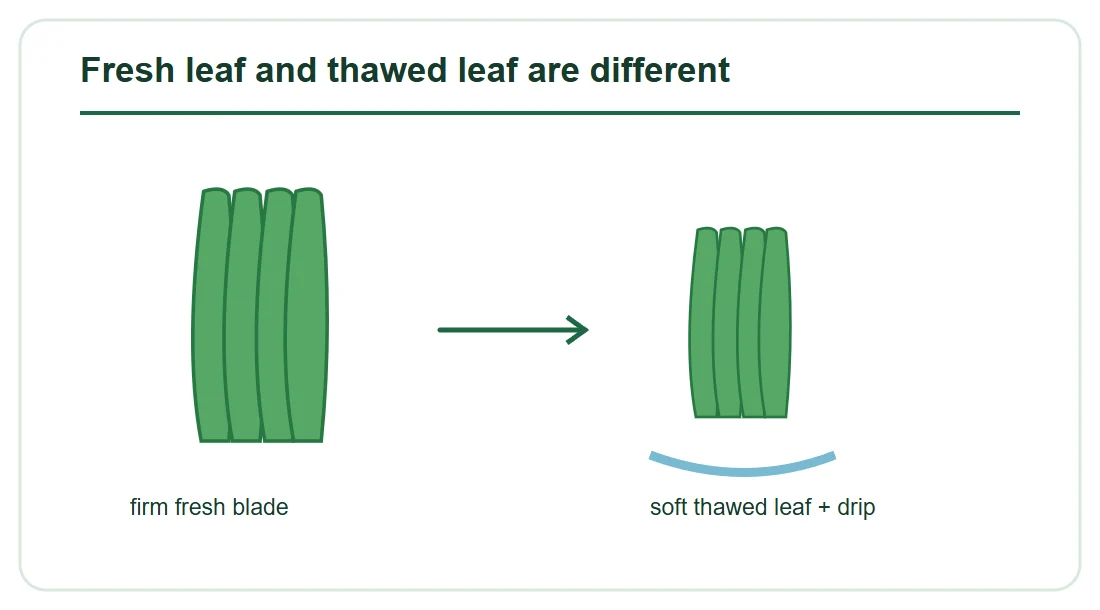
Fresh leaf and thawed leaf are different. Original schematic illustration.
For a hot dumpling filling, an individually separable cut may be added while cold and mixed promptly so the moisture is distributed through the filling. For a delicate garnish, the frozen format may be unsuitable because thawing can flatten the slender tubes and leave visible moisture on the plate. Test the actual delivered form before promising a garnish result. If a sauce will be blended, shape matters less than flavor and water contribution. If a baked pastry needs green flecks, assess color and distribution after baking, not just in the frozen bag.
Do not equate frozen with ready to eat. The product's treatment, intended use and any required cooking must come from its agreed specification and destination-market requirements. A blanch step, if present, is a process treatment, not automatic proof of a finished ready-to-eat status. Keep raw-ingredient handling and final dish validation distinct. The customer should follow the cooking and food-safety controls for its own recipe.
There is also a sensory difference between freshly thawed and cooked leaves. A direct sniff of a frozen bag can underrate a garlic-chive ingredient, while a hot pan can briefly exaggerate its aroma. The fair test is the served product at the temperature and time relevant to the customer. For a frozen dumpling, that may include reheating after storage. For an egg item, it may include a short hot hold. Write the endpoint into the evaluation record so the next lot can be judged in the same way.
Select a cut for dumplings, eggs and sauces
Begin with the product, not an arbitrary cutting machine setting. A dumpling filling must distribute across many units without long leaves bridging or clumping. A very coarse cut can protrude through a thin wrapper; a very fine cut can blend into an undifferentiated green paste. Lay out a few finished dumplings, cut them open and look for both distribution and bite. The accepted leaf length is the one that solves those problems in the customer's machine and recipe.
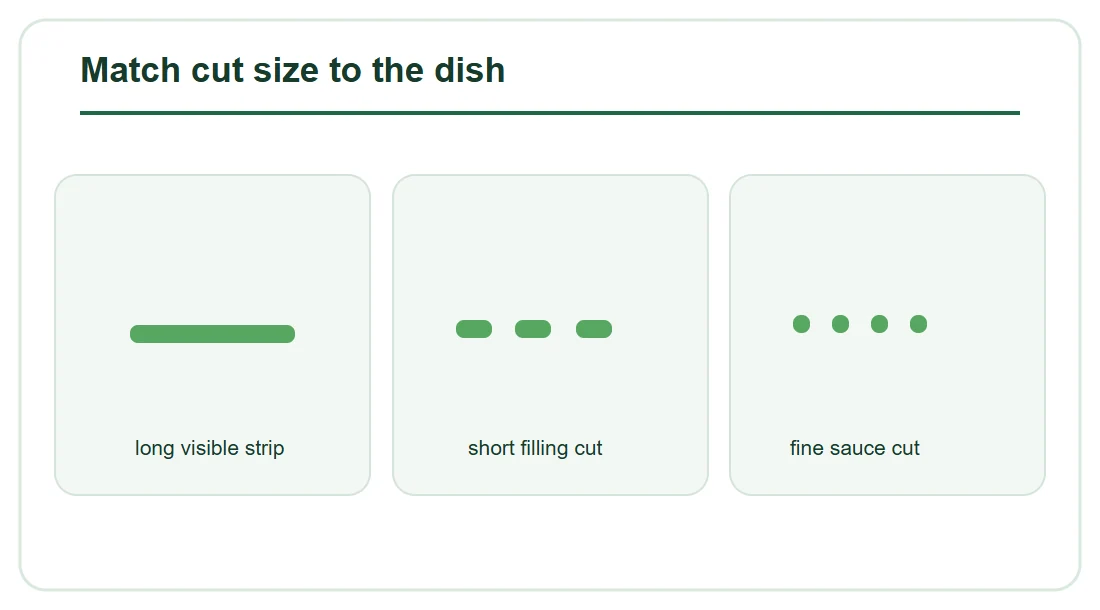
Match cut size to the dish. Original schematic illustration.
An egg pancake has another visual requirement. Flat strips can form visible green lines and retain a recognizable garlic-chive identity. If the pieces are too short, the cooked pancake may look like it contains an anonymous chopped herb. If they are too long, portioning can become irregular and the egg may tear around the leaves. A bench batch followed by normal production handling is more reliable than choosing length from a photograph alone.
For a smooth sauce, dressing or paste, the priorities shift. A fine cut can speed dispersion, but the recipe may need a drain or solids adjustment if the ingredient releases liquid. Decide whether the green pieces should remain visible after blending. If not, control flavor and color rather than buying a visually premium long cut. If yes, assess the final product after a hold period, because green flecks can settle or darken in a sauce.
Ask what is excluded from the cut. Yellow leaves, coarse bases, flower stalks, excessive fines and foreign plant material may matter more than a nominal average length. Different dishes tolerate these defects differently. A dumpling buyer may reject stringy bases that interfere with bite; a sauce plant may care more about low foreign matter and repeatable flavor. Specify the exclusions that matter to the final food and verify them in a representative sample.
Discuss the frozen ingredient for your production
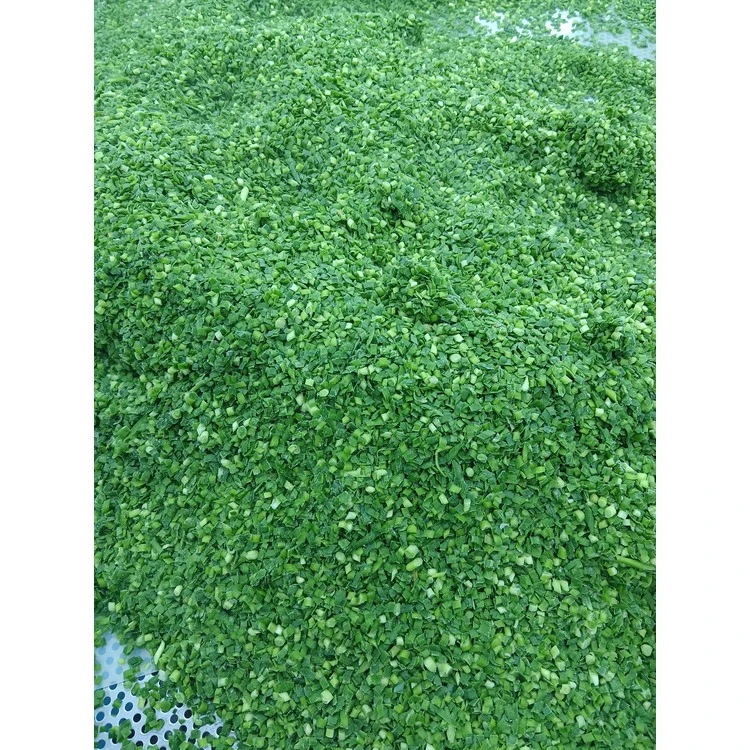
Frozen Chinese Chives
Cooked dumpling fillings, eggs and sauces.
Confirm for your order: Plant identity and cut length; aroma, draining trial and pack.
View product & supply detailsFor a commercial trial, send your required form, application, pack, quantity and destination. We can discuss the offered sample and the order specification with you.
Request Specifications & QuoteSample a frozen Chinese-chive lot for identity
GreenLand-food's product page includes a close view of cut Chinese chives spread for inspection and a separate photograph of workers sorting cut leaves. The first helps show the small leafy form; the second shows a sorting activity. Neither photo alone proves the botanical species, the final aroma, or a numerical defect rate. Treat them as a realistic reference for what the offered commercial cut looks like, then examine an actual sample for the intended order.
Cut Chinese chives spread for inspection.
Spread a modest frozen portion in a shallow tray and look at leaf shape, cut consistency, pale base pieces, yellowing, clumps and unexpected material. Record how much remains separable at the intended dosing temperature. Take a second portion into the actual recipe and cook it under a documented method. The visual tray check and the cooked trial answer different questions. A uniform tray can still lack the desired garlic note; a strong aroma can still come with pieces too long for the filler.
Build a comparison that someone else can repeat. Label the reference and candidate blind where practical. Weigh portions, use the same surrounding ingredients and capture photographs of the frozen cut and the finished dish. Note the time from addition to tasting. Rather than a generic "passes quality," record observations such as "green strips remain visible in the cut dumpling; no coarse base felt in the bite; garlic note remains after reheating." That statement can anchor the approved sample and any later dispute.
If identity is uncertain, pause the sample decision. Request the ingredient declaration, supplier confirmation and traceability information that connect the botanical name to the lot. If the ingredient looks like spring onion or a different allium, an aroma test is an investigation aid, not authority to relabel it. Resolve the discrepancy before approving a formulation or packaging artwork that names Chinese chives.
Write a purchase description that prevents substitution
A usable description can be short and still precise: frozen Chinese or garlic chive leaf, Allium tuberosum, in the agreed short cut, for cooked dumpling filling. Attach the approved product photograph and sample reference. Then specify the accepted cut distribution, base and yellow-leaf allowances, treatment status, packing format and intended final use as agreed values. The exact limits should come from the buyer's finished-food trial and supplier confirmation. They should not be copied from a general article.
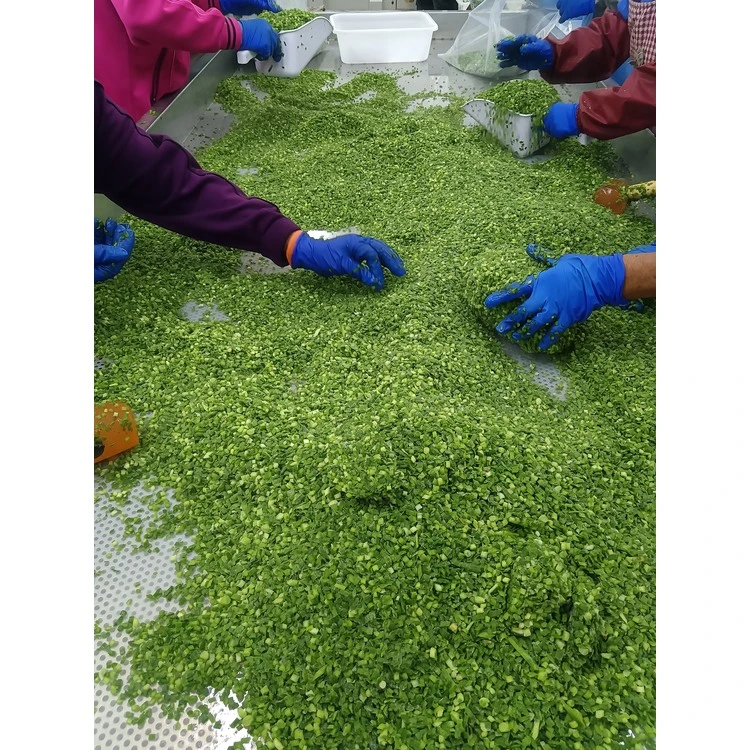
Workers sorting cut Chinese chives.
State that "regular chives" means A. schoenoprasum only when that is the ingredient wanted. Avoid writing both names as if they were synonyms on one order. The same goes for "Chinese leek," which can create translation ambiguity. A bilingual label or specification should have one controlling botanical and commercial product description. If the customer approves a substitute, record it as an approved alternate with a separate sample and recipe result.
The recipe also determines the useful packing unit. A food manufacturer dosing a mixer may want a bag size that fits one batch with minimal open-bag remainder. A distributor repacking for foodservice has different case and labelling needs. Ask for the order volume and the destination early enough to check available format and required documentation. These are practical order inputs, not evidence that a particular specification or route is already approved.
For an importer serving several customers, preserve the recipe decisions separately. A single Chinese-chive SKU may fit a cooked dumpling line and fail a premium fresh-looking garnish. If two customers want different leaf lengths, write two approved forms rather than a loose range that hides the difference. The same principle applies when a bakery wants longer visible strips but a sauce factory wants a fine chop. One broad description can make a delivery technically compliant while neither customer likes the result. State which finished-food test governs each requested form.
One small buyer box is usually enough for the commercial decision: identify the plant, approve the cut in the recipe, then fix the agreed sample and labels. The rest of the evaluation belongs in the customer's normal ingredient qualification system. Repeating a generic carton inspection list will not resolve the key risk here, which is the wrong allium or a leaf form that no longer works in the dish.
Cook-test the ingredient before approval
For a dumpling filling, make a small batch at the intended mixing and filling conditions. Add frozen Chinese chives at a consistent point in the sequence, keeping the other ingredients constant. Check whether pieces distribute without balling, whether the filling becomes wetter during standing, and whether leaves remain visible after the selected steam or pan-cook step. Cut open several units from different positions in the run. A single attractive unit can miss a distribution problem.
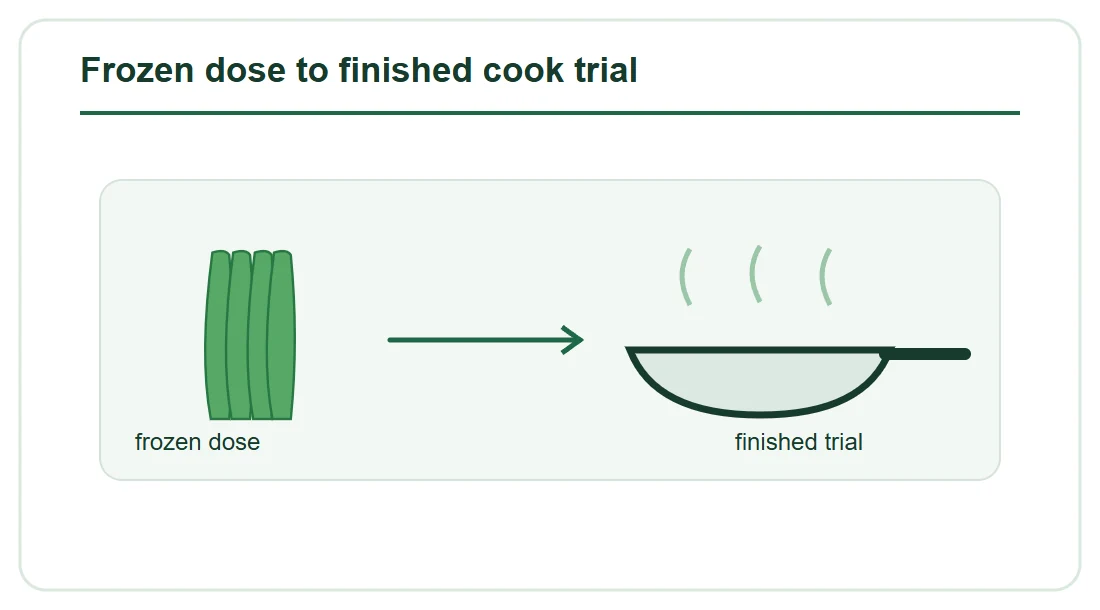
Frozen dose to finished cook trial. Original schematic illustration.
For eggs or a pancake, cook one reference portion and one candidate portion side by side. Use the same pan heat, ingredient weight and addition stage. Evaluate the leaf after the egg sets, then again after the intended hold. If the garlic note is too strong, changing the dose may be a better solution than changing species. If the pieces appear dark or stringy, revisit the cut or leaf-base fraction. The observation should lead to one controlled change at a time.
For a sauce, taste before and after normal processing and storage. A garlic-chive note that seems vivid in a quick pan trial may disappear in an acidified or strongly seasoned sauce. Conversely, a coarse green particle may remain visible when the application expects a smooth texture. Record flavor, appearance and water release at the customer-facing endpoint. That record supports later lot checks better than a promise that "frozen chives retain flavor."
The final approval has a narrow meaning: this specified ingredient form worked in this recipe under these conditions. It does not establish that garlic chives can replace common chives in every dish, that the frozen leaves can be eaten without the customer's normal controls, or that a photo proves the contents of future cartons. It does give the buyer a clear way to order and recheck the ingredient that the product actually needs.
Questions about names and substitutions
Are garlic chives the same as regular chives? No. Garlic chives are Allium tuberosum, with flat leaves and a garlic-like note; common chives are Allium schoenoprasum, with hollow leaves and a mild onion note. Identify the species and leaf form before substituting one for the other.
Can I use garlic chives instead of chives in a recipe? You can trial that change, particularly in cooked dishes, but use a taste adjustment and inspect the finished texture. A fresh garnish and a cooked dumpling filling set different requirements. Do not assume a weight-for-weight substitution will preserve the original flavor.
Do frozen garlic chives need to be thawed? It depends on the recipe and the supplied cut. A hot filling or sauce may accept a measured frozen addition; a cold garnish may show unattractive moisture after thawing. Follow the product's handling instructions and test the actual addition point.
What should a bulk order call the ingredient? Use "frozen Chinese/garlic chive leaf, Allium tuberosum," followed by the agreed cut, treatment, packing and intended use. Attach the accepted sample or its recorded visual and cooked results so "chives" cannot silently become another plant.
Compare another allium leaf used as a frozen foodservice ingredient.
Clarify the garlic bulb and greens before describing allium plant parts.
Source frozen chinese chives with GreenLand-food
GreenLand-food is a professional frozen chinese chives supplier and manufacturer in China, providing factory-direct wholesale supply for importers, food manufacturers, foodservice distributors and private-label programs.
Send us the product form, specification, packing, quantity, application, destination, private-label needs and requested documents.