


How to Cook Frozen Cabbage in Soups, Fillings and Prepared Meals
Oct 19, 2026
Leave a message
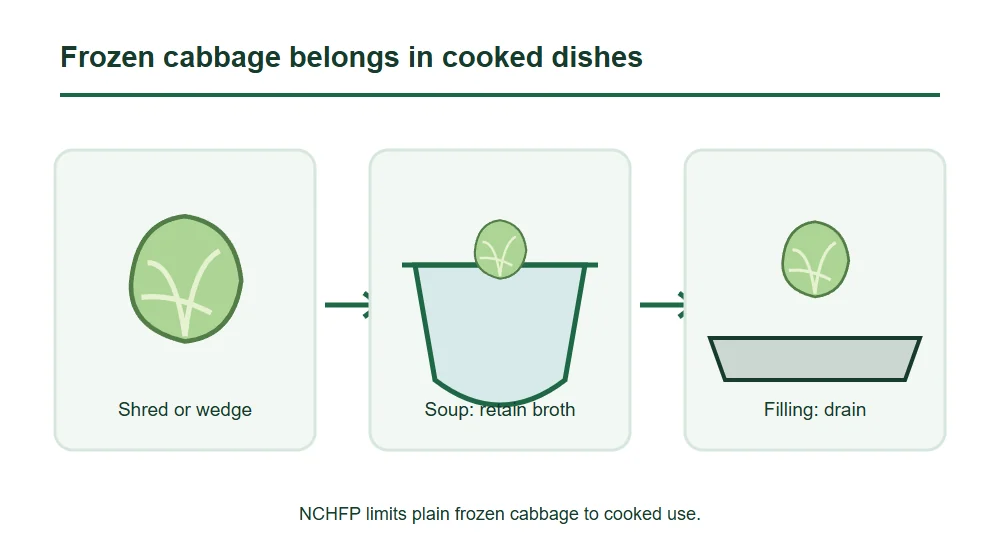
A dense frozen block needs a different handling step from loose pieces: warm and separate it in the cooking vessel, then check the centre. Follow the pack's instructions and the complete dish recipe rather than one advertised cabbage cooking minute.
The first decision is the cut and the dish's tolerance for water. A soup can absorb some thaw liquid; a wrapper often cannot. A prepared meal adds another constraint because the coldest part of the filled tray or pouch must be considered in the actual reheat method. Frozen cabbage is not a crisp raw-slaw ingredient. The National Center for Home Food Preservation says frozen cabbage or Chinese cabbage is suitable only as a cooked vegetable. Its 1½-minute water blanch is a home step before freezing, not a later soup, filling or ready-meal cooking schedule. We use that published boundary to explain a kitchen choice; it does not establish how a commercial GreenLand lot was processed.
- Identify cabbage type and cut; frozen cabbage is for cooked uses.
- Broth can receive released water, but dough and pastry usually need a drained or reduced filling.
- Test the complete prepared-meal pack; a pre-freeze blanching time is not a final cook time.
Identify the cut and its actual pre-treatment
A round heading cabbage, a Chinese cabbage and a chopped leafy mixture can behave differently even when each box says 'cabbage.' The shape and leaf-to-rib ratio affect how a portion distributes through soup and how much water appears in a filling. Check the product identity and the cut on the package. A shred spreads rapidly and softens quickly; a thin wedge keeps visible layers; an entire leaf may suit rolls but is harder to heat evenly as a frozen stack. Do not apply a recipe written for a small shred to a solid, multi-leaf block without checking its centre. GreenLand lists separate frozen cabbage and frozen Chinese cabbage categories; the two names should not silently be treated as identical commercial SKUs.
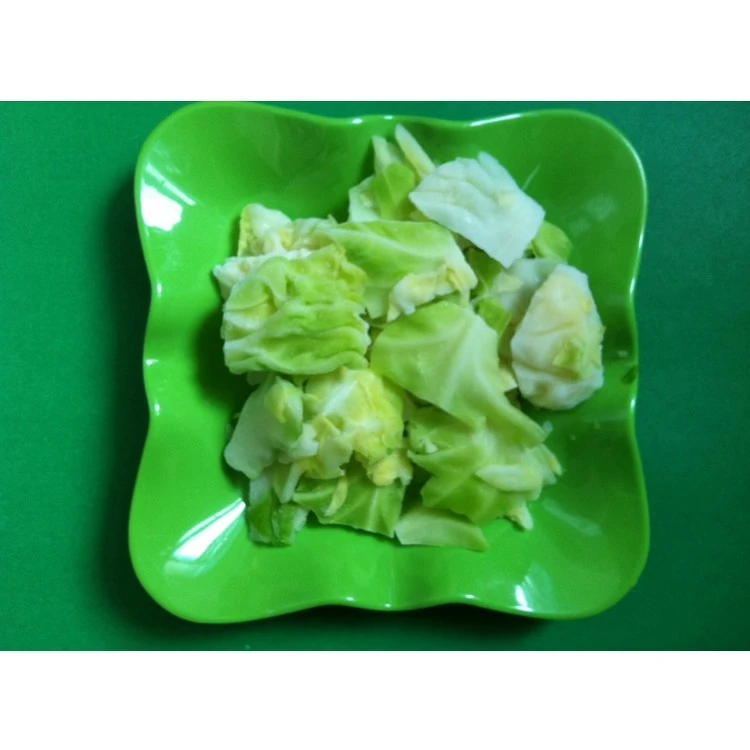
Cut cabbage in a tray on GreenLand-food product page; exact lot and frozen state require records.
At home, open a pack only when you are ready to cook, inspect the pieces for heavy ice or obvious clumping, and remove the portion needed without leaving the remainder warming on the counter. A piece with a thick central rib may need more cooking than a thin leaf. In a mixed-cut pack, distribute the ribs and leaves between servings so one bowl is not all firm core and another all soft leaf. A kitchen trial can weigh the ribs and thin portions separately from a small sample; that is a local recipe measure, not a standard grade. For a prepared-food line, record the proportion by mass only if the method defines how operators separate them.
The NCHFP cabbage freezing directions call for solid fresh heads, coarse outer-leaf trimming and medium-to-coarse shreds, thin wedges or separated leaves. They specify a water blanch of 1½ minutes, prompt cooling and draining, then packaging with ½-inch headspace. Those figures describe a particular home freezing preparation from a university preservation source. They do not prove how any purchased frozen cabbage was processed. They also do not mean a later frozen casserole needs exactly 1½ minutes in the oven. Ask the seller for the actual product specification and follow the pack's cooking instructions.
For a buyer or test kitchen, ask whether the named lot is simply cut and frozen, blanched before freezing, or fully cooked before packing. These are process-history branches, not visible grades. The same-looking shred may call for a different later cook or label instruction. Record the lot code, declared cut, pack weight, pre-treatment statement and intended cooked use before running a sample. A small bag that has thawed and refrozen in transit cannot be judged by a single attractive photograph; check the actual condition and temperature record. Do not infer a blanch from softness or a fully cooked state from a ready-to-use-sounding catalogue name. This identity check prevents a kitchen from treating an unverified ingredient as if it had already received the customer's required cook.
Soup: portion frozen cabbage against broth recovery
Soup is forgiving of softened cabbage because the leaves are meant to take up broth and lose raw crispness. Choose a pot large enough that the frozen portion does not stop all simmering for an extended period. Prepare the broth and slower-cooking vegetables first. Add loose small pieces when the recipe has time to return to a simmer and finish the thicker ribs. If a compact block enters the pot, separate it as it softens and stir so the centre meets hot liquid. A bubbling edge alone does not confirm that a dense cabbage core has heated through.
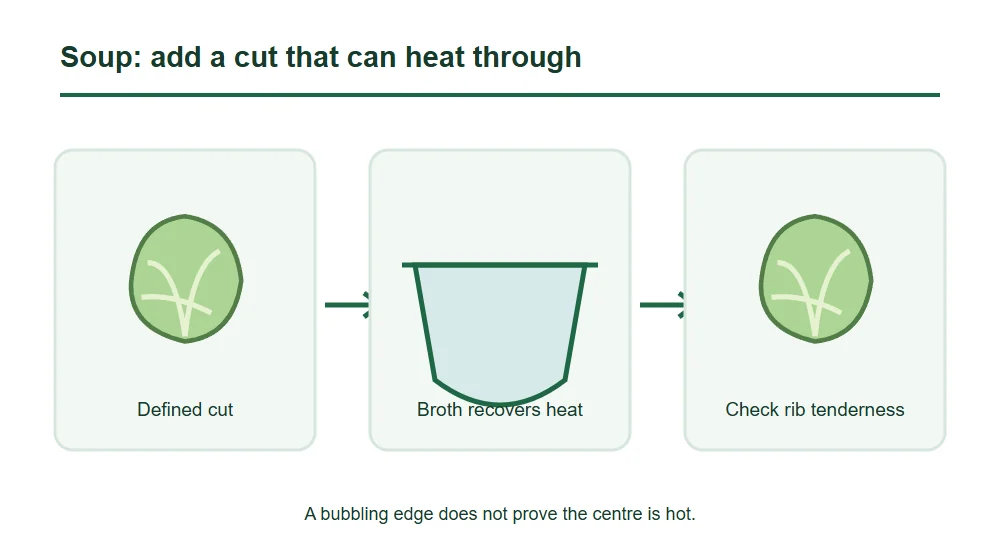
NCHFP's general frozen-vegetable serving guidance says most frozen vegetables are cooked without thawing first and notes that leafy greens may cook more evenly if partly thawed. Its covered-saucepan water suggestion is broad guidance for vegetables served alone; soup broth already supplies water. Do not add more liquid merely to mimic that method. If the final soup tastes dilute, first record cabbage mass, broth volume and any liquid or frost introduced by the frozen portion.
For a proposed home comparison, use two 1-litre pots, each with 750 ml of the same broth and 150 g of the same loose frozen cabbage cut. Add cabbage at different points in the recipe while keeping the finished portion, stove setting and lid use fixed. Record the time for the whole pot to regain a simmer, then judge the thickest rib and the broth at the recipe endpoint. These amounts and observations are a comparison design, not an official cooking schedule. In a kettle or larger batch, record working fill level, loading rate, agitation and the coldest expected point after the frozen addition; copying the home pot's clock time to different equipment would hide those variables. If the cabbage is a frozen block, run that form as a separate challenge rather than averaging it with loose shreds.
Filling: cook, drain, cool, then enclose
A dumpling, pie, roll or savoury pastry has less room to absorb cabbage water than a soup. Begin with the actual frozen cut and the filling recipe. If the recipe permits a thawed ingredient, thaw a covered portion under refrigeration; otherwise heat the cabbage in the recipe's pan or steamer until the compact mass separates and the required cook is completed. Transfer it to a clean sieve or perforated pan, allow a defined drain interval, and cool before combining it with a wrapper or a temperature-sensitive filling. Press only if the desired bite survives the press. Record whether drained liquid is discarded or deliberately reduced into a sauce; simply pouring it back into a dry filling defeats the water-control step.
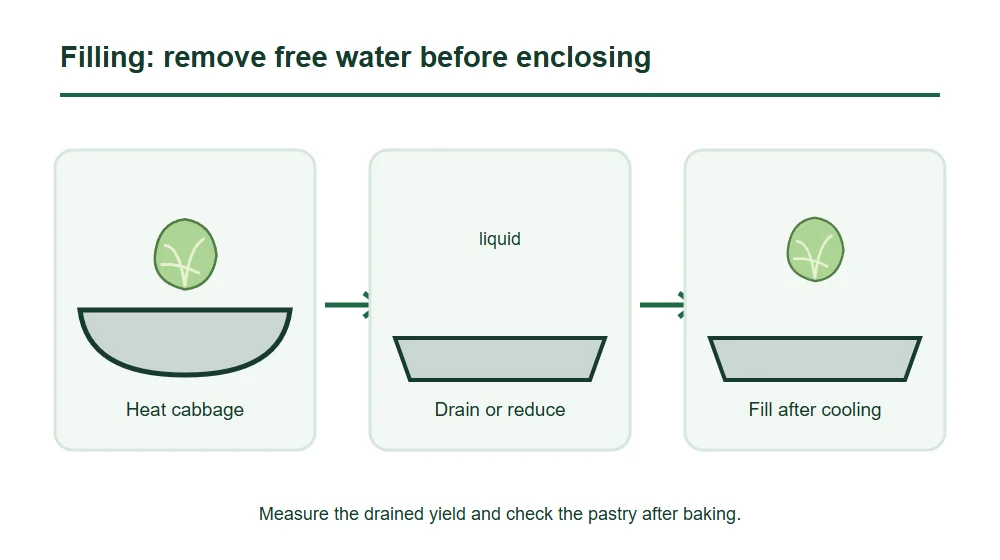
The measurement can be small and repeatable. In a proposed trial, start with 500 g frozen cabbage, record the thaw or cook route, drain in the same sieve for three minutes, then weigh the liquid and cabbage separately. If 60 g liquid is collected and 440 g cabbage remains, the collected fraction is 60 ÷ 500 × 100 = 12% of frozen starting mass. This is a fictional demonstration, not a GreenLand lot result or legal limit. Heated trials may also lose water as vapour, so a liquid-cup value alone is not total water loss. A food maker can repeat the trial at the intended batch size using its actual tilting pan, steamer or perforated tote, recording load depth, drain area, drain time and temperature. A deeper load may retain liquid even when the ingredient is identical.
Then assemble and cook a defined number of pieces under one complete recipe. For example, compare two 100-piece test runs at the same wrapper weight, filling mass and seal method: one with drained cabbage and one without. Count leaking seams out of 100 cooked pieces, and weigh any collected pan liquid separately in grams. A 10/100 seam count is 10% by piece count; it is not 10% by mass. Photograph whether liquid appeared before wrapping, at the seam, or after final cooking. Long ribbons that pull at a seam call for a cut change; a fine paste may need less mixing or a coarser shred. If a meat or egg filling is present, follow the full recipe's safe cooking instructions; no cabbage drain measurement validates the other ingredients.
A UC Berkeley cabbage-dumpling recipe salts and squeezes fresh cabbage to manage water. It illustrates why filling moisture matters, but its method and timing are not a validated process for frozen commercial cabbage. Use the actual pack's handling instructions, and test the chosen frozen form before claiming equivalence with fresh cabbage. A hot, wet filling can soften dough even when the drained mass looks right; cooling and assembly temperature are therefore part of the trial record.
Discuss the frozen ingredient for your production
Frozen Cabbage
Soups, cooked fillings and prepared meals.
Confirm for your order: Cut and actual pre-treatment; drained yield, cooking trial and pack.
View product & supply detailsFor a commercial trial, send your required form, application, pack, quantity and destination. We can discuss the offered sample and the order specification with you.
Request Specifications & QuoteSkillet: pan load and evaporation
A skillet can turn loose frozen cabbage into a hot side dish, but the pan must have enough exposed surface to let released water leave. Heat the pan, add one manageable portion, and separate the shreds as frost melts. Stir enough to distribute heat without repeatedly breaking the leaves. If a shallow liquid pool remains, let it reduce before adding a thick sauce. For a softer braised side, covering the pan may be intentional; for lightly browned edges it traps steam and works against the goal. Season in the order the recipe requires, noting that early salt can draw more liquid into a crowded pan.
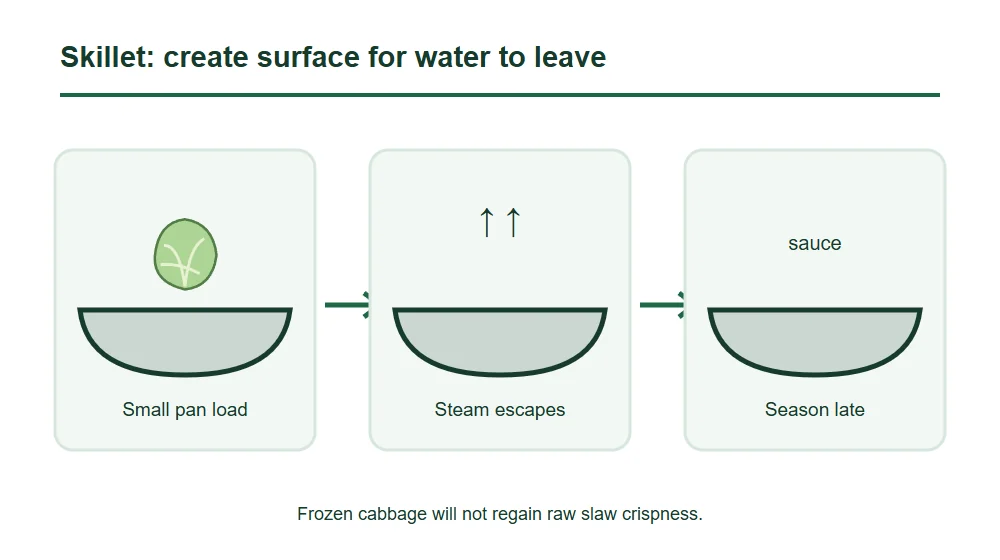
Compare the same cabbage mass in one shallow layer and in a deeper load, holding pan diameter, burner setting, starting temperature and sauce amount constant. Note the time until visible free liquid disappears, the mass of the finished cabbage before sauce, and whether the thickest rib has the intended bite. These are process observations, not a universal minute or a pathogen reduction claim. Weighing after oil or sauce addition mixes vegetable water loss with the added ingredients; either weigh before the additions or record their masses separately. A commercial wok, tilt skillet and steam-jacketed kettle have different contact areas and agitation, so each needs its own load test.
Do not chase raw-slaw crispness by cooking longer. Freezing softens tissue, and a wet pan can make the leaf softer still. If browning matters, reduce load or increase exposed area before raising heat to the point of scorching. A solid frozen block is not a loose-shred trial: do not force a knife through it while icy. Warm and separate it according to the pack and recipe, then confirm that its centre receives the required cooking. Frozen cabbage is a cooked-use ingredient under the NCHFP cabbage guidance; a formulated freezer slaw is a separate product and method.
Prepared meals: validate the complete pack
A chilled or frozen prepared meal adds stages beyond cooking cabbage in a pan: the ingredient might have been blanched, fully cooked or only cut and frozen before assembly, and the assembled tray may be frozen and reheated again. These histories are not equivalent. Record the supplier's declared product state and the customer's actual sequence. A catalogue photo cannot establish whether the ingredient is ready to eat, whether it received a validated kill step, or what the filled meal label may say. If the product state is unclear, resolve it through the lot specification and process record before the trial is used for a label or safety decision.
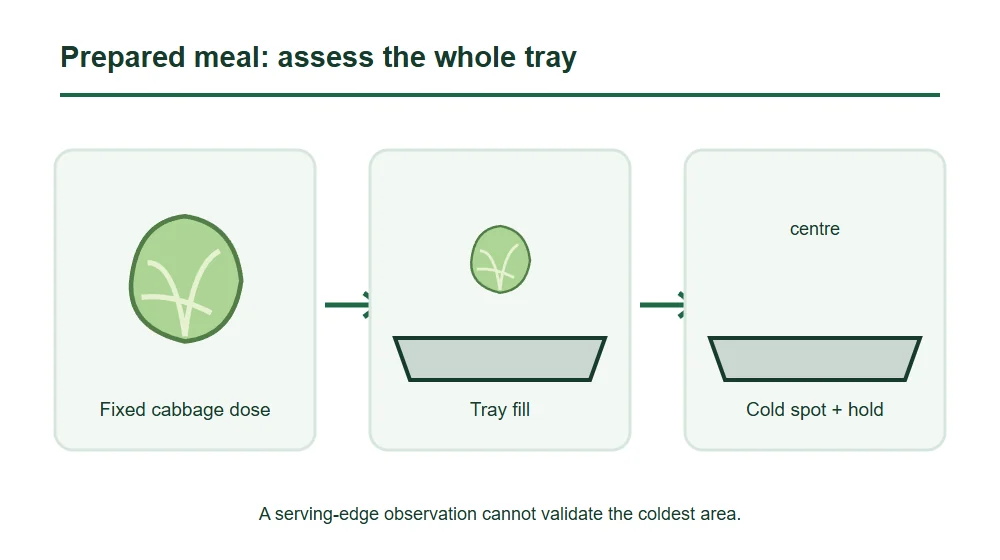
Use the intended tray or pouch, the maximum planned fill weight and the actual reheat equipment. A trial in a microwave needs the tray shape, lid or film, rotation/standing step and location of the probe documented; a convection oven or steam cabinet needs its own air or steam setting and rack position. Map the expected cold point in the complete meal, then use a calibrated probe and the recipe or food-safety team's approved endpoint. Do not infer heating from a visibly bubbling edge. Keep the cooking validation distinct from a quality observation such as rib tenderness or sauce separation. A trial with a different tray depth or cabbage pocket position is a new test condition.
For quality, hold the cooked meal for a stated service interval and record visible free liquid, leaf fragmentation, rib firmness and portion-to-portion distribution. As a proposed example, compare 20 trays at a fixed 400 g fill with 40 g of two alternative cabbage cuts, keeping sauce solids and total mass constant. After the approved reheat, collect liquid from a defined drain point after the same ten-minute hold, reporting grams per tray; count trays with an oversized rib out of 20. These figures are fictional trial settings, not legal acceptance limits or a published heating schedule. Production, development and quality can then choose a cut for this exact recipe, pack and reheat method, rather than calling one cut universally better.
Keep blanching, freezing and final cooking separate
Home blanching before freezing is a quality-preservation and preparation step. NCHFP's 1½-minute water blanch is for its described cabbage freezing procedure; it is not a published validation that a later commercial meal is microbiologically safe. Freezing itself does not sterilize food. NCHFP's freezing overview says cold retards microbial growth and chemical change. When the food warms, bacteria present before freezing can grow again. Follow the frozen pack's cooking directions and the finished dish's full safe-handling method. If raw meat or poultry is in the recipe, follow its separate safe cooking requirements, not a cabbage timer.
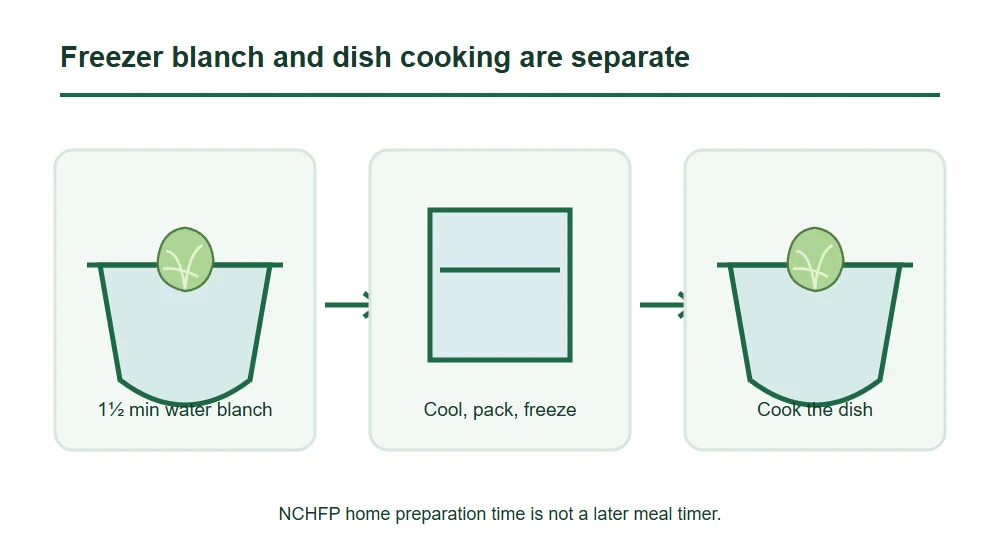
The same separation helps diagnose defects. A greyed leaf may reflect raw material, blanching or storage; a soggy roll may reflect free water, filling ratio or weak wrapper. A warm carton at receiving is a cold-chain concern even if a small sample later tastes fine. At home, discard a product with signs of spoilage rather than attempting to cook away an off odor. In a factory, hold a suspect lot, investigate its temperature and process records, and release only under the approved procedure.
Avoid contaminating foods that will not be cooked. Use clean tools and wash hands after handling raw components. Do not set cooked cabbage back onto a board used for raw poultry. FDA's produce preparation advice says washing reduces but does not eliminate bacteria and that thoroughly cooking produce reduces risk. The page gives general produce guidance; take a cooking endpoint from the actual pack, complete recipe and food-safety plan.
Run one cut-by-dish trial before scaling
A buyer's specification should name round cabbage or Chinese cabbage, leaf and rib inclusion, shred width or wedge size, pack form, the declared pre-treatment, intended cook step and target dish. If the product is intended for soup, ask about visible cut distribution and how it moves in broth. For a dumpling or prepared meal, ask about incoming free ice, draining behavior and how much cabbage is present in each portion. The category photograph can show approximate appearance, but it does not verify that the actual shipment has the same cut, blanch profile, contamination status or yield.
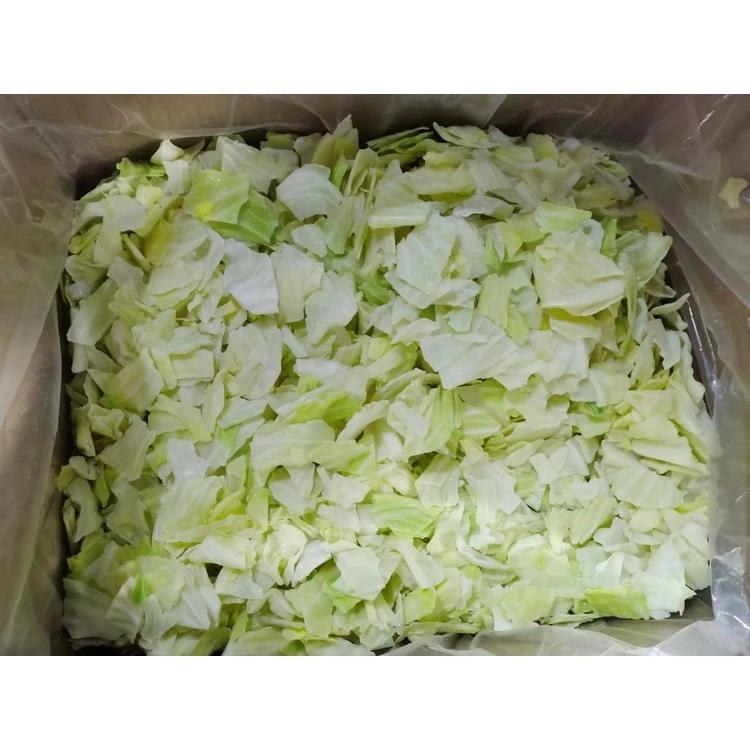
Separate GreenLand-food cabbage carton photograph; exact lot and frozen state require records.
For an application trial, assign roles. Procurement confirms identity and pack; receiving records lot, condition and any deviation; quality checks the agreed defect and document criteria; development runs the recipe; production verifies that the chosen conditions transfer to the actual equipment. Use a sample plan suited to the lot and risk; an online recipe does not supply a legally binding sampling rule. If a trial fails, record the exact failure and its stage. Change one variable at a time where possible: cabbage cut, portion mass, drain time, pan load, sauce ratio or heat sequence. Retest after a change in site or process because the earlier result may not transfer.
A release decision can then be plain and defensible. If the named lot meets its agreed identity, documented processing and application checks, it may be approved for the specified use. If it does not, hold or redirect it under the buyer's approved procedure rather than promising that a different cooking instruction will repair every defect. We can discuss a proposed frozen cabbage specification and sample comparison; the order-linked records and the customer's cooking validation establish what a particular shipment can do.
Before scaling up, put the earlier 500 g filling trial on a cost denominator. If that fictional pack cost $1.20 and yielded 440 g drained cabbage, ingredient cost would be $1.20 ÷ 0.44 kg = about $2.73 per kilogram of drained filling cabbage, before labour, sauce or wrapper cost. That is a calculation example, not a GreenLand quote. At 80 g drained cabbage per portion, the trial supports five full portions with 40 g left; record whether the remainder is used, because it changes the actual cost per served piece. If the same juice remains in a soup, drained mass is the wrong denominator; use finished servings and their taste instead. A buyer comparing two cuts should report both the dish result and the handling cost. Extra drain time, broken wrappers or a lower tray fill yield can outweigh a small difference in the invoice price per frozen kilogram.
Questions about frozen cabbage cooking
Can I cook frozen cabbage without thawing it? Often yes for soup or a covered cooked dish when the pack directions allow it. Add a manageable portion, stir through the cold core and cook the whole recipe thoroughly. For a dry filling, controlled thawing and draining may provide a more repeatable water balance.
Will frozen cabbage work in a salad? Plain frozen cabbage is a poor substitute for crisp raw slaw. NCHFP describes its frozen cabbage or Chinese cabbage as suitable only for cooked use. A specially formulated freezer slaw is a different product and needs its own recipe.
Does the 1½-minute blanch mean the cabbage is fully cooked? No. That is NCHFP's water-blanch time before freezing in the stated home method. It does not establish a later soup, filling or commercial meal endpoint.
Why is my cabbage filling wet? Define the frozen cabbage mass and a consistent drain interval, then measure the released liquid. Also check sauce, salt, wrapper strength and assembly temperature. Change the likely cause in a small repeat trial instead of assuming more cooking will solve every leak.
Compare cabbage with other frozen vegetables in broth.
See a different filling moisture problem.
Separate pre-freeze blanching from final dish cooking.
Source frozen cabbage with GreenLand-food
GreenLand-food is a professional frozen cabbage supplier and manufacturer in China, providing factory-direct wholesale supply for importers, food manufacturers, foodservice distributors and private-label programs.
Send the cut, pack, quantity, application, destination and document requirements for a specification discussion.