


What Do Goji Berries Taste Like? Fresh, Frozen and Dried Forms
Oct 19, 2026
Leave a message
Fresh fruit is soft and juicy; frozen whole fruit can offer a similar fruit character after appropriate handling but loses some fresh bite on thawing; dried fruit is chewy and more concentrated. A dried goji used in tea or porridge is not a direct sensory substitute for a frozen berry in a beverage or fruit blend. Taste the exact form in the finished food before writing a flavor claim or approving a recipe.
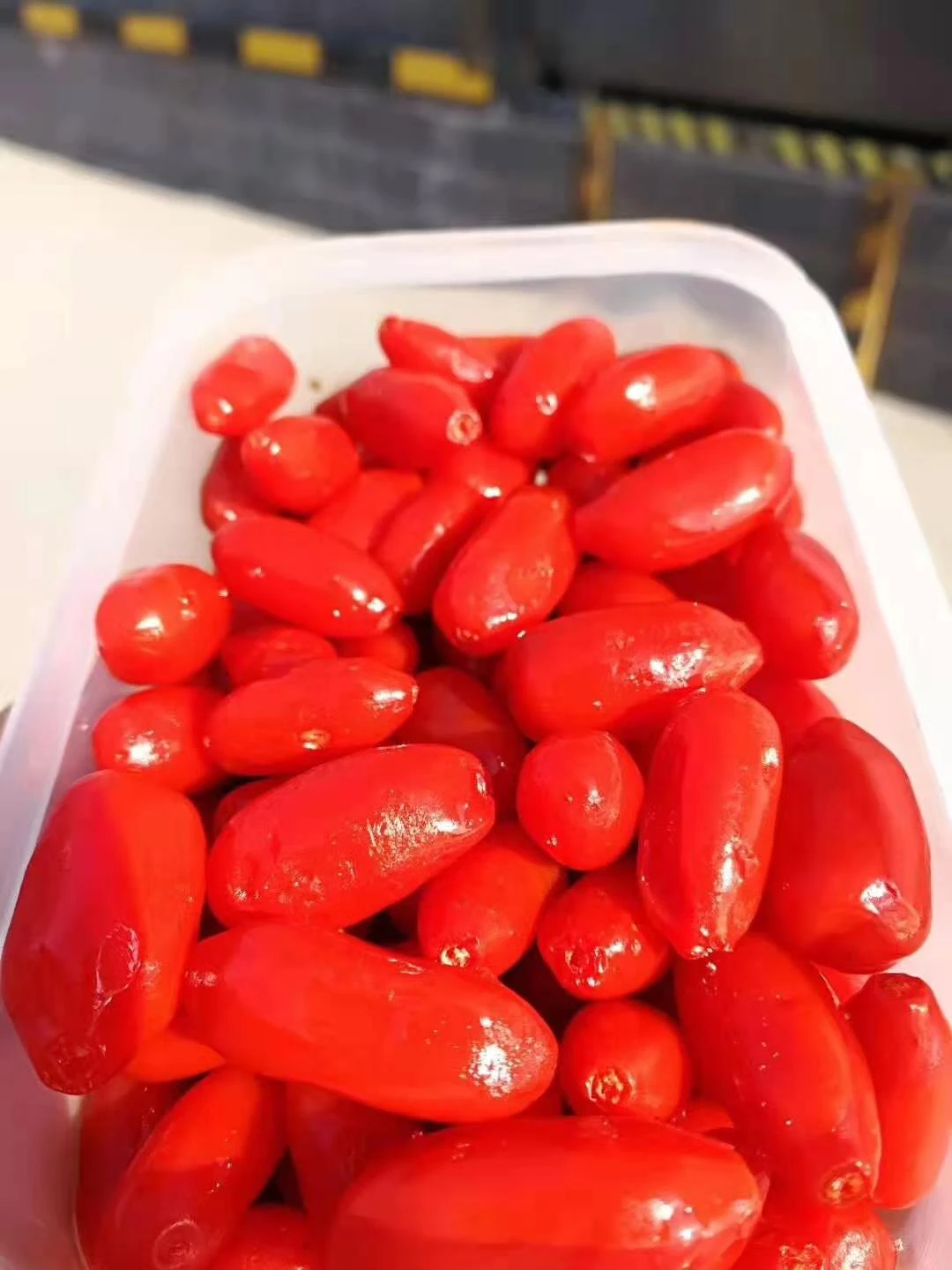
GreenLand-food offers frozen goji berries as a fruit ingredient. Its product page shows whole orange-red berries in a lined carton. That image is a form reference, not a flavor test. This guide focuses on what a buyer or cook can actually sense: sweetness, acidity, aroma, texture, color and how those qualities behave in beverages, soups, bakery fillings and other uses. It does not make medical or wellness promises.
- Goji is mildly sweet-tart with a possible herbal note; taste varies by form.
- Fresh is juicy, frozen softens on thawing, and ordinary dried whole fruit is chewy and concentrated.
- Assess the exact fruit form in the final beverage, soup or bakery item.
Describe the flavor without a health claim
Start with a plain description: gentle sweetness, a tart edge and a fruit note that some tasters describe as slightly tomato-like or herbal. The berry is not necessarily as sharp as a cranberry or as rich as a dried cherry. These comparisons are prompts for tasting, not fixed measurements. Variety, ripeness, origin, processing and recipe all influence what people perceive. A buyer should sample the offered form rather than treat a generic online flavor description as a contract.
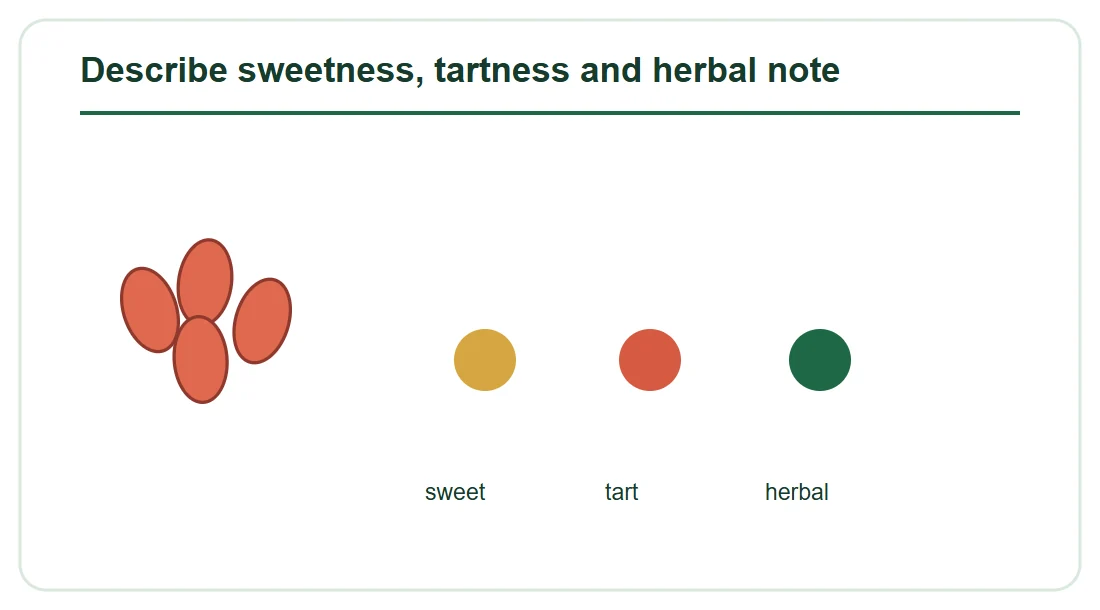
Describe sweetness, tartness and herbal note. Original schematic illustration.
The University of Florida's IFAS Extension describes goji fruit as sweet and sour and records fresh and dried culinary uses. Bon Appétit describes dried goji with a cranberry or sour-cherry resemblance and reports a sweeter tomato-like impression after rehydration. Those descriptions do not conflict when the sampled forms and preparations differ. A dry berry concentrates soluble solids and develops chew; a hydrated berry softens and disperses flavor into its surrounding liquid. A frozen berry introduces still another water and texture path.
When writing a menu or ingredient brief, separate flavor from appearance. "Bright red" describes the fruit's look, not its taste. "Sweet" alone can disappoint someone expecting a strawberry-like dessert note. A more useful description says how the berry is used: a mild sweet-tart accent in a warm grain dish, a red fruit note in a blended drink, or soft whole berries in a cooked sauce. The form and dose belong in that sentence.
Avoid using the word "superfood" as a substitute for sensory evidence. It says little about whether a product tastes right in yogurt, soup or bakery filling. If a marketer wants a nutrition or health claim, that is a separate substantiation and market-review exercise. The culinary choice can be made with a controlled taste panel, recipe trial and honest ingredient description.
A useful flavor brief can have three short axes rather than a single adjective: perceived sweetness, perceived tartness and the non-fruit aftertaste. Add texture as a separate observation. One taster may call the last note earthy; another may call it herbal or tomato-like. Ask them to describe it in their own words before showing a suggested term, then agree on a small shared vocabulary for later lots. That process prevents a leading comparison such as "cranberry" from making every panelist search for a taste that is not actually dominant.
| Form | Texture and water | Where to test the flavor |
|---|---|---|
| Fresh whole berry | Juicy, delicate skin and small seeds | Plain sample, then fresh garnish or blend |
| Frozen whole berry | Softens and releases juice on thawing | Final beverage, filling or cooked sauce |
| Ordinary dried whole berry | Chewy, lower-water fruit; rehydrates in liquid | Finished tea, snack mix or rehydrated recipe |
Fresh fruit: juice, acidity and seed feel
Fresh goji is soft and juicy. Its thin skin and many small seeds contribute to mouthfeel, especially if the fruit is eaten whole rather than blended. The flavor can seem less concentrated than the dried berry because the fruit carries much more water. A very ripe berry may feel sweeter; another lot may lean sharper or have a green note. That range is a reason to taste a specific fresh sample instead of promising one universal comparison to cherry or tomato.
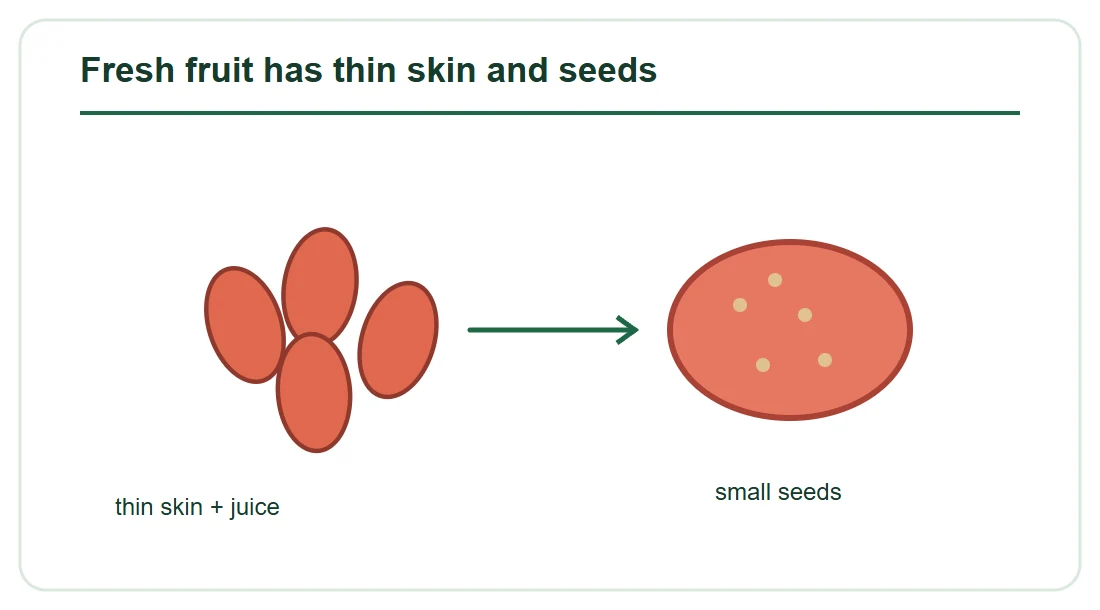
Fresh fruit has thin skin and seeds. Original schematic illustration.
To evaluate fresh fruit, begin with a small plain sample at a defined temperature. Look for color, intact skin and any damaged berries. Taste several fruits rather than selecting the prettiest one. Note the first impression, the acidity after swallowing and whether seeds remain noticeable. Repeat in the intended recipe, because yogurt fat, added sugar, citrus or broth can change which note stands out. A plain taste is only the first stage of a useful product decision.
Fresh goji is delicate and is uncommon in many distant retail markets. The Goji Reserve's grower page describes the fresh fruit as soft and difficult to store or transport over long distances; Bon Appétit notes that U.S. shoppers more often encounter dried fruit. Those observations explain why processed forms exist. They do not imply that every fresh berry is fragile to the same extent or that a frozen lot has been shown to preserve a particular flavor percentage.
If a chef uses fresh berries as a visible garnish, the whole-fruit appearance is central. In a purée, intactness matters less than flavor, color and seed texture after blending. Record the serving form before deciding that a fresh sample is the reference for a frozen purchase. The reference should match what the consumer will actually see and taste.
Frozen fruit: taste after thawing and cooking
Freezing can make whole goji available for a different production calendar, but it changes texture. As ice forms and later melts, a thawed berry can be softer and wetter than fresh fruit. That does not make it unsuitable. Softness may be helpful in a smoothie, fruit preparation or sauce, while a retail pack promising firm fresh-like berries would need a stricter trial. The important question is whether the fruit keeps an acceptable sweet-tart balance and appearance in the planned application.
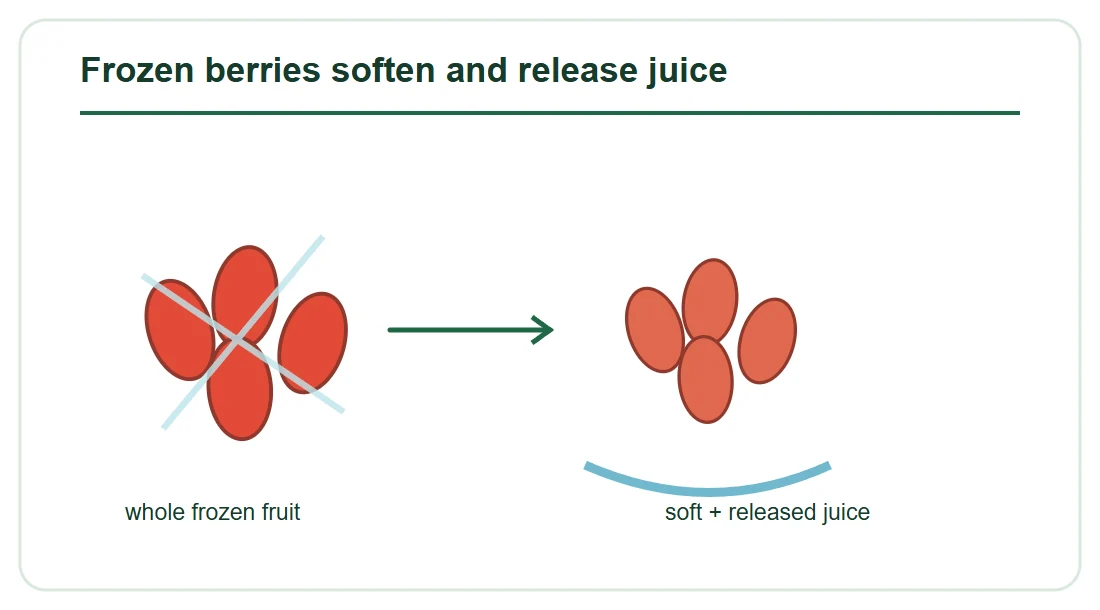
Frozen berries soften and release juice. Original schematic illustration.
For a direct tasting, separate a representative portion of the frozen lot. Inspect size range, color, broken berries, loose stems and clumps while cold. Follow the supplier's handling directions for a controlled thaw or cook. Collect any released juice rather than discarding it unnoticed, because that juice may carry flavor and color into the finished food. Taste both fruit and liquid at the serving temperature. A cold berry can mute aroma; a warmed berry can seem sweeter or more savory. Record which condition matters to the product.
In a beverage, blend a defined berry weight with the exact base and compare against a reference formulation. Note color, acidity, seeds, pulp and any earthy finish after a normal hold. In a fruit filling, heat the berries as the production recipe would and inspect the cooked mixture after cooling. In a whole-berry topping, look for burst skins and released juice after the intended thaw. These are three different quality questions, even though the ingredient name is the same.
The GreenLand product page shows whole frozen orange-red berries in a lined carton. It does not disclose a verified sweetness or acidity range for all orders, nor a ready-to-eat status. Ask for a representative sample, the exact treatment and product specification. The customer must validate its own final processing and any required food-safety controls. A photograph cannot replace that work.
Dried fruit: a different concentration and chew
Dried goji is the form many cooks recognize first. Removing water gives a chewy fruit that can taste sweeter and more concentrated by weight than fresh fruit. It can also have a leathery surface until it sits in liquid. Add dried berries to warm water, tea, broth or porridge and they soften while the liquid picks up fruit flavor. A serving made with soaked fruit will not taste exactly like one made with dry fruit eaten straight from the bag.
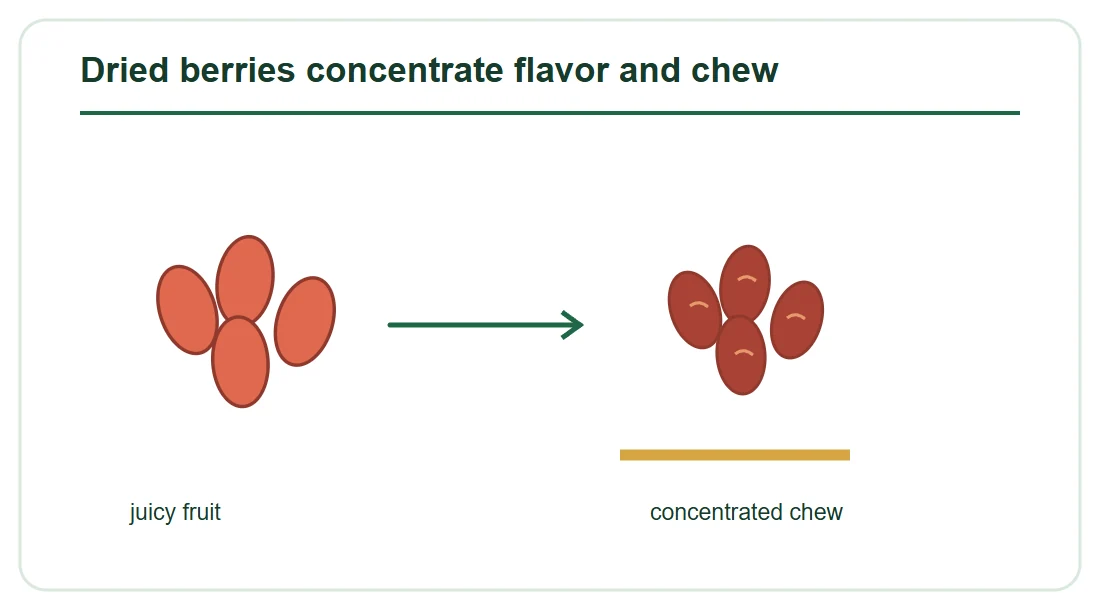
Dried berries concentrate flavor and chew. Original schematic illustration.
Bon Appétit describes using dried goji in oatmeal, baked goods, grain dishes and savory preparations, as well as soaking it before blending. Uwajimaya notes dried goji in teas, soups and stews. These culinary uses are credible starting points, but their texture outcomes depend on how long the berries contact liquid and whether the dish is eaten immediately. A short steep may leave some chew; a long simmer may give a softer, less distinct berry.
Do not replace a recipe's fresh or frozen weight with the same weight of dried fruit. The water content is different. If a sauce formula calls for whole frozen berries, dried fruit added weight for weight can shift sweetness, solids and liquid balance. Rehydrate, measure the amount of water absorbed and reformulate the recipe. Conversely, if a tea expects dried berries to steep, frozen fruit can dilute or cool the liquid differently. Taste and measure the actual final beverage.
"Dried" also does not identify every processed form. A soft dried berry, a crisp freeze-dried piece and a powder have distinct textures and dosing behavior. A buyer should name the exact one. The article's comparison concerns ordinary dried whole fruit, not a claim that all dried formats share one flavor or shelf life.
Try a simple side-by-side kitchen exercise when a recipe changes form. Make one cup of the base recipe with its original dried berries. In a second cup, use frozen berries, adjusting the liquid in a measured way rather than by guess. Hold both for the normal time before tasting. Note how many whole berries the spoon collects, whether the liquid has taken on red color and whether the flavor seems sharper or sweeter. The test will not provide a universal conversion factor, but it will reveal which recipe variable needs work.
Choose a form for beverages, soups and bakery
For a blended beverage, frozen whole berries are a logical candidate when the blender can incorporate pulp and seeds. Test the berry weight against water, dairy or plant base, sweetener and acid in the actual formula. A stronger berry dose may deepen color while making the finish more herbal; a lower dose may vanish under other fruit. Taste after the beverage's normal hold and serving temperature. A bench blend made and consumed immediately is not a complete test for a retail bottle.
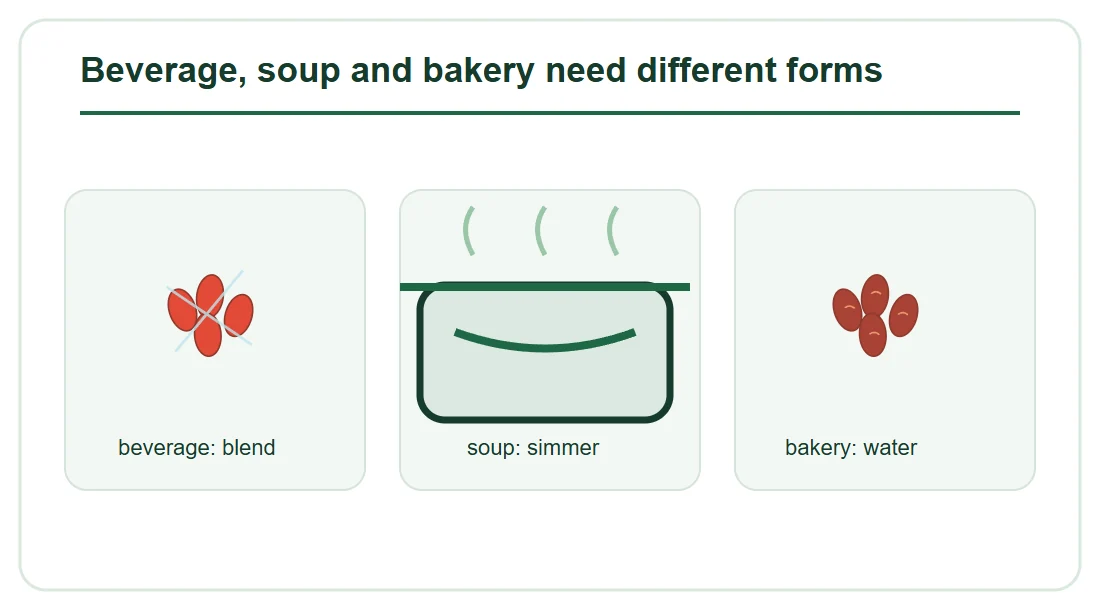
Beverage, soup and bakery need different forms. Original schematic illustration.
For tea, porridge or a warm savory soup, dried fruit is familiar because it can soak and release flavor gradually. Frozen berries can also be explored, but add them with an awareness of thawed juice and the temperature drop. If the menu wants whole berries that remain visible, check their shape after simmering. If the goal is only a subtle sweet note in broth, a strained infusion or purée may work differently from intact fruit. Define what the fruit should contribute before comparing price per kilogram.
A bakery filling has another constraint: free water. Whole frozen berries may break and release juice during heating. That may suit a jammy center but can wet dough or cause filling leakage. A dried berry can hold its shape differently and may pull moisture from the surrounding filling. Test the chosen fruit in the baked item, then cool and cut it open. Note whether the consumer sees a distinct berry, a red streak or a uniform filling. The answer determines the preferred form and the necessary recipe adjustment.
For yogurt or a chilled dessert, consider the eating experience after storage. A frozen berry added to a thick base can release colored juice as it thaws, forming a halo. That may be attractive in a stirred fruit-on-the-bottom design and unattractive in a clean white topping. Dried fruit may become chewy-soft or remain tough depending on contact time. Run the observation over the real product's hold period, not only at assembly.
Discuss the frozen ingredient for your production
Frozen Goji Berries
Beverage, soup and bakery development.
Confirm for your order: Fruit identity, maturity and flavour sample; intended process, defect limits and pack.
View product & supply detailsFor a commercial trial, send your required form, application, pack, quantity and destination. We can discuss the offered sample and the order specification with you.
Request Specifications & QuoteBuild a repeatable sensory tasting panel
A tasting panel does not need laboratory theater to be useful. Use a few trained or consistently briefed tasters, anonymize the samples where practical and serve the same weight at the same temperature. Ask them to score or describe sweetness, acidity, herbal or savory note, seed feel, color and overall fit for the dish. Keep the descriptors simple enough that the team can use them again. "Pleasant" alone cannot explain why a later lot differs.
A separate tray view helps define the tasting portion. Record the fruit form, sample preparation and serving temperature before comparing flavour; appearance alone does not establish processing or ingredients.
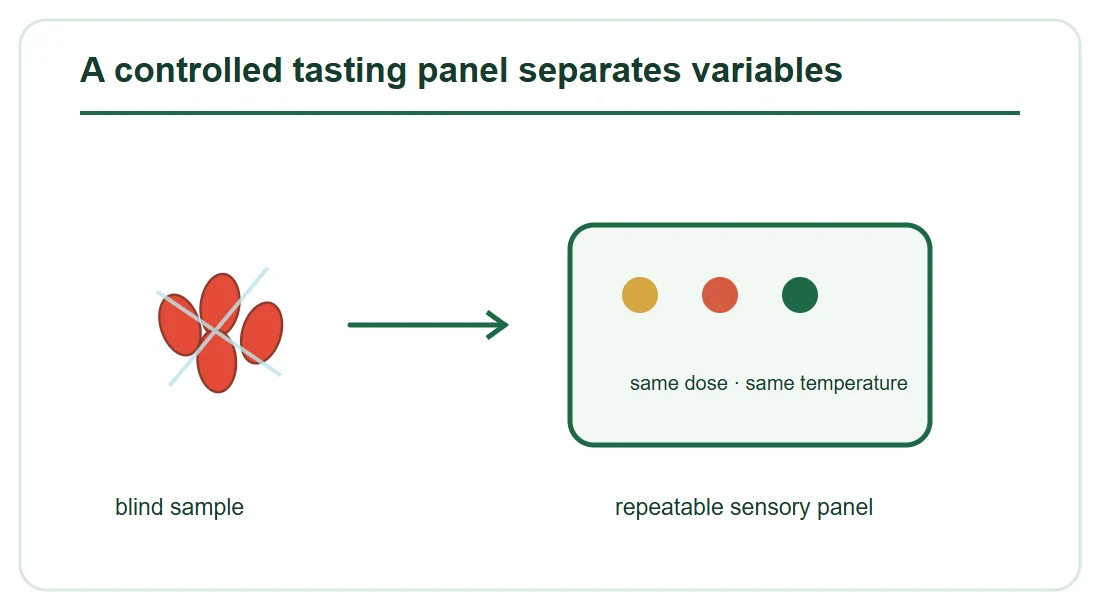
A controlled tasting panel separates variables. Original schematic illustration.
Begin with the fruit on its own, then use the finished recipe. For example, compare two frozen lots plain after the same controlled thaw, then blend each into the same beverage formula. A difference in plain tartness may disappear under citrus, while a difference in seed texture becomes more noticeable after blending. The two-stage design prevents the panel from rejecting a perfectly usable lot for a characteristic that the actual recipe hides.
Include a reference that represents the approved product form. Comparing frozen fruit only to dried fruit will mainly rediscover the difference in water content. If the customer previously approved a frozen lot, keep a documented sensory profile or a properly controlled retained reference according to its quality system. Record harvest or lot information supplied with the sample, because "goji" by itself is too broad an identifier for a repeat purchase.
Taste at an appropriate delay. A thawed berry immediately out of the freezer can seem dull because cold suppresses aroma. A cooked sauce tasted boiling hot can obscure acidity. Let each sample reach the agreed service condition, then sample all candidates within the same window. That control is cheap and often more useful than debating a generic online tasting note.
If the product is meant for more than one market, consider how the descriptions will travel. "Berry-like" may sound appealing but offers little guidance to a chef who has never tasted goji. A reference sample and a short panel record travel better than a poetic claim. A photo of the berry explains shape; a tasting note explains flavor; a finished-recipe trial explains whether the fruit belongs in the product. Keep those three kinds of evidence separate so a buyer does not treat color as proof of sweetness or a recipe success as proof that every lot will taste identical.
Inspect a frozen goji sample and lot
The visible GreenLand carton photograph shows plump orange-red whole fruit against a blue liner. It demonstrates the offered category's product shape and packing context. It does not show a second independent crop view or a measured defect rate. For an actual order, request a current representative sample and examine berries in a shallow layer: whole versus crushed fruit, stems, clumps, color variation and free ice. Photograph the sample under consistent light so the team can compare it with the approved form.
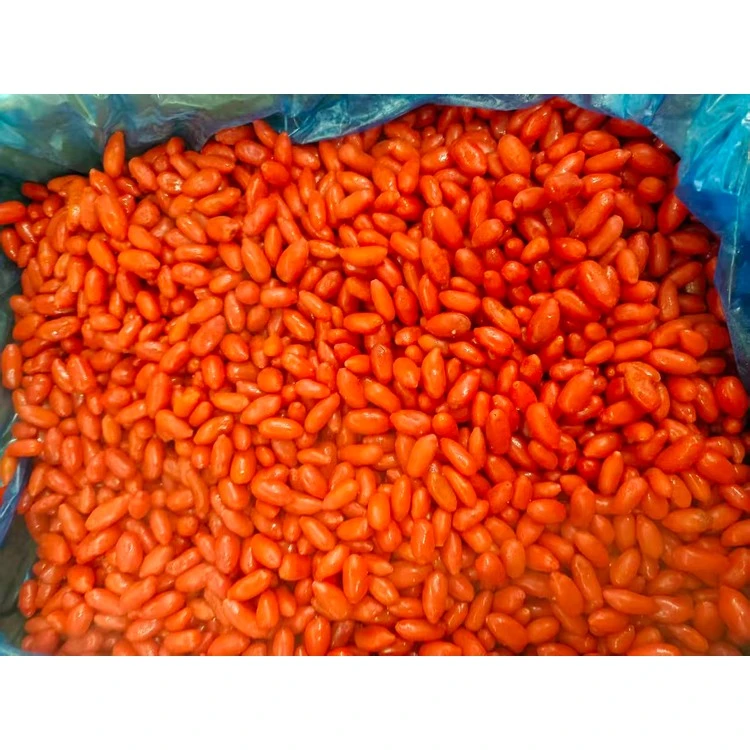
Frozen goji berries in a blue lined carton.
Then thaw or cook a separate weighed portion under the intended method. Record the amount of free juice if it matters to the recipe, how many berries stay recognizable and what the finished dish tastes like. An attractive frozen tray can still produce a bland filling; a less uniform visual lot may work perfectly in a purée. Tie the criteria to the planned application rather than inventing one grade that should fit every drink, bakery and dessert.
Ask GreenLand-food to confirm the offered treatment, packing, lot documentation and handling instructions for the destination. Those are product-specific facts to verify, not conclusions to draw from a category image. If the customer needs a particular berry-size band or intact share, state the requirement during sample qualification and agree how it will be checked. Do not silently apply a numerical tolerance from another fruit or a dried-goji specification.
The distinction between lot identity and recipe approval matters. A delivery may match the agreed frozen sample while a revised formulation changes the taste. A new sweetener or berry blend can also mask a lot difference. Hold the recipe constant during incoming comparisons; reopen formulation work when the recipe changes. That keeps supplier and customer responsibilities clear without turning this flavor guide into a generic warehouse checklist.
Specify the ingredient for the final application
Describe the purchase as "whole frozen goji berries for [named application]" and add the accepted sample, intended treatment status, packing and quantity. A beverage buyer might emphasize flavor balance, blend behavior and seed/pulp acceptance. A bakery buyer may prioritize whole-fruit share and released juice after baking. A distributor selling the fruit as a visible ingredient may require tighter appearance criteria. The title on a product page cannot decide these different outcomes.
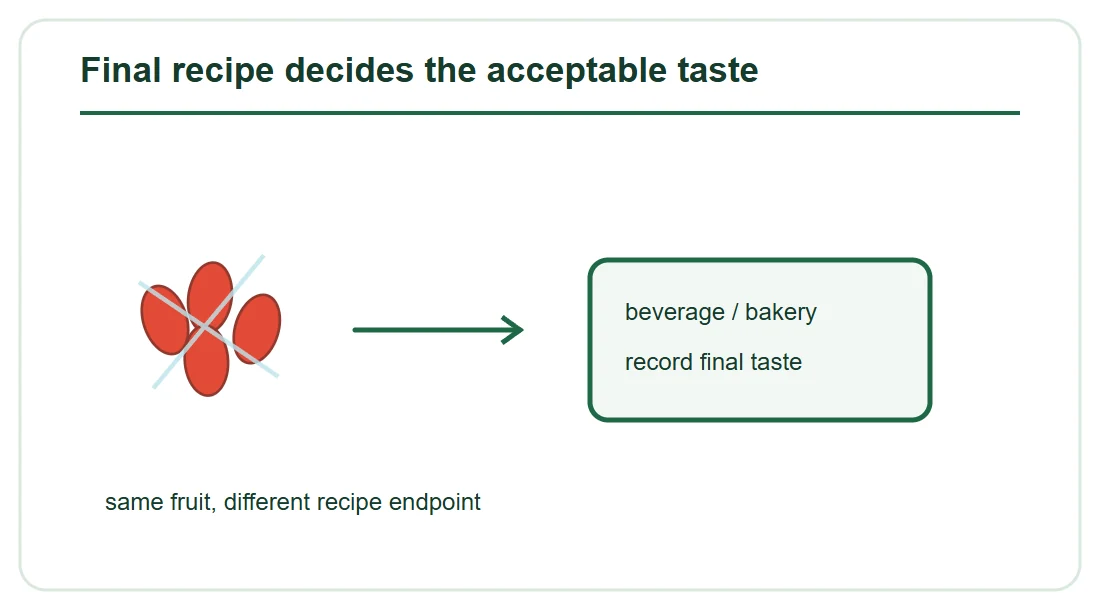
Final recipe decides the acceptable taste. Original schematic illustration.
Ask for destination, private-label needs and relevant documents when requesting a quote, but keep the sensory decision in front. If the commercial team receives only "goji berries, good taste," it has no way to know whether the customer expects a chewy dried topping, a soft frozen whole fruit or a bright blended purée. Name the form, then show the desired eating result. An approved cooked or blended sample is more informative than a long list of adjectives.
If the sample tastes too sharp, the first change may be recipe balance rather than a different origin. If it tastes flat, test the dose and service temperature before assuming the berry lot has failed. If seeds or skins dominate, a strained purée may better fit the application. If the whole fruit falls apart in a visible topping, consider another form or placement. Keep each trial's change and observation together so the team can learn what actually solved the problem.
Flavor is an outcome of fruit plus preparation. A frozen-goji specification can describe the incoming berry, but it cannot promise a single taste across every beverage, soup or baked item. GreenLand-food can supply and discuss the specific offer; the customer decides whether that offer works in its finished food after the relevant processing and storage path.
Questions about taste and substitution
Do goji berries taste like cranberries? Some dried-goji descriptions use cranberry as a comparison for tartness, but goji can also have mild sweetness and a lightly herbal or savory note. Taste the particular fresh, frozen or dried form rather than expecting the same profile as a cranberry.
Are fresh and dried goji berries interchangeable? Not weight for weight. Drying removes water and changes chew and flavor concentration. Rehydrate or reformulate a recipe, then test the final food if substituting one for the other.
What happens to frozen goji after thawing? The fruit may soften and release colored juice. This can be useful in sauces and blends but may change a whole-berry topping. Follow the supplier's handling instructions and judge the berry at the intended serving stage.
Can you make health claims from goji's taste or color? No. Flavor and red appearance do not establish a health effect. Describe the culinary properties honestly and review any separate nutrition or health claim under the rules for the destination market.
Consider how released fruit juice changes a cooked preserve.
Compare whole-fruit distribution and water in a baked filling.
Place goji beside other frozen-fruit ingredient formats.
Source frozen goji berries with GreenLand-food
GreenLand-food is a professional frozen goji berries supplier and manufacturer in China, providing factory-direct wholesale supply for importers, food manufacturers, foodservice distributors and private-label programs.
Send us the product form, specification, packing, quantity, application, destination, private-label needs and requested documents.