


Using Coconut Meat in Food: Young, Mature and Frozen Forms
Oct 19, 2026
Leave a message
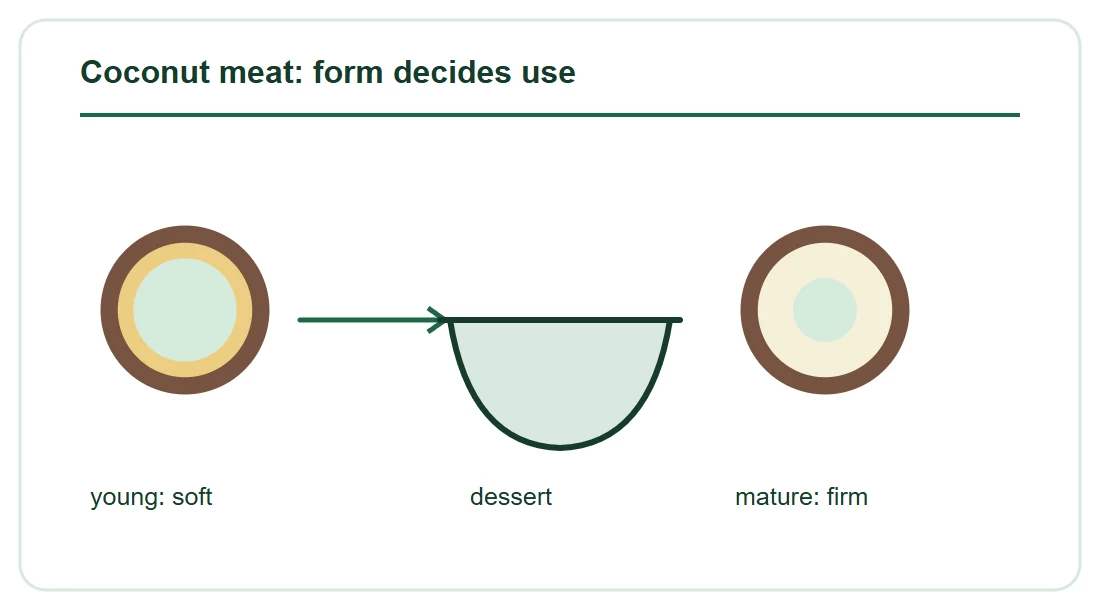
Soft young flesh can be spooned, blended into a drink or folded into a chilled dessert. Firm mature flesh can be grated for milk, shaved for texture or chopped for cooking. Frozen prepared meat removes the shelling step but still needs a form-specific trial: a pliable young piece and a firm mature shred will not behave alike in the same recipe. Coconut water, coconut milk, cream, oil and desiccated shreds are related products, yet none is simply another name for a piece of coconut meat.
GreenLand-food's frozen coconut page shows prepared white meat being handled in a processing room and a packed white product in a blue crate. Those are real views of its category, but they do not establish the maturity, precise cut, sweetening, heat treatment or ready-to-eat status of every offer. The recipe should define which of those features matters, then the current sample and specification should confirm what is supplied.
- Young coconut flesh is soft; mature meat is firm and useful for grating and extraction.
- Coconut meat, milk, cream and water are different recipe inputs.
- Ask for the GreenLand offer's maturity, cut and treatment, then test it in the final food.
Start with the form of coconut meat
The first useful distinction is young versus mature. UF/IFAS notes that immature coconut meat can be eaten with a spoon, whereas the meat becomes firm as the fruit matures. That tells a cook why one piece feels like a soft gel and another needs a grater or knife. Both are coconut meat, but one is suitable for a delicate cold spoon dessert while the other can make visible chewy shreds or be processed into coconut milk.
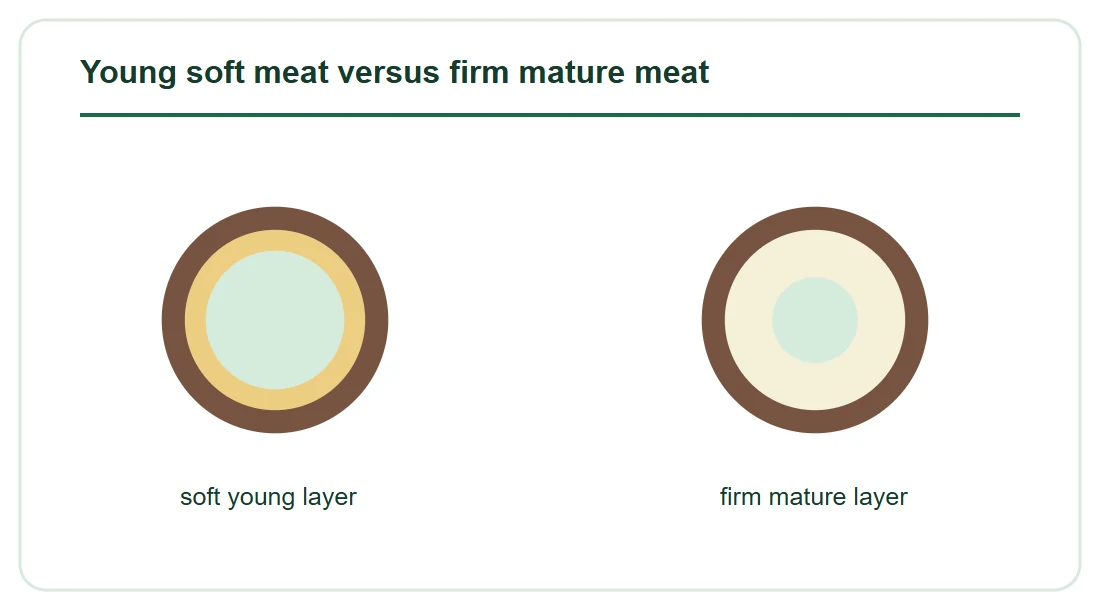
Young soft meat versus firm mature meat. Original schematic illustration.
The second distinction is cut. A curved spooned strip, a cube, a fine shred and a chip expose different amounts of surface and behave differently under heat. A fine shred distributes through a cake; a thick strip gives a distinct bite in a drink; a cube in a curry may require a longer cook or a different maturity to feel pleasant. Do not purchase "frozen coconut" for a recipe that actually requires a particular bite without describing the piece.
| Form | Typical texture | Good first test |
|---|---|---|
| Young spooned flesh | Soft and pliable | Chilled dessert or blended drink |
| Mature grated flesh | Firm fibrous pieces | Milk extraction, baking or cooking |
| Prepared frozen meat | Depends on maturity, cut and treatment | Thaw and use-trial the exact offer |
The third distinction is ingredient state. Coconut flesh can be fresh, frozen, dried, sweetened or processed into milk. A frozen meat pack may be plain or have a declared treatment. A desiccated shred has much less water and cannot be swapped weight for weight into a recipe written for moist frozen strips. Ask what the recipe actually needs: a visible chew, a creamy extraction, a fresh mild aroma or a dry baking inclusion. That answer narrows the product form before the supplier conversation begins.
When reading a recipe, underline the noun after "coconut." If it says milk, the liquid phase is part of the formula. If it says cream, the solids and fat concentration may be important. If it says shredded coconut, the size and moisture of the particles matter. If it says young coconut flesh, the soft piece is the feature. This quick reading prevents a plausible-looking but expensive substitution test with the wrong starting ingredient.
Young coconut flesh suits soft textures
Young coconut meat is soft enough to lift with a spoon. It can contribute a gentle coconut note and a tender, sometimes jelly-like texture to a chilled cup. In a fruit dessert, cut it into narrow strips or small spoonfuls and fold it with other fruit after the base has cooled. The point is to preserve its soft identity, not to cook it until it disappears. A restaurant may serve it with the coconut water from the same fruit, but those are separate edible components.
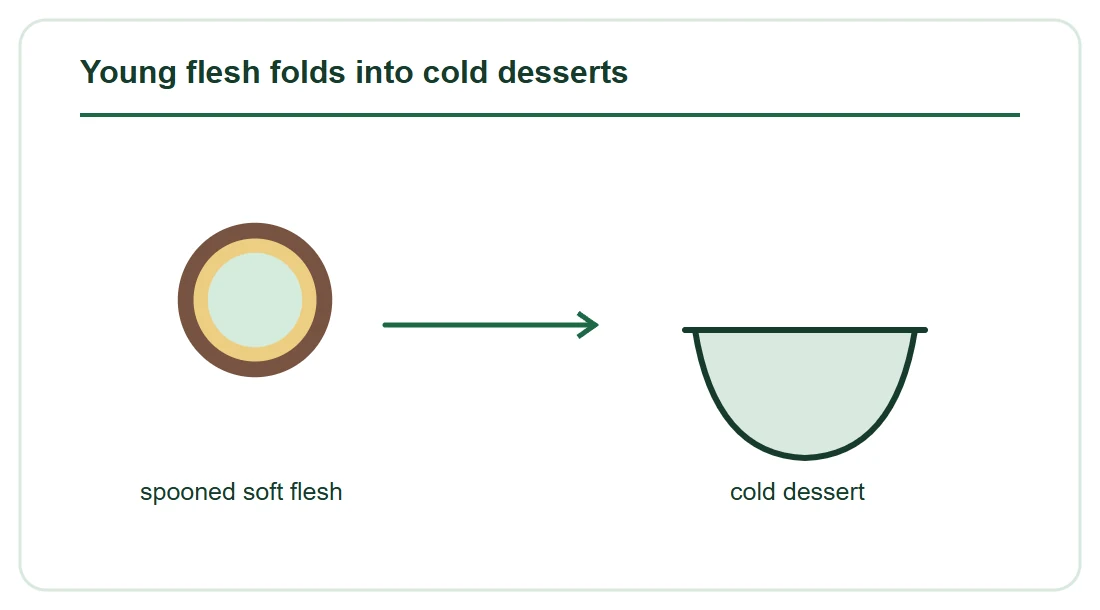
Young flesh folds into cold desserts. Original schematic illustration.
For a blended beverage, start with a measured amount of young flesh and a defined liquid base. Blend, taste and inspect for fibers or chunks. If it is too thick, change the liquid amount and record the adjustment. If the coconut note is too faint, increase the fruit portion or reduce competing flavors before claiming that the ingredient is weak. A fruit smoothie with pineapple will hide subtle coconut differently from a plain coconut drink.
Young flesh can also be used in a chilled pudding or frozen dessert. Its soft strips may remain visible in a gel or custard, while a purée can provide body. In a frozen dessert, test the finished product after full freezing and normal serving tempering; the bite of a soft room-temperature strip does not predict its bite when very cold. A piece that becomes too hard can be cut smaller or blended into the base. The design choice belongs in the recipe, not in a generic statement that "coconut meat works in ice cream."
A supplier page for frozen young Thai coconut, Copra, describes its own product as tender and suited to smoothies and desserts. That is evidence of a young-meat application, not a specification for GreenLand's offer. The GreenLand photos alone cannot prove the fruit's maturity or that it behaves like Copra's labelled young product. Ask for the current description and taste a sample before applying another supplier's handling or shelf-life instructions.
Mature coconut meat gives chew and grating yield
Mature meat is firmer and more substantial. A grater produces shreds that can be pressed or steeped for coconut milk, folded into a cake, cooked in a savory dish or toasted for a topping. A thin shaved piece can be crisped or dried; a large cube can remain chewy. The Tamil Nadu Agricultural University processing guide describes several forms, including chips and other prepared coconut products. They are different processes, not one universal use of a whole white piece.
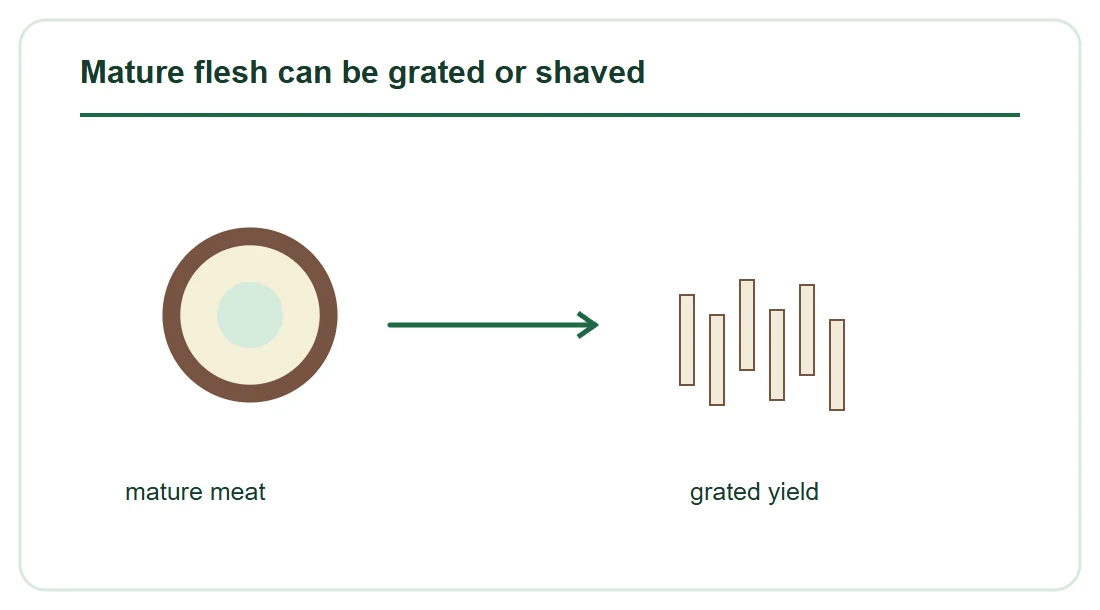
Mature flesh can be grated or shaved. Original schematic illustration.
For a cake, choose between moist grated flesh and dry desiccated coconut. Moist meat can contribute water to a batter; dried shreds absorb liquid. A recipe developed with one form may bake differently with the other. Weigh a trial portion, note whether it is sweetened and cut the cooled cake to see distribution and crumb texture. If the shreds clump or settle, adjust the cut and batter method. If the cake is dry, do not automatically add more fruit before determining whether the formula expected moisture from fresh meat.
For a savory dish, mature meat can be grated into a spice paste or cooked in a curry where its flavor and body are wanted. A larger strip can add chew to a vegetable preparation. Taste after the full heat path: a piece pleasant in a raw sample may stay too firm in a short sauté, while a fine shred may disappear into a long simmer. State whether the diner should see and bite coconut or only sense it in the sauce.
Toasted coconut is a separate endpoint. Spread appropriate shaved or grated mature meat in an even layer and heat while watching color closely. The desired result is fragrant and lightly browned, not burnt at the edges. A wet frozen piece may first steam and dry before browning, so the exact method used for shelf-stable desiccated flakes cannot simply be copied. Cool the trial and taste it on the intended dish; a crisp garnish may soften quickly on a moist dessert.
Choose strips, dice or shreds for the dish
Form follows eating experience. A broad young strip is visible in a chilled fruit cup and may curl around a spoon. A small cube distributes through a ready meal but can feel rubbery if it is too firm for the cooking time. A fine shred gives even coconut presence in baking or a sauce. A chip is a distinct snack or garnish with a drying or toasting step. The same white ingredient can support all four roles only if it is prepared and processed appropriately.
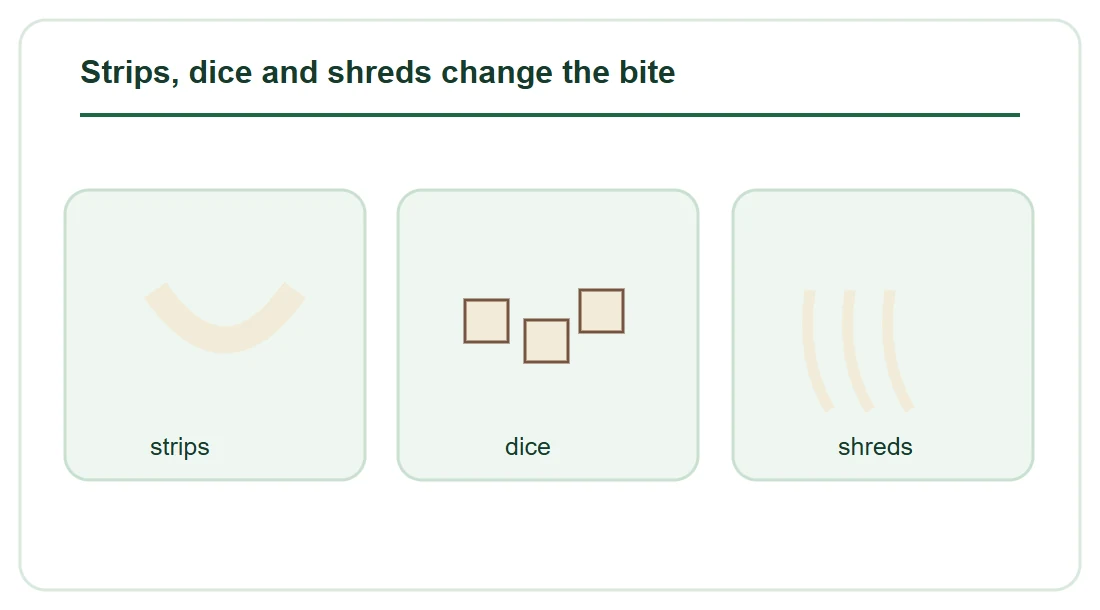
Strips, dice and shreds change the bite. Original schematic illustration.
For a drink containing visible fruit, place a measured dose of cut coconut in the actual cup. Check whether pieces float or settle, whether they fit through the drinking opening, and whether the bite remains pleasant after the intended ice hold. A wide soft strip may look attractive in a clear cup but be awkward through a straw. A small firm dice may pass through yet feel too tough. Test both appearance and physical eating, not just flavor.
For a curry, begin with the final cooking time. If coconut meat is meant to remain as a vegetable-like piece, cook a trial at the recipe's heat and taste the center. If it is meant to become part of the sauce, choose a smaller cut or process it. Do not attempt to solve an unsuitable maturity only by cooking longer; that may overcook the rest of the dish. The reference sample should be judged in the completed curry, not just after thawing on a tray.
For bakery inclusions, record the cut, added weight and distribution. Fold shreds into batter and inspect several slices rather than the top alone. If pieces clump, change the mixing sequence or use a finer cut. If their white color disappears against a pale crumb, a toasted garnish after baking may deliver clearer visual evidence. A coconut-heavy bar and a light sponge cake need different piece sizes. These are recipe decisions to be settled in a small bake before ordering bulk frozen material.
Make coconut milk and cream from the right input
Coconut milk is an extraction, not the clear liquid inside the nut. The University of Florida's plant-based milk guide says coconut milk may be made by soaking grated mature coconut meat in water; it describes coconut cream as a concentrated pressed product that can be diluted. Coconut water is the naturally occurring translucent fluid in the cavity. A customer asking for "coconut" to make a white curry sauce should specify whether it needs meat for extraction, prepared milk, cream or water.
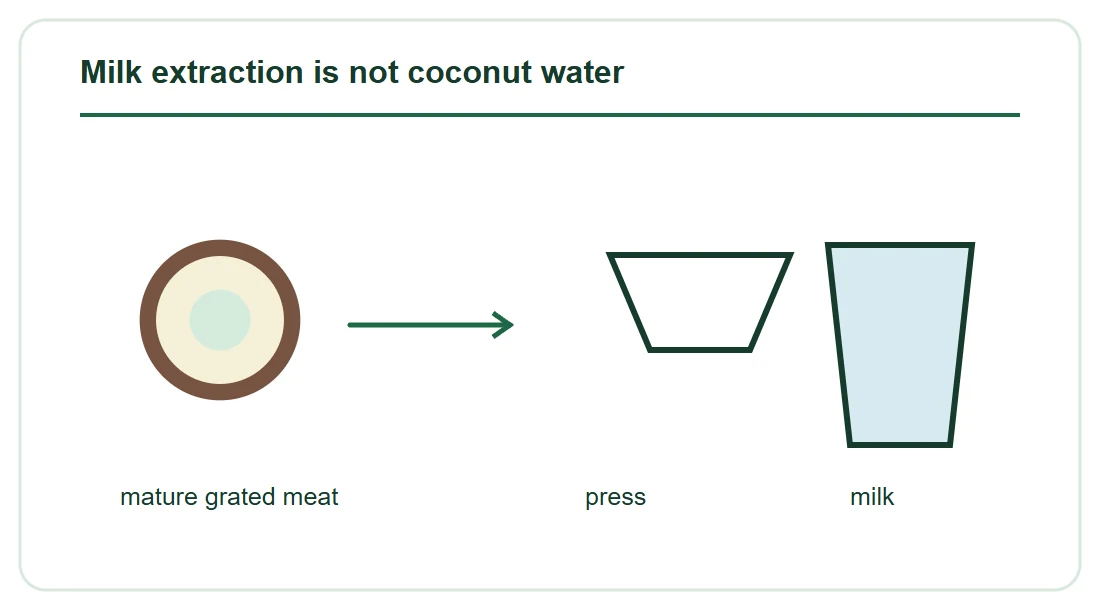
Milk extraction is not coconut water. Original schematic illustration.
For a small extraction trial with confirmed mature meat, grate or finely process a weighed portion, combine with a measured amount of suitable water, mix, then press or strain. Record the mass of meat, added water and liquid recovered. Taste the milk and observe whether fat separates after a short hold. This kitchen exercise can compare ingredient forms; it is not a validated commercial extraction or heat treatment. A pre-packed frozen meat cut may yield differently from freshly grated mature flesh. Confirm the cut and maturity before assuming the extraction will work.
- Confirm that the input is mature edible meat, then weigh it and record whether it is fresh, frozen or dried.
- Grate or process the meat to a consistent cut. Add a measured quantity of suitable water and mix under the chosen trial method.
- Press or strain the mixture. Weigh the recovered liquid and note the solids left behind.
- Taste the liquid in its intended recipe and observe separation after the normal hold. Any saleable milk needs its own validated process and label.
If the milk is for curry, taste it after the actual simmer with spices. If for a beverage, evaluate at drinking temperature and after storage. A thin milk can be rich in aroma but too light for a sauce; a concentrated cream can make a drink heavy. Adjust the formulation from measurements rather than treating "one coconut" as a stable unit. Different fruit sizes and maturity make that phrase imprecise.
The UF/IFAS guide also distinguishes processed plant-based coconut beverages from cooking milk. A bottled low-fat drink can be diluted and fortified; a thick culinary coconut milk is made for a different job. Neither one is the same as frozen meat pieces. When swapping them, account for water, fat and solids in the recipe. A direct weight-for-weight replacement could change emulsion, mouthfeel and cooking behavior, even if the label of each product contains the word coconut.
Use frozen coconut in desserts and cooked dishes
Frozen prepared meat can be convenient when the dish needs white coconut flesh without opening whole nuts. For a chilled dessert, thaw a representative sample according to its current instructions and observe drip loss, aroma, pliability and any discoloration. Cut it in the intended serving size, fold it into the dessert and inspect again after the normal cold hold. If the fruit releases liquid into a clear gel, decide whether to drain a measured portion, adjust the gel or use a different cut. Keep the liquid balance visible.
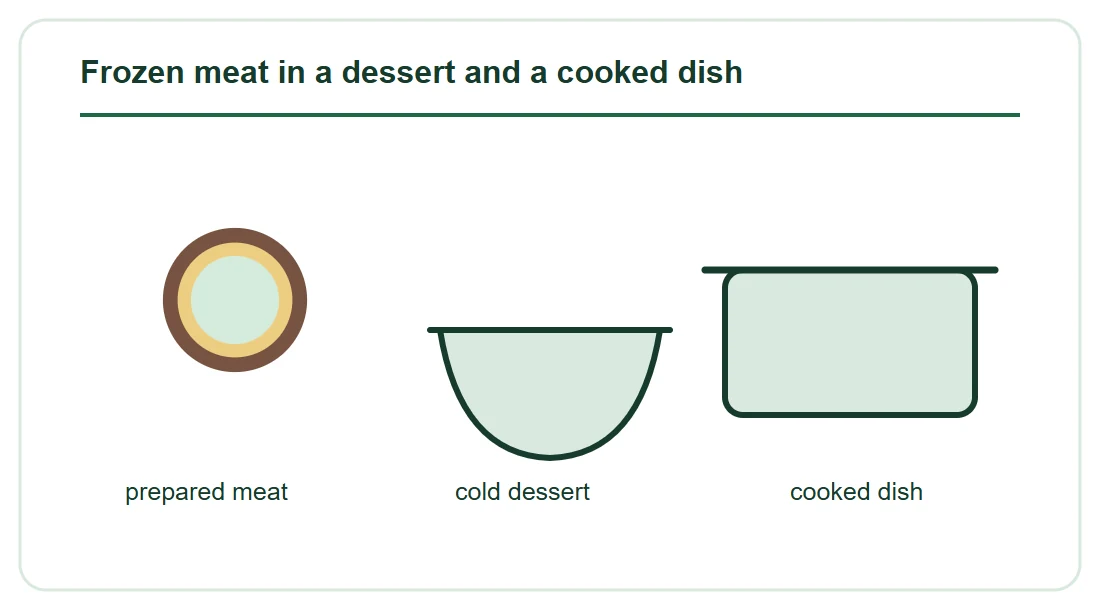
Frozen meat in a dessert and a cooked dish. Original schematic illustration.
For a smoothie, compare blending from frozen with partial thawing only if the product's handling instructions permit both. Record the blend time, portion size and final temperature. A cold frozen piece can thicken the drink, whereas a thawed piece may blend more smoothly. If the drink tastes watery, determine whether the added liquid, thaw drip or fruit type caused it. Do not attach a generic nutrition claim or tropical flavor promise to a category photograph.
For a cooked curry or bakery filling, put the offered frozen cut through the full heat step. Test a small weighed batch alongside an accepted reference form if one exists. Look for intact pieces, white color, chewy bite and the aroma after cooking and cooling. A product that is ideal for a smoothie may be too soft to remain visible in curry. A form that holds in curry may be too fibrous in a chilled spoon dessert. Multiple applications require multiple acceptance tests.
For a dessert topping, a moist meat piece and a dry toasted flake need separate recipes. If the desired finish is crunchy, a frozen wet strip will not become a dry flake merely by thawing. It needs a suitable drying or toasting process and a test for color and crispness. If the desired finish is soft and fresh-tasting, avoid a high-heat step that strips away that texture. State the desired bite in the brief so the supplier knows which form to discuss.
Discuss the frozen ingredient for your production

Frozen Coconut
Dessert manufacture and cooked food applications.
Confirm for your order: Young or mature flesh and offered cut; ingredient statement, use status and pack.
View product & supply detailsFor a commercial trial, send your required form, application, pack, quantity and destination. We can discuss the offered sample and the order specification with you.
Request Specifications & QuoteThaw and taste without assuming ready-to-eat status
A frozen package shows a storage state, not a ready-to-eat claim. Obtain the offered product's ingredient declaration, treatment description and handling instruction before using it in an uncooked dessert or drink. Ask whether any heat step is required and let the customer's food-safety team decide the finished-food controls. A processing-room photograph proves that the pictured activity occurred in a facility scene; it does not identify the treatment or release status of the particular lot on order.
Prepared white coconut meat handled in a processing room.
Use an orderly sensory check after the required preparation. Look at the color and cut while frozen. Prepare a weighed portion under the stated method. Then taste for a clean coconut note and examine texture at the dish's serving temperature. An off smell, unusual color or unexpected free liquid should be recorded and investigated against the specification. Do not diagnose the cause from one photo or one tasting note. Preserve the lot reference and compare a second sample if the result is uncertain.
If an order is for cold use, inspect the sample after the full cold hold, not merely immediately after thawing. If for cooking, use the actual recipe heat and time. The room-temperature bite is a useful middle observation but may not match either consumer endpoint. A fruit piece can feel tender when warm and firmer in a refrigerated dessert. A shredded component can seem fragrant before cooking but disappear behind spices. The last observation should be the finished food that will be sold.
Keep moisture accounting separate from food-safety release. Measuring thaw drip helps a baker or drink developer balance a recipe; it does not prove microbiological suitability. Conversely, a product may meet an agreed safety specification yet fail the customer's sensory target. Record both checks with the people responsible for them. This makes the handoff between ingredient supplier, product developer and food-safety team explicit without turning an article about coconut uses into a generic warehouse form.
Trial the offered GreenLand cut and process
The GreenLand category has two distinct genuine product photographs: prepared white coconut meat in a processing-room scene and packed white meat in a blue crate. The banner is a crop of the first scene and is not a third independent photo. Those views support that a prepared white product is offered, but they do not prove whether the photographed fruit was young or mature. Do not write "young Thai coconut" or "mature grated coconut" into the purchase order solely from the pictures. Ask GreenLand-food to identify the offered maturity, cut, treatment, pack and required handling in a current specification.

Packed prepared white coconut meat in a blue crate.
Design a compact trial around the use. For a cold fruit cup, evaluate pliability, portion appearance and free liquid after the normal hold. For a smoothie, evaluate blendability, flavor at final dilution and fibers. For curry, evaluate the piece after cooking. For milk extraction, verify mature grated input and record extraction yield. A single score for "coconut quality" cannot substitute for these different outcomes. Approve one or more named applications against a representative sample.
GreenLand-food can discuss available cut, packing and export documentation after the customer states the destination and use. The customer should preserve its approved sample, recipe and acceptance record so later lots can be compared under equal conditions. If a new lot behaves differently, repeat the same thaw or cook method before deciding whether the ingredient or kitchen process changed. Do not infer shelf life, temperature tolerance or a destination-specific claim from a category page.
The final order description should name frozen coconut meat, its verified maturity or edible texture class, cut size or form, ingredient declaration, pack and intended use. If the requirement is instead coconut milk, cream, water, oil or desiccated flakes, source the correct processed product rather than asking a meat piece to fill a different function. This distinction saves recipe time and makes the supplier's response specific to the food the customer intends to make.
Questions about coconut meat uses
What can I make with young coconut meat? Its soft flesh can suit chilled fruit cups, blended drinks and delicate desserts. Test the actual maturity and texture, especially if buying a prepared frozen product rather than scooping a fresh young coconut.
What is mature coconut meat used for? Firm mature meat can be grated for milk extraction, shredded into baking or savory food, and sliced for a chew or toasted topping. The cut and preparation decide the result.
Is coconut milk the same as coconut water? No. Coconut milk is a processed extraction from meat, commonly mature grated meat; coconut water is the liquid naturally inside the nut. Coconut cream is more concentrated than many coconut-milk beverages.
Can GreenLand frozen coconut be used uncooked? The category photos do not establish ready-to-eat status. Confirm the current product's treatment and handling instruction and validate the customer's intended cold food before use.
Review frozen-fruit handling questions separately from coconut form.
Consider beverage equipment when a frozen ingredient enters a drink.
Compare other fruit-form choices available to food manufacturers.
Source frozen coconut meat with GreenLand-food
GreenLand-food is a professional frozen coconut meat supplier and manufacturer in China, providing factory-direct wholesale supply for importers, food manufacturers, foodservice distributors and private-label programs.
Send us the product form, specification, packing, quantity, application, destination, private-label needs and requested documents.