


How to Cook Lotus Root: Slices, Blanching & Frozen Prep
Sep 07, 2026
Leave a message
The direct answer
Choose the cut before the cooking method. Clean and cut fresh lotus root evenly; follow the instructions for prepared or frozen packs. Blanching can support a later cooking stage, while stir-frying, simmering and roasting each need their own texture and load checks.
Keep these distinctions in mind
Choose crisp slices or a softer simmered texture
To cook lotus root, first decide whether you want thin, crisp slices or thicker pieces that soften in broth. Stir-frying suits the first result; simmering and braising suit the second. A brief blanch can prepare slices for a later cooking stage, but it is not interchangeable with the complete cooking instructions on a frozen product. Thickness, pretreatment and the amount in the pan matter more than a single universal cooking time.
The familiar wheel-shaped slices come from the plant's underground rhizome, commonly sold as lotus root. Their holes make the ingredient visually distinctive, while the firm flesh gives a bite that differs from potato or carrot. A cooked slice may remain pleasantly crunchy. It does not need to collapse before it is enjoyable, and softness alone should not be used to decide whether a commercial product has received its required cooking treatment.
For a home kitchen, the main decision is the dish. For a restaurant or ready-meal producer, it is also what happens after the first pan: hot holding, chilling, freezing and customer reheating can all change the result. We assess frozen lotus root against that complete route. A slice that looks excellent immediately after stir-frying may be too soft when it reaches the final tray.
Choose a reference texture before testing suppliers. Describe whether the slice should snap, bend slightly or yield readily to a fork. Keep a cooked reference photograph, but record the bite separately; a photograph cannot show resistance or fibrousness.
Fresh whole roots, prepared packs and frozen slices
Fresh whole lotus root needs inspection, washing, trimming and usually peeling. Prepared chilled packs may already be peeled, sliced or treated to limit discoloration. Frozen packs may have been blanched or otherwise prepared before freezing. These products can look similar after cooking while requiring different handling beforehand.
Read the ingredient list and preparation instructions instead of inferring the process from the appearance. A pale slice is not proof of a particular pretreatment, and a frozen slice is not automatically ready to eat. If the label says to cook from frozen, build the recipe around that instruction. If it requires a controlled thaw, account for the released water and the time needed under refrigeration.
| Starting form | Preparation decision | What to watch in the dish |
|---|---|---|
| Fresh whole rhizome | Inspect, clean, trim and cut evenly | Variable diameter and trimming loss |
| Chilled prepared slices | Check ingredients, storage and cooking directions | Surface moisture and any flavor from the packing medium |
| Frozen slices | Confirm blanching status and the required cooking route | Water release, slice separation and final bite |
| Thick frozen pieces | Match the pieces to a longer cooking application | Uneven centers if the thickness range is broad |
Do not replace one form with another by weight and assume the recipe will remain unchanged. A peeled frozen kilogram removes preparation labor, but the cooked yield depends on drainage, breakage and the selected method. A fresh kilogram includes material that may be discarded before the pan. The useful comparison is the acceptable portion on the plate.
Clean and cut fresh lotus root evenly
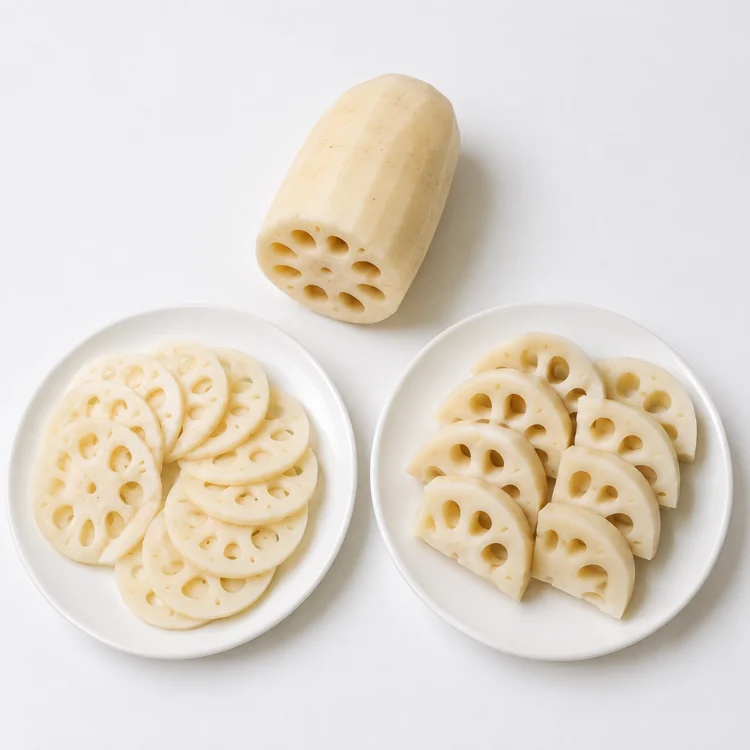
Select firm pieces without soft decay, objectionable odor or damaged areas that extend into the flesh. Wash the whole piece under running water before peeling, so the knife does not carry surface dirt directly into the cut surfaces. The FDA's produce handling guidance recommends running water rather than soap or commercial produce wash. Clean hands, boards and knives matter alongside the ingredient itself.
Trim the ends, peel if the recipe calls for it, and inspect the channels exposed by cutting. Rinse away visible soil from accessible holes. Choose a sharp knife or a guarded slicer appropriate to the volume. The objective is consistent thickness with intact edges, not the thinnest possible slice. Thin, torn wheels tend to break further during tossing and packing.
- Decide the intended dish and the desired bite.
- Prepare one short section and cut a small trial batch.
- Measure several slices rather than judging only the first cut.
- Cook the trial and adjust the thickness before cutting the remainder.
- Keep prepared slices clean, protected and appropriately chilled until cooking.
Cut lotus root can discolor on exposure to air. A short recipe-specific soak in water, sometimes with a little food acid, may help appearance. That is a color-management step, not a sanitation treatment. Do not use it to justify holding cut produce warm or to repair poor raw material. Drain well before a high-heat cooking method.
In a commercial kitchen, collect trimmings and broken slices separately during the trial. They show whether the selected diameter and cut are practical for the equipment. A beautiful sample cut by hand may not represent the yield of a busy production shift.
Blanching: a preparation step with a specific job
Blanching briefly exposes the slices to hot water or steam. Depending on the recipe and process, it can begin cooking, reduce the work left for the final pan and help establish a more consistent starting condition. It also changes texture. Treat it as a deliberate stage with a defined purpose, not a compulsory ritual for every lotus-root dish.
For fresh thin slices that will be stir-fried, test a brief blanch followed by thorough draining against direct cooking. The blanched version may finish more evenly in a short service window; the directly cooked version may retain a different bite. The better choice depends on the slice, the pan and the final recipe. Do not copy a blanch duration from thick pieces onto delicate slices without testing.
If cooking continues immediately, drain the slices and move into the next stage promptly. If they are being cooled for later use, follow a suitable rapid-cooling procedure and refrigerated storage controls. Leaving a large warm bowl on a counter until the center cools is a different process from rapidly chilling a small batch.
For frozen procurement, ask whether the supplied product has already been blanched. Repeating the same treatment in your kitchen can soften edges and increase breakage without improving the dish. Conversely, omitting a required cooking step because the supplier mentioned blanching can leave the preparation incomplete. The product specification should distinguish industrial pretreatment from the instructions the user must follow.
Keep time, load and temperature in the trial record. Water that returns to heat quickly after a small sample behaves differently from a pot overloaded with cold slices. If production doubles the load, the original stopwatch result needs to be checked again.

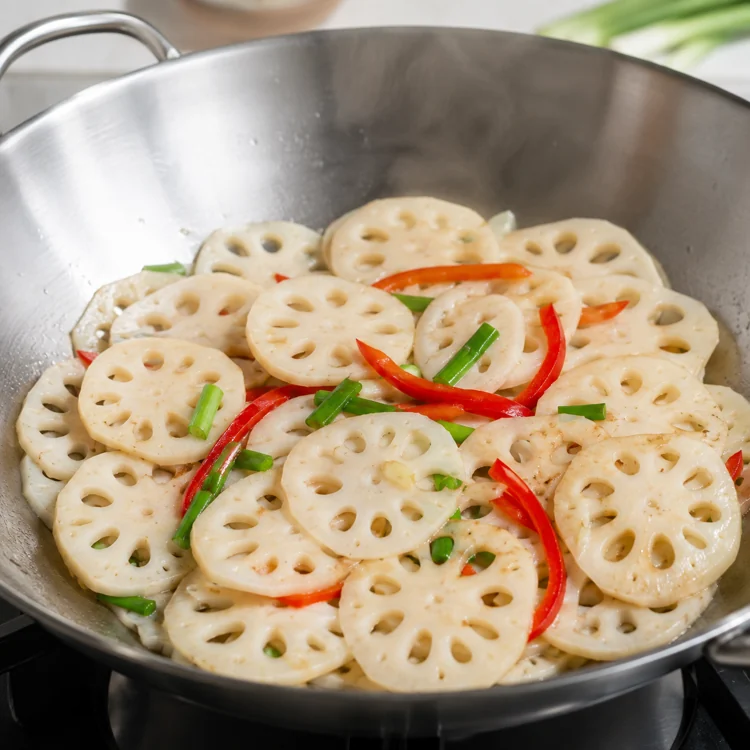
Stir-fry thin slices without making the pan watery
Stir-frying works best when the slices meet a hot cooking surface and the released moisture can escape. A crowded pan loses that advantage. Instead of quick surface cooking, the vegetables sit in accumulating liquid, and the finished dish can taste diluted even when the seasoning quantity is correct.
Prepare the sauce and accompanying ingredients before starting. Cook dense ingredients earlier if they need more time, then add lotus root at the stage that preserves the chosen bite. Use manageable batches and toss carefully so the holes and thin bridges between them stay intact. A broad spatula is often gentler than repeatedly stabbing or crushing the slices.
For thin fresh slices, cooking is commonly measured in a few minutes, but the endpoint matters more than a borrowed number. Taste a properly cooked trial slice for the intended texture and check the recipe's required heat treatment. Thicker cuts, lower heat and heavier loads need a different schedule. Frozen slices require the supplier's directions as the starting point.
Add a concentrated sauce in a controlled quantity. A large addition of cold, thin sauce can turn the final stage into a simmer. If the sauce needs reducing, reduce it separately or allow for that time before the lotus root enters the pan. Do not sacrifice the ingredient's texture merely to thicken an oversized pool of liquid.
Evaluate the dish both immediately and after the actual service wait. A stir-fry that sits under a cover continues to steam. For takeaway meals, condensation inside the closed pack may soften slices further. That is a packaging and service issue as much as a cooking issue.
Braise or simmer for a different bite
Braising gives lotus root time to take on the surrounding flavors and soften more gradually. Thicker slices or chunks can work well because they are less likely to break during a longer cooking period. The desired result may be yielding and substantial rather than the crisp, light bite expected in a stir-fry.
Use enough liquid for the chosen method and keep the heat controlled. A violent boil knocks pieces together and can damage the edges before the center reaches the preferred tenderness. Gentle movement also makes it easier to retain an attractive whole-slice presentation in a soup or braised vegetable dish.
Begin checking a representative piece during cooking, including one of the thickest pieces in the batch. Test the center and the outer flesh. When the recipe includes strong acid, salt, sugar or a thick sauce, do not assume it will behave exactly like plain water. Use the finished recipe for the final approval trial, rather than approving texture in an unrelated test liquid.
Long cooking can move flavor into the broth as well as into the vegetable. Season toward the end when reduction is substantial, and record the final liquid yield. This is especially useful for a meal manufacturer: an onion-rich braise or a soy-based sauce can vary in concentration when the vegetable contributes a different amount of water.
For a chilled or frozen prepared meal, stop thinking of the first cook as the final result. Test the product after its planned cooling, packing, storage and reheating sequence. The slice should meet the agreed texture when eaten, while every required safety control remains satisfied at the relevant stage.
Roasting and chips need a different cut
Roasted lotus root and lotus-root chips are related ideas with different targets. A roasted slice may have browned edges and a chewy or tender center. A chip needs a much thinner, more uniform cut and enough moisture removal to become crisp. Using one cutting specification for both usually produces an uneven result.
For roasting, drain or dry the prepared surface, coat evenly with the recipe's oil and arrange the slices with space between them. Check whether the tray material and oven airflow give even color. Turn or rotate the tray when the equipment requires it. Pieces touching in a wet pile will not brown in the same way as a single layer.
For chips, very thin slices require careful cutting equipment and close attention near the end of cooking. Browning can accelerate before a thicker center becomes crisp. A mixed-thickness batch therefore creates an awkward choice between burnt thin pieces and leathery thick ones. Improving the cut is more effective than adding a universal extra minute.
Seasoning also matters. Sugar-containing coatings can darken quickly, while wet sauces undermine crispness. Apply delicate seasonings at a stage that protects both flavor and texture. Judge crispness after a brief cooling period as well as straight from the oven or fryer, because the eating experience changes as steam escapes.
Commercial frozen slices intended for soups or stir-fries should not automatically be sold as a chip-ready ingredient. We would first review the cut thickness, pretreatment, moisture behavior and the customer's equipment. A separate chip application trial is more reliable than a claim based only on the round shape.
Cooking frozen lotus root from the bag
Frozen lotus root can reduce peeling and slicing work and make portions easier to plan. Its usefulness depends on a clear specification and cooking instructions. The bag may contain individually separated slices, thicker pieces or a different cut, and the processing history influences how those pieces behave when heated.
Follow the labeled method. For a product intended to cook from frozen, remove the required amount and return the remaining stock to frozen storage promptly. Do not thaw the entire bag simply to make portioning convenient. If the pieces have fused into a hard block, investigate handling and the product's normal form rather than repeatedly warming the bag to loosen it.
Expect the pan or broth to cool when frozen vegetables are added. Use a suitable batch size, and allow the equipment to recover. In a stir-fry, excess load can generate a watery result; in soup, it can extend the time needed to bring the dish back to its required condition. These are predictable process changes that can be addressed during a trial.
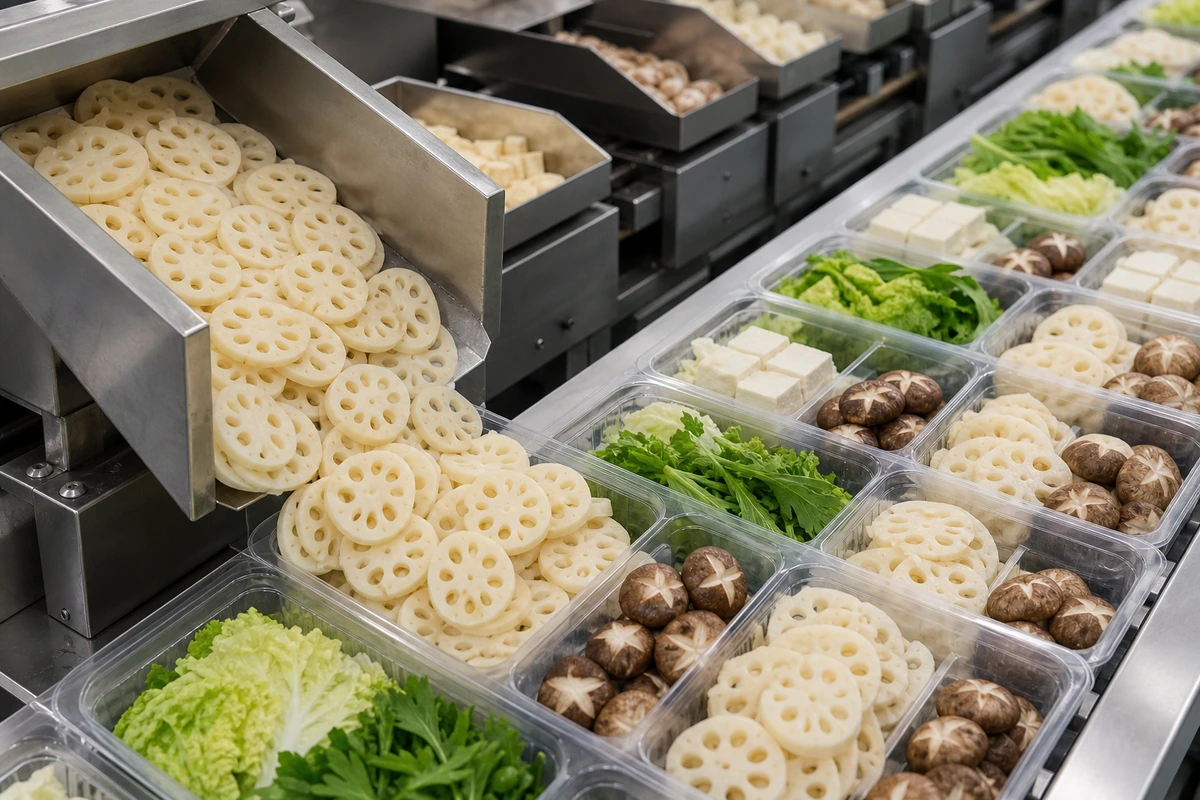
We supply frozen lotus root for cooking applications where cut consistency and preparation yield matter. When reviewing a requirement, we ask how the slices will be heated, whether the dish is served immediately and whether another freeze or reheat stage follows. Those details help define a useful sample instead of sending a visually similar product without an application reference.
For a separate discussion of preservation and texture, see whether lotus root can be frozen. Freezing and cooking are connected decisions, but one does not replace the other.

Solving dark color, tough centers and broken slices
Discoloration, toughness and breakage need different responses. Increasing cooking time is not a reliable correction for all three. Start by identifying when the defect appears: before cooking, during heating, after draining or after holding. That point often narrows the cause more effectively than the final appearance alone.
| Observation | Check first | Useful trial adjustment |
|---|---|---|
| Darkening before the pan | Raw material, exposure time and pretreatment | Shorten prepared holding and compare an approved color-control step |
| Tough or uneven centers | Thickness range and actual heating load | Tighten the cut range and test the largest pieces |
| Broken wheels | Existing cracks, thin bridges and rough mixing | Compare gentler handling and a more suitable thickness |
| Watery stir-fry | Surface water, frozen load and sauce volume | Drain where instructed and reduce the pan load |
| Softness after reheating | Total heat exposure across both cooks | Rebalance the validated first and final cooking stages |
A little natural color variation is not necessarily a reason to reject a lot, while an attractive white color does not prove that the texture is right. Define an acceptable range with representative samples. If color is critical to a light sauce or retail photograph, make that requirement explicit before production.
Keep rejected samples or photographs with the batch code and cooking record where your quality system allows. A complaint stating only "too soft" leaves uncertainty about the starting product, load and holding time. A comparison under the same method gives both purchasing and production teams something they can act on.
Specifying lotus root for foodservice and ready meals
A useful specification identifies the cut, thickness range, diameter expectations and allowed proportion of broken pieces. It also describes the intended cooked texture. "Premium lotus root slices" is too vague to explain why one lot works in a clear soup and another fails in a neatly arranged meal tray.
For application details, see Lotus Root Soup: Choose Slice Thickness for Broth and Bite.
For a visible whole-slice application, set an agreed approach to full wheels, partial wheels and fragments. For a mixed filling, intact circles may contribute little value compared with consistency and ease of portioning. Paying for a presentation grade that is later chopped can add cost without improving the finished food.
Confirm ingredients and any processing aids or additives requiring disclosure in the destination market. Ask for the applicable product specification, microbiological criteria, traceability information and relevant test reports. Documents should refer to the supplied product and production scope. A general certificate cannot answer every question about a particular lot or recipe.
The sample should be tested in the actual formulation at a practical batch size. Record input weight, cooked drained weight, acceptable slice count and waste. Where a meal undergoes customer reheating, assess the finished meal under the proposed instructions. This ties the purchase decision to the food that will actually be served.
We can review the required cut, packing and application together. Minimum order quantity, available pack sizes and lead time should be confirmed for the specific requirement. They depend on the product and packing plan; a custom slice or private-label bag should not be assumed to follow the same schedule as an established bulk format.
A practical cooking trial, packing and delivery plan
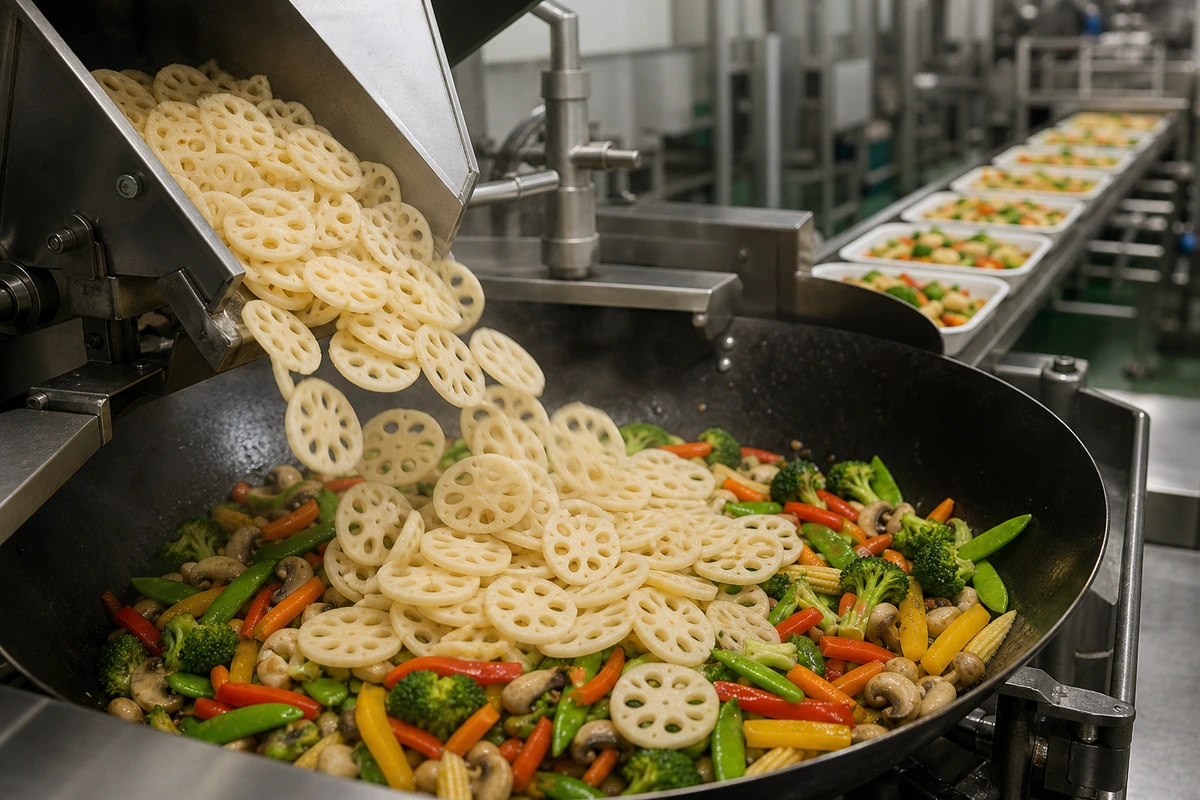
Build a small comparison around the decisions that could change the order. For example, test two slice thicknesses in the same stir-fry, then hold each for the restaurant's normal service delay. Use equal input weights, the same sauce and the same equipment. Change one factor at a time so the result can be explained.
Record the result in terms the team can repeat: whole-slice retention, cooked yield, bite, color and water released into the dish. Add the operator's workload. An ingredient that saves peeling but requires long manual separation may provide less labor benefit than expected. A reliable portioning method belongs in the assessment.
Choose packing around the amount used per preparation run. Repeatedly opening a large bag for very small portions exposes the stock to unnecessary handling. A smaller inner pack may improve control, while a larger pack may suit continuous production. Confirm carton dimensions, net weight and pallet arrangement when planning storage and shipment.
At receipt, inspect package integrity, lot identification and the agreed transport temperature evidence. Keep the product under its specified frozen conditions, commonly at or below -18°C, and follow the supplied storage instructions. Visible frost or clumping deserves investigation, but an arrival photograph alone cannot reconstruct the full temperature history.
Send the destination market, expected volume, target cut, cooking route and packing requirements with the sample request. Include any private-label artwork needs and documents required for supplier approval. That gives us a clear basis to confirm feasibility, sample timing, commercial terms and the checks needed before a shipment is released.
Source frozen lotus root with GreenLand-food
GreenLand-food is a professional frozen lotus root supplier and manufacturer in China, providing factory-direct wholesale supply for importers, food manufacturers, foodservice distributors and private-label programs.
Include slice thickness, full-wheel requirements and the intended stir-fry, soup or ready-meal preparation route.
Send your product form, specification, packing, quantity, application and destination, together with private-label needs and requested documents. We will review the requirement and confirm the available sample, packing and commercial options for your order.