


What Are Yuca Fries? Cassava, Cooking & Frozen Formats
Sep 04, 2026
Leave a message
The direct answer
Yuca fries are made from cassava root. Plain frozen cassava pieces and prepared frozen fries are different products. Use appropriately sourced food-grade cassava and follow its preparation instructions; a fork-tender texture or a short recipe time does not validate every cassava safety process.
Keep these distinctions in mind
Yuca, cassava and fried yuca: what the names mean
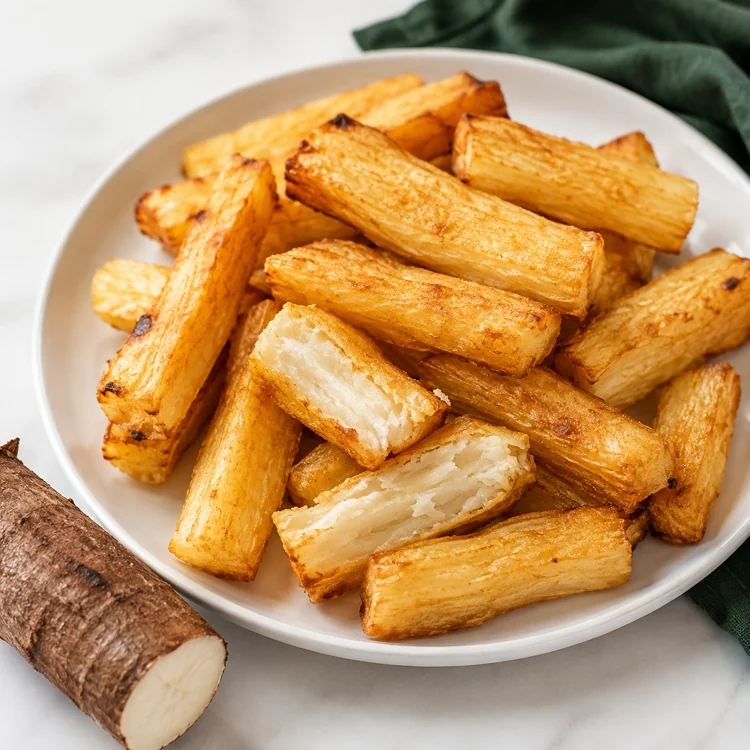
Yuca fries are pieces of cassava root prepared as a fried side dish. You may see the same food called cassava fries, yuca frita or mandioca frita. The names tell you the ingredient and the broad style of preparation; they do not tell you whether a purchased frozen product has already been cooked.
Cassava is a starchy root with firm pale flesh under a tough outer skin. It is different from potato, although both ingredients can become a crisp side dish. It is also different from the ornamental plant usually spelled yucca. For an ingredient order, "cassava" or "yuca" is clearer than relying on the extra-c spelling sometimes found on menus.
"What is fried yuca?" has the same basic answer: cassava that has been prepared and fried. The shape may be a thick stick, a wedge or an irregular piece separated from a cooked root. A menu photograph can show any of these, so a restaurant wanting straight, even batons needs to specify that shape rather than ordering by the dish name alone.
The distinction matters beyond appearance. Root pieces, cooked sticks and coated prepared fries can arrive in similar bags while needing different kitchen procedures. At GreenLand-food, we start a cassava discussion with the cut and processing state. A buyer describing a finished golden fry has given us an application target; we still need to confirm the ingredient that will achieve it.
How yuca fries taste and differ from potato fries
A well-prepared yuca fry has a crisp outside and a substantial, starchy interior. The flavor is mild, sometimes described as slightly nutty, which leaves room for garlic, herbs, salt and dipping sauces. Compared with a light potato fry, a thick cassava piece can feel denser and more fibrous. Neither texture is automatically better: the right choice depends on the intended eating experience.
A thin baton provides more surface relative to its center. It can become crisp quickly but also becomes dry more easily. A thick wedge gives a stronger contrast between crust and interior, while requiring attention to the center and any tough central fiber. An irregular hand-separated piece can look appropriate on a rustic sharing plate but complicates automated portioning.
| Characteristic | Yuca fries | Potato fries |
|---|---|---|
| Main ingredient | Cassava root | Potato tuber |
| Typical interior | Substantial, starchy, sometimes slightly fibrous | Varies from fluffy to creamy with potato type and process |
| Shape control | Root geometry and fiber can affect straightness | Depends on tuber size, cutting and product grade |
| Kitchen instruction | Must match cassava identity and prior processing | Must match raw, blanched or prepared potato product |
| Purchase comparison | Compare edible finished portions and service performance | Use the same finished-portion basis |
Do not promote cassava fries as inherently healthier because the ingredient changes. Oil uptake, coating, portion size and seasoning all affect the finished food. Plain cassava does not contain gluten, but a gluten-free claim for fries also requires checking coatings, seasonings and shared preparation equipment.
Choose the starting product before choosing the method
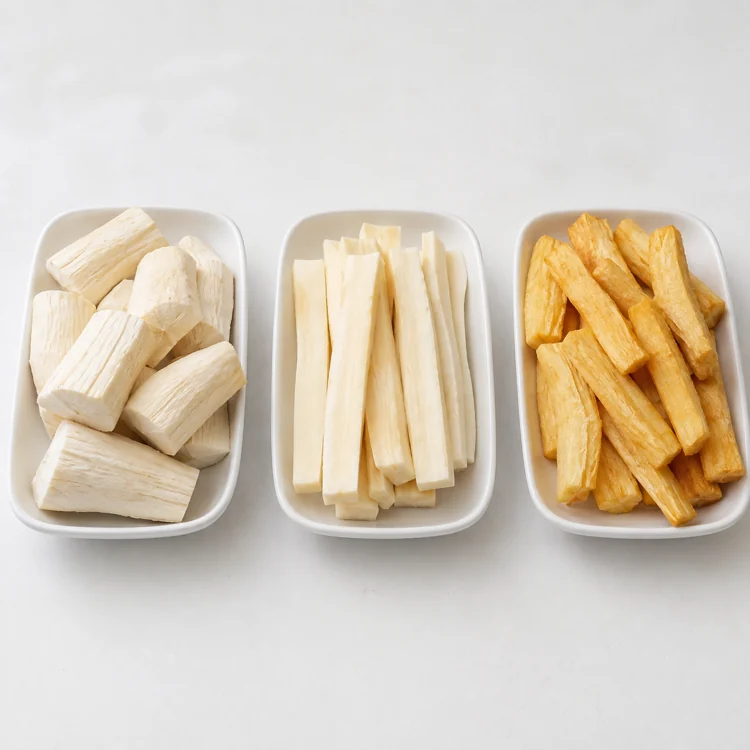
The most useful question on a frozen bag is not "Can I fry this?" It is "What has already happened to this cassava?" A peeled root piece may still require a substantial preparation stage. A fully prepared frozen fry may be designed for a specified direct-from-frozen finish. The two should never share an assumed instruction.
Look for a complete product description, ingredient list, storage direction and cooking method. If these are unclear, obtain clarification before using the product. "IQF" describes how pieces are frozen individually; it does not mean fully cooked, ready to eat or ready for every type of fryer.
| Starting material | What to establish | Practical consequence |
|---|---|---|
| Fresh food-grade cassava root | Suitable edible type, sound condition and proper preparation directions | Peeling and primary preparation remain part of the kitchen task |
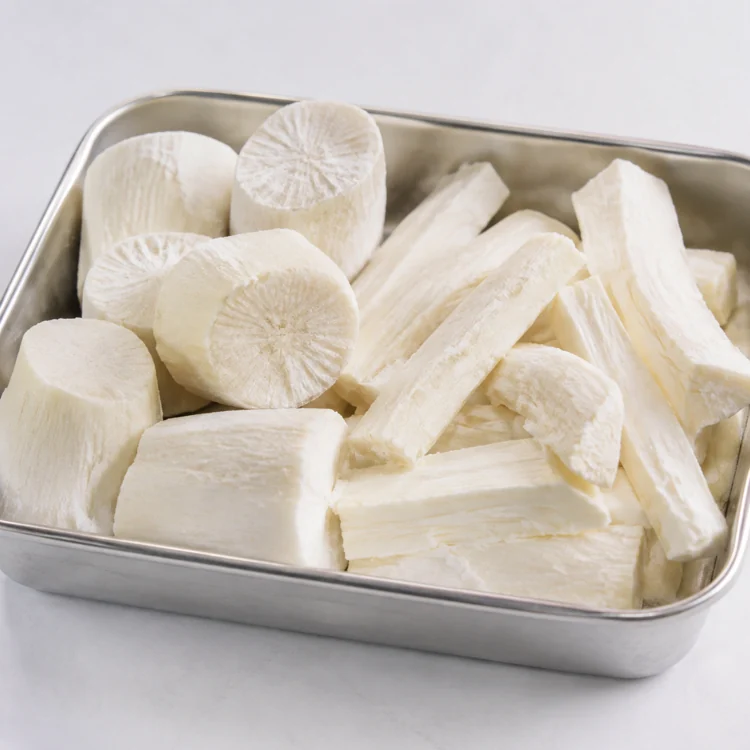
| Frozen peeled chunks | Raw or otherwise processed; required cooking steps | A frozen chunk is not automatically a prepared fry |
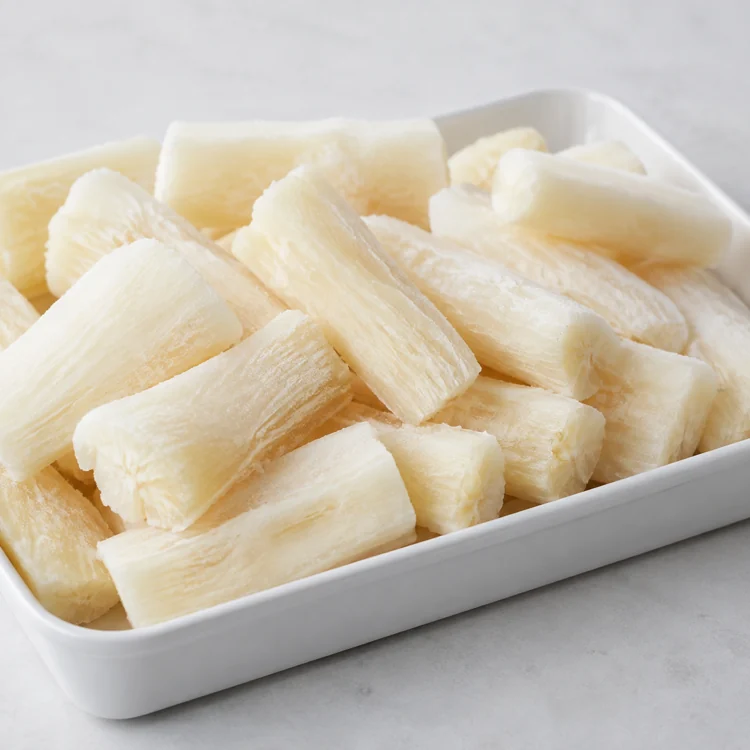
| Frozen cassava sticks | Cut dimensions, thermal treatment and final cooking route | Similar-looking sticks may require different handling |
| Prepared frozen fries | Ingredients, coating or oil, validated finishing directions | Follow the specified appliance, load and preparation state |
Check the actual food as well as the paperwork. A bag labeled sticks should not contain a large proportion of short fragments. A product expected to portion freely should not arrive as one solid mass. Neither observation proves food safety, but both can reveal a mismatch with the agreed product or a handling problem worth investigating.
Preparing food-grade cassava for fries
Cassava needs particular care because it contains cyanogenic compounds. Its identity and processing history matter. Canada's food inspection guidance distinguishes sweet and bitter cassava, while Food Standards Australia New Zealand cautions that ordinary cooking methods cannot reliably detoxify every cassava material. These are reasons to use a known food-grade product with appropriate instructions, rather than adapting a fry recipe to an unidentified root. See CFIA's natural-toxin guidance and FSANZ's cassava guidance.
For a suitable food-grade cassava product, the preparation sequence should make the responsibilities clear:
- Confirm the product identity and follow its preparation directions. Do not use taste to identify an unknown cassava type.
- If supplied fresh and unpeeled, remove the skin and unsuitable tissue as directed. Use a stable board and handle the firm root carefully.
- Apply the required primary cooking or preparation stage. Do not replace it with a quick surface browning.
- Remove any tough central fiber when preparing the pieces for eating, then form a reasonably even cut.
- Drain and handle the prepared pieces hygienically before the final fry, roast or other specified finish.
This sequence is not a detoxification protocol for bitter or high-cyanide cassava. Nor is fork tenderness a chemical test. Commercial purchasing should establish which controls the processor uses and what product-specific evidence is available. The eating-quality trial starts after the material's suitability and safe preparation have been established.
Boiling, drying and finishing: what each stage changes
Many culinary preparations first cook suitable peeled cassava in water, then drain it and finish it in oil. These stages do different jobs. Moist cooking softens the dense interior; draining removes free water; final frying develops the outside. Skipping a stage because the surface already looks golden can leave an unpleasant center or conflict with the product instructions.
For texture development, evaluate the largest pieces in the batch. Small fragments may soften and begin breaking while larger pieces remain resistant. If this happens repeatedly, a narrower size range is often more useful than extending the cooking time for everything. Record whether breakage begins during primary cooking, draining, cutting or frying.
Drain prepared pieces well before an oil finish, and keep unnecessary water away from hot oil. Use suitable frying equipment and its safe loading procedure. A wet surface also works against consistent browning: the equipment must first drive off water before the crust develops. Do not interpret "dry the surface" as permission to leave cooked food on a counter for an extended period.
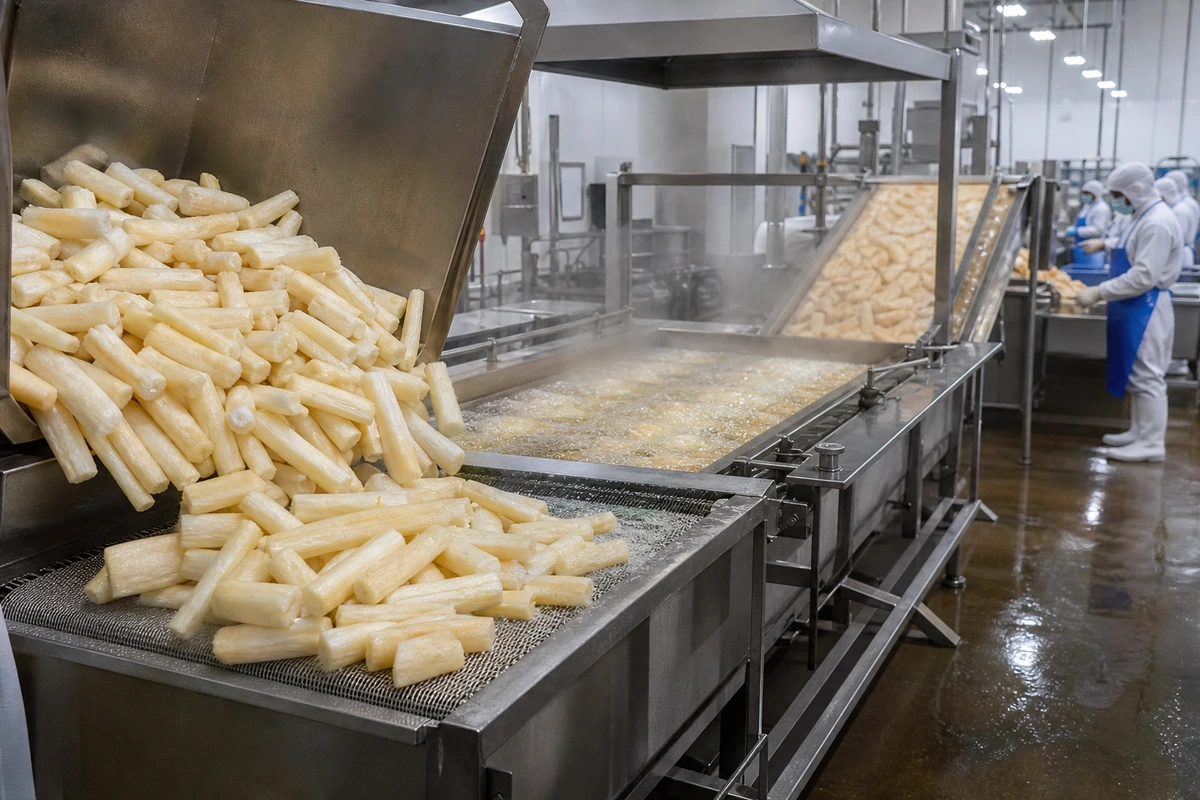
For a commercial trial, follow the product's specified temperature and starting load. Record the actual batch weight, recovery time, cooking duration and finished texture. A lightly loaded test basket may produce a promising result that disappears during busy service. Oven and air-fryer instructions also need their own trial; they cannot be derived simply by copying a deep-fryer time.
Frozen cassava pieces versus prepared frozen fries
Frozen cassava pieces are ingredients. Prepared frozen fries are products designed around a finishing method. A supplier may offer both, but the existence of a cassava range does not establish that every piece is par-fried, coated or ready for a short final cook.
The cooking frozen yuca guide sets out processing-status and preparation checks before pieces are treated as ready fries.
Our frozen cassava range provides the starting point for discussing chunks, sticks and other cuts. The quotation should explicitly state the thermal treatment and intended use. If the brief is a retail fry bag, confirm the full ingredient declaration and the instructions that will appear on the pack; do not infer them from the product name.
An uncoated product may suit a kitchen that wants control over the seasoning and final surface. A coated product, where available and approved, may behave differently in the fryer and under holding. Coatings also change ingredient declarations and may introduce allergens. A comparison is meaningful only when the kitchen knows which formulation it is testing.
IQF separation can make partial-bag use easier, but "free-flowing" needs an agreed practical meaning. A few loose pieces stuck together are different from a hard block requiring force to break. Define how the product is examined while frozen, what clumping is acceptable and how damaged pieces are counted. Avoid accepting a photograph of one attractive handful as the complete quality standard.
Why yuca fries turn hard, greasy or fragile
A disappointing fry often points to a specific mismatch between the cut, previous processing and kitchen method. Change one variable at a time. Otherwise a successful second batch may be difficult to reproduce because several things changed together.
| Problem | What to investigate | Useful trial adjustment |
|---|---|---|
| Hard or fibrous center | Product preparation state, large pieces, remaining central fiber | Confirm the primary preparation and examine the largest pieces |
| Dark outside before an acceptable center | Cut thickness, starting state, finish intensity | Follow the approved route and compare a more uniform cut |
| Greasy surface | Equipment recovery, excessive loading, surface water | Test the specified load and drainage before changing the ingredient |
| Many broken pieces | Prior softening, rough handling, thin cut, shipment damage | Find the stage at which breakage increases |
| Good at first, poor after holding | Condensation, ventilation, holding duration | Test in the actual service container and service window |
Do not use appearance troubleshooting to rescue a product with an unexplained safety or identity problem. Keep that lot separate for review. Equally, do not assume every broken fry indicates temperature abuse: cutting and handling can cause mechanical damage without a thawing event.
Keep a retained photograph of the frozen sample and of the finished portion under consistent light. Note the elapsed time before each assessment. These small records make a supplier discussion much more useful than "the fries were not crispy," particularly when the delivered cut and the kitchen's handling both need examination.
Designing a restaurant portion and service trial
Start with the meal, not the carton. A side dish for grilled meat, a sharing appetizer and a delivery snack have different requirements. Thick cassava pieces that work on an open plate may lose surface crispness inside a closed takeaway box. A sauce poured over the fries creates a different challenge from a dip served separately.
Choose a target finished portion by weight and by visual coverage. A count-only portion is unreliable if stick length varies widely. Conversely, weight alone can hide an awkward presentation when one plate receives a few large wedges and another receives mostly short pieces. Recording both helps the kitchen decide how tight the cut specification needs to be.
A useful service test has four parts: preparation exactly as instructed, immediate tasting, assessment after the planned holding period, and assessment in the actual serving container. Repeat with a realistic busy-service load. Include the normal salt or seasoning because its distribution affects the final result, but keep it constant when comparing suppliers.
Calculate the cost per acceptable portion. Include preparation loss, fiber removal where relevant, breakage, cooking yield and unsold cooked product. For an illustrative calculation, divide the total ingredient and preparation cost of a batch by the number of saleable portions it produces. The example is a method, not a promised cassava yield. A cheaper bag can become the more expensive choice if it creates extra trimming or inconsistent portions.
Write a cassava fry specification that can be checked
A useful specification describes a measurable product and a repeatable test. "Premium cassava fries" does neither. Define the ingredient and process first, then the physical and cooking characteristics that matter to your application.
State the nominal stick length and cross-section, together with an agreed method for measuring irregular pieces. Define short pieces, thin tips and fragments separately if they affect service. Ask whether tolerances are assessed by weight, count or another method, and make the basis consistent across samples and incoming goods.
Record flesh color, remaining peel, visible discoloration, foreign material and the treatment of central fiber. Describe the expected frozen separation. Include the formulation when oil, salt, coatings or other ingredients are present. For a plain cassava order, do not assume every supplier's "plain" means the same thing; review the ingredient declaration.
The cooking test should identify the appliance, preparation state, load and endpoint assessment. Chemical and microbiological requirements need a separate, appropriate verification plan. A sensory panel can approve flavor and texture, but it does not replace those controls. We will review the buyer's destination, application and requested evidence before confirming the order standard.
Attach representative sample photographs to the written description. Photographs help communicate shape and color, while the written tolerances prevent a single image from becoming an impossible expectation that every natural piece must match exactly.
A practical comparison can start with one restaurant portion: weigh the frozen input, cook under the supplied instructions, then weigh the fries that meet the agreed size and texture standard. Record fragments separately from full sticks and note how much product remains acceptable after the normal service wait. Repeat with the same basket load and equipment. This distinguishes a cut problem from an overloaded fryer and gives purchasing a usable cost basis. If a coating or seasoning is part of the product, include its ingredients and performance in the comparison rather than treating it as an invisible processing detail.
Receiving, frozen storage and pack instructions
At receipt, match the product name, lot reference and pack size to the order before moving into a detailed quality check. Check carton condition, inner-bag seals and the temperature records specified in the agreement. Photograph relevant defects with the lot reference visible in the record, and preserve the evidence needed for an investigation.
Keep the product at the frozen-storage temperature stated on its label and specification, commonly at or below −18°C for commercial frozen vegetables. Manage transfers so that cases do not repeatedly warm during picking and packing. A reefer set point is useful information, but it is not the same as a complete record of product temperature throughout handling.
For partial-bag use, portion under the kitchen's approved procedure, close the remainder securely and return it promptly to the appropriate storage. Do not leave an open carton beside the fryer through service. Repeated handling makes moisture exposure and loss of product identity more likely, even before a visible defect appears.
Pack instructions should distinguish storage, primary preparation and final finishing. A retail customer needs directions for the appliance shown on the label. A central kitchen needs batch instructions that fit its equipment and food-safety system. Changing the pack size can change the way a user handles the product, so a larger bag is more than a simple multiplication of the small-bag weight.
Sampling, documents and purchasing decisions
Request a sample that represents the proposed commercial product. Confirm whether it comes from the same cut, formulation and processing route as the planned order. If the sample is specially prepared or differs from normal production, record that difference before using it to approve a contract.
Ask for the specification, ingredient declaration, preparation instructions and the relevant batch or product test information. Where certificates are requested, confirm the holder, scope and validity for the product and supply arrangement. A certificate title alone does not answer a question about a particular cassava lot or cooking method.
Discuss MOQ, trial quantity, packing and lead time together. A standard foodservice bag, printed retail pack and customized cut may have different production and packaging requirements. Give the destination, approximate volume and required delivery window so that we can review a workable supply plan. Avoid building a launch date around an unconfirmed sample or artwork schedule.
Before comparing quotations, align the commercial basis: net product weight, cut, processing state, formulation, packaging and delivery terms. Keep the approved cooking trial with that file. Once these points are clear, a yuca fry becomes a defined product for a particular menu or retail program, and the next conversation can focus on supply rather than on correcting an avoidable ingredient misunderstanding.
Source frozen cassava with GreenLand-food
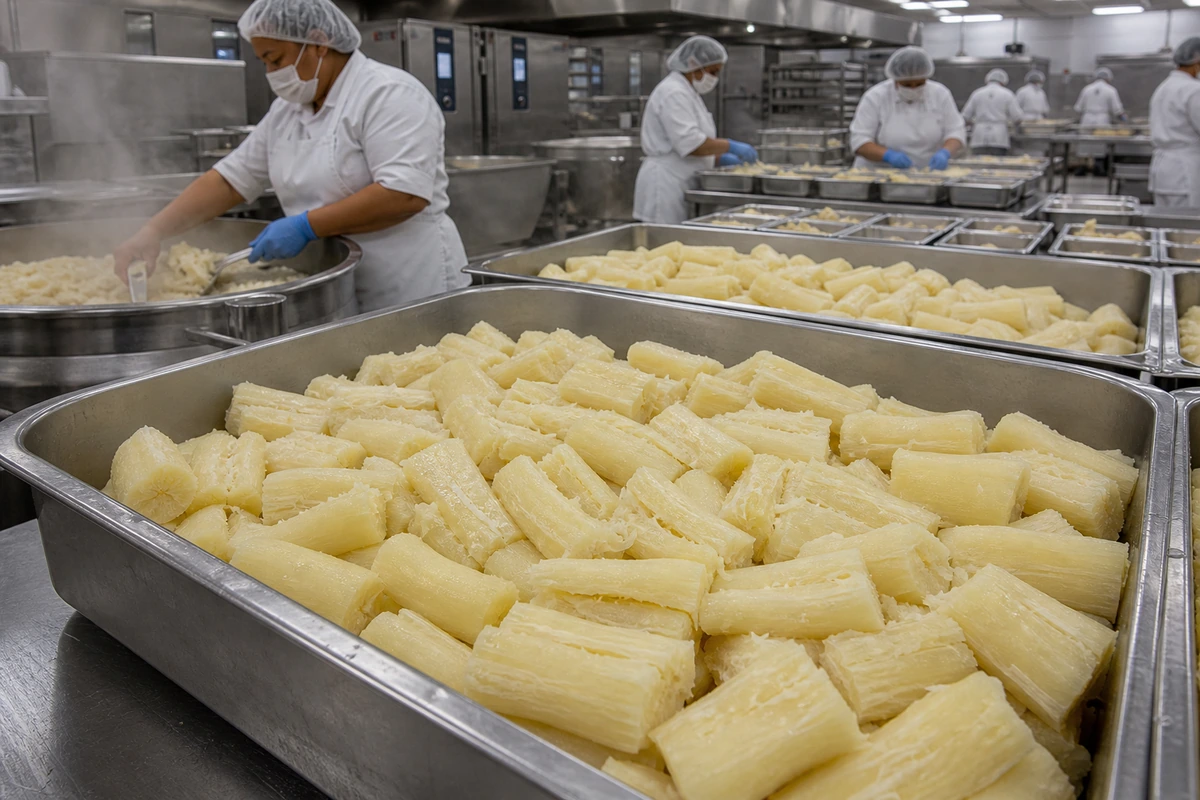
GreenLand-food is a professional frozen cassava supplier and manufacturer in China, providing factory-direct wholesale supply for importers, food manufacturers, foodservice distributors and private-label programs.
Include whether you need plain cassava pieces or a prepared fry format, the intended finishing equipment and the acceptable cooked yield.
Send your product form, specification, packing, quantity, application and destination, together with private-label needs and requested documents. We will review the requirement and confirm the available sample, packing and commercial options for your order.