


What Is Romanesco? Broccoli, Cauliflower and Frozen Floret Identity
Oct 19, 2026
Leave a message
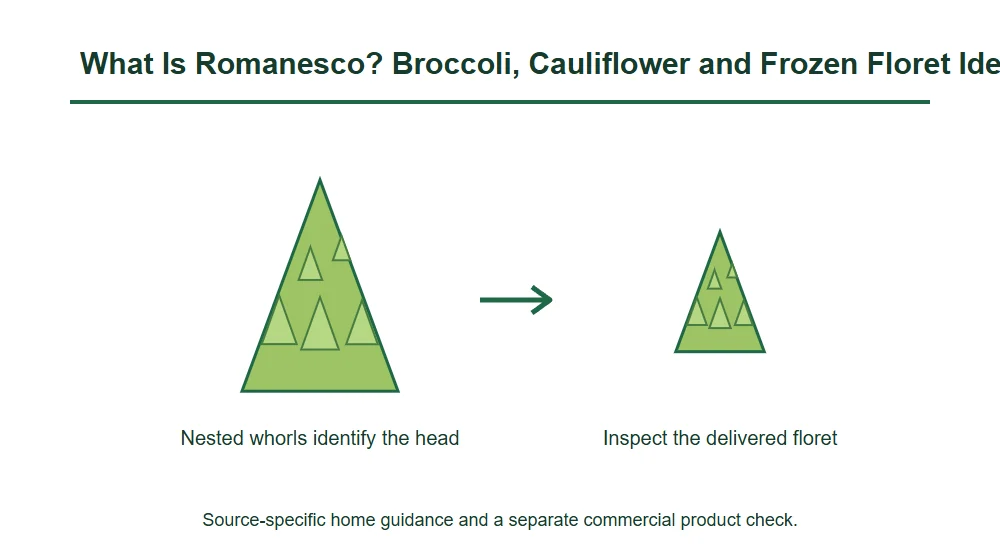
The scientific and horticultural labels vary among references, but the commercial decision is direct: name Romanesco itself, specify the floret cut and approve a sample. Its unusual head structure is its identity and often the reason a chef or ready-meal buyer chooses it.
That identity can be weakened when a whole head becomes frozen florets. Cutting, blanching, freezing and handling may break the pointed forms or leave a high proportion of stems. A bag labelled "mixed brassica florets" might be useful for one recipe and unacceptable for another. This guide explains the vegetable and its relatives, then shows how to evaluate frozen Romanesco for a plate, blend or prepared meal. We use real GreenLand-food product photographs as appearance references, while treating measurable cut, cook result and lot records as separate evidence.
- Romanesco has a light-green head of repeated pointed whorls; common broccoli/cauliflower names vary.
- A measured photo of one cut floret does not establish a whole-head or lot size.
- Choose intact floret or fragment tolerance by the cooked dish and name the shipped form.
Identify Romanesco by its head, not its nickname
A whole Romanesco head is usually easy to recognise. Pale or lime-green cones repeat in smaller patterns across the head, giving the surface a striking geometric texture. The University of Wisconsin Extension describes the pointed groups as bud structures arranged in spirals. That visible architecture is more useful to a produce buyer than a casual comparison with broccoli. It also gives a chef a reason to preserve an intact floret instead of chopping the head into an anonymous green vegetable.
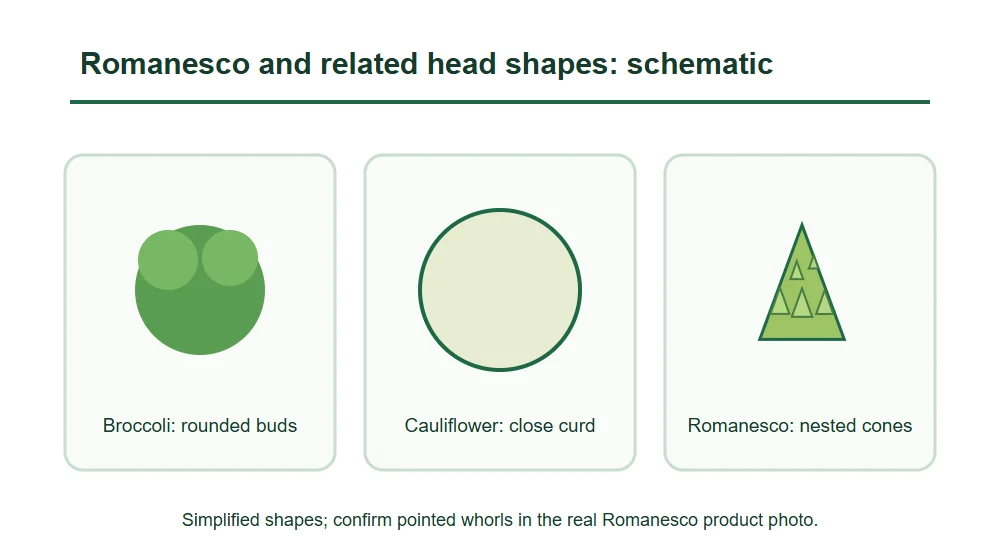
Simplified shapes; confirm pointed whorls in the real Romanesco product photo.
Romanesco belongs to Brassica oleracea, the same species that includes familiar cultivated broccoli, cauliflower, cabbage and several other vegetables. Those crops were selected for different edible structures. A shared species does not make their market names or cooking behaviour interchangeable. The practical proof of identity is the head shape and the approved product form. If a supplier calls a green cauliflower "Romanesco," ask for a sample; a smooth or rounded curd is not the pointed spiral head the buyer may expect.
The names are genuinely varied, but the plant is not an arbitrary blend of two vegetables. Wisconsin Extension uses the common names Romanesco broccoli and Roman cauliflower while describing the lime-green, spiral head. The Royal Horticultural Society lists an accepted Brassica oleracea Botrytis Group 'Romanesco' and describes pointed florets in whorls. For a shopper, the quick identification is: broccoli has rounded bud clusters, ordinary white cauliflower a compact pale curd, and Romanesco a repeated cone-like pattern across a light-green head. A producer can use a familiar comparison name on a shelf, but the ordered ingredient should say Romanesco and show the actual cut. Botanical grouping does not license substitution with standard broccoli or cauliflower.
For frozen purchasing, inspect loose florets rather than only a whole head image. The desired cones should remain identifiable after cutting and freezing, with an agreed amount of attached stem. A photograph can show the type of piece, but it does not measure breakage throughout a lot. Spread a representative sample on a contrasting tray and assess it at normal cooking scale. If visual impact matters to the finished dish, also examine a cooked portion.
How it relates to broccoli and cauliflower
Put the three heads side by side before discussing a frozen cut. Broccoli offers branches ending in rounded green buds; cauliflower forms a close, pale curd; Romanesco is made of nested pointed green whorls. The repeated points create a different silhouette even after the head is cut. That is why a Romanesco floret that loses its tip is not automatically worthless, but it may lose the visual reason a chef bought it. Use the shape as a consumer identification cue and an optional presentation grade, not as evidence of a particular nutrient value, legal classification or freezing treatment.
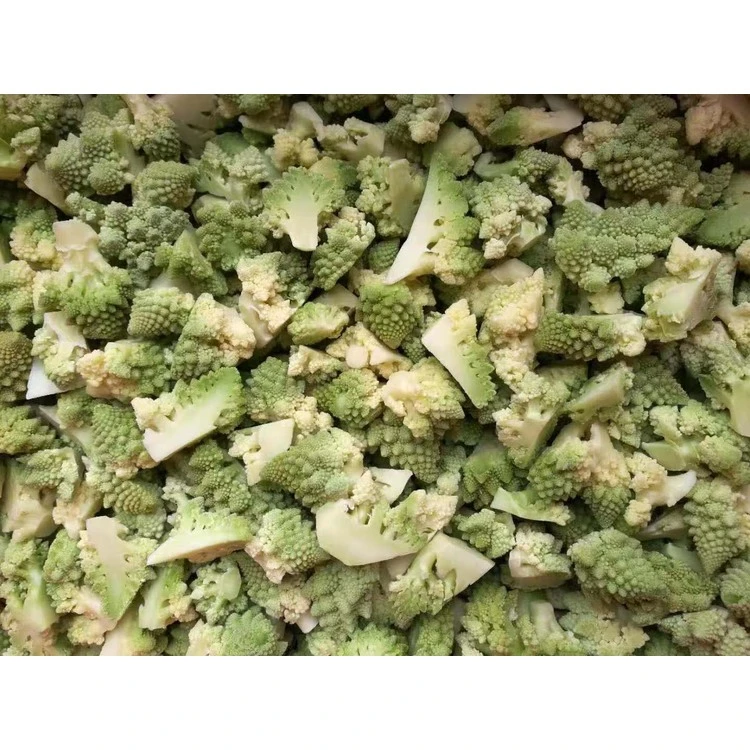
IQF Romanesco florets and stems in a loose product sample.
NC State Extension presents Romanesco among a cauliflower and broccoli group; the RHS gives it a cauliflower group name. Neither label alone tells a factory how to cut or freeze it. Use botanical references to avoid calling it an unrelated crop, then use a product specification to govern the transaction. In ingredient declarations and customs classification, the importing business should confirm the exact legally applicable terminology for the destination and the product's processed state; a website guide cannot decide those particulars.
The first GreenLand-food photograph shows a loose collection of cut Romanesco florets with pale stems and green pointed heads. Read the photo at two scales. At the piece scale, look for the nested cones, the length of stem below them and whether the tip is intact. At the pile scale, notice that there are both small and large pieces; a tightly cropped hero photograph would hide this distribution. Neither scale tells you how many pieces are in a defined size band or whether the largest base cooks through before the smallest point softens. For a plate, ask for a physical frozen sample and cook the smallest and largest representative pieces by the same method. For a blend, test whether the unusual silhouette is still visible after mixing with broccoli or cauliflower. Keep the original photo as an appearance reference, not an unmeasured claim about factory grade or lot uniformity.
Do not infer flavour or nutrient equivalence from relatedness. Romanesco is commonly described as mild and somewhat nutty; Wisconsin Extension notes a cauliflower-like texture. Actual taste depends on cultivar, maturity, processing and cooking. A marketer may prefer a comparison with broccoli or cauliflower to help consumers understand it, but the purchasing team should test the proposed frozen lot in its own sauce, seasoning and heating method. A strong cheese sauce may mask distinctions that matter in a lightly dressed side.
Taste, colour and cooking behaviour
The light green colour is part of Romanesco's appeal. A raw head may look vivid, but a cooked floret can appear duller if overheated or held too long. A frozen sample should be evaluated both straight from the pack and after the intended cook. A photographed raw head is not proof that a ready meal will retain the same colour after blanching, freezing, assembly, storage and reheating. For an exposed plated side, visual testing carries more weight than it might in a puréed soup.
Compare real samples; no colour change is presumed by the drawing.
Texture is a related decision. A large floret has a thicker stem base than its pointed tip. If a cook waits for the base to soften fully, the small outer points can become delicate. A narrow size range makes it easier to reach a useful endpoint across a batch. This is not a reason to demand every piece be identical; natural forms vary. It is a reason to agree a range and to limit small fragments that will overcook before the larger pieces are ready.
Steam, sautéing, roasting and incorporation into a prepared meal can all produce different results. A sauce can protect pieces from drying but may cover the spiral. A dry-heat method can emphasise edges while demanding care not to break small points. In a soup, the vegetable may need only brief heating if the florets have already been treated during processing. The supplier should describe the finished ingredient state; the cook determines the final heat exposure through a controlled trial.
When comparing Romanesco with broccoli or cauliflower, cook matched samples by the method intended for the menu. Use comparable cut sizes, not one large Romanesco piece against tiny broccoli pieces. Record colour, aroma, bite, breakage and how many pieces remain recognisable. If Romanesco is chosen for its spiral appearance, that last measure may determine whether it deserves a separate SKU. A blind taste comparison alone would miss the reason for buying it.
Why frozen florets need their own specification
Ask first which part of the visual structure the dish actually needs. For a plated side, select a reference floret showing a recognisable pointed tip and an acceptable stem length. For a mixed vegetable bag, decide whether smaller pieces can carry the Romanesco identity at the plate's viewing distance. For a blended soup, broken but sound florets may be perfectly usable. Then define the inspection denominator: for example, count whole-looking versus tip-broken pieces in a weighed tray sample, and separately weigh loose fines. A single percentage cannot serve both measures without saying whether it refers to count or mass. These are proposed buyer measurements, not published grades or legal tolerances.
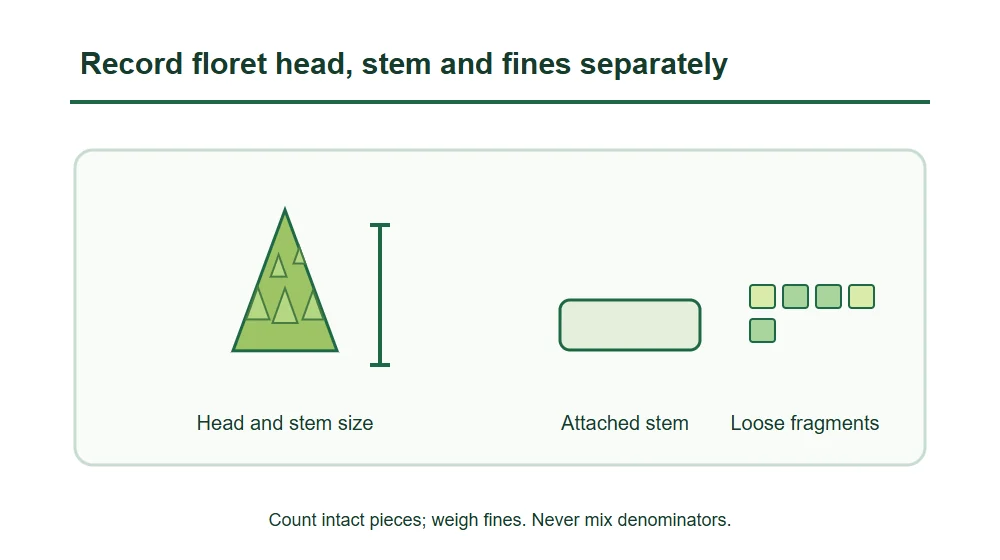
Count intact pieces; weigh fines. Never mix denominators.
The shape makes breakage more consequential than it might be in a less distinctive vegetable. A broken point can still be edible and useful in a soup or blended product, but it may reduce the value of a plated side. Therefore the acceptable fraction of small pieces should follow the application. A foodservice distributor serving buffet sides may need robust whole-looking florets; a vegetable mix producer might allow more variation. Set a standard that reflects that use rather than borrowing a universal number from another crop.
Ask about the processing route without inventing its parameters. Raw material selection, trimming, washing, cut size, any heat treatment, cooling, freezing and packing all affect the final sample. We can review the product form and the documentation requested by the buyer. A home blanching time for broccoli or cauliflower should not be presented as the exact factory condition for Romanesco. The commercial product needs its own process controls and finished-product evidence.
Packing matters to the delicate tips. Overfilled or heavily compressed units can increase breakage during storage and transport. A bag that can be handled without crushing the pieces may protect visual quality, but the right unit size also needs to suit the customer's freezer and batch weight. Request a production-equivalent packed sample when appearance is critical. A loose tray sample that never experienced packing and distribution may flatter the product.
Select cuts for plates, blends and ready meals
For a plated side, place several representative frozen florets in a single layer rather than heaping them into a deep pan. Cook them by the method intended for service, then transfer gently to a plate and inspect the tips after the planned hold. Choose a sample containing the largest stem bases as well as smaller pieces; if only the small pieces are tender when the large bases still resist a fork, the size range is too broad for a single endpoint. A second trial can narrow the size band or adjust the cook, but an apparent gain in tenderness is not useful if every visible cone breaks in transfer.
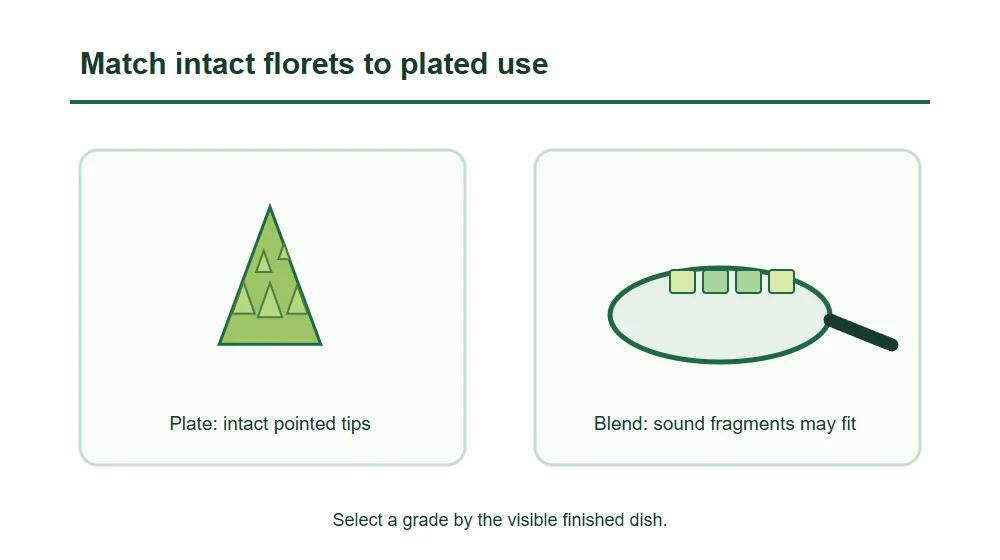
Select a grade by the visible finished dish.
A mixed vegetable bag has a different requirement. Romanesco should distribute evenly with broccoli, carrot, cauliflower or other components so the bag does not yield some portions with no visible Romanesco. Match the general piece scale and consider the different cooking rates. A high fraction of tiny Romanesco fragments can settle or collect at the bottom of a pack. Test multiple portions from a production-style mix, including the end of the bag, before setting the recipe.
For a ready-meal tray, consider the full process. The vegetable may be heated before assembly, then chilled or frozen with the meal, distributed and reheated by the consumer. Each stage can soften or damage the spiral. Trial the finished tray after the intended reheat, using the actual sauce and packaging. If Romanesco sits under a thick sauce and is no longer visible, the buyer may decide a different cut or even another vegetable would meet the dish objective at lower cost. That is a menu decision, not a fault in the crop.
Small broken florets and stem pieces can still have value in soups or purées when a clean identity and flavour matter more than display. State this use in the RFQ if it allows a different grade. Avoid accepting mixed grades by accident: a lower-priced product with too many fragments may increase sorting labour or make portioning unpredictable. The right grade is the one whose cooked yield and appearance fit the planned application.
Discuss the frozen ingredient for your production
Frozen Romanesco
Cooked sides, vegetable blends and prepared meals.
Confirm for your order: Floret size and spiral integrity; stem allowance, cooking trial and pack.
View product & supply detailsFor a commercial trial, send your required form, application, pack, quantity and destination. We can discuss the offered sample and the order specification with you.
Request Specifications & QuoteCook from frozen while protecting the spiral
For most cooked uses, start with the supplier's specified frozen product and trial direct addition rather than leaving it to thaw at room temperature. Thawing can release surface water and make fragile pieces harder to handle. If the recipe calls for draining or partial thawing, perform that step under a controlled chilled procedure and measure the resulting yield. The cook should know whether the proposed ingredient is raw, blanched or otherwise treated before deciding its final heat requirement.
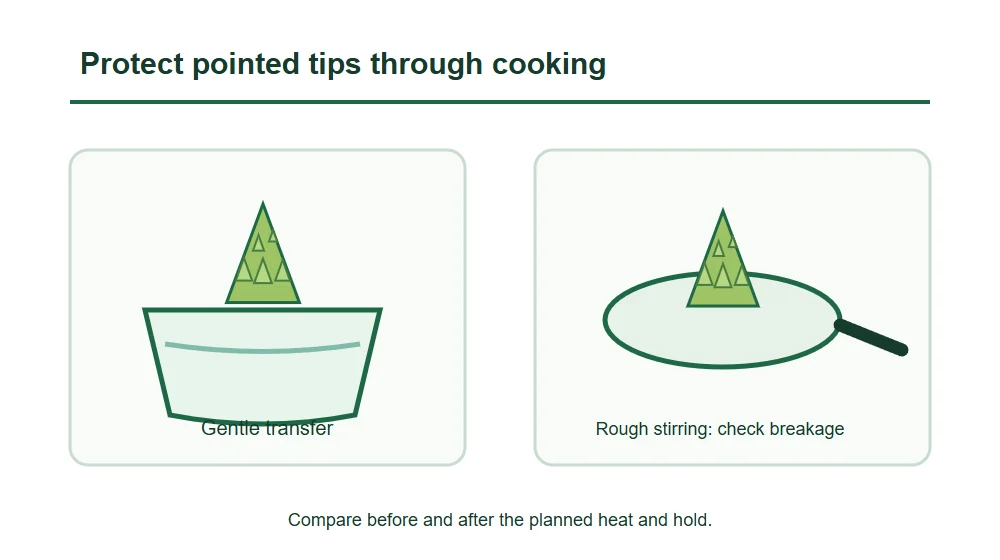
Compare before and after the planned heat and hold.
Use gentle handling when shape matters. A vigorously stirred kettle can shear pointed tips from stems, particularly after they soften. A pan or steamer loaded too deeply can give uneven heating and require longer exposure for the largest pieces. Match batch size to equipment, turn pieces carefully and check a representative piece from the largest size band. The endpoint is a tender edible stem with recognisable structure, not a fixed number of minutes borrowed from another kitchen.
If the dish is fully cooked, the finished-food process should be validated by the manufacturer or kitchen. A frozen vegetable is not automatically ready to eat because its production includes a blanch step. Conversely, if a buyer wants to use Romanesco in a cold or minimally heated preparation, it needs an ingredient explicitly suitable for that use and a corresponding food-safety plan. Product marketing language alone cannot establish that suitability.
After cooking, assess colour and breakage across the whole batch. Count how many pieces still display their distinctive points in a plated sample. If too many break, change one variable at a time: size range, handling, addition point, batch load or supplier cut. Keep the test photographs and method with the approved product record. That evidence lets the next shipment be evaluated against the same visual and culinary expectation.
Check a sample and receive a bulk lot
A useful sample table has two views: a frozen spread to see the cut, and a cooked plate to see what survives handling. Select from more than the top layer of a bag, weigh the sample and place it on a contrasting tray. Record the size band, attached stem, recognisable pointed tips and loose fragments, with count and mass denominators named separately. Cook another portion using the intended vessel and transfer, then inspect whether tip breakage rose. A pleasing photograph of one large floret cannot substitute for that paired observation; nor does a single poor fragment prove an entire packed lot fails.
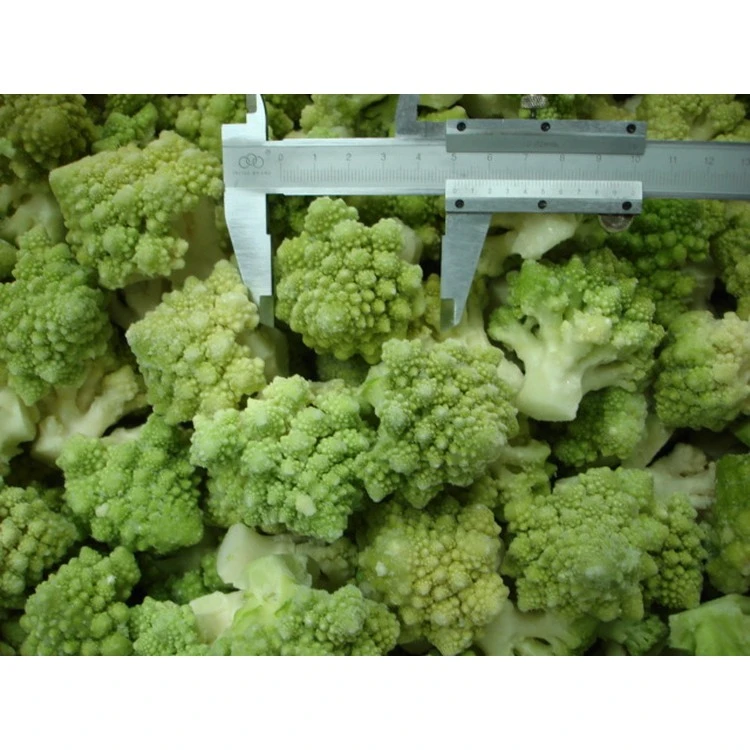
Caliper placed across one cut Romanesco floret among other cut pieces.
For a restaurant, test the piece after the longest realistic hot hold and after a second transfer, because the pointed tip is most exposed then. For a frozen ready meal, inspect after the meal's actual assembly, storage and reheat. These paths can give opposite purchasing decisions for the same floret: a robust larger piece may suit a plated side, while smaller sound fragments can still carry flavour in a vegetable mix. Keep transport, pack compression and carton integrity in the receiving record, but do not let a logistics checklist replace the question of whether the spiral remains on the served plate.
The second GreenLand photograph shows a caliper placed across one cut Romanesco floret among other cut pieces. It is a useful illustration of how a single floret dimension might be taken, but it is not a whole-head raw-material size measurement and does not describe the distribution inside a lot. A proper cut-size check states whether the jaws span the widest head, stem base or total piece length, then measures a defined number of pieces from a weighed spread. Photograph the scale beside the sample and report the count or mass denominator. The image cannot establish that those pieces were measured in a controlled experiment; it is a product-page illustration.
If a bag contains fused clumps or many broken tips, keep the suspect material frozen and document the physical condition before an operator separates it. A single caliper image cannot tell whether breakage occurred during cutting, freezing, packing or transport. Compare the current spread with the approved sample and check relevant pack handling records. For a plated use, rerun the cook test with representative pieces, including large stems and loose points. The final decision may differ for a blended soup use, so any concession should name the permitted application rather than silently treating every Romanesco SKU as equivalent.
Naming, labelling and substitution risks
The naming rule can be short: on an order or ingredient specification, write Romanesco and the actual form, such as frozen florets, plus whether substitution is allowed. 'Romanesco broccoli' and 'Roman cauliflower' are explanatory common names, but neither phrase alone tells a cook whether the bag contains intact pointed pieces or a fragment mix. A photograph of an attractive whole head should not be used to imply that the delivered bag contains whole heads. Show a representative cut-piece image at the point where buyers choose an appearance grade.
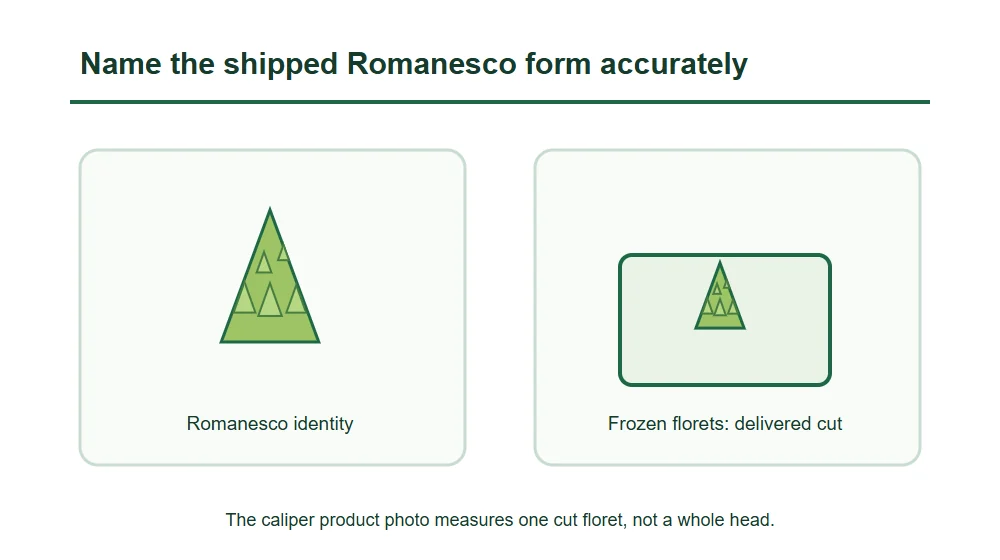
The caliper product photo measures one cut floret, not a whole head.
A second decision is how much of the point must survive. Place a measured frozen sample on a contrasting tray; note intact-looking tips, broken tips, attached stem and fine fragments separately. After cooking, repeat the visual count because a piece can enter intact and leave broken after stirring. If the product is meant for a smooth soup, that breakage may have little economic importance. If a ready-meal tray advertises Romanesco spirals, it matters a great deal. The acceptance rule should follow the dish, with count and mass results kept distinct.
Labelling and import descriptions also require care. The legal classification of a frozen vegetable can depend on the destination's tariff nomenclature and the exact processed state. The importing party and customs specialist should confirm the applicable declaration before shipment. The botanical discussion in this article is not an import ruling. GreenLand-food can provide the product description and agreed shipment documents, while the importer controls destination filing and clearance.
Finally, keep the acceptance record current. A new season or production run may change raw head size and cut yield. If the next sample no longer matches the approved appearance, repeat the cooking and packaging trial rather than relying on a last year's photo. That is how the unusual vegetable stays an intentional ingredient instead of becoming an unpredictable accent in a blend.
A label and a serving photograph should describe the product people receive. If a retail pack contains florets, a whole head can serve as botanical context, but the front or adjacent image should also show a representative frozen piece. For foodservice, photograph the cooked floret after the planned heat and hold, not just the largest raw cone. The useful buyer question is whether the spiral remains identifiable at serving size; if it does not, a less appearance-driven grade may be a better fit.
Keep three statements separate: botanical identity, shipped form and cooking suggestion. Romanesco names a distinctive cultivated Brassica oleracea; 'frozen Romanesco florets' identifies a processed cut; roasting or steaming describes an application. None of those statements alone proves a ready-to-eat product. This clarity is more helpful than repeating several paragraphs warning that broccoli and cauliflower are related, because it lets a reader recognise the plant and lets a buyer specify the bag.
Questions buyers ask about Romanesco
Is Romanesco broccoli or cauliflower? It is a distinctive cultivated Brassica oleracea. Common and horticultural references group or name it differently, often with broccoli or cauliflower. For buying, use Romanesco as the specific product name and approve the actual head or frozen floret form.
Can frozen Romanesco replace broccoli in a recipe? Sometimes, but it should be tested. The flavour, stem bite, colour, piece shape and breakage may differ. If the recipe sells the spiral appearance, a blind substitution test that measures only taste is inadequate.
Should Romanesco be thawed before cooking? Direct cooking from frozen is a sensible trial for many cooked dishes, but the right method depends on the supplied treatment, cut and equipment. Confirm the product state and evaluate the finished dish after holding or reheating as relevant.
What details should an RFQ include? Send the intended use, floret size and stem preference, acceptable fragments, packing, quantity, destination, requested documents and whether substitution is allowed. GreenLand-food can then discuss a frozen Romanesco sample that your purchasing and culinary teams can evaluate.
Understand the closely related crops before deciding a substitution.
Read the cultivar and colour context behind cauliflower and Romanesco.
Review frozen floret quality and handling principles across the range.
Source frozen romanesco with GreenLand-food
GreenLand-food is a professional frozen romanesco supplier and manufacturer in China, providing factory-direct wholesale supply for importers, food manufacturers, foodservice distributors and private-label programs.
Send us the product form, specification, packing, quantity, application, destination, private-label needs and requested documents.