


How to Cook Radish Leaves
Sep 24, 2026
Leave a message


Choose leaves and stems worth cooking
Look at the greens when buying a bunch of radishes, not only at the red or white roots. Leaves that are green, reasonably firm and free of extensive yellowing or decay can be used. Very tender small leaves can be cooked quickly; large mature leaves may be tougher and more peppery. The stems can also be edible, but a thick woody lower section may remain stringy after the leaves have wilted. Separate it before deciding how to cook the rest. Purdue Extension's radish guide treats the greens as a usable part of the radish and notes that storage of the leaves and root is a separate practical matter.
The variety and maturity affect flavor. A small salad radish bunch can give delicate greens; a larger field radish can give more assertive leaf and stem material. Some peppery note is normal and can be pleasant with garlic, sesame or a mild broth. It is not necessary to promise that every radish leaf tastes like spinach. If the leaves are intended for a refined filling, blanch and taste a sample before processing the whole batch. If the dish is a rustic stir-fry, a stronger green may be part of its character.

Close view of frozen radish leaves with chopped stems.
Inspect for soil and damage. Radish leaves often sit close to the ground, so grit can hide in folds and stem joints. Discard slimy, badly yellowed or moldy material rather than trying to cook defects away. A few minor holes or cosmetic marks may be acceptable after trimming, depending on the kitchen's standard. The relevant question is whether the trimmed leaves are sound and suitable for the finished dish. For foodservice, define a usable-yield expectation; a cheap bunch with few sound leaves can cost more in trimming labor than a prepared leaf ingredient.
Keep leaves cool after purchase. If the roots and greens are attached, separating them for storage can help maintain quality, then wash shortly before use rather than storing a wet pile. Use the supplier's handling advice and the kitchen's produce procedure. A leaf that has wilted from moisture loss may still be usable in a cooked dish if otherwise sound, but one with an off odor or decay should not be mixed with good greens. Freshness is relevant to both flavor and the work required to clean the batch.
For a repeated recipe, decide whether the leaf, stem or both should appear in the finished food. A small amount of tender stem adds bite; too many coarse stems can make a filling stringy. This is the first specification decision, even in a home kitchen. The wash and cooking method should follow it. A radish leaf recipe that ignores leaf maturity and stem ratio is likely to give inconsistent results.
Wash grit and trim coarse stems
Separate the leaves from the roots and remove the tough base of each stem. Put the greens in a large bowl of cool water and agitate gently to release soil. Lift the greens out rather than pouring the dirty water back over them; repeat in fresh water until grit no longer settles in the bowl. A final rinse under running water can help with folded leaves. Dry or drain according to the next cooking method. For a fast stir-fry, excess water is a problem; for blanching, a little remaining water is irrelevant.
For a quick fresh-leaf preparation, use this sequence before choosing the final dish:
- Sort out damaged leaves and cut away woody lower stem ends.
- Swish the greens in cool water, lift them above settled grit, and repeat until clean.
- Drain well; chop retained tender stems smaller than the leaf blades.
- Blanch or stir-fry a small sample, then adjust the stem cut and cooking time to its bite.
Do not skip the stem junctions. Soil can remain where a radish bunch was tied or where leaves meet the root. Trim bruised or yellowed parts as you wash. If stems are thin and tender, chop them slightly smaller than the leaves and add them first to the pan. If they are coarse and fibrous, remove more of the base. Taste one cooked stem from a sample before deciding to keep all of them. This takes little time and prevents a chewy surprise in an otherwise tender dish.

Radish leaves washed and coarse stem ends trimmed.
Cut size should match the use. Broad leaves can stay mostly whole for a quick side dish, while soup and dumpling filling benefit from an even chop. After blanching, squeeze or drain excess water before chopping so the board and filling do not become wet. If the greens will be mixed with garlic or seasoning, prepare those ingredients before heating the pan; radish leaves cook quickly and do not give the cook much time to search for a knife after they hit the heat.
A clean wash is not a reason to leave the greens soaking for a long time. Prolonged soaking can dull texture and does not substitute for inspection and proper handling. Use several short changes of water where the leaves are gritty. FoodSafety.gov's produce advice recommends rinsing fresh fruits and vegetables under running water. For commercial production, follow the plant's validated wash process and incoming-produce controls rather than transferring a household bowl method to a large line.
Record trimmed yield in a foodservice recipe. If a 5 kg delivery yields only 3 kg of usable greens after removing roots, coarse stems and damaged leaves, the cooked portion cost is based on 3 kg, not the invoice weight. A frozen chopped product can remove some trimming work, but it brings its own moisture and cut-specification questions. Knowing the fresh baseline makes a fair comparison possible.
Blanch radish leaves when tenderness or bitterness calls for it
Blanching is useful when leaves are mature, strong-flavored, or destined for a filling that needs controlled moisture. Bring a large pot of water to a steady boil, add a manageable batch of cleaned greens, and cook briefly until they wilt and brighten. Lift them out, cool promptly when the recipe requires it, then drain or squeeze well. Thin tender leaves may need only a very short exposure; stems and mature leaves may need longer. The endpoint is a cooked green that is tender without becoming dull and mushy, not a universal number for every radish variety.
Published recipes demonstrate why times vary. China Sichuan Food describes a blanch-and-fry method with short cooking for trimmed greens, while other leaf-butter recipes blanch only briefly before blending. The difference reflects leaf thickness and final dish. Use a small test batch if the leaves are unfamiliar. Taste the blanched leaf and stem separately; if the stem remains too firm, you can chop it finer or remove more of it next time rather than extending the whole batch until the leaves lose all structure.
Blanching can moderate pepperiness, but it can also carry flavor into the water. Discard the water if the purpose is to soften a strong or bitter note. Drain thoroughly before adding the leaves to a stir-fry; wet blanched greens can make the wok steam. For dumpling filling, excess water can loosen the mixture and weaken the wrapper, so squeeze and weigh the drained greens before seasoning. A soup can tolerate more moisture, but even there the ratio of greens to broth should be deliberate.

Radish leaves moved from boiling water to ice water.
If preparing a large batch for later service, cool the greens under the kitchen's food-safety procedure. Do not stack a deep hot mass in a container and let it cool slowly. Smaller shallow portions and prompt chilling help preserve both safety and color. A manufacturing line should validate its own blanch, cooling and frozen process for the selected cut. A home recipe time is an idea for a kitchen test, not a commercial process specification.
Blanching is optional for tender leaves that will go straight into a hot skillet and be eaten promptly. It is useful when the recipe needs a controlled texture or when the greens will be chopped, squeezed and mixed. Decide by the leaf and final dish, not by an assumption that edible radish greens always require the same treatment.
Stir-fry tender radish leaves without waterlogging the pan
For a quick stir-fry, start with well-drained leaves and a pan large enough to let moisture evaporate. Heat a modest amount of oil, add any chopped tender stems first, and follow with the leaves. Toss over medium-high heat until the greens wilt and the stems reach the desired bite. Garlic or ginger can be added at a stage where it flavors the oil without burning. Season near the end so the leaves do not release too much liquid early. The exact time depends on batch size and leaf thickness, so watch the greens rather than the clock alone.
Bon Appétit's radish-green stir-fry shows how the leaves can become a deliberate dish instead of waste from the root. The practical challenge is water. Greens washed immediately before cooking carry surface water, and a full pan releases more. If the pan is crowded, the leaves steam in their own liquid and the flavor becomes diluted. Cook in batches, dry the greens after washing and use a wide pan. If water accumulates, let it evaporate before adding a concentrated sauce or remove a little rather than turning the dish into an accidental braise.
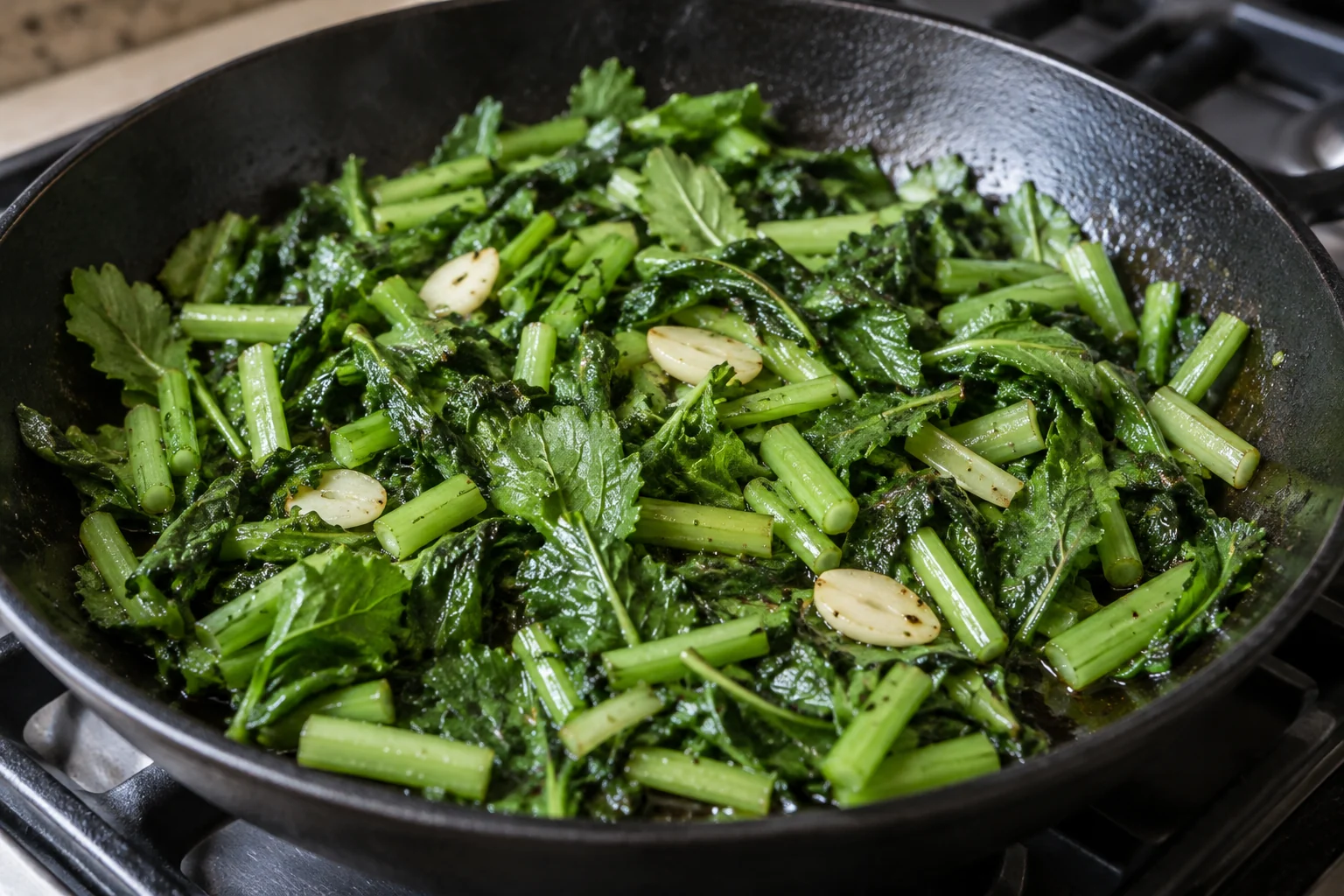
Radish greens quickly stir-fried with garlic.
Do not cook tender leaves until they look uniformly dark and limp if the intended result is a bright side. Stop when they have wilted and tasted tender. Larger stems may require a head start; very small leaves may need almost no extra time after the stems. A sprinkle of acid at service can sharpen the flavor, but taste first because some radish greens already have a peppery edge. Salt level and garnish should support the vegetable, not mask its identity.
Portioning matters in foodservice. Raw greens collapse dramatically, so a large-looking pan of leaves may produce a small cooked serving. Weigh the raw prepared amount and the cooked yield in a trial. If a menu lists radish greens as a significant component, calculate the amount needed after trimming and cooking. A recipe written only in "bunches" can vary with root size and grower. A measured leaf weight is more repeatable.
For a held buffet dish, undercook slightly in the first pan step if further heating is unavoidable, then check color and bite after holding. Greens keep softening in a hot pan or steam table. A frozen chopped leaf product is convenient for batch cooking but may release more water; it should be tested separately rather than inserted at the same weight and timing without adjustment.
Use cooked leaves in soups, fillings and sauces
Radish leaves do not have to remain whole. Chopped cooked leaves can go into clear soup, dumpling filling, savory pancake batter, pasta sauce or a vegetable blend. Each use needs a different moisture level. Soup can take greens added near the end so they remain visible. A filling needs them drained and chopped finely enough to distribute. A sauce may welcome a smoother blend, but the leaf's peppery flavor should be tested against the other ingredients rather than assumed to disappear.
For soup, wash and trim fresh leaves, chop the stems a little smaller, and add them before the soft leaves if needed. The broth should already be established and any proteins or slower vegetables cooked according to the recipe. Simmer just long enough for the leaves to become tender. If using blanched greens, add them even later because they have already been partly cooked. A very long simmer can dull color and make the texture indistinct. Taste the broth after adding the greens; their peppery note may change the seasoning balance.
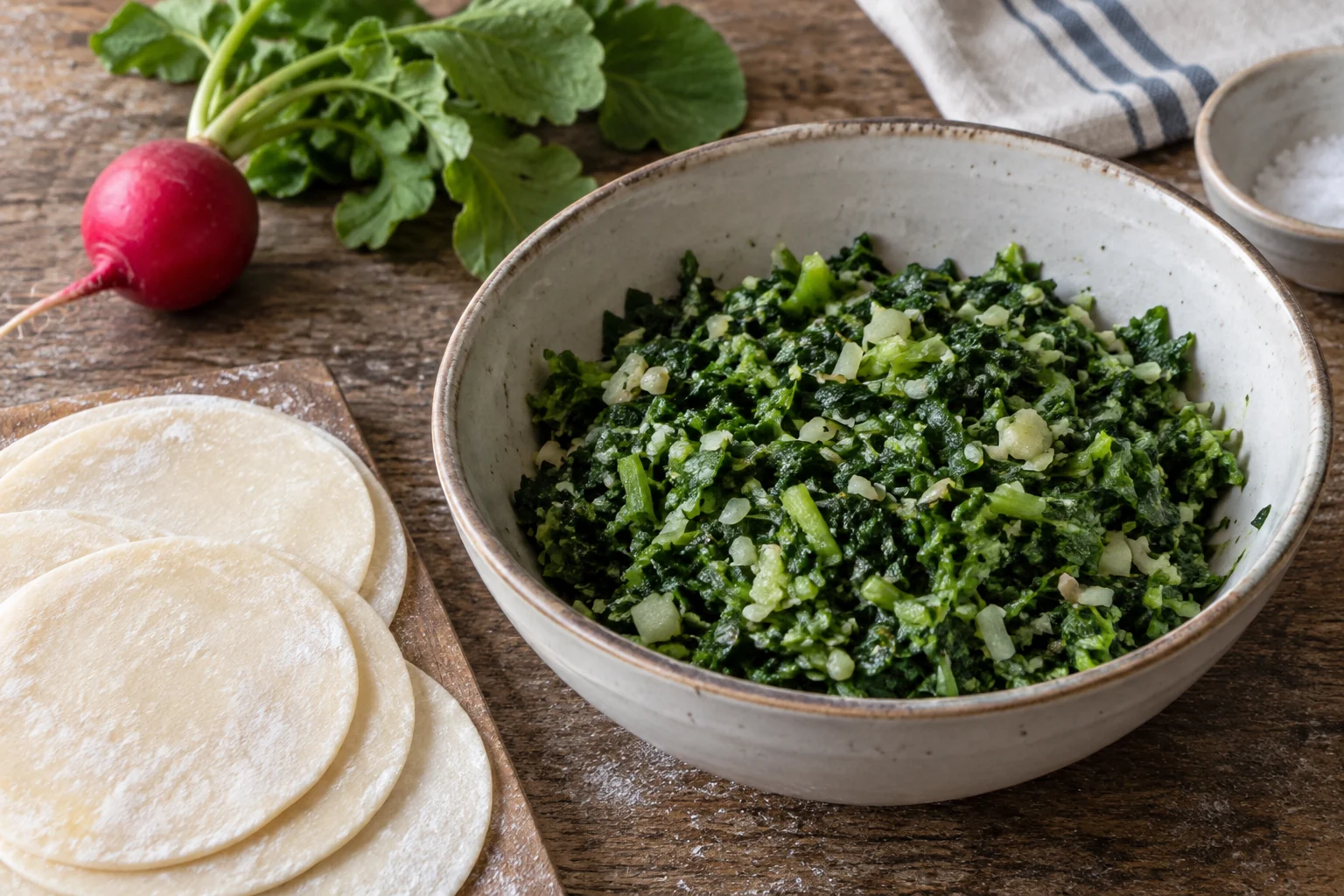
Chopped cooked radish greens mixed into dumpling filling.
For dumpling or pastry filling, blanching and squeezing can be valuable. Excess leaf water can loosen the mixture, split wrappers and alter cooking yield. Chop the cooked greens, squeeze or press them consistently, then weigh the prepared amount. Mix with the other filling ingredients and cook a small test portion before making the full batch. A frozen chopped leaf ingredient may already be blanched or raw; confirm its processing state and measure how much liquid it releases after the planned thaw or cook step. Adjust the recipe by usable drained weight, not by gross frozen weight alone.
In a sauce or puree, the greens can add color and a savory note, but temperature and acidity affect that color. A pale green sauce may darken if held hot for a long period. Trial the actual service or shelf-life route. Do not add radish greens solely to make a nutritional claim; the dish needs to taste and look right. If nutrition labeling matters, calculate it from a validated recipe and actual ingredient specification.
Waste control is a legitimate reason to use leaves attached to roots, but a kitchen still needs a quality standard. Sound leaves that are washed and cooked promptly can become a side or filling; damaged greens should not be included merely to improve the waste figure. Plan the menu so the leaves are used close to their receiving date. A frozen approved product can be useful when demand is steady but fresh leaf supply and trimming yield vary.
Cook frozen chopped radish leaves without thawing away quality
Frozen chopped radish leaves enter a recipe in a different physical state. Pieces may be loose IQF, lightly clumped or packed in a block depending on the product. They may be raw, blanched or otherwise pretreated. The first step is to read the supplier's specification and cooking instruction. Freezing does not make raw greens ready-to-eat. A hot soup or stir-fry may accept pieces directly from frozen, but a filling may need controlled thawing and draining to prevent excess liquid. Choose the route by the product and final dish.
For soup, adding measured frozen leaves near the end can be efficient; allow the broth to return to the required heat and cook according to the product instruction. For a wide skillet, use batches so frozen surface ice does not turn a stir-fry into a wet stew. If the greens release liquid, let it evaporate before adding sauce. Do not pack too much frozen material into one pan. A factory can design a continuous cooker around the water load, but a restaurant pan has less heat capacity and may need a smaller batch.

Frozen radish leaves with longer green stem pieces.
For fillings, weigh the frozen portion, thaw under controlled refrigeration if the recipe calls for it, drain consistently and weigh the prepared amount. Record the yield. If one lot has more stem or surface ice, it can change the ratio of leaf to water in a dumpling filling. The specification should control cut and allowable stem content, and the kitchen method should state whether the ingredient is weighed before or after draining. Otherwise two cooks can follow the same nominal recipe yet produce very different filling texture.
GreenLand-food offers IQF frozen radish leaves for buyers who want prepared leaf input rather than trimming roots in every kitchen. A sample should show the real cut, leaf-stem balance and after-cook performance. We can discuss pack size, monthly volume and the intended dish. A frozen product is most useful when its form matches the line's handling and the finished food's appearance.
Frozen greens can help smooth seasonal supply, but they do not remove the need for receiving checks. Inspect the inner pack and lot code, frozen condition, excessive ice, color and foreign material under the buyer's program. Test taste and texture after the actual heat and hold process. Keep a sample reference so that "fine chopped leaves" means the same thing to the purchaser, cook and supplier.
Specify cut size and leaf-stem ratio for repeatable dishes
A purchase specification for radish leaves should state the plant material, processing state, cut size, permitted stem ratio, color expectations, pack size, frozen storage requirement and intended cooking route. A leaf-heavy fine cut can blend into dumpling filling; a coarser cut with some stem can show more texture in soup. Neither is universally better. The correct choice follows the dish, the portion and the production equipment. A general statement that greens are "chopped" leaves too much variation for repeatable manufacturing.
Leaf-stem ratio is particularly important. Pale, fibrous stem pieces can change the visual appearance and bite of a green filling. Some tender stem is useful, but large lower sections may be stringy. Agree how the ratio will be measured in a sample and what the permitted cut range is. If the supplier cannot offer the required form in one item, consider whether the recipe can adapt or whether a different prepared leaf product is needed. Do not write a tolerance that looks precise but cannot be checked on receipt.
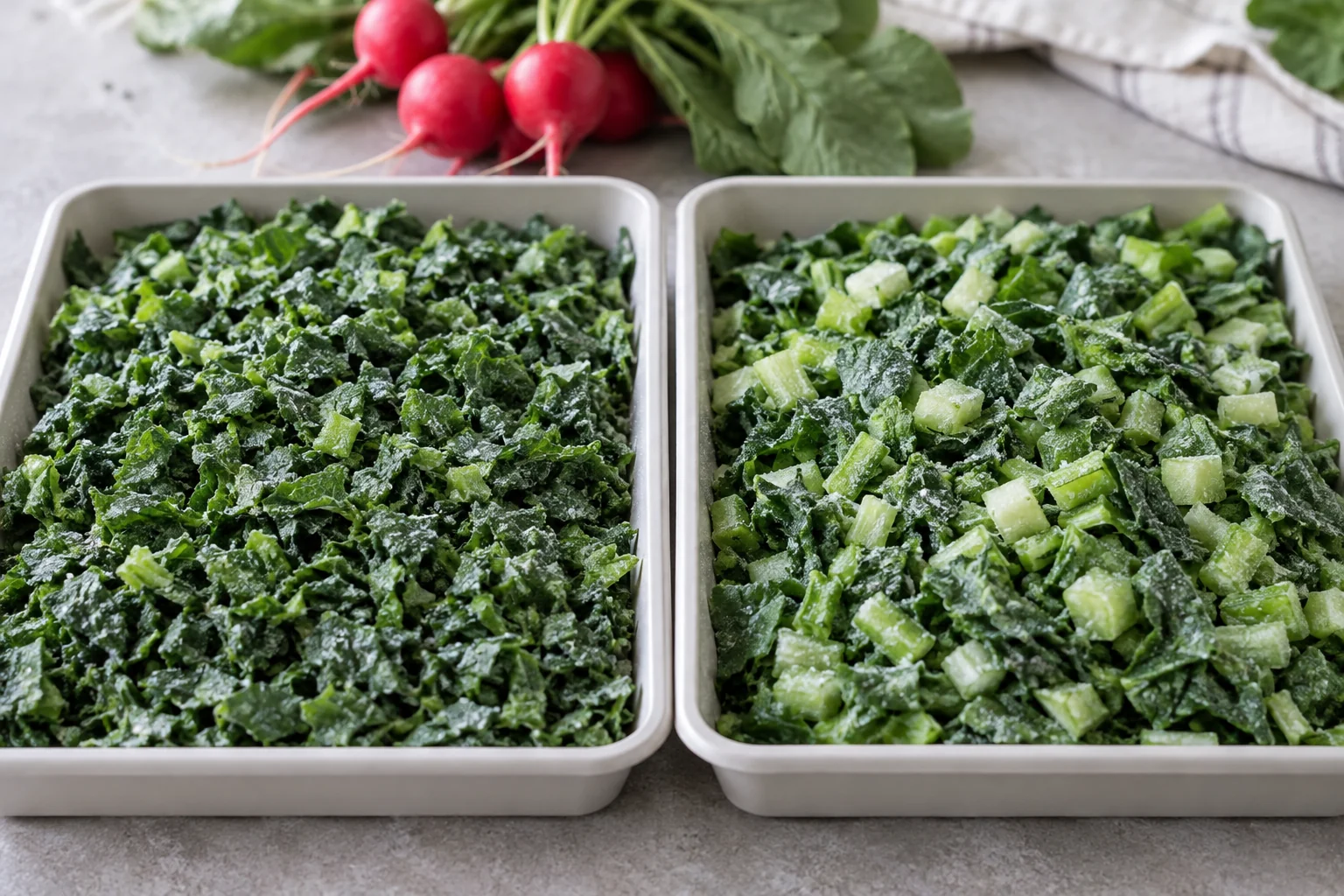
Frozen chopped radish leaf samples with different stem ratios.
Review usable yield and labor. Fresh bunches require separating roots, washing grit and trimming variable leaves; the invoice weight includes material the recipe will not use. Frozen chopped leaves can reduce those steps but may bring water or stem variation that changes cooked yield. Trial both by finished portion rather than gross kilogram. Add labor and waste disposal where those costs are material. A source that costs more per kilogram may make the finished dish cheaper if it saves repeated preparation, and the reverse can also be true for a kitchen with easy fresh supply.
Ask the supplier for a sample from the actual product code and pack. Cook it in a soup, stir-fry or filling exactly as the site intends, including cooling and reheating if relevant. Record flavor, color, texture and water release. Compare several portions rather than one spoonful. If the product will go into a frozen finished meal, test the full freeze and reheat cycle. The approved sample and written specification should travel together so a later buyer does not substitute another chopped green merely because its name sounds similar.
GreenLand-food can confirm available frozen radish leaf formats against a buyer's target cut, packing and destination. Tell us whether the leaves will be a visible vegetable, a filling component or a blended sauce ingredient. That answer shapes the useful leaf-stem balance and sample test. Cooking radish leaves is simple at home; making the result repeatable across many kitchens or production days requires this extra clarity.
Source frozen radish leaves with GreenLand-food
GreenLand-food is a professional frozen radish leaves supplier and manufacturer in China, providing factory-direct wholesale supply for importers, food manufacturers, foodservice distributors and private-label programs.
Send the target cut, quantity, application, destination and requested documents so we can confirm a relevant sample and current supply.