


Cherry Pie Filling from Frozen Cherries: Sweetness, Juice and Pits
Oct 19, 2026
Leave a message
Check whether the fruit is sweet or sour and whether it is pitted; then decide whether to use it directly from frozen or to thaw and measure the released juice. For a home pie, follow one complete tested baker's recipe and bake until the centre fruit is visibly bubbling before cooling the pie to set. For home canning, use the National Center for Home Food Preservation's sour-cherry filling directions and its frozen-fruit adjustment, not a home-pie starch substitution.
This article answers the kitchen question first and then shows how a bakery buyer can specify a frozen cherry for consistent filling. The two settings share one problem-cherries release liquid-but they do not share a safety process. A product photo cannot tell you the cherry variety, residual pits or soluble-solids content of a lot. Those details come from a label, an agreed specification and a checked sample. Any numerical example we use for a trial below is illustrative; it is not a GreenLand lot result, a legal tolerance or a validated canning formula.
- Identify sour versus sweet and inspect for pits before choosing a pie recipe.
- Follow one complete oven-pie method and judge centre bubbling after the defined bake.
- The official sour-cherry canned filling has a separate frozen-juice adjustment and tested process.
Choose sour or sweet cherries before the sugar
Sour cherries bring a more tart flavour to a pie; dark sweet cherries contribute more sweetness before any sugar is added. A recipe formulated for one can taste unbalanced with the other. King Arthur Baking's sour-cherry pie uses individually quick-frozen or water-packed sour cherries and a defined sugar and thickener combination. A separate frozen dark sweet-cherry pie cooks its filling before assembly and treats lemon and sugar as part of the sweet-fruit balance. These are examples of different finished pies, not interchangeable ratios. Follow the ingredients and handling of the route you select.
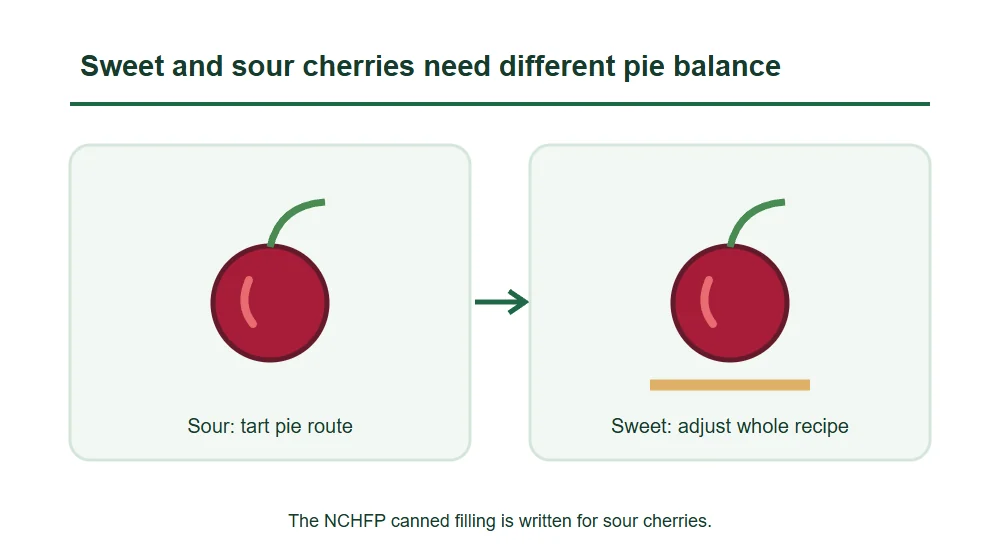
If the bag says only "cherries," read further before measuring. Ask whether the fruit is a sour pie cherry, dark sweet cherry or another specified type, and whether sugar or syrup has been added. Taste a thawed sample when appropriate. A frozen cherry's colour alone cannot establish acidity or sweetness: variety, ripeness and pack form all matter. A baker using one kilogram of dark sweet fruit may need a different sugar and acid balance from the same mass of sour fruit, but the adjustment belongs to a complete recipe trial. Adding an arbitrary spoon of lemon to a formula does not transform the ingredient into sour cherries.
One small comparison is useful before committing to a production batch. Prepare the same dough and pan, and make a single pie with each candidate using a coherent recipe for that fruit type. Record fruit mass, added sugar, thickener type, any acid, and finished sensory result after full cooling. "Too sweet" is a recipe observation; "the cherry lot has excessive sugar" is a supplier claim requiring a defined test. Keep those statements separate. If a frozen product is intended for a bakery with a fixed house recipe, send the buyer a sample labelled by type and pack form so the bake trial answers a reproducible question.
Check the pit status before any pie work
The word "pitted" belongs in the ingredient specification, not only in the recipe title. A residual cherry stone in a pie is a serious eating and equipment problem. Check the supplier's declared form and inspect a representative working portion as you prepare the filling. Do not assume that a carton photograph or a visually smooth fruit guarantees every cherry is stone-free. Open some fruit where the pit cavity is unclear, and separate any hard fragments found. A clear defect definition should distinguish a whole pit from a hard pit fragment, a cherry stem and a soft piece of fruit tissue.
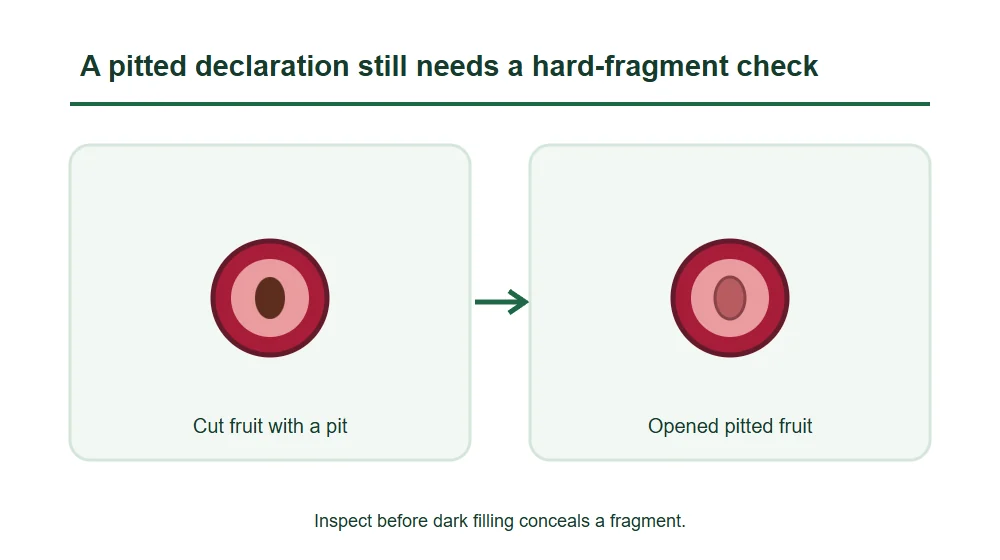
For home cooking, examine small handfuls on a light-coloured tray while the cherries are still firm enough to handle, then recheck as they thaw. A whole stone can hide in a collapsed fruit. Work slowly enough that the pit check does not become a ceremonial glance before the fruit is covered in dark syrup. If you find a pit, set the affected portion aside and inspect the remainder more carefully. This is a practical kitchen control, not a claim that a household visual check proves zero pits across an entire bag.
For a bakery sample, write a denominator and a disposition before counting. A proposed trial could inspect three separately drawn 1 kg samples after controlled thawing and report pits and hard fragments per kilogram, with every finding described and photographed. That is an example of how to measure an agreed customer requirement, not an official regulatory sampling plan or an automatic pass rule. The plant should retain the lot identification, sample locations, inspector, counts and corrective disposition. If a finding triggers a hold under the agreed contract, release should be decided by the authorised quality role after investigation, not by averaging a pit into a larger number of good fruit.
Thaw, drain and measure the released juice
Freezing disrupts fruit tissue, so a thawed pack can contribute more free juice than a fresh-fruit recipe expects. Decide whether the filling method wants fruit still frozen, fruit thawed with all its juice, or fruit drained with a measured amount of juice returned. King Arthur's cited sour pie starts with frozen IQF cherries in a bowl and lets the mixed filling rest 20 minutes before assembly. By contrast, the USDA/NCHFP canned filling instructions tell the user to thaw frozen cherries, collect and measure their juice, and use it to replace part of the specified water. Those are different processes; combining steps from both can distort the liquid and thickener balance.
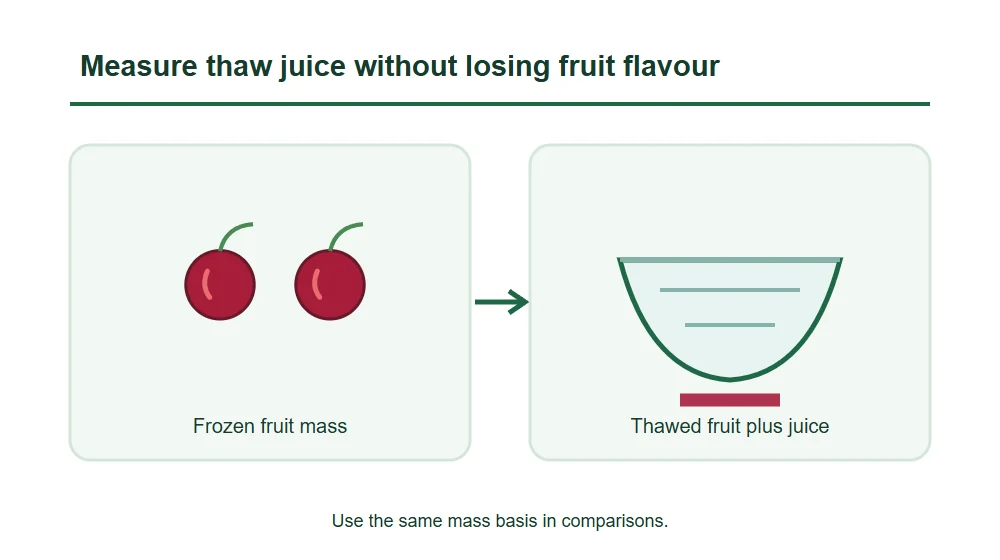
If your chosen home-pie recipe calls for thawed fruit, place the cherries in a covered bowl in the refrigerator. Set a strainer over a second clean container if it specifies drainage. Weigh the fruit first, then measure or weigh the liquid recovered after a defined time. Keep that juice until the recipe is complete. Pouring it away wastes flavour; returning it all when the recipe anticipated drained fruit can make a wet pie. If using a frozen-first recipe, do not pre-drain the fruit simply because another recipe does. Follow that recipe's rest and thickener conditions so the fruit and its liquid develop together.
A simple liquid-yield figure makes a comparison reproducible: juice collected divided by starting frozen-fruit mass, multiplied by 100. If 120 g of juice drains from a 1,000 g sample under the chosen method, this is 12% by that method. The number is fictional and not a target. It depends on variety, fruit condition, cut, freezing history, thaw time and the strainer. Record those variables next to the result. The reading of a kilogram of still-frozen fruit is not equivalent to a kilogram of drained cherries after thawing; do not mix the two mass bases in a pastry formula.
A small cooked filling for a home pie
There are two reasonable kitchen paths, provided each follows a complete recipe. For a frozen-first sour pie, the King Arthur Baking recipe gives one 9-inch pie using 5–6 cups (1,125–1,350 g) of sour cherries, its own sugar and Instant Clearjel or Pie Filling Enhancer amounts, a 20-minute rest for frozen fruit, and a 425°F oven for about 40–45 minutes until bubbling. These are that recipe's conditions, not a GreenLand universal formula. Its named Instant Clearjel is a home-pie ingredient and should not be silently substituted for the cook-type Clear Jel in a canned-filling process.
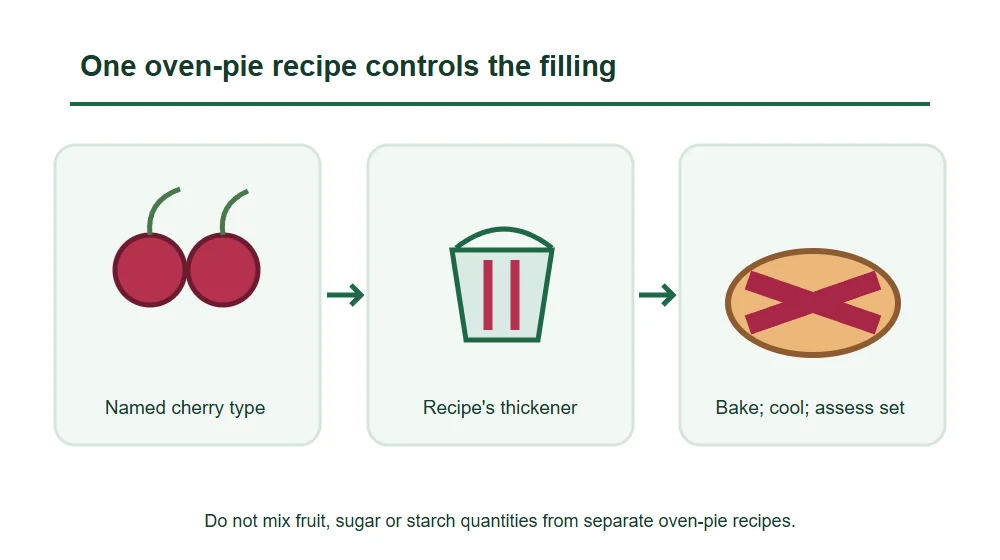
For a sweet-cherry pie, the cited Baking with Butter recipe starts frozen dark sweet cherries in a saucepan with cornstarch, lemon and sugar, heats the mixture until it bubbles and becomes thick and glossy, cools the cooked filling, and then assembles a pie. The site bakes at 425°F initially and then at 350°F, with a long final cool. That approach gives the cook a chance to see the liquid and starch develop before it is hidden under pastry. It is an oven-pie method for immediate eating or refrigerated leftovers, not a home-canning process.
Whichever route you choose, measure the named thickener and use it as directed. Granulated sugar, fruit acid and starch are not interchangeable solutions to a wet filling. Thickener needs the recipe's intended amount of liquid and sufficient heating to perform; sugar balances sourness and affects the finished bite. If you invent a hybrid-half of one recipe's fruit and all of another's water-the texture prediction is poor. Choose one method, write it down, and only then make an intentionally small adjustment for your cherry's taste. If the family wants less sweetness, trial it in the home pie; do not carry that change into a published shelf-stable canning recipe.
Build the pie and judge the centre, not just the edge
Prepare the pastry and pan before a filling becomes warm and runny. A chilled, firm bottom crust is easier to handle than one that has absorbed cherry juice for half an hour. Add the fruit filling in the condition the recipe specifies, cover with a vented top or lattice, and use a tray below the pie if the recipe expects bubbling and possible drips. The pastry rim often colours before the middle of a deep fruit filling has heated enough to thicken. Check the middle through a vent or lattice opening for active bubbles as well as a properly baked crust. A brown edge with a quiet, liquid centre is not the same endpoint.
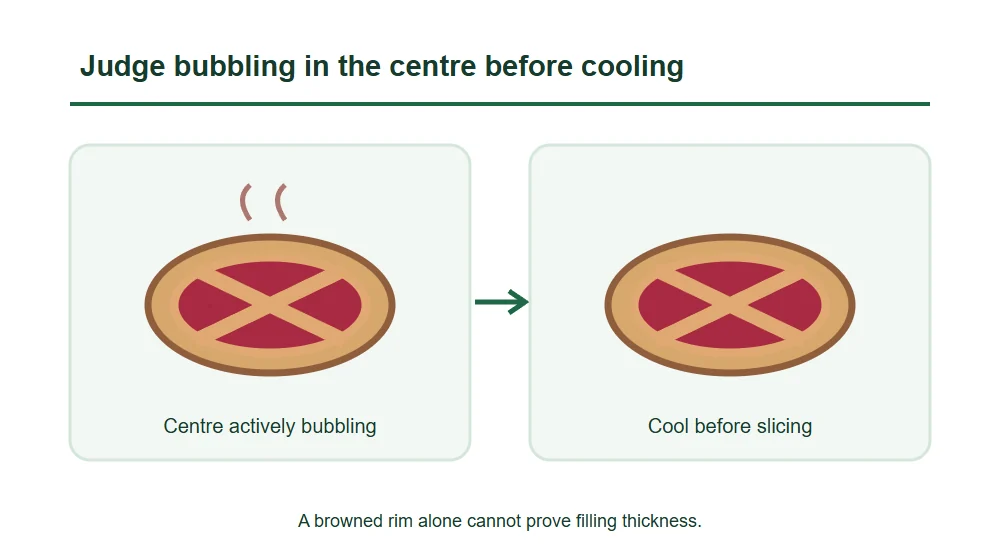
King Arthur's sour pie directions call for a golden crust and bubbling fruit before removal. The sweet-cherry recipe described above uses a longer two-temperature bake and then cools for several hours. Treat each time as conditioned by its recipe, pan, amount of fruit and oven; do not copy a 40-minute number to a larger pie or a different thickener. A glass or metal pan, fruit starting temperature and pastry thickness can shift the path. If the edge is browning while the centre is not ready, protect the edge according to your pastry recipe and continue observing the filling rather than calling the pie done on appearance alone.
Let the pie cool as its recipe instructs before slicing. Hot fruit filling flows more readily, even if the starch has been cooked correctly. A slice cut immediately after baking is a poor test of the final set. If the cooled pie remains watery, review the measured fruit and juice, thickener type and amount, and centre-bubbling endpoint before increasing starch without limit. Too much thickener can make a gummy rather than a fruit-rich pie. Make the next trial by changing one variable so you know what helped.
The tested canned filling follows a different recipe
Shelf-stable jarred pie filling is a preservation process, not simply leftover home pie filling put into a jar. The NCHFP cherry pie filling page identifies sour cherries, includes unsweetened frozen fruit, prescribes cook-type Clear Jel and bottled lemon juice, and gives jar processing times by altitude. It says to rinse sweetened frozen cherries while frozen. The USDA Complete Guide, Guide 2 directs users of frozen cherries to thaw the fruit, measure its juice and replace part of the recipe water with that juice. The guide's frozen-fruit note specifies a Clear Jel amount that differs from its own cherry table and the NCHFP webpage table, both of which label the fruit "fresh or thawed sour cherries." We cannot resolve that presentation difference by combining parts of the sources. Before canning a frozen-cherry filling, consult the complete current official directions and ask your local Extension food-preservation specialist to clarify the applicable frozen-fruit amount and method. Keep the sour-cherry restriction, bottled lemon juice and altitude-dependent processing intact.
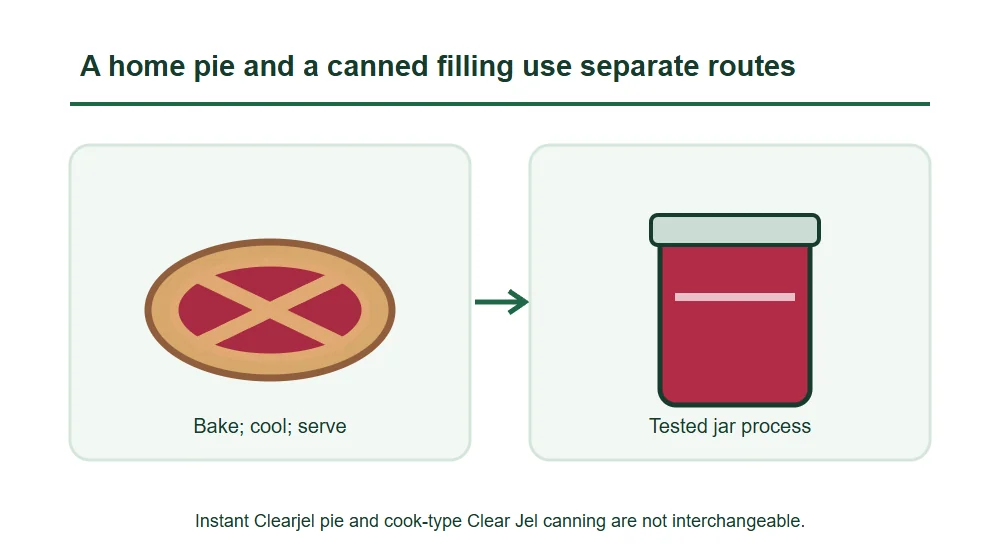
The official one-quart table lists 3⅓ cups of fresh or thawed sour cherries, one cup sugar, 1⅓ cups cold water and 1 tablespoon plus 1 teaspoon bottled lemon juice. Those numbers are listed here to identify the source's fruit and acid conditions, not as a stand-alone canning recipe. The amount of bottled lemon juice is part of the tested preservation formula and should not be reduced to make a sweeter pie. Optional spices may be adjusted within the official directions, but a different fruit, thickener or jar process is not proved safe by a casual substitution. For frozen fruit, the juice substitution and Clear Jel presentation need to be read with the full method and clarified with Extension rather than inferred from this article.
No statement in that sour-cherry canning guidance validates a sweet-cherry version of the same formula, nor does it validate an industrial filling line. A commercial packer needs its own regulatory and process control route. For a home cook who wants one pie tonight, an oven-pie recipe is easier and avoids conflating recipe quality with shelf-stable processing. For a home canner, use the official complete directions with the fruit and equipment specified. A freezer bag of unknown cherry type is not enough information to start that process responsibly.
Why starch and juice cannot be guessed from fruit weight
A cherry package weight includes fruit and potentially a separate ice or syrup phase. Even an unsweetened IQF bag can yield a substantial amount of liquid after thawing. In a pastry, the starch must thicken the water available during baking or pre-cooking; measuring fruit mass alone does not tell you all of that water. Sugar competes for water and changes sweetness, while acid changes flavour and, in preservation, can be an explicit safety factor. It is tempting to "fix" a loose pie by adding more starch to a single wet batch, but without knowing whether the recipe assumed frozen or drained fruit, that change can make the next normal bag too thick.
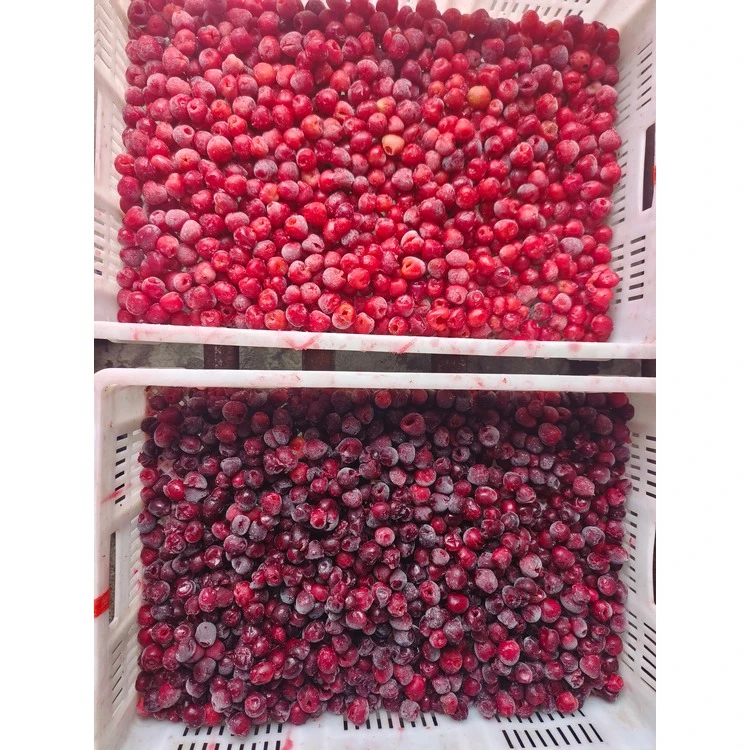
Frozen cherries in two white crates; appearance alone cannot quantify thaw juice.
Use a short test sheet instead. Record the recipe name and version; cherry type; frozen weight; any juice drained and juice returned; sugar, acid and thickener with their units; pan size; oven path; whether the centre bubbled; cooling time; and how one cut slice held together. Photograph the slice at a defined time after cutting, not only the untouched glossy surface. A bakery can add a yield measure such as cooked-filling mass divided by starting fruit-plus-added-ingredient mass. The arithmetic is useful only when the denominator is defined. A reported "92% yield" without stating whether juice was discarded before weighing cannot diagnose loss or compare suppliers.
Pit control is a separate column from texture. A filling could set beautifully and still be unacceptable because it contains a stone. Likewise, a pit-free lot can be unsuitable for a particular pie if the fruit is too sweet, too small or too broken for visible pieces. Keep the observations distinct so a reformulation does not conceal a physical defect. When the buyer asks for a maximum pit count or fragment limit, define whether the denominator is fruit mass, finished filling mass or number of inspected units, and who makes the decision on a finding. The article cannot invent that contractual tolerance.
A dark filling can conceal both a pit fragment and a small stem, so inspect a light tray sample before thickener darkens and coats everything. Use a separate container for findings and record a photograph with a scale. That simple sequence preserves evidence for a supplier discussion and prevents the defect from being lost during cooking.
Trial a frozen cherry lot for a bakery
Start with the bakery's actual pie, not a generic cherry dessert. Ask for fruit type, pitted state, sweetened or unsweetened pack, preferred size and the intended cooking path. Then take clearly labelled samples from the proposed frozen lot and prepare the same recipe at a controlled batch size. For a trial, one could make two identical 9-inch pies on the same day using equal fruit mass and a written recipe, changing only the cherry source. This is an illustrative development design; it is not a statistical lot acceptance plan. If the recipe uses drained fruit, measure drained juice for each source and add back only the quantity the method specifies.
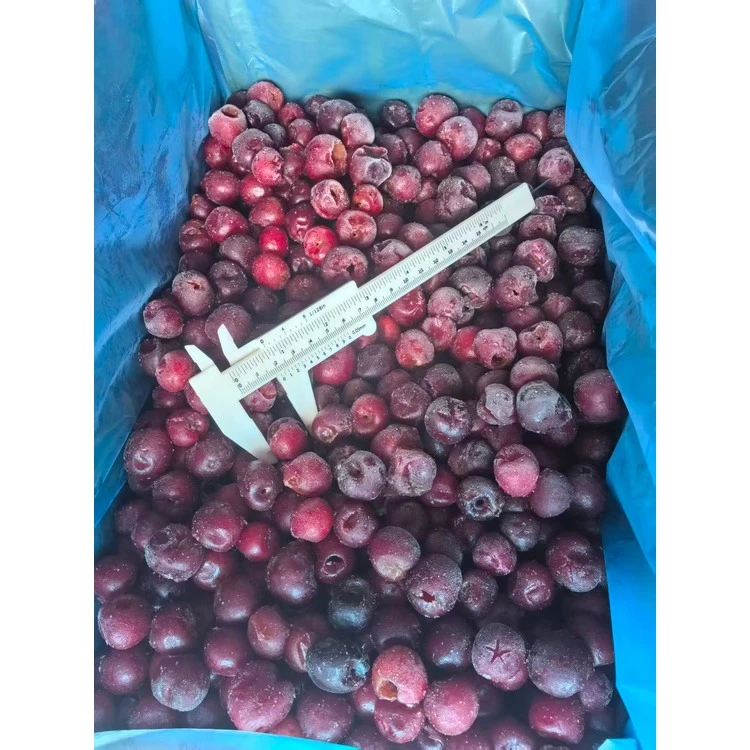
Frozen cherry sample with caliper for a bakery lot trial.
The useful results are concrete: number and type of hard fragments found in a known mass, mass of released juice under a defined thaw, fruit-piece survival after cooking, sweetness after full cooling, centre set, bottom-crust wetness, and appearance of the slice. Record oven, pan, batch weight, thickener brand and the serving temperature. A buyer comparing costs should divide ingredient and process cost by acceptable finished pies, not by the nominal kilogram price of frozen fruit alone. More broken fruit or more free liquid may increase trim, thickener, handling time or rejected finished units. Do not promise a saving until those numbers are measured in the customer's process.
GreenLand-food can discuss the frozen cherries shown on our product page, the agreed form and sample documentation for a wholesale inquiry. A pictured fruit size reference and a photograph of two crates help the buyer see the product, but do not demonstrate that the crates represent separate lots, pitting performance, cultivar identity or a commercial lot's bake result. We would keep the requested specification, lot identity, inspection record, deviation decision and release authorisation linked to the shipment. If the sampled fruit differs from the agreed cherry type or pit status, the responsible quality team should hold and investigate it rather than treating a baked pie's good flavour as compensation.
Discuss the frozen ingredient for your production
Frozen Cherries
Cooked bakery fillings, sauces and fruit preparations.
Confirm for your order: Variety, pit status and fruit form; juice loss trial, defects and pack.
View product & supply detailsFor a commercial trial, send your required form, application, pack, quantity and destination. We can discuss the offered sample and the order specification with you.
Request Specifications & QuoteQuestions about frozen fruit, pits and loose filling
Do I have to thaw frozen cherries for a pie? No universal rule applies. King Arthur's cited sour-cherry oven pie begins with frozen IQF fruit and rests the mixed filling for 20 minutes. The USDA/NCHFP canned-filling route instead thaws and measures juice. Follow the complete recipe you chose.
Can I use sweet cherries in the official canned sour-cherry filling? The cited NCHFP/USDA recipe is written for sour cherries. A sweet-cherry pie for immediate baking is a separate recipe; do not describe a fruit substitution as tested shelf-stable canning guidance.
What if a bag says pitted but I find a stone? Stop and check the remaining fruit carefully for the home pie. For commercial supply, retain the identified finding, sample mass, lot and agreed defect rule, and refer it to quality for disposition. A pitted label is not proof that no hard fragment could remain.
Why is my pie runny after baking? First cool it for the period in your recipe. If it remains loose, compare the juice handling, thickener type and dose, and whether the centre bubbled. Change one controlled factor in the next pie; do not move a home-pie starch fix into a canned-filling process.
Compare a different fruit and its filling-water challenge.
See how a cut fruit is portioned for later pastry use.
Compare frozen-fruit handling across pastry formats.
Source frozen cherries with GreenLand-food
GreenLand-food is a professional frozen cherries supplier and manufacturer in China, providing factory-direct wholesale supply for importers, food manufacturers, foodservice distributors and private-label programs.
Send us the product form, specification, packing, quantity, application, destination, private-label needs and requested documents.