


How to Ripen Bananas in the Oven
Aug 31, 2026
Leave a message
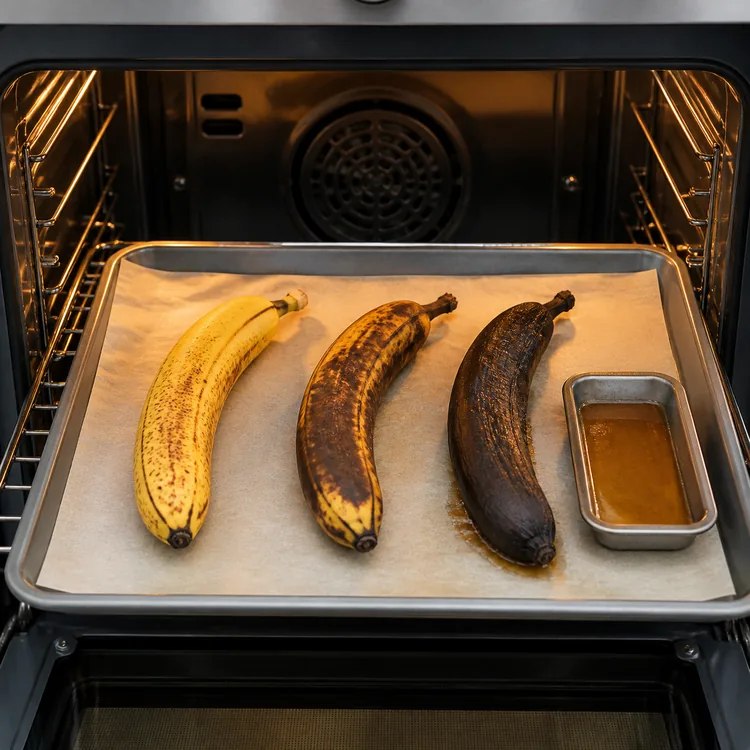
The oven softens bananas; time and ethylene ripen them
For a practical starting point, heat unpeeled yellow or yellow-green bananas on a lined tray at 300°F/150°C. Begin checking after 15 minutes and continue only until the peel is mostly dark and the pulp yields easily under light pressure. Depending on starting ripeness, fruit size, oven accuracy, and load, the useful window may be roughly 20–40 minutes. Cool completely before opening.
Treat the result as cooked banana pulp for immediate baking or blending. A black peel is an endpoint cue, not proof that a green fruit has completed natural ripening. If the cooled pulp tastes starchy or weak, no darker peel can repair the missing sweetness and aroma.
Start with the right fruit
Yellow fruit, even if firm, can become useful mash. A vivid-green banana usually becomes hot and soft while keeping a starchy, underdeveloped flavor.
Use endpoint cues
Ovens and bananas vary. Watch peel color, softness, leakage, and aroma instead of treating one time as a guarantee.
Choose the application first
Oven-softened pulp suits batter and some puree work. It does not suit raw slices, decorative toppings, or products that depend on fresh banana bite.
Measure before scaling
Record starting fruit weight, usable pulp, released liquid, sweetness, color, and final formula behavior. A black peel is not a commercial specification.
Decide by starting ripeness, not by urgency
The same oven setting produces very different ingredients when the fruit starts at a different maturity. Peel color alone is imperfect, so combine it with firmness, aroma, and a small taste check. UC Davis notes that banana quality at ripeness depends on maturity and that starch conversion, acids, and volatile compounds all influence sweetness and flavor. That is why heat can make two bananas equally soft while leaving them noticeably different in taste.
| Starting condition | Likely oven result | Best decision |
|---|---|---|
| Vivid green, very hard, little banana aroma | Peel may blacken and flesh may soften, but the pulp can remain bland, astringent, or starchy. | Do not rely on the oven. Allow natural ripening or choose a correctly matured ingredient. |
| Yellow-green, firm, faint aroma | Becomes mashable; sweetness and aroma may still be lighter than the recipe expects. | Use only for forgiving batters after a taste and weight check. |
| Fully yellow, firm to lightly soft | Good softening, some concentration, easy mashing, moderate cooked-banana character. | Best oven candidate for banana bread, muffins, pancakes, or a trial puree. |
| Yellow with brown speckles | Already useful; brief warming can soften it further but may be unnecessary. | Mash directly or freeze for later use unless the recipe benefits from roasted flavor. |
| Very soft, heavily spotted or brown | High leakage, dark color, stronger cooked notes, and lower usable yield after long roasting. | Use without oven treatment if sound. Discard fruit with mold, fermentation odor, pests, or leaking decay. |
This table is a decision aid, not a ripeness specification. Cultivar, maturity at harvest, prior cold exposure, and handling history can separate peel color from pulp condition. UC Davis has documented that peel and pulp can ripen out of sync, another reason to test the ingredient rather than approve it by color alone.

How to soften nearly ripe bananas in the oven
Use this method for sound dessert bananas that are already yellow or moving out of the green stage. The objective is soft pulp for immediate mixing, not shelf-ready ripe fruit. If you are working to a controlled recipe, weigh the fruit before and after heating; longer roasting can change both water content and usable yield.
- Set the objective. Decide whether you need a mash for banana bread, a looser pulp for puree, or merely a softer fruit. Do not use this method for fresh slices, fruit salad, pudding layers, retail display, or another application that needs an intact raw texture.
- Screen the bananas. Use fruit that is sound, clean, and free from mold, split decay, pest activity, or fermented odor. A heat step does not rescue spoiled raw material. Reject vivid-green fruit if sweetness and developed banana aroma are essential.
- Preheat to 300°F/150°C. This moderate starting temperature allows a gradual change and reduces the chance of scorching leaked juice before the center softens. Oven calibration matters; a small countertop oven can run hotter than its display suggests.
- Line a rimmed metal tray. Use parchment or foil and leave space between unpeeled bananas. The peel contains the pulp, while the rim catches juice if a skin splits. Do not stack fruit or place it directly on an oven rack.
- Start checking at 15 minutes. Look for broad brown-to-black peel areas, a slightly collapsed profile, and a center that yields under gentle pressure. Most yellow bananas need more time, often reaching a useful endpoint in roughly 20–40 minutes. Remove pieces individually if they soften at different rates.
- Stop by condition, not by blackness alone. A glossy black peel plus a firm, starchy center means the color cue has outrun the desired pulp change. More time may increase water loss and cooked flavor without creating the missing natural aroma.
- Cool completely on the tray. Hot pulp is difficult to judge and can loosen a batter prematurely. Cooling also lets you collect the released liquid instead of losing it on the tray or adding it accidentally.
- Open, weigh, and taste. Scoop the pulp into a clean container. Record usable pulp weight and liquid separately. Taste for starchiness, sweetness, acidity, and cooked notes before deciding whether the ingredient fits the formula.
- Use promptly or freeze deliberately. Mix the cooled pulp into the planned batch, or portion and freeze it in an airtight format. Do not leave warm banana pulp standing for extended periods, and do not treat oven heating as a preservation or sterilization step.
Why black peel does not equal natural ripeness
A banana is a climacteric fruit. During natural or controlled commercial ripening, ethylene signaling activates a coordinated set of biological changes: starch is broken down, soluble sugars accumulate, cell walls soften, pigments change, acids shift, and aroma compounds develop. A peer-reviewed review in Frontiers in Plant Science describes starch-to-sucrose metabolism as part of this network, not as a single heat reaction.
An oven works through a different route. Heat weakens plant tissue, changes pectin and cell-wall behavior, moves water, darkens the peel, and creates cooked or roasted flavors. If the fruit has already converted much of its starch during earlier ripening, heating can make it taste fuller by concentrating existing sugars and volatiles. If the fruit is still very green, the same heat can soften or gelatinize starchy tissue without completing the living metabolic sequence that would have built the expected sweet aroma.
The practical distinction is simple: natural ripening changes the ingredient before cooking; the oven cooks the ingredient to make it usable. Commercial banana ripening therefore uses controlled ethylene, temperature, humidity, and airflow-not a baking oven. The UC Davis postharvest fact sheet lists 15–20°C as a typical commercial ripening temperature range, far below a 150°C oven.
Choose the method by time and final use
| Method | What it actually does | Best fit | Main limitation |
|---|---|---|---|
| Counter Several days |
Allows normal ethylene-regulated ripening. | Eating, raw slices, baking, puree, or freezing when time is available. | Timing varies with maturity and room conditions. |
| Paper bag About one to two days |
Retains some ethylene around the fruit while the porous bag limits trapped moisture. | Faster natural ripening for eating or broad recipe use. | Still needs time and a physiologically mature banana. |
| Oven About 20–40 minutes plus cooling |
Cooks, softens, darkens, and may concentrate flavors already present. | Immediate mash for forgiving bakery or puree trials. | Does not reliably create ripe sweetness or aroma in green fruit. |
| Microwave Short bursts |
Heats and softens quickly with limited concentration. | Small emergency batches that will be mashed. | Uneven hot spots and weak flavor development. |
| Frozen ripe banana Ready from stock |
Preserves a selected ripeness condition and provides a prepared form. | Smoothies direct from frozen; bakery, puree, or sauce after controlled thawing. | Requires form, Brix, color, drip-loss, packing, and cold-chain control. |
The times are starting ranges, not guarantees. For a one-off loaf, observation is enough. For a production formula, define the ingredient by measurements and application performance.
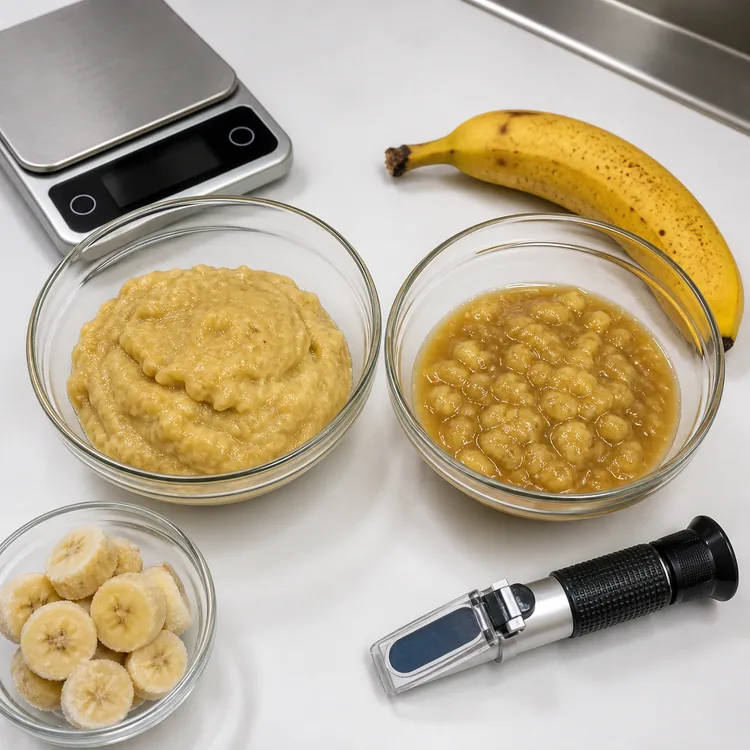
When the oven is the wrong tool
You need raw banana texture. Oven-softened fruit collapses. It is unsuitable for pudding layers, banoffee-style slices, cereal toppings, fresh fruit cups, or retail packs where the buyer expects an intact, pale slice.
The bananas are fully green. A peel can turn black before the pulp develops a ripe flavor. If the formula depends on banana sweetness, a green start creates pressure to compensate with sugar, flavor, or longer roasting-changes that may hide the immediate defect while shifting the product away from its approved formulation.
Aroma is the key quality cue. Naturally ripened bananas develop volatile compounds alongside sweetness and softening. Long roasting creates a different cooked profile. That may be welcome in a roasted-banana cake, but it is not a neutral substitute for a fresh banana puree, dairy preparation, or smoothie base.
You need a clean-label, standardized commercial process. Emergency oven treatment introduces variable time, load, pulp loss, color, and energy use. If it is repeated in production, it needs validation like any other cook step, including equipment capacity, temperature distribution, yield, sanitation, holding, and traceability. Calling it a "ripening" shortcut does not remove those controls.
The fruit is spoiled. Mold, leaking decay, pest damage, alcoholic or fermented odor, or a compromised raw-material history is a rejection issue. Heating does not convert spoiled fruit into acceptable ingredient stock.
Do not correct a ripeness problem with sugar alone
Extra sugar can raise sweetness, but it cannot supply the same banana aroma, acidity balance, pectin behavior, or water distribution. In a cake or quick bread, a sweeter but wetter pulp may increase browning while weakening crumb structure. In puree, sugar addition changes the ingredient declaration and may alter Brix without proving that the fruit reached the expected maturity.
Run a small controlled batch: hold flour, fat, leavening, bake profile, and banana weight constant; compare the pulp conditions; then decide whether any formula change is justified. Document the approved result instead of making a fresh rescue adjustment for every lot.
How ripeness changes puree and bakery performance
Pulp yield and released liquid
Oven treatment can split peels, evaporate water, and release liquid. If a recipe originally called for three bananas, replacing that count with three heavily roasted bananas can change the actual pulp mass. Weigh the cooled edible pulp. Decide whether the tray liquid belongs in the formula; adding it back may preserve yield and soluble flavor, while excluding it may give a thicker mash. The correct choice depends on the product.
Sweetness, Brix, and flavor
Brix can help compare soluble solids among samples, but it is not a complete flavor score. Two pulps at similar Brix can differ in starchiness, acidity, aroma, cooked notes, and color. For a bakery, the useful acceptance point may be an approved pulp-to-flour ratio and sensory result. For a puree or beverage processor, Brix, acidity direction, viscosity, color, and flavor profile may all need limits.
Color and oxidation
Dark peel is expected after heating; dark pulp is a separate issue. Exposure to air after peeling can accelerate browning, while long heating can deepen the cooked color. A chocolate banana cake may tolerate this. A pale dairy drink, baby-food formulation, or visible fruit filling may not. Define the allowed pulp color and evaluate it after the complete process, not only at mixing.
Texture and viscosity
Naturally ripe mash may be thick and cohesive; oven-softened pulp may be looser, more separated, or more concentrated depending on time. This changes batter mixing, deposit accuracy, pumpability, puree filling, and sauce stability. Record the result at the temperature and time relevant to production. A warm pulp can appear thinner than the same material after cooling.
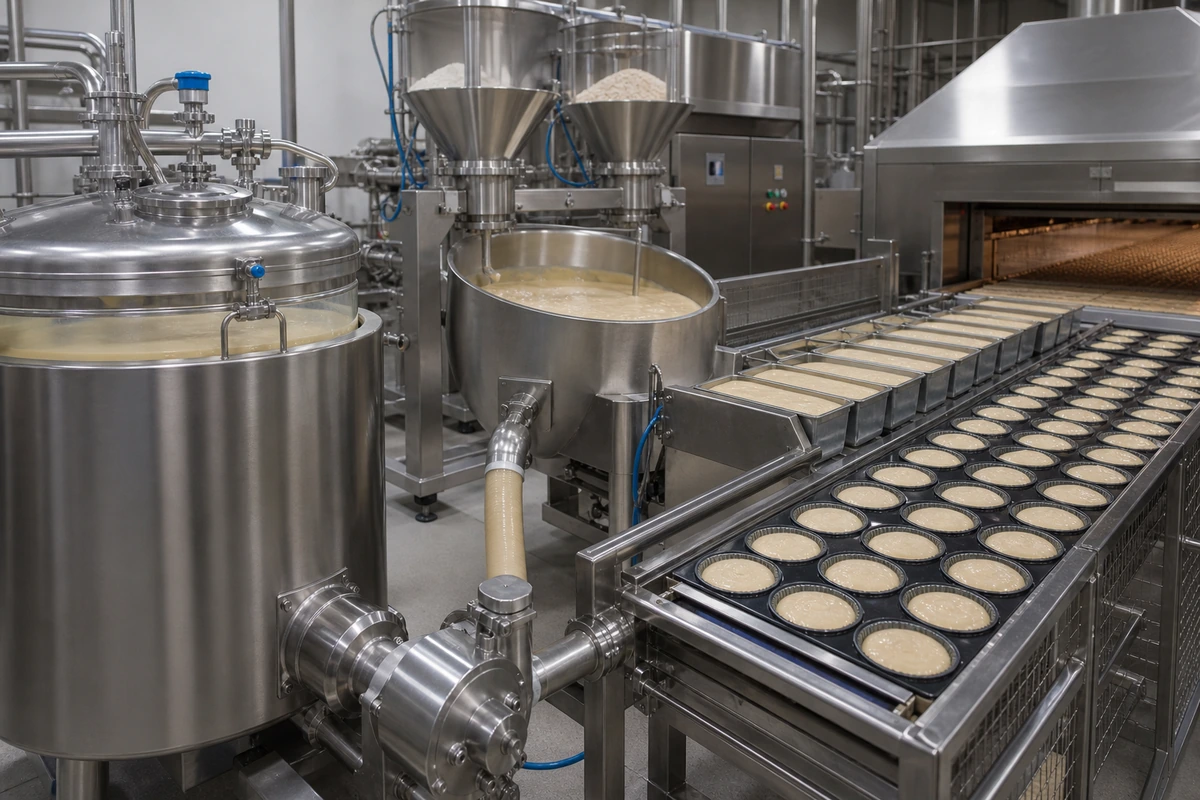
From ripe fruit to frozen banana applications
Once bananas are at the right maturity, freezing can preserve a prepared ingredient for later production. It does not restore a green banana or improve weak raw material. The decision is therefore sequential: select mature fruit first, then choose the frozen form that fits the process.
Use frozen slices or chunks directly from frozen when a smoothie, frozen dessert, or beverage program needs cold body and portion control. Use thawed banana, mash, or puree when the ingredient must distribute evenly through batter, sauce, dairy preparation, or fruit filling. GreenLand-food's published guide on using frozen bananas separates direct-from-frozen applications from thawed applications in more detail.
For a closer explanation, see What to Do With Frozen Bananas.
Thawing adds another variable: soft tissue releases liquid. That liquid may be valuable in a smoothie or puree but disruptive in a moisture-sensitive batter. For controlled use, define whether the pack is dosed frozen, tempered, or fully thawed; how released liquid is handled; how long the ingredient can wait before use; and what temperature enters the mixer. The related frozen banana thawing guide covers those choices.
For buyers comparing fresh ripening with frozen supply, the strongest commercial advantage is not convenience alone. It is the ability to define fruit form, maturity direction, Brix, color, oxidation tolerance, piece size, packing, and cold-chain condition before the shipment enters the formula.

Specify frozen banana by the job it must do
| Application | Practical form | Acceptance focus | Packing direction |
|---|---|---|---|
| Smoothie and beverage | Slices or chunks; puree for high-throughput blending | Ripeness, Brix direction, pale color, oxidation, free-flow condition, blend time | Foodservice bags, dosing packs, or bulk cartons |
| Bakery | Chunks for visible inclusions; thawed pieces or puree for batter | Pulp yield, sweetness, moisture, released liquid, baked color and flavor | Bulk or foodservice packs matched to batch size |
| Puree and fruit preparation | Chunks, whole peeled fruit, or prepared puree | Brix, acidity direction, viscosity, color, oxidation, ingredient declaration | Bulk liner, puree pack, or project-specific format |
| Dairy and dessert | Dice, slices, chunks, or puree | Color after mixing, piece integrity, flavor balance, drip loss and distribution | Foodservice or industrial packs |
| Retail/private label | Uniform slices or chunks | Piece size, broken pieces, color, frost, clumping, label and net weight | 400 g, 500 g, 1 kg, or confirmed custom retail pack |
The current GreenLand-food Bulk Frozen Bananas page lists slices, chunks, dice, and whole peeled banana; a 14° minimum Brix reference or confirmed buyer requirement; 10–20 mm slice thickness or customized size; and bulk, foodservice, retail, and private-label packing. Treat those as discussion points to reconfirm for the crop, form, order, and destination-not as permission to leave the specification open.
What to confirm before a frozen banana order
Form and size: slices, chunks, dice, whole peeled fruit, or puree-style input; target thickness or dice size; acceptable size tolerance; and broken-piece limit. A blender program may welcome smaller pieces that a retail pack would reject.
Ripeness and analytical direction: intended maturity, Brix target or range, acidity direction where relevant, typical flavor, starchiness rejection, and the method used to evaluate a lot. Approving only "sweet banana" invites disagreement.
Color and oxidation: expected natural pale-yellow color, allowed darkening, bruises, peel residue, surface frost, and color after thawing or mixing. Request a sample and test it in the real formula.
Physical performance: free-flow condition, clumping, loose ice, thaw drip, piece integrity, puree viscosity, blending time, and baked or processed result. The supplier sample, pre-shipment sample, and arrival lot should be judged by the same method.
Packing and order plan: inner bag, carton, net weight, retail label, private-label artwork, pallet requirement, MOQ, mixed-container feasibility, lead time, loading port, and destination. The current exact-product page lists a 5,000 kg reference MOQ and several pack formats, but availability and packing must be confirmed for the actual project.
Documents and cold chain: specification sheet, COA, packing list, commercial invoice, certificate support, origin document where required, batch traceability, loading photos, third-party inspection needs, storage at or below -18°C, and the arrival-check procedure. Ask which certificate applies to the producing facility and shipment rather than assuming that every document applies to every lot.
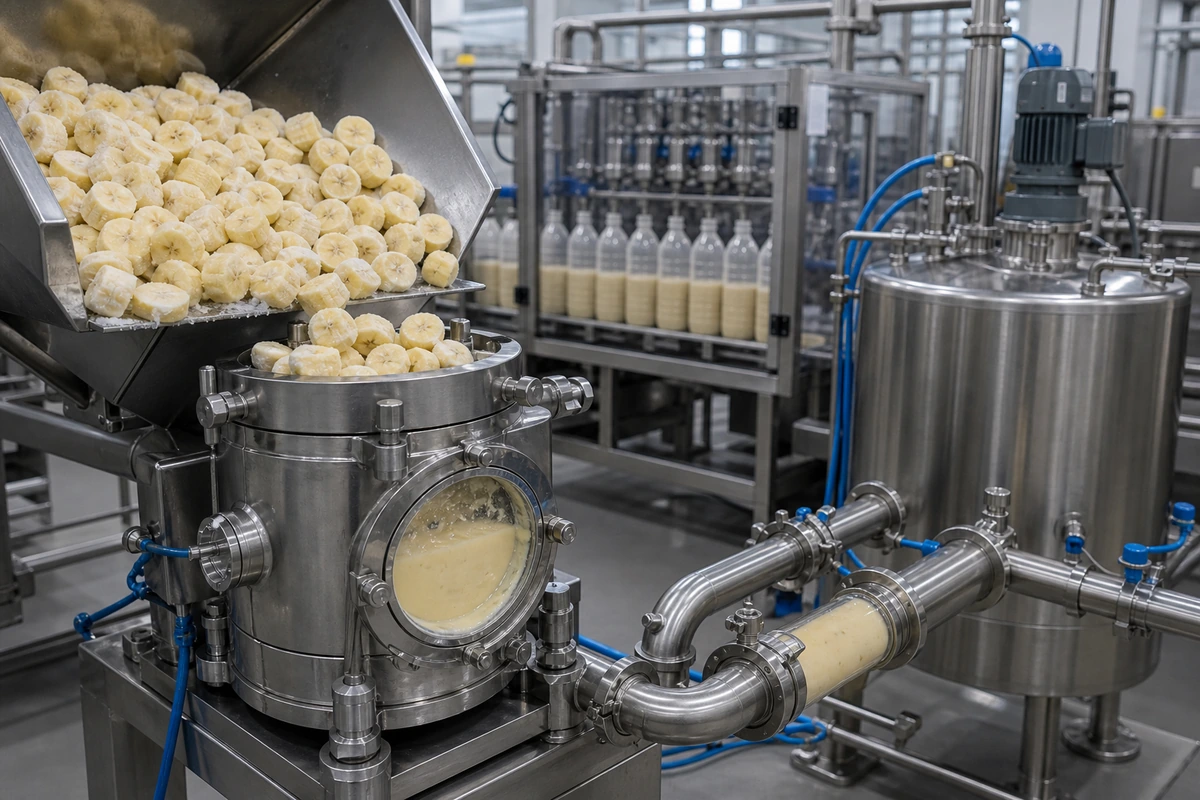
Turn "ripe banana" into an approval method
- State the final application and whether the banana is used frozen, tempered, thawed, mashed, or blended.
- Approve fruit form, size, maturity direction, Brix, color, oxidation, broken pieces, peel residue, and foreign-matter limits.
- Define a sample method: thawing condition, pulp/liquid handling, weighing, sensory check, viscosity or blend test, and finished-product trial.
- Confirm pack size, carton, pallet, private-label needs, order quantity, destination, lead time, and loading plan.
- List required specifications, COA fields, certificates, traceability, inspection evidence, loading photos, and arrival checks before contracting.
FAQ
Does putting bananas in the oven really ripen them?
Not in the full physiological sense. The oven cooks and softens the pulp, darkens the peel, moves water, and may concentrate sugars and aromas already present. Natural ripening is an ethylene-regulated process that also converts starch, changes acidity, and develops characteristic aroma. Use oven-treated fruit as cooked banana pulp for baking or blending.
Can I ripen completely green bananas in the oven?
The peel may blacken and the flesh may soften, but a very green banana can remain starchy, bland, or astringent. If sweetness and ripe banana aroma matter, allow natural ripening or use a correctly matured banana ingredient. Do not keep roasting simply to make the peel darker.
What oven temperature should I use for bananas?
Use 300°F/150°C as a cautious starting point for unpeeled yellow or nearly ripe bananas on a lined tray. Begin checking at 15 minutes and stop when the peel is broadly dark and the center yields easily; a useful endpoint often falls around 20–40 minutes. Oven accuracy, fruit size, load, and starting ripeness can shift the time.
Can oven-softened bananas be frozen?
Yes. Cool the pulp completely, portion it by weight, pack it airtight, label the amount and intended use, and freeze it promptly. Record whether released liquid was included. After thawing, expect a very soft texture, so use it for batter, puree, sauce, or another blended application rather than fresh-looking slices.
Are oven-softened bananas suitable for commercial puree or bakery production?
They may work in a controlled trial, but the process should not be approved by peel color alone. Measure usable pulp yield, released liquid, Brix direction, flavor, color, viscosity, batter behavior, and finished-product results. For repeat production, a specified ripe or frozen banana input is usually easier to standardize than emergency oven treatment.
Source Frozen Banana with GreenLand-food
We are a frozen banana supplier and manufacturer in China, providing factory-direct wholesale supply for importers, bakery and beverage manufacturers, foodservice distributors, retail brands, and private-label buyers.
Send the product form, specification, packing, quantity, application, destination, private-label needs, and requested documents. Include the intended maturity or Brix direction, color tolerance, cut size, thawing method, and sample test when these affect performance.