


Do Peaches Need to Be Refrigerated?
Aug 31, 2026
Leave a message
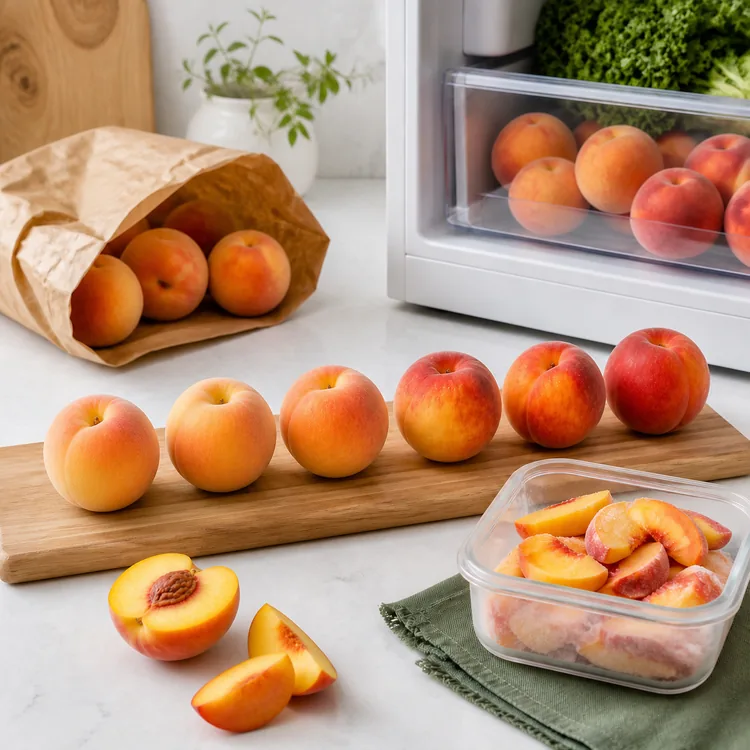
Ripen first, refrigerate second, freeze when the clock is too short
Do not automatically refrigerate a hard peach. Cold slows the ripening process, so fruit that has not reached eating maturity may remain firm, muted in aroma, or disappointing in texture. Let it ripen on the counter, preferably in a single layer away from direct sun. Once the fruit gives gently and smells distinctly peachy, refrigeration can slow further softening and decay.
Cut peaches are different: cover and refrigerate them promptly at 40°F/4°C or below. For a large ripe batch that will not be used within several days, prepare and freeze it instead of hoping the refrigerator will hold peak quality indefinitely.
Ripeness decides the location
Firm peaches belong on the counter; ripe whole peaches may move to the refrigerator; cut peaches need cold, covered storage.
Fridge life is an estimate
Three to five days is a useful planning window for ripe fruit, not a guarantee. Bruising, maturity, humidity, temperature, and prior handling can shorten it.
Cold cannot repair poor fruit
Refrigeration slows change; it does not reverse immaturity, internal breakdown, bruising, dehydration, fermentation, or mold.
Freezing changes application fit
Frozen peaches keep flavor useful for processing, but thawed tissue is softer. Plan them for blended, baked, sauced, filled, or formulated products.
How to store peaches: decide by condition
A calendar cannot tell you where a peach belongs. Start by looking at firmness, aroma, surface condition, and whether the flesh is still whole. The table below gives the safest practical decision for each common situation.
| Peach condition | Where to store it | Practical window | Main control |
|---|---|---|---|
| Firm, mature, not yet aromatic | Counter at room temperature | Check daily; often 1–3 days | Single layer, no direct sun, no heavy stacking |
| Ripe, fragrant, slight give | Eat soon or refrigerate | Commonly 3–5 days refrigerated | Protect from bruising and moisture loss |
| Cut, peeled, or pitted | Covered container in refrigerator | Use promptly; inspect before use | Limit air exposure and keep at 40°F/4°C or below |
| Very ripe but sound | Use immediately or freeze | Same day is the prudent plan | Choose smoothie, sauce, puree, jam, or bakery use |
| Moldy, fermented, slimy, or leaking | Discard | Do not extend | Do not freeze spoiled fruit |
How to tell whether a peach is ready for the fridge
Use several signals together. A ripe melting-flesh peach normally yields slightly when pressed very gently near the stem, releases a clear peach aroma, and shows a cream or yellow ground color rather than a green cast. Red blush is not a dependable ripeness test because it is strongly influenced by variety and sun exposure. A hard peach with strong red color can still be immature or simply not ready to eat.
Do not squeeze the whole fruit repeatedly. Peaches have thin skin and tender tissue, and finger pressure can create bruises that show later as soft, brown, or watery areas. Cup the fruit in your palm and test one small area near the stem. Sort a batch by firmness rather than treating every peach as if it will ripen on the same day.
One caution matters: not every peach cultivar softens in the same way. The UGA Cooperative Extension postharvest bulletin distinguishes melting and nonmelting flesh types and explains that cultivar, maturity at harvest, and destination affect ripening behavior. If a peach stays hard, green, and aroma-free for days, more time may not create good eating quality; it may have been harvested before physiological maturity.
Ripen firm peaches on the counter without bruising them
Set firm peaches stem-side down in a single layer on a clean, dry surface. Leave a little space between fruit so a soft spot or moldy peach is easy to see and remove. Keep the layer out of direct sunlight and away from a warm stove, dishwasher vent, or other heat source. A fruit bowl looks tidy, but a deep pile concentrates weight on the fruit at the bottom.
To speed ripening, place one or a few peaches in a plain paper bag and fold the top loosely. The bag concentrates naturally produced ethylene while still allowing some exchange of moisture and air. Check at least daily; a closed bag can move fruit from firm to overripe faster than expected. Adding a ripe banana or apple raises ethylene exposure further, but it also shortens the monitoring interval. Plastic is a poor ripening bag when it traps condensation against tender fruit.
Do not wash whole peaches before counter storage. Added surface moisture can support decay, especially around stem cavities or existing abrasions. Wash under cool running water just before eating or processing. The FDA advises rubbing produce gently under plain running water rather than using soap, detergent, or commercial produce wash.
How to keep peaches fresh after they ripen
Move only ripe, sound fruit into the refrigerator. Keep peaches in a shallow single layer or a ventilated produce container so they are not crushed. A high-humidity produce drawer can reduce water loss, but the fruit should not sit in pooled condensation. Keep it away from raw meat and from packages that can press against it.
Take out only what you expect to eat and allow it to warm for roughly 20–30 minutes. Aroma is easier to perceive at room temperature. Refrigeration buys time; it does not improve sweetness, repair a dry texture, or remove internal damage.
How long do peaches last in the fridge?
For whole, ripe peaches, 3–5 days is the most useful household planning estimate. Utah State University Extension gives that range for ripe peaches stored in a refrigerator. A peach that entered cold storage at the first point of ripeness may remain acceptable longer; a heavily handled fruit that was already very soft may deteriorate in a day. The date is less informative than the condition you observe.
Check the batch every day. Use the softest sound fruit first. Remove any peach with visible mold, leaking juice, a fermented or sour odor, a slimy surface, or collapsed tissue. A dry wrinkle suggests moisture loss, while a bruise is a localized handling defect. A small bruise does not automatically mean the entire peach is unsafe, but cut it open and judge the surrounding flesh before use. Mold is a discard signal, not a trimming project for a soft fruit.
Cut peaches have more exposed surface, lose moisture faster, and brown more readily. Place them in a clean covered container and refrigerate promptly. Acid treatment can slow enzymatic browning, but lemon or ascorbic acid is not a substitute for refrigeration. The FDA recommends keeping refrigerators at 40°F/4°C or below and refrigerating pre-cut produce. Use cut peaches as soon as practical because both texture and aroma decline after preparation.
| Observed condition | What it may mean | Practical action |
|---|---|---|
| Fragrant, slight give, clean skin | Ripe and ready | Eat, cook, or freeze soon |
| Wrinkled skin, no mold | Water loss and declining quality | Use promptly in a cooked or blended application |
| Brown, dry, mealy flesh inside | Possible internal breakdown or poor prior handling | Reject if eating quality is unacceptable; refrigeration cannot reverse it |
| Mold, slime, leakage, fermented odor | Spoilage | Discard and clean the storage area |
Seven mistakes that shorten peach freshness
- Refrigerating before the fruit is ready. Cold slows ripening, so a hard peach may never develop the aroma and texture you expected during a short domestic-fridge stay.
- Stacking ripe peaches in a deep bowl. Weight and repeated contact create pressure points that become bruises and decay sites.
- Washing before storage. Residual water around the stem and skin abrasions increases the chance of surface deterioration. Wash immediately before use instead.
- Sealing damp whole fruit in plastic. A bag can reduce dehydration, but trapped condensation works against you. Use a ventilated or loosely closed arrangement for whole fruit.
- Using the calendar as a guarantee. Storage time starts with harvest maturity and handling history, not with the moment you put the fruit in your refrigerator.
- Leaving cut peaches uncovered. Air exposure accelerates browning, drying, aroma loss, and cross-contact inside the refrigerator.
- Freezing fruit after spoilage starts. Freezing pauses further change but does not restore spoiled, fermented, moldy, or badly damaged fruit.
When refrigeration is no longer enough, freeze ripe peaches
Freezing is the sensible choice when several peaches reach ripeness together and you cannot use them within the refrigerator window. Choose ripe, sound fruit. Freezing an underripe peach preserves its weak flavor; freezing an overripe but still sound peach preserves soft tissue that is best directed to puree, sauce, smoothie, jam, or filling.
The commercial equivalent is not simply "a colder fridge." IQF processing prepares ripe fruit in a defined form, removes heat quickly, and keeps individual pieces free-flowing when drainage, freezing, and cold-chain controls are effective. The visible frozen peach form below is intended for portionable processing rather than fresh-hand eating.

How to freeze peaches step by step
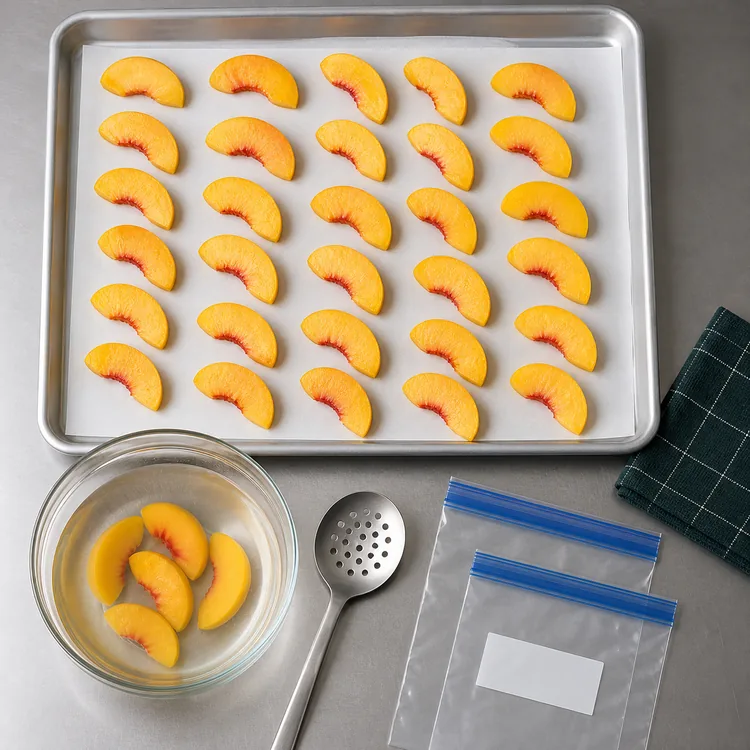
For household tray freezing, the goal is to prepare uniform pieces, limit browning, freeze them separately, and package them with as little excess air as practical. If you prefer syrup, sugar, crushed, or puree packs, follow the tested methods from the National Center for Home Food Preservation.
- Select ripe, sound peaches. Reject moldy, fermented, leaking, or badly bruised fruit. Separate very soft peaches for puree rather than expecting neat slices.
- Wash immediately before preparation. Rinse under cool running water and dry. Clean hands, knives, boards, trays, and containers before cutting.
- Peel if the final use requires it. Blanching briefly and cooling in ice water can loosen skins. Peeling is optional for some smoothies or rustic sauces but usually gives a cleaner bakery, dairy, and fruit-preparation result.
- Pit and cut to one consistent form. Wedges, slices, dices, halves, or puree freeze and thaw differently. Even piece size helps the batch freeze and portion more consistently.
- Control browning. Use an ascorbic-acid product according to its directions or an appropriate tested pack method. Acid treatment slows color change; it does not sanitize spoiled fruit.
- Tray-freeze pieces in one layer. Drain well, arrange pieces without contact on a lined tray, and freeze until firm. Surface water becomes ice and encourages pieces to stick together.
- Pack, date, and return to the freezer. Transfer firm pieces to freezer-safe bags or containers, remove excess air without crushing the fruit, label the pack, and keep the freezer at 0°F/-18°C or below. Open only long enough to remove the quantity needed.
Frozen peaches do not return to a fresh, crisp state
Ice crystals disrupt cell structure. After thawing, peaches normally release juice and feel softer than fresh fruit. That is a quality and application issue, not automatically a defect. Use the change to your advantage: frozen peaches work well in smoothies, cooked sauces, puree, jam, beverage bases, bakery fillings, dairy fruit preparations, sorbet, and desserts where fresh-firm bite is not the only acceptance criterion.
For visible topping or intact fruit pieces, cut definition, maturity, freezing speed, thawing method, and drip loss matter far more. Read our related guide on how to use frozen peaches in cooking and processing for application-specific handling.
Why domestic refrigerators and commercial peach storage give different answers
Consumer advice often says "do not refrigerate unripe peaches," while commercial postharvest guidance describes rapid cooling and controlled cold storage. Both can be correct because the fruit, equipment, temperature, humidity, cultivar knowledge, and storage objective are different.
A household peach is usually bought for near-term eating. The refrigerator commonly runs near 35–40°F/2–4°C, its temperature and humidity fluctuate, and the buyer rarely knows the cultivar's chilling sensitivity or its previous time-temperature history. Keeping a firm peach on the counter lets a physiologically mature fruit develop aroma and softness before short refrigeration.
Commercial handlers may cool fruit rapidly and hold susceptible cultivars close to 32°F/0°C with tightly managed humidity. UGA reports that peaches need high relative humidity to limit dehydration and explains the role of preconditioning for some supply chains. UC Davis describes the 36–46°F/2–8°C range as a concern for internal breakdown in susceptible stone fruit during extended handling. Symptoms can include mealiness, leathery flesh, browning around the pit, lack of juiciness, and flavor loss.
The practical conclusion is not that a ripe peach should never enter your refrigerator. A short domestic-fridge stay remains useful. The conclusion is that "cold" is not one uniform treatment, and a damaged texture may reflect cultivar sensitivity and earlier supply-chain exposure rather than the last two days in your kitchen. Commercial buyers therefore need time-temperature evidence, maturity specifications, and arrival checks-not just a nominal storage temperature.
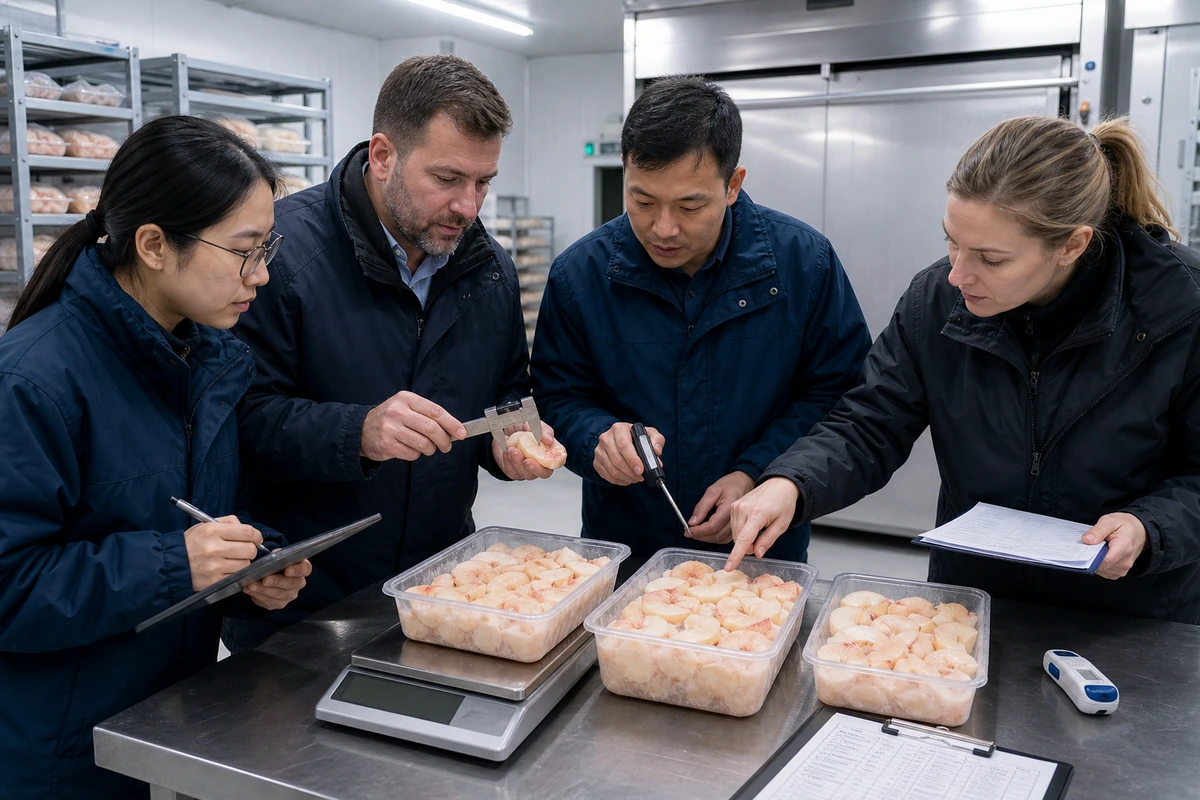
What fresh-peach storage teaches a frozen-peach buyer
Fresh storage behavior exposes the variables that later shape frozen quality. Fruit cut too firm may have weak aroma and a raw, resistant bite. Fruit processed too late may give excessive soft pieces and drip loss. Slow preparation after peeling encourages browning. Poor drainage creates surface ice. Temperature fluctuation encourages clumping and may worsen dehydration or texture loss. Those are specification issues, not details that a generic "Grade A" claim resolves.
At GreenLand-food, we help purchasing teams define frozen peach by the result needed in the finished product. A beverage processor may value Brix, aroma, color, and puree yield. A yogurt program may need 10×10 mm or 15×15 mm dice with a controlled broken-piece tolerance. A bakery filling can accept smaller pieces but may need predictable solids and limited browning after heat. Retail frozen-fruit packs need attractive, free-flowing pieces and consistent net weight.
| Frozen peach form | Typical application | Buyer acceptance points |
|---|---|---|
| Halves or slices | Dessert, catering, bakery, further cutting | Shape, pit removal, peel residue, browning, firmness, broken-piece tolerance |
| Chunks, commonly 15–25 mm or 20–30 mm | Smoothie, beverage, fruit preparation, bakery | Size distribution, free-flowing condition, Brix, color, drip loss, small-piece percentage |
| Dice, commonly 10×10 mm or 15×15 mm | Yogurt, dairy topping, retail mixes, portioned preparations | Dimensional tolerance, intact cube rate, soft-piece limit, net weight, treatment declaration |
| Bits and pieces or puree input | Jam, sauce, puree, beverage base, industrial formulation | Yield, Brix/acidity balance, color, off-flavor absence, foreign matter, pack economy |
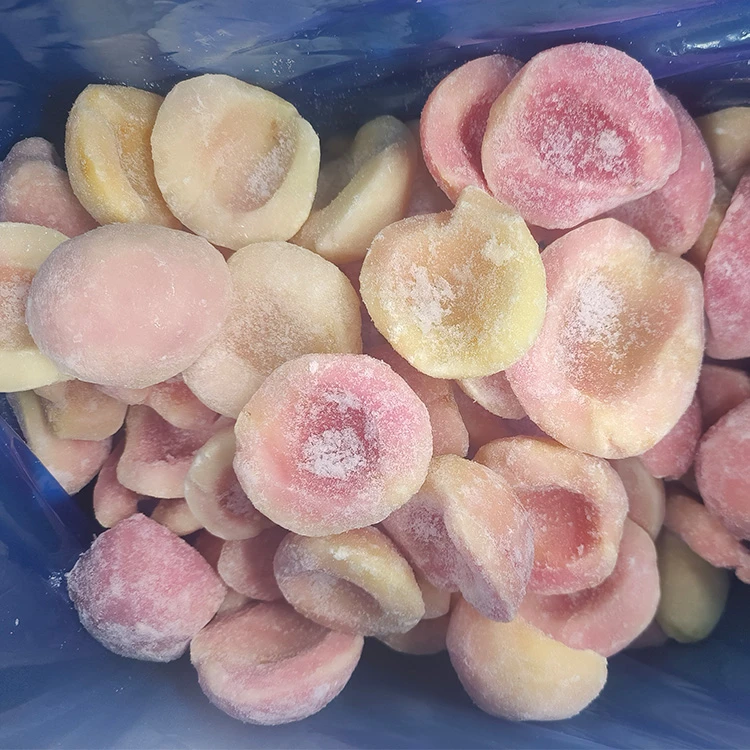
Inspect frozen condition before approving the lot
A small amount of loose frost is not the same as a solid frozen block, thick surface ice, or evidence of thaw-refreeze history. Open the sample under controlled conditions and document product temperature, free-flowing condition, color distribution, cut dimensions, broken pieces, peel, pit fragments, foreign matter, odor, and package integrity.
Then thaw a defined sample using the intended method. Record drip loss, retained shape, firmness, aroma, and performance in the actual formula. A cold, frozen visual inspection alone cannot predict what peach pieces will do in yogurt, filling, sauce, or beverage processing.
Specify the peach, pack, evidence, and arrival decision together
Before quotation, confirm yellow or white peach, freestone or clingstone where relevant, form, cut size, maturity or firmness target, Brix discussion, color expectation, anti-browning treatment and declaration, peel and pit-fragment tolerance, broken pieces, drip-loss method, clumping limit, and intended application.
For ingredient format details, see What Is a Freestone Peach? Pitting Yield and Frozen Cut Selection.
Match packing to the operation: a 1×10 kg carton may suit industrial or foodservice use; 4×2.5 kg supports controlled kitchen handling; 400 g, 500 g, or 1 kg bags may suit retail and private-label programs. Confirm carton strength, liner or bag material, net weight tolerance, pallet pattern, label language, lot coding, and mixed-container feasibility before artwork or production approval.
Request the specification sheet, representative sample approval, COA, packing list, commercial invoice, certificate support matched to the producing site and product scope, traceability records, loading photos, and third-party inspection support when required. Define storage at -18°C or below, temperature evidence, receiving inspection, claim window, and disposition rules in the purchase agreement.
Application fit matters more than a generic "fresh-like" promise
A buyer should not pay for visual perfection that disappears in a puree, or accept excessive soft pieces for a visible topping. Define the transformation the peach must survive. Beverage and sauce operations may focus on aroma, color, Brix, acidity, puree yield, and filtration behavior. Bakery teams may test fruit distribution, bake stability, bleed, and water release. Dairy teams may evaluate piece survival, serum release, color migration, and filling equipment compatibility.
Pilot the representative lot at the intended addition rate and process temperature. Record frozen input weight, thawing loss, usable solids, reject percentage, and final product yield. A lower price per kilogram can disappear if a batch carries more ice, broken pieces, pit fragments, or unusable soft tissue.
Evidence behind the storage decisions
The household recommendation combines several different evidence layers. The Utah State University peach preservation guide gives a 3–5 day refrigerated window for ripe peaches. The FDA produce-safety guidance supports refrigeration at 40°F/4°C or below for perishable and pre-cut produce and recommends plain running water for washing.
For commercial context, the UGA postharvest bulletin explains maturity, cooling, humidity, preconditioning, and storage-temperature effects. The UC Davis stone-fruit internal-breakdown reference describes mealiness, leathery texture, flesh browning, flavor loss, and the need for cultivar-aware commercial temperature control.
For freezing, use a tested preservation method rather than an improvised chemical concentration. The National Center for Home Food Preservation provides syrup, sugar, crushed, and puree pack directions with specific ascorbic-acid options. GreenLand-food's related article on whether peaches can be frozen expands the texture and use decision, while our guide to frozen peach storage life covers cold-chain quality and freezer-burn interpretation.
Peach storage FAQ
Will peaches ripen in the refrigerator?
Ripening slows sharply in a household refrigerator, so firm peaches are better left at room temperature until they become fragrant and yield slightly. A peach picked before physiological maturity may never develop good flavor, regardless of where it is stored.
Should ripe peaches be stored in a plastic bag?
A ventilated or loosely closed bag can reduce dehydration, but do not trap condensation around ripe fruit. Keep peaches dry, avoid crushing them, and check the batch daily. Use a covered container for cut peaches.
How long do fresh peaches last in the fridge?
Plan around 3–5 days for sound, ripe whole peaches, then judge each fruit by aroma, firmness, leakage, discoloration, and mold. Very ripe or bruised fruit may last much less time.
Do cut peaches need to be refrigerated?
Yes. Put cut, peeled, or pitted peaches in a clean covered container and refrigerate promptly at 40°F/4°C or below. Browning control does not replace cold storage.
Why did my refrigerated peach become brown or mealy inside?
Possible causes include internal breakdown, cultivar sensitivity, time spent in an injurious temperature range earlier in the supply chain, excessive storage, or harvest at unsuitable maturity. Short refrigeration cannot reverse that damage.
Can peaches be frozen with the skin on?
Yes, when the intended use accepts skin, such as some smoothies, sauces, or purees. Peel them when you need a smooth texture, clean color, visible slices, or a specification that limits peel residue.
How can a buyer compare two frozen peach offers?
Compare the same peach type, form, cut tolerance, Brix method, maturity and firmness expectation, anti-browning treatment, peel and pit-fragment limits, broken pieces, drip-loss test, packing, net weight, documents, storage condition, and sample approval basis-not price per kilogram alone.
Source Frozen Peach with GreenLand-food
GreenLand-food is a professional frozen peach supplier and manufacturer in China, providing factory-direct wholesale supply for importers, food manufacturers, foodservice distributors, retail brands, and private-label programs.
Send the peach type, product form, specification, packing, quantity, application, destination, private-label needs, and requested documents. We will review cut size, Brix, treatment, defect tolerances, cold-chain plan, and the most suitable packing before quotation.