


How to Sauté Frozen Green Beans on the Stove
Aug 31, 2026
Leave a message
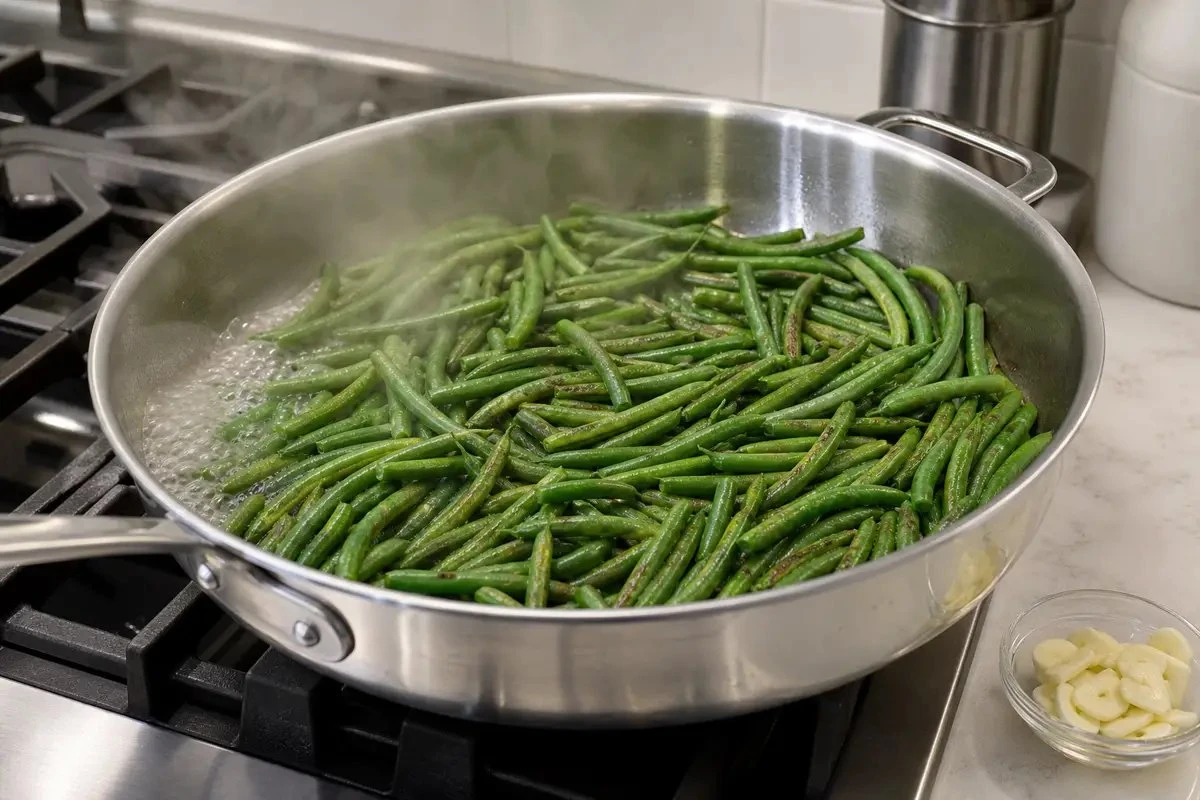
Steam off the water, then sauté
Put 10–12 ounces/280–340 grams of loose frozen beans in a preheated 12-inch/30-centimeter skillet. Keep the pan uncovered and stir occasionally until the released water is almost gone, usually 3–5 minutes. Add 1–2 teaspoons of oil, spread the beans against the hot surface, and cook 2–5 minutes more. Add fresh garlic and delicate finishes only near the end.
A 12-inch skillet handles a modest bag better than a deep saucepan with the same volume.
Evaporate released water first; add fat and build flavor after the pan sounds dry.
Loose beans go straight in. Heavy frost or a small pan justifies a quick de-ice and thorough draining.
Hot tender centers and dry lightly browned surfaces matter more than one exact minute.
Why frozen beans steam before they sauté
Sautéing usually means cooking food in a shallow layer with a small amount of fat over fairly high heat. Frozen green beans complicate that definition. Surface frost melts as soon as the beans reach the skillet, and ice inside the plant tissue becomes liquid. Until that water evaporates, the pan temperature near the beans is pulled toward the boiling point of water and true browning is limited.
If oil, butter, garlic, and sauce all enter at the beginning, they mix with the released water. The beans simmer in a flavored liquid. They can still taste good, but the result is closer to braised or steamed beans than a dry sauté. Garlic cooks inconsistently: some pieces float in the liquid, while pieces touching bare hot metal may scorch.
Separating the process solves the conflict. Phase one is a controlled steam-off stage in an uncovered pan. Phase two begins when the hiss softens, large wet patches disappear, and the beans contact hot metal. At that point, a small amount of fat carries flavor, improves contact, and supports light browning. You can then add aromatics without asking them to survive the entire thawing period.
Frozen beans will not always char like raw fresh beans. They have usually been blanched before freezing, and freezing changes cell structure. The realistic goal is a hot tender center with some resistance, a surface that is no longer wet, and scattered browned spots. Chasing a uniformly dark exterior can turn the center soft and the skin wrinkled.

Straight from frozen or quick de-ice?
| Condition | Best route | Expected timing | Main control |
|---|---|---|---|
| Loose beans, light frost, wide skillet | Straight from frozen | 6–10 minutes total | Wait for pan to dry before fat |
| Hard clump or heavy loose snow | Quick de-ice, drain, blot | About 3–6 minutes in pan | Surface must be dry before sauté |
| Small skillet or full 1 lb / 450 g bag | Split into two batches | Calibrate each hot batch | Preserve shallow load |
| French-cut beans | Either route, check early | About 4–7 minutes | Avoid drying thin edges |
| Thick whole or cut beans | Straight from frozen if loose | About 8–12 minutes | Test center before browning further |
Timing begins when the beans enter the hot pan, but it should be treated as a range. Gas flame, electric coil, induction response, pan mass, bean size, and load all change heat recovery. A second batch in an already-hot pan often reaches the dry phase sooner.
The two-phase stovetop method
- Choose a wide skillet. Use about a 12-inch/30-centimeter pan for 10–12 ounces/280–340 grams. Stainless steel, carbon steel, cast iron, and heavy nonstick all work, but they recover and brown differently.
- Preheat over medium-high heat. Give a heavy pan time to warm. Do not leave an empty nonstick skillet over excessive heat; follow the pan maker's use limits.
- Inspect the frozen beans. Remove loose ice. Keep freely separating beans frozen. If you de-ice a clump, drain and blot it thoroughly.
- Begin the dry steam-off phase. Add the beans to the uncovered skillet. Stir or toss every 30–60 seconds as frost melts. Spread them back into a shallow layer after each movement.
- Listen and look for the transition. The loud watery hiss becomes quieter, visible puddles disappear, and the beans begin to squeak or make sharper contact sounds. If liquid persists, keep evaporating rather than adding butter or sauce.
- Add fat and dry seasoning. Use one to two teaspoons of cooking oil, salt, pepper, and dry spices. Toss to coat, then leave the beans undisturbed for 30–60 seconds at a time so they can contact the pan.
- Brown without overcooking. Sauté for another two to five minutes. If the centers are hot and tender but the pan is too aggressive, lower the heat rather than chasing dark color.
- Add aromatics late. Stir in minced garlic, ginger, shallot, chili, nuts, or seeds for the final one or two minutes. Move them constantly so small pieces do not burn.
- Finish off heat. Add lemon, vinegar, herbs, Parmesan, browned butter, or a small amount of sauce. Taste after the finish before adding more salt.
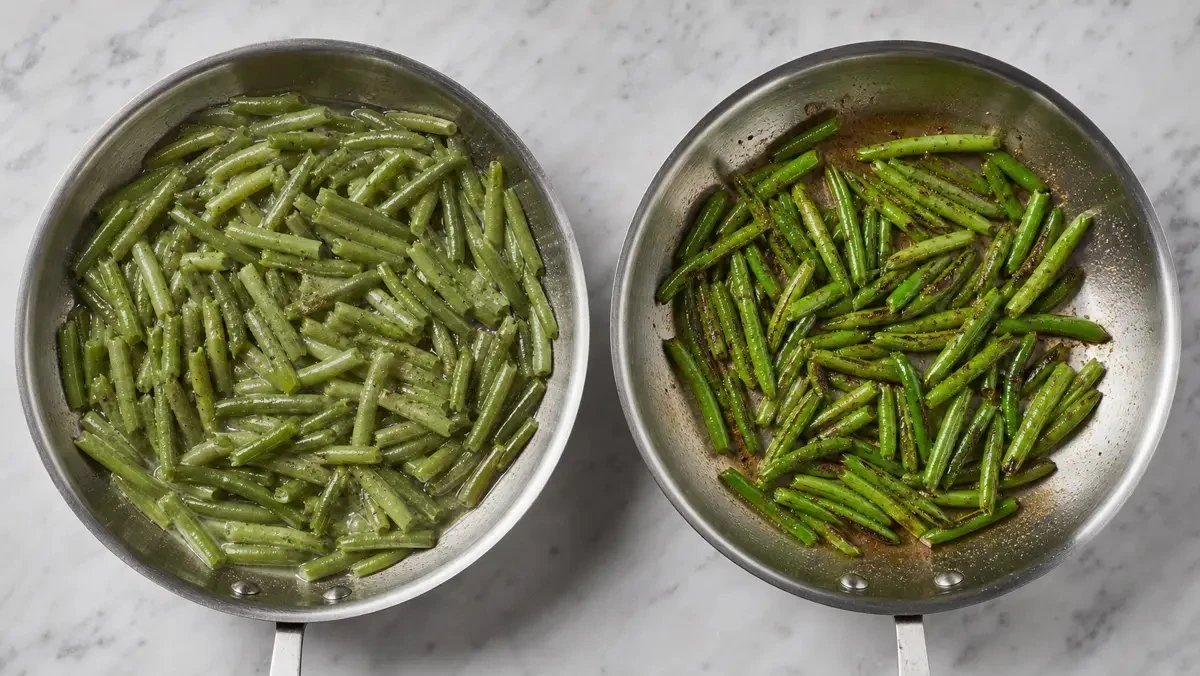
Pan material, heat source, and load change the result
Stainless steel: responsive and useful for browning, but wet beans may stick when the pan is not properly heated or fat is delayed too long after drying. A thin metal spatula helps release browned contact points.
Cast iron and carbon steel: hold heat well when a frozen load lands. They can produce strong contact color, yet slow heat adjustments mean garlic and butter can scorch after the pan becomes dry. Reduce the burner before adding delicate aromatics.
Nonstick: reduces sticking and makes low-fat cooking easy, though browning may be gentler. Respect the maker's temperature and utensil guidance. Do not preheat an empty coated pan indefinitely.
Gas, coil, and induction: gas changes quickly but may heat the perimeter unevenly. Electric coils recover more slowly. Induction can deliver rapid concentrated energy depending on pan compatibility and burner size. Record the actual burner and setting rather than assuming "medium-high" transfers across kitchens.
Load: surface area matters more than pan volume. A deep sauté pan may hold a full bag physically but still give poor evaporation because the beans cover one another. For scale-up, preserve grams per usable pan area and use more pans rather than multiplying depth.
Use four doneness cues
Center: a cooled test bean is hot and tender with the amount of resistance you want.
Surface: the skin is dry with scattered browned spots rather than a wet sheen or deeply shriveled coating.
Pan: there is no standing water and the fat looks like a thin film rather than a diluted pool.
Aroma: garlic, butter, spices, and nuts smell fragrant, not bitter. Finish immediately when small aromatics begin to color.
Troubleshooting stovetop frozen green beans
| Result | Most likely cause | Correction |
|---|---|---|
| Pan stays watery | Too much product, heavy frost, or lid used | Uncover, split the batch, remove loose ice |
| Beans stick before browning | Pan temperature or fat timing is wrong | Let water evaporate, then add a thin fat film |
| Garlic is bitter | Added during the full high-heat process | Add in final one to two minutes |
| Dark skin, cold center | Heat too high for thick beans | Lower heat and extend steam-off stage |
| Soft with no color | Long simmer in released water or sauce | Use wider pan and stage wet finishes |
| Bland after finishing | Seasoning diluted or no contrast | Salt after drying; add acid, herbs, or toasted garnish |
Five finishes built around the dry-pan transition
Garlic and lemon: add minced garlic in the final minute, remove the pan from heat, then add lemon zest and a small squeeze of juice. Zest supplies aroma without re-wetting the surface.
Browned butter and almonds: toast almonds separately or after the beans leave the pan. Add browned butter as a finish so its milk solids do not burn during the steam-off stage.
Sesame and ginger: sauté grated ginger briefly after the pan dries, then finish with toasted sesame oil, sesame seeds, and a small amount of soy. Reduce added salt because soy contributes sodium.
Tomato and herb: use well-drained sun-dried tomato strips in the final phase and finish with parsley or basil. A watery fresh tomato sauce changes the method into a braise.
Chili and Parmesan: add dry chili during browning, then grated Parmesan off heat. A chili crisp can be spooned over at service; its garlic and sugar are less likely to burn when they avoid prolonged skillet contact.

Worked calibration: resolving the thaw-or-not argument
Suppose you have a 12-inch stainless-steel skillet, an induction burner, and a 12-ounce/340-gram bag of regular whole beans. The bag flows freely and contains only a spoonful of loose snow. Remove that ice, preheat the skillet at a recorded medium-high setting, and add the beans directly from frozen. At the end of each minute, note whether water pools, whether the pieces separate, and whether the pan returns to a sharper dry sound.
At minute four, imagine that visible liquid is gone and a cooled test bean is hot but firmer than your target. Add two teaspoons of neutral oil, salt, pepper, and garlic powder. Spread the beans, leave them in contact for 45 seconds, toss, and repeat. At minute eight, the centers are tender and several contact points are lightly browned. Add minced garlic for one minute, remove from heat, and finish with lemon zest. Your recorded process is nine minutes total, with fat entering at minute four.
On another day, a different bag is fused into a heavily frosted block. If you put the same 340 grams into the skillet, water remains at minute six and the centers soften while the surface stays pale. That does not prove the straight-from-frozen method is wrong; it proves the product condition exceeded the method's evaporation capacity. For the next portion, rinse just enough to separate, drain, blot, and sauté the dry surface. It may reach the desired endpoint in four or five minutes because the de-icing step occurred outside the pan.
The useful decision is therefore conditional. Straight from frozen protects convenience and avoids an extra handling step when the beans are loose and the pan is wide. Quick de-icing protects the sauté endpoint when heavy frost or clumping would turn the pan into a boiler. Neither route should leave beans sitting at room temperature, and both require you to judge the cooked center rather than copying the time from the previous bag.
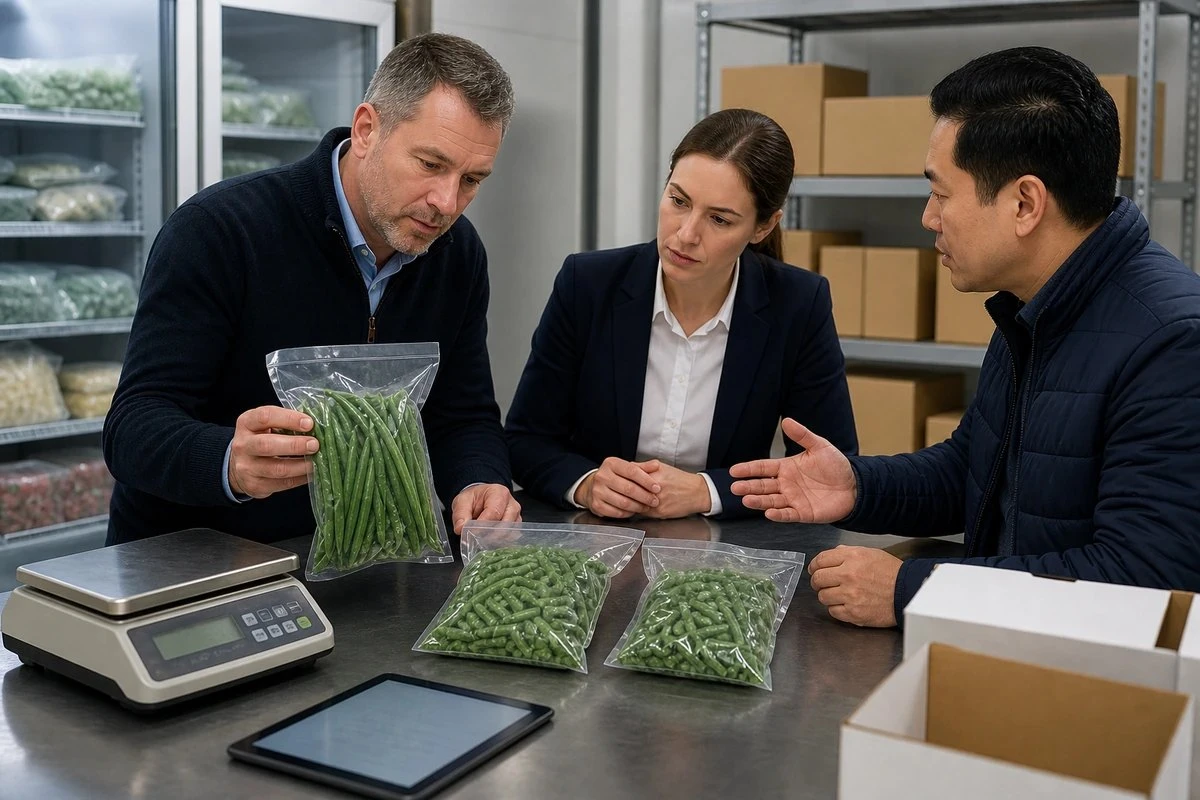
A buyer trial can use the same comparison. Test equal loads of candidate lots under a fixed pan protocol and record the time to a dry surface. If one sample consistently releases much more free water, investigate surface ice, pack condition, storage history, and specification before adjusting every kitchen direction. The test becomes evidence about process fit instead of a subjective claim that one bean "sautés better."
Repeat the winning condition at least once before treating it as a standard. One favorable pan can reflect burner cycling, a lighter handful, or a warmer starting surface. Repetition confirms whether the observed dry-pan transition and finish window are stable enough to publish, teach, or use in production. Keep the bean lot and measured load visible in the record.
Frequently asked questions
How long do frozen green beans take in a skillet?
Most loose frozen green beans need about 6 to 10 minutes in a wide skillet over medium-high heat. Use the first 3 to 5 minutes to release and evaporate water, then add fat and sauté until hot, tender, and lightly browned. Thick beans or a larger load may take longer.
Should I thaw frozen green beans before sautéing?
Not when the beans are loose, lightly frosted, and fit in a wide shallow layer. Use a quick de-ice, drain, and dry step when the bag is heavily frosted, the pieces are locked together, or your pan is too small to evaporate the released water efficiently.
How do I keep frozen green beans from getting watery on the stove?
Use a wide uncovered skillet, remove loose ice, keep the load shallow, and let released water evaporate before adding much fat or sauce. If liquid pools, spread the beans out and wait; adding butter, garlic, or sauce while the pan is wet delays browning.
When should garlic be added to sautéed frozen green beans?
Add fresh minced garlic after the pan is dry and the beans have begun to brown, usually during the final one or two minutes. Garlic added during the wet steam-off stage can cook unevenly, and garlic left over high heat too long can become bitter.
What size skillet works for a bag of frozen green beans?
A 12-inch or 30-centimeter skillet is a practical starting point for about 10 to 12 ounces or 280 to 340 grams. A full one-pound or 450-gram bag often needs a very wide pan or two batches. Judge by whether the beans form a loose shallow layer.
Can I use butter instead of oil to sauté frozen green beans?
Yes, but add butter after most water has evaporated, or combine it with a higher-heat cooking oil. Whole butter added at the beginning can foam, dilute into meltwater, and brown before thick beans are hot. A final butter finish gives better flavor control.
Source for the pan, line, and finished application
Tell us the required cut, diameter, pack, market, process load, pan or line, sauce system, holding condition, and trial volume. We can review the requirement, discuss samples, and confirm the proposed specification and documentation.
Request a quote Download the catalog