


Sweet Potato Casserole Using Frozen Sweet Potatoes: Input Form and Topping Trial
Sep 27, 2026
Leave a message

Define the frozen sweet-potato input before adjusting the recipe
"Frozen sweet potato" is not a complete casserole specification. It may arrive as cut pieces, diced material or another processed form, and the preparation history matters. Ask whether the product was blanched or otherwise cooked before freezing, what the cut tolerance is, how many small fragments are allowed and how it is packed. A piece that looks convenient in the carton can still change the water balance after thawing and heating. These questions belong in the first sample request, before a kitchen tries to repair an unknown input with more sugar or binder.
Begin the trial with a representative sealed pack. Record the lot number, pack date if supplied, storage condition and the product description actually offered. Photograph the product as it leaves the pack. Note loose ice, clumps, broken pieces and any visible color variation. Those observations are not quality verdicts on their own; they tell the development team what entered the kettle or tray. If two samples have different cut distributions, do not combine them into one "frozen sweet potato" result.
Set a single starting route for thawing or direct cooking. A plant that cooks from frozen should evaluate from frozen, while a commissary that thaws under refrigeration should reproduce that handling. Record the weight before and after the chosen preparation step and keep any separated liquid visible for assessment. Draining without recording the amount can make a wet lot appear equivalent to a dry lot, then break the yield calculation at production scale. Do not impose a universal thaw loss threshold from an editorial article; agree the acceptable range in the buyer's own process.

GreenLand product photograph. Real GreenLand sweet potato product condition for the sweet-potato-input discussion.
Cut sweet potato and cooked mash serve different purposes. Pieces give the operator control over how much structure remains after mashing, but they also need consistent softening. A smooth prepared mash may save a cooking and mechanical step, provided its ingredient declaration, solids and texture fit the formula. An IQF cube should not be described as ready-to-use puree. Likewise, the photograph of a cut product proves the visible product form, not the availability of every processing option or a guarantee that each lot behaves identically.
For a development request, specify the desired visual result in the casserole: rustic spoon marks, a fairly smooth set filling or visible pieces. Then describe the equipment path. A paddle mixer, bowl cutter and hand masher can create different shear from the same cooked cubes. A narrow pan depth affects moisture release and bake time. The supplier needs these details to recommend a sample form; a product name alone is too broad. If your trial starts with two forms, prepare both under documented conditions so the comparison is meaningful.
There is a simple checkpoint before adding eggs, dairy or topping. Take a spoonful of plain, cooked sweet potato from each candidate lot. Judge whether it is fully tender, whether it mashes without hard centers, whether water separates on the plate and whether color remains acceptable after heating. This is a kitchen observation, not a laboratory test, but it prevents a heavily seasoned formula from masking a basic input problem. If the base is inconsistent, investigate the ingredient and cooking step before changing the finished recipe.
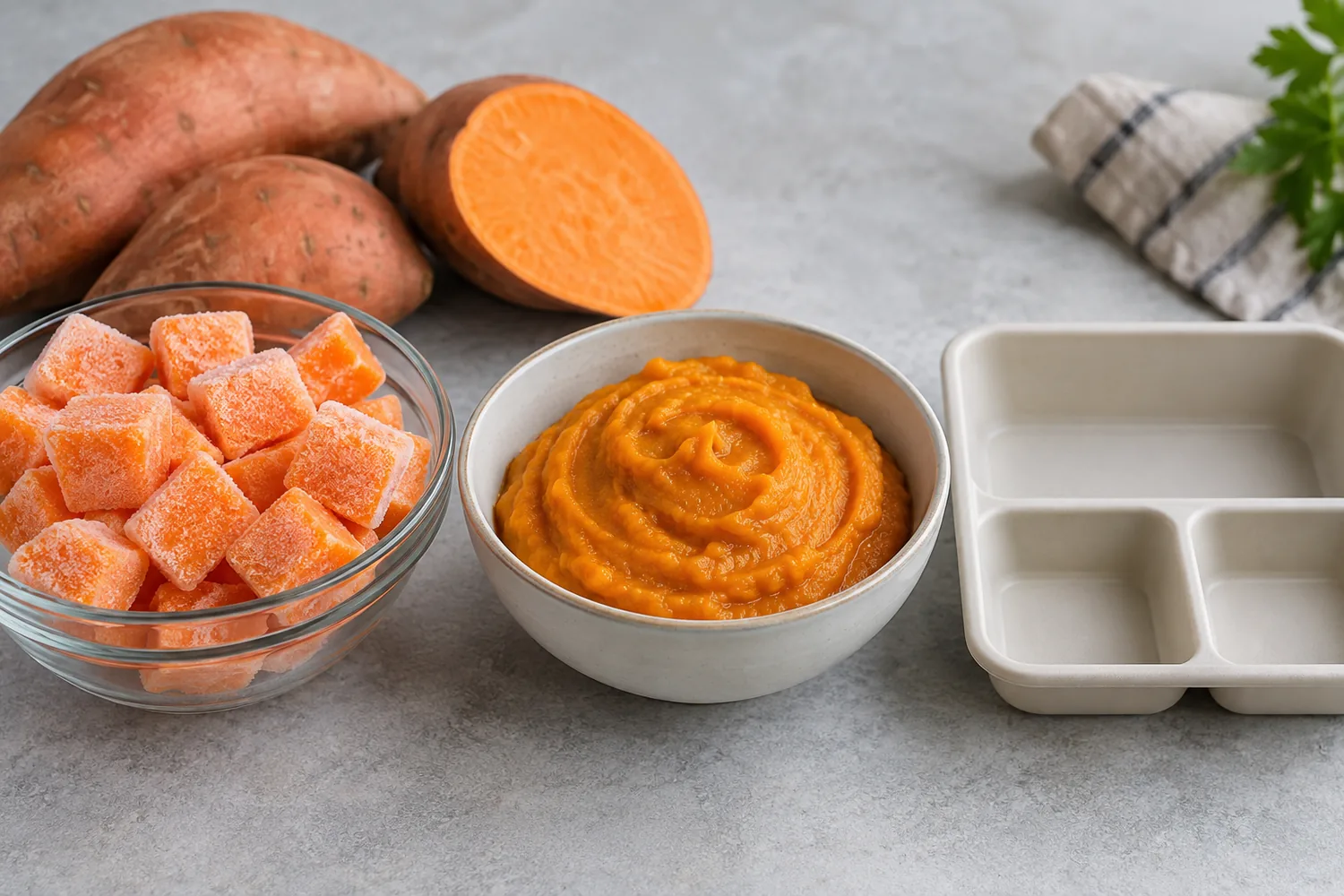
Illustrative view. Side-by-side food development still life: clearly separate frozen orange sweet potato cubes, thawed cooked puree, and a neutral sample tray. Show different product forms and moisture state, no labels or invented GreenLand packaging..
Supply planning belongs here as well. Confirm whether the quoted material is the cut and pack format used in the trial, whether mixed lots could be delivered in one order, and what documentation accompanies the shipment. A buyer planning a seasonal promotion should ask about lead time before locking a menu photograph or artwork. A beautiful test pan has little operational value if it depends on a form that is not in the agreed supply program. Keep the approved sample, supplier specification and purchase description aligned.
Build filling texture from cubes or puree
A good casserole filling is more than a sweet mash. It should hold enough shape to serve, remain pleasant on a fork and avoid a liquid layer at the tray edge. Frozen cubes can contribute a recognizable sweet potato texture if they are cooked until their centers are tender and then broken down consistently. Leaving hard fragments creates a misleading contrast: the baked surface may appear done while the filling contains pieces that never integrated. At the other extreme, excessive shear can make the same cooked material seem pasty.
Run a small side-by-side batch at the same target finished weight. Prepare one batch from the proposed frozen pieces and another from the comparison input the buyer currently uses. Note the actual water or dairy added, the mixing time, and the amount of usable filling that reaches the pan. A fixed "cups for cups" substitution obscures these differences because cup volume depends on cut geometry and packing. Weight is a better basis for the trial, though the final addition rate still has to follow sensory and process approval.
Check the base at three points: immediately after cooking, after the full filling is mixed and after baking. On the first check, look for softness and drained liquid. On the second, look for a consistent spoon trail and any free liquid after a short rest. On the third, cut through the pan and observe the sidewall of a portion. If it slumps or weeps, the cause might be incoming water, incomplete cooking, formula balance or bake profile. One photograph cannot isolate the cause; the process record can narrow it.

GreenLand product photograph. Real GreenLand sweet potato product condition for the filling-texture discussion.
Different finished products require different textures. For a banquet buffet, a soft spoonable filling may be ideal as long as it maintains an attractive scoop during service. A chilled prepared side dish may need more set so the portion survives packing and reheating. A restaurant side baked and served promptly may allow a looser center that would look poor after a long hold. Write the intended service condition on the trial sheet before judging the samples. That prevents a team from rejecting a useful input against the wrong standard.
Watch the filling edges and the pan bottom as carefully as the top. Free water often becomes visible where a scoop cuts through or where the filling contacts the hot metal. A browned topping can temporarily conceal a soft center. Conversely, a firm top may reflect overbaking rather than a well-balanced ingredient. Remove a defined sample from the center and another near the side. Describe the differences rather than calling the whole tray "good" or "bad." This gives production a practical way to tune pan depth, heating and mix.
If the frozen input is sold as pieces, ask for the normal size range and the share of fines. Small fragments soften quickly and can help a rustic filling bind; large pieces need longer cooking. A broad distribution can produce both overworked puree and firm cores in one batch. The buyer can request tighter cut control where the finished texture justifies it, but that requirement should follow a trial and commercial discussion. It is not honest to infer a supplier's tolerance from an illustrative product photograph.
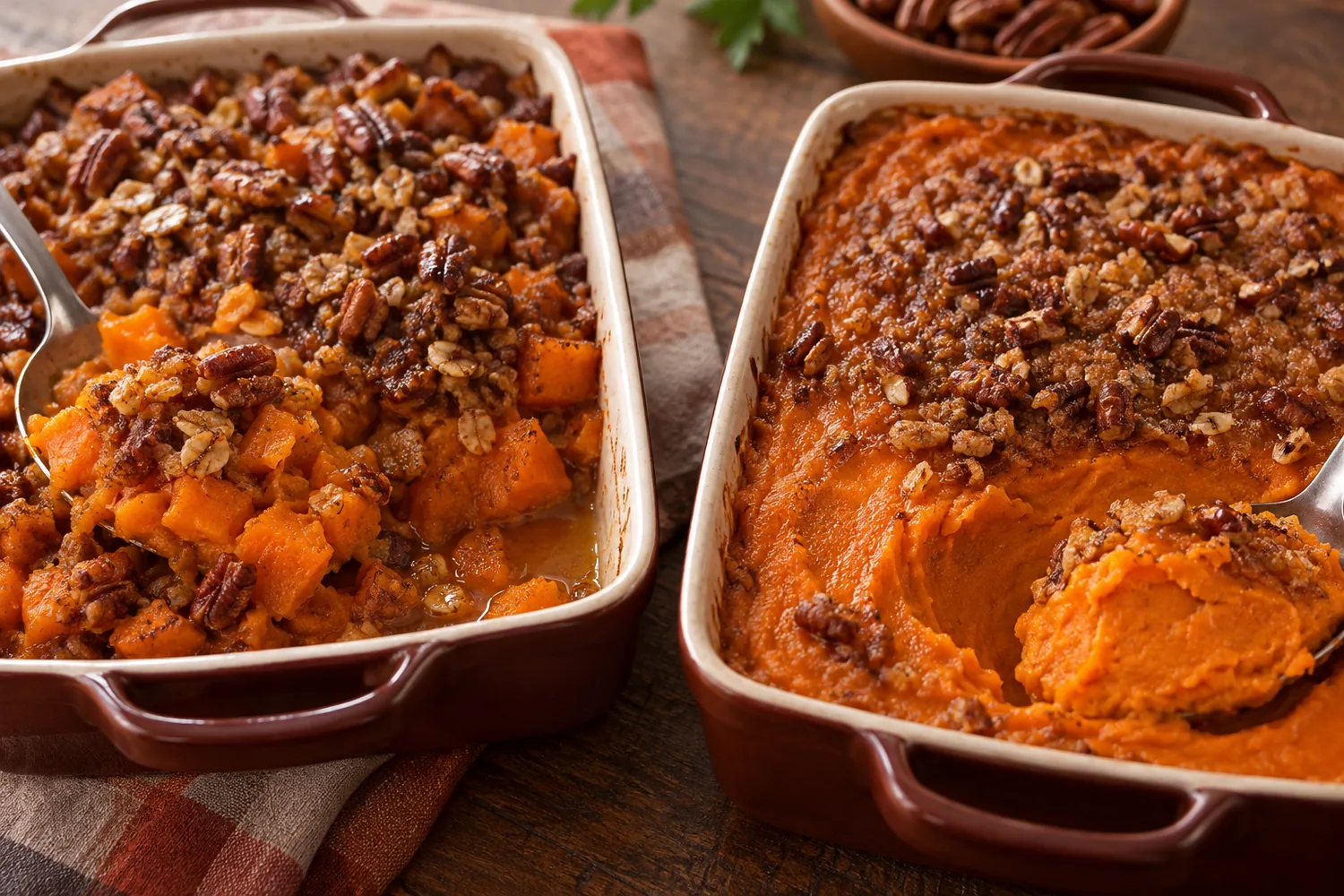
Illustrative view. Photoreal close side view of two small casserole test pans, one coarse cube mash and one smooth puree, both after baking. A cut serving reveals differing internal set and a small amount of free liquid in one pan; no text, no fabricated measurement..
Do not let the panel score collapse into a single preference number too early. Ask the cook to describe ease of handling, the development team to describe texture and the service team to describe portioning. They may value different aspects of the same batch. If one candidate has a more attractive surface but a lower usable yield, the buyer needs both facts. The decision may change with labor cost, menu price or a private-label texture promise. Record the reason for selecting a form so a later buyer can understand the tradeoff.
Test the egg, dairy and sweetener system with the chosen base
Many casserole formulas use eggs, milk or cream, butter and sugar to turn cooked sweet potato into a sliceable or spoonable filling. That system responds to the water already in the sweet potato. Adding a fixed amount of dairy to two bases with different moisture levels may produce different set and yield even if both taste similar before baking. Establish the plain cooked base first, then tune the binder and enrichment around the selected ingredient. Keep the test batches close enough in total mass and pan depth to make observations useful.
An egg-containing formula needs controlled mixing and a verified cooking program. Mix thoroughly enough to distribute the egg, but avoid an assumption that more beating improves a starchy vegetable filling. Overworking can change mouthfeel, and trapped air may change the apparent height of a fresh pan. Check the finished casserole against the food business's validated temperature and handling requirements. This article is a sourcing and development guide, not a substitute for the site's food safety plan or a universal cooking time.
Dairy and butter change richness, but they also alter how a hot spoonful behaves during service. A filling that seems balanced when served immediately may become denser as it cools. If the application includes chill, reheat or an extended hot hold, build those stages into the trial. Record a first-service sample, then a later sample under the operation's normal controlled conditions. Avoid generalizing from an uncontrolled counter-top rest. The comparison should tell the buyer what happens in its own tray and equipment.
Sweetness is a formulation decision rather than a fixed property of the cultivar or frozen process. Natural sweet potato flavor, added sugar, marshmallow or streusel can each shift the impression of sweetness. Adjust one part at a time. For instance, if a sweeter topping is planned, judge the filling together with that topping before increasing sugar in the base. A sample that tastes restrained on its own may be balanced in a full bite. This also helps protect the ingredient flavor instead of covering it.
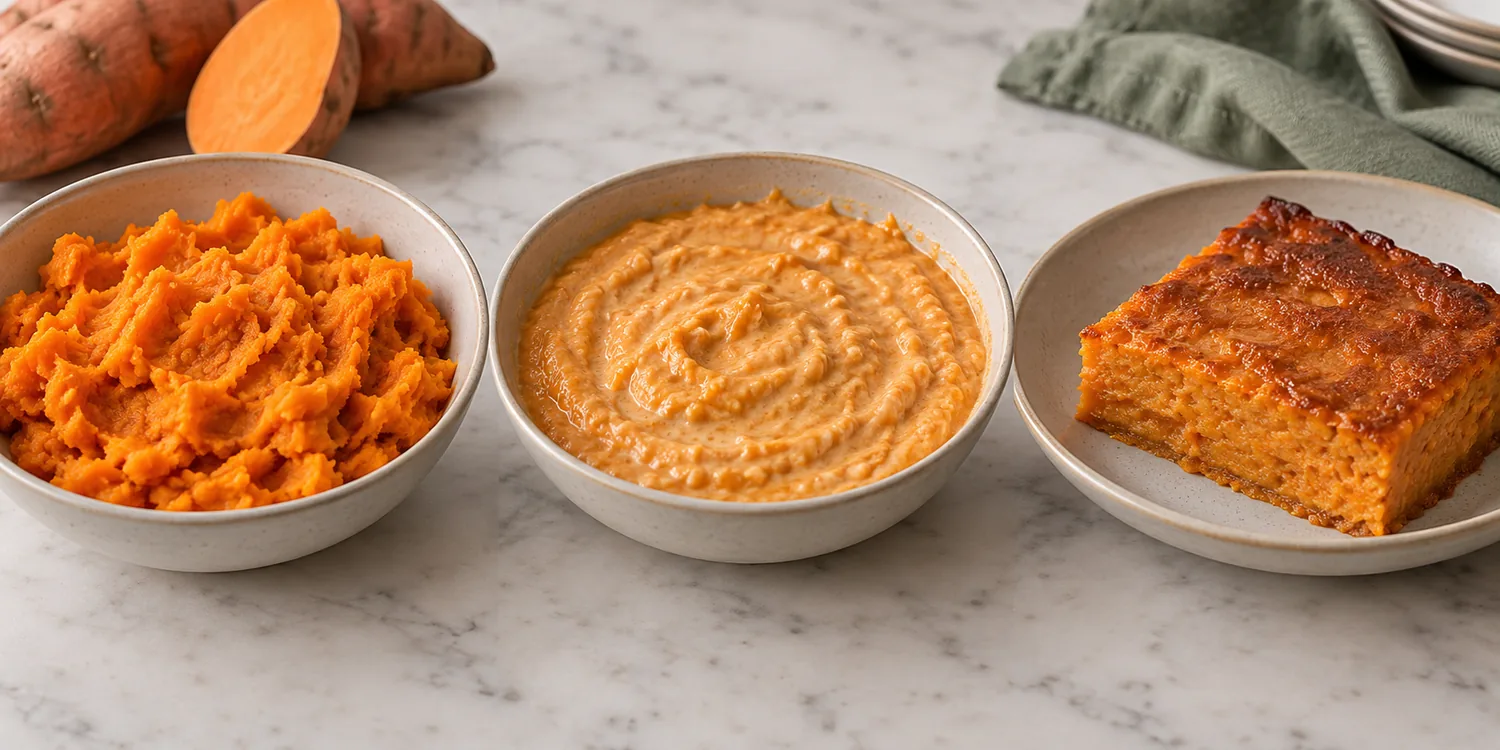
Illustrative view. Educational food photograph of three stages of sweet potato casserole filling in shallow bowls: cooked sweet potato mash, evenly mixed egg-dairy filling, and baked set slice. Clear causal sequence through texture, no labels or text, no raw egg near finished food..
Spices deserve the same discipline. Cinnamon, nutmeg and vanilla can make a trial feel familiar, but they can also mask differences in cooked sweet potato flavor between lots. Run at least one small plain-base assessment before seasoning. Once the input has passed, use the intended formula. If the business makes an allergen-controlled or private-label product, verify every added ingredient and processing statement separately. A frozen sweet potato supplier's product page cannot certify the customer's egg, dairy, nut or marshmallow program.
For each formula iteration, record the ingredient weights, incoming lot, cook yield, pan size, bake settings and final usable portion count. This is more valuable than an isolated "best recipe" comment. If a later shipment changes texture, the records allow the buyer and supplier to distinguish a lot difference from a kitchen change. The approval target should be a repeatable finished portion: a defined spoon or cut, attractive filling surface, acceptable liquid separation and a flavor level appropriate to the menu or package claim.
If the trial uses a replacement input, change as few other variables as practical in the first comparison. A simultaneous new spice mix, shallower tray and different bake setting can make the result impossible to interpret. Once the ingredient effect is understood, optimize the full formula in a second round. This staged approach is especially helpful when the development team is replacing fresh prep with a frozen ingredient to save labor: the labor benefit, cooking yield and finished eating quality all deserve their own line on the trial sheet.
Stage streusel, nuts and marshmallow toppings for the service route
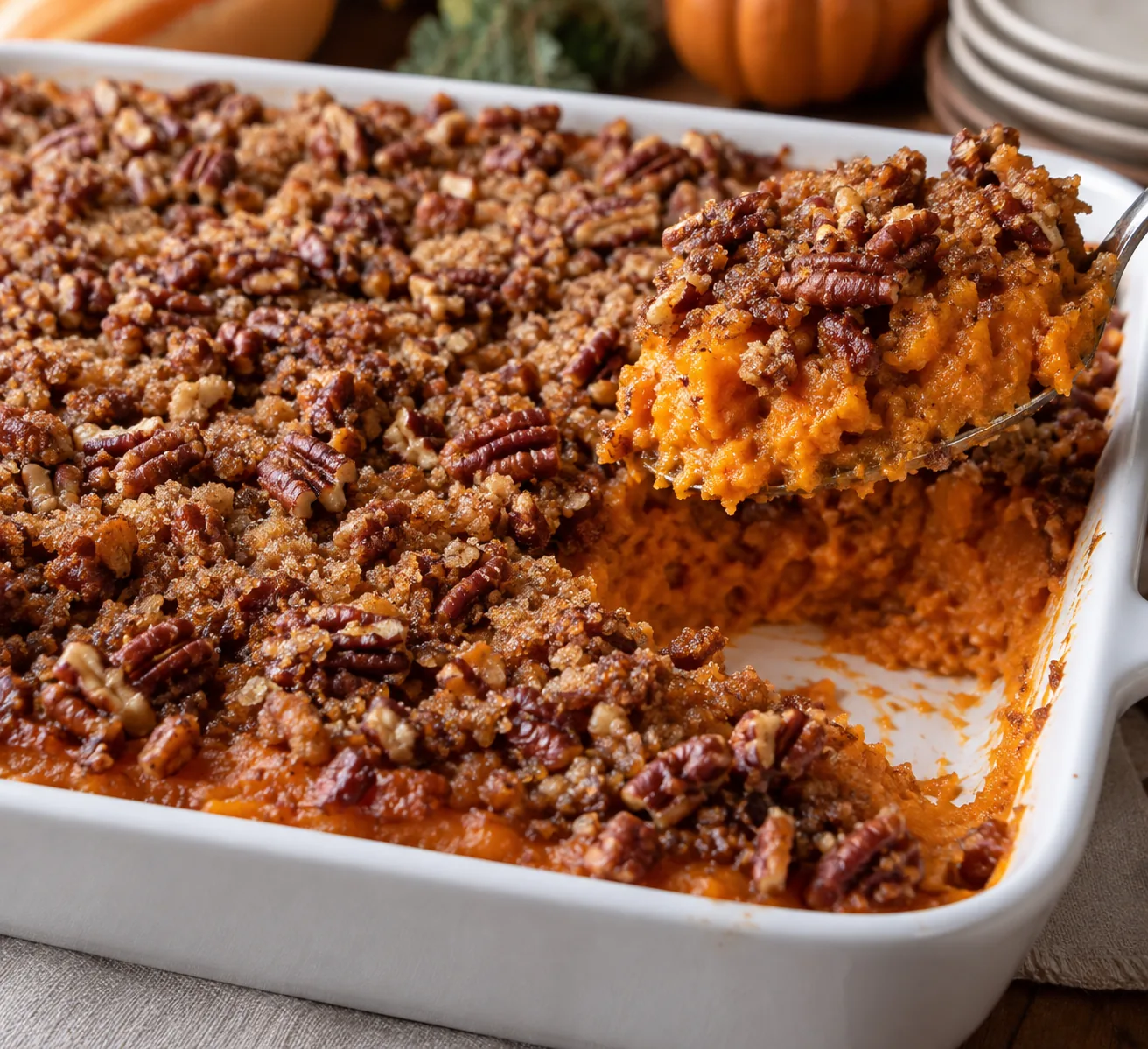
Topping choice changes the casserole's process as much as its appearance. A dry pecan streusel needs enough oven exposure to brown and stay distinct from a moist filling. Chopped nuts give a different crunch and visible ingredient identity. Marshmallow browns quickly and contributes sweetness, but its surface can behave differently during covered holding. None of those is automatically the best option. Select the one that survives the operation's bake, transport and service route while meeting the customer brief.
Test topping application at a specified filling temperature and stage. A topping added to a very wet, cool base may absorb moisture before it browns. One applied late may remain crisp but require a separate finishing step. If the product is assembled centrally and baked later, evaluate it after the actual storage interval. If it is served immediately from a restaurant oven, evaluate that shorter route. The photograph of several topping styles is an illustration of choices; it is not evidence that one treatment outperformed another in GreenLand trials.
Record topping weight per pan or per portion, not just a handful scattered over the surface. Uneven coverage makes both appearance and service cost hard to judge. Photograph the tray before baking and after the first scoop. Look for exposed filling, dark spots, migration into the base and the condition of crumbs at the cut edge. A topping that looks attractive as an untouched tray may detach in a scoop, while another may keep a clean edge. That serving behavior matters in foodservice and prepared-meal production.
For a nut topping, the buyer should confirm allergen handling, labeling and cross-contact controls within its own facility and with each relevant supplier. A sweet potato article cannot stand in for those records. A marshmallow topping may introduce different ingredient declarations and handling constraints. Keep supplier documentation tied to the material actually purchased and the destination market. The frozen sweet potato input is one component of the finished food, so do not transfer its product claims to the complete casserole.
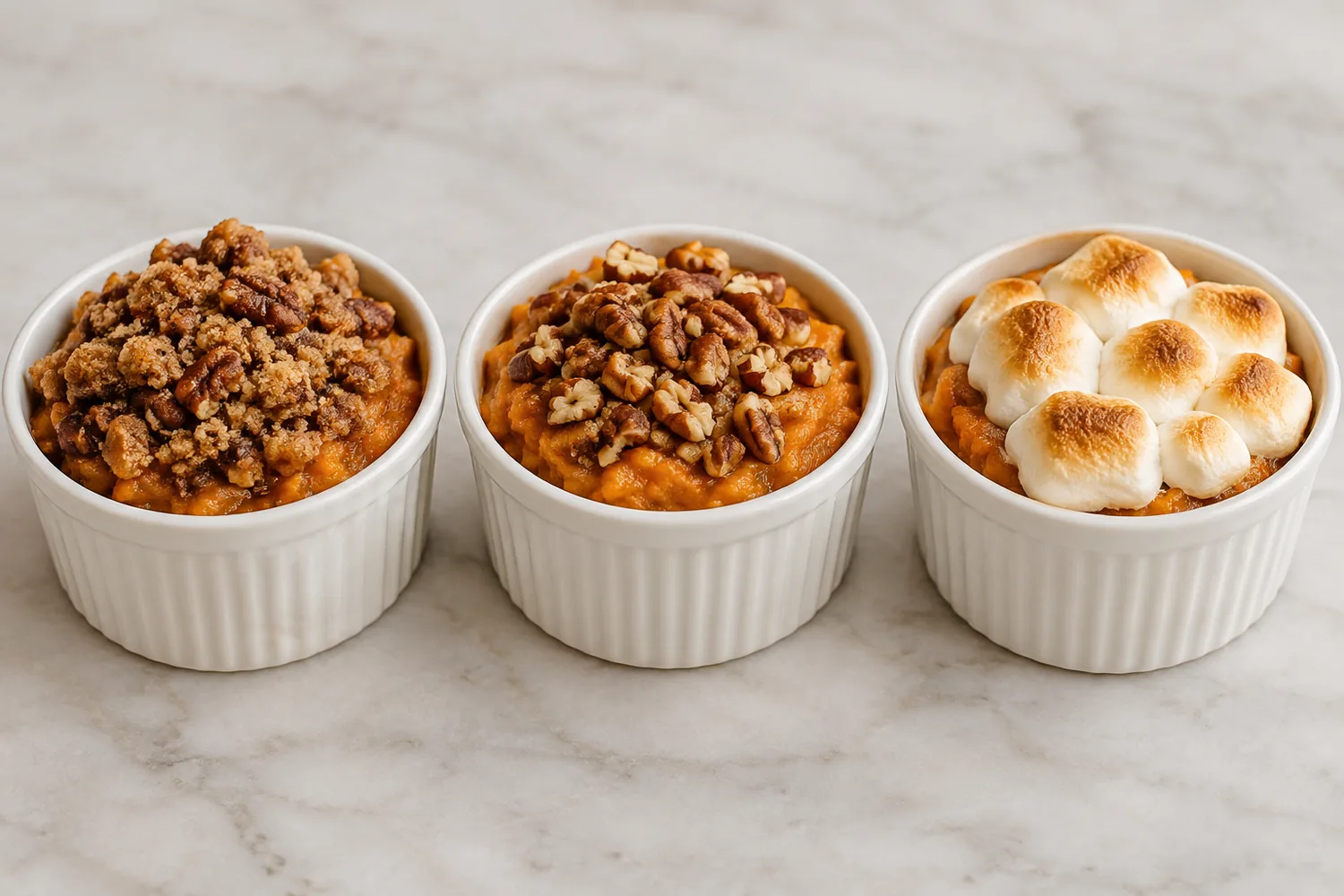
Illustrative view. Three small sweet potato casserole test portions shown at equal scale with separate topping treatments: dry pecan streusel, chopped nuts, and lightly browned marshmallow. Distinct textures and coverage, clean food styling, no text..
Package design can also change the topping decision. A lid close to the surface may smear marshmallow or trap steam against a crisp crumb. A deep pan may protect the top during movement but lengthen the heating path through the filling. Where the final product is packed hot or reheated in its container, test with that container. Do not approve a topping solely from a shallow open-pan bake if the commercial presentation is a sealed tray. The goal is to approve the whole assembly under the planned route.
The most useful comparison is modest and controlled: same filling, same pan, one topping variable at a time and the same service checkpoint. Record a small number of observable outcomes: color, adherence, crunch, scoop integrity and whether the topping hides or exposes moisture. Those notes support a buyer's decision without pretending to be a shelf-life or statistically validated study. If the intended product has a long chilled or frozen distribution life, commission the appropriate formal validation separately.
Keep a small un-topped control pan during development if production conditions allow. It makes it easier to see whether a wet surface comes from the filling or from topping contact. This control is a diagnostic kitchen sample, not a proposed commercial SKU. When the team has identified the preferred filling, repeat the test with the chosen topping and commercial pan. That final confirmation catches an interaction that a plain-base test or a beautiful isolated topping photograph could miss.
Judge the tray at service, then write the purchasing brief
An approved casserole must work when the customer receives a portion, not only when the oven timer ends. Take one sample at the planned first service and another at a defined later point in the actual controlled service. Record the holding equipment, covered or uncovered state, pan depth and approximate number of portions removed. Observe whether the filling remains cohesive, whether a liquid layer appears and whether the topping retains the intended texture. These observations are specific to the buyer's process; they should never be presented as measured GreenLand performance data.
Use a consistent serving tool. A shallow spoon, deep scoop and spatula can make the same filling look different. Define the target portion mass and its acceptable visual shape. For a buffet, check whether repeated scoops leave a clean tray edge and recognizable topping. For a packed side dish, inspect the portion after the expected transport and reheat. For an individual retail tray, consider whether the filling settles or separates beneath the topping. The purchasing specification should reflect the application that matters most.
Separate ingredient acceptance from finished-dish approval. Incoming frozen sweet potato checks might cover identity, cut size, visible defects, pack integrity and lot documents. Kitchen checks might cover cooking yield, liquid separation and mash texture. Finished-dish checks might cover set, scoop, flavor and topping condition. If a trial fails, this separation points to the next useful question. It also avoids blaming a supplier ingredient for a pan depth, binder or service change that was never held constant.
Write a concise sample request once the first trial has identified the likely form. Include the intended application, target cut or texture, expected cooking method, packing format, planned volume, destination, private-label requirements and any documents the buying team needs. Ask the supplier to confirm the current specification and available form. An online image can help start the conversation, but only the current offer, technical documents and approved physical samples should establish commercial terms.
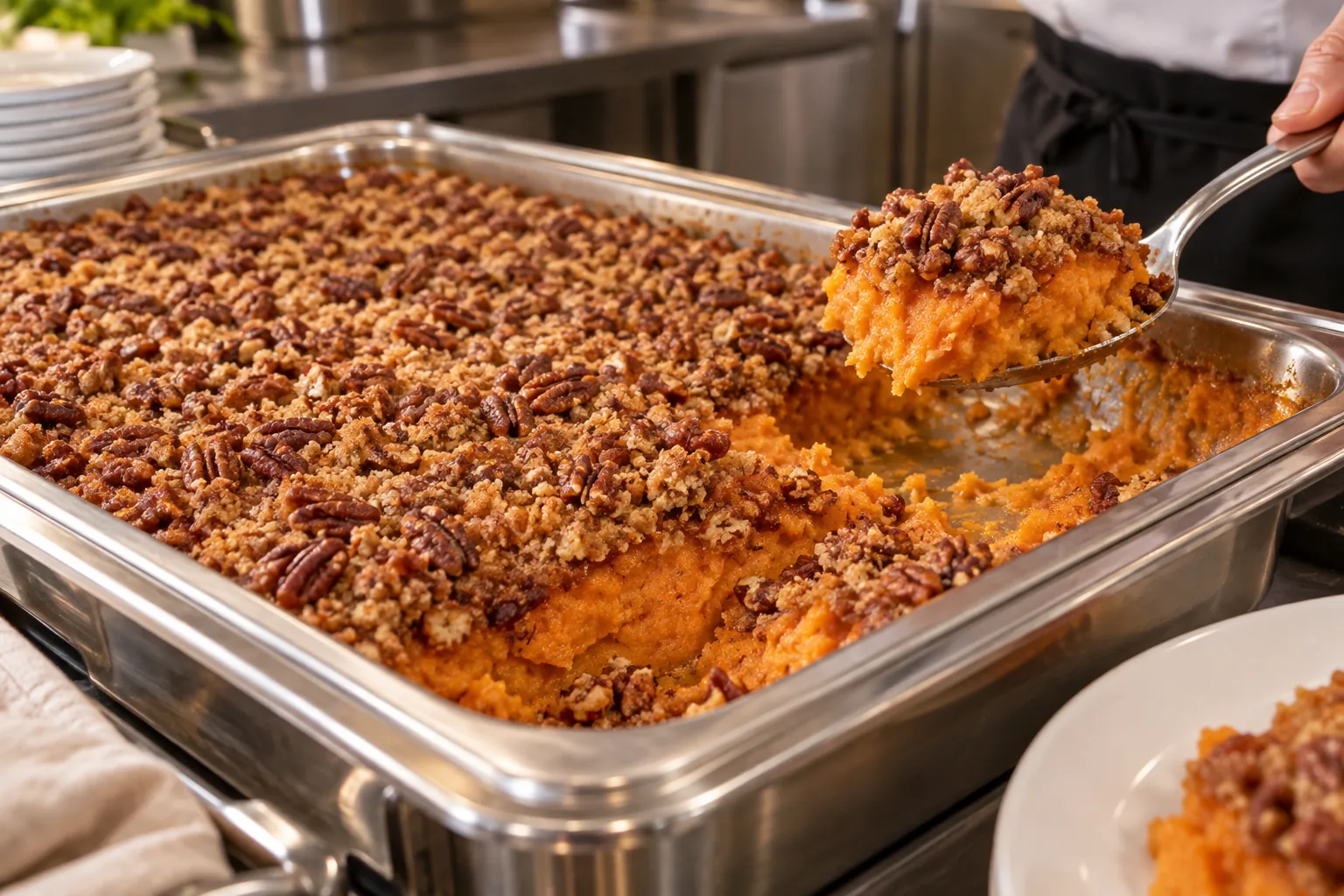
Illustrative view. Serving view of sweet potato casserole portioning from a catering tray; no claim of a measured hold test.
For a first purchase, retain an approved reference sample and the trial sheet used to accept it. On receipt, compare the new lot against the agreed specification and review any change in cut distribution or handling that may affect the filling. If the recipe requires a narrow performance window, arrange a short confirmation cook before a major production run. This is a manageable control, not a demand that every shipment be reinvented from scratch. It gives both teams concrete evidence when a change matters.
GreenLand's role is to supply and discuss the frozen sweet potato ingredient that fits the buyer's operation. The finished casserole remains the manufacturer's or foodservice team's formulation, equipment and service decision. Share the requested form, desired tray result and process route when you inquire. We can then discuss the current product specification, packing, shipment details and samples for your own approval trial. The best outcome is a repeatable purchasing brief tied to the way the casserole is actually made and served.
Before sign-off, bring the people who will actually use the product into one short review. Procurement can confirm the offer and documents, product development can confirm the formula and sensory result, quality can confirm the agreed checks, and operations can confirm the preparation route. A casserole that passes only a desk review may fail in a crowded service period. A shared approval note with the lot and trial conditions is more durable than a memory of one successful tasting.
Source Frozen Sweet Potato with GreenLand-food
GreenLand-food is a professional frozen sweet potato supplier and manufacturer in China, providing factory-direct wholesale supply for importers, food manufacturers, foodservice distributors and private-label programs.
Send the product form, specification, packing, quantity, application, destination, private-label needs and requested documents so we can confirm a current offer.