


Plum Wine Processing: Added Pectinase Can Undermine the Expected Methanol Benefit of Juice Separation
Oct 09, 2026
Leave a message

Research This Article & Topic with AI
Verify key claims, compare reliable sources, and explore GreenLand-food's practical frozen food knowledge.
Article details and research questions are prepared in the links. Sign-in or sending may be required.

Consider an illustrative enquiry: a wine processor asks GreenLand why a plum juice trial did not deliver the expected reduction in a pectin-derived reaction product. We would clarify the actual frozen ingredient and ask for the two trial routes, enzyme-preparation details and analytical basis. GreenLand-food supplies frozen plum ingredients; the customer's winemaking process, analytical work and safety validation require their own qualified technical review.
Map where pectin and enzymes enter the route
A juice route begins before the juice reaches a fermentation vessel. Plums are prepared, pitted or cut, handled and converted into a material from which liquid is recovered. The word "juice" identifies a selected stream, but it does not describe every operation that produced it. In the illustrative processor's comparison, the first question is what happened to the fruit before separation. If enzyme-assisted recovery was introduced at that stage, the supposedly simpler juice route contains an additional intervention that should appear in the comparison record.
Keep the solid and liquid phases visible in the process description. A retained wet pulp contains fruit material and liquid; a recovered juice can contain suspended or dissolved components according to the separation method. A clearer-looking liquid does not provide an analytical measurement of its pectin, enzyme activity or methanol content. The laboratory can examine relevant constituents using appropriate methods. The processor should state which stream was sampled, how it was prepared and at which stage the reported value was obtained.
An enzyme preparation also needs a precise identity. "Pectinase" is a convenient commercial description for a group of activities, rather than one fully specified reaction. The OIV enzyme-preparation monograph describes documentation of activity, biological origin, batch information and other preparation details in its grape-related scope. Those details are useful questions for comparing technical sheets. They do not establish that a particular preparation is authorised for a plum wine in every destination market.
For this enquiry, ask when the preparation entered the material. Was it added to crushed fruit before recovery, to recovered juice, or at another stage? Did a treatment occur before addition or after addition? Was the same product and batch used in both trials? Record what the process team actually did, without filling a missing step with an assumption. The presence of less visible pulp later in the route cannot show whether a pectin-related reaction already occurred earlier.

Two schematic recovery routes. The added preparation enters before enzyme-assisted recovery, so a comparison must retain that step as well as pulp separation.
The fruit itself must be described with equal care. GreenLand's frozen plum supply page includes forms and quality requirements that can be confirmed for an order. Whole fruit, pitted halves, smaller pieces and puree are different preparation starting points. If the customer's trial uses halves and then crushes them, document that operation. If it begins with a prepared puree, confirm what is supplied and what remains the customer's processing responsibility. A trial on a fresh experimental cultivar does not automatically describe an offered frozen form.
The route diagram should distinguish entry points and material exits without implying a yield. An immediate separation route and an enzyme-assisted route can both produce liquid and retained pulp. Their outputs carry different histories. It is therefore useful to preserve samples or records at the recovery stage and at the finished stage, as selected by the qualified technical team. A final liquid label becomes more informative when it can be traced to those events and the actual ingredient lot.
This mapping gives purchasing a practical role. We can help confirm the frozen form, agreed specification, sample identity, packing and available batch documentation. The processor can then connect that ingredient description with its own route record. The discussion remains focused on the change being investigated: how separation and added enzyme activity interact. It avoids attributing a finished-wine result to a supplier's product name when the intervening processing steps have not yet been described.
The paper describes a counteracting process step
In their original plum-wine paper, Milji膰 and colleagues explained that pressing before fermentation was intended to reduce the pectin-bearing material entering that stage. They also described how enzyme treatment needed for sufficient juice recovery accelerated methanol formation and could leave little of the anticipated benefit. This passage is a technological argument about interacting steps. It is not a separately presented factorial experiment proving one effect size for every combination of pressing and enzyme treatment.
The distinction matters because an attractive causal story can become too definite as it passes into a buying conversation. The paper provides a reason to ask whether a recovery intervention worked against the separation objective. It does not allow a supplier to calculate the outcome of an untested customer's route from pulp content alone. The relevant next step is to examine the actual process and results together, while keeping the original material and study scope attached to the source claim.

PME hydrolyses a methyl ester group and releases methanol. This reaction differs from cleavage of the pectin backbone.
PME, or pectin methylesterase, removes methyl ester groups from pectin and releases methanol through that reaction. Other pectin-related activities can act on the polymer in different ways. The OIV PME activity monograph describes an activity determination in an enzyme preparation. It helps explain why a preparation's general liquefaction performance and its relevant ester-removal activity should not be represented by an unexplained single number. The diagram shows the reaction relationship schematically, without presenting an industrial dosing method.
A recovery trial therefore has more than one endpoint. It may be designed to obtain useful liquid, to retain a desired plum character, to make a stream easier to handle or to meet a finished-product analytical requirement. Success in one endpoint does not establish success in the others. The process team can define the intended comparisons and use the relevant analytical methods. The purchasing team should retain the purpose of each result, so that a high recovery value retains its meaning as a yield observation.
In the illustrative enquiry, two batches labelled "plum juice wine" could still represent substantially different routes. One might have been recovered immediately after preparation; another might have used an enzyme step to improve recovery. The proposed comparison should state those differences before interpreting the finished reports. If the trials used different fruit lots, preparation batches or holding histories as well, those additional differences should be recorded. They can limit the conclusion even when the central processing idea is sound.
| Route being compared | Separation question | Enzyme question | Finished evidence needed |
|---|---|---|---|
| Immediate juice recovery | What solid material and liquid were separated? | What native or added activity was present at that stage? | Analytical result and quality for the actual route. |
| Enzyme-assisted recovery | What useful liquid was recovered after treatment? | Which preparation, activity information and treatment order apply? | Matched analytical and quality results after the complete route. |
| Pulp-containing fermentation comparison | What fruit material entered fermentation? | Was the activity history comparable with the juice route? | A comparison that retains all relevant material and process differences. |
These rows describe questions for a trial review; they are not observed rankings. They show why "less pulp" is an incomplete acceptance statement. A well-documented comparison gives each route a defined material input, preparation history, recovery basis and finished evaluation. The team can then determine what the evidence supports and what remains unresolved. A decision to proceed should refer to that complete comparison instead of repeating an expectation that was formed before the added-enzyme step was considered.
Native and commercial PME need not share one response

A recovered liquid can carry pectin substrate and relevant activity. Appearance and pulp separation leave those analytical questions open.
Native activity enters with the fruit, while an added preparation enters when the processor introduces it. Those sources do not have to respond identically to the same treatment. In the original plum-wine investigation, experiments without the commercial pectolytic preparation helped distinguish the native-enzyme context from the context containing added activity. The authors interpreted differences in treatment response within their tested system. Their explanation does not establish a universal resistance ranking for every native plum enzyme and every commercial preparation.
Treatment order is therefore part of the enzyme history. A step performed before a preparation is added cannot be assumed to act on the activity that enters later. A step performed afterwards encounters the material then present, which may include both native and added contributions. Drawing those entry points often makes a report easier to understand than listing the same operations without their order. The drawing is a process map; it does not specify an inactivation schedule or predict a finished concentration.
An activity value on a technical sheet should also retain its test conditions and units. The preparation's stated performance may be determined under conditions chosen for the assay, rather than those in the processor's plum material. A useful technical review asks what was measured, how the preparation was stored, whether its identity remained consistent across trials and whether the method addresses the activity relevant to the investigation. A general declaration of enzymatic strength may help describe a product while leaving the specific methanol-related question unresolved.
Relevant literature in other fruit systems reinforces the need to keep matrix identity explicit. A primary carambola-wine study examined pectinesterase inhibition in that fruit system. It offers background evidence that the reaction environment and enzyme context matter. It does not establish an inhibitor choice for plum wine, a permitted additive, or a commercial treatment recommendation. The useful transfer is the investigation question: which activity and environment were actually present when the outcome developed?
For the illustrative processor, an enzyme enquiry should include the manufacturer's preparation identity, lot, technical sheet and the relevant method information. It should state whether the two trials used the same preparation and whether the order of addition was retained. The customer's technical team can then determine whether further activity testing is needed. Missing preparation information is a reason to qualify the conclusion, rather than presume that all products sold as pectinase contributed the same activity under the same conditions.

Treatment order changes which enzyme sources are present. Native activity enters with the fruit; added activity enters with the preparation.
The frozen plum ingredient deserves a separate record. An agreed fruit specification can describe form, maturity-related requirements, pitting, colour, soluble solids or acidity where relevant, defects, packing and handling. It does not replace a specification for an enzyme preparation or a validated winemaking process. Keeping those descriptions distinct makes a supplier enquiry easier to answer: the requested plum can be identified, and the processor can see which later variables remain under its own control or its specialist service providers' control.
When a preparation or fruit lot changes, the previous comparison should be reviewed for relevance. Some differences may be routine and already covered by the processor's established validation; others may affect the investigation enough to need a new representative trial. The appropriate decision belongs to the technical team familiar with the product. Purchasing can support it by preserving batch identities, retaining the original reports and clearly stating which details changed between the accepted sample and the proposed supply programme.
Compare the actual route with qualified process analysis
Define the object being compared before selecting a result. A recovered-juice sample, a fermenting material and a finished wine represent different stages. A pectin measurement, an activity determination and a methanol analysis describe different quantities. Reporting them together is useful only when the sample basis and purpose of each are clear. For the illustrative enquiry, we would request the actual analytical reports and process records, so that the technical review can follow the material rather than infer its history from the finished beverage name.
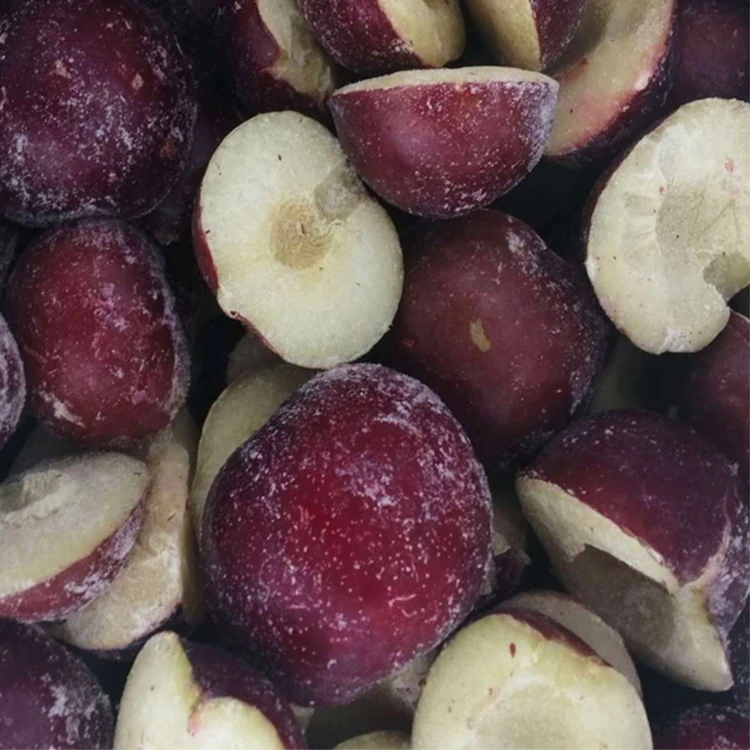
GreenLand-food product photograph: confirm the plum form, skin inclusion and specification for the intended recovery route.
A recovered-liquid yield needs a stated basis. It might refer to the original fruit mass, the prepared material after pitting or another defined input. It may include a selected liquid fraction or material recovered after an additional separation. Those are legitimate choices when described, but they can produce incomparable percentages when the basis is omitted. Keeping the retained wet pulp and any relevant additions in the record helps the processor assess the recovery comparison without mistaking a change in accounting for a process improvement.
Sampling should be selected by the qualified laboratory and process team for the question at hand. Representative input samples can describe the ingredient entering the route. Recovery-stage samples can help interpret what passed into the liquid stream. Finished-product analysis can assess the result after the complete process. The appropriate methods, sampling conditions and preservation depend on the intended analysis. A photograph or an informal observation can support the description of a stream while supplying none of the analytical information needed for a methanol decision.
The original paper's analytical work belongs to its own experimental protocol. A contemporary commercial comparison should use a suitable validated method and the applicable requirements selected for the actual product and market. Method identity, reporting units, uncertainty and sample handling should accompany the result where relevant. A historical value quoted from a research paper is not a current legal acceptance limit. The team responsible for release must establish the classification and requirements of its finished product independently of this ingredient article.
A primary persimmon-wine study compared enzyme preparations and treatment order while evaluating recovery and finished outcomes. Its useful contribution to this discussion is the design principle: activity context and sequence can be examined together. Its selected conditions and results concern persimmon in that experiment. They do not provide a plum-wine recipe or show that one preparation will give the same outcome with a different fruit, formulation, scale or processing history.
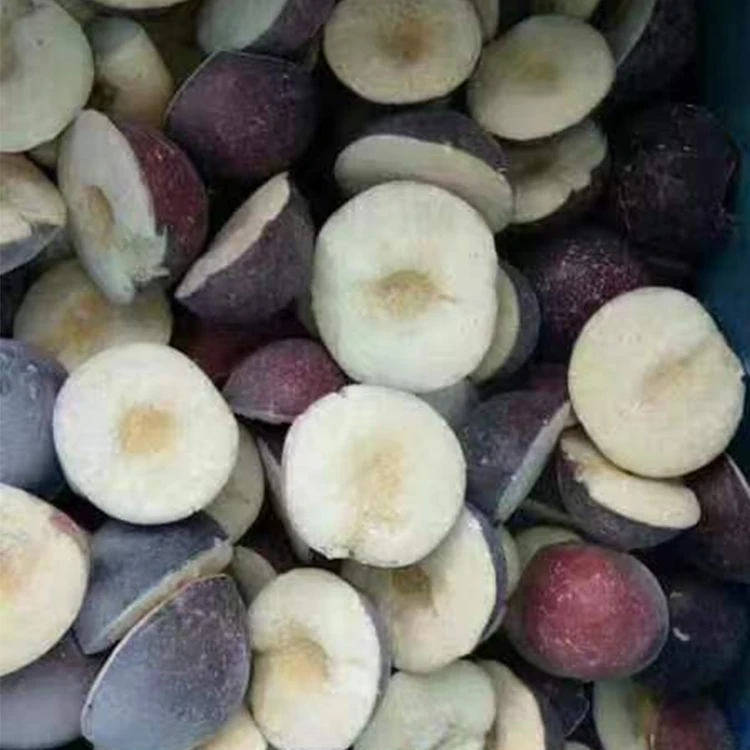
GreenLand-food product photograph: confirm the plum form, skin inclusion and specification for the intended recovery route.
For the illustrative GreenLand buyer, a practical review request would combine the offered plum form and lot with the two route descriptions, enzyme information, recovery basis and finished reports. Include the intended product, destination and the finished sensory quality the team is trying to preserve. If one route produces a different colour, aroma or mouthfeel, retain that observation rather than judging it through a chemical value alone. The task is to understand whether the candidate route produces a useful, acceptable product under its own validation.
The real product photographs beside this section show frozen plum form and visible fruit structure. They help match the ingredient discussed in the enquiry and should be interpreted as product evidence. They are not samples from the cited wine experiments and do not show a methanol level. The IQF plums page offers a starting point for form, pitting, packing and documentation questions. Laboratory and process conclusions require their own reports tied to the actual trial.
The processor should define what counts as recovered product before comparing routes. Liquid draining naturally from a thawed plum ingredient, juice collected in the first pressing and liquid recovered after an added preparation may all be called juice in a trial record, although they have different histories. Label those fractions at collection and state whether they are combined before fermentation. If the buyer changes the combining rule between trials, the finished comparison no longer represents pressing alone. We would request that fraction description alongside the plum form and the agreed treatment sequence. It gives the technical team a way to associate an analytical result with the actual material entering the next operation. This record also helps commercial staff interpret yield: a larger recovered volume is a useful operational observation, but its value depends on the intended product and the results achieved after the later steps.
Accept a validated overall process rather than less pulp
An acceptance decision should cover the purpose of the proposed route. If the processor wants a useful recovery with a desired plum character and an acceptable finished analytical result, each part needs evidence. A route that removes more visible pulp may satisfy a separation preference while leaving the reaction history unresolved. A route that improves a chemical endpoint may change recovery or sensory quality in a way the finished product cannot use. The technical team should define those criteria before approving the comparison.

Illustrative plum sampling bench with coded aliquots. Keep the collection stage and sample preparation attached to each analytical report.
The plum-wine paper examined candidate interventions with sensory tradeoffs. That observation supports evaluating the complete product, but it does not establish a preferred treatment for the illustrative enquiry. Its historical toxicological and regulatory statements are also outside the acceptance framework here. No additive dose, heat schedule, microwave setting or drinking-safety assurance follows from this article. Any proposed treatment must be selected and validated by the responsible specialists for the actual formulation, equipment, packaging and destination requirements.
Use the trial record to keep technical approval attached to a reproducible material and route. State the plum form and ingredient lot, the enzyme-preparation identity, the order of operations, the recovery calculation and the finished sampling stage. Keep the analytical method and sensory assessment with the decision. That record lets a later reviewer determine whether a changed preparation, crop, supplier specification or process remains within the evidence already accepted. A brief note saying only "juice route approved" carries too little information for that review.
The illustrative processor's original expectation can then be assessed fairly. The trial may show that the separation objective was incomplete because a recovery intervention changed the relevant reaction. It may also reveal a difference in fruit, preparation or measurement that prevents a clean conclusion. Both are useful findings when reported accurately. The next experiment should be designed around the unresolved question and the intended finished product, rather than repeat the same route while assuming that its name guarantees the outcome.

Useful recovery, analytical outcome and sensory quality require their own observations. Follow both recovered liquid and finished product rather than inferring one from pulp removal.
For the ingredient enquiry, we would confirm the frozen plum specification needed for the next trial. The useful inputs include pitted or unpitted form, halves or smaller cuts, any relevant maturity, colour, Brix or acidity requirements, packing, sample quantity and destination. Where the processor requires particular documents or a confirmed cultivar, include that request before sample selection. Availability and the agreed specification should be confirmed for the order. A technically interesting paper cannot supply missing commercial product information.
If a representative sample performs satisfactorily, preserve the conditions that made it representative when moving to the supply order. The production quantity, packing format, handling arrangements and sample-to-lot relationship should remain clear. A processor may need a further trial when changing from a small development pack to a materially different preparation method. Its technical team can determine the appropriate scale of that work. We help the purchasing team organise the ingredient information needed to make the comparison traceable and useful.
The strongest response to this enquiry is a defined plum ingredient paired with a defined customer route and finished evaluation. Separation and added activity act at different points, so both belong in the process review. Demonstrated recovery, analytical quality and sensory suitability provide the basis for the customer's acceptance decision. With those requirements established, GreenLand-food can discuss the frozen plum form, packing and documentation appropriate to the next sample and the intended wholesale supply programme.
Related Reading
What to Do with Frozen Plums: Best Uses and Processing Guide
Choose the frozen plum form and control released liquid before developing a processing comparison.
How to Ripen Plums and Tell When They Are Ready
Recognise maturity limits when specifying the fruit entering a recovery trial.
Plums vs Prunes: Which Fruit Form Fits a Frozen Ingredient Specification?
Distinguish frozen plum ingredients from fresh prune-type fruit and dried prunes when defining an enquiry.
Source frozen plum with GreenLand-food
We are a professional frozen plum supplier and manufacturer in China, providing factory-direct wholesale supply for importers, food manufacturers, foodservice distributors and private-label programs.
Tell us the required fruit form, cut, packing, quantity, application, destination and requested documents. We can clarify the ingredient specification and available batch information so your technical team can plan its own application trial.