


What to Do with Frozen Figs: Baking, Jam and Sauces
Oct 19, 2026
Leave a message
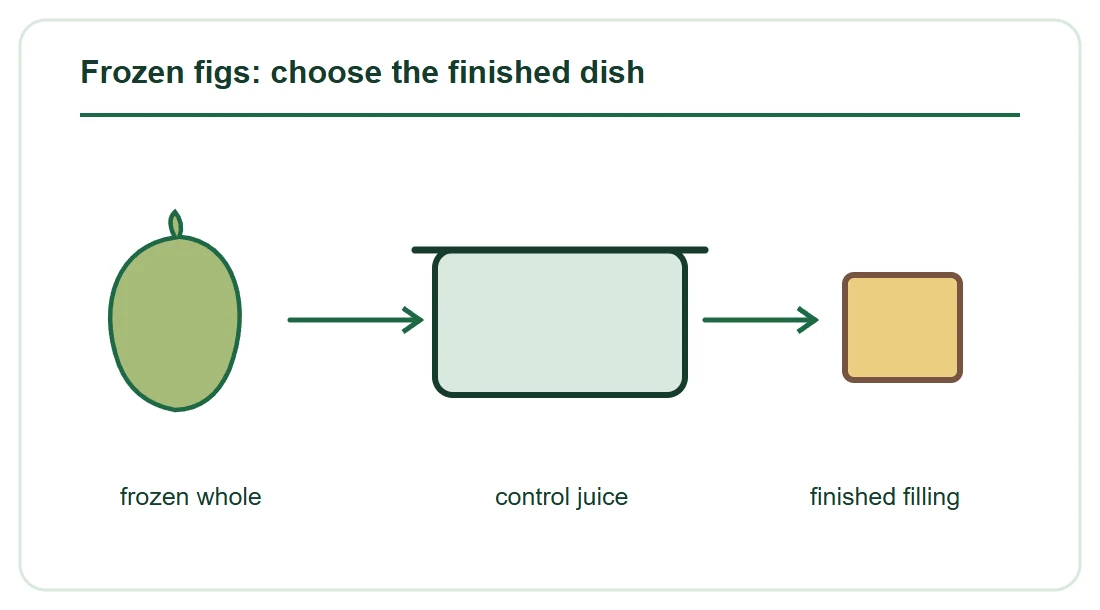
Start by deciding whether the dish needs recognizable pieces or a thick fruit base. Then thaw or cook a measured portion, keep track of the juice, remove the stems if present, and taste it in the actual recipe. That short sequence prevents a wet pastry and makes a savory sauce easier to balance.
This is a guide to using figs that are already frozen. If you are asking how to freeze a harvest for storage, that is a separate preparation question. GreenLand-food's frozen figs are an ingredient to specify by form and use. Our supplied cut-fig inspection photographs show exposed flesh and skin; they do not establish a ready-made jam, a validated bakery filling or ready-to-eat status. The culinary decisions below explain what to test for the exact whole or cut SKU before a home recipe or commercial line relies on it.
- Softened frozen figs and their juice suit compote, sauces and cooked fillings.
- Keep track of released liquid before it reaches pastry; test thickness after cooling.
- A refrigerated fig spread does not validate a shelf-stable canned jam.
Choose the dish before thawing the figs
A frozen fig softens as it thaws. If you need a compote or sauce, that softness is convenient: the fruit breaks down with gentle heat and its juice becomes part of the liquid phase. If you need neat, identifiable halves on a tart, handle the fruit while still firm and test whether it keeps a presentable shape after baking. For a cold cheese board, a thawed fig may look less glossy and firm than a fresh one, so a cooked preserve or warm compote is often a more honest presentation.
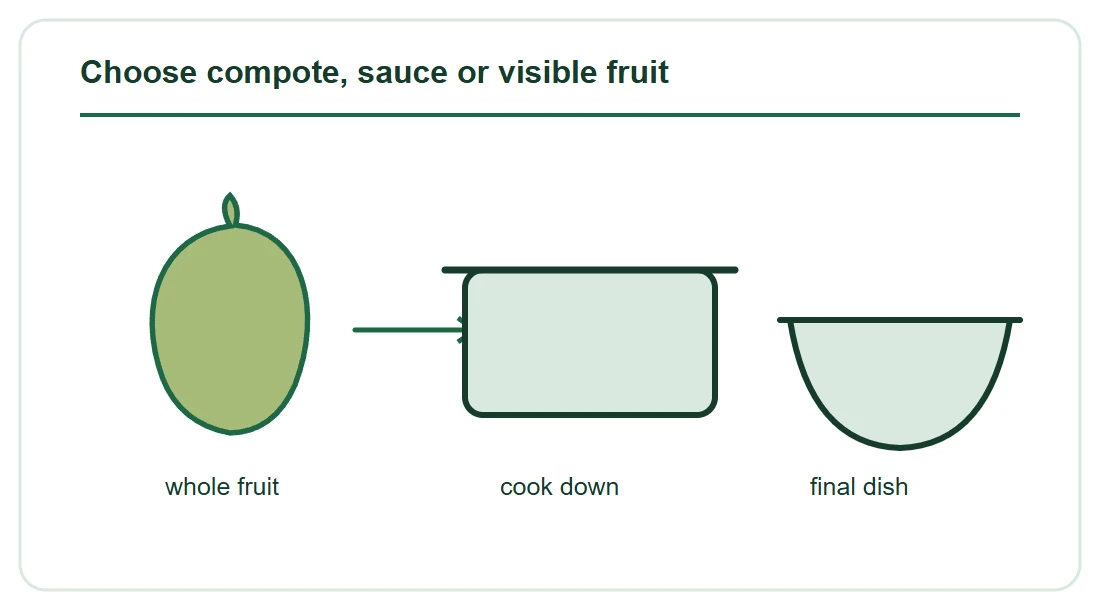
Choose compote, sauce or visible fruit. Original schematic illustration.
The Pennsylvania State Extension freezing-fruit guidance lists figs as suitable for whole or sliced freezing and reminds readers that a sugar or syrup pack changes what later goes into a recipe. That distinction matters even if the bag says simply "frozen figs." A dry-packed whole fig, a fig in syrup and a sweetened fig purée are not interchangeable by weight in pastry or sauce. Read the current ingredient declaration, inspect a sample, and adjust added sugar and water only after you know which form you actually have.
Take a small working portion out of frozen storage and keep the rest cold. Note whether it contains whole fruits, halves, loose fragments or a block of fruit and ice. Remove stems if they are present and unwanted in the dish. Cut a large fig while partly frozen if clean pieces are important; a fully soft fruit can squash under the knife. For a purée, that does not matter. Choose the prep that suits the final food, not a universal thawing habit.
The National Center for Home Food Preservation explains that thawed fruit and fruit purée can be used in toppings, fillings, cakes and jam. That is useful breadth, but it does not mean every preparation has identical texture or food-safety requirements. A fig swirl baked into a cake, a refrigerated topping spooned over yogurt and a shelf-stable jar each have different endpoints. Name the desired finished product before selecting a recipe and any preservation method.
Use the thawed juice rather than losing it
Place a weighed fig sample in a covered bowl to thaw under appropriate refrigeration, following the product's handling directions. When it softens, separate the visible fruit pieces and the free juice long enough to measure both. Taste the juice. It may carry much of the fig sweetness and color; pouring it away can make a sauce dull, while adding it all to pastry filling can make dough soggy. The decision is not "drain everything" or "use everything," but where that liquid belongs.
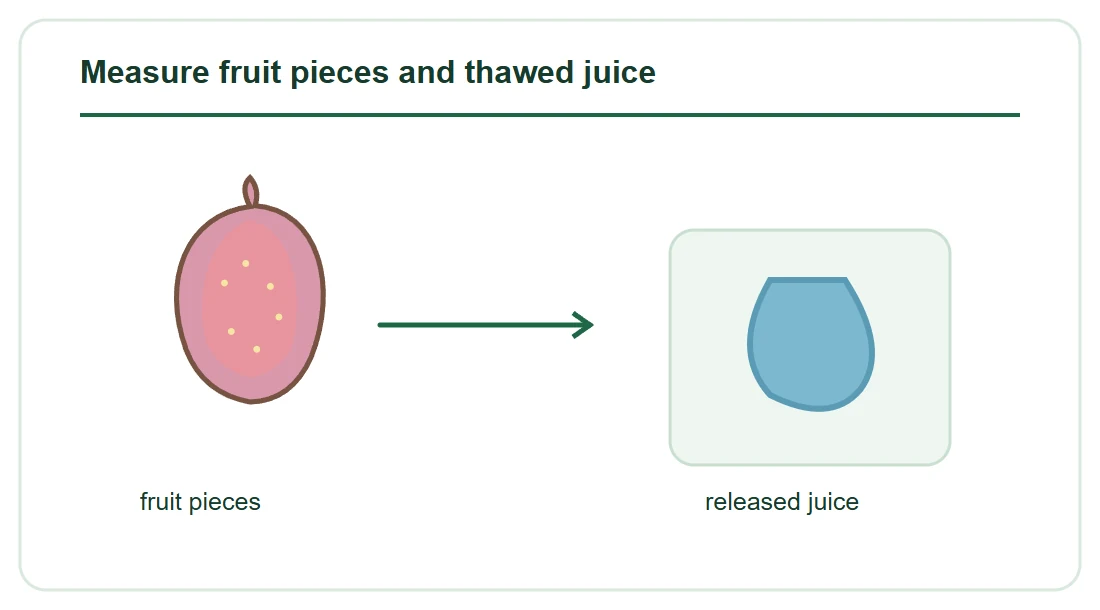
Measure fruit pieces and thawed juice. Original schematic illustration.
For a compote, return the juice to the saucepan and reduce it with the fruit. For a glaze, reduce the juice separately, then fold in the pieces near the end so they do not disappear. For a tart, cook or bind excess juice before it touches the pastry. If a chilled cup uses the juice as a colored layer, test whether it bleeds into the neighboring cream after the normal display time. A measurable separation gives a cook and a product developer a way to adjust the recipe without guessing.
Do not confuse free juice with added syrup. If the supplied figs are sugar-packed, the liquid may already be sweet enough to change a recipe. Record the fruit-to-liquid proportion in the sample and compare it with the intended order specification. If pieces are packed dry yet a thawed sample releases substantial juice, that may simply be the texture consequence of freezing. A rejected application should identify whether the problem is fruit integrity, too much water in the chosen recipe, or an actual deviation from the accepted lot.
The NCHFP describes release of juice during freezing and thawing as useful in some fruit preparations. The important kitchen experiment is to taste and cook the actual lot. Run one test with all the released liquid and one with a measured portion held back; keep every other ingredient equal. Compare flavor, thickness and visible pieces after cooling. That paired test is more informative than a generic instruction to drain frozen fruit, and it gives the team a reproducible adjustment if a different fruit form is quoted later.
Make a quick refrigerated fig compote
A compote is an accessible first use because it welcomes softened fruit and has an obvious spoonable endpoint. This is a refrigerated serving preparation, not a home-canning recipe. Start with a measured amount of stemmed, thawed figs and their juice in a small saucepan. Add a little water only if the pan needs it to prevent catching. Warm gently, crush some figs and leave others in pieces. Taste before adding sweetener; ripe figs may provide much of the sweetness. Add lemon or another acid in small measured additions if the flavor feels flat, then cook until a spoon leaves a brief path across the base of the pan. Cool a spoonful before deciding the final thickness.
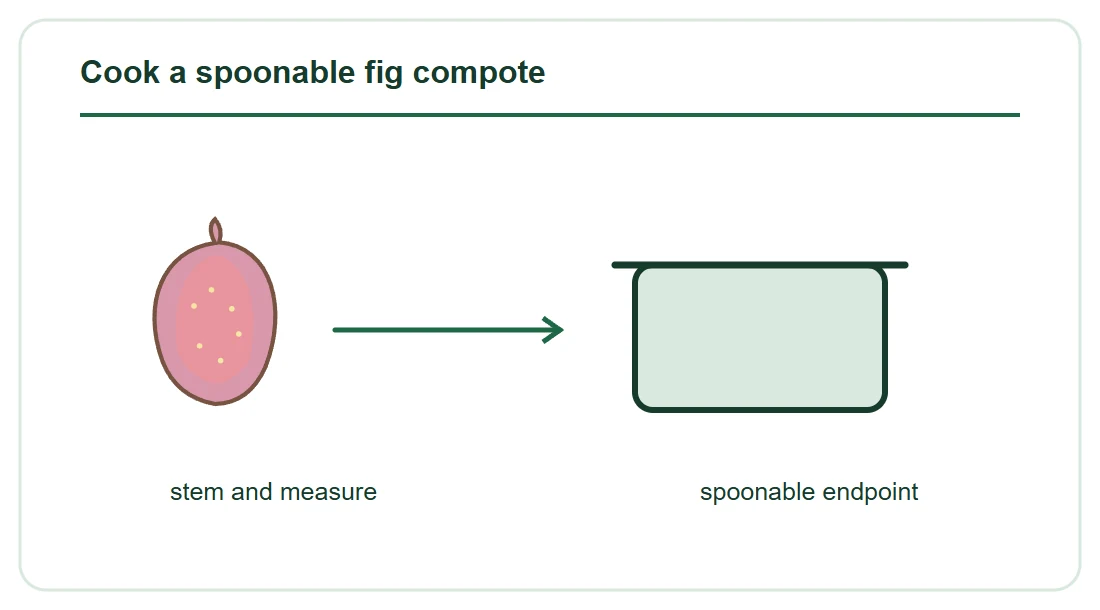
Cook a spoonable fig compote. Original schematic illustration.
- Measure the figs and their free juice; remove stems and any unwanted damaged fruit.
- Warm the fruit gently, stirring so the soft flesh does not scorch. Crush a portion for body while keeping some pieces visible.
- Taste the base, then add measured sweetener or acid only if the serving use needs them. Continue until the warm sauce coats a spoon and a cooled sample is spoonable.
- Cool promptly under the applicable food-safety procedure and serve refrigerated over yogurt, porridge, ice cream or a dessert. Record the formulation and hold limit for the actual product.
This deliberately gives sensory endpoints rather than an invented universal time. A wide pan, a deep saucepan, ripe whole figs and sweetened purée will reduce at different rates. For a café topping, check whether the compote stays on the spoon after refrigeration and whether it releases water onto the dessert. For a bakery swirl, it may need further reduction. For a drink, it may need to be thinner and strained. One batch can demonstrate the direction; the final recipe still needs its own weights and process controls.
Fresh-fig preserve recipes from Food Network and NCHFP illustrate how fruit can thicken with sugar and acid, but they have different aims. The Ina Garten recipe is a refrigerated soft preserve made from stated fresh fruit; the NCHFP recipe is a tested home-canning formula. Neither should be described as a validated shelf-stable process for an arbitrary commercial frozen fig bag. If shelf stability is the goal, use a formulation and thermal process specifically validated for the actual product and packaging.
Turn softened figs into a savory pan sauce
Figs are not limited to dessert. Their soft sweetness can round a pan sauce for roast vegetables, poultry or a savory pastry. Start with shallot or another aromatic in a little fat, then add chopped, thawed figs and their measured juice. Add stock, a suitable vinegar or citrus acid, and any herbs the dish requires. Simmer until the fruit softens into the sauce; strain if a smooth finish is wanted, or leave pieces for a rustic one. Taste alongside the food, not only from the pan, because a sauce that seems bright alone can turn too sweet next to a rich main course.
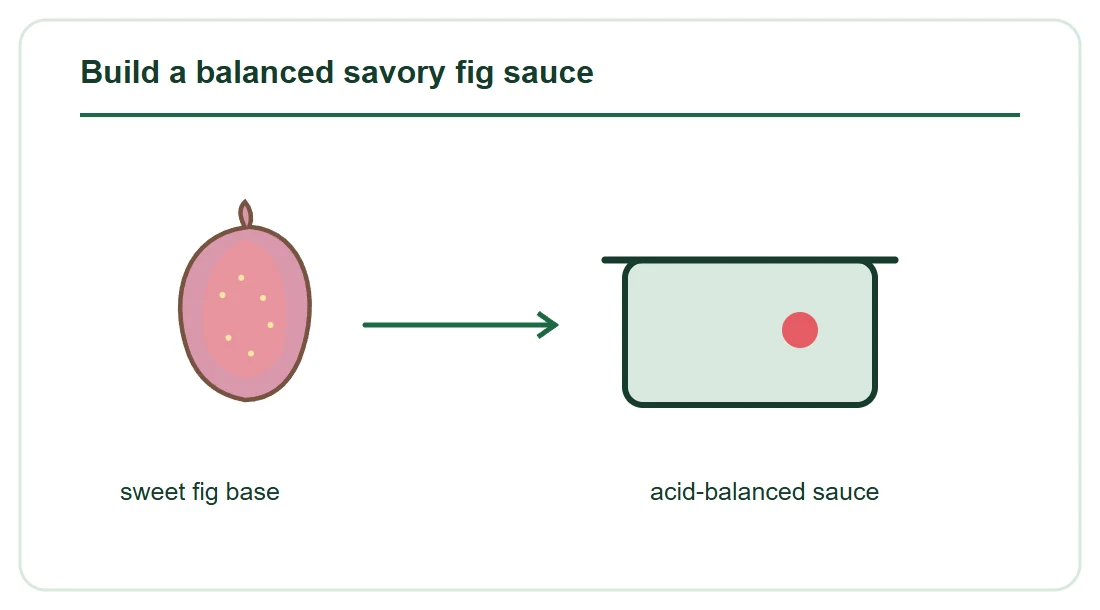
Build a balanced savory fig sauce. Original schematic illustration.
The acid is a flavor balance, not a preservation shortcut. A spoon of vinegar cannot make an untested sealed jar shelf stable. If the sauce will be cooled for later service, apply the kitchen's approved cooling and reheating controls. For commercial manufacture, the customer must validate its own recipe, heat treatment and label. GreenLand-food can discuss the frozen ingredient and its lot documentation, but an ingredient photo does not validate the customer's finished sauce.
Texture sets the sauce direction. Leave recognizable fig fragments in a chutney-like topping. Mash them for a spread under cheese. Blend and strain for a glossy glaze where seeds or skin pieces are unwelcome. Add a measured amount of water or stock if the sauce concentrates too quickly, and note the final yield. Comparing only the starting weight of fruit hides how much water evaporated. A scale and a final serving photo make later batches easier to repeat.
Try a simple two-pan test with the same fruit weight. In the first pan, keep all thaw juice and reduce gently. In the second, set aside half the juice and add it only if the sauce needs it. Taste both at the same serving temperature. The first may carry fuller fruit flavor but take longer to concentrate; the second may hold pieces better. Use the result for this recipe rather than declaring that every frozen fig needs draining or every savory sauce needs all the liquid.
Build a bakery filling that does not flood dough
A fig filling for scones, turnovers, cakes or bars needs more than good flavor. It must stay where the baker puts it. A thawed whole fig can release juice during baking even if it looked fairly dry on the bench. Cook the fruit with its liquid into a thick preparation, cool it fully, and check how it behaves on a spoon before filling dough. If you want visible halves on top of a tart, test the exact fruit size and placement; a puree-filling method cannot preserve that appearance.
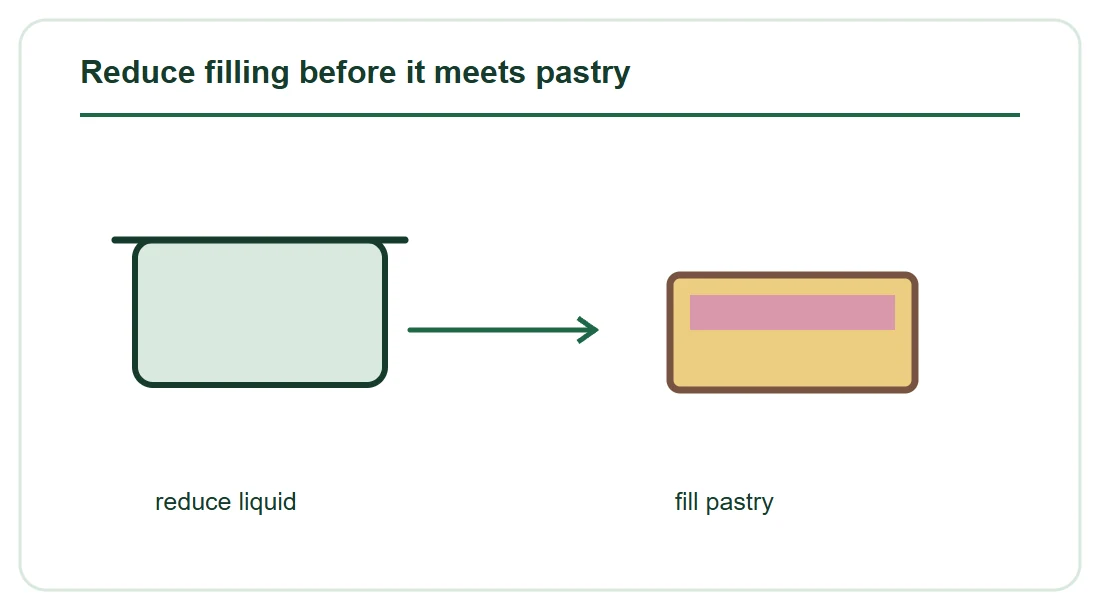
Reduce filling before it meets pastry. Original schematic illustration.
King Arthur Baking's layered fig scone recipe explicitly calls for a thick jam or fruit butter. Its baker's note explains that a loose spread can prevent even, tall baking. That is a recipe-specific warning, but the principle travels well: liquid filling can move between layers and wet adjacent dough. It does not give a universal moisture specification for GreenLand's whole frozen figs. A trial baker should record the filling weight, its cooled thickness, dough weight and whether any liquid escapes after baking and cooling.
For a simple tart trial, place a cooled cooked-fig layer on a pre-prepared pastry base, leaving room at the edge. Bake according to the dough recipe, then examine the bottom crust after cooling. If it is damp, reduce the fruit further or use a suitable formulation method rather than simply adding more sugar. If the fig layer disappears, preserve more pieces and reduce with gentler stirring. If seeds dominate the mouthfeel, blend or sieve a portion. Each failure points to a different correction.
For a muffin or cake, a weighed chopped portion of partially frozen figs can be folded into batter, but the released juice and fruit distribution need a trial. Very wet pieces may sink or form gummy pockets. Coat or pre-cook only if the tested formula supports it; do not promise that one trick fixes every batter. Cut through a cooled sample and inspect the center, not just the top. If the cake will be frozen and thawed again, judge the final slice after that cycle as well.
Discuss the frozen ingredient for your production
Frozen Figs
Cooked compotes, sauces and bakery fillings.
Confirm for your order: Offered fruit form, ripeness and skin condition; thawing loss, application trial and pack.
View product & supply detailsFor a commercial trial, send your required form, application, pack, quantity and destination. We can discuss the offered sample and the order specification with you.
Request Specifications & QuoteMake fig jam with the right preservation boundary
"Jam" can mean a refrigerated spread, a freezer spread or a shelf-stable canned product. The ingredient and process requirements differ. A cook may simmer frozen figs, sugar and lemon for a refrigerated topping, then cool and store it under a defined refrigerated procedure. A home canner should use a tested recipe exactly as written, including its fruit form, acid, sugar, container and processing details. A commercial producer needs a validated process for its own formulation and pack. These are not interchangeable labels for one pot of sweet fruit.
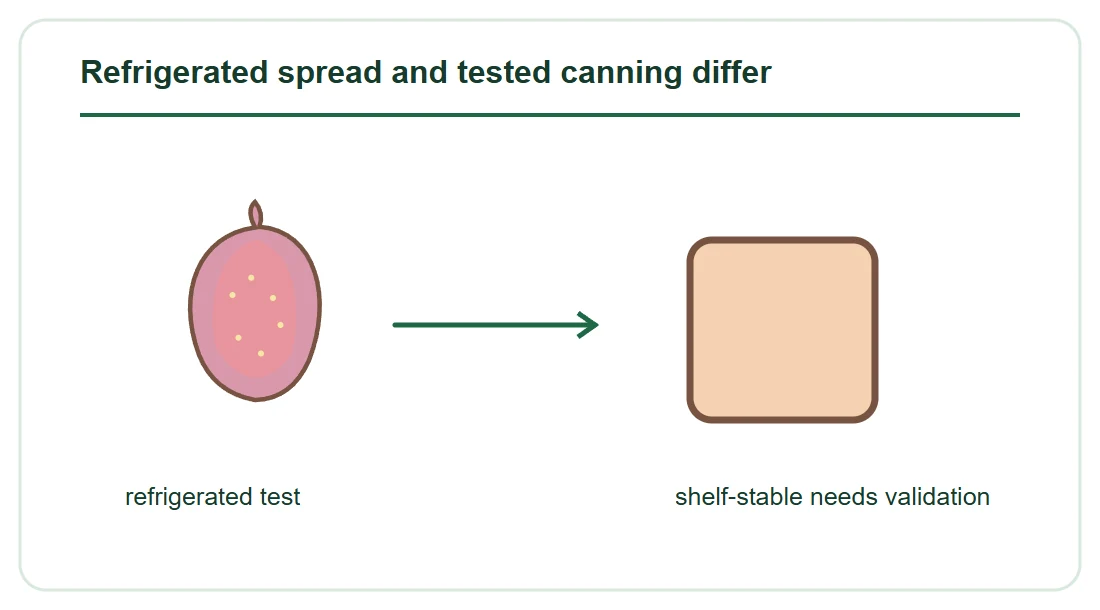
Refrigerated spread and tested canning differ. Original schematic illustration.
The NCHFP's fig jam without added pectin uses chopped fresh figs, measured water, sugar and lemon juice, with a stated boiling-water canner procedure. Its page is a primary source for that specific tested home-canning method. It does not say that any frozen fig pack can replace the fresh fruit without checking the recipe assumptions. A syrup-packed or sweetened frozen product would change the water and sugar balance; a puree would change the texture and fill. The NCHFP also has a separate whole-fig preserve recipe, which is a better conceptual match when recognizable fruit pieces are the goal.
For a refrigerated test with frozen figs, first document the offered form and ingredient declaration. Stem the fruit, decide whether skins and seeds should remain, and cook a small weighed batch with a defined sugar and acid amount. Check the set after cooling, because hot jam-like fruit looks thinner than it may be at service. Taste on the actual bread, pastry or cheese pairing. Record yield and refrigerated handling. This creates a useful culinary prototype without presenting it as a shelf-stable preservation instruction.
If a bakery uses fig jam as an intermediate filling, the set also needs to survive its later bake. A spoon test at room temperature is only the first screen. Spread a measured layer into the real dough, bake, cool and cut it. A filling may be excellent on toast but too wet in a scone. Another may bake cleanly but feel pasty as a topping. Keep the intended use attached to the approved formula and ingredient sample.
Use whole or cut figs for visible desserts
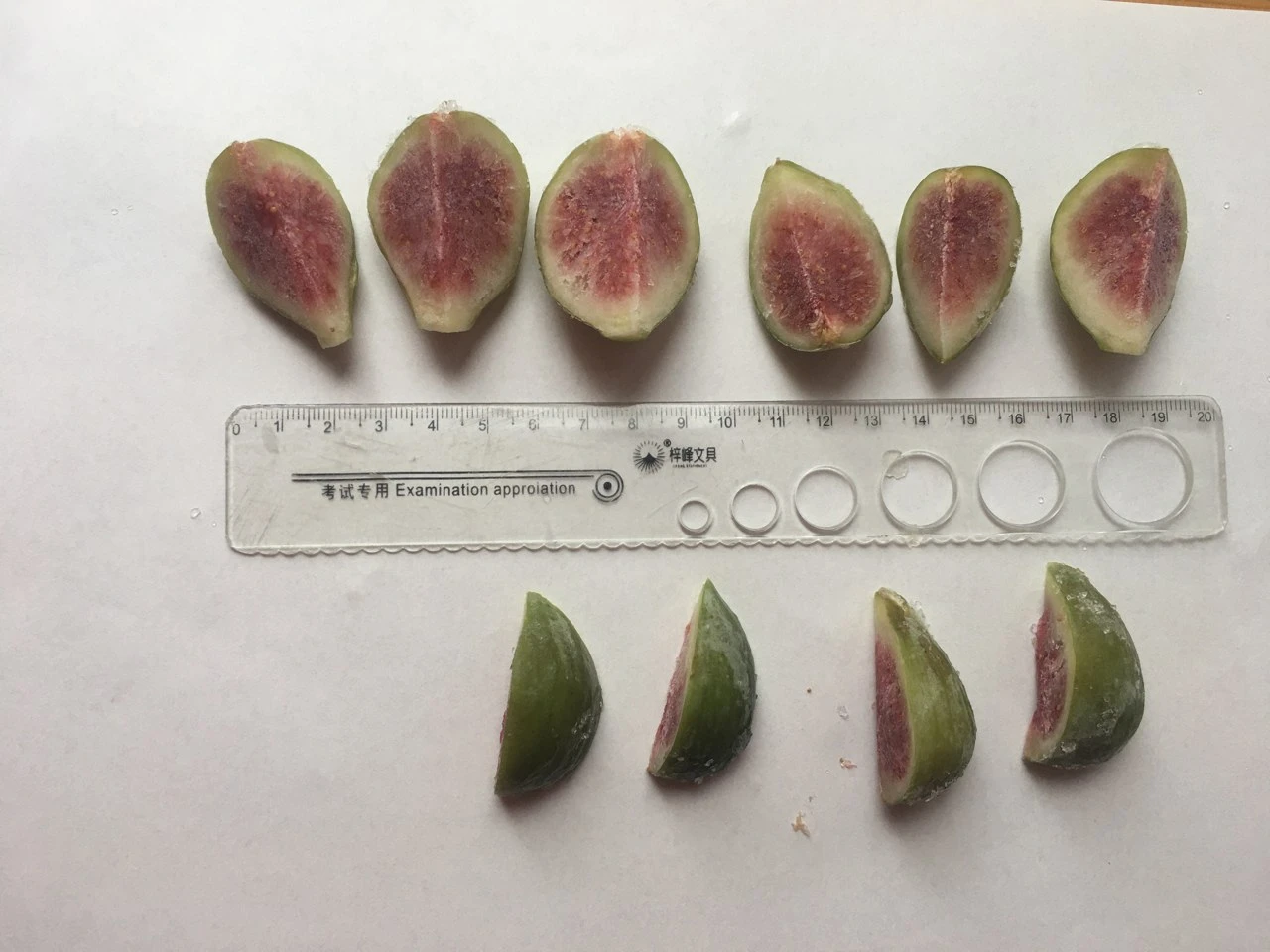
Whole or cut figs can suit a cooked dessert where recognizable fruit matters: a warm fruit dish, a topping with halves, or a pastry with pieces placed deliberately. The supplied cut-fruit photograph shows green skin and exposed flesh, but is not a promise of identical variety, colour or maturity in every order. Inspect a representative cut sample for internal color, seed pattern and damage before designing a dessert around the look.
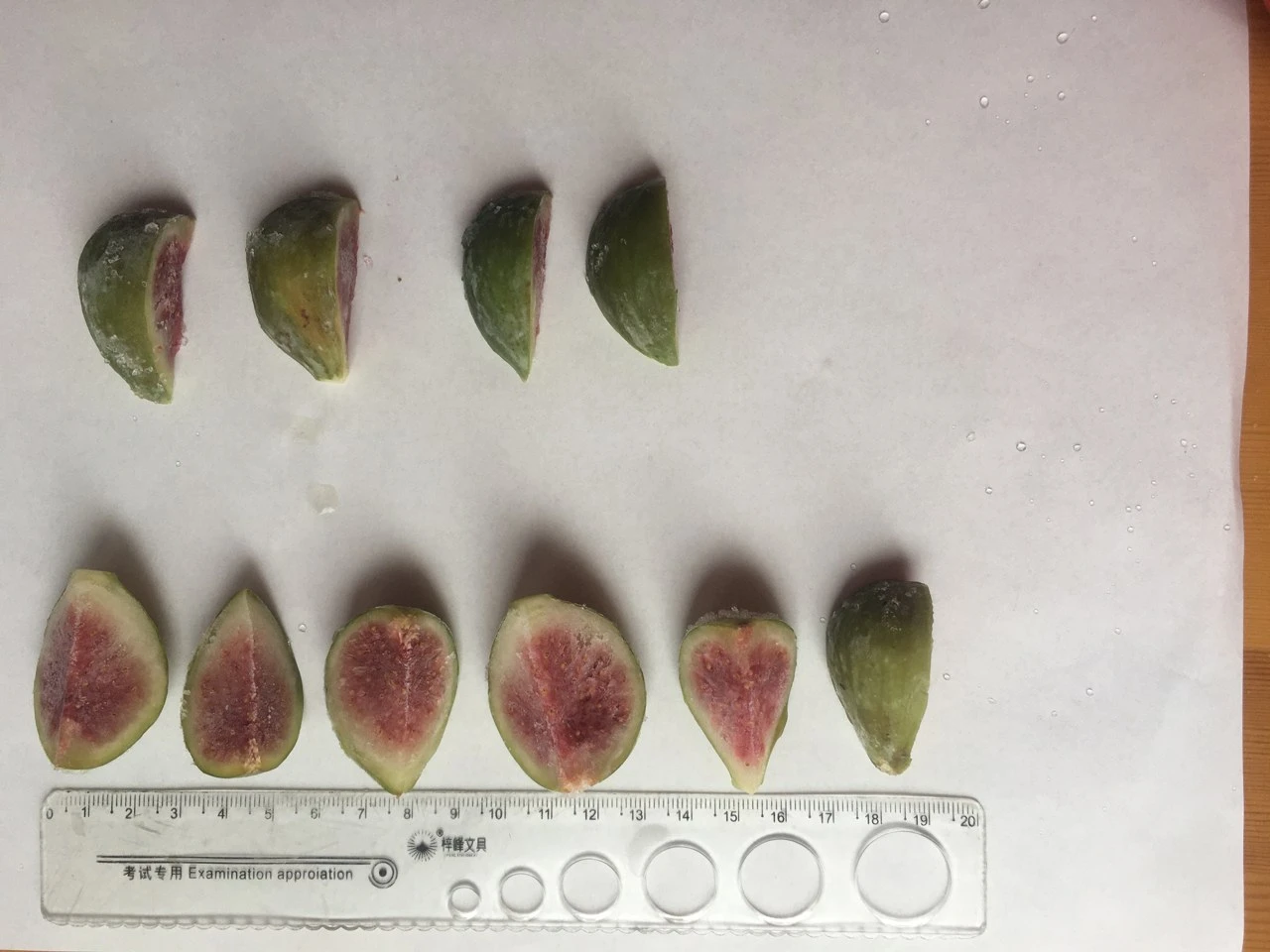
This separate inspection photograph illustrates portion and centre checks. Judge the finished dessert using a current sample from the agreed SKU, rather than deriving a size tolerance from the picture.
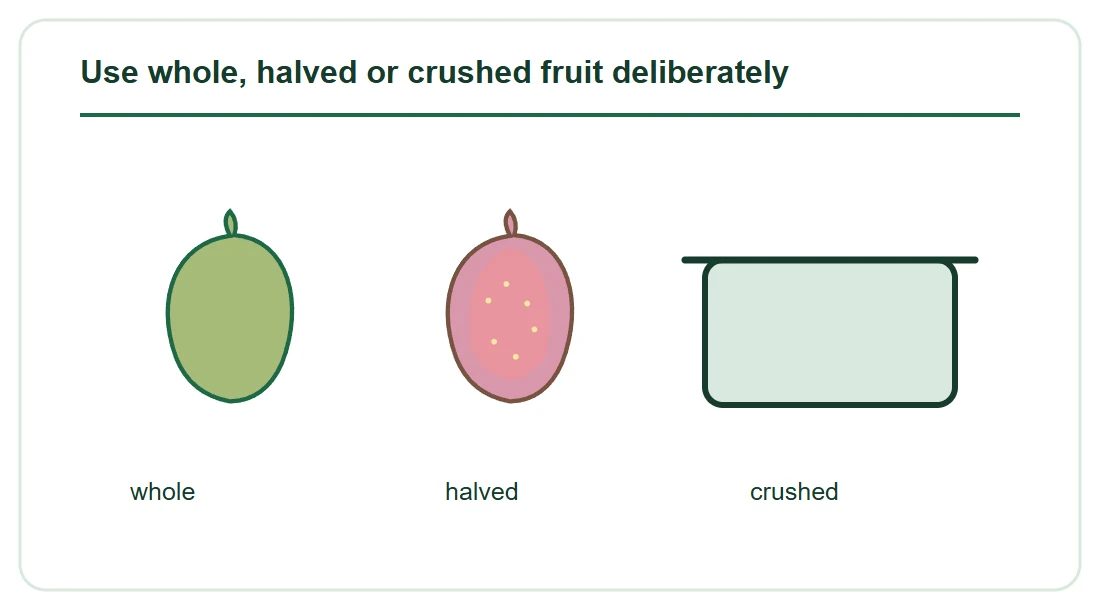
Use whole, halved or crushed fruit deliberately. Original schematic illustration.
Handle a partially thawed fig gently if the final dish needs a recognizable outline. Split one and bake or poach it under the intended method. Check whether the cut surface keeps its structure and whether the skin stays pleasant to eat. A small fruit may be served whole; a large one may need halves or quarters so a diner can manage it with a spoon. Remove stems, and do not mistake a frosty hard fruit for a finished bite.
In a parfait, a cooked or partially crushed layer can be more reliable than a whole thawed fruit. The layer can carry the released juice instead of leaking it into the yogurt. In a plated dessert, warm fig compote beside a cold dairy element gives a deliberate temperature contrast; test the service delay because the cold component can melt or thin. In an ice cream ripple, cool the cooked fig component fully before folding it in and inspect whether it stays separate after storage.
For a visible bakery topping, compare placement before and after baking. A piece can migrate as batter rises or collapse into a dark patch when cut. Photograph a top view and cross-section of the cooled result. If the fruit sinks, use a smaller piece or a thicker batter trial; if it dries, protect it with an appropriate glaze or change the addition point. Those are recipe-development options to test, not universal instructions that every fig variety will follow.
Trial a commercial frozen-fig lot by application
Our supplied inspection photographs show two different arrangements of cut figs, giving a view of the skin, exposed centres and portion shapes. They illustrate checks to perform on a current sample; they do not demonstrate a particular freezing process or a finished application result. Ask for a current sample and specification if the finished food requires a particular size, maturity, internal color, whole-fruit share or skin condition. A photograph alone cannot set a numerical tolerance.
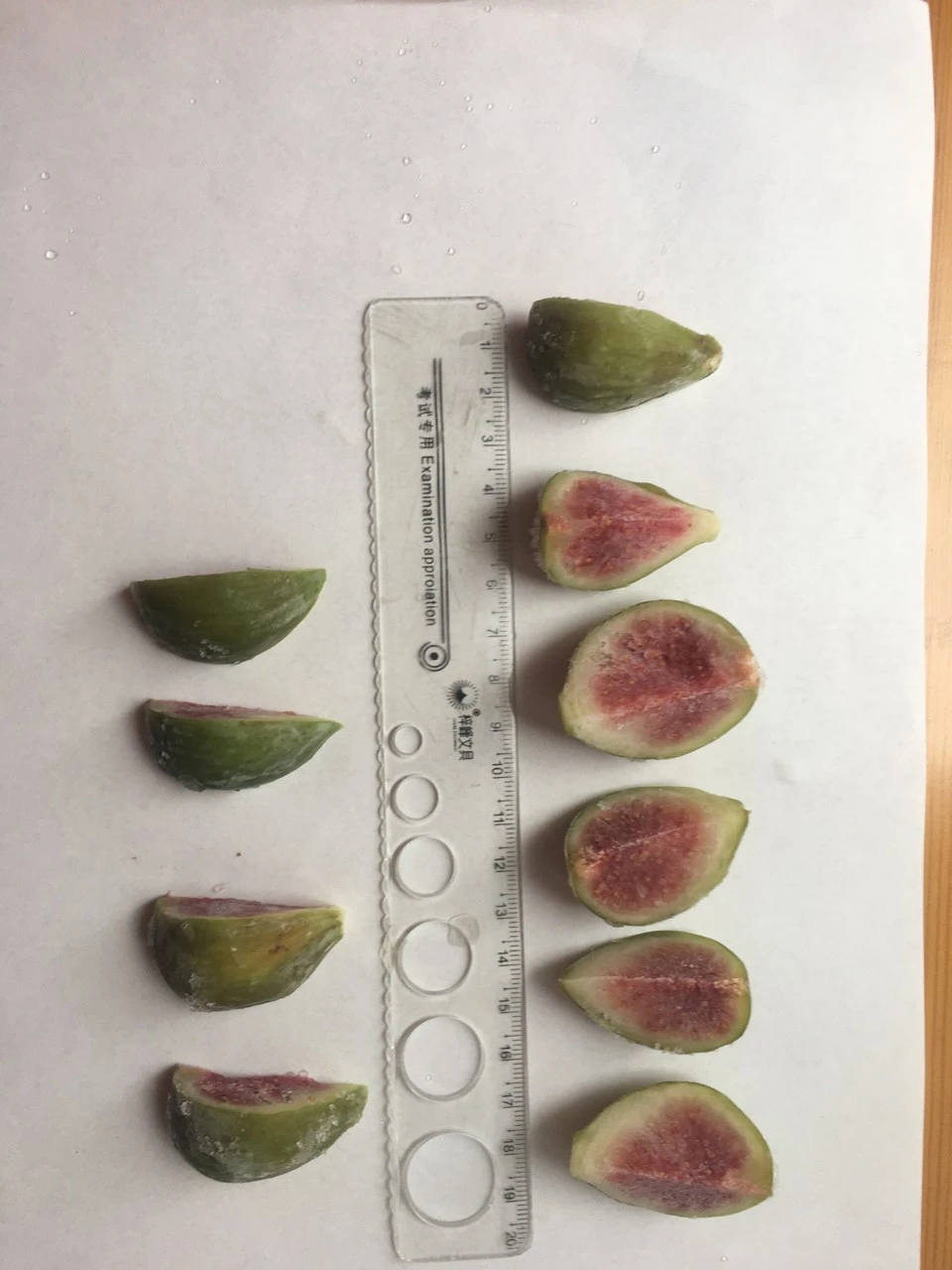
Cut pieces show the flesh and skin that will enter a recipe. Confirm the offered whole or cut SKU and assess it after the intended thawing and cooking conditions.
Build three small tests if the buyer serves several applications: a compote with all released juice, a thick bakery filling and a visible-fruit dessert. Weigh the fruit at the start. Record stems removed, free liquid, cooked yield, piece retention and sensory result after the normal cooling or baking path. The same lot might be excellent for a sauce and unsuitable for a tart with whole halves. A useful acceptance note names the approved application rather than giving the lot a vague single grade.
The customer should also check whether the offered figs are dry-packed, sweetened or accompanied by syrup, and confirm the food-safety status and required handling from current documents. A frozen whole-fruit image is not proof of ready-to-eat status, absence of stems or a preservation process. GreenLand-food can supply lot identity, packing and product information for the offer; the customer validates the recipe, any shelf-stable process and final-product release.
When a later shipment arrives, compare a representative sample under the same preparation. If more juice appears, determine whether the incoming fruit differs, the thaw method changed or the fruit was held longer before cooking. If the bakery filling leaks, compare the filling's final cooked solids and deposit weight as well as the incoming fig. This evidence makes a supplier discussion specific and helps the kitchen avoid rejecting a sound ingredient for a recipe-control problem.
Questions about frozen-fig uses
Can I bake with frozen figs? Yes, after testing the chosen cut and recipe. Whole or chopped frozen figs can release liquid; a pastry filling often works better after cooking the fruit into a thick preparation and cooling it before use.
Should I drain thawed figs? Keep and measure the liquid first. It may belong in a sauce or compote, while a pastry may need a reduced or partly separated liquid. Decide by the finished food, not a blanket draining rule.
Can frozen figs go into jam? They can be cooked into a refrigerated fruit spread. Shelf-stable canning requires a tested recipe that covers the ingredient form and process; do not assume a fresh-fig home-canning formula validates an arbitrary frozen or syrup-packed fig product.
Are GreenLand's frozen figs already a ready dessert? The inspection photographs show cut fruit, rather than a finished dessert. Confirm the current whole or cut specification and required handling, then test the fruit in the dessert, sauce or bakery formula in which it will actually be served.
Understand recipe and preservation boundaries for other frozen fruits.
Compare liquid and piece retention in another baked filling.
Check a distinct naming question for a developed fruit spread.
Source frozen figs with GreenLand-food
GreenLand-food is a professional frozen figs supplier and manufacturer in China, providing factory-direct wholesale supply for importers, food manufacturers, foodservice distributors and private-label programs.
Send us the product form, specification, packing, quantity, application, destination, private-label needs and requested documents.