


Is Passion Fruit a Citrus Fruit?
Sep 07, 2026
Leave a message
Sour flavor does not determine botanical family
The familiar edible passion fruit, Passiflora edulis, belongs to the family Passifloraceae; oranges, lemons and limes belong to the citrus group in Rutaceae. Passion fruit can taste sharply acidic and work well beside citrus in drinks, but similar sourness does not make the plants botanically equivalent. For a food business, the distinction also matters when choosing an ingredient: passion fruit pulp, orange juice and lemon juice bring different aromas, solids, seed characteristics and formulation effects. Start with the correct fruit identity, then compare how the actual ingredients perform. In a purchasing brief, state the actual fruit and composition, then describe the desired flavor. A citrus-like sensory note can guide a trial, but it cannot define seed content, concentration, ingredient declarations or a like-for-like substitution.
Passion fruit and familiar citrus fruits belong to different botanical families, regardless of their shared acidic taste.
Measure the actual formulation: pH, titratable acidity, Brix and sensory assessment describe different characteristics.
Treat a citrus replacement as a controlled recipe trial, with composition and ingredient documentation reviewed alongside flavor.
The botanical answer
The classification is a question about the plant, not the flavor of its fruit. Kew's Plants of the World Online recognizes Passiflora edulis as the familiar passion fruit species. UF/IFAS describes its cultivation and types, including the distinction between purple and yellow forms. Those fruit colors do not place either type in the citrus family.
The term tropical fruit is broader and describes a growing or market category rather than one botanical family. Passion fruit and pineapple can both appear in a tropical fruit mix without being closely related to one another or to oranges. A purchasing category is useful for organizing a range, but it should not replace the ingredient's actual name.
For a product specification, write passion fruit and identify the supplied form. If a recipe calls for a blend containing passion fruit and citrus, list and evaluate the actual components. Describing passion fruit as citrus merely because it is tart creates confusion that later appears in sample selection, flavor expectations and product declarations. The direct botanical answer is simple; the practical work is preserving that distinction when the fruit becomes an ingredient.
Compare the fruit structures
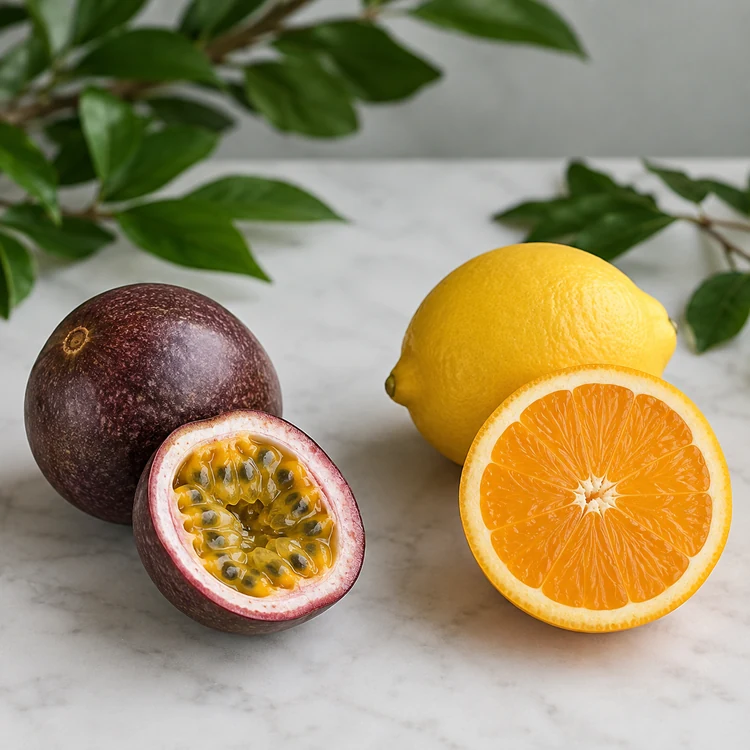
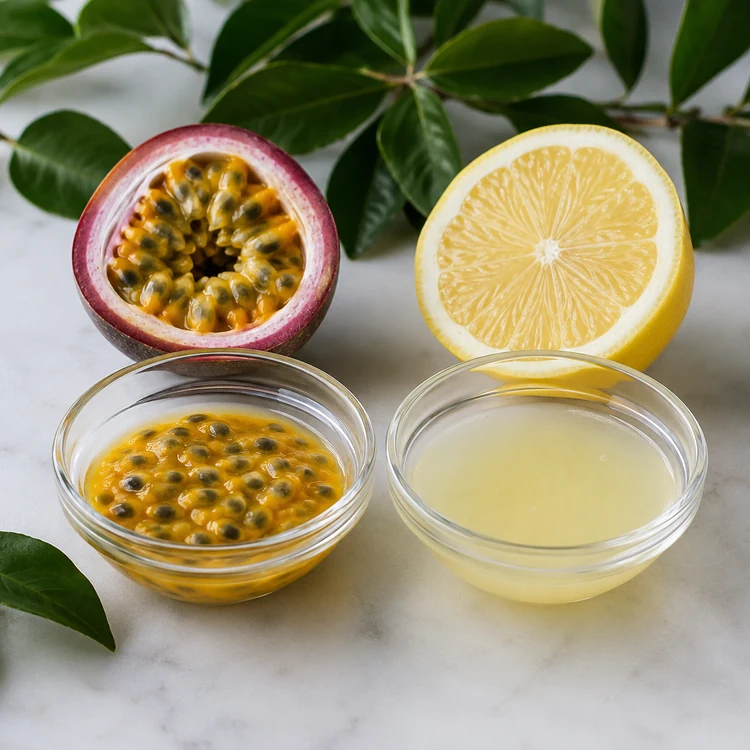
Cutting the fruit provides a useful visual comparison. Passion fruit has a rind surrounding a cavity filled with aromatic pulp associated with numerous dark seeds. An orange or lemon has the familiar radial citrus segments. These structures lead to different preparation steps: passion fruit is commonly halved and scooped, while citrus juice extraction works with a different internal arrangement.
| Feature | Passion fruit | Familiar citrus examples |
|---|---|---|
| Botanical family | Passifloraceae | Rutaceae |
| Common edible structure | Seeded pulp inside a rind | Segmented interior with juice vesicles |
| Typical small-kitchen preparation | Halve, scoop and optionally sieve | Cut and squeeze or use an extractor |
| Visible seed issue in a drink | Seeds may be deliberately retained | Seeds are usually removed during extraction |
| Useful purchasing description | Seeded pulp, seedless base or another specified form | Named citrus juice and its specified form |
The table describes familiar examples, not every fruit structure within either family. For ingredient selection, the consequence is clear: equipment and acceptance checks should follow the supplied material. A passion fruit base containing intact seeds may be suitable for a visible fruit topping while being unsuitable for a narrow beverage nozzle. The problem is physical compatibility, not whether the flavor seems citrus-like.

Why passion fruit can taste citrus-like
People often use citrus-like as a sensory description for a bright, sharp or refreshing flavor. In that context, the phrase describes an impression rather than a botanical classification. Passion fruit has its own recognizable aroma, and acidity is only one part of the experience. A sour ingredient can be recognizably different from lemon even when both make a drink taste sharper.
Use sensory language carefully in a purchasing conversation. "Bright acidity with a clear passion fruit aroma" gives the supplier more information than "citrus taste." The latter could be interpreted as a request for lemon, lime, orange or a blend. If the sample should match a reference product, provide the reference and describe the intended flavor balance without using one fruit name as a substitute for another.
Color can reinforce the confusion. Golden passion fruit pulp and orange or lemon preparations may look related in photographs, especially when frozen products are shown in blocks. Appearance cannot establish composition. Check the ingredient declaration and technical description before tasting. A yellow color, sour taste and tropical marketing name together still do not tell the buyer whether a product is pure passion fruit, a mixed base or a sweetened preparation.
Acidity, pH and Brix answer different questions
For formulation, separate the measurements that are often grouped under "sourness." pH describes hydrogen ion activity on a logarithmic scale. Titratable acidity measures acidity through a defined titration method and reporting basis. Brix estimates soluble solids under the specified measurement conditions. None of these is a direct botanical test, and none alone describes the full flavor of a fruit base.
| Check | What it helps describe | What it does not establish alone |
|---|---|---|
| pH | An important characteristic of the formulation | Complete flavor, total acidity or a validated shelf life |
| Titratable acidity | Acidity on an agreed analytical basis | Aroma or perceived sweetness by itself |
| Brix | Soluble solids measurement | Pure sugar content in every mixed preparation |
| Sensory assessment | Aroma, balance, mouthfeel and application acceptance | Microbiological safety |
Agree methods and conditions before comparing results from different suppliers. A report without a test basis may be difficult to interpret, particularly for a mixed or sweetened ingredient. For a commercial drink, the final formulation and process need their own assessment. Matching the pH of one ingredient to another is not proof that the two finished products can use the same preservation conditions or storage claim.
Citrus substitutions change more than sourness
Replacing lemon juice with passion fruit changes fruit identity and aroma, and may change solids, color and texture. Replacing orange juice creates a different balance again. There is no universal one-for-one substitution because the starting products themselves vary: fresh extracted juice, single-strength frozen material, concentrate and sweetened bases are different inputs.
Begin with the role of the citrus ingredient in the recipe. Is it providing a recognizable lemon note, bulk liquid, acidity, color or a combination? A passion fruit base may provide one of those functions while changing the others. If a recipe depends on citrus flavor as part of its identity, a successful passion fruit version should be treated as a deliberate reformulation rather than an invisible replacement.
For a trial, keep the existing recipe as a reference and create a clearly identified alternative. Record the substitution by mass, assess the result, then make any needed adjustment in a separate version. This preserves a useful comparison. If sugar, water and fruit quantity are all changed at once without a record, the team cannot tell which change produced the improvement or why the next batch tastes different.
A useful reformulation brief can separate three roles played by an existing citrus ingredient. First, identify its flavor contribution: does the customer expect a recognizable lemon or orange note? Second, identify its formulation contribution, such as liquid volume, soluble solids or acidity. Third, identify its presentation contribution, including color and cloud. Passion fruit may replace or complement some of these roles, but the brief should say which changes are intentional.
Imagine a café replacing part of the orange component in a tropical drink with passion fruit. The goal may be a stronger passion fruit aroma while retaining enough orange body. That is a blend-development question. Replacing every gram of orange automatically, then correcting the result with extra syrup, makes it harder to understand whether the new drink meets the intended goal.
Write the first comparison before tasting: same serving mass, same service temperature, identified input products and a recorded replacement amount. Then assess the intended sensory change. This simple discipline keeps botanical classification from becoming a misleading shortcut for formulation. The fact that both ingredients taste acidic tells the team where to investigate; it does not provide the finished recipe.
Choose a passion fruit ingredient by composition
The first selection is the form: whole fruit, seeded pulp, seedless base, juice or concentrate. Next establish what has been added or removed. A product name alone may not tell you whether the material is sweetened or whether water has been removed. Ask for the ingredient declaration and specification before comparing price or recommended use levels.
The passion fruit puree guide turns the botanical distinction into a specific pulp, seed and acidity decision.
We supply frozen passion fruit products and review the required form against the application. A visible seeded dessert layer and a smooth drink need different physical acceptance points even when both use passion fruit. The right sample is the one that matches the operation's required seed content, handling method and fruit character.
Check concentration separately. Codex distinguishes juice, puree and concentrated forms, and a buyer needs the actual product basis to calculate an inclusion rate. A small quantity of concentrate cannot be compared directly with the same mass of a single-strength base. Evaluate the amount needed to make an acceptable finished product, not only the price per kilogram of the incoming material.
Design a beverage comparison that gives usable results
Build the trial around one defined question. For example: can a passion fruit base produce the desired bright fruit drink at the existing serving size? That is more useful than asking whether passion fruit "works like citrus" in general. Define the intended flavor, appearance and service conditions before opening samples.
- Identify each input. Record the fruit, form, composition, lot and concentration basis. Do not compare a sweetened passion fruit base with an unsweetened citrus juice without accounting for that difference.
- Prepare a reference. Make the current recipe exactly as normally served, including its water, sweetener and ice conditions. Keep that sample available during evaluation.
- Make a controlled alternative. Replace the selected fruit input at a recorded mass and leave other variables unchanged for the first comparison.
- Assess the full drink. Compare aroma, acidity balance, sweetness, color, body and seed or particle behavior at the intended serving temperature.
- Adjust in documented stages. Change fruit level, water or sweetener deliberately, creating a new recorded version rather than altering the comparison sample without a note.
- Repeat at service scale. Confirm that the approved recipe mixes and dispenses consistently in the actual vessel and equipment.
Keep feedback concrete. "The passion fruit aroma disappears after dilution" suggests a different action from "the drink is too sharp at the current sugar level." Separating those observations helps the buyer and supplier discuss ingredient strength, recipe design and commercial value without treating every problem as acidity.
Color and cloud behave differently across bases
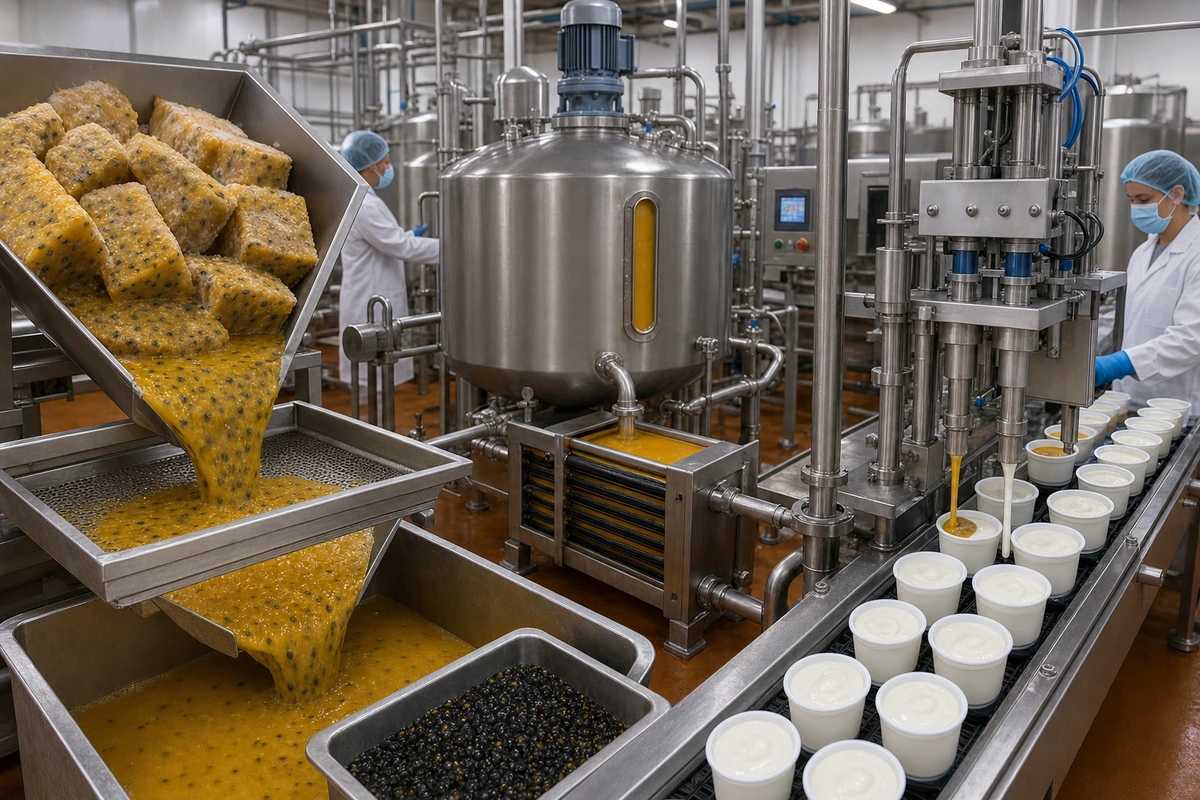
The expected appearance belongs in the product brief. A clear-looking citrus-style beverage, a cloudy fruit drink and a seeded passion fruit drink are different targets. Passion fruit pulp can introduce suspended material and visible seeds, depending on its form. Filtering to achieve one appearance can change recovery and mouthfeel, so assess the final drink rather than judging the raw base alone.
Use consistent lighting, glasses and fill levels when comparing samples. A shallow cup can make a drink appear lighter than a tall glass, while a dark background exaggerates some color differences. Photographs are useful records only when the conditions are reasonably controlled. Retain the physical and sensory observations alongside the image so a purchasing decision is not based on camera settings.
Check appearance after the relevant holding period. Look for settling, an uneven pulp layer, foam and changes in serving consistency. If the recipe needs gentle mixing before dispensing, define how that is done. A formulation intended for a bottle, a café dispenser and a dessert cup may need three separate trials because the customer experiences each product differently.
Dairy and bakery need their own trial
A beverage result does not establish performance in dairy. The base composition, acidity, addition sequence and subsequent processing can affect the finished texture and appearance. Test the actual dairy or plant-based system, including the intended temperature and hold. A fruit base that tastes balanced in water may be too sharp or physically unsuitable in another matrix at the same addition rate.
For bakery, assess the recipe after the real preparation stages. Filling leakage, seed visibility, aroma after heating and texture after cooling can matter more than the raw puree's appearance. If a citrus filling is being reformulated with passion fruit, treat the thickening and sweetness requirements as part of the development work. Do not assume the old formula remains correct because both fruits are acidic.
Our frozen passion fruit puree can be discussed against a defined application and seed requirement. Provide the process stage at which it is added and whether the food undergoes further treatment. This allows the supplied ingredient's intended use and the buyer's recipe process to be reviewed together, instead of leaving a critical assumption until the sample reaches production.

Ingredient declarations follow the actual formula
Use the actual ingredient identity in technical and commercial documentation. Passion fruit does not become citrus because a sensory panel uses citrus-like to describe its flavor. If a product contains a blend of passion fruit and orange juice, the documentation should reflect that blend. The final product name and declaration must be reviewed against the destination market's applicable requirements.
Avoid using botanical classification to make unsupported dietary or medical claims. A statement that passion fruit is not citrus does not establish that it is suitable for a person with a particular food allergy, sensitivity or medical restriction. Those questions depend on the individual and the actual product, including other ingredients and cross-contact controls. A supplier should provide factual composition information rather than a blanket suitability promise.
For an importer or private-label program, coordinate the ingredient description, specification, packaging artwork and customer-facing product name before the order is finalized. Review any change in sweetener, concentration or added fruit as a formulation change that may affect those documents. Clear naming reduces avoidable disagreement between the purchasing team, the label reviewer and the staff preparing the finished recipe.
Product naming becomes especially useful when several departments handle the same ingredient. Purchasing may use a supplier's commercial name, the kitchen may call it fruit puree, and a packaging designer may describe it as a tropical citrus base. Before those terms appear in documents, create one agreed product description and record any informal kitchen shorthand separately.
For example, a specification can identify an unsweetened seeded passion fruit preparation while the recipe instruction calls for a weighed portion of that exact item. The customer-facing description can then be reviewed against the finished formula. If orange juice is added later, it belongs to the finished recipe, not retroactively to the supplied passion fruit ingredient. Keeping the stages distinct prevents a later supplier change from silently altering the product declaration.
The same method helps with customer questionnaires. Answer whether the supplied ingredient contains a named citrus fruit from its actual composition and supporting supplier information, rather than from a sensory description. If cross-contact or individual dietary suitability is asked about, obtain the relevant specific information instead of inferring an answer from the botanical family. This is a documentation task with a concrete product basis.
Retain version control when the formula changes. A new sweetened base, a concentrate or a mixed-fruit preparation can require different recipe quantities and documentation. The unchanged word passion on the front of a sample container is not enough to preserve equivalence.
Qualify a frozen passion fruit supplier
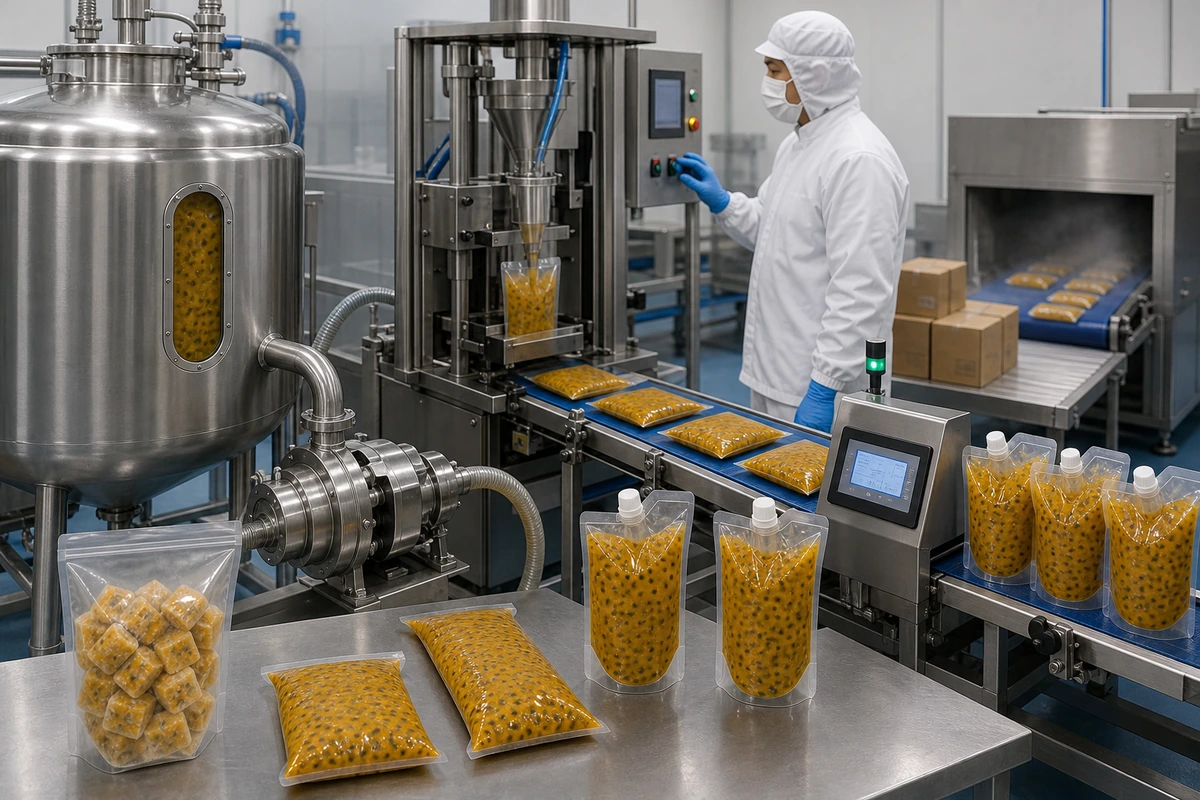
A supplier review should establish the exact product before broad company claims take over the conversation. Ask for the ingredient declaration, form, agreed physical and analytical attributes, intended-use instructions and a representative sample. Confirm the seed status and any added ingredients. A photograph of yellow frozen blocks is not enough to distinguish seeded pulp from a smooth base or a formulated preparation.
For quality review, identify the documents required for the specific destination and use. A specification describes the agreed product; a lot-specific report provides different information; a certificate has its own holder, scope and validity. Confirm the relevant documents for the proposed order rather than assuming every item in a supplier's catalog has identical supporting evidence.
We review frozen passion fruit juice requirements with the application, packing and shipment plan. Send the proposed quantity, destination, pack format and sample acceptance priorities. MOQ and lead time require order-specific confirmation. Keep the approved sample and recipe reference in the purchasing file so repeat supply can be assessed against a practical standard.
Plan storage and repeated production
Choose pack sizes that match actual consumption. A bulk pack may suit a beverage factory but create unnecessary partial-pack handling in a small foodservice operation. Estimate the quantity needed per batch, the number of batches per day and the available freezer and refrigerated handling space. These figures make the packing discussion more useful than simply requesting the largest or cheapest format.
Follow the supplier's storage, thawing and use instructions. Keep lots identifiable, prevent repeated uncontrolled warming and record opening information where required by the operation. Freezing preserves an ingredient under specified conditions; it does not make an unknown handling history acceptable. The product's intended use still determines whether further processing is needed before serving.
For repeat menus, retain the approved formulation and check a new supply lot under the same conditions. Record any change needed in fruit inclusion, water or sweetener. If the adjustment is substantial, review the ingredient specification rather than gradually drifting away from the original recipe. The business benefit of correct classification is practical: the team buys a defined passion fruit ingredient and knows how it behaves, instead of expecting it to perform as an unspecified citrus substitute.
Questions about names and categories
Does the word tropical identify a botanical family?
No. It is a broad growing or market description that can group unrelated fruits. Use the actual fruit name and composition in a specification; a tropical range or blend name does not establish that its ingredients belong to the citrus family.
Should a supplier questionnaire use the tasting panel's citrus-like description?
Use the actual product composition when answering ingredient-identity questions. A citrus-like aroma note belongs in sensory discussion. Questions about added citrus, cross-contact or dietary suitability require the corresponding specific product information, rather than an inference from taste.
Source frozen passion fruit with GreenLand-food
GreenLand-food is a professional frozen passion fruit supplier and manufacturer in China, providing factory-direct wholesale supply for importers, food manufacturers, foodservice distributors and private-label programs.
Tell us the product form, required specification, packing and quantity, along with the application, destination and delivery timing. Include seed or cut preferences where relevant, private-label requirements and the documents your team needs. We will review the sample, MOQ, lead time and loading arrangement for the proposed order.