


Section 301 Tariffs in 2026: What U.S. Frozen Fruit and Vegetable Importers Should Verify
Aug 27, 2026
Leave a message
Buyer guide · Updated August 26, 2026
A verification-first workflow for U.S. frozen-produce importers navigating overlapping Section 301 actions, HTS classifications, exclusions and entry timing.
Quick answer: In 2026, a U.S. frozen fruit or vegetable importer should not ask only, "What is the Section 301 rate?" The controlled question is: which product, with which country of origin, under which current eight- or ten-digit HTSUS provision, entered on which date, and paired with which Chapter 99 heading or exclusion? Confirm those fields in the live HTSUS and the controlling USTR notice with your customs broker before pricing or entry.
Four points to carry into every 2026 entry review
- Section 301 is no longer shorthand for one China tariff list. The older China technology-transfer actions and the July 2026 forced-labor-related actions are separate legal layers with different Chapter 99 provisions, scopes and exceptions.
- Country of origin, not the port of export or invoice address, drives the origin-specific Section 301 check.
- A frozen-produce description is not a classification. Sugar, preparation, species, form and other facts can change the HTSUS line.
- Never publish or approve a landed-cost rate until the product-origin-HTSUS-Chapter 99-exclusion-entry-date matrix is complete and checked against the current revision.
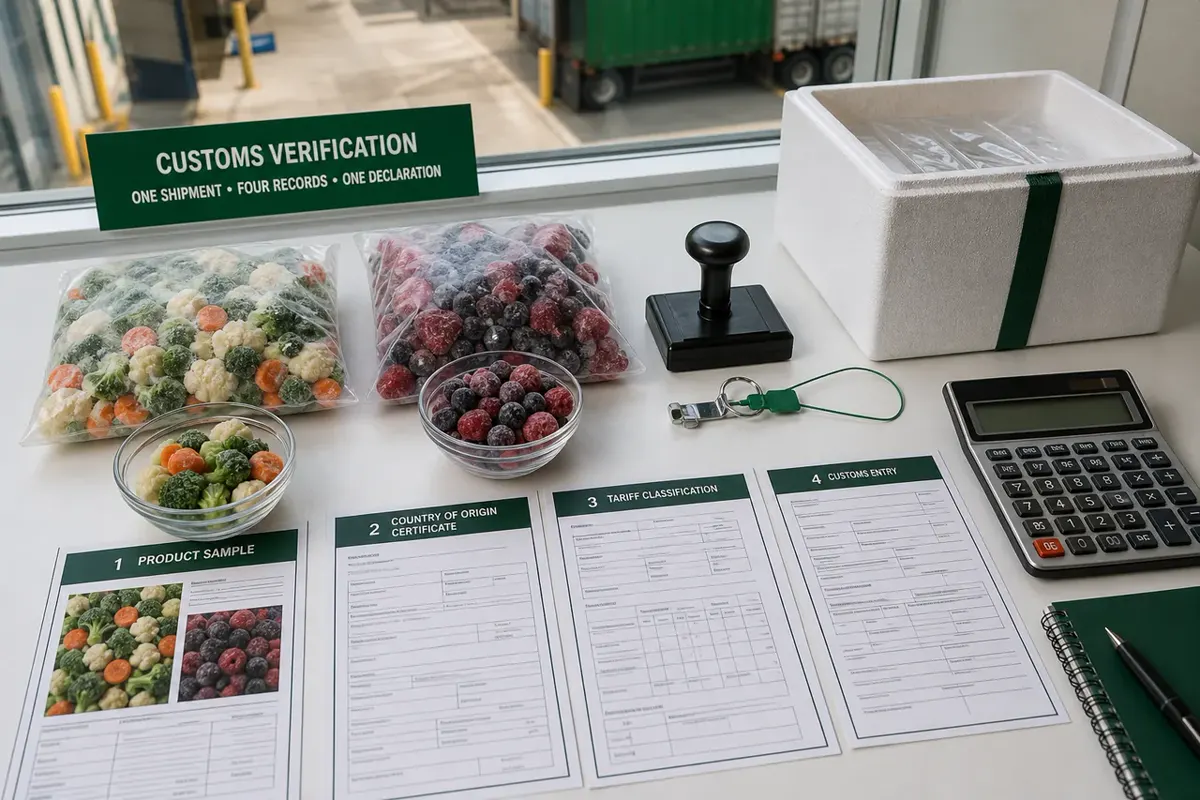
Classification, origin, applicable action and entry timing must be confirmed as separate records.
Why the old "China 301" shortcut is unsafe in 2026
Many importing teams built a practical shortcut around the Section 301 actions first imposed after the China technology-transfer investigation. They classified the product, checked whether the subheading appeared on List 1, 2, 3 or 4, looked for an active exclusion, and reported the relevant Chapter 99 line. That workflow still matters for China-origin goods, but it is no longer the whole 2026 picture.
In July 2026, USTR took final action in 60 investigations concerning trading partners' failure to impose or effectively enforce forced-labor import prohibitions. The controlling Federal Register notice created origin-specific Chapter 99 provisions and product exemptions. The additional duties generally became applicable to covered goods entered for consumption, or withdrawn from warehouse for consumption, on or after 12:01 a.m. Eastern time on July 24, 2026, with a narrow in-transit treatment defined in the notice.
That means the phrase "Section 301 duty" can now refer to different actions. For a product of China, the July notice uses heading 9903.05.31 for covered articles, subject to the exclusions and special provisions stated in U.S. note 52 and the annexes. The older China technology-transfer actions use Chapter 99 headings in the 9903.88 series. An importer must test both applicable frameworks rather than replacing one with the other or automatically adding every percentage seen in a tariff newsletter.
The USTR China Section 301 product search remains a useful official lookup for the technology-transfer action. It requires an eight-digit HTS subheading and identifies the relevant action and additional rate. The USITC HTSUS, however, is the live legal schedule the entry team must review for the current ordinary tariff line, Chapter 99 notes and special provisions.
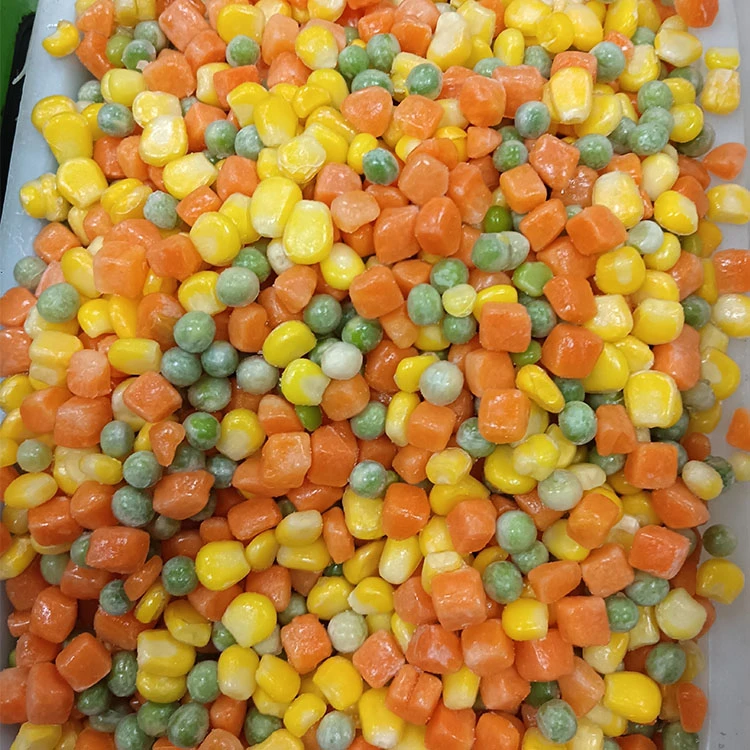
The product recipe, processing and pack details can affect the classification used in a landed-cost model.
Build one product-origin-HTSUS-Chapter 99 record
Do not start the tariff review from the supplier's short commercial description. "IQF mixed vegetables," "frozen berries" and "frozen mango" are purchasing descriptions, not complete customs classifications. The classification record should capture the facts that could move the goods between provisions.
Frozen fruit HS classifications provide product-form examples to check with the broker before applying a tariff measure.
| Field | Evidence to retain | Why it changes the decision |
|---|---|---|
| Exact product identity | Species, ingredients, proportions, cut, preparation, sugar or other additions, packaging and intended condition at import | Determines the ordinary HTSUS provision; mixtures and prepared products may not stay in the same heading as a single frozen commodity. |
| Country of origin | Manufacturing flow, growing origin where relevant, processing location, origin statement and broker analysis | Section 301 measures are origin-specific. Export country and transshipment do not automatically change origin. |
| HTSUS | Current eight- and ten-digit line, rationale, prior ruling if any and effective revision date | Connects the physical product to the ordinary rate and the product scope in Chapter 99 notes or annexes. |
| Chapter 99 action | Applicable heading, U.S. note, USTR action and scope language | Identifies the additional-duty layer and reporting order. |
| Exclusion or exemption | Exact legal description, covered subheading, product parameters, effective dates and entry facts | An exclusion is applied by its legal scope, not by similarity or product name. |
| Entry timing | Loading date, final mode of transit, arrival, entry or withdrawal date and warehouse status | Effective-date and in-transit provisions are date- and event-specific. |
Keep this matrix at SKU level. Two products supplied by the same factory can have different classifications. The same product shipped from two origins can require different Chapter 99 treatment. A blend can change classification when ingredient proportions change, even if the marketing name remains the same.
If the facts are genuinely uncertain, a supplier declaration is not a substitute for a classification opinion. Use the product specification and production flow to brief a licensed customs broker. For recurring high-value imports or a novel classification issue, discuss whether a binding CBP ruling is appropriate. The CBP Section 301 FAQ specifically points importers to CBP import specialists and the ruling process when exclusion or classification scope is uncertain.

Importer, broker and supplier should work from the same signed product facts before entry.
Country of export is not country of origin
A refrigerated container may leave a European port, carry a Chinese processor's product, include fruit grown in more than one country, or contain goods stored in a third-country warehouse. None of those facts alone resolves customs origin. CBP's Section 301 guidance states that the China technology-transfer duties are based on country of origin, not country of export.
For frozen produce, origin analysis can become fact-sensitive when raw material crosses a border for washing, cutting, blanching, freezing, blending or packing. A change in tariff heading may be relevant but is not a universal origin rule. The correct analysis depends on the legal origin standard and the actual production process. Ask for a process map that identifies where cultivation, primary preparation, freezing, blending and packing occurred. Do not accept "shipped from" as an origin answer.
Mixed-origin berry blends need particular discipline. The importer should know whether different origin lots remain identifiable, whether the finished blend takes one declared origin under the applicable rule, and what documentation supports the conclusion. If a supplier cannot reconstruct the origin logic by lot, the risk is not only a tariff error; it is also a traceability and admissibility weakness.
Check the July 2026 action before assuming frozen produce is covered
The July 2026 notice applies origin-specific rates to covered products, but it also contains exclusions and special treatment in Annex I and Annex II. Part A is commercially important because it identifies product exemptions that can remove listed tariff lines from the new action. Some frozen agricultural products appear within the annex structure, but the legal question is never "Are frozen foods exempt?" It is whether the exact current HTSUS subheading and product description fall within the applicable annex and note for the origin concerned.
Use a two-step test. First, find the ordinary HTSUS line from complete product facts. Second, read the Chapter 99 note and annex language in the current schedule. Do not rely on a PDF keyword hit alone: an annex may use eight-digit scope, include limitations, or interact with an origin-specific part. Save the schedule revision and source link used for the entry decision.
For China-origin goods, run the older technology-transfer Section 301 search separately. An exemption from the 2026 forced-labor-related action does not automatically remove an older China Section 301 duty, and an exclusion under the older action does not automatically exempt the product from a different 2026 heading. Each action needs its own legal match.
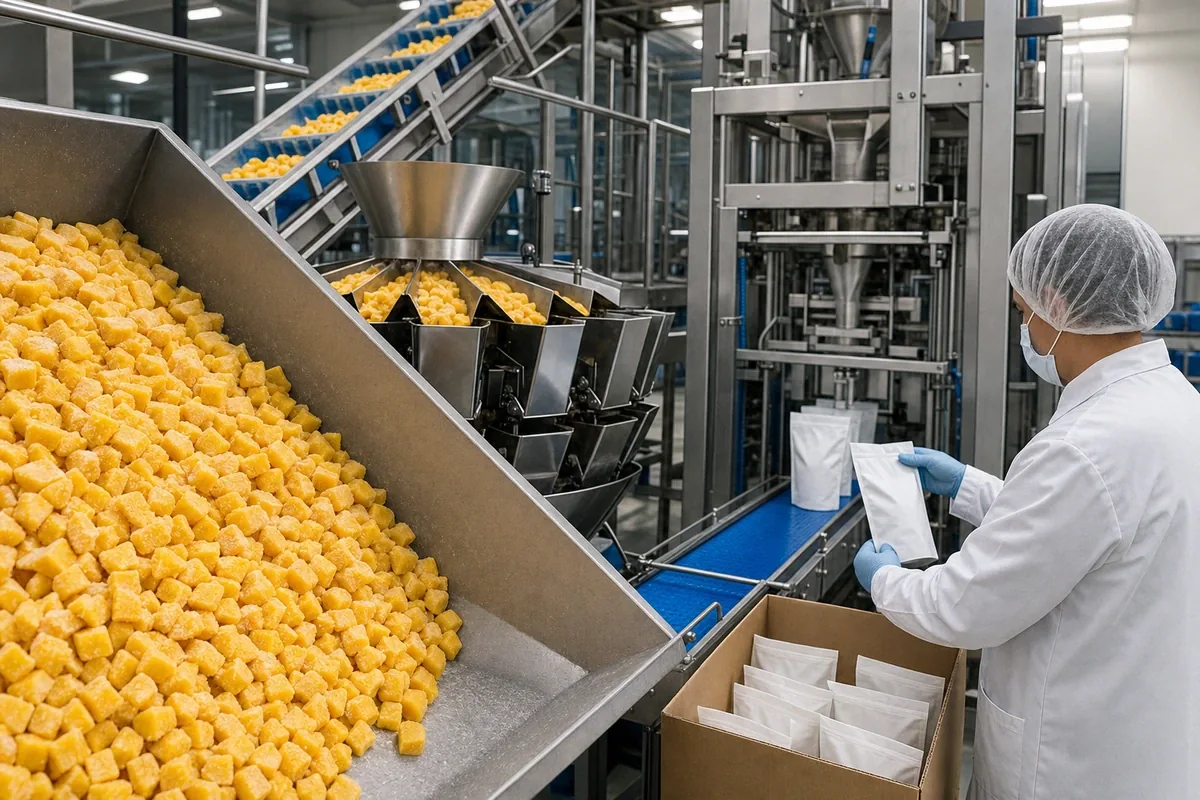
A useful comparison separates customs value, duties, fees, freight, cold-chain charges and domestic delivery.
Exclusions require scope and date, not a product nickname
USTR has extended certain exclusions from the China technology-transfer Section 301 action through November 9, 2026. The USTR exclusions page links to the controlling notice. That does not mean a product qualifies because it resembles an excluded item. The importer must match the exact exclusion description and its stated tariff scope.
Use an exclusion file with five elements: the controlling notice; the legal product description; the covered HTSUS provision; the effective entry period; and evidence that the imported product satisfies every physical limitation. If dimensions, composition, power, material or use are part of the description, place those facts in the product record. For frozen produce, a broad commodity name rarely proves all required classification facts.
Entry timing also deserves a separate line. The 2026 forced-labor notice provided a short, specific in-transit exception for goods loaded before the effective time and entered before the stated deadline. That window is not a general grace period. Record the events required by the notice and keep bills of lading, loading evidence and entry records. For immediate-transport entries, CBP guidance explains that the rate timing may follow acceptance at the original port under the cited regulation. Let the broker apply the rule to the actual entry path.
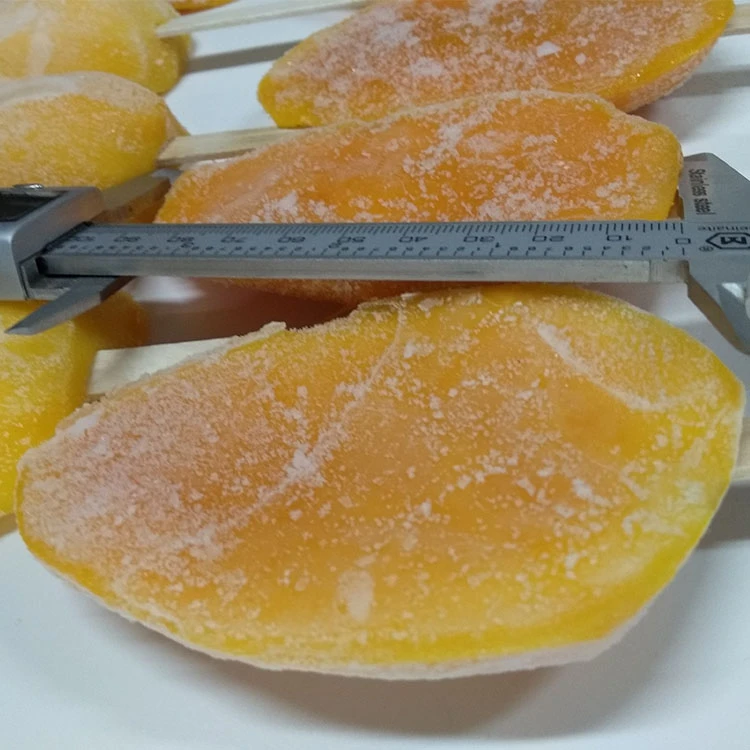
Fruit form, added ingredients and processing facts must match the tariff classification reviewed by the importer.
Calculate landed cost in a transparent order
A landed-cost sheet should let a reviewer see which costs depend on customs value, which are percentage duties, which are per-unit charges, and which arise after import. Do not type one combined tariff percentage into a cell with no source.
- Establish customs value. Use the correct valuation method and document assists, packing, commissions, royalties or other adjustments where applicable. The commercial invoice total is not automatically the final customs value.
- Apply the ordinary HTSUS duty. Record the current column 1 rate or trade-program treatment supported by origin evidence.
- Apply each valid additional-duty provision. Show the Chapter 99 heading, rate basis and source separately. Do not stack an action until the product and origin satisfy its note.
- Add other trade remedies or fees. Check antidumping or countervailing duty scope, merchandise processing fee, harbour maintenance fee where applicable, and any other entry-specific charge.
- Add logistics and compliance costs. Freight, insurance, broker, bond, examination, demurrage risk, cold storage, testing and inland delivery belong in the landed-cost view even though they are not customs duties.
- Convert to the buying unit. Reconcile gross weight, net weight, glaze, pack-out, expected loss and saleable units.
For illustration, assume a buyer has a customs value of $100,000. Instead of writing "tariff = 37.5%," create separate rows for the ordinary duty, each applicable Chapter 99 action and all fees. If classification review later changes one layer, the model can be updated without rebuilding the shipment economics. Use placeholder rates during sourcing until the broker signs off; mark the scenario as provisional.
Compare quotations on the same Incoterm and scope. A DDP price may include duties but hide the classification and importer-of-record assumptions. A FOB price makes duties visible but leaves freight and U.S. costs open. Request the HTSUS, origin and duty assumptions behind any delivered quotation and reconcile them with your own entry plan.
A tariff calculation is only one part of an executable import and delivery plan.
Worked frozen-produce scenarios
Scenario A: China-origin IQF vegetable, single ingredient
The supplier provides an English product name and a ten-digit code from an old quotation. The buyer should first confirm species, cut, blanching and additions, then classify under the current HTSUS. Next, check the USTR China product search for the older technology-transfer action, review any live exclusion by exact scope, and test the 2026 origin-specific Chapter 99 note and Annex II exemptions. Only then can the team show the ordinary rate and each additional layer.
Scenario B: frozen berry blend packed in a third country
The invoice states the packing country, but the berries were grown and frozen in multiple origins. The buyer needs ingredient proportions, processing steps and origin analysis before selecting any origin-specific Chapter 99 line. The blend's ordinary classification may also depend on composition and additions. The procurement team should not ask the broker to validate a rate without the production map.
Scenario C: product covered by an exclusion description
A search result suggests the HTSUS line has an exclusion. The reviewer must open the controlling notice, match the full product description, check the entry date and retain supporting technical facts. A broker statement that "this code is excluded" is incomplete if the exclusion applies only to a subset of products under that code.
Scenario D: shipment loaded around July 24, 2026
The team should not use the purchase order date. It should compare the notice's required loading, final-mode-of-transit and entry events with transport and entry documents. If the facts fall outside the narrow in-transit language, the normal effective-date rule applies.
Purchase order and broker control checklist
| Control point | Purchase order or shipment file field | Owner |
|---|---|---|
| Product definition | Species, ingredients, percentages, processing, form, pack and intended use | Buyer and QA |
| Origin evidence | Growing, freezing, blending and packing locations; origin rationale | Supplier and trade compliance |
| Classification | Current HTSUS and version, rationale and ruling reference if any | Customs broker/importer |
| Chapter 99 | Each action tested, heading, note, rate basis and result | Broker/trade compliance |
| Exclusion | Notice, exact scope, proof and effective dates | Trade compliance |
| Entry timing | Load, transit, arrival, entry and warehouse-withdrawal milestones | Logistics/broker |
| Commercial allocation | Who bears a new or changed duty; price-adjustment mechanism | Procurement/legal |
| Record retention | Signed matrix, source documents and approval date | Importer of record |
Put a classification-change clause into recurring purchase arrangements. Product formulation, origin route or processing location can change after approval. Require the supplier to notify you before changing any fact used in the customs analysis. A purchasing system should block the shipment if the declared HTSUS, origin or Chapter 99 combination differs from the approved record.
Forced-labour admissibility is a separate review
The 2026 Section 301 action was adopted in response to trading partners' forced-labour import-ban practices. It is still a tariff measure. Paying an additional duty does not establish that the imported goods are admissible under U.S. forced-labour laws, and an exemption from the duty does not prove the supply chain is free of forced labour.
Keep the admissibility file separate and connected. Map farms, processors, packers and material inputs; assess risk; retain supplier due diligence; and maintain traceability to the shipment. Review CBP forced-labour requirements and any applicable withholding or UFLPA issues with qualified counsel. Do not describe an origin-specific tariff payment as a forced-labour compliance certificate.
A numbered pre-entry verification process
- Freeze the commercial product facts before classification.
- Document country of origin from the real production flow, not the shipping route.
- Confirm the current eight- and ten-digit HTSUS with the broker.
- Search the older China technology-transfer action when origin is China.
- Test the July 2026 origin-specific Chapter 99 note and annex exemptions.
- Match any exclusion by complete legal description and effective date.
- Confirm entry timing from transport and customs records.
- Build landed cost with each duty and fee on a separate sourced row.
- Review forced-labour admissibility independently.
- Approve the matrix, lock the assumptions and monitor schedule changes until entry.
How GreenLand-food supports the product side of the review
Contract allocation when the duty treatment can change
A customs matrix answers today's entry question; the purchase contract decides who absorbs change. Frozen-produce contracts can be signed months before harvest, packing and entry. During that interval, an HTS revision, exclusion expiry, new USTR notice, origin-route change or product reformulation can alter landed cost. If the contract says only "duties for buyer account," it may not address a supplier change that invalidates the approved classification assumptions.
Record a tariff baseline in the purchase order: product facts, declared origin, approved HTSUS, named Chapter 99 assumptions, Incoterm, customs-value basis and calculation date. State that the importer retains classification responsibility while the supplier must provide accurate facts and notify changes. A baseline does not freeze the law; it identifies what each party priced.
Use a change mechanism with evidence and timing. If a new government action applies, decide whether the price adjusts automatically, requires renegotiation or gives either party a cancellation right before production. If the supplier changes origin, ingredients or processing without approval, the supplier should not expect the buyer to absorb every resulting duty. Legal counsel should tailor the clause to the transaction, but procurement should ensure the commercial decision exists.
For DDP or duty-inclusive offers, request transparency without assuming the seller is the lawful importer. Ask which entity will be importer of record, which HTSUS and Chapter 99 lines were used, whether exclusions were claimed, and what happens if CBP disagrees. A very low delivered price can reflect a valid exemption, but it can also reflect an unsupported entry assumption. The buyer's compliance risk is not eliminated by a price term.
Maintain the matrix from PO to liquidation
The verification process should not stop when the broker transmits the entry. Compare the entered data with the approved matrix: manufacturer, origin, classification, Chapter 99 lines, value, quantities and exclusions. If the supplier invoice or packing list changed, pause and revalidate rather than forcing the documents to fit the old record.
After entry, retain the version of the HTSUS, Federal Register notice, exclusion and product evidence used. Review CBP messages and broker questions. Post-entry correction, protest, reconciliation or other mechanisms may have deadlines and eligibility requirements; route potential errors promptly to the broker or customs counsel. Do not wait for liquidation to discover that a provisional rate was never confirmed.
Reconcile actual duty to the landed-cost model by SKU and entry. Variances should have a reason code: customs value, ordinary duty, Section 301 layer, exclusion, fees, freight or broker correction. This turns trade compliance into purchasing feedback. Repeated variance on one product may indicate a master-data problem rather than normal shipping cost.
Build a change watch around authoritative sources. Assign responsibility for the USITC revision page, USTR action and exclusion notices, Federal Register publications and relevant CBP messages. A forwarded broker newsletter can trigger the review, but the reviewer should open the primary text and identify the effective event. Record "no impact" decisions as well as changes so the team knows the notice was assessed.
Use effective-date scenarios before a rule changes. List purchase orders, production dates, vessels, warehouse entries and expected consumption entries that could fall on either side. Confirm whether the legal text uses entry, withdrawal, loading, export or another event. Commercial teams often use "ship date" when the law uses a different milestone. That vocabulary gap can move a large duty amount.
Train procurement to recognise classification-changing product edits. Added sugar, seasoning, sauce, preparation, mixed proportions and packaging can matter. The buyer does not need to classify the goods, but should know when to stop reusing old customs data and request review. Include a customs-impact question in product change control.
Apply the same discipline to samples. A pre-production sample may be plain IQF product while the commercial lot includes a retail sachet, glaze or added ingredient. Ensure the classified article and supporting specification describe what crosses the border, not only what the buyer evaluated for taste. Archive the commercial label and ingredient proof with the entry record.
Review entries by value as well as count. A low-volume SKU can create the largest exposure when customs value is high or the additional rate is material.
Worked control: one mixed-vegetable SKU, two origins
Assume a buyer sources an unseasoned IQF blend of peas, carrots, corn and green beans from factories in two countries. The ingredient percentages and preparation are identical. The ordinary tariff classification may be the same, but the 2026 origin-specific Section 301 heading can differ. The buyer therefore keeps two origin records under one commercial SKU rather than one universal tariff master.
For Origin A, the current Chapter 99 note points to an origin heading subject to an Annex II Part A product exemption. The broker confirms that the exact ordinary subheading appears in the exemption. The file retains the annex, current HTS revision and specification. For Origin B, the same ordinary subheading is not exempt under the origin's applicable provisions, so an additional duty layer remains. The DDP quotations cannot be compared until those treatments and freight are normalized.
Later, the Origin A supplier proposes adding a small amount of sauce to improve retail appeal. Procurement might view that as a minor reformulation. Customs treats it as a new classification question. The system blocks the old HTSUS and Chapter 99 combination until the ingredient statement and process are reviewed. The control prevents a product change from silently inheriting an exemption that may no longer match.
The lesson is operational: customs logic belongs to the product-origin version, not only to the supplier or marketing SKU. That granularity is what makes a 2026 matrix usable.
GreenLand-food is a frozen fruit, vegetable and mushroom supplier. We can provide the commercial and product facts your importer and broker need to review: exact product description, ingredient statement, processing flow, pack format, production location and available lot documents. We do not determine U.S. customs classification or provide legal advice, and we will not promise a tariff rate without the importer's complete entry facts.
For product screening, review our frozen fruit and frozen vegetable ranges, or download the current frozen-food catalog. Tell us the product, cut, ingredients, origin requirement, pack, destination and load window so we can prepare a precise supplier information pack for your customs review.
Frequently asked questions
Are all China-origin frozen fruits and vegetables subject to the same Section 301 rate in 2026?
No. Treatment depends on the exact HTSUS classification, the applicable Section 301 action, current Chapter 99 notes, exclusions or exemptions, origin and entry date. The older China technology-transfer action and the July 2026 forced-labour-related action must be tested separately. Confirm the live result with your customs broker.
Can a supplier's HTS code and DDP quotation be used as the importer's final duty decision?
No. They are inputs, not the importer's final analysis. The U.S. importer of record remains responsible for reasonable care. Verify product facts, origin, current classification, Chapter 99 treatment, exclusions and entry timing, then reconcile the supplier's price assumptions with the approved entry matrix.
Prepare a clean product file before your broker review
Send us your frozen product, cut or form, ingredient statement, pack, destination and planned shipment date. We will confirm the order-specific product and origin information available from the matched supply facility.