


Should Mushrooms Be Organic? What Buyers Should Verify
Sep 24, 2026
Leave a message

Mushrooms do not have to be organic to be suitable for a commercial menu or processed food. Organic certification may be important to a brand promise or customer contract, but it is a specific verified supply claim, not a shortcut for every quality decision. A buyer should first define the intended species and form, then verify the certification scope if organic is required, the residue specification for either route, the product's processing and traceability, and the cooked result. Conventional mushrooms can be appropriate when they meet the agreed safety and quality requirements.
The question changes again for frozen mushrooms. An organic claim on a fresh grower's crop does not automatically establish that a particular frozen mixed pack, its processor and its handling chain qualify for the destination-market label. Conversely, a conventional frozen pack may have sound controls and documented test results without carrying an organic claim. This article sets out a practical purchasing method for both routes. It does not claim that a GreenLand-food lot is organic unless its current certificate and product documents confirm that status.
What organic changes for a mushroom buyer
Organic is a production and labeling system with rules that vary by market. It concerns approved practices, inputs, records, certification and oversight. It should not be used as a synonym for "pesticide free," "more nutritious" or "safer" without evidence for the specific claim. A certified organic mushroom can still need testing and careful cold-chain handling; a conventional mushroom can still meet residue limits and a customer's sensory standard. Buyers need to keep the legal claim and the product performance separate in the specification.
For a retail brand, organic may be a non-negotiable label requirement. For a restaurant, the decision may be driven by menu positioning and cost. A soup factory might care more about species, cut, color, flavor and usable yield than certification, unless its finished product is marketed as organic. Decide that question before requesting quotes. If the answer is "organic only," request the required market's certification documents from the outset. If it is a preference, price both options against the same species, grade, pack and application test.

Cultivated mushrooms growing from visible substrate.
Mushrooms have an unusual production setting compared with field vegetables. They grow on prepared substrates, and the relevant production rules address those inputs and the cultivation process. Do not assume that the absence of soil or a particular production method makes a crop automatically organic or automatically ineligible. The USDA National Organic Program has specific mushroom regulations; other destination markets may have their own requirements. A buyer should ask the certifier or qualified compliance team which rules apply to the product and destination.
The species name matters. White button, cremini, shiitake, oyster and mixed mushroom products have different flavor, color and cooking yield. An organic white button mushroom is not an equivalent substitute for a conventional shiitake in a premium sauce just because of the certification claim. Specify species or blend percentages before comparing prices. If the blend varies seasonally, agree on acceptable variation and test its effect on the recipe.
Organic purchasing also affects inventory management. Separate lots, correct labels, approved suppliers and traceable transactions are needed if the finished food carries an organic claim. A buyer cannot simply place an organic label on a conventional frozen pack because it came from the same factory as an organic SKU. Plan the documentation and segregation work into the cost comparison. Ask how mixed lots, repacking and changes of processor are controlled.
Verify certified status and product scope
Begin with the current certificate from an accredited certification body accepted in the destination market. Confirm the legal entity, site, valid period, product category and activity. A grower certificate, a processor certificate and a trader certificate can cover different steps. The word "organic" on a quotation or a brochure is not enough to establish the status of the frozen product the buyer will receive. Match the certificate details with the contracting supplier and the actual product and lot.
Read the scope carefully. It should cover the mushroom species or product group and any processing relevant to the offer. Slicing, blanching, IQF freezing, blending, packing and relabeling may involve separate certified operations. If the product is a mixture, ask whether every agricultural component and the final handling process support the proposed claim. A certificate may be genuine yet irrelevant to a specific mixed SKU. Resolve that before artwork and purchase orders are approved.
Then connect documents to the shipment. Request the product specification, batch or lot identification, invoice description, certificate reference and any transaction or import document required by the destination. For EU organic imports, electronic certificates of inspection through TRACES are part of the import process; other markets have different procedures. The exact documents depend on origin, route and buyer role. A supplier should be able to explain the chain from grower to processor to exporter without gaps or contradictory names.

Mushroom lot beside buyer document folder.
Check the current status near ordering and shipment, especially for a long-term contract. Certification can expire, be suspended or change scope. An old PDF is a starting point for a conversation, not proof that a later container is covered. Where possible, verify the certifier and certificate in the relevant official or certifier database. Record the check date and the version used for approval. This is especially important when the commercial label or customer contract makes an organic statement.
Do not assume one jurisdiction's certificate is accepted in every market. Equivalency arrangements and import rules may apply, and the finished product's organic label can have additional requirements. The purchaser's regulatory team should approve the exact claim and documents for the destination. A sourcing article can identify the check, but it cannot replace that approval for a particular shipment.
For a conventional offer, there is no organic certificate to validate, but the rest of the product evidence still matters. Request the agreed specification, origin, process flow, food-safety documents, lot traceability and test records as applicable. Use the same care in matching paperwork to physical packs. Certification is one column in the approval sheet, not a replacement for supplier qualification.
Residue specifications for both supply routes
Residue control should be written as a measurable requirement. Name the destination market, applicable maximum residue limits, sampling plan, laboratory method and reporting limits relevant to the risk. Ask whether testing applies to raw mushrooms, processed mushrooms or the finished frozen pack. A report for a different species, site or production period may be useful background but should not be treated as evidence for the current lot without a defined sampling relationship.
Organic certification does not mean a laboratory will always report zero residues. Contamination, drift, environmental background and analytical limits complicate that statement. Regulatory agencies address how residues are investigated in organic production; a positive result may require review rather than a simple one-line conclusion about the whole system. The buyer should state the applicable organic rules and the customer's additional contractual limits separately. If a retailer requires a stricter screen than law, put it in the agreement and validate the method.
Conventional production is also regulated. The relevant question is whether the lot meets the destination market's food-safety limits and the buyer's agreed criteria. A conventional grower may have controlled input use, records and residue testing. The buyer should inspect those records with the same discipline used for organic documents. Avoid a comparison that equates organic with "tested" and conventional with "untested." Test plans depend on risk, supplier history, product and market.
Mushroom sample beside an unmarked test folder.
Specify the laboratory basis: accreditation, analytical scope, method, sample identification and units. "Passed pesticide test" says little if the panel did not include substances of concern or the detection limit is above the buyer's requirement. Ask for the actual certificate of analysis where appropriate and connect it to the lot code. If a composite sample represents several production lots, understand the sampling design. Retesting after a failure should follow a documented disposition procedure rather than being used to shop for a favorable result.
Chemical residues are only one hazard category. Mushroom buyers may also need limits or control programs for microbiological quality, foreign matter, heavy metals where relevant, and processing hygiene. Species identification and avoidance of unauthorized substitution can be significant in mixed packs. Agree which evidence is supplied routinely and which is available on request. A useful specification is short enough to operate yet precise enough to decide whether a shipment is acceptable.
Review the result against the intended use. A product headed for a fully cooked soup has a different downstream process from one intended for a cold ready-to-eat application, but the supplier should not infer that a cooking step excuses noncompliance with ingredient specifications. Identify whether the frozen mushrooms are raw, blanched or cooked and what additional heating is required. Residue tests do not establish that a frozen product is ready to eat.
Conventional versus organic performance and price
Compare like with like. Use the same species, cut size, grade, packaging, delivery basis and volume when evaluating organic and conventional offers. Otherwise a price difference may reflect a better trim, a different mushroom species or a smaller pack rather than certification. Ask for a landed cost per usable kilogram after thawing and cooking, not only a price per carton. Record the pack's net drained or usable yield under the real recipe.
Frozen mushrooms can release liquid during cooking. That is normal for a water-rich ingredient, but the amount matters in a sauce or pastry filling. In a controlled trial, weigh the frozen input, cook it with the intended pan loading, drain if the recipe does so, then weigh the result. Assess color, bite, aroma, slice integrity and visible ice. Compare both supply routes under identical conditions. An organic lot is not automatically firmer or more flavorful; those attributes depend on species, maturity, cut, processing and storage as well.
Look at consistency across lots. A single good sample cannot prove a supplier can repeat the blend ratio or cut year-round. Request a realistic tolerance for cap and stem proportions, piece size, color and defects. If the application is a cream soup, small differences in appearance may be acceptable; a visible pizza topping may need tight piece and color standards. The commercial value of a more uniform ingredient can exceed a modest per-kilogram price difference.

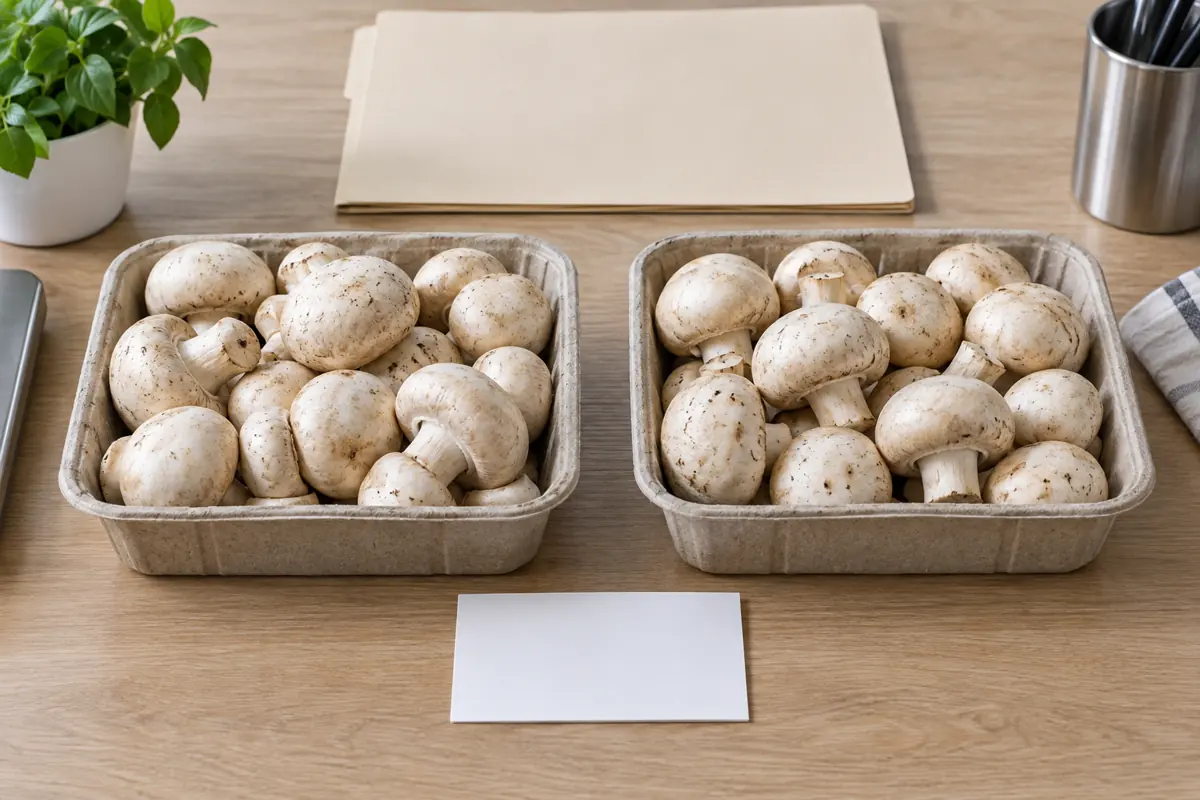
Two equivalent trays of cultivated mushrooms.
Availability is part of the decision. A certified organic line may have limited volume or longer lead times in some markets. Ask about seasonal capacity, minimum order, pack changes and contingency supply. If an organic claim is on the finished label, a conventional substitute may not be permissible without a label or recipe change. The buyer should plan that risk before launch. For a menu that treats organic as an optional preference, a preapproved conventional alternative can improve continuity.
Include documentation labor. Certified status may require certificate review, lot linking, inventory segregation and import paperwork. Those are real costs, but they may be justified by the customer requirement and brand value. Conventional procurement still requires supplier approval, food-safety and traceability checks. Put both routes into one approval matrix so the choice is made on evidence and finished-food economics rather than on a headline premium alone.
Finally, evaluate the cooked food blind when possible. Serve the two mushroom options in the exact product, at the intended inclusion level, after the planned hold or freeze-thaw cycle. Record whether trained staff or customers can detect a meaningful difference. Certification should be judged against the label requirement; sensory performance should be judged in the application. Keeping those tests separate makes purchasing discussions clearer.
Frozen mushroom handling and chain of custody
IQF mushrooms are a useful example because freezing introduces additional process and documentation steps. The GreenLand frozen mushroom category shows several forms, while the IQF frozen mixed mushroom page provides a starting point for a product inquiry. The published product page is not evidence that an available lot is certified organic. Ask for the current offer and documents tied to the specific SKU.

Mixed frozen mushroom pieces from GreenLand product page.
Clarify whether the mushrooms are raw, blanched or otherwise processed before freezing. This affects color, flavor, microbiological status and cooking directions. Ask for the blend specification, cut dimensions, maximum clumping or ice, pack size, net weight, storage temperature and shelf-life basis. Some recipes can accept loose small pieces; others require recognizable slices. A photograph of a frozen pack cannot answer all those questions. A representative sample should be cooked in the intended application.
Traceability should connect the raw material lot to processing and finished cartons. For a mixed pack, identify how the component lots and species are recorded. Organic chain of custody, if claimed, should be supported through receipt, storage, processing, blending and shipping. For conventional packs, the same lot mapping supports recall and complaint handling. Check that carton codes are legible and match the documents before the shipment is accepted.

Mixed frozen mushroom pieces from GreenLand product page in second view.
Maintain the specified frozen temperature through loading, transport and receiving. Repeated warming can create large ice crystals, stuck pieces and free water, degrading presentation and yield. Inspect a representative number of cartons for damage, leakage, heavy frost and signs of thawing. Record the receiving condition and reconcile discrepancies promptly. A frozen ingredient can meet its chemical and certification documents while arriving in poor physical condition; both aspects need acceptance criteria.
If a processor changes the pack format or source farm, ask whether the approved certificate scope, label and sensory sample still apply. A new supplier under the same trade name may need requalification. Set change-notification terms in the supply agreement. This is especially relevant to blended mushrooms, where changes may alter both organic eligibility and the flavor profile even if the broad product name stays the same.
Write a mushroom RFQ that can be verified
A useful request for quotation starts with the finished use and destination. State the species or blend, visible cut, planned recipe, annual and initial order quantity, pack size, delivery terms and target cooked yield. Add the required processing status and frozen storage condition. If organic is mandatory, name the market and the exact label claim contemplated. If it is a preference, ask for a separate conventional offer with matching physical specifications.
Request a current specification sheet, sample, origin and process description, relevant food-safety certifications, traceability example and recent testing appropriate to the product. For an organic quote, add the certifier, current certificate and scope, the processing sites and required transaction or import documents. Tell the supplier the residue and other analytical requirements with methods and limits. A vague request for "all certificates" can generate a folder of unrelated papers without answering the lot question.
Define the acceptance test before samples arrive. For example, cook equal weights in the same pan with the same oil and heat, then record cooked yield, drained liquid, piece integrity, color, aroma and taste. For a frozen mixed mushroom product, check blend proportions in several sample portions, not just one handful. If the product is used in sauce, assess it after the normal hold time. Photograph the accepted result and attach it to the approved specification.
Set a document checkpoint at purchase order and another at shipment. The first confirms that the offered product can meet the intended claim. The second matches the actual lots, codes, quantity and destination paperwork. If a document is missing or inconsistent, hold the claim and resolve it before labeling or customs submission. A certificate from a previous delivery cannot fill that gap merely because the mushrooms look similar.
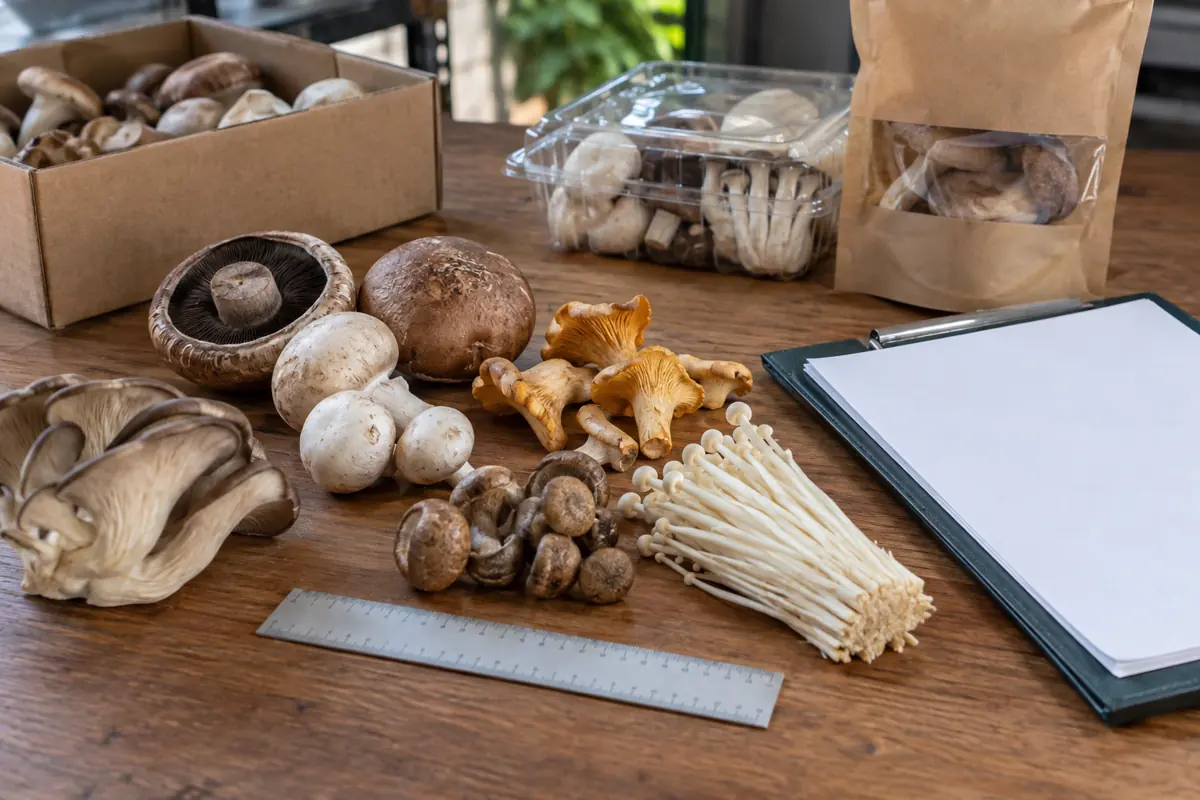
Mixed mushroom samples with cut and packing references.
At GreenLand-food, we can discuss frozen mushroom species, blends, cuts and packing against a buyer's application. We can also confirm what certificates and lot documents apply to a specific current offer. We would not describe a product as certified organic until those documents and the intended market have been checked. Send the product use, target specification, destination and expected volume; then evaluate the supplied sample and records together. The best answer to "should mushrooms be organic?" is the one that matches the customer's claim, the verified supply chain and the performance of the food you will actually serve.
The decision should be revisited when the destination or finished-product claim changes. A mushroom bought for an ordinary restaurant sauce may later be used in a retail SKU whose front label says organic. That new use needs a fresh document review, even if the ingredient itself has not changed. Similarly, a new processor or repacker can change which certification activities are covered. Put a change trigger in the approved-supplier record so marketing, quality and purchasing review it together before the next order.
A simple approval matrix can prevent expensive misunderstandings. Give each offer separate fields for species and cut, lot traceability, organic certificate and scope if claimed, residue test coverage, processing status, cooked yield, pack integrity and landed price. Mark an item "pending" when its evidence is missing rather than treating a quotation as proof. This makes it possible to compare a certified offer with a conventional one fairly while preserving the reasons for the choice. It also gives a receiving team a short list of things it can actually check when cartons arrive.
For a mixed mushroom product, ask how the blend name is maintained across production. If the approved sample contains visibly different species, a later pack with a different proportion can change flavor and cooking loss without changing the broad label. Agree whether proportions are fixed, ranged or indicative, and decide which changes require notice. Organic documentation and sensory approval should refer to the same formulation. Otherwise a buyer can have paperwork for one product and a kitchen trial for another.
Set a review date for the decision. Certificates renew, regulations change, new customer specifications arrive and supplier performance becomes clearer after several lots. The quality team can review the latest claims and test history while the chef or product developer reviews yield and sensory consistency. If the chosen route remains suitable, document why. If it no longer fits, update the specification, approved supplier list and label before substitutions reach production. This periodic check is far less disruptive than discovering a documentation gap after a shipment has been packed.
Plan a dependable frozen mushrooms supply
GreenLand-food is a professional frozen mushrooms supplier and manufacturer in China. We discuss factory-direct wholesale supply, product form, packing and shipment details against your application.