


How to Tell If Kiwi Has Gone Bad: Fresh, Cut and Frozen Signs
Sep 01, 2026
Leave a message
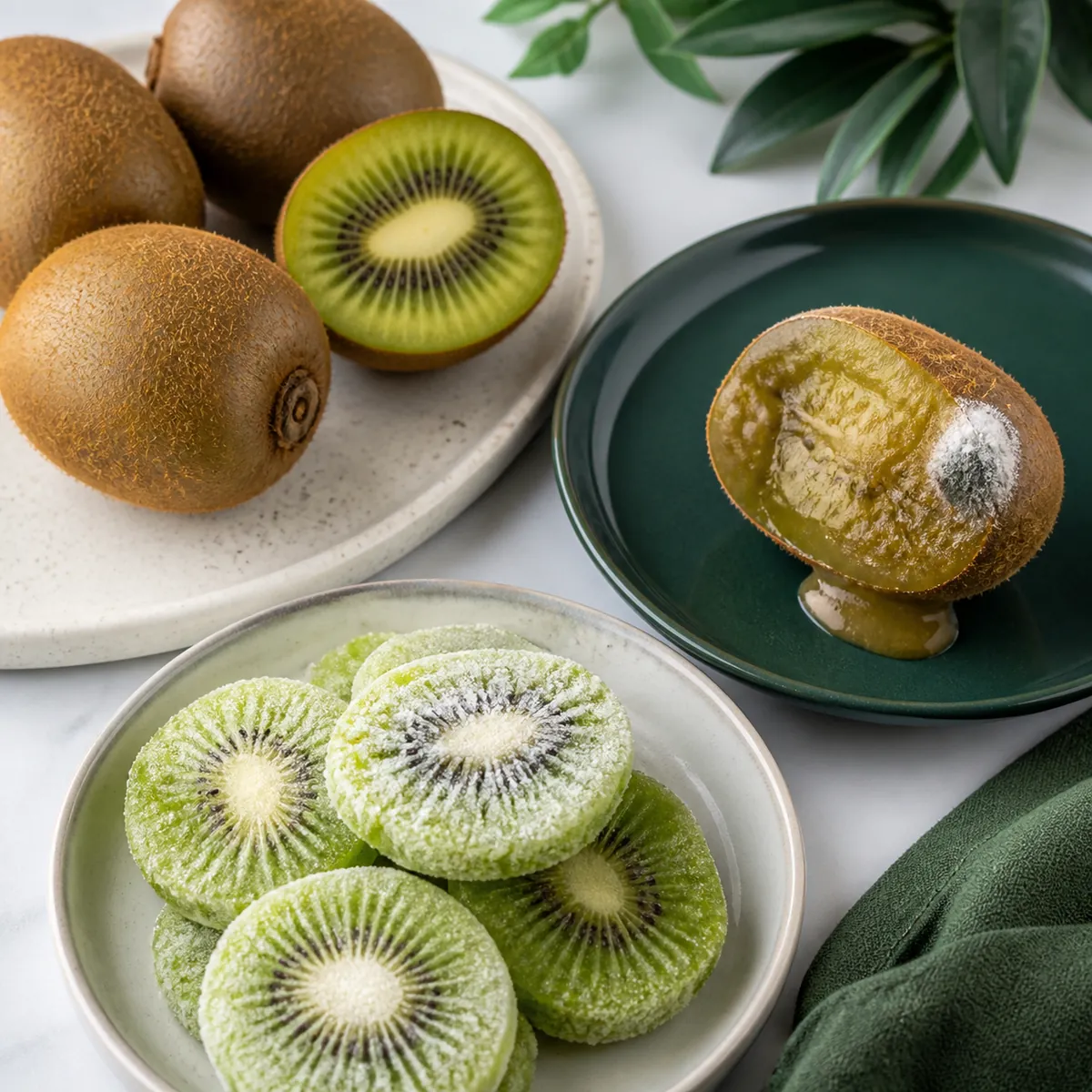
Look, smell and feel before deciding
A whole kiwi that yields slightly, smells fresh and has intact juicy flesh is ripe. A wrinkled kiwi can be old or dehydrated yet still usable after inspection. A kiwi has gone bad when mold, slime, leaking juice, gas, fermented odor, rotten odor or wet tissue collapse shows active deterioration. Do not taste suspicious fruit to decide.
Cut kiwi needs a stricter handling history because its protective skin is gone. Frozen kiwi should be judged for packaging, cold-chain history, odor and appearance. Frost, dryness and soft thawed texture reduce quality; they are not the same evidence as mold or temperature abuse.
Key takeaways
Ripe, overripe and spoiled kiwi are different
| Condition | Feel | Smell and appearance | Decision |
|---|---|---|---|
| Ripe | Slight, even give | Fresh aroma, juicy characteristic flesh | Eat or refrigerate |
| Overripe but sound | Very soft, perhaps slightly wrinkled | Strong ripe aroma, no mold or wet decay | Use immediately in a tolerant application |
| Spoiled | Collapsed, slimy or leaking | Mold, fermentation, rotten odor, wet dark breakdown | Discard without tasting |
Check a whole fresh kiwi
Begin outside. Sound kiwi skin can be fuzzy, brown and naturally uneven. Small superficial scuffs are not the same as mold. Look for fuzzy growth, split wet skin, leaking juice and broad sunken dark areas. A localized dry pressure mark may be a quality defect; a wet expanding lesion is more concerning.
If the fruit is sound but still firm, see ripening kiwi for a separate ripening decision.
Press very gently. Uniform slight give suggests ripeness. One isolated mushy pocket under otherwise firm skin can indicate a bruise or internal breakdown. A lightweight, deeply wrinkled kiwi may be dehydrated. Cut it only if there is no visible mold or objectionable odor and its handling history is acceptable.
Smell the fruit near the stem. A ripe kiwi has a mild fresh fruity aroma. Alcohol-like fermentation, vinegar-like sharpness, mustiness or rotten odor supports discard. Do not bring mold close to the face for an aggressive smell test.
When opened, look for characteristic green or gold flesh, sound radial structure and normal seeds. Some variation near the core is natural. Extensive translucent wet tissue, dark spreading breakdown, bubbles, slime or mold is not normal ripening.

Frozen kiwi is expected to be softer after thawing
GreenLand's frozen kiwi slices are intended for applications that can accept freeze-thaw texture change. Ice crystals disrupt tissue, so a thawed slice releases juice and lacks the firm fresh bite.
Judge frozen product for color, flavor, odor, pack integrity, temperature, frost, clumping and evidence of thaw-refreeze. Do not reject a safe lot merely because it behaves like frozen fruit, but do not ignore cold-chain evidence.
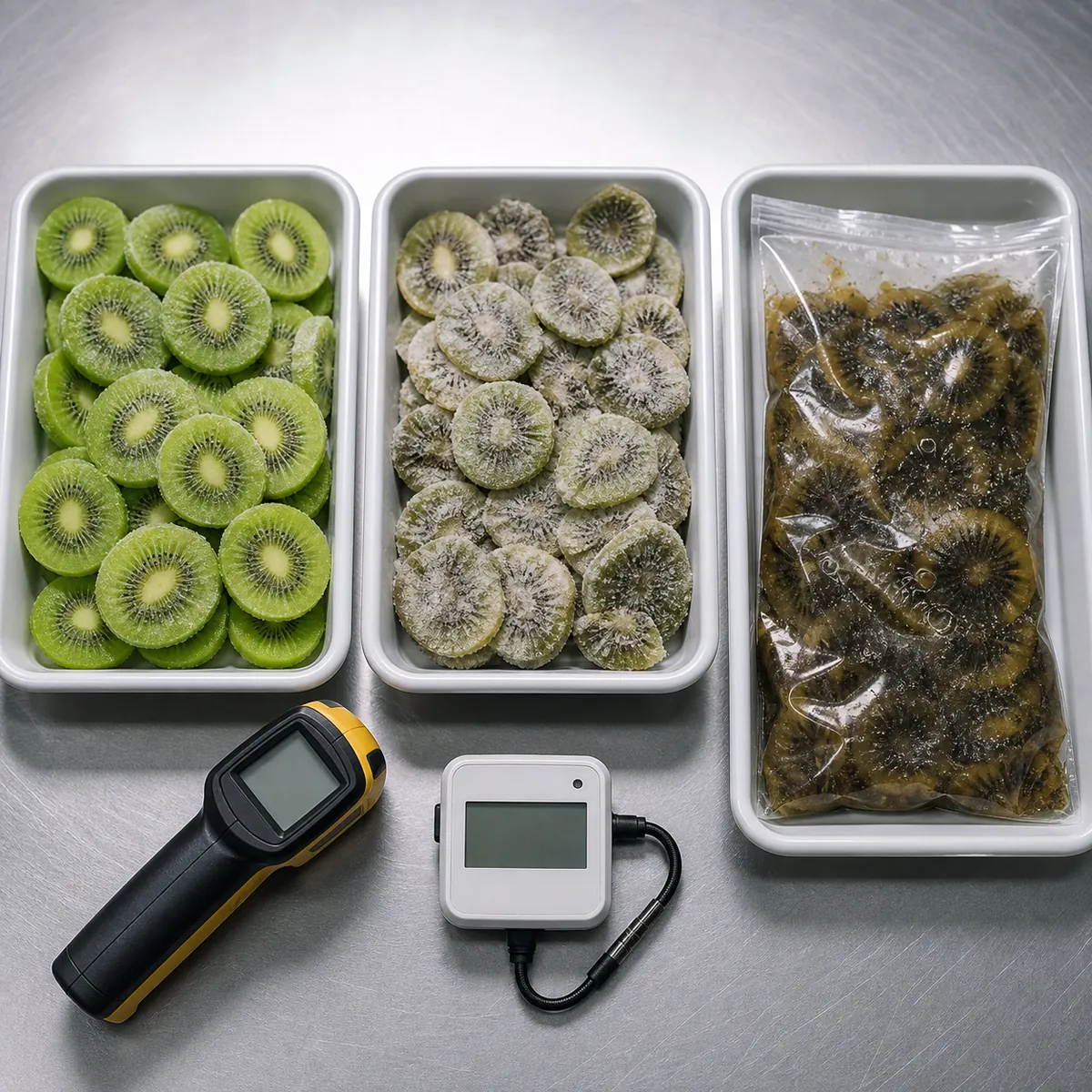
Check cut kiwi more conservatively
Cut fruit has no protective skin and more moist surface exposed to handling. It should be refrigerated promptly in a clean covered container and kept away from raw meat, seafood, unwashed produce and leaking packages. The container should not cycle repeatedly between room temperature and refrigeration during service.
Surface drying or a small color change can be a quality issue. Slime, gas, cloudy leaking liquid, mold or sour fermentation odor are discard signs. If the cut kiwi was left outside safe temperature control for an uncertain period, appearance alone cannot prove that it is acceptable.
Commercial kitchens need a written cut-fruit policy, including preparation time, refrigeration, container labeling, utensil control and discard point. Do not copy a household blog's shelf-life number in place of the applicable food code and site plan.
Mold on a soft, moist fruit is not handled like mold on a hard dry cheese. Do not slice away a visible patch and serve the remainder. Discard the affected kiwi and inspect nearby cut fruit and the container for cross-contact.
A six-step kiwi inspection sequence
- Confirm the state and history. Whole fresh, cut chilled and frozen kiwi have different expected textures. Check how they were stored.
- Inspect the package or skin. Look for leaks, swelling, broken seals, mold, wet lesions and freezer damage.
- Check odor without tasting. Reject fermented, musty, sour or rotten odor that is not characteristic of the product.
- Assess texture. Distinguish even ripe give from a wet collapsed pocket. For frozen fruit, assess it under the defined frozen or thaw method.
- Cut a representative sound whole fruit. Inspect flesh, core, seeds, juice and internal defects. Do not cut and taste fruit that already has a discard sign.
- Decide and document. Use, downgrade for an appropriate cooked application, hold for technical review or discard. For a commercial lot, retain lot, photos, temperature and sample evidence.
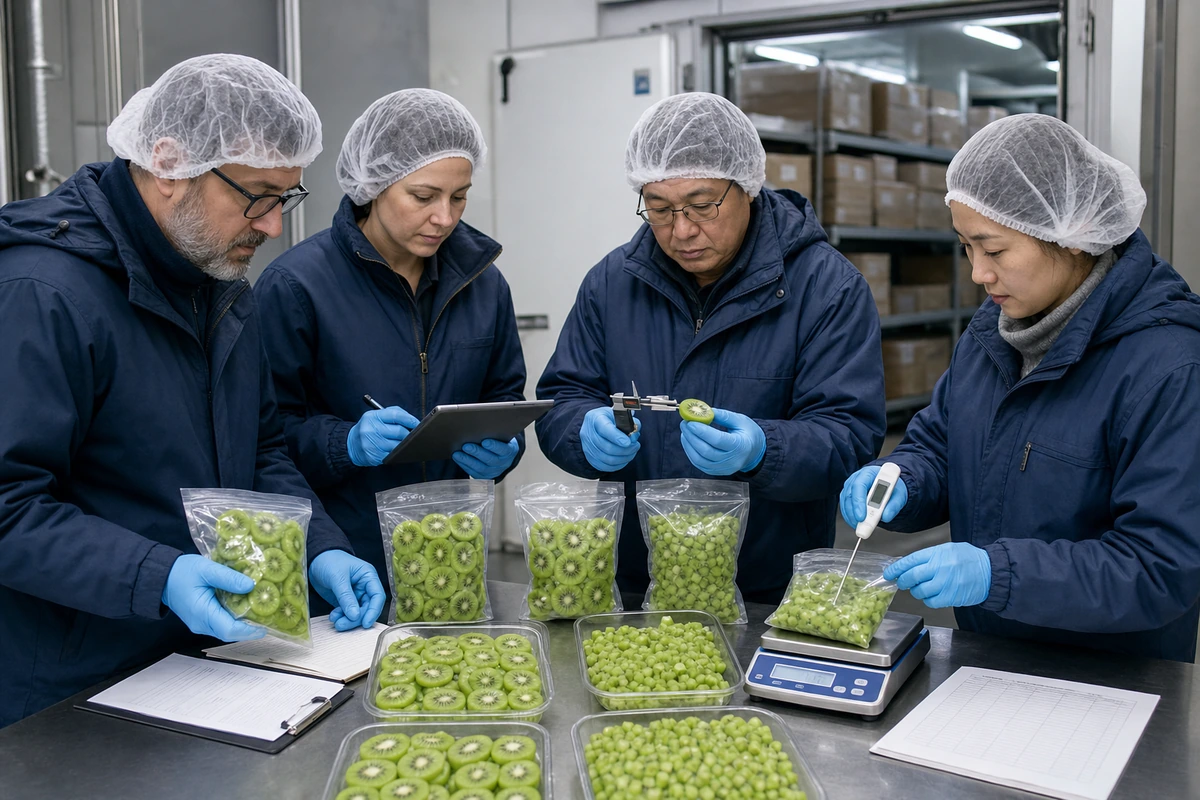
A buyer complaint needs evidence
Photograph the unopened carton, label, bag, product frozen and product after the agreed thaw method. Record lot, quantity affected, product and ambient temperatures, receiving time and storage history.
Describe the defect precisely: freezer burn, clump, dark color, off odor, leakage, mold, broken pieces or excessive drip. "Bad kiwi" is too broad for root-cause work.
Normal frozen changes versus rejection signs
| Observation | Meaning | Action |
|---|---|---|
| Soft after thawing | Expected freeze-thaw texture change | Judge against approved application, not fresh fruit |
| Dry pale frost patches | Freezer burn or dehydration quality loss | Assess severity, package and specification |
| Large solid clump | Compression, surface moisture or temperature cycling | Check receiving evidence and contract tolerance |
| Leaking pack and off odor | Possible thawing and deterioration | Hold or reject under food-safety procedure; do not taste |

Use a defined thaw test
The same frozen lot can look different after room-temperature thawing, refrigerated thawing or direct blending. Write the method, sample mass, time and evaluation point so buyer and supplier compare the same condition.
Measure drip when it affects usable yield, but do not treat all released juice as waste if the application can use it. Record color, odor, flavor, piece integrity and clumps against the approved reference.
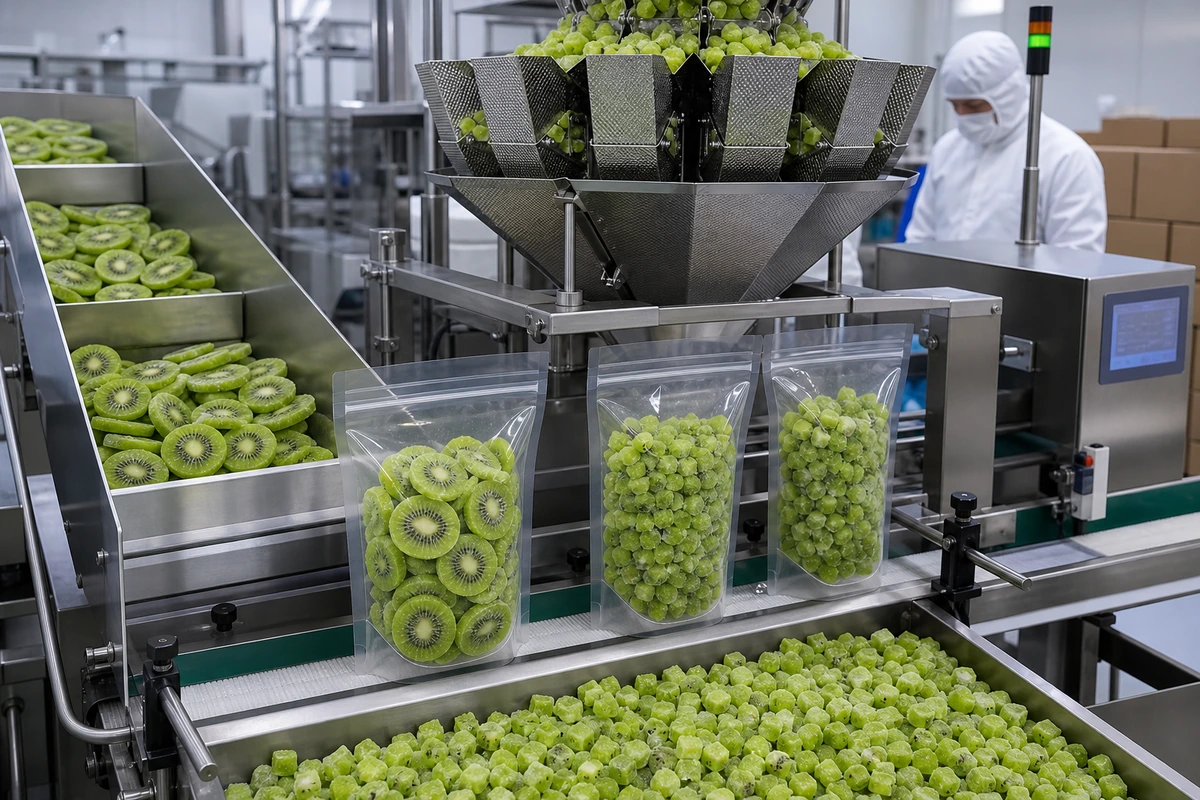
Packing and cold chain reduce avoidable defects
Moisture-resistant packaging, proper seals and stable frozen storage limit dehydration, odor pickup and recrystallization. Confirm net weight, inner bag, carton, label and lot-code requirements.
At receiving, inspect temperature and packaging before the load warms on the dock. Evidence collected early is more useful than a complaint raised after mixed storage histories.
Separating quality defects, spoilage and safety decisions
Quality describes whether kiwi meets the intended color, flavor, texture and appearance. Spoilage describes deterioration such as mold, fermentation and wet breakdown. Food safety considers hazards that may not always be visible. These categories overlap but are not identical. A dry freezer-burned slice can be poor quality without visible spoilage, while time-temperature abuse can create concern before dramatic mold appears.
Start with handling history. Ask when whole fruit arrived, when cut fruit was prepared, how it was refrigerated, whether a frozen bag remained hard and whether power or transport interruptions occurred. A visual inspection cannot certify a product with an unknown or unacceptable history. When uncertainty is material, use the conservative site procedure.
Whole kiwi has a protective skin, but defects can enter through wounds and bruises. Look at the stem end, blossom end and pressure points. A dry superficial mark is different from a moist enlarging lesion. One-sided collapse can indicate impact damage. Separate fruit for closer inspection before damage spreads through a storage tray.
Wrinkling mainly indicates water loss and age. It can occur before the flesh spoils. Weighing a sample or comparing with a sound reference can reveal dehydration, but the practical decision still depends on use. A slightly shriveled sound fruit may suit puree; it may fail a retail appearance standard. Do not sell a downgrade as premium fruit.
Internal disorders can be hidden. Cut representative fruit from a lot that shows unusual firmness, color or storage behavior. Inspect the core and flesh for translucency, water-soaked areas, browning and off odor. Record whether the defect is isolated or systematic. A supplier complaint needs more than one carefully selected bad fruit and more than one carefully selected good fruit.
For cut kiwi, container condition adds evidence. Condensation, cloudy liquid, gas pressure, film failure and contaminated utensils can explain deterioration. Keep preparation labels and use-by controls visible. Never refresh an old container by adding new fruit on top; that destroys age control and can spread contamination.
Mold requires decisive handling. Do not smell it closely, taste around it or cut the visible patch from soft kiwi. Discard the affected fruit and inspect adjacent product and food-contact surfaces. Follow the organization's cleaning and cross-contamination process, especially when moldy juice has leaked.
Frozen packages should be inspected unopened first. Note broken seals, punctures, crushed cartons, staining, ice outside the bag and label condition. A bag with loose pieces and light internal frost can be normal. A wet carton, leaking bag or large deformed refrozen block needs technical review and documented temperature evidence.
Define the thaw method before comparing color and drip. Use the same sample mass, container, time and temperature for approved and complaint samples. Photograph both at matching points. If one is evaluated half-frozen and the other fully thawed, the comparison will exaggerate differences.
Freezer burn appears as dry, pale or frosted areas caused by moisture loss and oxidation. It can reduce aroma, color and texture. Quantify the affected percentage and compare it with the contract. Severe freezer burn can justify a quality claim, but the term should not be used as shorthand for microbial spoilage.
Clumping has several possible causes: compression before full freezing, surface moisture, packaging pressure or temperature cycling. A clump does not reveal its cause by appearance alone. Measure the clumped fraction, inspect frost and packaging, review temperature records and compare with the supplier's free-flow specification.
Use odor and flavor testing safely. Qualified staff may taste a sample that has passed history, package, visual and odor checks under the company procedure. Nobody should taste a product with mold, leakage, fermentation odor or suspected temperature abuse. Tasting is a quality evaluation, not a way to prove safety.
A complaint sample should remain traceable. Retain original packaging, lot code, receipt documents and remaining product under controlled storage. Identify how much of the lot is affected and how it was sampled. If the evidence may support a food-safety investigation, follow the organization's escalation and sample-handling requirements.
Corrective action depends on cause. Freezer burn may point to film barrier, sealing or storage duration. Clumps may point to temperature cycling or excess surface water. Dark color may originate in maturity, oxidation or treatment. Off odor and leakage demand a more serious hold and investigation. One generic "bad kiwi" correction will miss these differences.
Prevention combines sound raw fruit, hygienic cutting, rapid and controlled freezing, suitable packaging and stable cold chain. Purchasing specifications should define the quality limits that matter, while the food-safety system controls hazards. Receiving evidence, a reference sample and precise language allow buyer and supplier to solve problems without confusing normal frozen texture with genuine deterioration.
A buyer-side frozen kiwi hold and release workflow
When a delivery looks abnormal, stop the affected lot from entering production. Identify the exact cartons and keep them under proper frozen conditions. A hold should protect evidence and prevent accidental use; it should not leave samples warming on a desk.
Review receiving records: seal, carton, vehicle and product temperatures as required by the procedure, arrival time, pallet position and visible frost or wetness. Compare with unaffected lots received and stored under the same conditions.
Select a representative sample across cartons and pallet positions. Record the sampling method. Do not open only the worst bag or only an attractive center bag. Photograph unopened packaging, labels and the frozen product.
Classify the observation precisely. Separate frost, freezer burn, clumps, broken slices, dark color, off odor, leakage, foreign material and mold. Quantify affected weight or percentage where possible and compare with the written specification.
Run the agreed thaw or direct-use test in a controlled area. Use the approved sample mass, temperature and time. Record drip, color, odor, flavor where safe, piece integrity and application performance. Keep complaint and reference samples under identical conditions.
Escalate potential safety or temperature-abuse evidence immediately to qualified personnel. Quality staff should not release a lot merely because a small cooked test tastes acceptable. Follow the food-safety plan, legal obligations and traceability procedure.
Contact the supplier with evidence rather than a broad claim. Send lot and pack codes, quantity, receiving history, photographs, measurements and the agreed test result. Ask for processing, packing and dispatch records relevant to the defect.
Decide disposition under authority: release, sort, downgrade to an approved application, return, destroy or continue investigation. A commercial decision should document why the action protects safety, legality and customer specification.
Preserve retention samples and records for the required period. If only part of the lot is affected, maintain separation and identification. Do not blend questionable material with good product to dilute a defect.
Complete root-cause review. Packaging damage, process water, freezing performance, warehouse cycling and transport can create different symptoms. Correct the responsible control instead of adding a generic inspection.
Update the specification or sampling plan only with evidence and approval. A tighter visual limit may not prevent temperature cycling; a temperature record may not control slice breakage. Match the control to the failure mode.
This workflow turns "kiwi has gone bad" into an actionable decision with state, defect, history, test and disposition. It protects the buyer and supplier from confusing normal thaw softness with true spoilage or a serious cold-chain failure.
When to use, downgrade, hold or discard
Use: the kiwi matches its fresh or frozen specification, handling history is acceptable and no discard sign is present. Continue normal rotation and processing.
Downgrade: a sound kiwi misses a presentation standard but fits an approved immediate puree or cooked use. Document the rule; never downgrade mold, leakage or temperature abuse.
Hold: a commercial lot has uncertain temperature, damaged packs, unexpected clumps, abnormal color or conflicting evidence. Keep it identified and controlled while qualified staff investigate.
Discard or reject: mold, slime, leaking wet breakdown, fermentation odor, rotten odor or a confirmed unacceptable history makes use inappropriate. Follow waste and food-safety procedure.
For each decision, record lot, quantity, observation, temperature or handling evidence, photographs, person authorizing and final disposition. This prevents held product from returning accidentally and allows supplier review.
A decision matrix should be tailored to the operation and jurisdiction. This guide supplies observable distinctions, not a replacement for a food-safety plan or qualified assessment.
The central discipline is to avoid two errors: discarding sound frozen fruit because it thawed soft, and using genuinely deteriorated kiwi because the defect is called normal ripening. State, evidence and history keep those decisions separate.
Document a recurring kiwi quality complaint
Record whether the complaint concerns whole fresh fruit, prepared cut fruit or frozen pieces. Capture the supplier or production lot, receipt date, storage condition, opening time and photographs. Terms such as "soft," "brown" or "bad" are not enough without showing the location, severity and odor or leakage observations.
Separate food-safety disposition from quality scoring. Mold, slime, leakage, fermented odor or evidence of temperature abuse requires action under the operation's food-safety procedure. Normal ripening softness, freezer drip or loss of firm fresh texture may instead be a suitability problem, although any uncertain food should not be served.
Compare unopened and opened units from the lot when safe to do so. Check whether damage clusters near crushed cartons, warm zones, door areas or partially sealed bags. For frozen fruit, review receiving temperature, freezer records, package integrity, frost and signs of thaw-refreeze exposure.
Keep a retained sample only when policy and safe storage allow. Send the supplier the original label, lot code, quantity affected, storage record and defined observation. This evidence supports a focused investigation into raw material, packing, transport or local handling.
Close the complaint with a documented decision: accept, sort, redirect to an approved use, hold for review or discard. Then update the specification or handling instruction if the same nonconformity repeats.
Frequently asked questions
Is a very soft kiwi bad?
Not necessarily. It may be overripe but usable if there is no mold, slime, leakage or off odor. Cut and inspect it. Discard fruit with wet collapse or uncertain handling.
Can you eat kiwi with wrinkled skin?
Wrinkling can indicate water loss and age. If there is no mold or objectionable odor, cut it and assess the flesh. Deep collapse, leakage and decay call for discard.
Can you cut mold off a kiwi?
No. Kiwi is a soft, moist fruit. Discard the moldy fruit rather than trimming the visible patch and eating the rest.
Why is thawed frozen kiwi mushy?
Ice crystals disrupt cells, so thawed kiwi is softer and releases juice. That is a quality characteristic of frozen fruit, not automatic spoilage.
Is freezer-burned kiwi unsafe?
Freezer burn is mainly dehydration and oxidation that reduce quality. Safety also depends on continuous frozen storage and sound packaging. Discard product with off odor, mold, leakage or uncertain temperature history.
What evidence should a buyer send with a frozen kiwi complaint?
Send lot and label photos, quantity affected, receiving and storage temperatures, unopened and opened pack images, frozen condition, agreed thaw-test results and a precise defect description.
Set clear frozen kiwi acceptance criteria
GreenLand-food is a frozen kiwi supplier and manufacturer supporting factory-direct and wholesale programs. Share your cut, application, color and texture target, pack, market and volume so our team can review frozen kiwi supply, sample and quality requirements.