


What Do Chickpeas Taste Like?
Aug 31, 2026
Leave a message
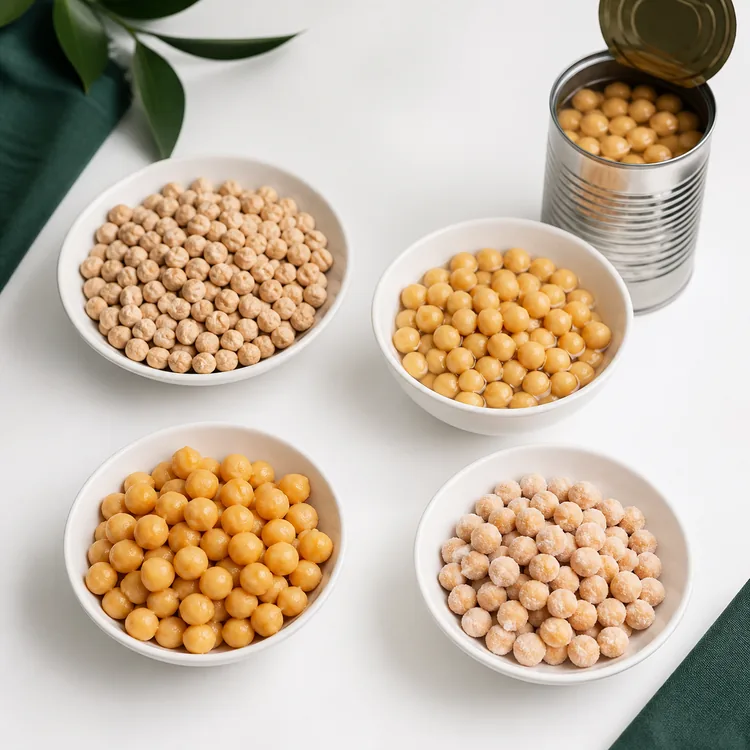
Expect a mild bean with a nutty aroma and a creamy, starchy bite
A well-prepared chickpea should not taste sharply bitter, sour, metallic or musty. Its flavor is subtle: a light toasted-nut impression, a clean earthy base and a gentle sweetness that becomes more noticeable when the bean is cooked evenly. The mouthfeel does much of the work. An intact bean gives slight resistance at the skin, then yields to a creamy center; a puree-ready bean crushes almost completely; a roasted bean shifts toward toasted flavor and crunch.
For a purchasing or product-development team, "mild and nutty" is only the starting point. The useful question is whether the flavor stays clean and whether the texture matches the final process. A salad needs intact, tender-firm beans. Hummus needs a soft center with low graininess. A curry or frozen ready meal needs enough structure to survive another heating cycle without a hard core or a broken, pasty finish.
Flavor is deliberately quiet
Chickpeas carry herbs, spices, acids, sauces and fats without disappearing completely or dominating the formula.
Texture changes the perceived taste
A chalky center reads dry and undercooked; an even creamy center reads richer; excessive softness can make the bean seem flat.
Product form is not a minor detail
Dry, canned, freshly cooked and IQF frozen chickpeas arrive at different stages of hydration, heat treatment and convenience.
Test in the real application
A pleasant thawed sample can still fail after mixing, freezing, reheating and holding, so approve the full process rather than one spoonful.
What creates the characteristic chickpea flavor?
The familiar description - mild, nutty and earthy - is accurate as long as it is not exaggerated. Chickpeas do not taste like roasted almonds or peanuts. The "nutty" part is a warm aroma impression that becomes clearer when moisture is reduced or the surface is browned. The center is more like a soft, starchy legume: gently savory, faintly sweet and clean when the raw material and process are sound. This restraint explains why chickpeas work in tahini-rich hummus, tomato-based curry, lemony salad, vegetable soup and seasoned snack products.
Variety matters. The widely sold beige Kabuli type is larger, smoother and generally milder, with the creamy texture many Western retail, foodservice and hummus programs expect. Desi chickpeas are smaller, darker and more assertive, with more hull and a stronger earthy impression. The Academy of Nutrition and Dietetics also distinguishes the plump beige Kabuli type from the smaller, darker Desi type. A buyer should therefore confirm variety and visual identity rather than accept "chickpea" as a complete specification.
Heat treatment and storage also change the aroma. Research on sterilised chickpeas found measurable sensory changes during storage and identified multiple odor-active volatile compounds. The practical lesson is not that every retort or canned product develops the same flavor. It is that packing method, heat exposure, storage time and formulation can change what reaches the palate. A current sample from the actual supplier and pack is more reliable than a broad assumption that all canned beans taste metallic or all frozen beans taste neutral.
Seasoning can mask weak material, but it cannot fully repair a stale or musty raw note, a sour packing-liquid character or a hard, chalky center. Evaluate plain chickpeas first. Once the base flavor is accepted, test them again with the actual salt, acid, spice, oil and sauce system. That two-stage approach separates ingredient quality from recipe preference.

The conveying view shows a product-specific handling step before final sample checks for color, size distribution, skin condition and cooking performance.
Texture is part of the flavor answer
A cooked chickpea has two main structures: the thin outer skin and the cotyledon inside. At the right endpoint, the skin offers light resistance and the center is hydrated all the way through. The bite moves from tender to creamy without a dry white core. This produces the "buttery" impression often used in sensory descriptions, even though no butter is present.
Undercooked beans feel hard or chalky in the center and can seem drier and more bitter than the same lot cooked correctly. Overcooked beans lose shape, shed skins and become pasty. Neither defect is just cosmetic. Hard centers disrupt hummus smoothness and ready-meal eating quality; excessive softness creates breakage, cloudy sauce, poor salad presentation and uneven portioning.
The correct endpoint depends on the application. There is no single "best" firmness for every buyer. Define the target in language that can be tested: firm-tender and intact for salad, crushable with moderate pressure for hummus, or structurally resilient for a product that will receive another cook, freeze and reheat cycle.
Dried, canned, freshly cooked and frozen chickpeas compared
These forms are related, but they are not operationally interchangeable. The table describes the usual starting point, not an unbreakable rule. Supplier process, variety, pack medium, cooking degree and storage can move a sample away from the norm.
| Product form | Typical flavor | Typical texture | Best commercial fit | Main buyer check |
|---|---|---|---|---|
| Dried, uncooked | Clean raw pulse aroma; final flavor depends heavily on age, soaking water, cooking liquid and seasoning. | Hard before cooking; widest control over the final endpoint. | Signature recipes, falafel from soaked uncooked beans, long-cook kitchens and programs able to manage soaking and yield. | Crop/lot age, hydration rate, cook time, defects, foreign material and cooked yield. |
| Canned or retort | Usually mild and integrated with the packing liquid; may show salt, acid, retort or pack-specific notes. | Fully cooked and often soft; consistency varies by brand, fill medium and thermal process. | Shelf-stable foodservice, retail pantry products, quick salad, soup and hummus preparation. | Drained weight, salt/ingredients, can integrity, bean breakage, packing-liquid flavor and open-pack usage. |
| Freshly cooked | Can deliver the clearest custom seasoning and strongest fresh-cooked aroma when the batch is well controlled. | Can be tuned from firm-tender to puree-soft, with high operator control and batch variability. | Central kitchens, premium hummus, prepared salads and formulas with an established cook-and-cool process. | Soak record, endpoint test, yield, cooling, holding time and cross-shift repeatability. |
| IQF frozen, pre-cooked | Mild, clean and lightly nutty when raw material, heat treatment, draining and cold chain are controlled. | Specified as firm-cooked or tender-cooked; individually frozen pieces support portioning and fast line use. | Frozen ready meals, foodservice, salads, bowls, soups, curries, retail frozen packs and industrial processing. | Cooking degree, hard/mushy defects, separation, surface ice, thaw drip, pack integrity and temperature history. |
The three texture endpoints buyers should distinguish
Firm-tender means the bean is cooked through but still has an intact outline and a controlled bite. It works for salads, grain bowls, visible garnishes and formulas that receive more heat. Firm-tender does not mean a hard center. Split a sample: the interior should be hydrated and even rather than white, dry or chalky.
Creamy means the center crushes with moderate finger or fork pressure and blends without persistent grit. That endpoint suits hummus, dips, puree, thickened soup and fillings. Skin-on and peeled formats behave differently, so a buyer seeking an exceptionally smooth puree should state whether skins are acceptable and test the actual milling or blending process.
Mushy is not simply "very creamy." It describes loss of structural control: broken beans, excessive loose skins, paste on the surface and rapid disintegration during mixing. Some puree processes can use a very soft bean, but a salad or ready meal will usually treat widespread mushiness as a defect. The signed specification should separate the target endpoint from the allowed percentage of broken or mushy pieces.
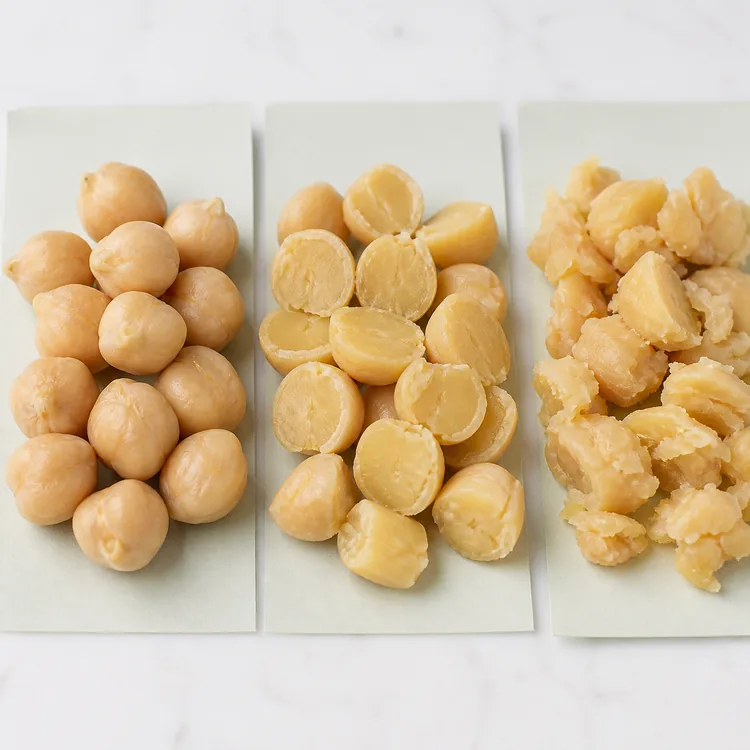
Cutting and crushing a sample reveals whether the center is evenly cooked and whether softness remains controlled.
Buyer control
Do not approve "soft" or "firm" without an agreed test
Sensory adjectives are useful during development but weak in a purchase contract unless the parties share a method. Ask the supplier to prepare the sample according to a written thawing or heating instruction, then evaluate a defined quantity at a defined temperature. Record hard centers, mushy beans, split/broken pieces, loose skins, color, odor, flavor, thaw drip and application performance.
For repeat orders, keep a retained approved sample, photos and a scorecard. The goal is not to pretend that an agricultural ingredient has zero natural variation. It is to define a commercial range that the purchasing, QA and production teams can recognize and enforce.
Match chickpea form and texture to the finished product
The same mild flavor is an advantage in many applications, but the required structure changes sharply. A useful form decision starts with the last processing step the chickpea must survive.
| Application | Preferred sensory target | Suitable starting form | Validation point |
|---|---|---|---|
| Hummus and dips | Clean flavor, very soft center, low graininess, controlled skins | Tender-cooked or peeled chickpeas; custom-cooked dry beans | Blend with the actual tahini, water, oil and acid system; measure final smoothness and yield |
| Salads and bowls | Mild clean taste, intact skin, firm-tender bite, low breakage | Firm-cooked IQF, controlled fresh-cooked or suitable canned | Test after draining, dressing, chilled holding and transport vibration |
| Soup, curry and stew | Tender center with enough structure for sauce cooking | Firm-cooked IQF, cooked dry beans or canned added late | Run the full simmer; check hard centers, sauce thickening and breakage |
| Frozen ready meals | Stable flavor and shape after freeze, storage and reheat | Application-matched IQF frozen chickpeas | Approve after sauce mixing, finished-product freezing, storage, reheat and hold |
| Roasted snack | Toasted aroma, dry crisp exterior, no hard glassy center | Cooked and well-drained beans selected for roasting | Control initial moisture, oil pickup, seasoning adhesion and crispness after packing |
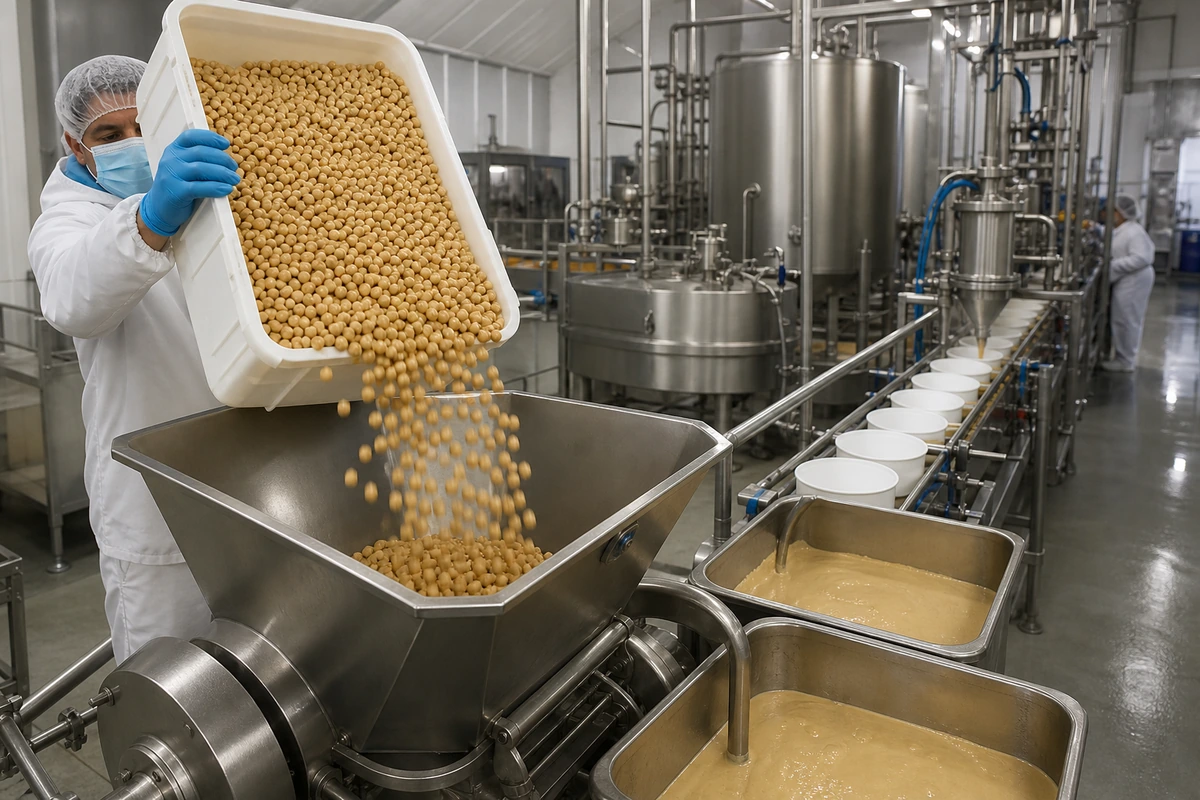
A puree application rewards an evenly soft center and low graininess; visible whole-bean perfection matters less than blending performance and yield.
Why hummus and salad need different chickpeas
Hummus exposes undercooking immediately. A chalky center becomes persistent grit, forces longer milling and may require more water or oil to reach the target viscosity. A very soft, evenly hydrated bean can improve smoothness and reduce process resistance. If skins are a concern, compare skin-on, peeled and post-cook skin-removal routes on the actual equipment rather than assuming one format is universally best.
Salad reverses the priorities. The bean remains visible and must hold its outline through draining, mixing, dressing, filling and chilled distribution. Excessive softness creates paste on equipment and an untidy pack. The ideal bean is tender throughout yet firm enough to survive handling. A light, neutral flavor allows the dressing to lead while the chickpea still contributes a recognizable earthy, nutty base.
This is why GreenLand-food confirms the intended application before the cooking degree. Our garbanzo bean cooking guide explains the household and batch-cooking endpoints in more detail; a commercial frozen order converts that endpoint into a supplier specification and sample approval.
A six-step commercial sensory test for chickpea samples
Use the same written preparation and scorecard for every supplier sample. Keep the plain test separate from the finished-recipe test so the team can identify whether a problem belongs to the ingredient or the formulation.
- Confirm identity and condition. Record the variety or declared product type, lot, pack size, ingredient statement, cooking degree and frozen or ambient condition. Photograph the unopened pack and sample. For IQF product, note whether the pieces are free-flowing, lightly joined or frozen into a hard block.
- Prepare by one controlled method. Follow the supplier instruction or the buyer's agreed thawing/heating protocol. Fix the sample weight, water or sauce addition, time, temperature and drain period. A result prepared hot on one day and chilled on another cannot support a fair comparison.
- Smell and taste the plain bean. Look for a mild pulse aroma, gentle nuttiness and a clean finish. Record sour, fermented, metallic, musty, rancid, burnt, excessively salty or stale notes. Do not cover the sample with lemon, garlic, cumin or tahini before this stage.
- Cut, crush and count. Split at least several beans from different parts of the sample. Check center hydration, skin adhesion, firmness and creaminess. Count hard centers, mushy beans, split/broken pieces and excessive loose skins using the contract method.
- Run the finished application. Blend the hummus, dress and hold the salad, simmer the curry, or complete the ready meal's cook-freeze-reheat cycle. Measure yield, viscosity, breakage, sauce pickup, drip and portion appearance where they matter.
- Approve a range, not a memory. Save the score, photos, method and retained reference sample. State acceptable limits and the action for an out-of-range lot. Repeat the test on a pre-shipment or production batch when the order risk justifies it.
Off-flavors and texture faults: what they may mean
A single descriptor is not a diagnosis. Compare the sealed pack, plain prepared sample, process record and storage history before assigning a cause.
| Observation | Possible explanation | Buyer action |
|---|---|---|
| Hard or chalky center | Insufficient hydration/cooking, aged dry lot, unsuitable process endpoint or uneven batch heating | Cut multiple beans, quantify the defect, compare process lots and confirm the intended cooking degree |
| Excessive mushiness or breakage | Overcooking, rough handling, long hot hold, unsuitable thaw/reheat method or weak raw material | Count broken/mushy pieces before and after the real process; adjust endpoint or application |
| Sour or fermented note | Pack formulation, temperature abuse, opened-pack deterioration or process deviation | Hold the lot, check pack integrity and time/temperature records, and follow the food-safety escalation procedure |
| Metallic or strongly retort-like note | Pack-specific flavor, thermal process, packing liquid or prolonged storage | Compare another lot/pack, test drained and rinsed product where appropriate, and evaluate in the finished formula |
| Musty, stale or oxidized note | Aged raw material, moisture exposure, storage history or pack deterioration | Check lot age, odor on opening, adjacent stock and supplier retention sample; do not mask into production |
| Heavy surface ice or hard frozen block | Inadequate draining, slow freezing, damaged pack or temperature fluctuation | Measure separation and loose ice, inspect cartons, review temperature history and test thaw drip |
What to put in an IQF frozen chickpea specification
Start with product identity: mature beige Kabuli whole chickpeas, peeled chickpeas or another declared form. State whether the beans are firm-cooked for further processing or tender fully cooked for short heating and blending. A label such as "pre-cooked" is incomplete unless the sample endpoint and intended application are clear.
Add sensory and defect criteria: natural beige color, mild clean chickpea flavor, no objectionable foreign odor or taste, no dry/chalky center at the agreed level, and limits for hard, mushy, split/broken or loose-skin defects. Define the test method. Include size or count range when visual uniformity affects a retail pack, salad or bowl.
For frozen handling, state free-flowing condition, allowed clumps or loose ice, net weight, inner bag and carton format, storage temperature, shelf-life basis and receiving checks. Frozen product should remain under a stable cold chain; a temperature excursion can increase clumping, dehydration and texture change even when the carton still looks acceptable.
GreenLand-food's IQF frozen chickpea page shows the relevant whole, cooked and peeled supply context. We confirm the actual form, cooking degree, packing and documents for the order rather than treating every listed option as automatic.

Manual sorting supports removal of visible foreign material and product defects; the buyer still confirms measurable limits through the signed specification and batch checks.
Packing, MOQ, documents and shipment questions
Product form is only useful if it arrives in a pack the receiving and production teams can handle. Retail programs may need 500 g or 1 kg private-label bags; foodservice may prefer 1 kg, 2.5 kg or 5 kg inner packs; industrial users may select a 10 kg carton. Confirm net weight, bag material, carton strength, label language, date coding, barcode and pallet plan. The exact available configuration depends on order quantity and the packing line.
MOQ should be confirmed against the product, packing and order plan. A stock bulk format can have a different minimum from a custom printed retail bag. Mixed-container planning may be possible when compatible frozen items, production timing and loading rules align, but it should be reviewed before a buyer promises a launch quantity.
Ask for the current product specification, ingredient and allergen statement, batch COA or agreed test report, packing list, commercial invoice, certificate of origin and any destination-specific certificates or declarations required by the contract. Confirm certificate holder, scope and validity rather than relying on a logo in a sales sheet. Microbiological, residue, heavy-metal or other test items should match the destination, customer standard and intended use.
For frozen shipments, align storage and transport at or below the agreed frozen temperature, reefer settings, loading condition, carton inspection and arrival checks. The broader GreenLand-food frozen vegetable range explains our category-level packing and cold-chain approach. If your team needs detailed storage distinctions among dry, opened canned, cooked and frozen beans, use our separate chickpea storage guide.
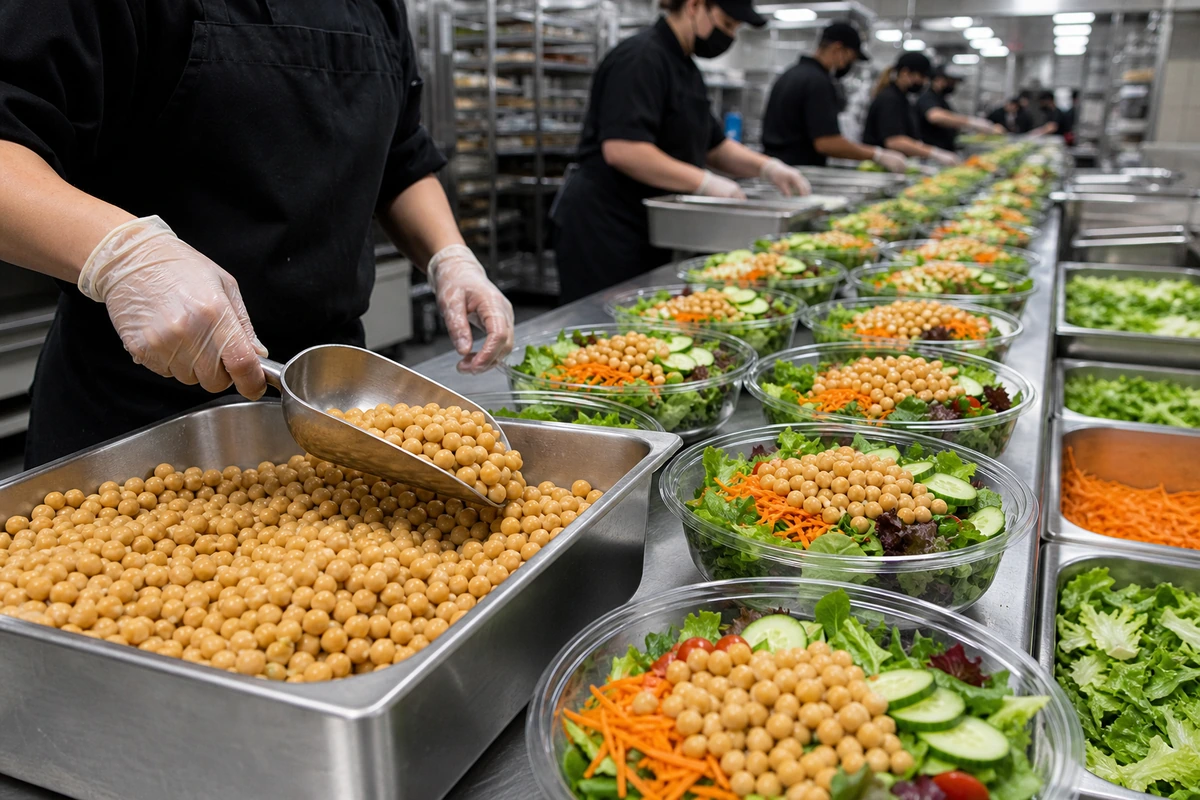
Visible salad applications need uniform whole beans that stay tender without turning pasty during portioning and chilled holding.
A practical form decision for purchasing teams
Choose dried chickpeas when the recipe depends on a custom soak/cook route and the operation can control labor, yield and cooling. Choose canned or retort chickpeas when ambient shelf stability and immediate use matter more than full control of the cooking endpoint. Choose freshly batch-cooked chickpeas when a central kitchen can repeat the process and wants a fresh-cooked flavor profile.
Choose IQF frozen chickpeas when the program needs a pre-cooked, portionable ingredient in a frozen supply chain - especially for ready meals, foodservice, retail frozen packs, salads, bowls, soups and curries. Confirm whether firm-cooked or tender-cooked product fits the formula. Do not pay for convenience while leaving the texture endpoint undefined.
The best form is the one that produces the target flavor and texture after the full commercial process, at the required labor, packing, inventory and document level. A disciplined sample trial makes that tradeoff visible before volume is committed.
Source IQF Frozen Chickpeas with GreenLand-food
GreenLand-food is a professional IQF frozen chickpeas supplier and manufacturer in China, providing factory-direct wholesale supply for importers, food manufacturers, foodservice distributors, retail brands and private-label programs.
Send the product form, specification, packing, quantity, application, destination, private-label needs and requested documents. We will review the cooking degree, sample method, pack plan and cold-chain requirements before quotation.