


Broccoli Florets: Anatomy, Specifications, Fines and Usable Yield
Sep 01, 2026
Leave a message
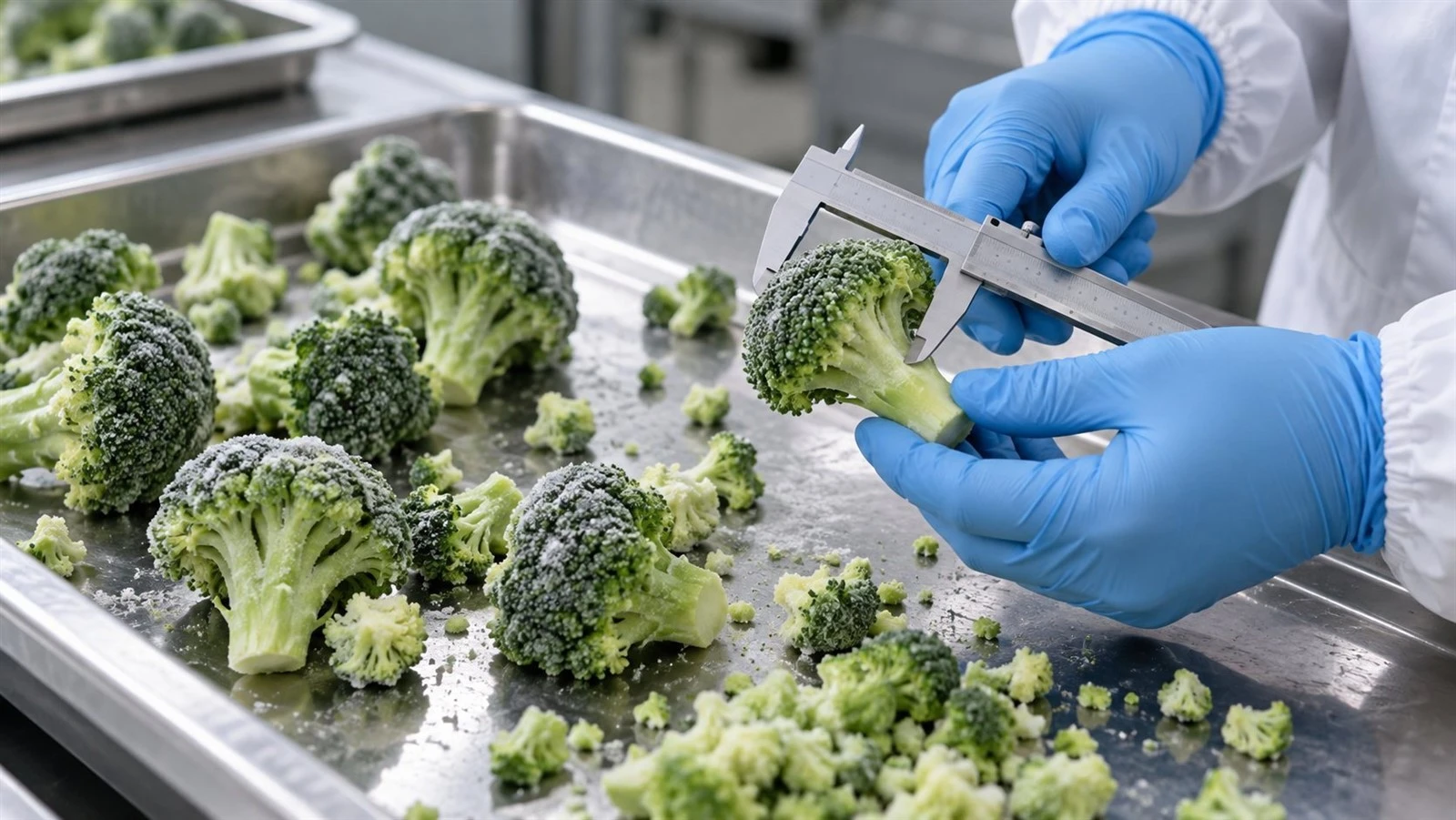
For a buyer comparing two broccoli offers, request the same crown-width axis, stem measurement, sample state and count or mass denominator. Keep the tray total so the defect categories can be reconciled.
Reviewed 21 October 2026. Shipment requirements are checked for the actual product, route and filing date.
What a broccoli floret includes
A broccoli floret is a bud cluster with its own small attached branch stem. A crown contains several connected branches; the coarse central stalk is a different structure. The tender attached stem therefore belongs in the description of a floret, while its permitted length, diameter and weight contribution must be specified. Removing every visible stem is not a workable definition of a normal floret.
Choose the form for the finished food before accepting a grade. Retail or steam-in-bag packs may need a controlled size distribution and consistent pieces; a ready meal needs pieces that portion and cook as intended; soup or sauce may make better use of smaller cuts. Foodservice yield depends on the same preparation and cooking trial used by the customer. Record these application questions alongside head diameter, attached-stem length and fines.
Define floret style before counting defects
A broccoli floret specification needs a drawing or photograph of the unit being measured. The bud cluster is the crown; the small attached branch stem is part of the floret, but the acceptable stem length or mass fraction is a buyer requirement. "20-40 mm" is incomplete until it says whether it is maximum crown width, shortest axis, overall length or sieve opening, and whether the piece is frozen or thawed during measurement.
Everyday language can be loose. A shopper may call the entire edible top a "floret," while a processor needs repeatable terms. A broccoli head is the full harvested top with its branching structure. A crown is normally a large trimmed top section that retains several branching clusters. A floret is one smaller branch carrying a compact bud cluster. The floret stem is the tender branch immediately below that cluster. The stalk is the thick central axis from which the branches grow. Leaves may also be edible, but they are normally removed from a frozen floret specification.
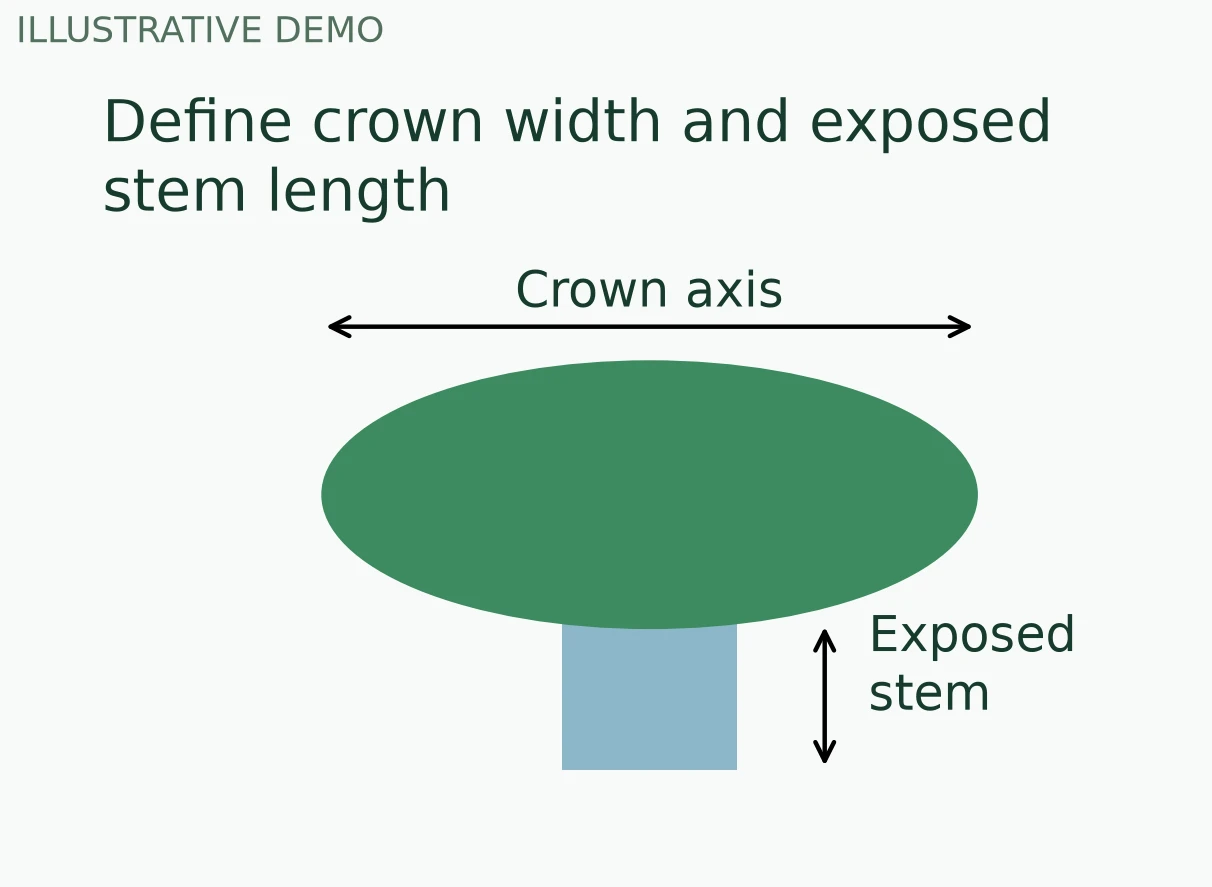
Define crown width and exposed stem length - illustrative demonstration; no actual shipment measurements. On narrow screens, scroll the diagram horizontally to read all labels.
This distinction matters because the branch stem is normal and useful, whereas a long or thick piece of central stalk can change appearance, texture, cooking time, and label expectations. Buyers who write "no stems" may unintentionally ask for an impossible or wasteful product. A more workable instruction is to define the acceptable floret form, maximum exposed stem length, stem-to-head balance, and tolerance for detached stem pieces.
Practical wording: "Predominantly intact broccoli florets with compact heads, tender attached branch stems, and no coarse central-stalk pieces" communicates more than "broccoli florets only." Add dimensions and numerical tolerances before using it as a purchase specification.
A compact green head often receives the visual attention, but the attached tender stem gives the piece structure. It also affects bite, heat penetration, piece weight, and plate coverage. Two samples with the same maximum width can therefore behave differently if one carries short, fine stems and the other carries long, thick stems.
That is why our frozen broccoli florets discussions begin with both the nominal size and the buyer's preferred head-to-stem profile.
A drawing of the product form prevents vocabulary drift. A floret has a bud cluster and attached small stem; a short spear, cut and stem dice are different presentations even when all originated from the same head. The same bag can contain attractive whole pieces and a high mass of detached material. For a visual product, specify the minimum portion that must remain intact and define what counts as a fragment. The example tray deliberately places detached stems and fines outside the intact-floret denominator so the buyer can see both appearance and delivered mass. That classification can be changed by contract, but it cannot remain implicit.
Specify measurement axis and state of product
A simple frozen-tray protocol records product state, sample mass, thaw or separation procedure, measurement tool and orientation. Measure crown width at the widest natural span without squeezing the buds. Measure attached stem from the crown junction to the cut end. If the buyer cares about plate appearance, count or mass of out-of-band intact florets may matter more than the average diameter. If the buyer blends the florets into soup, fines and usable mass may matter more.
Commercial terms vary between markets and suppliers, so treat the following as a decision framework rather than a universal legal dictionary. Official standards can be useful references. For example, the USDA frozen broccoli standard defines several product styles by dimensions and structure. A buyer contract may use different dimensions, but it should be equally explicit.

Actual GreenLand frozen broccoli product image; visual identity checked.
Match the product form to the inspection decision
For a purchase specification, agree the product form, lot identification, inspection method and decision rule before shipment. The product photograph identifies a possible supply form; it does not certify a test result.
View the corresponding frozen product
Request Specifications & QuoteAt home, "cut the broccoli into florets" means following the natural branches and dividing the head into convenient pieces. A frozen processor adds several control steps: trimming, washing, cutting or separating, blanching when specified, cooling, individual quick freezing, screening, inspection, and packing. Those steps can change dimensions and create small fragments. Freezing also makes impact damage during conveying and packing visible as broken heads and fines.
A useful frozen description therefore combines the form name with a measurement rule. State whether the nominal size refers to maximum head diameter, widest dimension, overall piece length, screen size, or another agreed method. Also state how many pieces may fall below or above the band. Our guide to choosing a frozen vegetable cut size explains why application and equipment come before a familiar number.
Do not assume that "20-40 mm," for example, means the same thing in every quotation. Ask where the caliper is placed, whether attached stem length is controlled separately, and whether out-of-range pieces are counted by number or weight.
Visual sorting helps, but the approved sample still needs measurable tolerances for routine inspection.
Source footing: USDA frozen broccoli grades. Authoritative style and grade references; buyer-specific cut bands still require contract definition.
Separate cap diameter, stem length and stem fraction
DEMONSTRATION ONLY - A 1,000 g de-iced tray contains 720 g in-band florets, 120 g oversize intact florets, 80 g small intact florets, 50 g detached stem and 30 g fines. On a mass basis, in-band yield is 720/1,000 = 72%; fines are 3%. If 72 of 100 intact florets are in band, the count-based result is also 72% in this fabricated example, but that numerical coincidence is not guaranteed. Keep count and mass denominators separate and state whether detached stem and fines enter either denominator.
GreenLand-food can discuss ranges such as 20-40 mm, 30-50 mm, 40-60 mm, or 50-70 mm for suitable frozen broccoli programs, but availability and exact measurement must be confirmed for each order. These are commercial options, not a promise that every crop, factory line, or destination uses the same bands. Start with the final application, then build the specification around the performance that matters.
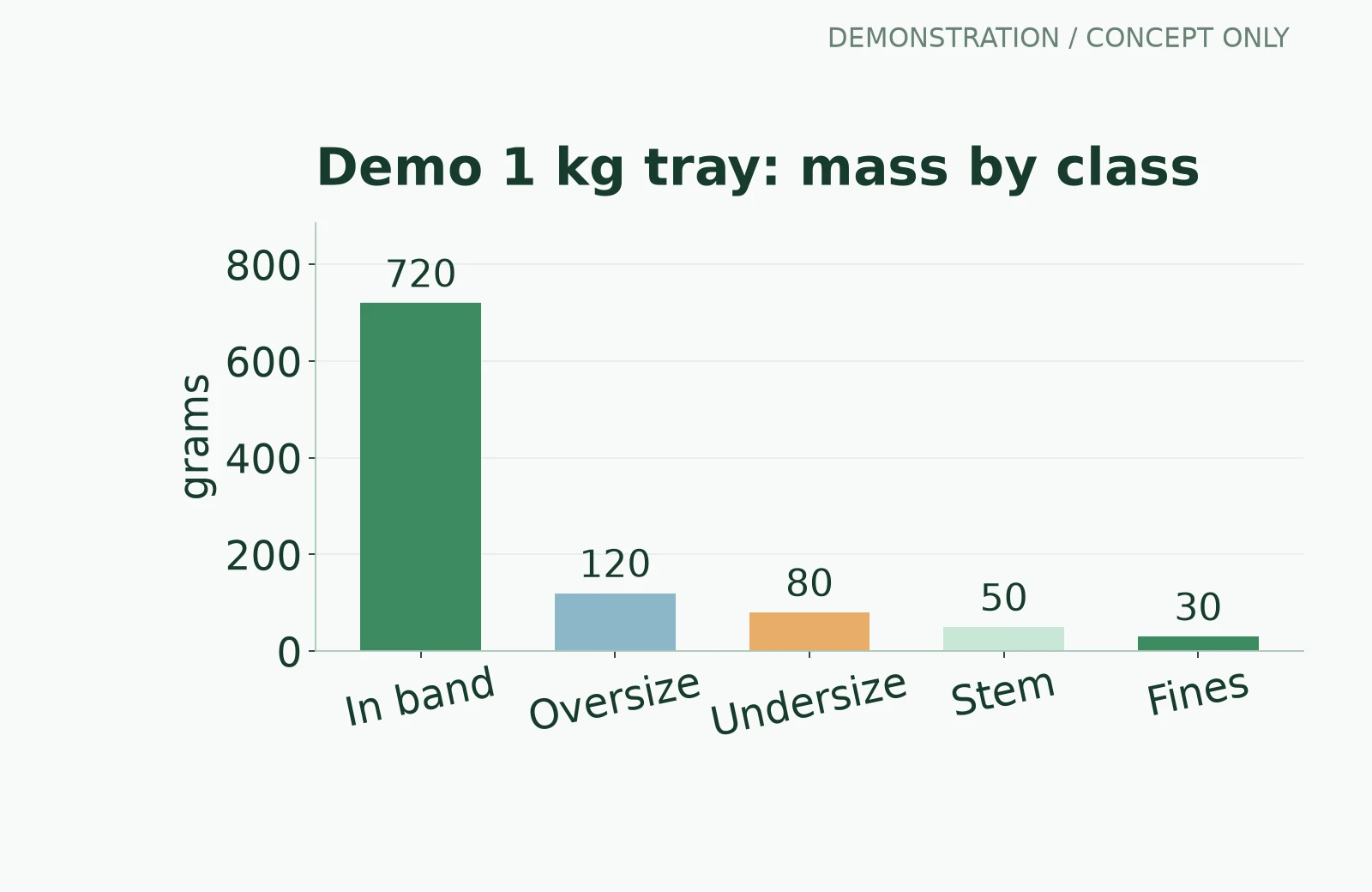
Demo 1 kg tray: mass by class - demonstration only; diagram values are illustrative, not factory specifications. On narrow screens, scroll the diagram horizontally to read all labels.
A bag may meet its net weight while giving the kitchen less usable floret material than expected. Detached coarse stems may be rejected from a premium side dish. Loose buds and tiny fragments may disappear through a blanching basket, collect at the bottom of a retail bag, cloud soup broth, or cook into softness before larger pieces are hot. None of this makes stems inherently poor: trimmed stem pieces are a valid ingredient when they are expected and matched to the application. The problem is mismatch.
Measure the relevant fractions in a thawed or frozen sample according to the agreed method. Separate intact target pieces, acceptable smaller pieces, detached stems, fines, out-of-range pieces, and defects. Record both weight and observations. If the buyer's line intentionally uses all edible material, the "usable" fraction may be high even for mixed cuts. If the customer plates only intact florets, the same lot may produce costly sorting and discard.
Breakage is also a supply-chain signal. Excess loose buds can come from fragile overmature heads, aggressive handling, unsuitable conveying, weak packaging, repeated movement, or temperature abuse that allows surface thawing and refreezing. A one-time photograph does not explain the cause, but a receiving record across lots helps separate normal variation from a recurring process or logistics issue.
Source footing: Sunshine IQF broccoli. Offers commercial floret band and pack examples, not universal market standards.
Calculate count and mass denominators explicitly
Defect classes should be mutually exclusive or governed by a precedence rule. A yellow, broken, oversize piece can otherwise be counted three times and inflate a defect percentage. One practical ledger records primary classification per unit plus secondary observations; another uses separate attribute denominators while stating that totals are not additive. The contract should identify which method controls acceptance. Surface ice, clumping and insect findings warrant separate fields because they answer different quality and safety questions.
Suppose Sample A is quoted at USD 2.10 per delivered kilogram and 95% is usable in the intended tray meal. Its ingredient cost per usable kilogram is USD 2.10 ÷ 0.95 = USD 2.21 . Sample B is quoted at USD 1.90, but only 80% fits the presentation and size requirement. Its usable cost is USD 1.90 ÷ 0.80 = USD 2.38 .
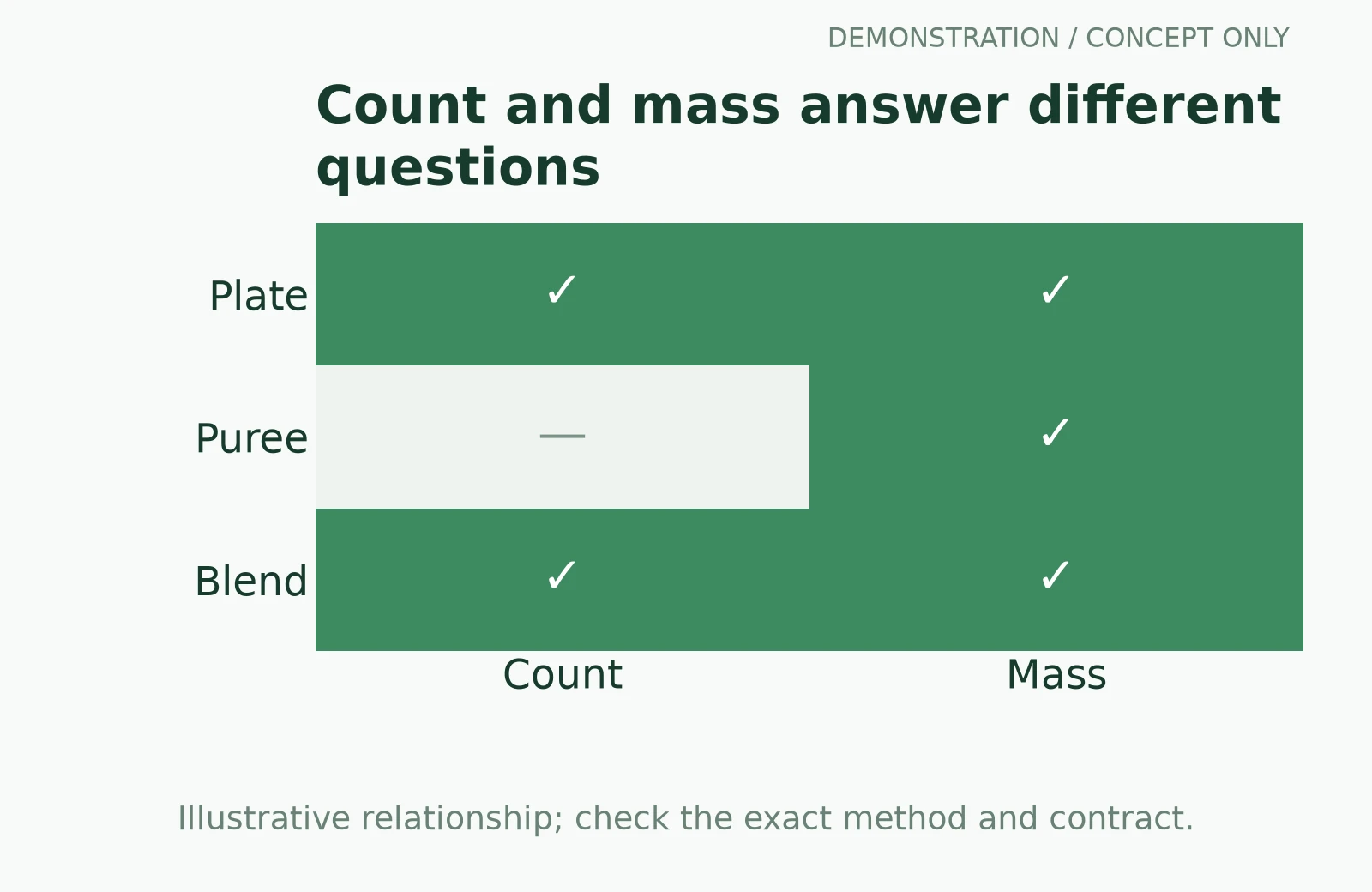
Count and mass answer different questions - demonstration only; diagram values are illustrative, not factory specifications. On narrow screens, scroll the diagram horizontally to read all labels.
The numbers are illustrative; add actual freight, duty, handling, rework, cooking loss, and disposal cost for your operation. The point is that a lower invoice price can be the more expensive choice when form, breakage, or stem balance creates poor usable yield.
Retail mono-product bags usually need recognizable pieces, attractive color, a controlled size spread, restrained fines, and reliable visual fill. Ready meals need pieces that heat through inside the customer's stated cook cycle without softening before the main component is ready.
Foodservice sides and buffets often value fork-friendly pieces and portion consistency. Soups, sauces, fillings, and industrial mixes may benefit from smaller cuts or a deliberate head-and-stem blend because distribution and cost matter more than a whole-floret appearance.
For more application-led choices, see our guide to frozen vegetables for industrial processing .
When inspecting a tray, distinguish two questions: what fraction of whole pieces falls within the agreed band, and what fraction of delivered mass is usable for the line. A count denominator can make numerous tiny fragments dominate the defect rate; a mass denominator can hide numerous small visual defects. Neither is automatically correct. For a plated foodservice application, customers may notice every outlier, so a count rule matters. For an industrial puree, mass yield may control cost. Record the observed values side by side instead of converting one into the other. Use a scale and a photographed segregation tray to resolve disagreements about whether a detached stalk is a floret, stem piece or fine.
Source footing: XMG floret inspection. Competitor covers size and stem ratio; opportunity is explicit geometry and denominator rules.
Classify fines, fragments and discoloration without double count
USDA frozen broccoli standards define styles and grading concepts, while commercial suppliers publish their own cut bands. Neither a supplier web page nor a photographed sample can silently replace the signed purchase specification. If a buyer is using a USDA grade, apply the exact edition and its prescribed sample and tally method; if using a custom band, provide a reference tray and measurement rule. We would not promise a grade from colour alone.
Good frozen broccoli assessment extends beyond size. Look for a reasonably uniform natural green color, compact buds, appropriate maturity, tender stems, and freedom from objectionable yellowing, woody tissue, decay, insects, foreign material, and excessive mechanical damage. Confirm whether the product is blanched and how the supplier controls the blanching step; under- and over-processing can affect enzyme stability, color, flavor, firmness, and final cook tolerance.
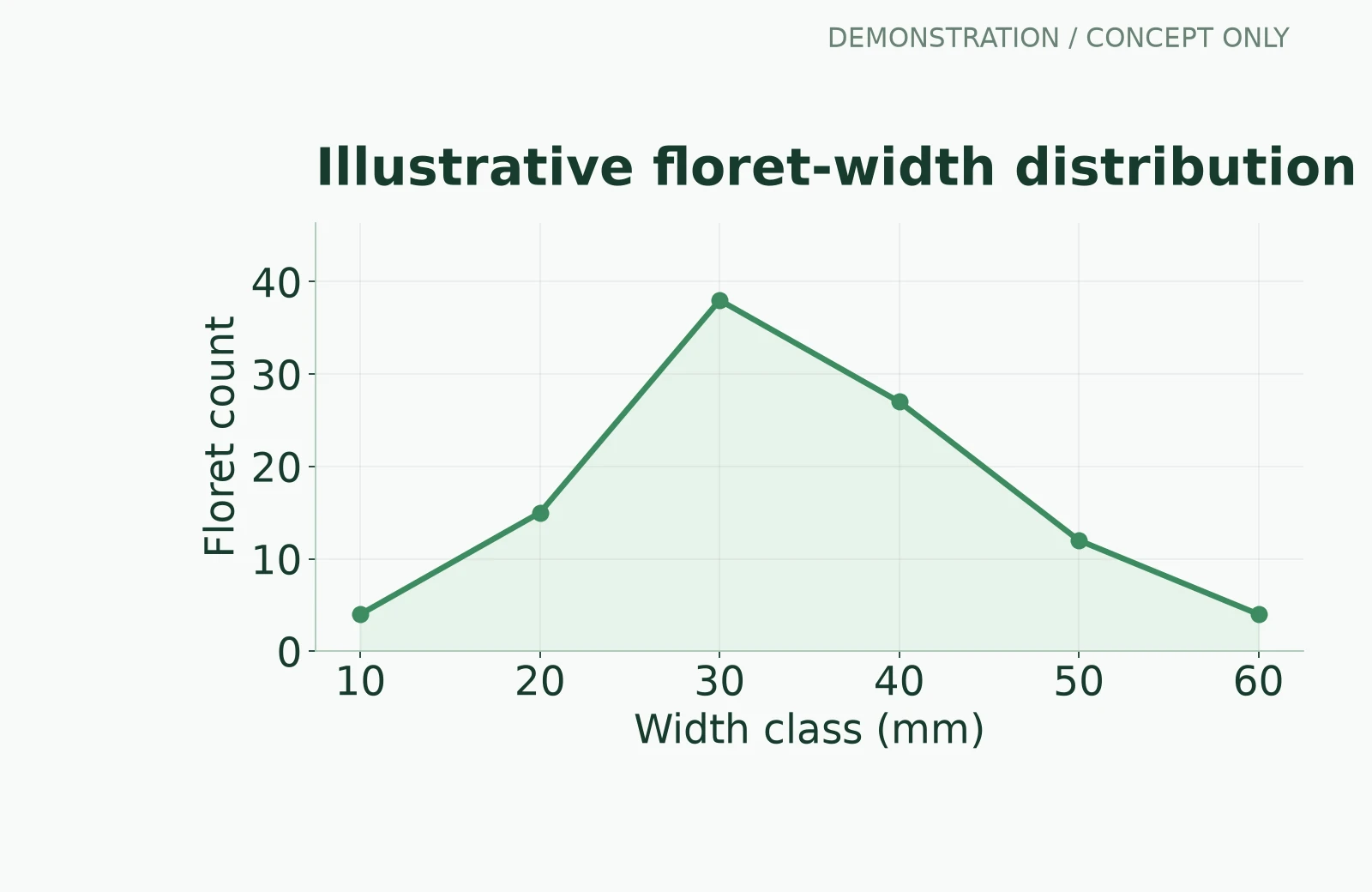
Illustrative floret-width distribution - demonstration only; diagram values are illustrative, not factory specifications. On narrow screens, scroll the diagram horizontally to read all labels.
Inspect the product while frozen for free-flow condition and clumps. Then evaluate it using the buyer's actual preparation method. A sample that looks excellent frozen can soften too far in a long sauce cook, while a firmer floret may suit that process. Conversely, a short consumer microwave cycle may expose cold stem centers in oversized pieces.
Our broader frozen vegetable specification guide covers the product, packing, quality, document, and logistics fields buyers can combine in one RFQ. Named form and a plain-language description of what is included. Target dimensions, measurement method, and undersize or oversize tolerances. Limits for detached stems, broken heads, loose buds, fines, coarse stalk, and defects. Color, maturity, blanching, texture, free-flow, and sensory expectations after the intended cook cycle. Packing format, net weight, coding, private label, carton marks, palletization, and loading quantity. Origin, traceability, inspection plan, required certificates, analysis, and export documents. Cold-chain conditions, shipment plan, destination requirements, and receiving checks.
Source footing: Jooever broccoli inspection. Strong visual cues but some unsupported universal assertions; use as gap evidence, not technical authority.
Use the existing order worksheets
Use a purchase order specification and a retained inspection worksheet to align the product, lot, sample, method and release decision.
A worked tray inspection and tally sheet
For a repeat-order program, retain labelled approved samples across seasonal lots and test the first production lot against them. Record raw tray photographs with a scale, the complete tally, the inspector and instrument, and the disposition of out-of-band material. A change in cutting equipment or raw head size can shift the distribution without changing the product name. This is why the buyer should compare distributions, not only the supplier's headline size range.
Define the use. Record the product, portion, equipment, cook cycle, appearance target, and unacceptable outcomes. Request the candidate specification. Include form, size, tolerances, blanching, packing, documents, quantity, and destination. Inspect the frozen sample. Check temperature, free flow, clumps, color, size distribution, breakage, stems, fines, and defects. Run the real process. Use the same kettle, oven, microwave, steaming, or filling conditions intended for production. Calculate usable yield. Include sorting, cooking loss, rejected pieces, portion count, labor, and disposal where relevant. Lock the reference. Sign the agreed specification and retain the approved sample, photographs, method, and acceptance record.

Actual GreenLand frozen broccoli product image; visual identity checked.
Product form is only one part of a workable supply program. Tell us whether you need bulk foodservice cartons, industrial bags, consumer retail packs, private-label artwork, or a mixed-container plan. MOQ and loading quantity depend on the product, season, factory match, packaging material, print requirements, and shipment configuration, so confirm them against a live quotation rather than relying on a generic number.
List destination-specific documents and standards in the first RFQ. Typical discussions may cover commercial invoice, packing list, bill of lading, certificate of origin, health or phytosanitary documents where applicable, product specification, lot coding, traceability, certificate of analysis, pesticide-residue expectations, microbiological limits, and facility or system certifications. The exact set depends on the country, buyer, product, and contract.
Frozen broccoli should remain under the agreed frozen conditions through storage, loading, transport, and receipt. Ask how product and container temperatures are checked, how cartons are protected during loading, and what evidence accompanies the shipment. At receipt, document seal condition, carton condition, temperature, coding, quantity, free-flow state, and sample results before releasing the lot.
The approved sample becomes useful only when the receiving team can reproduce the evaluation. Start by defining the sampling unit: how many cartons, which pallet positions, how much product from each carton, and how samples are combined or kept separate. A top carton at the container door may not represent the full load. Randomization and clear lot coding protect both buyer and supplier from conclusions based on one convenient handful.
Record the frozen condition first. Note product temperature using the agreed method, carton and liner integrity, ice or frost that appears abnormal, clumping, color, odor after opening, and free-flow behavior. Then weigh a known test portion. Pass it through the agreed screens or manually classify each piece into target florets, acceptable off-size material, detached stems, broken heads, fines, and defects. The category definitions should be written and illustrated so two inspectors do not sort the same borderline piece differently.
Calculate every fraction against the original test weight. If a 1,000-gram sample contains 905 grams of target and acceptable pieces, 45 grams of detached stems, 28 grams of fines, 12 grams of out-of-range pieces, and 10 grams of defects, the inspector has a transparent result rather than a general impression. The categories in this illustration are not recommended limits; the purchase contract must state which fractions are acceptable and whether categories overlap.
Next, cook a fresh portion using a fixed procedure. Control sample weight, equipment, water or sauce ratio, start state, time, endpoint, holding time, and tasting temperature. Record head integrity, stem tenderness, color, aroma, flavor, water release, and the proportion that survives the process as intended. If the product is used in a complete meal, repeat the test inside that meal. A standalone steam test cannot predict performance in an acidic sauce, a long hot hold, or a microwave tray with dense components.
Track results by lot and supplier over time. A single result near a limit may require the contract's re-test procedure; a trend in breakage, oversize, or cooked softness may justify a process review before it becomes a claim. Share photographs, raw weights, calculations, sample identity, and method when raising a concern. This level of evidence helps the commercial and quality teams discuss the same product and makes corrective action more specific.
The inspector should not grade by memory while the product warms. Prepare labelled trays for in-band pieces, oversize, undersize, detached stem and fines; photograph each with the same scale and weighing ticket. Work with manageable sub-samples so a frozen piece can be measured before thaw changes its shape. Record any excluded ice or packaging mass. If two reviewers disagree, they can compare the stored photo and exact rule, then record a consensus or a disputed classification. The dispute record is more valuable than quietly rewriting a tally after a customer complaint.
Source footing: Good Seed IQF broccoli. Demonstrates cut bands differ by application; commercial band is a quote parameter.
Translate measurements into an approved reference sample
The RFQ should request style, intended application, frozen pack format, crown-axis definition, stem maximum or ratio method, in-band fraction and the unit of that fraction, fines definition, sample unit, allowable defects and escalation rule. If a supplier datasheet gives an unusual dimension such as 23.5 cm, ask for a controlled correction and its measurement basis. A purchase decision should rest on the signed specification rather than an unsupported conversion to millimetres.
Write the first RFQ so competing quotations describe the same buying unit. If suppliers interpret "medium florets" differently, the prices are not directly comparable and later negotiation becomes an argument about scope. Attach the intended cooking method, a target photograph if useful, and the required reporting method for each tolerance. Mark which points are mandatory, which are preferred, and which may be adjusted after sample testing. This gives the supplier room to propose an available crop and line match without quietly changing a critical requirement.
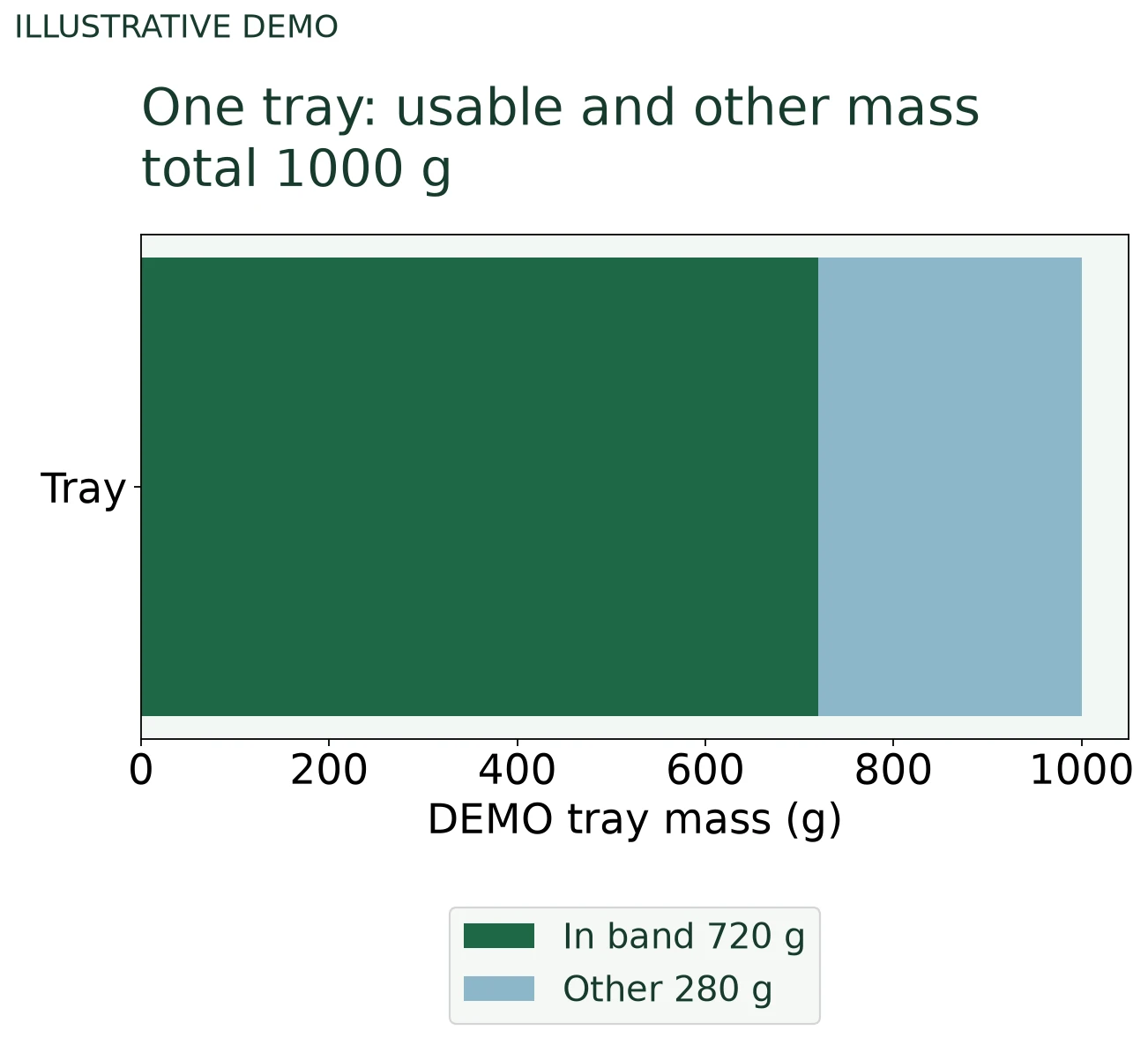
A single tray reconciles to 1000 grams - demonstration only; no actual shipment data. On narrow screens, scroll the diagram horizontally to read all labels.
An approved reference sample should be identified by lot, date and storage condition, with a photo showing the measurement axis and a ruler. Retain at least one sealed pack for supplier and buyer comparison when feasible; opening and refreezing it can alter texture and frost, so a digital record remains useful. At receiving, compare each new lot against the written method and reference, then trend changes across production dates. If the floret band shifts because raw broccoli heads are larger or cutting blades were reset, the supplier may still meet a generic product name while missing the customer's portioning need. This is why the measurement instruction belongs in the purchase order, not only in a sales photograph.
The denominator should travel with every defect percentage. If the inspector reports stem length by number of florets but yellowing by mass, those figures cannot be placed side by side as if they describe the same population. Keep the original unit count, weighed mass, classification rule and any excluded fragments in the worksheet.
A borderline dimension needs a consistent measurement convention. Record tool resolution, orientation, the treatment of a naturally irregular crown and the rule for values at the band boundary. Two inspectors can repeat measurements on the same labelled pieces to expose a method disagreement before inspecting a commercial lot. Preserve those paired observations and resolve the convention in the specification. The goal is a reproducible classification that both purchasing and receiving can apply, especially when a small orientation change moves a piece across the stated limit.
Build your frozen broccoli order with GreenLand-food
GreenLand-food is a professional frozen broccoli supplier and manufacturer in China, providing factory-direct wholesale supply for importers, food manufacturers and foodservice programmes.
Send your product form, specification, packing, quantity, application, destination, private-label needs and requested documents. We will organise the product and order requirements with your purchasing and quality teams.