


When Is Passion Fruit in Season?
Aug 31, 2026
Leave a message
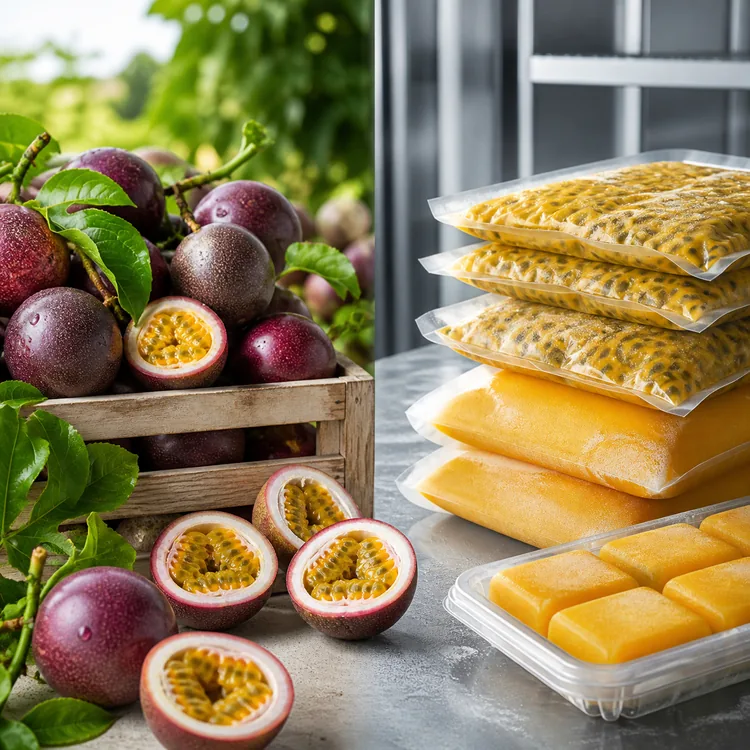
Passion fruit is seasonal by origin, not by one global calendar
If you are buying fresh passion fruit locally, ask for the season in your growing region. A simple month answer without an origin can be misleading. Warm regions may have a long crop, two distinct flushes, or some fruit throughout the year, while cooler subtropical areas usually show a clearer peak. Weather, cultivar, elevation, pollination, and vine condition can move the start, end, and volume of each crop.
If you are planning commercial production, separate fresh harvest from ingredient availability. Frozen passion fruit pulp and puree can be produced from ripe fruit during harvest, packed into controlled lots, stored at or below the agreed frozen temperature, and released against a forecast. That creates continuity beyond the fresh-fruit window, but only when product specification, frozen stock, shelf life, call-off timing, and cold-chain evidence are confirmed.
Key takeaways
Name the origin
A season answer is useful only when it names the country or region, because harvest calendars overlap but do not match.
Treat peaks as planning ranges
Weather and crop condition can shift volume. Confirm the current crop, not only a standard calendar printed months earlier.
Frozen does not erase specification
Seed level, Brix, acidity, color, texture, added-sugar status, pack size, and application performance still need agreement.
Year-round is a program
Reliable continuity comes from forecast, crop-window production, frozen inventory, batch release, and shipment planning-not a slogan.
Season examples
What months are passion fruit in season?
The most accurate short answer is: passion fruit is harvested during different months in different origins, and some warm regions produce for much of the year. The examples below come from current government or university sources. They show why one worldwide calendar would hide more than it explains.
| Origin example | Reported crop window | How to use it |
|---|---|---|
| Florida, United States | June through December | Use as a Florida fresh-harvest reference, then confirm the current farm and cultivar before a promotion or production run. |
| Southern California cultivar examples | June through February | This is a cultivar listing from Ventura County, not a promise for every California district or every production year. |
| Northern Vietnam | Harvest can occur year-round; main season May through December | Plan the highest-volume processing and inventory build around the main season, while treating off-peak fruit as lower-volume support. |
| Southern Vietnam | Harvest occurs year-round | Year-round field harvest still requires current confirmation of volume, maturity, quality, and processing capacity. |
| Australia | Grown year-round; peak production December through August | Distinguish availability from peak volume. The lower-volume months can carry different price and supply risk. |
Sources: Florida Department of Agriculture, University of California Cooperative Extension, and the Australian Department of Agriculture. These are planning examples, not a substitute for a current supplier crop report.

A frozen puree program turns fruit harvested during suitable crop windows into a defined ingredient lot for later production releases.
Why the season can look different in two markets
Passion fruit is a perennial vine grown across tropical and subtropical climates. It does not behave like a temperate crop with one neat, universal harvest month. UF/IFAS notes that flowering to harvest generally takes about 70–75 days, and fruiting in Florida varies with location and cultivar. A warm region can support an extended cycle, while a cooler district may have a shorter, more concentrated crop.
Fresh produce traders can also combine several origins. The fruit in a wholesale market in January may not come from the same origin as the fruit offered in July. As those origins overlap, the market can appear to have a twelve-month season even though each farm still works through peaks, shoulders, and quieter weeks.
For a processor, this distinction matters. Global fresh availability can help cover spot needs, but it does not automatically provide the same variety, maturity, Brix, acidity, color, seed character, price, or shipment time. A stable formula needs a defined ingredient standard, not only fruit from whichever origin happens to be available.
Availability versus continuity
Fresh fruit, frozen stock, and annual supply are three different things
The phrase "available year-round" is often used too loosely. A buyer should ask what kind of availability the supplier means and what evidence supports it. Fresh fruit availability describes what can be harvested or traded now. Frozen-stock availability describes finished lots already held in cold storage. Annual program continuity describes whether those lots, plus scheduled new production, are sufficient for the buyer's forecast and call-off dates.
| Availability claim | What it actually means | Evidence to request |
|---|---|---|
| Fresh fruit is in season | Fruit is being harvested in a named region now. | Origin, cultivar, current crop report, maturity, weekly volume, and expected end date. |
| Frozen product is in stock | A finished lot exists in frozen storage. | Lot number, production date, remaining shelf life, quantity, specification, COA, storage condition, and release status. |
| We can supply all year | The supplier expects stock and scheduled production to cover forecast demand. | Annual forecast, reserved quantity, monthly call-off plan, safety stock rule, new-crop timing, lead time, and deviation communication. |
How frozen pulp and puree bridge the crop window
Frozen pulp and puree do not make the vine produce in every month. They preserve a usable ingredient lot after the fruit has been harvested and processed. Ripe fruit is received, sorted, opened or pulped, and prepared to the required seed and texture condition. It is then packed, frozen, coded by lot, and held in frozen storage. Production teams can draw from that inventory later instead of buying small quantities of variable fresh fruit for every run.
This is especially useful where the edible pulp is the real ingredient and the peel would otherwise be freight, storage, and waste. A beverage factory may prefer seeded pulp for visible fruit character or seedless puree for a smoother drink. A dairy or bakery plant may prioritize consistent acidity and blend performance. Foodservice operators may need small packs that thaw by shift, while industrial processors may want larger packs that match batch size.
Freezing supports continuity, but quality still begins with the raw fruit and the agreed process. Fruit picked at different maturity, puree with different screening, or lots with different Brix and acidity can change a formula. The purchase specification should therefore cover the ingredient that arrives at the plant, not merely the name "passion fruit puree."
Pulp or puree: choose by process, not by label alone
"Pulp" usually signals more natural fruit texture and may include seeds. "Puree" usually signals a smoother, more uniform ingredient that may be screened or deseeded. Those words are not a complete international specification. Two suppliers can use the same name for products with different viscosity, seed content, solids, or sugar addition.
Before sampling, state the final application and what your line can handle. A visual seed may be desirable in fruit tea but troublesome in a fine nozzle. A smooth puree may simplify yogurt dosing but remove the appearance wanted in a premium dessert sauce. Approve the product in the actual formula, not only in a spoon test.
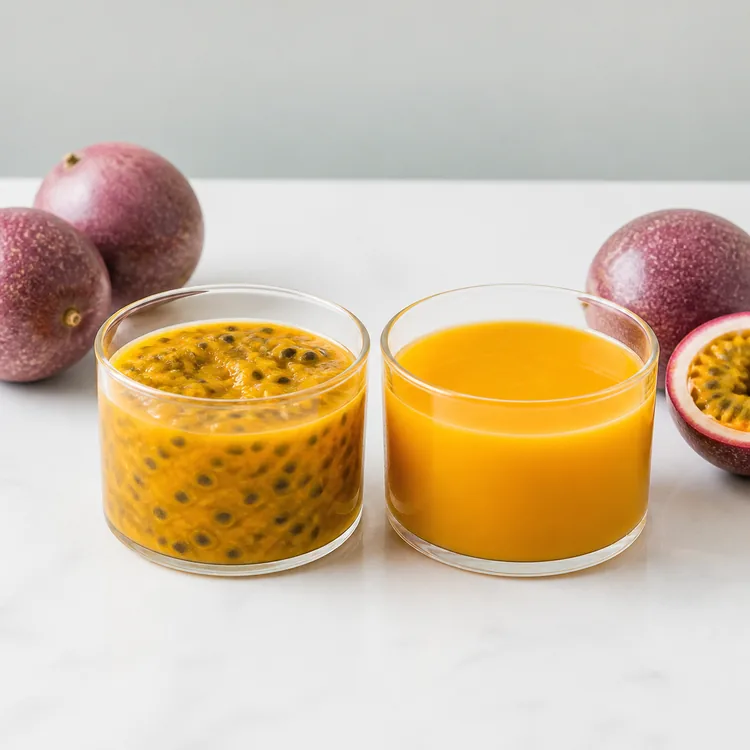
Visible seeds and pulp texture can support fruit identity, while a smooth puree can be easier to dose and blend.
| Decision point | Seeded pulp | Seedless or screened puree | Buyer check |
|---|---|---|---|
| Appearance and texture | More visible fruit character; seeds may be part of the presentation. | Smoother, more uniform flow and mouthfeel. | Seed level, screen size, viscosity, separation after thawing, and acceptable natural variation. |
| Typical fit | Fruit tea, cocktail base, dessert sauce, toppings, and products where seeds signal fruit identity. | RTD beverages, dairy dosing, ice cream, bakery fillings, sauces, and fine-nozzle processing. | Run a trial through the real pump, screen, mixer, heat step, and final pack. |
| Formula controls | Pulp-to-juice balance and seed distribution can affect portion consistency. | Uniformity can simplify dosing, but solids and acidity still vary by specification. | Brix, acidity or pH as relevant, ingredient list, added sugar, color, aroma, and thaw performance. |
| Packing choice | Use a pack that keeps seed and pulp distribution practical when thawed. | Choose a pack size that can be thawed and used without unnecessary open-pack hold time. | Inner bag, net weight, carton, pallet pattern, portion size, and post-thaw handling instruction. |
Annual program design
Six steps that turn a crop window into year-round continuity
A reliable program begins before the crop reaches peak volume. The process below is useful for importers, beverage and dairy plants, foodservice distributors, and private-label buyers who need planned releases rather than occasional spot stock.
- Define the finished product and the non-negotiable ingredient controls. State whether you need seeded pulp, seedless puree, another agreed form, or samples of more than one option. Add the application, process temperature, equipment limits, desired flavor direction, Brix and acidity requirements where relevant, color expectation, added-sugar status, and any label restrictions. This prevents a purchase team from comparing two different ingredients under one name.
- Build the forecast by month, not only by annual tonnes. Share the expected total, monthly demand, campaign peaks, launch dates, and call-off pattern. A supplier can have enough annual product but still miss the month when your factory or promotion needs it. Monthly forecasting also shows whether smaller packs, mixed containers, or more frequent releases are commercially sensible.
- Confirm the crop and production window. Review the intended raw-material origin, likely harvest range, current crop condition, processing slot, and backup plan. Decide which volume should be produced during the main crop and whether later production will come from a second flush, another qualified origin, or reserved frozen stock. Record what changes require your approval, such as a different origin or material specification.
- Approve a commercial sample and specification before scale-up. Evaluate color, aroma, typical flavor, Brix, acidity or pH when relevant, seed level, viscosity, separation, foreign matter, pack integrity, and performance in the final formula. The approved sample should connect to a written tolerance, because a single attractive jar cannot control later batches by itself.
- Reserve frozen stock and define release evidence. Agree on the quantity reserved, production lot structure, remaining shelf life at each call-off, stock-rotation rule, and the records required for release. Depending on the project, these may include a specification, COA, test report, certificate copy, batch traceability, packing list, label approval, loading photos, and temperature records.
- Review actual consumption and reforecast before the next crop. Compare call-offs with the plan, check remaining stock and shelf life, record application performance by lot, and update demand early. If sales run faster than expected, a new crop does not instantly become finished export stock. If sales run slower, excessive inventory can age past the buyer's preferred remaining-shelf-life requirement.
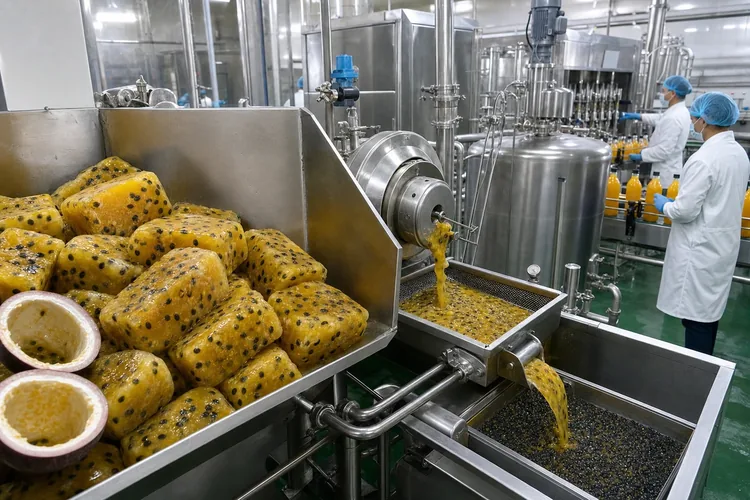
Beverage programs need the pulp or puree specification, dosing behavior, and monthly ingredient releases to stay aligned with the production calendar.
The crop calendar should appear in your purchasing calendar
A processor that waits for finished stock to run low is already late. Work backward from the required arrival date through destination clearance, sea transit, loading, production release, quality review, packing, and the relevant crop window. The longest step is not always shipping. In peak season, raw-material competition, production-line allocation, packing material, and cold-store space can become the real bottlenecks.
Ask for the current lead time rather than repeating an old number from a product page. Trial orders, label approval, private-label printing, laboratory tests, mixed-container planning, and destination-specific documents can add time. A practical supplier response should separate what is already in stock from what still needs production.
Buyer control
What a credible year-round offer should prove
Do not accept "year-round" as the specification. Ask which lots are physically available, which quantity is reserved for your program, when the next production window opens, and which crop or origin will support it. Confirm whether a change in raw material, seed level, processing method, or pack requires written approval.
For each lot, connect the commercial promise to evidence: production date, remaining shelf life, agreed product form, Brix and acidity results where specified, sensory release, microbiological and residue requirements for the destination and use, pack and label checks, batch traceability, quantity, storage condition, and shipment release records.
At GreenLand-food, we help purchasing teams confirm these points against the order rather than treating all passion fruit formats as interchangeable. The frozen passion fruit range is the starting point; your application, specification, packing, quantity, and destination determine the actual supply plan.
Packing, MOQ, documents, and cold chain belong in the same conversation
Packing determines how the ingredient moves through your plant. A large block or bulk bag may suit an industrial batch, while smaller packs reduce open-pack exposure and improve portion control in foodservice. Confirm inner-pack material, net weight tolerance, carton strength, pallet pattern, label content, private-label artwork, and whether the pack size can thaw safely within your operating procedure.
MOQ should be checked against the exact product, pack, and shipment plan. A standard bulk carton may allow a different commercial minimum from a customized retail pouch. Mixed-container options can help a distributor test several products, but they also require compatible loading, documentation, and inventory planning. Ask for the actual configuration and loading quantity before comparing a per-kilogram price.
Document needs vary by destination and customer. Identify required certificates, product specification, COA, test reports, ingredient and allergen declarations, traceability records, packing list, invoice, bill of lading data, and any market-specific file before production. A certificate name alone is not enough; the issuing site, scope, product coverage, validity, and order relevance must align.

Confirm the exact passion fruit form and packing shown in the approved order rather than assuming every frozen format handles the same way.
Keep the frozen chain stable from storage to receiving
Codex guidance for quick-frozen foods calls for products to be maintained at -18°C or colder through the cold chain, subject to permitted national tolerances. The useful control is broader than one set-point. Review product temperature at loading, cold-store records, reefer settings, pre-cooling where applicable, loading exposure, airflow, pallet arrangement, door-open time, and the response to any temperature alarm.
At arrival, compare evidence with the physical lot. Check container and seal information, carton condition, inner-pack seals, lot codes, product temperature according to your receiving procedure, unusual frost, thawing or leakage signs, color, odor, and the condition of the pulp or puree after controlled thawing. Isolate questionable cartons while the evidence is reviewed; do not blend a concern into production and try to reconstruct the lot later.
The GreenLand frozen fruit quality guide explains why a thawed or application test is as important as a frozen-pack photograph. For passion fruit, the acceptance test may include seed distribution, separation, aroma, color, Brix, acidity, viscosity, and performance in the final beverage, dairy, bakery, or sauce system.
For storage and handling details, see Health Benefits, Nutritional Value, and Proper Storage of Frozen Passion Fruit.
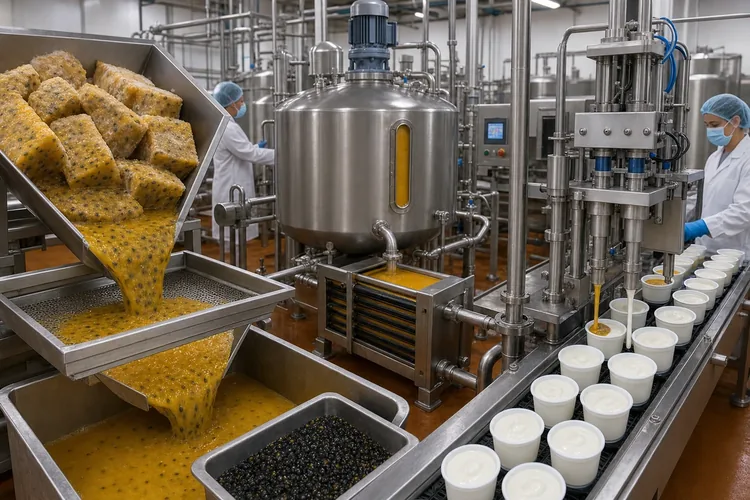
Dairy and frozen-dessert buyers should test acidity, seed level, color, and dosing performance in the real base before approving a long program.
Match the format to the application
Beverages and fruit tea: decide whether visible seeds are part of the product identity, then check acidity, aroma strength, mixing, settling, filtration, and pump or nozzle compatibility.
Dairy, ice cream, and sorbet: test the ingredient in the actual base. Acidity can affect dairy systems, while color, aroma, seed content, and separation influence the final consumer experience.
Bakery, fillings, and sauces: assess heat behavior, water release, viscosity, seed visibility, and the way the fruit profile balances sugar, fat, starch, pectin, or other stabilizers.
Foodservice and private label: align portion size, thawing procedure, retail or foodservice pack, label language, carton configuration, and the remaining shelf life expected at each destination.
Common sourcing mistakes around passion fruit season
Using one country's months as a global rule
A calendar copied without its origin can create the wrong purchase window. Always attach the country, region, cultivar if relevant, and current crop condition.
Equating "in stock" with an annual commitment
One available lot may cover a trial but not twelve months of call-offs. Confirm reserved quantity, monthly releases, shelf life, and next-crop replenishment.
Comparing pulp and puree by price only
A lower price does not help if the seed level blocks equipment, the viscosity changes dosing, or the flavor balance forces a formula adjustment.
Approving only the frozen appearance
Thaw and test the ingredient in the intended process. Separation, aroma, acidity, color, and texture may matter more than the look of the unopened pack.
Leaving documents until after production
Certificate scope, test requirements, label content, and destination files can change the facility, process, cost, or timing. Confirm them before the order is released.
Booking after the stock gap appears
Work backward from arrival and reforecast early. Crop, processing, testing, private-label packing, and reefer booking cannot always be compressed safely.
Frequently asked questions
When is passion fruit in season in the United States?
The season depends on the state and growing district. Florida's Department of Agriculture lists a June-through-December harvest, while University of California Cooperative Extension lists June through February for selected Southern California cultivars. Confirm the current local crop because weather, cultivar, and farm conditions can move the usable window.
Is passion fruit available all year?
It can be available all year in some warm origins or through overlapping global supply, but that does not mean every origin has peak fruit every month. Frozen pulp and puree can support year-round commercial use when sufficient lots are produced during crop windows, kept under controlled frozen storage, and reserved against the buyer's forecast.
What is the difference between frozen passion fruit pulp and puree?
Pulp usually keeps more natural fruit texture and may include seeds. Puree is usually smoother and may be screened or deseeded. The terms are not a complete specification, so confirm seed level, Brix, acidity, ingredient list, viscosity, separation after thawing, pack size, and performance in the final process.
For ingredient format details, see Can You Freeze Passion Fruit Whole? Whole Fruit vs Pulp.
How far ahead should a buyer book frozen passion fruit?
There is no universal booking period. Share an annual forecast and monthly call-off plan, then confirm current stock, production slot, crop timing, tests, packing, private-label approval, shipment route, and destination documents. Book earlier for customized packs, promotional peaks, or programs that require reserved crop-window production.
How should frozen passion fruit pulp and puree be stored?
Keep the product at or below the temperature stated in the specification; -18°C or colder is the standard reference used for quick-frozen foods. Minimize fluctuation and agree on cold-store, loading, transport, and receiving evidence. Follow the supplier's approved thawing and post-thaw use instructions for the exact pack.
What should be included in a frozen passion fruit RFQ?
Send the required form, seeded or seedless preference, Brix and acidity target where relevant, added-sugar status, texture, pack size, quantity, monthly demand, application, destination, delivery port, private-label needs, certificate and test requirements, document list, and requested arrival date. This gives the supplier enough information to confirm a realistic product and supply plan.
Plan Frozen Passion Fruit Supply with GreenLand-food
GreenLand-food is a professional frozen passion fruit supplier and manufacturer in China, providing factory-direct wholesale supply for importers, beverage and food manufacturers, foodservice distributors, retailers, and private-label programs.
Send the product form, specification, packing, quantity, application, destination, private-label needs, and requested documents. We will review the crop window, available stock, production plan, lead time, and cold-chain requirements for your program.