


How to Rehydrate Mushrooms
Sep 08, 2026
Leave a message
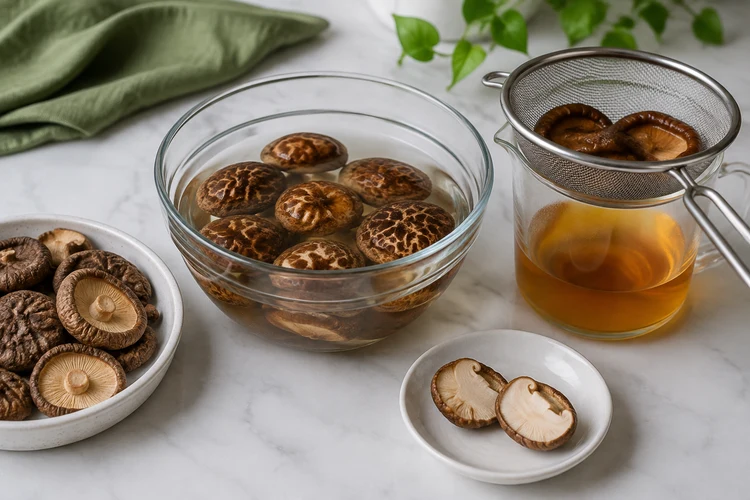
Use the refrigerator for a long soak. Hong Kong's Centre for Food Safety advises limiting room-temperature soaking to generally no more than two hours and refrigerating when a longer soak is needed. Soaking restores water; it does not make dried mushrooms ready to eat.
The liquid can be useful in a cooked sauce or soup if the product is suitable and the liquid is strained carefully. It can also carry sediment, strong flavours or contaminants from poor handling. This guide explains how to select the soaking method, manage time and temperature, and decide when fresh or frozen mushrooms are a better fit for the dish.
Match the soaking method to the dried mushroom
Begin with the product identity and instructions. Whole dried shiitake caps, thin porcini slices, wood ear mushrooms and a mixed dried product do not hydrate at the same rate. Thickness, structure and drying conditions influence how quickly water reaches the centre. A single instruction to soak mushrooms for ten minutes is too broad for these different forms.
Choose commercially supplied, correctly identified edible mushrooms. A soaking method cannot establish the safety of a wild collection or correct an uncertain species identification. It also cannot make an inedible or poisonous mushroom suitable for a recipe. If a dried mix contains an unexplained species, resolve that with the seller before using it.
The desired result matters. For a finely chopped sauce ingredient, slight differences in cap appearance may be unimportant. For a whole cap served visibly in a braise, even hydration and an intact shape matter more. A thick, hard centre can remain noticeable after cooking and make an otherwise attractive portion unpleasant to eat.
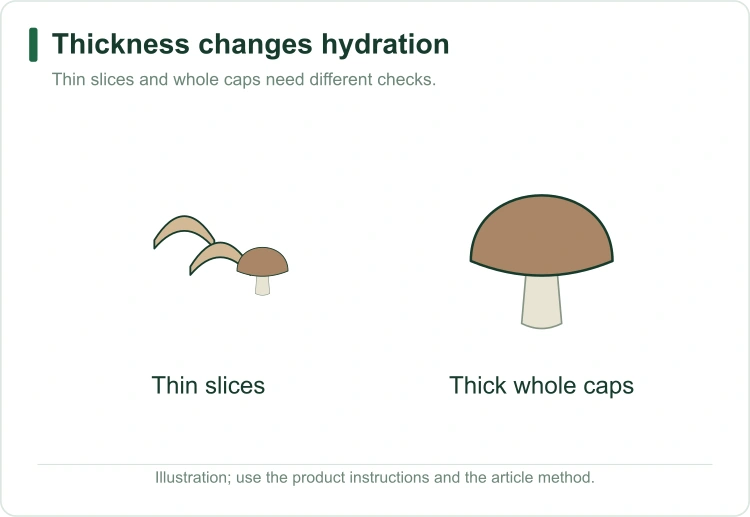
Thickness affects how quickly water reaches the centre. A general soaking time should be checked against the actual species, cut and supplier's preparation instructions.
| Dried form | Main hydration concern | Useful check |
|---|---|---|
| Thin mushroom slices | Uneven pieces and trapped grit | Check the thickest slice |
| Whole shiitake caps | A firm centre beneath a softened surface | Cut one representative cap |
| Long stem pieces | Persistent fibrous texture | Assess after the required cooking |
| Mixed dried mushrooms | Different species and thicknesses | Follow the mix instructions and inspect components |
| Powder or very fine granules | Clumping during recipe mixing | Use the preparation method specified for that ingredient |
Drying also changes flavour and texture. Rehydration adds water back but does not reverse every change caused by drying. A rehydrated mushroom may remain chewier or have a more concentrated aroma than a fresh counterpart. That can be desirable in a stock or braise, while being less suitable for a dish that depends on a delicate fresh bite.
For a first use, prepare a small representative amount rather than committing an entire pack. Record the dry weight, water quantity, soaking conditions and drained result. This creates a useful starting method for the specific product. It also reveals whether the supplier's recommended preparation fits the equipment and schedule of your kitchen.
For a commercial enquiry, state whether you need whole caps, slices, pieces or a mixed product. The name of the mushroom alone is not enough to predict hydration time or labour. A prepared frozen format may be worth comparing where the recipe needs repeatable cooked pieces without a soaking stage.
Rinse, cover with water and check the centre
Inspect the dried mushrooms before soaking. They should match the product description and be free of obvious spoilage or foreign material. Dried food is not automatically suitable indefinitely: damaged packaging, moisture ingress or an abnormal condition needs attention. Follow the date and storage instructions on the pack.
Rinse briefly under clean running water to remove loose surface grit. Use a clean bowl or food-grade container large enough for expansion, then add enough clean water to cover the mushrooms. A small clean plate can help keep floating caps submerged, provided it does not crush them or introduce contamination.
The Missouri Department of Conservation's mushroom preservation guidance gives warm-water soaking of roughly 30–60 minutes as a general reconstitution method. Treat that as a broad starting range for suitable dried mushrooms, while following the actual product's instructions and the time-temperature precautions described below.
As the mushrooms soften, turn or separate pieces that are pressed together. A pile of overlapping caps can hydrate unevenly, especially where air remains trapped. Add water if needed to keep them covered. Avoid repeatedly handling the batch with unclean hands or utensils while checking progress.
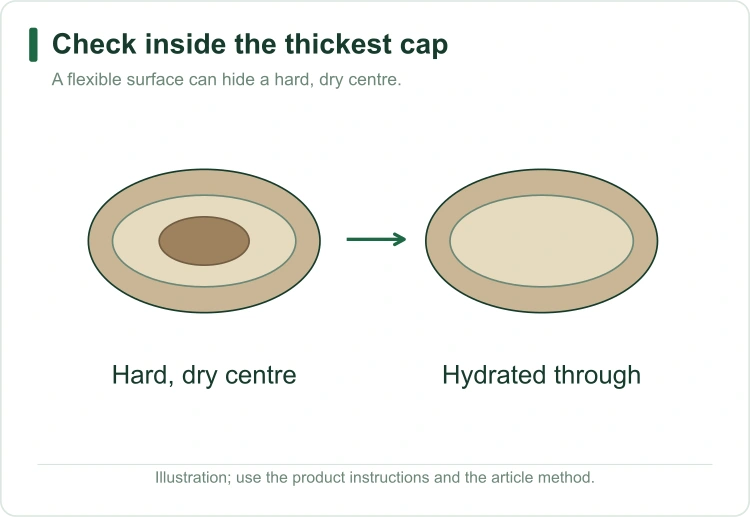
A softened surface can hide a hard centre. Cut a representative thick cap and continue the appropriate controlled soak if the middle remains dry.
Test a representative thick piece. It should bend or yield as expected for the species, and a cut through the centre should not reveal a dry, hard core. A softened outer surface can disguise incomplete hydration. If the centre remains firm, continue under appropriate refrigerated conditions rather than leaving the bowl warm for an open-ended period.
Drain when the mushrooms have reached the required state. Some recipes call for gentle squeezing; others benefit from retaining more liquid in the cap. Follow the intended preparation and use the same draining method when comparing batches. Aggressive squeezing can damage a whole cap or distort a delicate slice.
Keep the mushrooms and any retained liquid under suitable temperature control until cooking. Do not treat the end of soaking as permission to leave the ingredients on the counter while the rest of the meal is prepared. The hydrated product now contains much more available moisture than the dry ingredient and should be handled accordingly.
Use time and temperature together during soaking
Soaking time only makes sense alongside water temperature and product thickness. Warm water can speed hydration, while a cold refrigerated soak gives more scheduling flexibility for thick caps. The best method is the one supported by the product instructions and suited to the intended texture, with safe handling maintained throughout.
The Centre for Food Safety's guidance on soaking dried mushrooms advises clean preparation, prompt use and refrigeration for soaking longer than the general two-hour room-temperature limit. This is a practical boundary to build into the method, rather than relying on whether the water still feels cool.
If a thick dried shiitake product calls for an extended or overnight soak, place it in the refrigerator from the start. Use a covered clean container and allow enough space for the mushrooms and water. Label the container with the start time where several batches are being prepared. Follow the supplier's duration rather than treating overnight as an unlimited window.
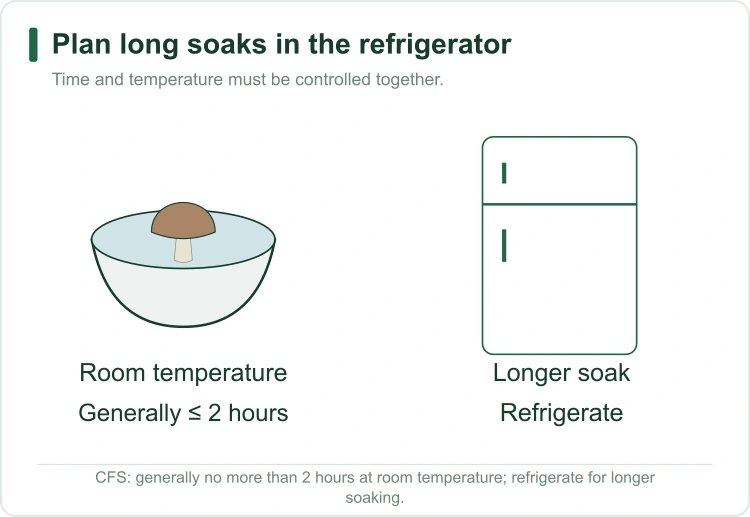
Plan a long soak in the refrigerator. The cited food safety guidance gives a general two-hour room-temperature boundary, alongside clean preparation and prompt use.
A quick hot-water method can be convenient for some thin products, but it may produce a different texture or flavour extraction from a slower soak. It is not automatically appropriate for every mushroom. Boiling water poured into a bowl also cools over time; the initial temperature does not mean the batch remains hot throughout the soak.
Do not use a longer warm soak to rescue mushrooms that remain tough because of a fibrous stem or an unsuitable product. Once the cap is hydrated, further soaking may not create the tenderness you want. The solution may be trimming, a different cooking method or a different format. Confirm the cause before extending the process.
For a kitchen schedule, work backwards from cooking. If the recipe requires hydrated whole caps, begin a controlled refrigerated soak early enough to inspect the centre before service. If a last-minute dish cannot accommodate that stage, a ready-to-cook frozen product may be operationally easier. Convenience should come from choosing the format, not from abandoning temperature control.
Discard a soaked batch that develops slime, an abnormal odour or another clear sign of deterioration. Do not taste it to decide whether it is acceptable. An apparently normal smell also cannot prove microbiological safety after poor time-temperature handling. When the handling history is unreliable, extra cooking should not be treated as a universal rescue step.
Separate clean soaking liquid from sediment
Dried mushroom soaking liquid can carry useful flavour, particularly in soups, gravies and braises. It can also contain fine soil or grit that was trapped in folds and gills. Decide whether to use it based on the product instructions, the condition of the batch and the recipe. Keeping every drop is not a requirement of good cooking.
Allow visible sediment to settle, then pour the clearer liquid through a fine sieve lined with an appropriate clean filter or cloth. Leave the gritty residue at the bottom of the bowl. Pouring the entire bowl quickly through a coarse strainer can carry fine particles into the sauce, where they remain unpleasant even after cooking.
The Sabarot guide to rehydrating dried mushrooms describes using filtered soaking liquid in cooking. This is a culinary use for a suitable, correctly handled product. Filtration removes particles; it should not be described as sterilising the liquid or making an unsafe batch acceptable.
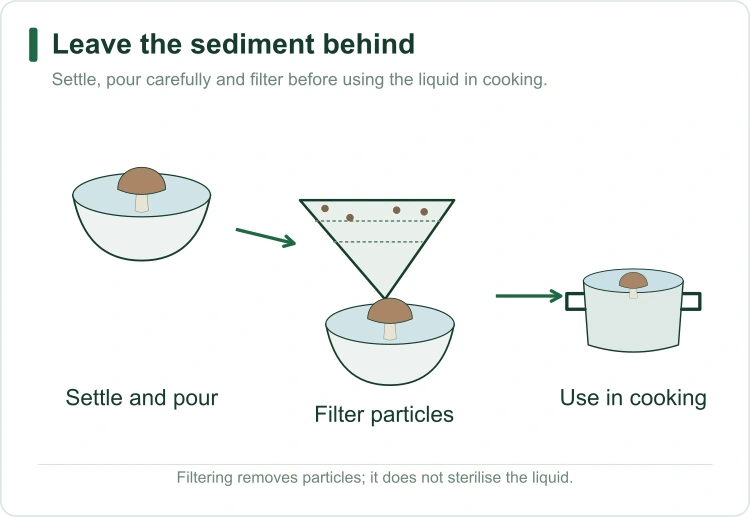
Leave sediment behind and filter the clearer liquid carefully. The filter removes particles; the retained liquid still belongs in a suitable cooked preparation.
Use retained liquid in a dish that receives the required cooking. Do not serve it as an uncooked drink or add it to a finished cold dish on the assumption that soaking has made it safe. Follow the product's preparation instructions and the food operation's established cooking controls.
Flavour strength can vary substantially. A dark, strongly flavoured liquid may dominate a delicate sauce, while a lighter liquid can be useful as part of the stock. Add a measured amount and assess the cooked recipe. The liquid's colour alone does not tell you how salty, bitter or aromatic it will be.
If the recipe needs a consistent sauce, record the liquid quantity used and adjust the remaining water or stock accordingly. Adding all the soaking liquid on top of the original recipe water can make the result too thin. Reducing it heavily can intensify flavours that were acceptable at a lower concentration.
For production, decide in advance whether soaking liquid is retained or discarded. That choice affects flavour, yield calculations, equipment and handling. A trial in which one operator uses the liquid and another discards it is not a controlled comparison of the mushroom ingredient. The approved method should state the filtration and cooking steps clearly.
Cook the rehydrated mushrooms for the intended dish
Rehydrated mushrooms should be cooked according to their identity, supplier instructions and recipe. The soaking stage makes the pieces workable and restores water; it is not a general cooking process. A mushroom that feels soft in the bowl may still require substantial preparation before eating.
Trim any stem portion that remains too fibrous for the intended dish. For whole shiitake caps, the stem may be better suited to a cooked stock than to the plated portion, depending on the product and recipe. Keep that material separate if you are measuring usable cap yield. It is useful food only where the intended preparation makes it suitable.
For a sautéed filling, drain the mushrooms consistently and cut them to the required size. Surface water delays browning just as it does with fresh mushrooms. Use manageable pan loads and account for retained moisture. If the goal is a moist filling, some liquid may be desirable, but it should be deliberate.
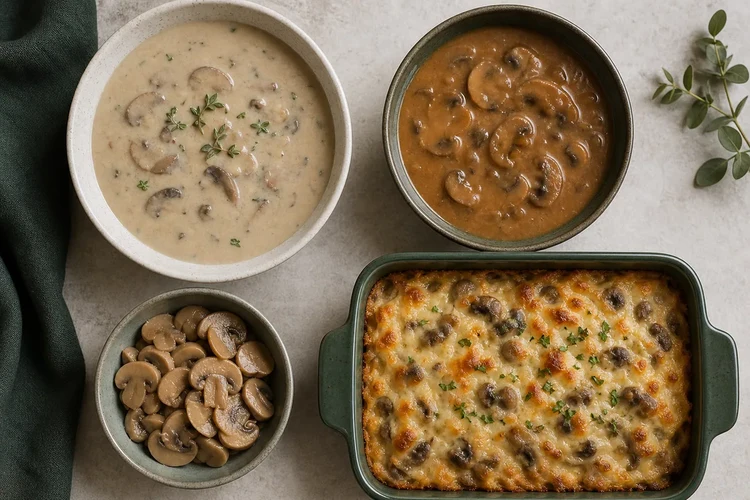
The hydrated mushroom must be cooked for the intended dish. Its cut, retained moisture and stem texture influence how it performs in a soup, sauce or filling.
For a braise, hydrated caps can absorb and contribute to the cooking liquid while softening further. The sauce should be formulated with both the mushrooms and any retained soaking liquid in mind. Check the cap centre and stem texture at the end of the required cooking, rather than assuming a softened edge represents the whole piece.
For a soup, decide whether diners should receive whole caps, strips or smaller pieces. A large rehydrated cap can be awkward in a spoon-served portion, while finely chopped mushrooms distribute flavour without creating the same visual identity. The cut should fit the eating method as well as the pot.
Do not extrapolate these general methods to mushrooms with specialised preparation requirements. Morels and other particular products may need specific guidance, and unidentified or poisonous mushrooms cannot be made safe through a generic soak-and-cook routine. The supplier's correct species identification and preparation instructions are essential.
A useful cooking trial records starting dry weight, drained hydrated weight, any trimmed waste and cooked output. Taste only after the required cooking. Record texture, aroma and the effect on the sauce or filling. This gives you a repeatable result for the particular dried product instead of a general impression that it became soft.
Compare dried, fresh and frozen formats by the result
Dried mushrooms can be valuable where concentrated aroma, a chewy cap or a flavoured cooking liquid is part of the recipe. They also allow a kitchen to hold a compact dry ingredient under the specified storage conditions. Their practical cost includes soaking, inspection, trimming and cooking, rather than only the dry purchase price.
For the drying step before rehydration, see Drying mushrooms without a dehydrator.
Fresh mushrooms offer a different starting texture and appearance. They may be preferable for visible clusters or a dish where the fresh structure is important. Their purchasing and storage schedule needs to match turnover, and the kitchen still has cleaning and trimming work. Fresh does not mean that every batch has the same usable yield.
Frozen mushrooms can simplify preparation for many cooked applications. Depending on the product, they may arrive cleaned and cut, with a specified pre-freezing treatment. They still need the labelled cooking process and a recipe that accommodates liquid release. Freezing does not restore the texture of a dried mushroom or make every species interchangeable.

Frozen shiitake strips offer a prepared alternative when a recipe needs a repeatable cut without a dried-mushroom soaking stage. Compare the finished flavour, bite, released liquid and total preparation time with rehydrated shiitake under the same recipe conditions.
| Format | Useful strength | Main preparation question |
|---|---|---|
| Dried | Concentrated flavour and compact storage | How long to hydrate, and what texture remains? |
| Fresh | Original cap or cluster presentation | How much cleaning, trimming and timely use are needed? |
| Frozen | Planned portions for cooked dishes | How does released moisture affect the recipe? |
| Mixed format | Different flavour and texture roles | Can each component be prepared consistently? |
For a quick sauce line, a frozen sliced product may be easier to portion than whole dried caps requiring a long soak. For a braise built around dried shiitake aroma, the dried format may remain the better choice. The format should support the intended result rather than being ranked as universally superior.
At GreenLand-food, we review frozen mushroom options for soups, sauces, fillings and prepared meals. A useful comparison with dried mushrooms includes the actual species and cut. Replacing dried shiitake with a different frozen species changes more than the preparation schedule; it changes the ingredient's flavour and texture.
For a fair cost comparison, calculate the amount of acceptable cooked mushroom delivered to the recipe. Include preparation labour and any useful liquid only on a clearly stated basis. A kilogram of water absorbed during soaking is part of the hydrated weight, but it is not a kilogram of additional dry mushroom solids.
Measure yield and specify the format for repeat production
Yield measurement begins before the water is added. Weigh the dry mushrooms and record the product code or batch. Use the same soaking conditions and draining method for each trial, then weigh the hydrated product before and after any trimming. Finally, record the cooked output that meets the recipe's requirements.
An illustrative example can show the calculation. If 100 grams of dried mushrooms becomes 500 grams after soaking and the agreed drain, the measured hydration ratio is 5:1 by weight. If 40 grams is then removed as unsuitable stem material, the usable hydrated amount is 460 grams. These figures are hypothetical; the actual ratio depends on the mushroom and method.
Cooking may change the weight again. A sauté can drive off water, while a braise may leave liquid within the cap or on its surface. Define the weighing stage so that the comparison is meaningful. Otherwise a wetter batch can appear to offer a better yield even when it contributes no more useful mushroom to the dish.

Whole frozen shiitake caps represent a different production format from dried caps. Compare purchased weight with usable cooked output and confirm stem trimming, size distribution and intact-cap requirements before deciding which format gives the better result for repeat production.
Record the quality alongside the numbers. Note hard centres, broken caps, grit, stem texture and the cooked flavour. A high hydration ratio is not automatically desirable if the pieces are waterlogged or lack the texture the recipe requires. The target is acceptable output, not the largest possible weight.
For a dried product specification, include species, whole or cut form, size expectations, foreign-material requirements, packing and preparation guidance. For a frozen alternative, include the species, cut, processing description, storage condition and intended cooking use. The two formats need different information because their preparation stages differ.
A useful enquiry to GreenLand-food includes the destination market, application, required cut, pack size and expected volume. If you are comparing with a dried ingredient, share the current preparation method and the finished result you need to preserve. We can review whether a frozen option is appropriate for that particular use.
For a production recipe, put the soaking instructions on the same preparation sheet as the cooking method. Include the container size, water quantity, temperature, start time and centre check, followed by the agreed drain. If the liquid is retained, state how it is filtered and how much enters the recipe. This prevents a change in soaking practice from silently changing the finished sauce.
When a new dried batch hydrates differently, record the observation before changing the recipe. Compare piece thickness, the hard-centre check and drained weight with the earlier approved material. If a frozen alternative is tested, run it through the same finished dish and compare the acceptable portions, preparation labour and sensory result. The two formats can then be judged on a useful common outcome.
Compare a frozen format with your current mushroom process
GreenLand-food is a professional frozen mushrooms supplier and manufacturer in China, providing factory-direct wholesale supply for importers, food manufacturers, foodservice distributors and private-label programmes.
Tell us the species, recipe, cut, pack size, volume and destination. If you currently use dried mushrooms, share the soaking and cooking method and the finished texture you need. We will review whether a proposed frozen option can meet that application and what a comparison trial should confirm.
Use the product range and downloadable catalogue to review the wider selection, then send the specification and order details that matter to your application.