


Can You Freeze Figs? Whole Fruit, Halves and Packing
Oct 19, 2026
Leave a message
You may leave the skin on or peel it. The National Center for Home Food Preservation (NCHFP) gives two clear home routes: pack the figs in cold 40 percent syrup with headspace, or make a dry pack, optionally freezing the pieces on a tray before transferring them to a freezer container. Light-coloured figs may benefit from the source's ascorbic-acid treatment to reduce darkening. Label the pack and use it later for a recipe that accepts softer thawed fruit rather than expecting the original fresh bite.
Whole, halved and syrup-packed are not merely visual styles. Each handles delicate fruit differently, uses a different amount of package space, and gives a different ingredient to a later cook. This guide explains how to freeze and pack figs for a later recipe. The steps here refer to home preservation sources. GreenLand's frozen-fig page is a commercial product reference. The supplied cut-fruit inspection photographs show skin and exposed centres; they do not validate cultivar, freezing process, shelf life or a household method.
- Select sound ripe figs; leave small fruit whole or cut and optionally peel.
- NCHFP describes separate dry/tray and cold 40% syrup packs with distinct colour-treatment units.
- Judge whole shape, centre condition and released liquid against the later recipe.
Yes, ripe figs can be frozen
The starting fruit determines the result. NCHFP's Freezing Figs says to select fully ripe figs, wash them and peel if desired. A ripe fig can be soft without being spoiled; the goal is sound, edible fruit that will survive preparation. Discard fruit that has mold, a sour odour, leakage or obvious decay. Freezing slows change but cannot reverse a bad starting condition. If the figs came from a market box, sort them individually instead of tipping a bruised bottom layer into the same pack as intact top fruit.
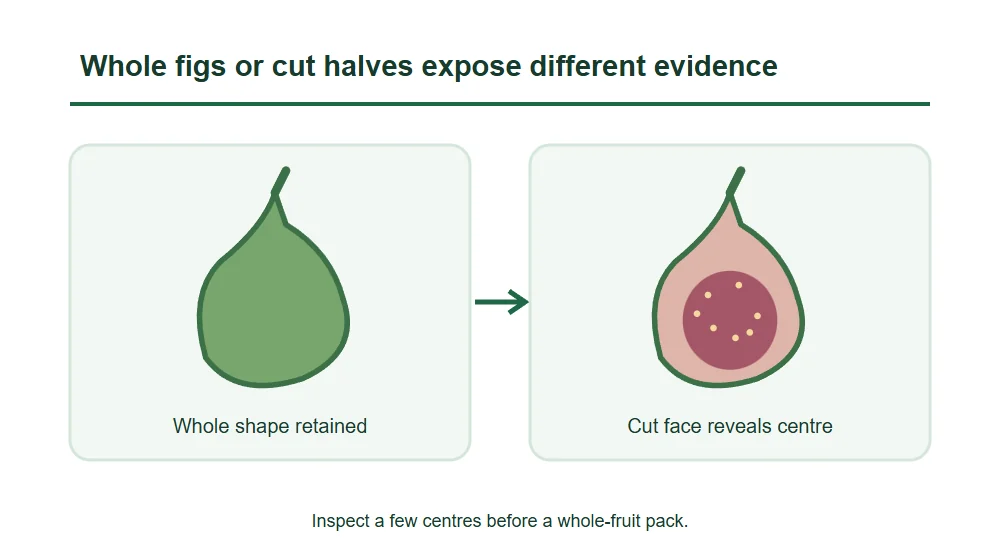
Fresh figs are fragile and their skins may split. A smaller intact fig with no damage can be kept whole for a later composed dish; a large fruit that is already very soft may be easier to halve and use in a cooked filling. The University of California's postharvest fig note says fresh-market figs need to be harvested almost fully ripe for good eating quality. This helps explain why handling quality varies so much before a home freezer is involved. It does not set a maturity percentage for a GreenLand frozen lot or tell you which colour cultivar is in a photograph.
Freezing and canning require different decisions. The NCHFP fig-preservation note explains that figs may be borderline in acidity for canning and that acid addition for frozen figs is a colour-quality measure, not a freezer safety requirement. Do not carry a freezing instruction into an untested jar process. Conversely, a home fig preserve recipe is not a requirement for unsweetened frozen fruit. State the intended storage method before choosing sugar, syrup or acid.
Whole figs or halves: choose by condition and use
Keeping a fig whole protects a recognizable shape and makes it easier to count pieces. It also means the thickest fruit takes longer to freeze and later thaw than a cut piece. A half exposes the inner pulp, allowing the cook to see condition and later portion the fruit, but it introduces a sticky cut face and more handling. Slices suit a recipe that will spread fruit across a dish, yet very thin slices can tear on a tray. There is no official universal diameter above which a fig must be halved for freezing. Choose a consistent form for the batch and test whether it serves the next recipe.
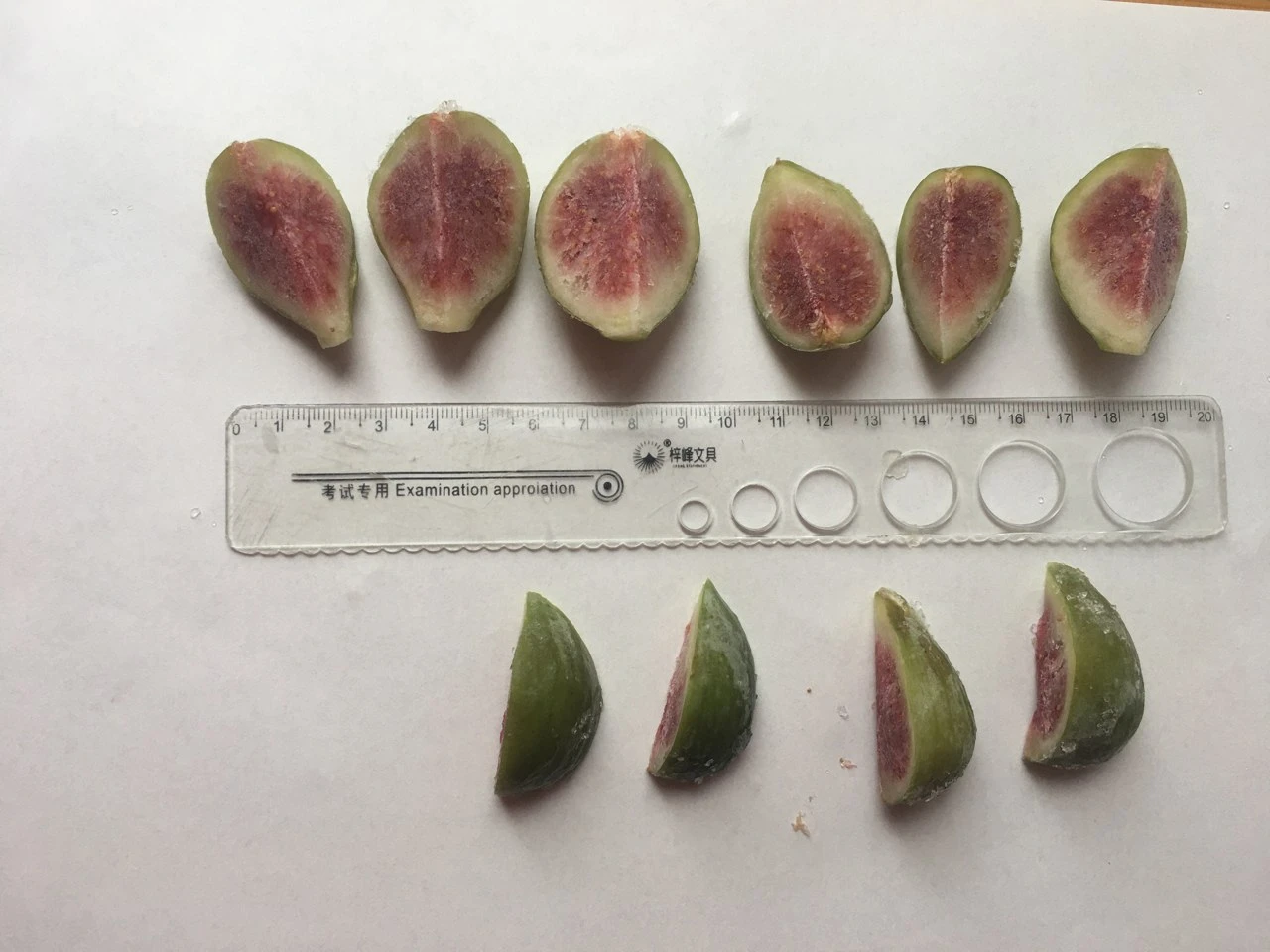
Cut-fig inspection view supplied by GreenLand. The exposed flesh helps explain what to inspect before choosing whole fruit or halves; this photograph is not a measured batch result.
For home freezing, NCHFP's fig preparation starts with fully ripe fruit. For a GreenLand whole-fruit order, we would agree a lot-based sample drawn across the selected packs, record external condition, and cut the sampled fruit to examine the centres as well as the skin. Record the sample count, source packs, defects and acceptance decision against the approved specification. A few attractive uncut figs do not establish internal condition throughout the lot. Sour odour, visible deterioration or inconsistent ripeness triggers segregation and QA assessment of the affected lot before freezing or release; the sampling plan and any re-sorting are recorded rather than assuming a one- or two-fruit check represents a commercial batch.
For a household comparison, prepare a few sound figs both ways, keep the pack recipe identical, and note the later use. Put a whole fruit and a half in separate labelled containers, freeze them under the same conditions, then thaw both in the refrigerator. Does the whole fruit hold a serving shape? Does the cut half lose too much juice? Record the observation rather than assuming the attractive fresh cut is how the thawed fruit will look. This is a small kitchen test, not a published quality score or a guarantee for all fig varieties.
Discuss the frozen ingredient for your production
Frozen Figs
Cooked compotes, sauces and bakery fillings.
Confirm for your order: Offered fruit form, ripeness and skin condition; thawing loss, application trial and pack.
View product & supply detailsFor a commercial trial, send your required form, application, pack, quantity and destination. We can discuss the offered sample and the order specification with you.
Request Specifications & QuoteWash, trim and decide whether to peel
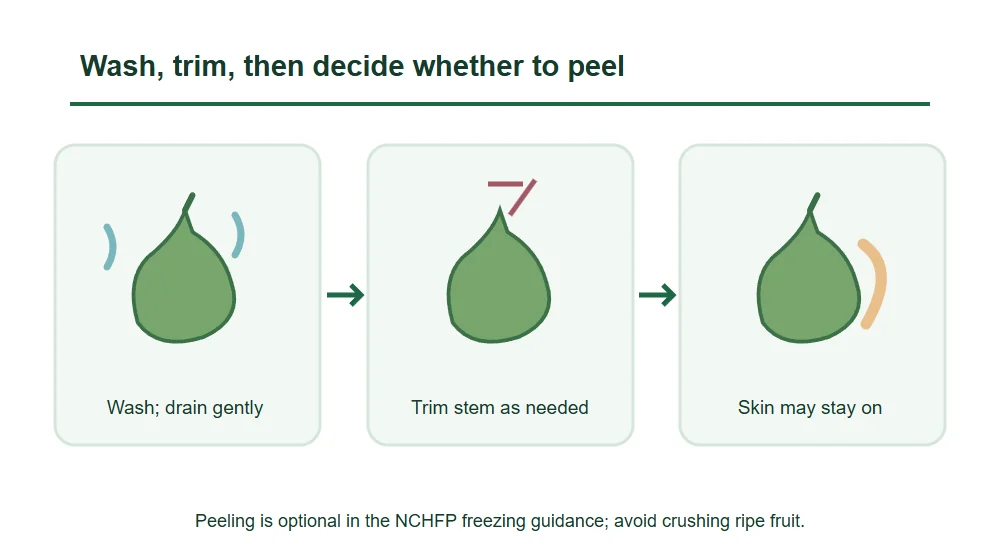
Handle each fig gently in clean water and let surface water drain. Trim the stem as appropriate for the later use, taking care not to crush the shoulders. A skin can be left on according to NCHFP; peeling is optional. If you plan to puree the figs, the skin may contribute colour and texture; if you need a smooth sauce, you may prefer peeled fruit or a later sieve. Peeling very ripe figs can create more waste and damage than it solves. Compare a few before peeling a full tray, and record whether skin removal is a true recipe requirement.
Keep the prepared fruit cool while working. Delicate figs deteriorate if a large bowl waits on a warm counter as you process the next basket. Work in manageable portions, and use clean trays and freezer containers. Weighing is optional for home cooking but valuable for a later comparison: prepared edible-fruit mass divided by original sorted-fruit mass, multiplied by 100, defines one usable-yield percentage. If 850 g of packed fruit comes from 1,000 g of sorted figs, that is 85% under that trimming method. This is an illustrative arithmetic example, not a measured GreenLand yield or buyer tolerance.
Do not call a washed, wet surface a useful syrup pack. Surface water on a dry-pack fig becomes ice at the outside and can join pieces together. Drain or gently blot before laying fruit on a tray. If you choose a syrup route, make the cold syrup separately and identify it on the label. A later cook needs to know whether a 500 g package contains 500 g figs, or fruit plus sweet syrup; the two do not supply the same fruit mass or sweetness.
Keep an accurate count of prepared containers as well as their weights. A smaller package is usually easier to thaw only once for a defined recipe than a large tub repeatedly opened and partly warmed. Write the quantity on the label before frost obscures the contents.
Dry pack and tray freeze
For the NCHFP dry-pack route, place prepared figs in freezer containers with headspace, seal and freeze. The source also allows a tray step: arrange fruit separately, freeze it, and pack it as soon as it is frozen. The tray step is useful if you want to remove a few pieces without thawing a block. It is not a substitute for a sealed final package. Leave the fruit exposed only for the initial freeze, then transfer it promptly so exposed surfaces do not dry out or pick up freezer odours.

Use a single layer rather than stacking wet figs. A whole fig with its own space may separate cleanly; halves with sticky cut surfaces should be set cut side up or on a suitable liner so they do not weld to one another. Test the tray's fit in the freezer before it is loaded. A tilted tray can turn carefully separated halves into a sticky corner. Once the fruit is solid, transfer it with gentle handling into labelled, moisture-resistant packaging. A low, broad container can protect whole fruit better than a bag crushed beneath other packages, while a bag may be practical for firm, separate slices.
If the pieces form a solid mass, ask what happened before assuming the freezer is defective. The figs may have touched on the tray, had too much surface water, been packed before their centres were frozen, or warmed during transfer. A mildly clumped mass can still be used for puree or a cooked sauce, but it is hard to count intact pieces for a plated use. That is a form failure, not proof of spoilage. The Minnesota Extension fruit-freezing guide gives general advice on prompt freezing, appropriate pack sizes and containers that resist moisture and vapour; those principles support the handling choice without replacing fig-specific NCHFP directions.
A 40 percent syrup pack is another route
NCHFP specifies a cold 40 percent syrup for its fig syrup pack, with enough liquid to cover the fruit and headspace in the freezer container. Its optional quality treatment is 3/4 teaspoon (2,250 mg) ascorbic acid or 1/2 cup lemon juice per quart of syrup. This is a source-specific household pack, not a requirement to sweeten every frozen fig. The syrup protects colour and texture in a different way from a dry pack, but it also adds sugar and changes what can be poured into the later recipe. Make and cool the syrup as instructed in the preservation guidance; do not pour hot liquid over fragile fruit immediately before freezing.
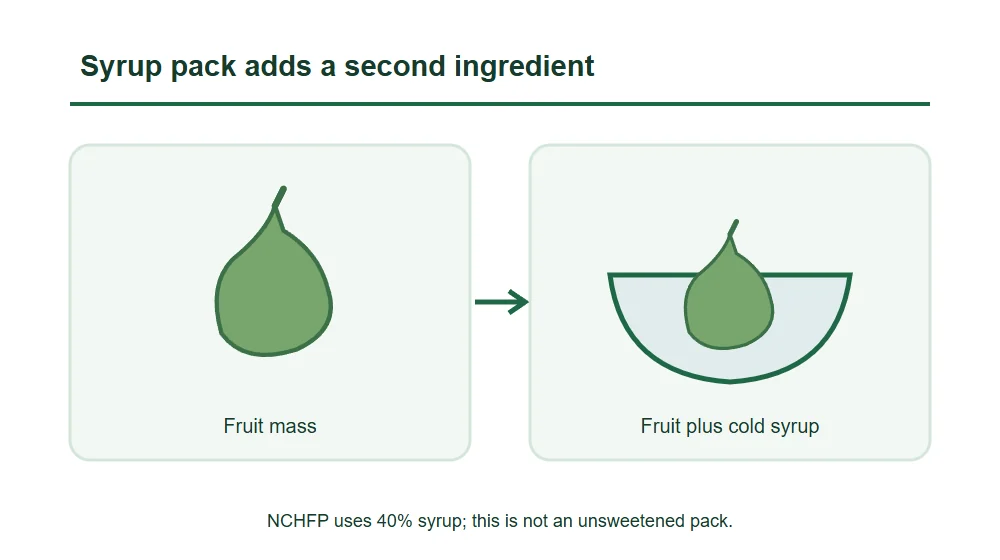
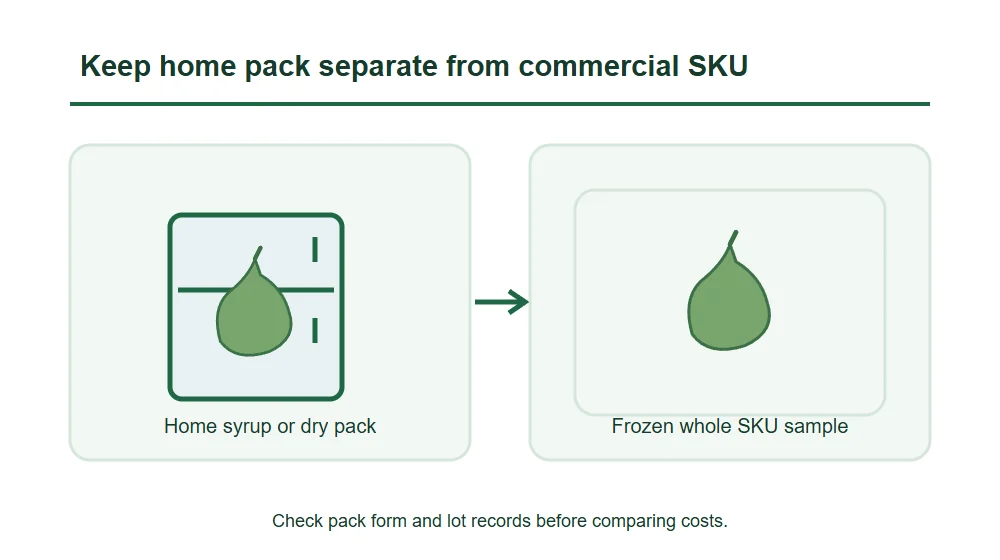
Use the complete NCHFP fig method above when choosing its home syrup pack: its stated syrup concentration is 40 percent. That household preservation method does not define an unsweetened commercial IQF specification. For a GreenLand supply proposal, we would confirm whole versus halved fruit, added sugar or no added sugar, ripeness, size, internal defects, packing and the intended customer process. The processor's batch formula and label must match that choice. We then compare an agreed sample after the customer's thawing or cooking procedure, recording usable yield and texture before agreeing the production specification.
When making the NCHFP syrup route at home, cool the syrup before it touches the prepared fruit and use a container suited to freezer storage. Check that the fruit remains submerged as the package is closed; a piece projecting above the syrup can dry or darken differently from the rest. Add a freezer-safe divider or follow the source's pack guidance rather than crushing fragile figs under a heavy object. On the label, write "figs in syrup" and the preparation date. A later baker should not mistake the visible fruit for the whole contents of the pack. If the recipe requires a fixed mass of fruit, drain and weigh fruit separately after thawing, while retaining the syrup until the formulation decision is made.
The mass basis matters. Suppose a container holds 300 g of figs and 200 g of syrup. A 500 g scoop of the package is 60% figs by total mass, not 500 g fruit. That is a fictional illustration of why a recipe may taste sweeter or become wetter than expected. Record the fruit and syrup contributions separately if you are developing a bakery or sauce formula. A commercial IQF whole-fig product may be unsweetened and require a different procedure; a syrup-pack method does not establish how that SKU is made.
Limit browning in light-coloured fruit
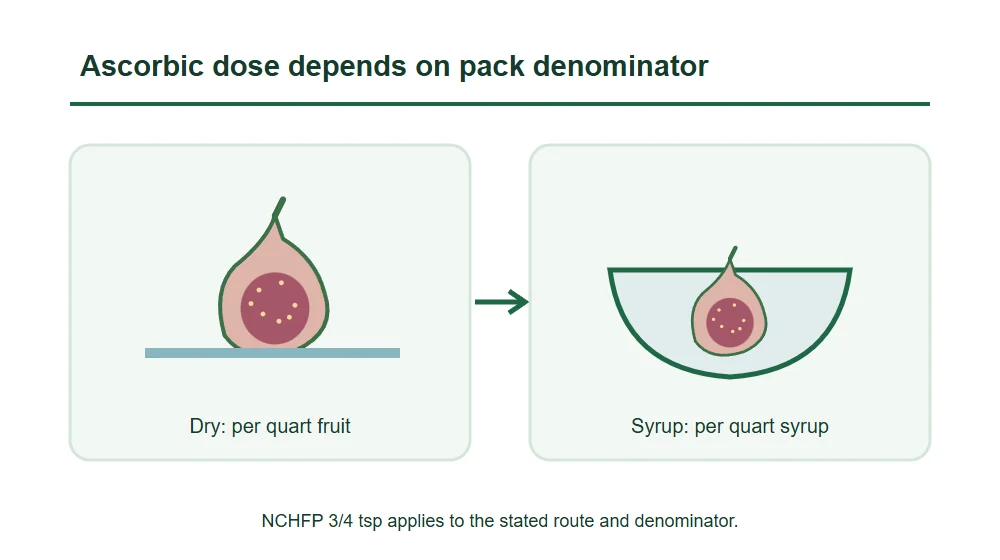
Light-skinned and light-fleshed figs can darken after cutting or freezing. For a NCHFP dry pack, the source suggests dissolving 3/4 teaspoon (2,250 mg) ascorbic acid in three tablespoons cold water and sprinkling it over one quart of fruit. Its syrup-pack option uses the same ascorbic quantity, or 1/2 cup lemon juice, per quart of syrup. Those are not the same denominator: one treatment is per quart fruit and the other is per quart syrup. Keep the units attached to the correct route. Do not express the amounts as a general per-kilogram legal limit or substitute an arbitrary squeeze of citrus while claiming to follow NCHFP.
The NCHFP explanatory fig note makes the purpose clear: acid in frozen figs helps prevent discoloration and preserve quality; it is not necessary to make freezing safe in the way an acidified canning process may be. A darkened cut face may be unappealing in a visible fruit dessert but acceptable in a cooked puree; define the visual endpoint by the recipe. If you compare treated and untreated figs, use pieces from similar fruit, apply the same freeze/thaw method and photograph cut faces under similar light. Otherwise the colour difference may be a lighting or ripeness difference rather than a treatment effect.
Read labels before serving fruit to someone with dietary or formulation constraints. Ascorbic acid and lemon juice are ingredients when added, and syrup is an added sweetener. A supplier's unsweetened fig sample should not quietly receive a household syrup treatment and then be discussed as though it represents the commercial pack. Keep any demonstration recipe, source protocol and SKU specification in separate records.
Thaw carefully and assess texture
Thaw a portion under refrigeration when you need to evaluate the finished texture. NCHFP thawing guidance warns against leaving food to thaw on a counter or in warm water, because the outside warms while the centre may still be frozen. A partly thawed fig can appear to retain its shape, then release more liquid once it is fully soft. Judge it at the actual serving or processing point. A fruit that will be cooked into a sauce can often be handled from frozen according to the chosen recipe; a composed dessert needs a more deliberate thaw and drain decision.
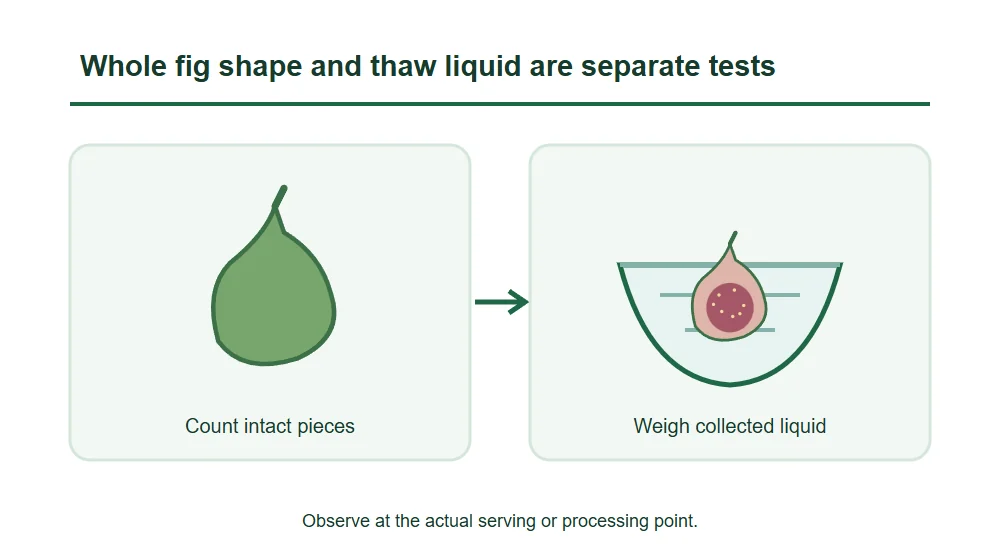
Observe three things separately: the number of pieces still recognizable, the liquid released, and flavour. A slightly collapsed fig may have good flavour for a filling. A beautifully shaped but bland fig may fail the dish. If you want a numerical comparison, weigh a fixed sample frozen, thaw it in a covered strainer under a defined refrigerator time, then weigh the collected liquid. Liquid-release percentage equals collected-liquid mass divided by initial frozen-fruit mass, times 100. For example, 80 g from 500 g is 16% under that imagined procedure. No source here establishes 16% as a limit; the method, time and fruit must accompany the result.
The thaw observation should match the recipe's real wait. If a restaurant will cut the figs while still partly firm and place them on a hot dish, a fully thawed overnight sample alone may exaggerate breakage. If a bakery will hold thawed fruit before filling, a five-minute view after removing it from the freezer will understate leakage. Ask how long the actual product waits, in what container and at what temperature, then repeat those conditions within safe handling guidance. Photograph the same pieces at the start and at use. Counting intact pieces without recording when they were counted leaves an apparently precise figure that another cook cannot reproduce.
Do not re-label soft thawed texture as a defect without a use context. Freezing changes cell structure, and some recipes deliberately break down fruit. A supplier and bakery can still agree on how many whole pieces must remain after a specified handling test. That acceptance condition requires an actual order specification and repeatable test. This article only supplies a way to frame the question; it does not report that our whole-fig SKU has passed it.
Why frozen commercial whole fruit needs a sample check
GreenLand's fig range should be checked against the exact offered SKU. The cut-fruit inspection photographs here expose skin and centres, but they cannot establish botanical variety, soluble solids, pack weight, or the condition after thawing. A ruler in a photograph does not replace a calibrated measurement of a defined sample. For a food manufacturer using visible fig pieces, the centre is particularly important because the external skin can hide deterioration. Request a current sample from the exact proposed SKU, confirm the lot identity and open a defined number of pieces before a bakery run. Name the cut and use in the inquiry: whole fruit for later cutting, halves, or a puree component are different purchasing decisions.
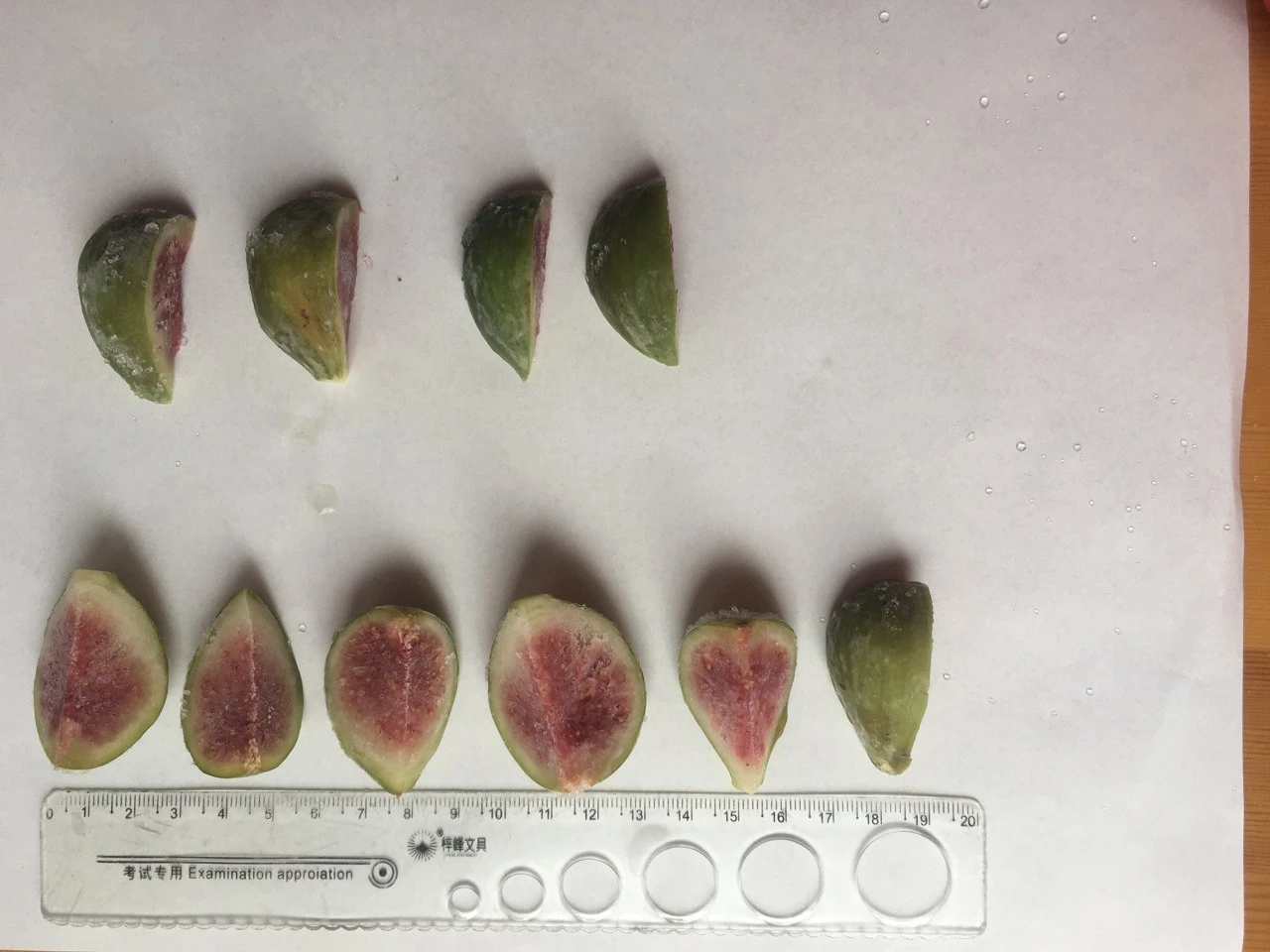
A second inspection arrangement shows skin and centres together. Agree the actual sample size, cutting method and acceptance criteria before inspecting a commercial lot.
A proposed trial could draw three labelled packages from different carton positions, then weigh and open ten figs from each package, recording inside condition, stem remnants, broken skin and any off-odour. These numbers illustrate a method; they are not a government sampling rule and do not justify an automatic batch release. After the raw inspection, handle matched samples in the buyer's intended recipe, retaining the same thaw time and equipment. Record the package and lot, inspector, deviation, customer criterion and authorised disposition. If an interior defect is found, the responsible quality role should hold that material against the agreement and investigate, not average the observation away because the rest of the fruit looked attractive.
Cost depends on usable fruit in the customer's dish. A whole-fig pack may carry trim and cutting labour; a pre-cut pack may save labour but break down more easily. Compare cost per acceptable finished unit and include syrup, free-liquid handling and rejected pieces where they apply. A low per-kilogram price alone does not decide which form is economical. We can discuss a factory-direct wholesale specification and proposed process trial, but cannot declare a validated result or guarantee a particular commercial freezing route from the public photograph.
Questions about skins, headspace and refreezing
Do I need to peel figs before freezing? NCHFP says peeling is optional. Leave the skin on when it suits the dish and survives your handling; peel or sieve for a smoother preparation. Try a small sample if the fruit is very ripe and prone to tearing.
Can I freeze figs whole? Yes, sound ripe small fruit may be left whole. Inspect some centres first and pack gently. Halves or slices may be more convenient when the next recipe needs measured pieces, but no universal size rule is established by the cited sources.
Why does a freezer container need headspace? Syrup and fruit expand as they freeze. NCHFP specifically calls for headspace in its pack instructions. Use a freezer-suitable container and follow the complete source guidance for its size; do not fill it to the rim and expect the seal to remain intact.
Can I refreeze thawed figs? The safe and useful choice depends on how the figs thawed and were handled. Do not leave them warm on a counter and then refreeze them as an apparent fresh-quality product. If they were handled under refrigeration, consult current food-safety guidance and judge the quality loss for the intended recipe; a second freeze will not restore shape.
Compare when whole fruit is less useful than prepared pulp.
Move from fig packing to a separate use decision.
See how a whole-fruit format fits a broader fruit sourcing brief.
Source frozen figs with GreenLand-food
GreenLand-food is a professional frozen figs supplier and manufacturer in China, providing factory-direct wholesale supply for importers, food manufacturers, foodservice distributors and private-label programs.
Send us the product form, specification, packing, quantity, application, destination, private-label needs and requested documents.