


When Are Onions Ready to Harvest?
Sep 07, 2026
Leave a message
The direct answer
Judge storage-onion readiness from natural top fall together with neck and bulb condition. Use dates and fallen-top percentages as local planning guidance, not universal rules. Do not force the leaves down, and separate sound prompt-use bulbs from suitable storage onions and rejected decayed material.
Keep these distinctions in mind
Harvest readiness depends on the intended use
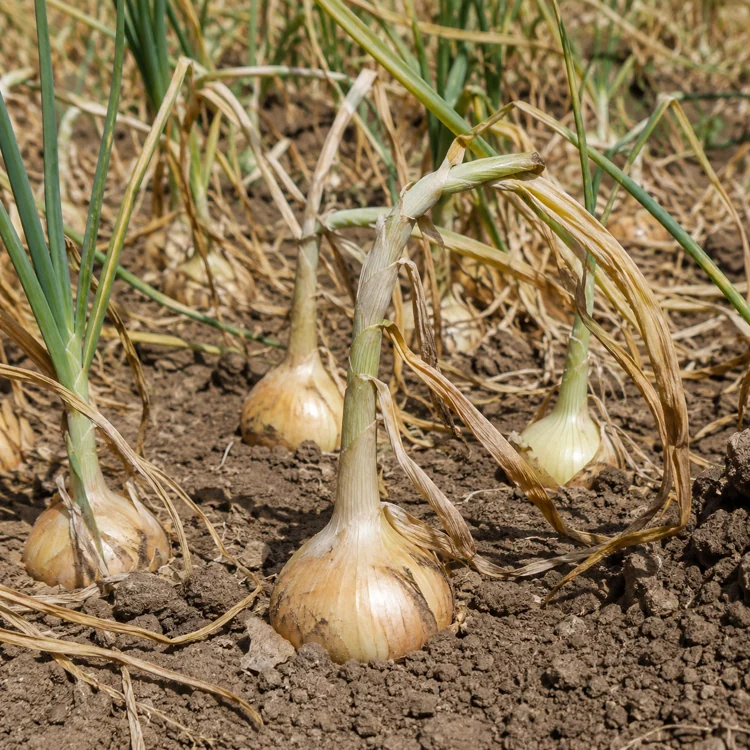
Onions grown as mature storage bulbs are usually ready to harvest when the tops begin to yellow and fall over naturally, the necks lose their firm upright growth and the bulbs are sound and well developed. Read those signs together rather than relying on one date. Onions for immediate fresh use can be lifted earlier, while long-storage onions need suitable maturity and a later curing stage.
The intended destination changes the decision. A small onion pulled for dinner does not need the same dry-bulb maturity as an onion expected to remain in storage for months. A processor may use sound bulbs on a planned schedule, but processing is not a way to make rotten or unsuitable onions acceptable.
For a closer explanation, see Is an Onion a Vegetable?.
Kansas State's harvest guidance and other extension references use natural top fall and bulb condition as practical signs. Percentages of fallen tops vary across recommendations because crop type, weather and intended use differ. Treat a percentage as context for a crop decision, not a universal pass mark.
For frozen onion supply, harvest readiness is one part of raw-material quality. We also consider soundness, peeling yield, the required cut and the processing schedule. A mature bulb can still fail a specification if it is damaged, diseased or poorly handled after lifting.
Read natural top fall with the neck and bulb
As a bulb onion matures, the foliage commonly yellows and the neck weakens, allowing the tops to fall naturally. This is different from deliberately bending the leaves down. Forcing the tops over does not create maturity and can damage the plant, so it should not be used to make a crop appear ready.
Look across the bed or lot rather than at one plant. A representative view helps distinguish normal progression from isolated damage. Check the neck, bulb firmness and outer condition alongside the foliage. A broken leaf on one onion may reflect handling, wind or another issue rather than a harvest signal for the whole crop.
Illinois Extension's onion guidance describes harvesting dry onions as the tops fall and begin drying. The useful principle is the combination of natural development and sound bulbs. A thick, actively growing neck needs a different assessment from a neck that has naturally softened at maturity.
| Observation | Possible meaning | What to check before acting |
|---|---|---|
| Tops yellow and fall naturally across the crop | Normal maturity progression | Neck condition, bulb soundness and weather |
| A few leaves are broken or flattened | Mechanical or weather damage | Whether the bulb and remaining plant are actually mature |
| Thick upright necks remain | Uneven or delayed maturity | Variety, crop history and suitability for storage |
| Soft, discolored or leaking bulbs | Possible decay or damage | Reject unsuitable material rather than curing it |
| Flower stalks appear | Bolting | Separate handling and limited storage expectations for sound bulbs |
Use these observations to sort and plan. They are not a substitute for investigating disease or an unusual crop problem when the signs do not fit normal maturity.
Use calendar dates as a planning estimate
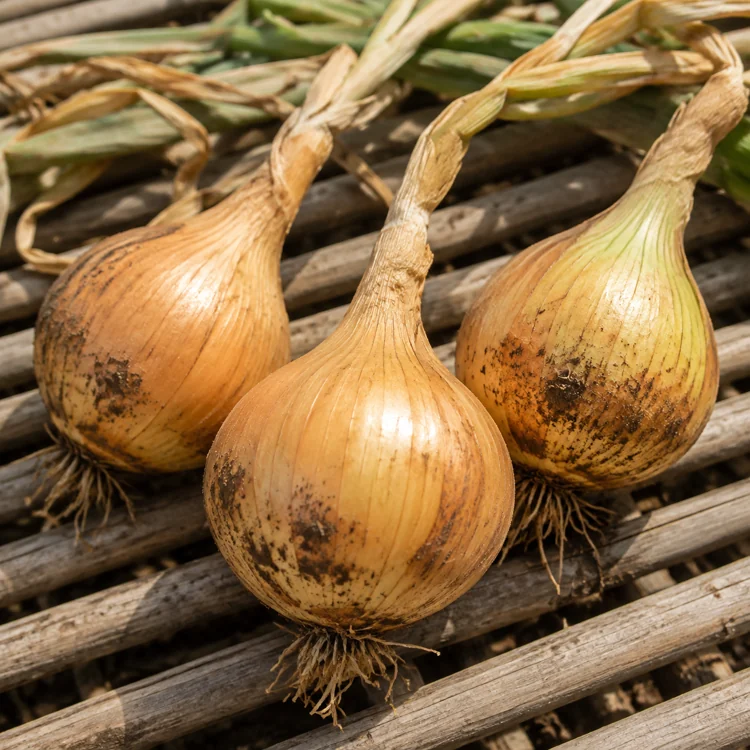
Days to maturity and local harvest calendars are useful for planning labor and equipment, but they are estimates. Planting date, variety, weather, growing conditions and the type of planting material affect the actual crop. A date printed on a seed packet cannot account for every season.
Onion varieties also differ in their day-length response. A variety suited to one growing region may not bulb in the same way elsewhere. That is a reason to use local growing guidance and a suitable cultivar, not a reason to force a harvest because a calendar says the expected month has arrived.
Track development as the anticipated window approaches. Note the proportion of natural top fall, the spread in bulb size and the condition of the necks. This helps schedule harvest without making a sudden decision from a single wet day or a single large bulb.
For commercial sourcing, the crop calendar should support a supply plan rather than a promise of an identical date every year. Ask about the likely harvest window, the processing period and the availability of the required grade. Weather or maturity shifts may change the plan, and clear communication is more useful than false precision.
We review delivery requirements against the proposed product and packing schedule. A buyer needing a particular frozen cut should state the desired shipment period early. That allows crop availability, processing and commercial lead time to be considered together instead of assuming that fresh harvest and export-ready frozen stock appear on the same day.
Why bolting or damage can imitate maturity
Bolting produces a flower stalk and changes the way an onion should be assessed for storage. A bolted onion may still have sound material for prompt use, but it should not automatically be placed with the best long-storage bulbs. Inspect it and follow suitable local guidance for handling the crop.
Damage can also flatten tops or interrupt growth. Wind, foot traffic, cultivation or rough handling may make leaves fall before the bulb has reached the desired maturity. The appearance of the foliage alone cannot distinguish every cause, which is why neck and bulb checks are useful.
Disease and decay are different again. A soft or leaking bulb, unusual discoloration or an objectionable odor should prompt rejection or appropriate investigation. Do not describe such bulbs as merely "early" or "processing grade" to avoid the quality issue.
For a grower, keep questionable material separate from sound bulbs intended for curing. For a processing buyer, define the defects that are unacceptable at receipt. A freezing step does not reverse decay, and peeling cannot be assumed to remove every problem associated with an unsuitable raw-material lot.
When crop damage is widespread, the harvest plan may need to change. Record the affected area, weather event or handling issue and assess the actual product. A clear lot history supports a better decision than mixing everything together and relying on later sorting to solve an unknown problem.
Choose a dry harvest window and protect the skins
A dry period generally makes lifting and initial handling easier and reduces the amount of wet soil carried with the bulbs. Consider the forecast alongside maturity. A crop may be ready while the weather is unsuitable for leaving bulbs exposed, so the plan should include a sheltered, ventilated place for the next stage.
Protect the outer scales and the bulb from bruising. The dry skins contribute to the onion's protection during handling and storage. Knocking bulbs together to remove soil can damage them, even if the injury is not obvious immediately. Gentle handling helps preserve the raw material that the crop has produced.
Avoid exposing harvested onions to conditions that can cause sunscald or repeated wetting. Extension advice differs in the details of field drying because climates differ. University of Nebraska–Lincoln's harvesting and curing guidance provides a useful reference for protecting bulbs while they dry.
Have the receiving area ready before lifting a large quantity. Harvesting more than can be handled and laid out appropriately can create piles with poor airflow and uneven drying. The capacity of the next stage should influence the daily harvest load.
For a commercial supply chain, record the harvest date and the handling route. That information helps explain later differences in peeling yield or storage condition. It is more useful than a broad claim that the onions were harvested in a good season without evidence about the actual lot.
Lift and sort without creating avoidable damage
Loosen the soil carefully where needed and lift the bulbs without cutting or bruising them. Pulling roughly from compacted ground can damage the neck or leave injuries. Use tools in a way that keeps their edges away from the bulb and protects the outer scales.
Remove loose soil gently. Do not wash onions intended for curing unless a specific controlled commercial process requires it; adding surface moisture can interfere with ordinary drying. The handling route for immediate preparation may differ, so keep the destination clear.
- Confirm the crop's maturity and the planned destination.
- Prepare a dry, ventilated handling area.
- Loosen and lift the bulbs carefully.
- Separate damaged, bolted or otherwise unsuitable material.
- Route sound storage bulbs into the appropriate curing process.
- Keep sound bulbs for prompt use identifiable and use them under a suitable plan.
Sorting should distinguish quality categories without disguising safety problems. A cosmetically imperfect but sound bulb is not the same as a rotten bulb. The former may suit an agreed processing use; the latter should not enter food production as a cost-saving measure.
For larger lots, inspect representative samples from different containers or field areas. A clean top layer can hide variation below. Record the sorting basis and any significant defects so the next team understands what it is receiving and why the lot was assigned to a particular route.
Decide which sound bulbs to cure and which to use soon
Sound mature onions of suitable storage varieties are the main candidates for curing and longer storage. Curing dries the neck and outer scales; it is a stage after harvest rather than a substitute for maturity. A freshly lifted onion should not be declared storage-ready simply because its tops have fallen.
For harvest and seasonality details, see How to Cure Onions After Harvest.
Sound bulbs with thick necks, bolting or handling damage may need prompt use rather than long storage, depending on their condition and the relevant guidance. Keep them separate so they are not accidentally held with the better storage lot. Reject decay rather than assigning it a shorter date.
Sweet onions can have different storage behavior from pungent storage types. The variety and condition matter more than a generic onion label. Ask the grower or supplier about the intended storage suitability instead of assuming every large bulb will keep equally well.
UC Agriculture and Natural Resources' onion harvest and storage guidance explains the connection between harvest, curing and later storage. For a buyer, the practical question is which stage the supplied raw material has reached and what handling remains before processing or sale.
Do not mix destinations casually. A lot selected for immediate peeling and cooking may be suitable for that planned route but poorly suited to an extended waiting period. If the schedule changes, reassess the storage plan and condition rather than leaving the product under an assumption that no longer matches its use.
How maturity affects peeling and cut quality
Maturity and condition influence how efficiently onions can be peeled and cut. A suitable bulb can provide clean layers and predictable trim loss. An uneven lot may require more sorting and produce a wider range of pieces, even when the cutting equipment is unchanged.
Very thick necks or poorly developed outer scales can complicate preparation. Damage or decay increases rejection and trimming needs. A large bulb is not automatically a high-yield bulb if a substantial portion must be removed to obtain acceptable material.
For dice, the buyer may care about size consistency and fines. For strips or rings, layer integrity and bulb structure are more visible. For whole small onions, diameter and the ability to remain intact after peeling become central. The raw-material assessment should connect to the final cut.
Measure yield in a practical test. Record the weight received, the acceptable peeled weight and the amount that meets the finished-cut specification. This reveals whether a cheaper crop lot actually produces economical usable output. Labor and line interruptions can matter alongside discarded weight.
We review frozen onion requirements with the target cut and application in mind. A crop lot should be suitable for the product being made, rather than treated as interchangeable raw material for every onion format. The sample and specification help turn that judgment into an acceptance basis the buyer can check.
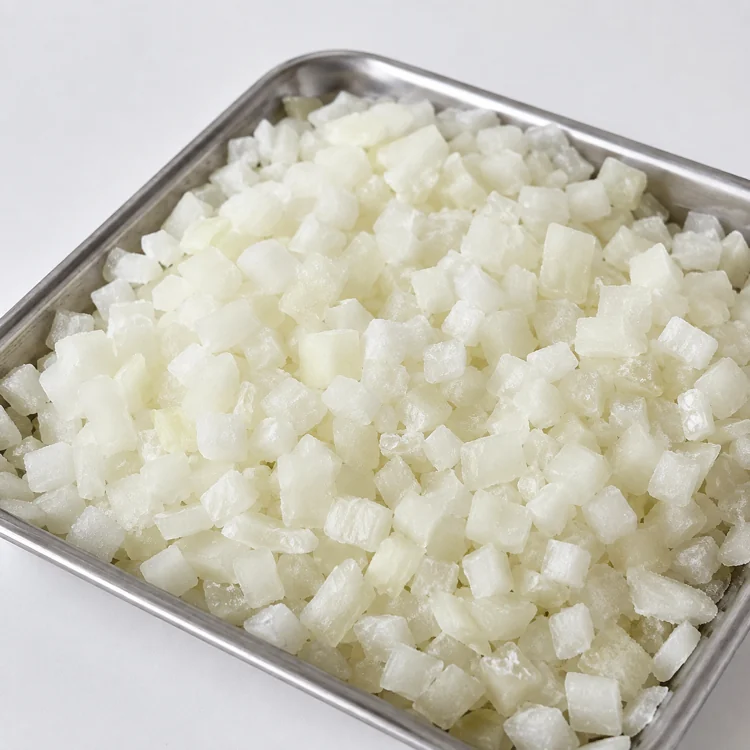
Route onions for fresh sale, storage or freezing
Fresh sale, storage and freezing are different routes with different handling needs. Fresh onions for prompt use may not require the same curing endpoint as dry bulbs intended for storage. Frozen cut onions pass through preparation and a freezing process, but they still need sound raw material and appropriate controls.
| Destination | Key raw-material question | Main planning issue |
|---|---|---|
| Immediate fresh use | Is the bulb sound and suitable for the recipe? | Prompt preparation and appropriate handling |
| Dry storage | Is it a suitable variety at the right maturity and curing condition? | Ventilation, sorting and storage environment |
| Frozen dice or strips | Will sound peeled material meet the cut and cooking specification? | Processing yield and controlled preparation |
| Whole frozen onions | Are diameter and bulb integrity suitable? | Peeling quality and whole-bulb retention |
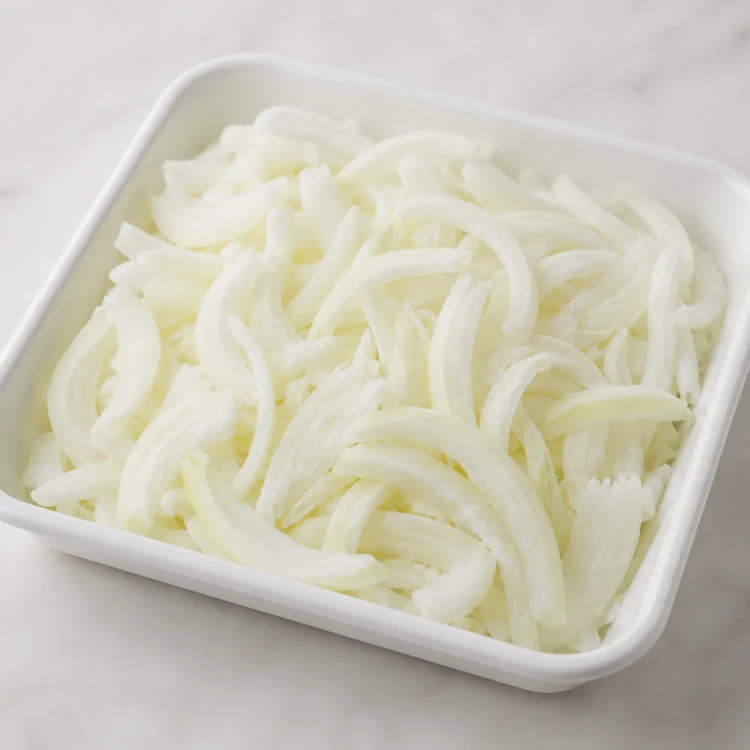
Freezing changes the product's later texture and use. Frozen onion often suits cooked dishes, while it may not reproduce the crispness of a fresh raw garnish. Our guide to freezing onions discusses that distinction separately from harvest readiness.
Do not describe processing as a rescue route for spoiled bulbs. The decision is about using sound material in an appropriate format. Any raw-material defect limits should be defined by the responsible quality team and the product's intended use.
For purchasing, ask when the lot will be processed and what happens between harvest and preparation. A clear schedule reduces the risk of an ingredient waiting under conditions that do not suit its maturity or storage characteristics.
Build a receiving specification for a crop lot
A receiving specification should identify the onion type, intended use and relevant size range. It should also describe soundness, allowable cosmetic variation and unacceptable defects. "Freshly harvested" is not enough to establish whether the lot suits a storage program or a particular processing line.
Define how samples are selected and assessed. Bulb size, neck condition, outer scales, mechanical damage and visible decay can all be relevant. If the lot is sold as cured, state the expected condition rather than accepting the word cured without an observable basis.
Include traceability information such as the grower or source lot, harvest period and handling records appropriate to the supply arrangement. For a frozen processor, connect that raw-material identity to the production and packing lot. The ability to follow a problem through the chain matters more than the appearance of a standalone certificate.
For the finished frozen product, specify the cut, packing, ingredients, storage and cooking instructions. The raw-material harvest record supports the quality story but does not replace finished-product checks. A sound crop can still be affected by poor peeling, cutting, freezing or later handling.
We can review a frozen onion supply requirement against the buyer's cut and application. Send the quality criteria that matter at receipt and after cooking. That helps align the sample, specification and commercial offer with the same intended result.
An inspection sheet can separate observations from the decision. For example, record the number of sampled bulbs with dry necks, mechanical injuries or visible decay in distinct fields, then apply the agreed acceptance criteria. Do not combine all defects into one percentage if their consequences differ. A superficial skin mark and a decayed bulb should not carry the same interpretation. Keep the sampling locations and lot identity with the result so a later review can establish whether the observation represented the whole delivery or only one container.
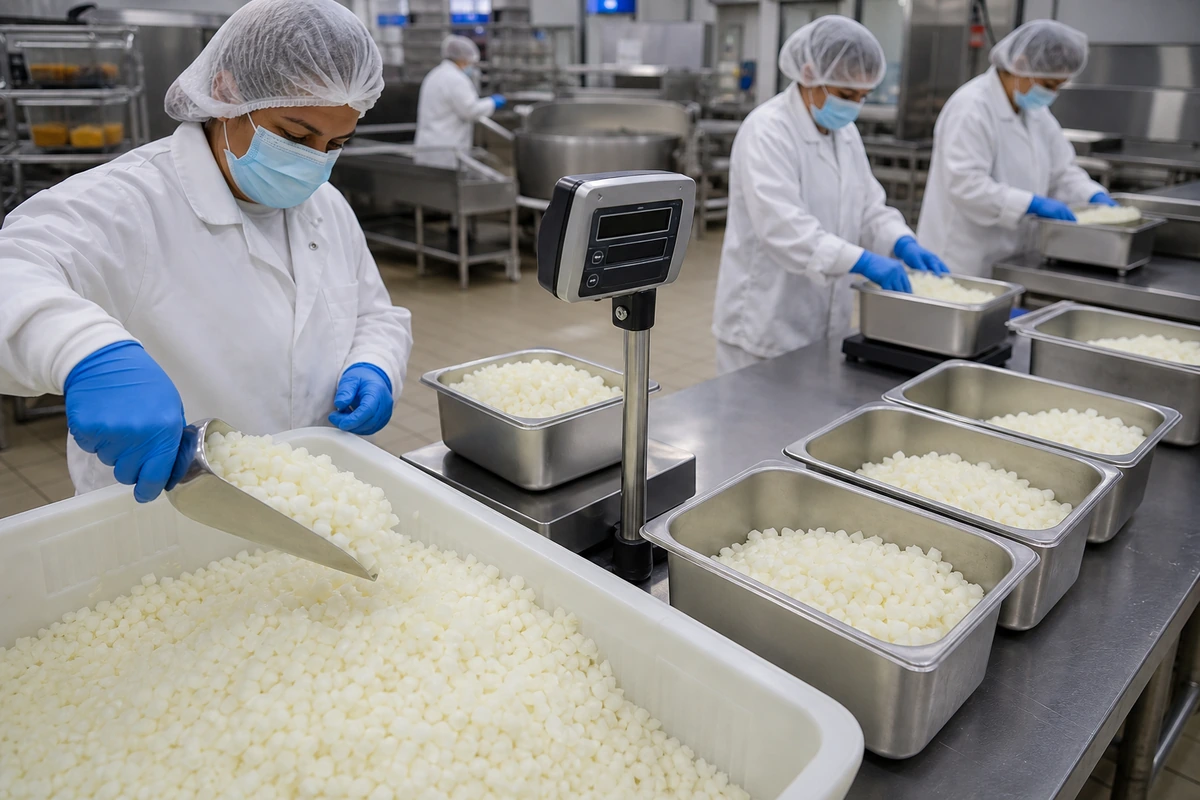
Plan commercial supply with crop and processing records
Begin with the demand and shipment window, then review the crop and production schedule. A buyer may need a consistent frozen cut throughout the year, while the raw material is harvested in defined periods. Storage and processing plans should bridge that difference without pretending the crop calendar is identical every season.
Confirm the expected volume, packing, minimum order quantity and lead time for the actual product. A custom cut, retail bag or private-label program can require additional preparation. Raise artwork, testing and document needs early enough to fit them into the schedule.
At frozen-goods receipt, check package integrity, lot identification and the agreed temperature evidence. Keep the product under its labeled frozen conditions, commonly at or below -18°C. Harvest quality and cold-chain control support each other; one cannot compensate for failure of the other.
Request relevant product specifications, quality reports and destination-specific shipment documents. Check the scope and validity of any certificates required for supplier approval. Crop origin and harvest timing should be supported by records where they are part of the agreed claim.
The useful inquiry describes the onion type, final cut, application, packing, quantity and destination, plus the required dispatch period. With those details, we can review a practical supply plan. Natural top fall helps identify harvest readiness, while the complete record helps ensure that readiness becomes suitable, traceable product in the buyer's operation.
Source frozen onion with GreenLand-food
GreenLand-food is a professional frozen onion supplier and manufacturer in China, providing factory-direct wholesale supply for importers, food manufacturers, foodservice distributors and private-label programs.
Include the cut and shipment window, plus any crop-origin, raw-material or processing records required for approval.
Send your product form, specification, packing, quantity, application and destination, together with private-label needs and requested documents. We will review the requirement and confirm the available sample, packing and commercial options for your order.