


When Is Lychee Season?
Sep 03, 2026
Leave a message
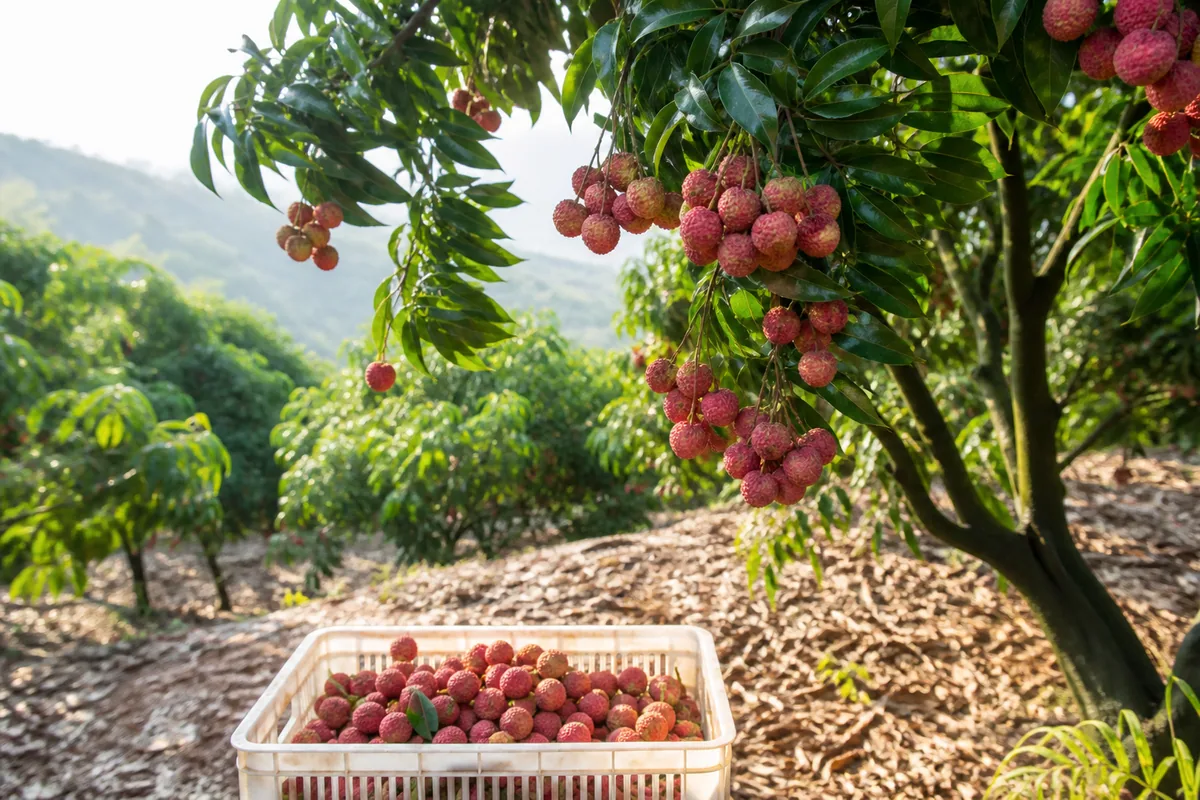
Mostly May to July in northern origins; November to February in southern origins
China, India, Vietnam and Florida commonly harvest lychee from May through July, with the exact start and peak varying by region and variety. Southern Hemisphere origins commonly run from roughly November through February, sometimes extending into March. Fresh fruit is highly perishable. IQF peeled and pitted lychee can ship beyond the crop period, but year-round availability remains subject to frozen stock, grade and order confirmation.
Origin, variety, latitude, elevation, flowering weather and crop year can shift the dates by weeks.
Key takeaways
- Attach every month range to an origin; a global fresh season without geography is misleading.
- Northern and Southern Hemisphere crops create complementary windows but not guaranteed continuous fresh supply.
- Lychee loses shell color and quality quickly after harvest, making cold handling and rapid processing important.
- Frozen peeled and pitted fruit extends use beyond harvest, while current stock, production lot, Brix, piece count and remaining shelf life still require confirmation.
Quick comparison
| Origin group | Typical main window | Supply note | Buyer question |
|---|---|---|---|
| Southern China and Vietnam | Late May–July | Large northern crop with regional and variety waves | Which province, variety and processing week? |
| India | May–June, region-dependent | Short local windows and fast fresh movement | Which growing region and current crop condition? |
| Florida and subtropical US | May–July | Small specialty fresh crop, weather-sensitive | Is the fruit local fresh or imported? |
| Southern Africa, Madagascar, Mauritius | November–January or February | Counter-season fresh supply | Which origin and arrival program? |
| Australia and other southern origins | November–February or March | Regional spread and export programs | Which variety, pack and shipment week? |
| IQF frozen lychee | Shipment after crop subject to stock | Processed during crop, stored frozen | Which lot, grade, production date and remaining life? |
China and Vietnam lead a broad early-summer window
Lychee originated in southern China and is widely produced across southern provinces. Commercial harvests often begin in late May, peak through June and continue into July depending on province, variety and weather. Earlier and later regions overlap, which creates a broader national window than one orchard experiences. Vietnam follows a similar late-spring and early-summer rhythm, with early and main-crop production areas.
GreenLand-food's disclosed frozen lychee origin is Fujian, China, with Wuye and Lanzhu among the available varieties and a main June–July crop and IQF processing period. That is a product-specific context, not a universal calendar for all Chinese lychee. Current-lot availability, Brix, size and stock must be checked for each order.

India has a concentrated May–June season
Major Indian litchi regions often harvest from May into June, with differences across Bihar, West Bengal, Uttar Pradesh and other growing areas. The fresh window is short, and high temperatures make rapid movement important. Varieties mature at different times, so a national "June fruit" description hides regional waves.
Buyers comparing fresh origins should review packhouse, sulfur or other treatment declarations where relevant, residue plans, transit time, variety, maturity and arrival condition. This article does not recommend one treatment; destination rules and product specifications govern what is permitted and declared.
Florida supplies a late-spring specialty crop
The Florida Department of Agriculture places local lychee mainly in May through July. Volumes and exact weeks vary with flowering and weather. The fruit is often sold through specialty channels and local markets. A consumer seeing lychee in a US store outside that window may be looking at imported fresh fruit, canned product or frozen fruit.
For storage and handling details, see How to Store Lychee Fruit: Fridge, Freezer and Packing.
Country of origin and product form should be read from the label rather than guessed from the season. Fresh appearance also changes in storage: shell browning can develop while flesh remains usable, but wet decay, mold, fermented odor and leaking require rejection.

Southern Hemisphere origins create a counter-season
South Africa, Madagascar and Mauritius can supply during the Northern Hemisphere winter, commonly from November into January or February. Australia also harvests across a broad summer period, with regional and variety differences that may extend from late spring into early autumn. These origins help fresh programs bridge part of the calendar. They do not create perfectly continuous supply because each crop remains short and weather-sensitive.
Long-distance fresh quality depends on harvest maturity, sulfur dioxide or other permitted treatments when used, packaging, temperature, humidity and transit. Buyers should assess the exact program and legal requirements, not only the appealing phrase counter-season.
Fresh lychee is highly perishable after harvest
The fruit shell loses bright red color quickly as it dries and browns. Flesh quality also declines with heat, water loss, decay and fermentation. Rapid pre-cooling, suitable packaging and cold-chain management extend marketable life, but they do not turn a short fresh crop into an indefinite season. The FAO notes that minor tropical fruits face high perishability, short harvest periods and irregular supply.
For receiving, record origin, variety, harvest or pack date evidence, arrival temperature, shell color, cracks, decay, odor, flesh condition and remaining-life expectation. A calendar answer helps procurement start the plan; the case condition decides acceptance.

IQF processing captures the crop for later use
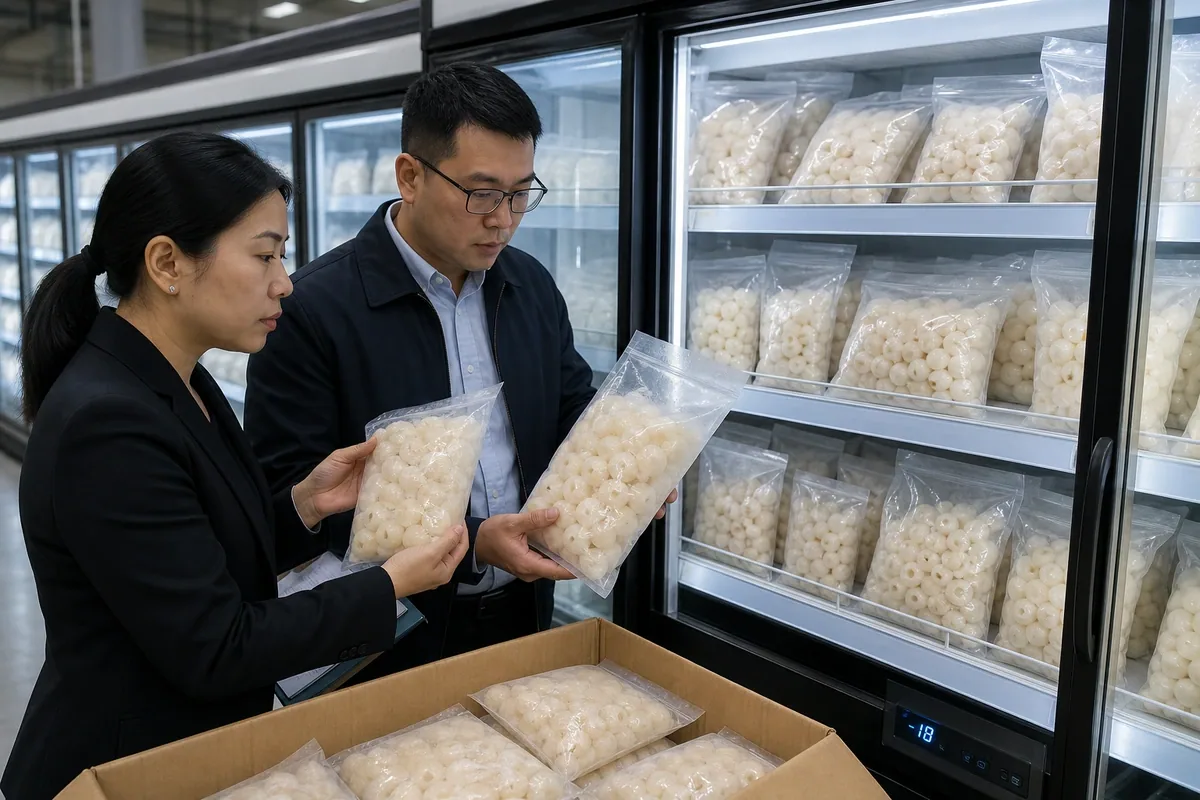
During the crop, selected lychee is peeled, pitted, inspected, frozen and packed. IQF aims to separate individual arils so foodservice and manufacturers can portion fruit. Freezing softens tissue after thawing but reduces preparation labor and makes beverage, dessert, yogurt, bakery and fruit-bowl programs possible outside fresh harvest. Broken peeled fruit can support puree and juice applications.
The processor must control shell removal, seed fragments, cavity damage, browning, Brix, size, intact ratio, frozen separation and cold chain. Freezing does not erase poor raw fruit. Mature but sound intake and rapid processing are essential.
Year-round frozen supply is a planning claim, not a blank guarantee
Frozen inventory produced in June or July can ship months later while it remains within declared storage and shelf-life conditions. Yet a specific premium large, high-Brix or private-label grade can sell out. Port capacity, reefer space, packing materials and documents also influence shipment. Use "year-round subject to stock" and confirm the current lot at quotation.
At GreenLand-food, the published frozen lychee specification distinguishes whole peeled and pitted, in-shell and broken processing grades. It describes Fujian crop, piece counts, Brix bands and packing references, all subject to current-lot and contract confirmation. Buyers should send quantity, form, pack, destination and shipment months early enough for allocation.

Build an annual crop-to-contract calendar
Six to nine months before the crop, forecast annual quantity and pack mix. Before processing, confirm variety, grade, Brix, size, intact ratio, treatment and testing plan. During production, review current-lot photos, samples or COA data. After freezing, allocate inventory by lot and shipment month, then monitor remaining shelf life and temperature. Keep an alternative grade or compatible origin strategy for noncritical preferences.
Separate forecast, provisional allocation and confirmed contract status. Agriculture can move. A good supplier communicates changes and gives evidence; a good buyer avoids launching a promotion from a general web season without actual stock confirmation.
Worked decisions that a short answer cannot cover
Worked calendar: June crop, February shipment
A beverage company needs frozen peeled lychee the following February. The fruit may be processed in June–July, allocated after sample approval and stored at or below the declared temperature until reefer loading. The buyer checks production date, remaining shelf life, lot COA, pack condition and cold-chain plan before release.
The shipment month is off-season for fresh Fujian fruit, but not automatically impossible for frozen stock. Availability still depends on allocation and condition.
Early fruit and peak fruit may not match
An early lot can be smaller or more acidic; peak-crop fruit may offer better size and volume; late fruit can vary in seed size and softness. Variety also changes these patterns. Do not approve one early sample and assume every later lot is identical.
Define acceptable ranges and review the current production lot for high-volume or premium programs.
Shell color is not the only fresh quality measure
A bright shell attracts shoppers, but internal flesh, aroma, decay, seed size and sweetness matter. Some post-harvest handling retains shell appearance while another lot browns externally but has sound flesh.
Receiving should use a cut test and odor check, not only a color photograph.
Frozen form determines inventory flexibility
Premium intact arils serve visible desserts and tea drinks. Standard pieces serve foodservice. Broken peeled fruit can serve puree and juice. Holding only premium grade can increase cost; holding only broken grade can block visual applications.
Forecast by application and form, then review whether compatible products can share a reefer or production plan subject to food-safety and order constraints.
More detail for a repeatable decision
Variety waves shape the Chinese calendar
Early cultivars can begin before the main June harvest, while later cultivars extend the season. Provinces differ in latitude, elevation and production scale. A national chart therefore represents overlapping local crops rather than one continuous orchard harvest.
Wuye and Lanzhu are among varieties associated with Fujian supply, but current availability and characteristics must be confirmed. Seed size, flesh yield, Brix, aroma and processing behavior vary. Variety is a commercial input, not decorative origin language.
For annual planning, ask when the selected form will actually be processed and when current-lot samples can be reviewed. Fresh harvest date and frozen packing date may be close but are not identical records.
Fresh import programs live by transit math
Count backward from required shelf days at retail. Subtract harvest-to-pack time, export handling, flight or sea transit, customs clearance, distribution and store display. A fruit that arrives during the nominal season can still have too little remaining quality for the program.
Air freight protects time but raises cost; sea programs need suitable variety, treatment, pack and temperature control. Evaluate shrink and rejected fruit, not only purchase price.
Keep origin and treatment declarations accurate. Fresh lychee regulations, residue requirements and permitted post-harvest treatments differ by market, so current professional review is essential.
Frozen inventory planning should segment grade
Allocate premium large intact arils for visible tea, fruit cups and dessert. Allocate standard whole fruit for general foodservice and dairy. Controlled broken peeled fruit can supply puree and beverage. Segmenting avoids consuming garnish grade in a blender early in the year.
Review private-label packaging separately from bulk inventory because film, artwork and minimum production runs can become the constraint even when fruit exists. Forecast master-carton and label needs before the crop.
Track each lot's piece count, Brix, intact ratio and remaining shelf life. A customer switching from puree to garnish cannot assume the same stock supports the new application.
Crop risk communication should use dated evidence
Flowering, fruit set, storms, heat and rain can change yield and timing. A useful update states the observation date, affected origin, likely range and next checkpoint. Avoid "crop normal" without numbers or photos.
During processing, share representative lot photos and test results under the agreed communication plan. Separate provisional results from final COA or release data.
If a crop cannot meet a preference, discuss an approved alternate variety, grade or shipment timing. Never weaken food-safety, hard-fragment or foreign-material controls as a response to shortage.
A buyer-ready lychee season file
Begin with an origin calendar listing province or country, variety, forecast start, peak and end, and whether the information covers fresh harvest or IQF processing. Mark every line with a source and update date. Do not merge Florida, India, Fujian and South Africa into one generic summer season.
Add the target form: in-shell fresh, whole in-shell frozen, whole peeled and pitted, broken peeled or puree. The form determines processing labor, grade availability, piece-count needs and stock flexibility. A buyer seeking garnish-grade arils has a narrower supply question than one seeking beverage puree.
Before crop, lock the specification and sample plan. During crop, review actual size, Brix, acidity where required, flesh color, intact ratio, seed fragments, shell residue, browning and frozen separation. Link any selected high-Brix or large-piece claim to the current tested lot.
After production, maintain an allocation table with lot, production date, quantity, pack, destination, remaining shelf life and shipment month. Inspect stock and temperature records before every release. Frozen availability is created by this work; it is not a magical extension of the fresh calendar.
Finally, plan a contingency that preserves honesty. An alternate standard grade or later shipment may solve a crop shortfall; relabeling broken fruit as premium whole does not. Communicate early, document approval and keep food-safety and hard-fragment controls unchanged.
Putting the answer into practice
For consumers, read the origin label. A fresh lychee sold in January may come from a Southern Hemisphere crop; a bag of frozen peeled fruit may have been processed months earlier in the north. Both can be appropriate products, but their histories are different.
For fresh importers, use the season chart to begin a transit plan, then qualify orchard, variety, packhouse, treatment, freight, clearance and arrival life. A crop can be on time and still fail a retail program if logistics consume the useful window.
For frozen buyers, use the crop calendar to plan production and allocation. Confirm form, grade, Brix, piece count, intact ratio, pack, production lot and shipment schedule. Stock created in the crop period must remain linked to cold-chain and remaining shelf life.
For private label, artwork and film deadlines can be as important as fruit. Approve language, nutrition and barcodes before packing slots tighten. Do not assume generic bulk stock can be converted instantly into a finished retail program.
The practical answer is conditional but clear: northern fresh lychee is mainly May–July, southern fresh lychee mainly November–February, and frozen supply can bridge later months when the exact stock and order are confirmed.
Review the calendar at every crop transition. A reliable program keeps the origin and variety visible, confirms the new lot before replacing the old one and avoids blending production dates without traceable agreement. This maintains sensory consistency while respecting normal agricultural change. Keep fresh-harvest claims separate from frozen-shipment availability in quotations, product pages and customer updates. A dated inventory answer is more useful to a buyer than a timeless claim that lychee is always in season somewhere. Record the answer beside the requested form, grade, pack and shipment month so that it can guide a real purchase.
What to confirm before approving volume
A useful inquiry describes the ingredient and the job it must do. Send the product identity, form, target application, packing, quantity, destination and the quality points your team will measure. We will review current availability and an appropriate supply route where possible. Final size, process, ingredients, limits, microbiology, documents, shelf life, lead time and commercial terms remain subject to the approved specification and order confirmation.
- Name origin, variety context and target crop year.
- Confirm fresh versus in-shell frozen, whole pitted or broken form.
- Set piece count, Brix, flesh color, intact ratio, seed and shell controls.
- Ask for crop, production date, current stock and remaining shelf life.
- Plan annual quantity, pack, destination and shipment months before crop.
- Confirm lot evidence, cold chain, documents and reefer loading plan.
Frequently asked questions
What months are lychee in season?
Fresh Northern Hemisphere lychee is mainly May–July; Southern Hemisphere supply is commonly November–February.
When is lychee season in China?
Southern Chinese regions commonly harvest from late May through July, with province and variety differences.
When is litchi season in India?
Many major regions harvest in May and June, though local start and peak dates vary.
When is lychee season in Florida?
The Florida Department of Agriculture describes a main May–July window.
Is lychee available in winter?
Fresh counter-season fruit may come from Southern Hemisphere origins, and frozen or canned lychee can be available beyond fresh harvest.
Why is fresh lychee season short?
The crop matures in a concentrated window and the fruit is highly perishable after harvest.
Does lychee shell browning mean the flesh is bad?
Not always. Check flesh, odor, leakage and decay. Mold, wet rot or fermented odor require rejection.
When is lychee frozen for IQF supply?
It is normally processed during the origin's crop, such as June–July for GreenLand-food's disclosed Fujian program.
Is frozen lychee available all year?
It can ship beyond harvest, but grade, quantity, pack and shipment remain subject to stock, lot and contract confirmation.
Can GreenLand-food plan frozen lychee for annual supply?
Send form, grade, Brix, piece count, pack, annual volume, destination and shipment months so we can review crop and inventory planning.
Reference points
- Florida Department of Agriculture lychee
- FAO lychee production overview
- GreenLand frozen lychee product
These sources support the classification, method or supply boundaries used above. The applicable product label, specification, food-safety plan and destination-market rules still control a real batch.
Source Frozen Lychee for your real application
GreenLand-food is a frozen lychee supplier and manufacturer in China, providing factory-direct wholesale support for importers, food manufacturers, foodservice distributors and private-label programs. Send the required form, specification, packing, quantity, destination, application and documents. We will review available order options and the next practical step.