


How to Make a Lychee Martini with Frozen Lychee
Sep 03, 2026
Leave a message
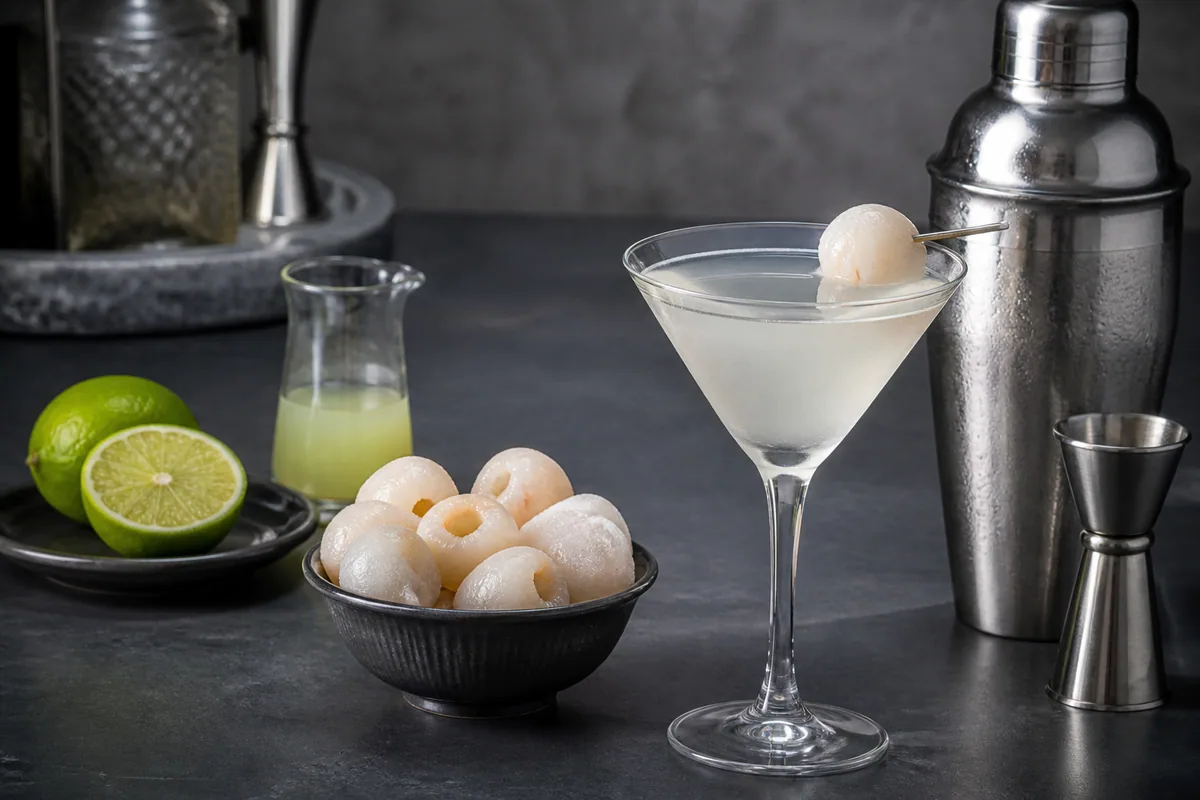
Start with measured fruit, acid and syrup
Muddle 35–45 g thawed pitted lychee in a shaker. Add 45 ml vodka, 15 ml fresh lime juice, 5–15 ml simple syrup and ice. Shake hard, fine-strain into a chilled martini glass and garnish with one thawed intact lychee. Taste the fruit before setting syrup: a high-Brix lot needs less, while a tart lot may need more. For adults of legal drinking age only; serve responsibly.
This is a starting formula. Glass size, fruit Brix, lime acidity, syrup strength and local alcohol rules affect the final service.
Key takeaways
- Use peeled and pitted fruit; do not place a hard lychee seed in a blended or shaken drink.
- Measure fruit by weight because piece size varies across crop and grade.
- Treat canned syrup, simple syrup, puree and whole IQF fruit as different sweetness and solids systems.
- Foodservice buyers should approve Brix, piece count, intact ratio, browning, seed fragments, puree yield and recipe performance.
Quick comparison
| Method | Fruit form | Texture and appearance | Best control |
|---|---|---|---|
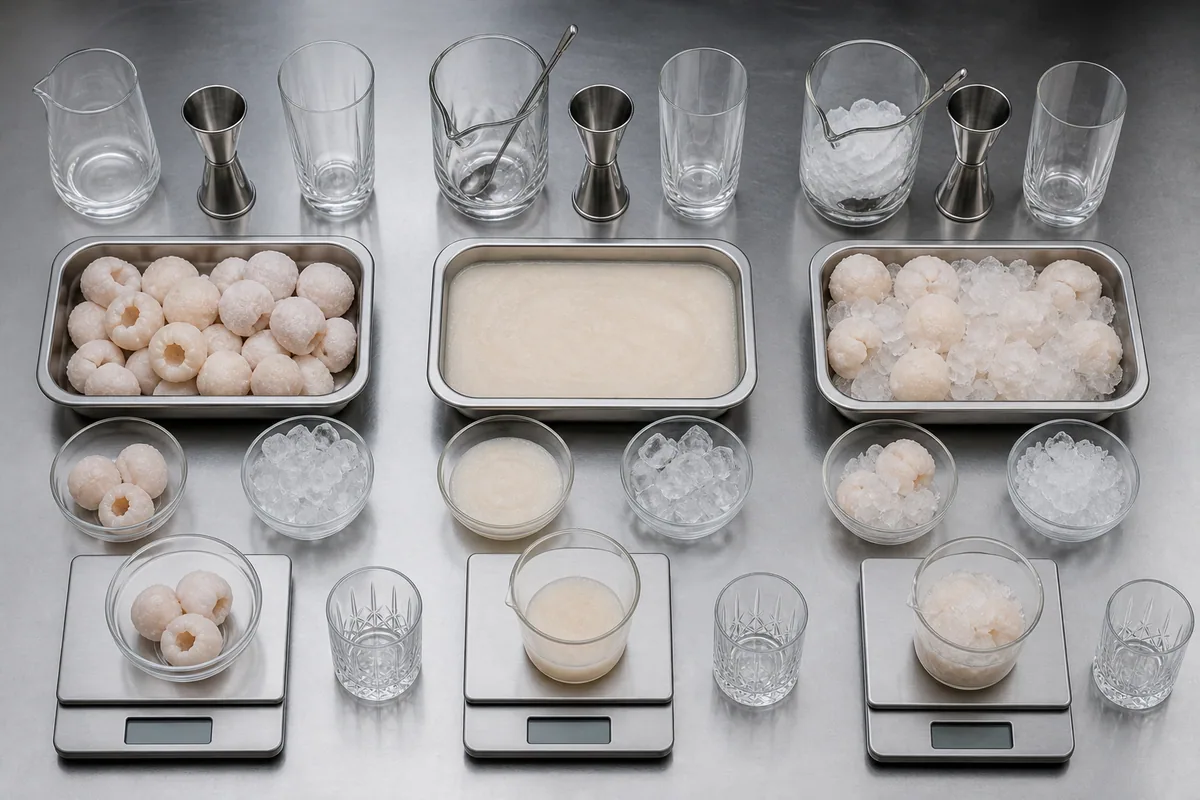
| Shaken and fine-strained | Thawed whole pitted fruit | Clearer pale drink, fresh aroma, no pulp chunks | Fruit weight, muddling, fine strain and syrup |
| Shaken with puree | Lychee puree | Cloudier, fuller fruit body and easier batch dosage | Puree Brix, viscosity and fruit percentage |
| Frozen slushy | Frozen pitted fruit plus ice | Thick, cold and visibly fruit-led | Fruit-to-ice ratio and blender load |
| Garnish-led service | Premium intact pitted aril | High visual value and countable portions | Piece count, cavity integrity and browning |
| Zero-proof test | Fruit, lime, tea or soda base | Useful sensory and service alternative | Sweetness, acid, dilution and carbonation |
Choose peeled and pitted frozen lychee
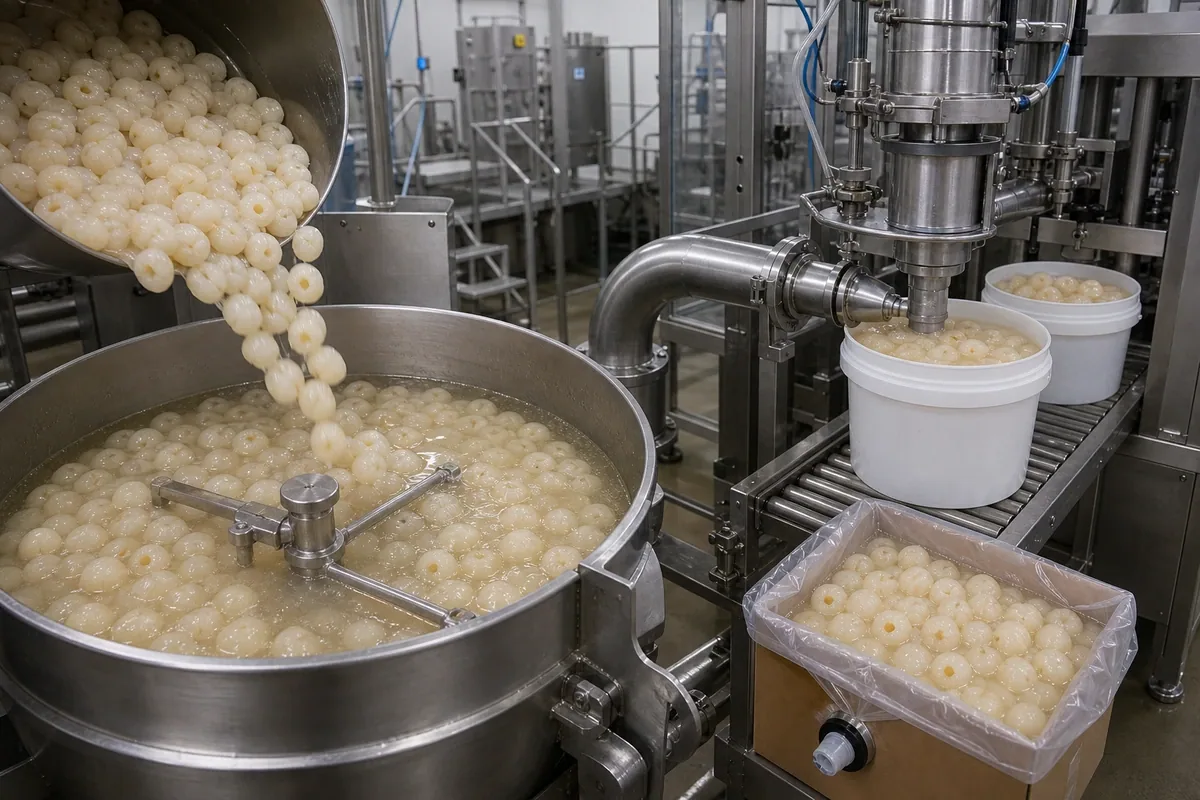
Whole peeled and pitted IQF fruit provides natural aroma and a visible garnish without shell and seed labor. Confirm that pitted means the hard seed has been removed and inspect the cavity for fragments according to the product specification. Premium intact arils suit garnish; controlled broken fruit can suit muddling or puree. In-shell frozen lychee is inefficient behind a busy bar unless the concept deliberately includes peeling.
Thaw only the service quantity under refrigeration. Capture released juice because it contains flavor and sugar; decide whether it enters the recipe. Smell for clean floral fruit and reject fermented, moldy or abnormal product. Do not assume every frozen product is ready to use uncooked; the supplier status and food-safety plan must fit beverage service.

Build one shaken drink with a repeatable starting ratio
For one standard test, use 45 ml vodka, 35–45 g thawed pitted lychee, 15 ml fresh lime juice and 5–15 ml 1:1 simple syrup. Muddle the fruit, add liquids and ice, shake until chilled, then fine-strain into a cold glass. Garnish with one intact pitted aril. This produces a fruit-led drink without relying on flavored liqueur or canned syrup.
Taste and adjust systematically. If the drink is sharp, add syrup in 2–3 ml steps. If it is heavy, reduce syrup or add a small measured amount of lime. If lychee disappears, increase fruit solids or use a controlled puree rather than pouring in perfume-like flavor. Record the final formula and glass yield.
- Thaw peeled and pitted lychee under refrigeration.
- Weigh 35–45 g fruit and reserve one intact garnish.
- Muddle fruit with measured lime and syrup.
- Add 45 ml vodka and plenty of ice.
- Shake hard and fine-strain into a chilled glass.
- Taste the finished balance and record any adjustment.
Syrup strength and fruit Brix change the recipe
A 1:1 simple syrup by weight is not the same as a rich 2:1 syrup. Canned lychee syrup already contains sugar and possibly other ingredients. Puree may be sweetened or unsweetened. Write the syrup basis in the recipe. If frozen fruit is 16°Bx in one lot and 20°Bx in another, the same 15 ml syrup can produce different sweetness. The cocktail should be adjusted from measured components, not memory.
For a chain, create an acceptable finished Brix or sensory range and confirm it with responsible beverage development. Alcohol changes refractometer readings, so do not apply a fruit Brix method blindly to the completed cocktail. Use a controlled pre-alcohol base or validated calculation and a tasting standard.
Lime should lift the floral fruit, not erase it
Fresh lime adds acidity and aroma. Too much turns the drink into a generic sour cocktail; too little leaves vodka and sugar heavy. Start at 15 ml and adapt to lime size, fruit and guest preference. Lemon gives a slightly different top note. Citric acid solution can improve consistency in a production base, but it requires controlled formulation and legal review rather than a bartender's casual substitution.
Lychee pairs naturally with rose, ginger, tea, coconut and raspberry, yet add one accent at a time. Strong elderflower, perfume-like flavor or heavy vanilla can mask the real fruit. The point of using frozen lychee is to make its fruit identity visible.
A slushy martini needs a different ratio
For a frozen version, blend frozen pitted lychee with vodka, measured lime, syrup and only enough ice for the desired texture. More ice dilutes flavor and can produce a grainy drink. Start with roughly 70–90 g frozen fruit per serving and reduce added ice, then scale after checking blender capacity. Do not blend whole seeds. Serve immediately because the texture separates as it warms.
Record the frozen fruit temperature, blender load, run time and final weight. A home recipe can tolerate variation; a bar serving 100 drinks needs a batch base and calibrated scoop. The finished alcoholic portion must remain within local service rules.
Puree provides easier batch dosing
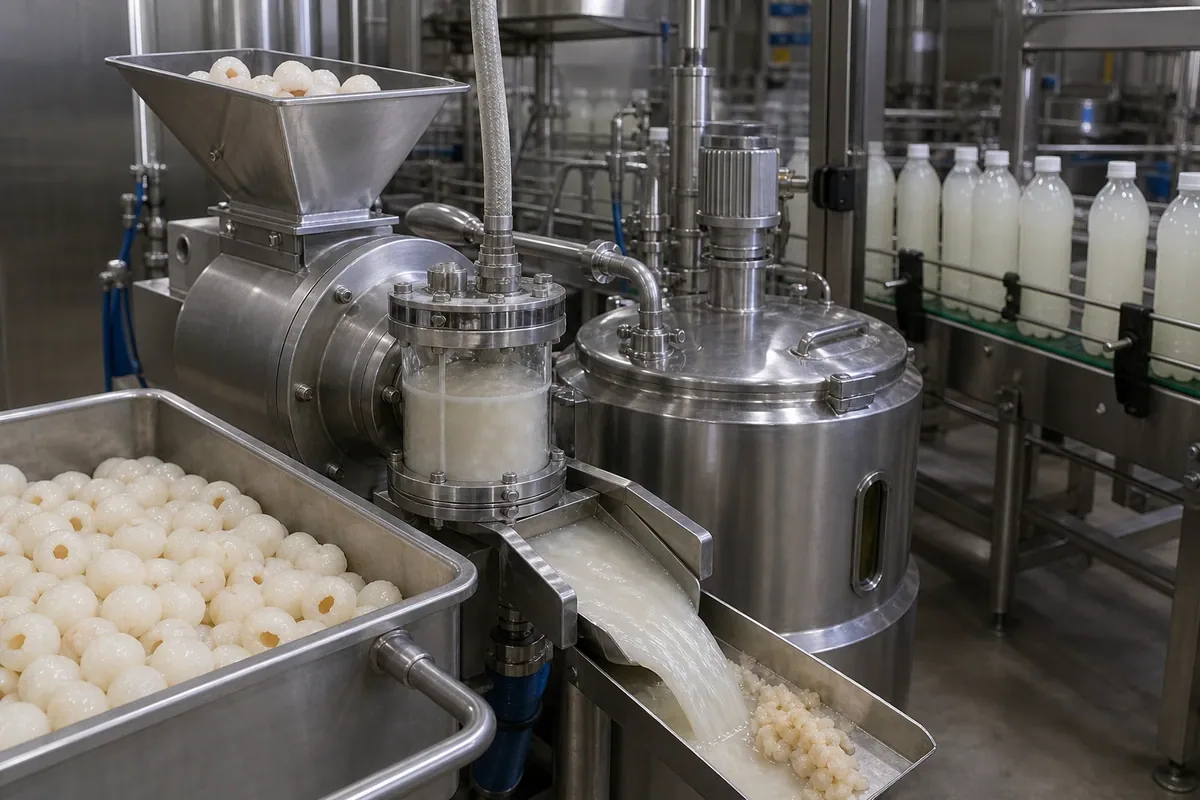
Lychee puree distributes fruit evenly and removes piece-count variation. It also makes the drink cloudier and can add pulp or sweetness. Confirm fruit percentage, added sugar, Brix, acidity, viscosity and preservative status. A controlled broken IQF grade can be processed into house puree if the kitchen has a safe thawing and blending procedure.
Build a nonalcoholic fruit-acid-sugar base first, taste and document it, then add the measured spirit per serving or according to an approved batch method. This allows the team to monitor fruit balance without confusing alcohol strength and also provides a route to a zero-proof lychee sour or sparkling drink.
Foodservice consistency begins with portion cost
Weigh the number of grams used for muddling and count premium garnish pieces per bag. Record thawed drained yield and juice. Calculate fruit cost per drink, garnish cost, labor and waste. A large aril may look premium but reduce piece count per kilogram; a smaller standard piece can be more practical for high-volume tea or cocktail service.
Choose the grade by value. Use intact high-Brix arils where the guest sees and bites the fruit; use a clean processing grade for puree. Keep seed, shell, browning and abnormal-odor standards appropriate in both. Do not call broken fruit defective simply because it is not garnish grade.

Approve frozen lychee in the complete service cycle
Test at least two crop lots in the same recipe. Score floral aroma, sweetness, acidity, alcohol integration, flesh color, garnish texture and browning after the expected service hold. For pre-batched base, evaluate separation and aroma after refrigerated storage under the operation's validated limit. Do not top up an old batch with new base.
At GreenLand-food, we discuss whole peeled and pitted, in-shell and broken frozen lychee forms with current-lot piece count, Brix, color, intact ratio, pack and documents. Final alcohol recipe, ready-to-eat validation and responsible service remain with the buyer and local regulations.
Worked decisions that a short answer cannot cover
Worked sweetness correction: the 20°Bx fruit lot
A bar's standard uses 15 ml simple syrup, but a selected high-Brix lychee lot makes the drink cloying. Rather than adding more lime and increasing total intensity, reduce syrup to 7.5 ml, keep fruit weight constant and taste. The fruit aroma becomes clearer.
Record the lot and revision. The goal is a controlled finished profile, not loyalty to one syrup number.
Whole fruit versus puree changes straining
Muddled whole fruit leaves fibers that require fine straining for a clear drink. Puree can pass through and create body. If the bar switches form without changing the strainer and dosage, yield and texture drift.
Write separate recipes for whole and puree formats instead of calling puree an equal substitution.
A garnish needs cavity inspection
The attractive aril sits directly in the guest's drink. Define no visible shell, no hard seed fragment, acceptable cavity tears and browning. Inspect under good light after thawing.
Premium garnish grade should deliver both appearance and safe handling evidence. A fruit count without cavity quality is incomplete.
Responsible service belongs in the formula file
Record standard drink volume and alcohol contribution, train staff, follow local age and licensing laws and offer a deliberate zero-proof alternative. Frozen fruit does not reduce alcohol strength.
For a nonalcoholic version, use tea, soda or a measured botanical base and repeat the same fruit-acid-sugar balance work.
More detail for a repeatable decision
Ice dilution must be part of recipe development
A hard shake chills and dilutes the drink. Small wet ice and long shaking add more water than large cold cubes and a short shake. Measure the strained drink weight to understand dilution. A formula that tastes balanced before shaking may become thin in the glass.
For a slushy version, frozen fruit supplies both flavor and cooling. Added ice should be the minimum needed for texture. Weigh it. A blender filled above its effective capacity can leave chunks and create inconsistent alcohol distribution.
Standardize glass temperature and fill volume. A warm oversized glass makes a correct batch seem weak. Operations are part of sensory consistency.
Batch bases require labeling and controlled holding
A nonalcoholic fruit-lime-syrup base can improve speed, but it needs a recipe, preparation time, use-by limit, refrigerated storage and allergen or ingredient review. Do not top up yesterday's container. Clean equipment between batches.
If alcohol is pre-batched, local licensing and service rules may impose additional controls. Calculate total alcohol accurately and train staff to portion rather than free-pour. Frozen lychee does not lower the alcohol content.
Agitate a puree base when validated because solids can settle. Check color and aroma through the permitted hold. A separated or fermented base should be discarded, not reblended into service.
A sensory standard keeps the drink fruit-led
Score lychee aroma before alcohol heat, sweetness, lime sharpness, dilution, bitterness, pulp, finish and garnish quality. Use a reference drink prepared by weight. A bartender's "floral enough" note will not reproduce across locations.
Evaluate at first sip and after five minutes in the glass. As the drink warms, lychee aroma opens while dilution continues. A balanced first sip can become sweet; a very cold sour drink can become expressive.
For a chain, allow a narrow adjustment band tied to fruit lot. Document whether syrup changes by lot and keep the core alcohol portion fixed.
Ingredient declarations matter in a cocktail program
Whole IQF 100% lychee, sweetened puree, flavored syrup and liqueur have different ingredient and allergen-adjacent profiles. Keep supplier documents and train staff so menu questions can be answered accurately.
Citric or ascorbic acid used for browning control should be declared where required. Do not describe treated fruit as untreated. Likewise, do not call a flavored drink made with no fruit a real-fruit martini.
A zero-proof version deserves equal formula control. It can use the same fruit base with tea, soda or a suitable nonalcoholic spirit, but the balance changes without ethanol and must be tested separately.
Scale the recipe without losing the lychee
First lock the single-drink standard by weight and volume. Prepare ten drinks and record strained yield, fruit waste and variation. If one bartender produces a different result, correct the method before multiplying it into a batch. Scaling an inconsistent recipe only creates a larger inconsistent batch.
For a nonalcoholic base, multiply fruit, lime and syrup, then taste after the mixture reaches service temperature. Cold storage can mute aroma and pulp can settle. Set a maximum validated hold, container size and agitation instruction. Label preparation time and discard time.
Add alcohol according to local law and the approved service model. Whether it is added per drink or into a licensed batch, calculate total volume and alcohol contribution accurately. Train staff to use calibrated jiggers or dispensers. Responsible service is part of operational quality.
Forecast garnish separately from muddled fruit. Premium intact arils may be limited even when broken processing fruit remains available. A menu can use one intact garnish and a puree base, combining visual value with consistent flavor. Specify the two grades rather than asking one bag to perform both jobs.
Review the finished drink after the first shipment and at the next crop transition. If Brix, aroma or piece size changes inside the agreed natural range, a small syrup adjustment may be appropriate. Record it. The guest should experience lychee, not the consequences of untracked agricultural variation.
Putting the answer into practice
A home bartender can begin with the starting formula, then change only syrup by small increments. Weighing the fruit and measuring the lime prevents a sweet crop or large fruit from silently changing the drink. Keep the alcohol portion standard.
A restaurant should create a recipe card with grams, milliliters, ice, shake time, strainer, glass and garnish. Add a thaw plan and a discard rule for fruit and base. Speed comes from preparation, not from free-pouring.
A beverage buyer should split visible garnish and blended flavor requirements. Whole intact arils and processing fruit can be sourced and costed separately. Confirm the ready-to-use status and keep hard seed fragments out of both paths.
The finished martini should taste recognizably of lychee-floral, juicy and gently acidic-while vodka, lime and sweetness remain balanced. Responsible serving and a deliberate zero-proof version complete the program.
Record the final garnish count and drained fruit yield as carefully as the liquid recipe; visible fruit is part of both the guest experience and portion cost.
What to confirm before approving volume
A useful inquiry describes the ingredient and the job it must do. Send the product identity, form, target application, packing, quantity, destination and the quality points your team will measure. We will review current availability and an appropriate supply route where possible. Final size, process, ingredients, limits, microbiology, documents, shelf life, lead time and commercial terms remain subject to the approved specification and order confirmation.
- Specify whole pitted garnish, broken fruit or puree form.
- Confirm piece count, Brix, flesh color, intact ratio and thaw yield.
- Set seed fragment, peel residue, browning and abnormal-odor limits.
- Record fruit grams, syrup strength, lime and alcohol per serving.
- Test at least two lots in the real shaken or blended method.
- Confirm ready-to-use status, cold chain, pack and responsible service controls.
Frequently asked questions
Can you make a lychee martini with frozen lychee?
Yes. Use thawed peeled and pitted fruit for a shaken drink or frozen fruit for a slushy version.
How much frozen lychee should I use per martini?
Start with 35–45 g thawed fruit for a shaken drink, plus one intact garnish, then adjust to fruit strength and glass size.
Do I need lychee liqueur?
No. Real frozen fruit, vodka, lime and simple syrup can make a clear fruit-led drink.
Can I use lychee puree instead of whole fruit?
Yes, but it changes sweetness, solids, clarity and dosage. Use a separate measured formula.
How much simple syrup goes in a lychee martini?
Start with 5–15 ml of 1:1 simple syrup. The correct amount depends on fruit Brix, lime and desired balance.
Should frozen lychee be thawed first?
For a shaken drink, thaw under refrigeration so it can be muddled. For a slushy version, blend from frozen with controlled ice.
Can I use canned lychee syrup?
Yes, but it replaces part of the simple syrup and may bring different sweetness and ingredients. Measure it rather than adding both blindly.
How do you make a nonalcoholic lychee martini?
Use frozen lychee, lime and measured syrup with chilled tea, soda or a zero-proof base. Balance it as a separate recipe.
What frozen lychee grade is best for bars?
Use intact pitted arils for garnish and controlled broken fruit or puree for muddling and batching.
Can GreenLand-food supply frozen lychee for beverage programs?
We can review available form, piece count, Brix, pack, quantity, destination and current-lot evidence for beverage and foodservice projects.
Reference points
- US Dietary Guidelines: drink responsibly
- GreenLand peeled litchi product
- GreenLand frozen lychee product
These sources support the classification, method or supply boundaries used above. The applicable product label, specification, food-safety plan and destination-market rules still control a real batch.
Source Frozen Lychee for your real application
GreenLand-food is a frozen lychee supplier and manufacturer in China, providing factory-direct wholesale support for importers, food manufacturers, foodservice distributors and private-label programs. Send the required form, specification, packing, quantity, destination, application and documents. We will review available order options and the next practical step.