


When Should Buyers Add a Second IQF Vegetable Supplier? A Heat-and-Drought Escalation Checklist
Aug 27, 2026
Leave a message
Buyer guide · Updated August 26, 2026
A controlled dual-sourcing playbook for protecting IQF vegetable continuity without lowering specification, food-safety or traceability standards.
Quick answer: Add a second IQF vegetable supplier when weather risk is confirmed by crop, processing, inventory and logistics evidence-and when the cost of delayed qualification is greater than the cost of running a parallel approval. A heat or drought headline alone is an early-warning signal. Use green, amber and red triggers, then qualify the second source against the same specification, sample, documents, capacity window and delivered-cost model before allocating volume.
Four rules for a second-source decision
- Separate regional weather stress from your product's supply risk. Crop, variety, growing region, harvest window and processing capacity must all connect.
- Qualify early enough to preserve choice. A red-stage shortage is the worst time to discover that the alternate supplier's cut, blanching, pack or certificates do not match.
- Do not compare FOB prices alone. Include yield, defects, testing, freight, duty, inventory, trial cost and the cost of service failure.
- A second supplier is not automatically better. Keep one source when concentration risk is controlled and splitting volume would damage quality, scale or accountability.
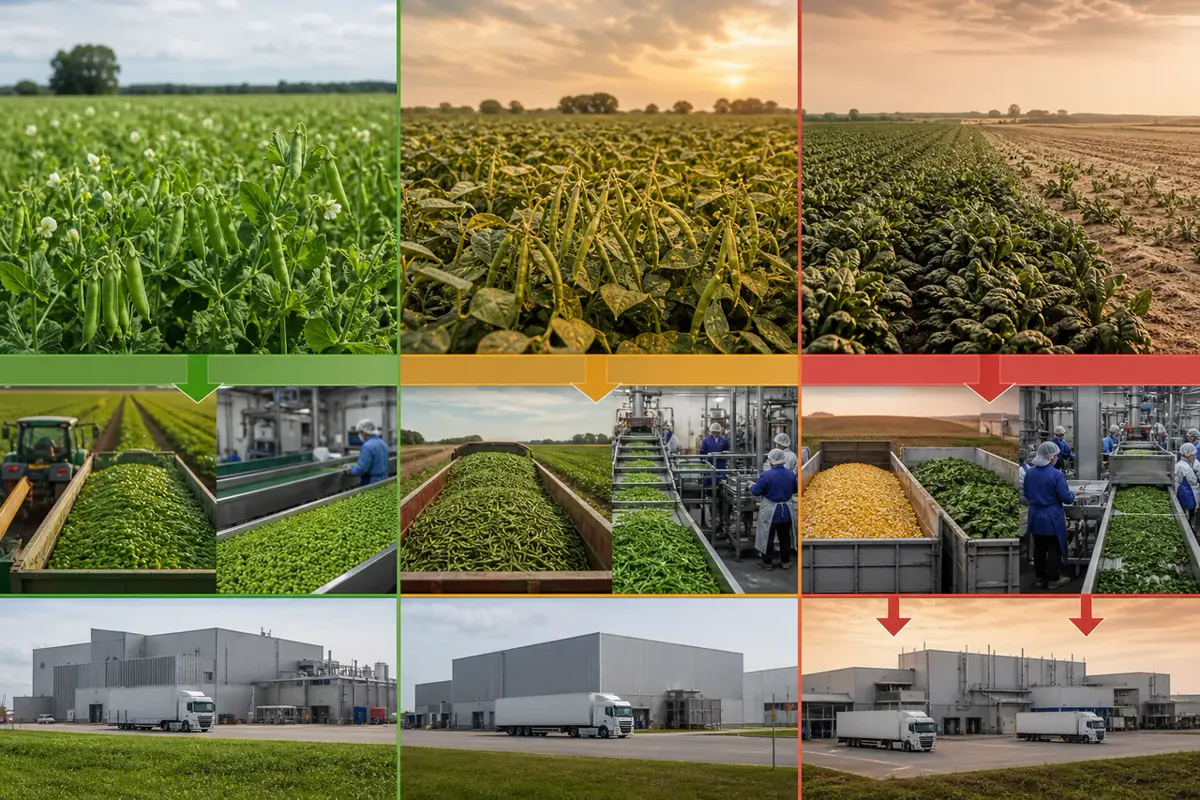
A trigger-based triage separates manageable variation from risks that require a qualified second source.
A weather alert is not a supplier-switch instruction
In July 2026, the European Commission's Joint Research Centre reported that heatwaves and water stress were affecting summer and winter crops across parts of Europe. The JRC update is a useful macro signal. It does not state that every IQF pea, green bean, sweet corn or spinach programme is short.
A crop can experience heat and still meet a buyer's volume. An affected region can be offset by another region, an earlier harvest, irrigation, field allocation, raw-material inventory or imported supply. Conversely, a buyer can face a problem before national yield statistics look severe if its approved variety, field group or processor has a narrow window.
Translate the headline through four links: weather to crop; crop to factory intake; intake to finished specification; finished stock to your delivery lane. If any link is missing, label the conclusion unconfirmed. The goal is not to predict an entire market. It is to protect one purchasing programme.
For example, a French industry report cited material pressure on pea yields and green-bean establishment during drought conditions. That evidence can justify asking a French processor about field progress, raw-material intake and pack-out. It cannot justify claiming a worldwide IQF vegetable shortage or cancelling a supplier in a different origin without checking its facts.
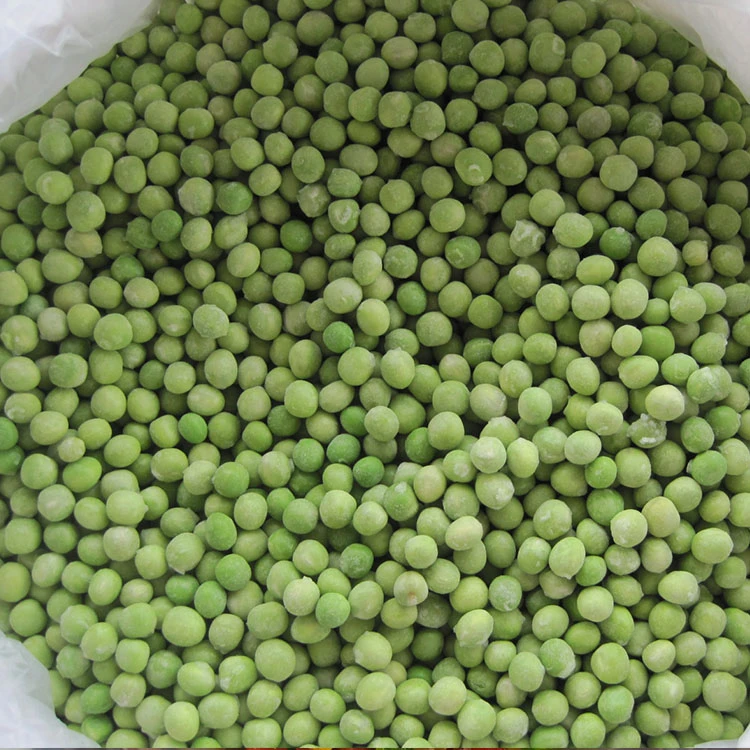
Second-source samples should be assessed against the same variety, size, defects, color and cooking performance criteria.
Use green, amber and red triggers
| Stage | Evidence pattern | Buyer action | Supplier status |
|---|---|---|---|
| Green: monitor | Weather warning but normal field reports, intake plan, finished-stock cover and logistics | Increase monitoring frequency; confirm next milestone and data owner | Primary source remains approved; alternate supplier mapping only |
| Amber: qualify | Two or more linked concerns such as delayed harvest, lower intake forecast, pack-out shift, shorter allocation or logistics compression | Launch document, sample, factory and cost qualification in parallel; reserve trial capacity if needed | Alternate is under controlled approval, not yet interchangeable |
| Red: allocate | Confirmed primary shortfall, missed production window, failed quality, withdrawn allocation or delivery risk beyond tolerance | Activate approved second source, split or transfer volume under signed controls | Both sources have defined allocation, lots and monitoring |
Do not use one trigger for every SKU. Define thresholds in buyer language. An amber volume trigger might be forecast cover below two purchase cycles. A quality trigger might be a projected rise in broken pieces above the signed limit. A schedule trigger might be a pack date moving beyond the latest safe vessel cut-off. Set thresholds before the situation becomes urgent.
Evidence should be independent where practical. Combine supplier field and production updates with weather data, crop reporting, freight conditions and your own inventory. A supplier's reassurance is useful but should not be the only source when service failure would stop a customer line.
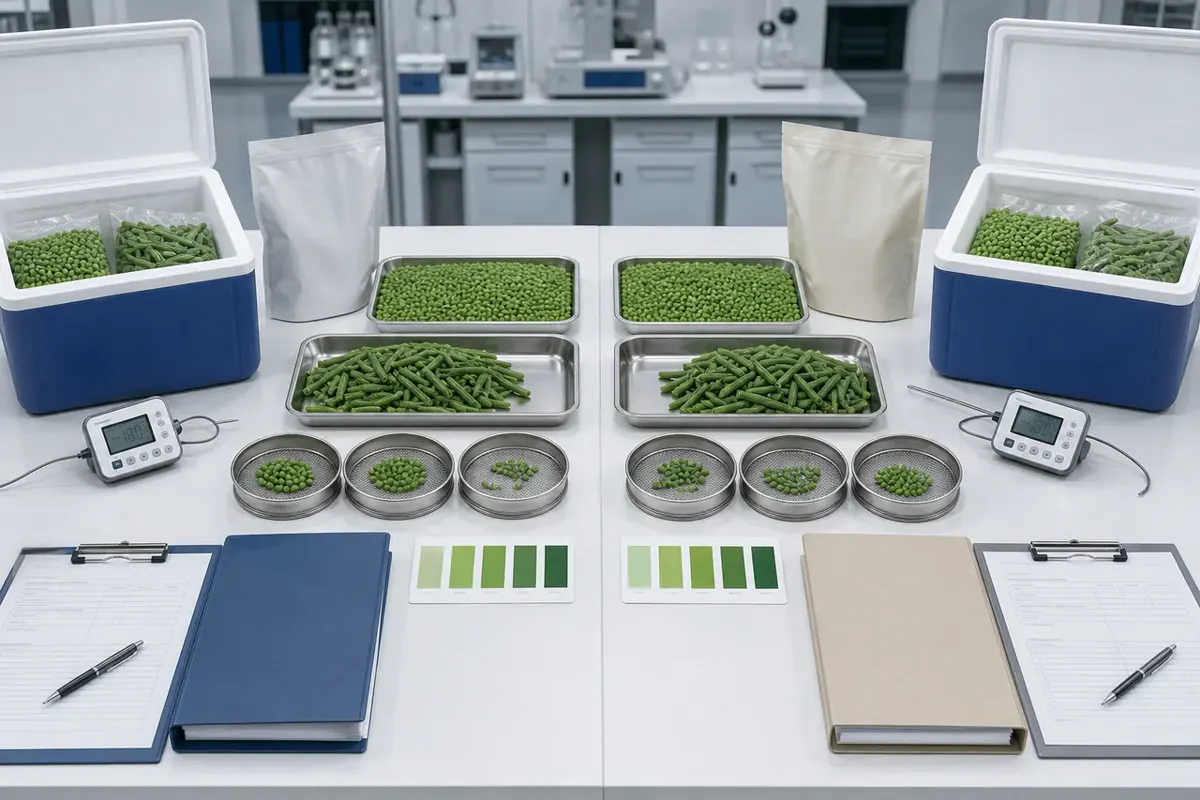
Field evidence helps buyers understand timing and quality risk without assuming that every region or crop is affected equally.
Crop-specific signals: peas, green beans, sweet corn and spinach
IQF green peas
Peas have a narrow maturity and processing window. Heat can accelerate maturation and compress harvesting, while field variability can affect tenderness, color and size distribution. Ask for variety, drilling and harvest dates, tenderometer or maturity controls where used, field-to-freezer timing, expected size grades and daily intake versus plan. A tonnage forecast without grade distribution may overstate usable yield for a small-pea specification.
For ingredient format details, see Pea Size Is Not Pea Tenderness: Reading Tenderometer and Alcohol-Insoluble-Solids Data.
Watch factory congestion. If several fields become ready at once, blanching and freezing capacity can become the limiting step even when raw peas are available. An alternate source should match grade, color, tenderness, blanching profile and sensory performance-not merely supply "green peas."
IQF green beans
Heat and water stress can affect flowering, pod set, fibre development, shape and uniformity. Confirm variety, diameter grade, cut length, broken-end tolerance, stringiness, color and blanching. Ask the processor whether intake is constrained by field yield, picking speed or sorting loss. A lower raw yield can be amplified if more beans fall outside the approved diameter or defect limits.
For an alternate source, compare whole, cut and French-style products separately. A supplier strong in one format may not have the cutter, sorter or capacity needed for another. Run a cooked texture and drained-yield comparison under the customer's real process.
IQF sweet corn
Sweet corn quality depends on variety, maturity and rapid processing. Heat can shift harvest timing and sugar-to-starch development. Check planting and harvest windows, Brix or maturity controls, kernel color, cut quality, cob fragments, blanching and finished-stock plan. A processor can have volume but a different sweetness or texture profile from the approved reference.
Different origins may use yellow, white or bicolor varieties and different kernel specifications. Confirm the exact variety or agreed sensory target. If retail artwork shows one color mix, a technically acceptable substitute may still create a label or customer-approval issue.
For ingredient format details, see Yellow vs White vs Bicolor IQF Sweet Corn.
IQF spinach
Spinach responds differently from pod and grain vegetables. Heat can affect bolting, leaf condition and harvest timing; heavy rain can create contamination and field-access issues. Confirm leaf or chopped format, stem tolerance, color, cut size, blanching, block/cube or IQF presentation, foreign-matter controls and microbiological plan. A second source that supplies spinach blocks may not replace an IQF leaf programme.
For all four crops, ask for the next verifiable milestone: field assessment date, first intake, peak production, retained-sample review, lot release or confirmed load date. "Crop looks fine" is not a milestone.
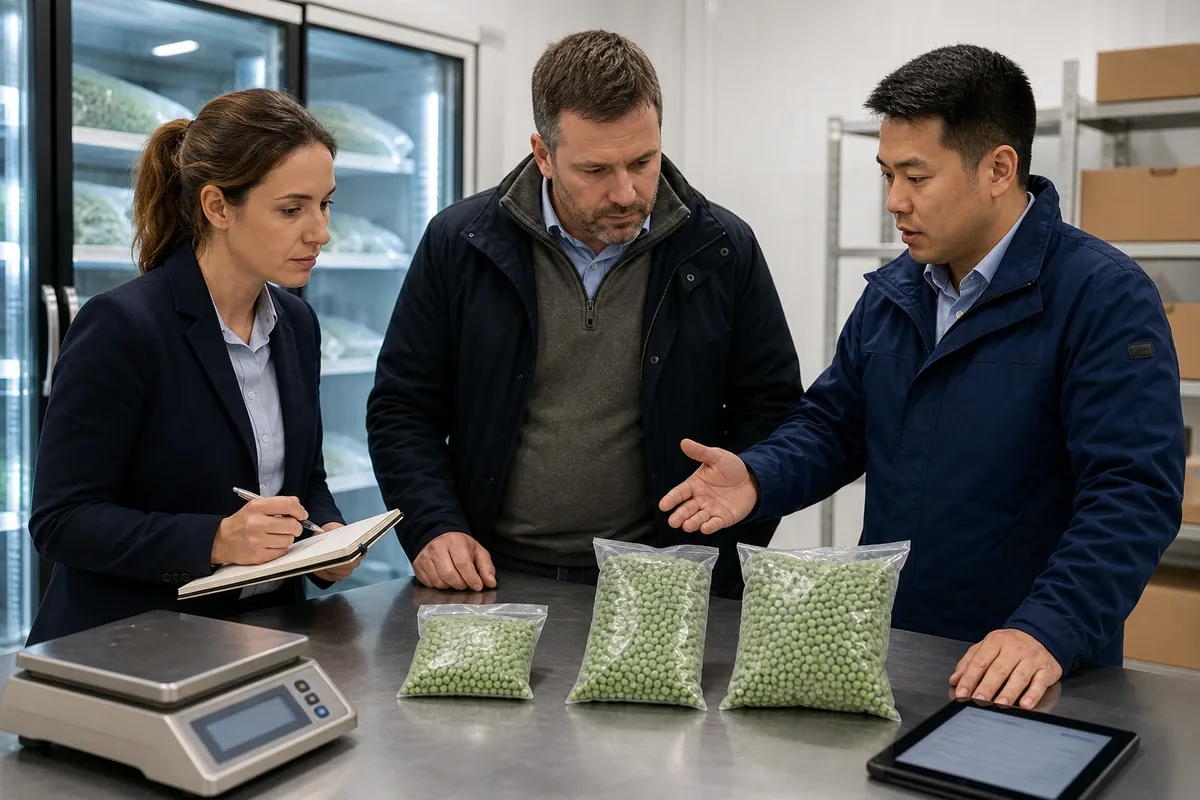
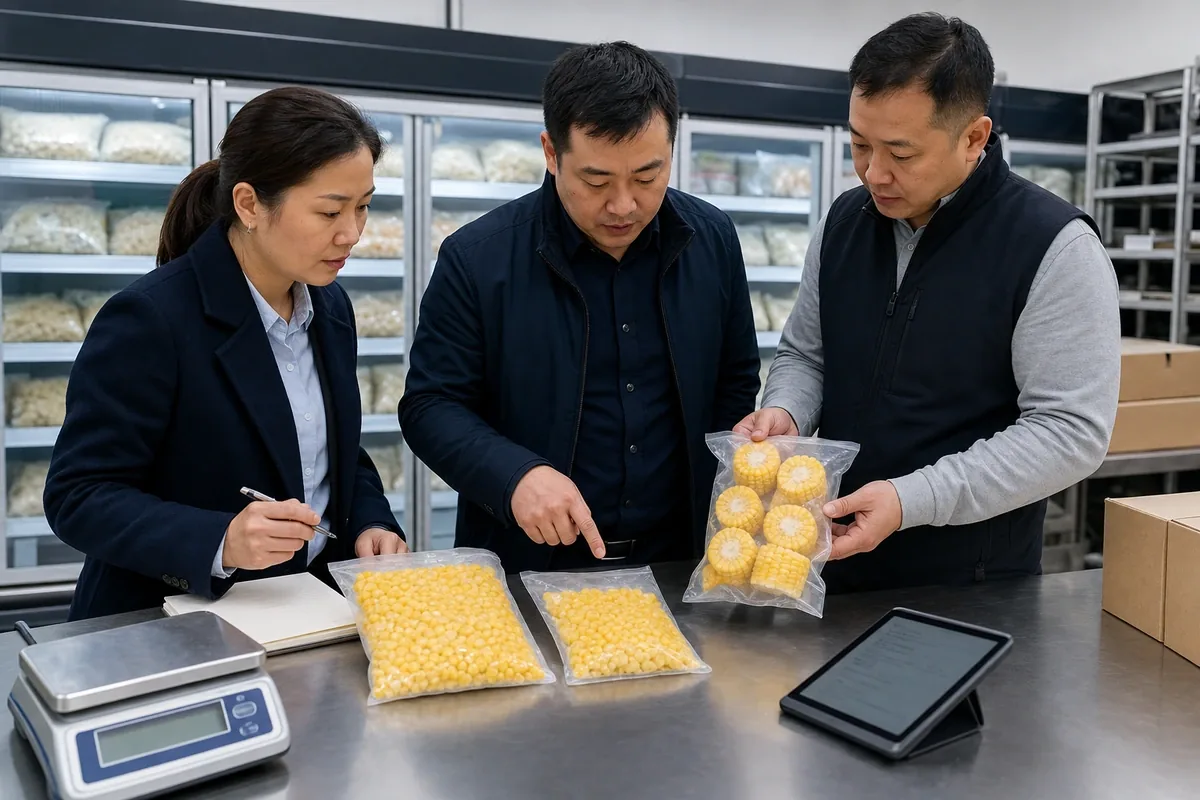
Both suppliers should be measured with one specification, test plan, deviation rule and scorecard.
Qualify the second source against one controlled specification
Parallel qualification fails when the buyer sends an abbreviated RFQ to the alternate and later discovers that the two quotations describe different products. Issue the same controlled specification and deviation form to both suppliers. Require every difference to be declared before sample approval.
| Specification block | Examples to match | Evidence |
|---|---|---|
| Product identity | Species, variety, cut, size, whole/broken ratio, color and blanching | Signed specification, process flow and sample |
| Defects and sensory | Foreign material, blemish, fibre, cob, stems, texture, flavor and odor | Inspection method, AQL or sampling plan, cooked evaluation |
| Food safety | Micro criteria, pathogen plan, pesticide scope, allergens, foreign-body control | COA, laboratory reports, HACCP, validation and monitoring records |
| Pack and logistics | Bag/liner, carton, net weight, code, pallet, shelf life, temperature and loading | Artwork, packaging specification, photos, loading plan and logger policy |
| Claims and market | Origin, non-GMO, organic, kosher/halal or customer-specific claims | Certificates and claim-specific traceability |
Create a reference sample and approved limit set. Do not approve only the alternate supplier's best hand-picked sample. Ask how the sample was selected and whether it represents commercial production. Where the crop is not yet running, distinguish pilot or previous-crop samples from current-crop approval and schedule a production-lot confirmation.
Use the same preparation method for comparison: sample mass, thawing or cooking, time, water ratio, equipment and scoring. Record both frozen and prepared observations. Some differences become visible only after cooking or incorporation into sauce, rice, soup or ready meals.

Commercial approval should cover actual production and loading capability, not only a good laboratory sample.
Run documents, samples and capacity in parallel
A sequential process-documents, then sample, then audit, then capacity-can finish after the primary source has already failed. At amber stage, run three tracks with one decision owner.
Technical and document track
Collect facility identity, certification scope, HACCP summary, process flow, allergen programme, product specification, testing plan, traceability example and destination-market documents. Log gaps and expiry dates. Verify that certificates cover the site and activity, not only a head office or affiliated facility.
Sample and application track
Test the alternate against the reference under the buyer's process. For retail, inspect free-flowing condition, appearance, fill and cooking instructions. For industrial use, compare yield, texture, color migration, sauce performance and line handling. Approve deviations consciously; do not let urgency redefine the specification informally.
Capacity and allocation track
Ask for crop window, line capacity, existing commitments, minimum run, pack capacity, earliest production, available finished stock and load schedule. "Annual capacity" is a poor substitute for a named allocation during the weeks you need. Confirm whether packaging material and printed film can meet the same date as the product.
Complete a traceability exercise before meaningful allocation where risk warrants it. A second source with poor lot genealogy can reduce weather concentration while increasing recall risk. Diversification should improve the total risk position, not merely the supplier count.
A controlled industrial trial tests line performance, sensory results, yield, documentation and traceability.
Compare delivered cost and cost of failure
Normalize offers to the same delivery point and buying unit. Include product price, pack, inland origin cost, ocean or road freight, insurance, duty, broker fees, testing, inspection, finance, cold storage and inland delivery. Adjust for glaze, defects, cooking loss and usable yield where they affect cost per finished unit.
Then add qualification and split-volume costs: samples, trials, audits, artwork, small production runs, duplicate inventory and supplier management. A second source may be more expensive per kilogram but valuable as an option. Treat the option cost separately from routine volume so the team can decide consciously how much resilience to buy.
Estimate failure cost: production downtime, expedited freight, customer penalties, lost promotion, relabelling, quality claims and emergency sourcing. The allocation decision should compare the incremental second-source cost with the expected loss avoided, not only with the primary FOB price.
Use scenarios rather than a false precise forecast. Model green, amber and red outcomes with probability ranges and name the assumptions. If the second source needs six weeks for artwork and the primary risk could materialise in four, the option is not operationally available even if its price is attractive.
When not to add a second supplier
- The primary supplier has diversified fields or origins, protected capacity and evidence that keeps all triggers green.
- Your annual volume is below practical minimum runs, so splitting would create old stock, inconsistent lots or uneconomic packs.
- The customer has not approved the alternate origin, variety, label or sensory profile and no safe approval window exists.
- The alternate uses the same raw-material region, processor, cold store or port, so it does not reduce the identified concentration.
- The alternate cannot match traceability, food-safety or destination-market documentation.
- Switching during a quality investigation would blur accountability or mix affected and unaffected supply.
In those cases, other controls may work better: safety stock, earlier contracting, reserved production, a different pack, flexible promotion timing, a validated substitute SKU or multi-region supply through the existing partner. "Two suppliers" is a method, not the objective. The objective is acceptable continuity and quality risk.
A numbered heat-and-drought escalation process
- Define the protected SKU, service window and maximum tolerable shortfall.
- Map approved fields, processing plants, pack lines, cold stores, ports and shared dependencies.
- Set crop-specific green, amber and red thresholds before the season.
- Monitor weather, field, intake, pack-out, allocation and logistics evidence at agreed intervals.
- At amber, launch alternate documents, samples, application tests and capacity checks in parallel.
- Compare both suppliers against one signed specification and deviation log.
- Build normalized delivered-cost and failure-cost scenarios.
- Approve the alternate with a validity period, current-crop condition and named allocation.
- At red, activate the pre-agreed split or transfer and increase incoming verification.
- After the season, review trigger accuracy, service, quality and whether the second source still adds value.
How GreenLand-food supports staged qualification
Worked escalation: an IQF pea programme moves from green to amber
A meal manufacturer buys 900 tonnes of small IQF peas for production from September through February. One processor supplies the full programme because its variety and tenderness profile match the finished meals. The buyer holds six weeks of inventory. In late June, a regional heat warning appears. Weather alone leaves the programme green.
One week later, the processor reports that maturity is advancing faster than planned and several fields may reach harvest together. It still forecasts enough total raw peas. The buyer asks for size-grade yield, daily intake plan, line capacity and finished-stock cover. The response shows that projected small-grade pack-out has fallen, while the freezing line will run near full capacity for eight days. Two linked indicators cross the amber threshold even though total tonnage remains adequate.
The buyer opens a parallel qualification with a processor in another region. It sends the full specification, cooking method and reference sample on the same day it requests certification and traceability records. The alternate has suitable peas but usually supplies a slightly larger size grade. A controlled trial shows the product passes color and flavor but changes portion appearance. The customer approves a narrow temporary size deviation with separate lot identification.
Capacity review reveals another constraint: the alternate can freeze the product, but its approved 10-kilogram carton is not in stock. Procurement reserves plain cartons and buyer-approved labels before the crop window. The alternate's FOB price is lower, but inland freight and the short packaging run make its delivered cost 6 percent higher. The buyer treats that difference as resilience cost, not as supplier underperformance.
The primary crop then performs better than the mid-season estimate. Its final small-grade allocation covers 820 tonnes, leaving an 80-tonne gap. Because the alternate is already conditionally approved, the buyer allocates 100 tonnes: 80 for the gap and 20 to validate routine production and preserve the relationship. Incoming inspection is increased for the first two lots. The primary retains most volume and accountability.
Without amber-stage qualification, the buyer would have faced a red-stage emergency for only 9 percent of annual volume. The example shows why trigger design should look at specification-compatible pack-out, not only total crop tonnage.
Map common-cause risk before calling the route diversified
Two supplier names can hide one dependency. They may buy from the same field group, use the same contract freezer, source packaging from one converter, store at the same cold store or ship through the same constrained port. Create a dependency map for farm region, processor, utilities, laboratory, pack material, cold storage, inland route and port.
Score independence by the risk you are trying to reduce. A second factory ten kilometres away may diversify line breakdown but not drought. A second origin may diversify weather but introduce the same ocean-service bottleneck. A co-packer may add retail-pack capacity while relying on the primary supplier's bulk product. The alternate does not have to be independent in every dimension, but its role must be explicit.
Ask whether both suppliers rely on the same variety and crop calendar. For a seasonal IQF product, staggering regions or harvest windows may reduce simultaneous failure more effectively than simply adding a nearby factory. Conversely, different varieties can create sensory and label differences that the customer must approve.
Supplier governance after activation
Once volume is split, define ownership by lot and customer. Do not mix supplier lots in one production run unless traceability, label and customer rules permit it. Monitor defects, yield, complaints and delivery separately so one source's performance is visible. A blended KPI can hide a failing alternate or unfairly penalise the primary.
Hold joint specifications under controlled revision. If one supplier receives an approved deviation, decide whether it is supplier-specific, seasonal or a permanent change. Do not let a temporary heat-related tolerance quietly become the new standard. Reference samples also need crop-year and storage-life review.
Review allocations after the risk window. Keeping token volume with an alternate can preserve readiness, but very small irregular orders may produce old packaging, low attention and inconsistent economics. Decide whether to maintain, rotate, reserve capacity or close the alternate approval. Resilience needs active management, not a supplier name left in the database.
Agree how forecasts are shared. The primary should not lose all visibility because an alternate is being qualified, and the alternate should not reserve capacity against an unrealistic upside. Use committed, flexible and contingency volumes with decision dates. This makes allocation credible and reduces the chance that both suppliers promise the same uncertain volume to several buyers.
Review ethical and sustainability expectations on the alternate route as well. Drought can intensify water-use, labour and community risks. Urgency should not bypass supplier due diligence. Ask how irrigation, worker welfare and legal compliance are managed, and do not describe a distant origin as resilient if it transfers unacceptable social or environmental risk.
Finally, agree an exit rule. If the alternate fails two production trials, cannot confirm current-crop allocation by the decision date or requires an unapproved deviation, stop counting it as available capacity. A realistic red-stage plan may then use safety stock, customer allocation or specification change. An unqualified supplier in a spreadsheet is not resilience.
Document who can declare each stage and who can reverse it. Clear authority prevents sales, planning and QA from operating under different risk colours.
We can help buyers compare an IQF vegetable requirement across suitable production partners without treating every factory as interchangeable. We start from the signed product and pack specification, destination, volume and timing. We then coordinate samples, facility documents, available crop-window information and an order-specific quotation for the matched route.
Browse our frozen vegetable range, review our traceability approach, or download the full frozen-food catalog. Tell us whether you are at green monitoring, amber qualification or red allocation stage so the evidence request can match the decision.
Frequently asked questions
Should a buyer add a second IQF vegetable supplier as soon as a heatwave is reported?
Not automatically. Use the report as an early-warning signal, then check the exact crop, region, harvest window, processor intake, finished-stock cover, allocation and logistics. Launch qualification when linked indicators reach your amber threshold; switch volume only after the alternate is approved and the red trigger is met.
How much volume should be allocated to a second supplier?
There is no universal split. Base it on minimum runs, qualification status, failure tolerance, customer approvals, capacity, delivered cost and how independent the two supply routes really are. Some buyers use a small continuity allocation; others keep an approved, reserved option until a trigger occurs.
Qualify an alternate before the decision becomes urgent
Send your IQF vegetable specification, annual volume, pack, destination, current supplier risk and required shipment window. We will review which supply routes can be compared on the same technical and commercial basis.