


Is a Mushroom a Vegetable or a Fruit?
Sep 03, 2026
Leave a message
Scientifically neither; culinarily often treated as a vegetable
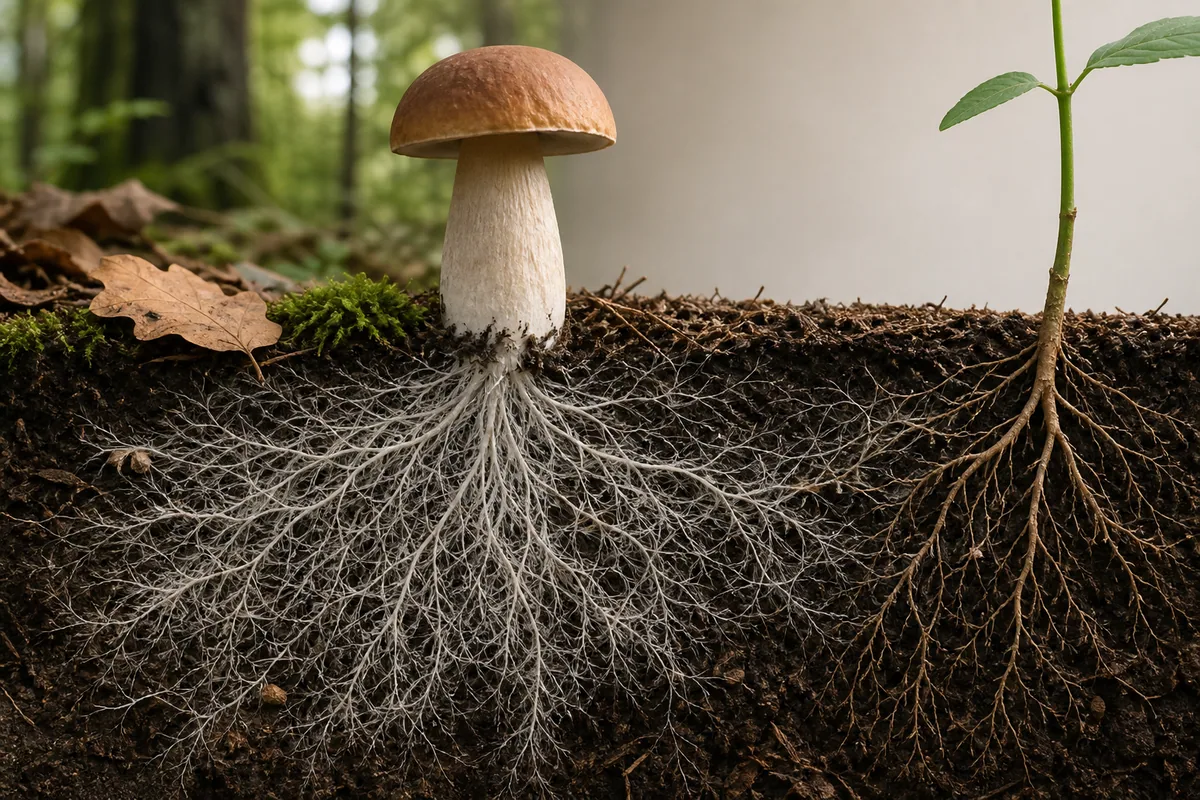
Mushrooms are fungi. The cap and stem we eat are commonly the reproductive fruiting body of a larger fungal organism whose mycelium grows through a substrate. In cooking and some nutrition systems, mushrooms sit beside vegetables because they are savory plant-like ingredients, but that grouping is practical rather than taxonomic.
Biological classification, grocery placement, nutrition grouping, product naming and customs classification answer different questions.
Key takeaways
- The fungus kingdom is separate from plants and animals.
- Fruiting body means a reproductive fungal structure, not a botanical fruit formed from a flower ovary.
- Vegetable is mainly a culinary and cultural term, so using it in meal planning does not rewrite taxonomy.
- Commercial buyers still need species, form, process, ingredients and customs review; "fungus" alone does not determine a tariff or label.
Quick comparison
| Context | How mushroom is classified | Why | What not to assume |
|---|---|---|---|
| Biology | Fungus | It belongs to kingdom Fungi and grows as hyphae/mycelium | It is not a plant vegetable |
| Botany | Not a fruit | It does not develop from a flower ovary | Fruiting body is not botanical fruit |
| Culinary use | Often grouped with vegetables | Savory use, preparation and meal role | Culinary grouping is not taxonomy |
| Nutrition guidance | Often placed with vegetables or vegetable alternatives | Practical dietary grouping and nutrient contribution | Grouping varies by authority |
| Trade and labels | Defined product with species, form and process | Legal descriptions depend on jurisdiction and product state | Do not infer HS code or claim from biology alone |
Mushrooms occupy their own biological kingdom
Fungi are eukaryotic organisms, but they do not photosynthesize like plants. Their cell walls contain chitin rather than the cellulose pattern usually associated with plants, and they obtain nutrients by absorbing compounds from their surroundings. Common edible mushrooms include species from several genera, such as Agaricus, Pleurotus, Lentinula and Boletus. The grocery word mushroom describes a form people recognize; it is not one single species.
The familiar cap, gills or pores and stem are only part of the organism. Fine threads called hyphae form a mycelial network through soil, wood, compost or a cultivated substrate. Under suitable conditions, that network produces a visible reproductive structure. Understanding this life cycle resolves the either-or question: the organism is fungal, so plant categories do not provide its scientific identity.

Fruiting body does not mean botanical fruit
Mycologists call the visible mushroom a fruiting body because it produces and disperses spores. The word describes function by analogy: it is the part that carries reproductive structures. A botanical fruit, however, develops from the ovary of a flower and contains seeds. Mushrooms have no flowers, ovaries or seeds. Their spores are not seeds in a fruit. Therefore, the phrase fungal fruiting body is correct while "mushroom is a fruit" is misleading in botanical classification.
This distinction matters in writing. A short answer can say: a mushroom is not a fruit, but the cap-and-stem structure is the fungus's fruiting body. Put both clauses together. Publishing only the second clause invites readers to transfer the everyday meaning of fruit to a technical term and can create incorrect product descriptions.
Vegetable is a culinary category, not one botanical branch
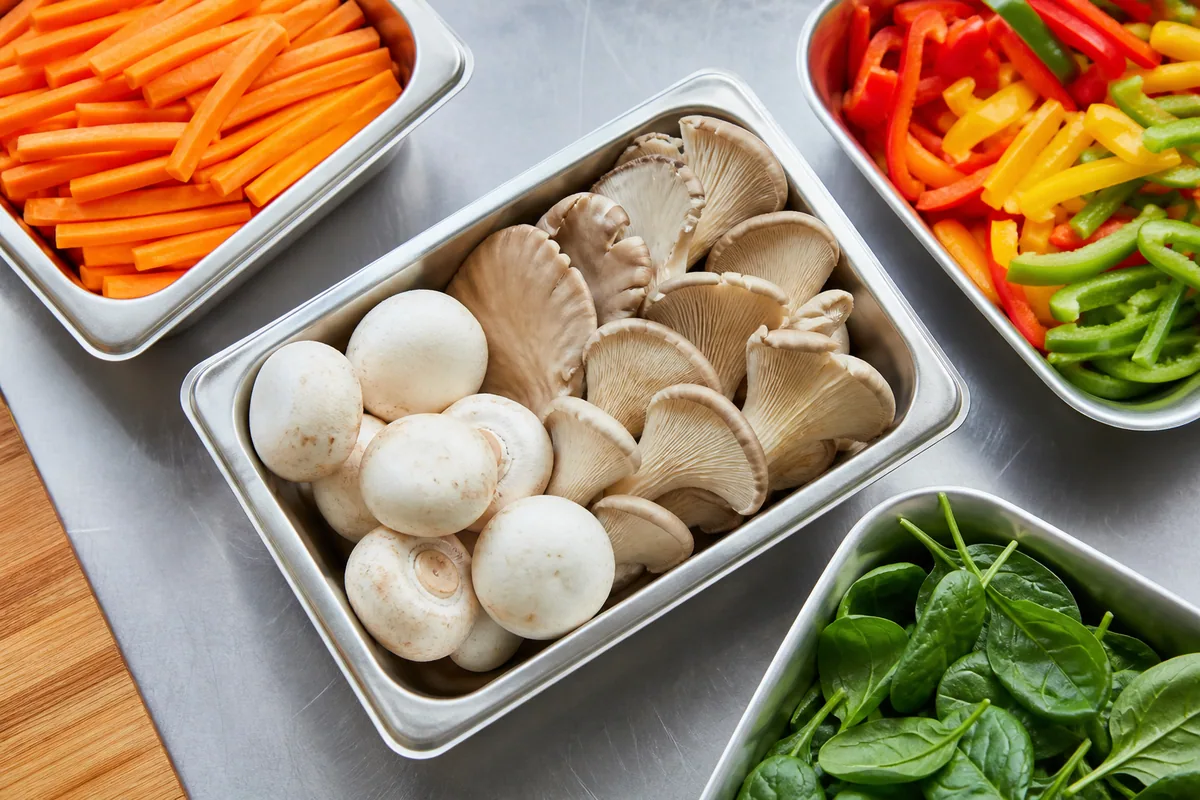
Vegetable commonly means an edible plant part used in savory dishes: roots, stems, leaves, flowers, bulbs and even botanical fruits such as tomatoes or peppers can all be called vegetables in the kitchen. Because the category is based on use, cooks also place mushrooms alongside vegetables. They are sautéed, roasted, added to soup, used on pizza and included in mixed vegetable dishes even though they are not plants.
Calling mushrooms vegetables in a recipe or menu can be understandable shorthand. It should not be used to claim they are botanically plants. The context determines whether the word is helpful. "Vegetable-and-mushroom stir-fry" is precise; "mushrooms are a type of vegetable" is not scientifically precise. Good copy names the culinary grouping without erasing the biological identity.
Nutrition grouping is practical and authority-specific
Dietary guidance often groups foods by how people eat them and the nutrients they contribute. Mushrooms can be counted with vegetables in some food-group systems despite their taxonomy. They provide water, fiber-like chitin, B vitamins and minerals in amounts that vary by species and production. UV exposure can influence vitamin D in some products. These characteristics do not transform fungi into plants; they explain why a nutrition tool may place them in a vegetable-oriented group.
Do not copy one country's dietary grouping into a universal legal claim. Nutrition labeling, serving references and permitted claims depend on jurisdiction and product. Fresh, dried, canned, marinated and frozen mushrooms also have different nutrient concentrations and ingredient statements. Use current official rules for the destination market rather than a taxonomy article.
Species and market form remain more useful than the kingdom
A buyer rarely orders "fungus" as a complete specification. Oyster, shiitake, button, king oyster, porcini, nameko and black fungus differ in texture, aroma, preparation and applications. Even within one species, maturity and color can create different market identities: white button, cremini and mature Portobello are commonly forms of Agaricus bisporus yet are not interchangeable in appearance or cut.
A chestnut mushroom identity guide shows why the same market name can mean brown Agaricus or a distinct clustered mushroom.
The order must state the accepted common name and, when necessary, scientific identity, origin, whole or cut form, size, pre-treatment, ingredients, defects, pack and use. A taxonomy fact prevents a category error; it does not replace the commercial details that make an ingredient usable.

Frozen mushrooms are still fungi, but the product state matters
Freezing does not change biological classification, but it changes the commercial product. An IQF oyster mushroom strip, a blanched button mushroom slice and a grilled king-oyster cube have different moisture, color and cooking behavior. The label and specification should state species or market identity, form, process and added ingredients. A buyer should not order "frozen vegetables" and assume mushrooms are automatically included.
At GreenLand-food, frozen mushrooms sit in their own product category even though they may enter vegetable mixes or savory applications. We discuss species, cut, pre-treatment, packing, cold chain and documents against each inquiry. Facility scope and availability vary by product and order; the word manufacturer or supplier should be tied to the selected route, not inferred from a broad kingdom-level statement.
Commercial labeling and tariff codes need a jurisdiction check
Customs schedules may organize edible mushrooms by fresh, chilled, frozen, dried or prepared state, with species distinctions in some lines. Retail labels may have standardized names and ingredient requirements. The fact that mushrooms are fungi does not by itself select an HS code, tax treatment, quota or nutritional category. Consult a qualified customs broker and current destination rules with the exact product description.
Prepare a classification file containing scientific and common name, photos, process flow, ingredients, preservation method, pack, intended use and proposed code. If a product is a mushroom-and-vegetable mix, proportions and preparation can matter. Do not copy a competitor's code from a marketplace listing. A clear factual dossier makes the broker's decision faster and reduces disputes at entry.
Use precise wording in education and sales material
A strong educational sentence is: mushrooms are fungi, not plants; cooks often treat them like vegetables, and the visible mushroom is a fungal fruiting body. That single line answers the science and the kitchen question. Avoid "mushrooms are fruits because they have spores" and avoid "mushrooms are vegetables because they are in the produce aisle." Both confuse a context with a taxonomy.
For product copy, lead with the product identity rather than a biology lesson: IQF frozen oyster mushrooms, sliced frozen shiitake or whole frozen nameko. Add application and measurable format details. Classification supports accuracy, but the buyer's decision depends on the ingredient they will actually receive.
Worked decisions that a short answer cannot cover
Worked classification map: tomato versus mushroom
A tomato is botanically a fruit because it develops from a flower ovary, yet cooks call it a vegetable in savory dishes. A mushroom is not botanically a fruit or vegetable because it is not a plant. Cooks may still group it with vegetables. The culinary result looks similar; the biological path is different.
This comparison helps readers understand why "vegetable" can be practical without being a scientific definition.
Spores are not seeds
Both spores and seeds can support reproduction, but they are not equivalent structures. A seed contains an embryo and stored resources from a plant reproductive process. A fungal spore is typically a much simpler propagule. Calling spores seeds can lead directly to the false fruit claim.
Educational diagrams should label the structures accurately. For commercial food, spores may influence appearance or harvest maturity, but they do not change the label category into fruit.
A mixed pack needs explicit category language
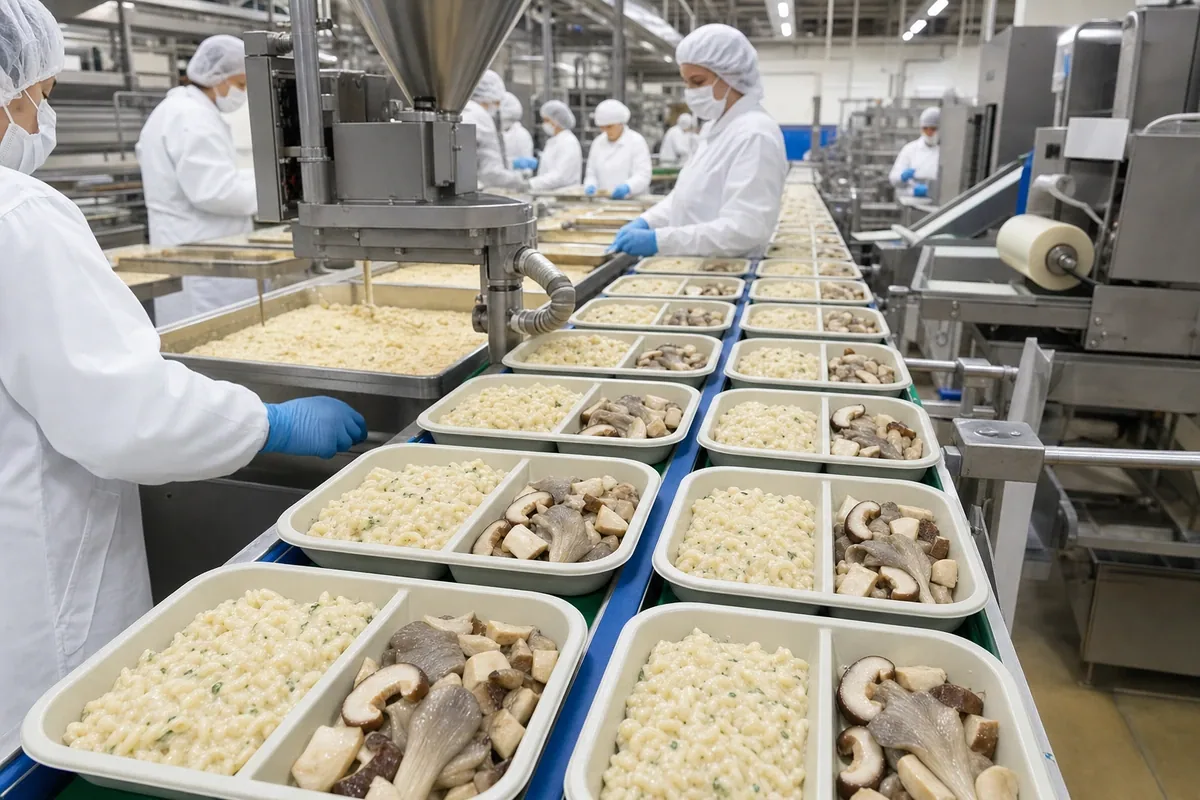
Imagine a retail bag with broccoli, peppers and sliced mushrooms. It may be marketed informally as a vegetable mix, but the ingredient list should name each component accurately. The specification must define percentages, cut sizes, defects and cooking directions.
Buyers should verify how destination rules treat the product. A marketing category does not erase the mushroom ingredient or automatically settle customs classification.
Why the answer matters to a frozen-food buyer
Misclassification can cause weak search copy, incorrect category navigation, wrong tariff assumptions or unclear supplier inquiries. Accurate language also prevents a buyer from treating every mushroom as one generic vegetable with interchangeable texture.
The practical outcome is better product identity: species, cut, treatment, application and facility scope become the center of the discussion.
More detail for a repeatable decision
Mushroom life cycles explain the vocabulary
Spores germinate under suitable conditions and produce hyphae. Compatible hyphae can form a mycelial network that grows through a substrate. Environmental signals and biological readiness can lead to primordia and then a fruiting body. The visible mushroom releases new spores, continuing the cycle.
This sequence is unlike flowering plants. No flower is pollinated and no ovary develops into a seed-bearing fruit. The reproductive analogy explains "fruiting," while the organism's fungal identity explains why fruit in the botanical sense is still wrong.
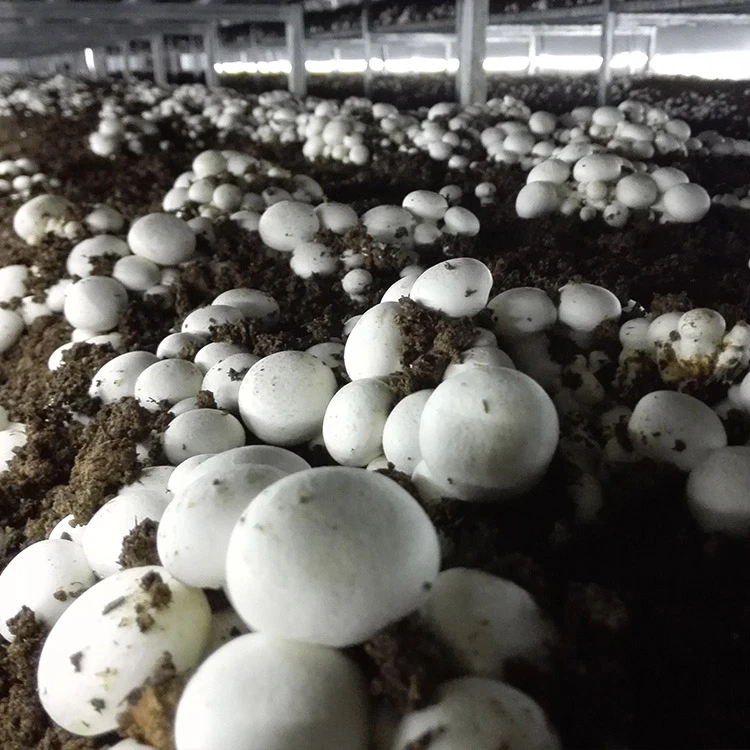
Cultivation uses this biology practically: spawn introduces fungal mycelium into a prepared substrate, then temperature, humidity, air and light are managed for colonization and fruiting. The substrate is not soil in every system, and the mushroom is not a planted vegetable.
Common edible groups demonstrate fungal diversity
Button, cremini and Portobello belong to Agaricus bisporus market forms. Oyster and king oyster belong to Pleurotus species. Shiitake is Lentinula edodes. Porcini refers mainly to Boletus edulis and related trade identities. Black fungus and wood ear fall in Auricularia groups.
Their gills, pores or other spore-bearing structures differ, as do cultivation, flavor and texture. Treating mushroom as one vegetable hides those distinctions. A mixed mushroom product should name its components and proportions rather than rely on a decorative forest image.
Some fungi do not make the familiar cap-and-stem body. Yeasts are fungi, molds are fungi and truffles form underground fruiting bodies. This diversity is another reason everyday produce categories cannot substitute for the kingdom definition.
Language changes with the document's job
A school answer should emphasize kingdom Fungi and the difference between fruiting body and fruit. A recipe can simply call mushrooms a savory ingredient. A retail category may place them beside vegetables for navigation. A specification should state species, form and process.
A customs description needs even more detail: fresh or frozen, whole or cut, prepared or preserved, ingredients and pack. A scientific name can support identity, but the broker needs the complete product. One sentence copied across every document will fail at least one of those jobs.
SEO copy should answer the classification query without forcing repeated phrases such as mushroom vegetable and mushroom fruit into every paragraph. Clear concepts naturally cover the variants and make the page easier for both readers and search systems to extract.
Classification does not prove nutrition or sustainability claims
Being a fungus does not automatically make a product high in a named nutrient. Values vary by species, substrate, UV exposure, process and serving size. Use laboratory or authoritative composition data and comply with destination rules before making a claim.
Likewise, mushroom cultivation can use agricultural by-products efficiently, but a general life-cycle advantage should not be assigned to every supplier or product without evidence. Energy for climate control, substrate, yield, processing and cold chain all matter.
Accurate taxonomy is a foundation for honest copy, not permission to attach unrelated health or environmental benefits. GreenLand-food's commercial discussion should stay with the verified frozen product, facility route, documents and buyer application.
A practical wording guide for four audiences
For a child or general reader, say: a mushroom is a fungus, not a plant; cooks often use it like a vegetable. That is accurate without requiring a long lesson. Add the fruiting-body explanation only when it helps answer why some science pages use fruit-like language.
For a nutrition page, identify the dietary framework and country. Explain that a food-group tool may count mushrooms with vegetables for planning. Do not turn the grouping into a botanical claim or imply that every processed mushroom has the same nutrients as a fresh one.
For a product page, name the ingredient first: IQF frozen oyster mushrooms, sliced shiitake or whole nameko. Then state form, pre-treatment, pack and application. A buyer gains little from a paragraph repeating kingdom Fungi when the cut, free-flow condition and cooked yield remain unknown.
For customs and regulatory work, assemble the exact product dossier and obtain current professional classification. Biological identity supports the file, but preservation method and preparation determine the commercial description. Avoid copying a code from a blog, marketplace or different species.
These audiences can all use the word mushroom correctly while emphasizing different facts. The discipline is to keep context visible. Scientific, culinary, nutritional and commercial classification are layers; none should be presented as if it automatically controls the others.
Putting the answer into practice
The simplest correct answer remains useful after all the detail: mushrooms are fungi. Calling them vegetables in a recipe is a culinary convenience, and calling the cap a fruiting body is biological vocabulary. Neither statement makes a mushroom a plant or a botanical fruit.
When a reader asks "are mushrooms fruit," answer in the same article rather than creating a competing page. Explain fruiting body immediately, then return to the scientific classification. This protects the site from splitting one concept into thin, repetitive posts.
When a buyer asks for mushrooms, replace the taxonomy question with an identity question: which species, market form, cut, process, pack, destination and application? Those details determine performance and documentation. A kingdom name cannot approve a production lot.
Accurate language is the shared standard. It helps educators, cooks, nutrition writers and procurement teams use different groupings without presenting any one of them as universal.
What to confirm before approving volume
A useful inquiry describes the ingredient and the job it must do. Send the product identity, form, target application, packing, quantity, destination and the quality points your team will measure. We will review current availability and an appropriate supply route where possible. Final size, process, ingredients, limits, microbiology, documents, shelf life, lead time and commercial terms remain subject to the approved specification and order confirmation.
- Name the mushroom species or accepted market identity.
- State fresh, frozen, dried, canned or prepared product state.
- Define whole or cut form, pre-treatment and ingredients.
- Use culinary grouping only where it helps the reader.
- Verify label and customs treatment in the destination market.
- Keep biological classification separate from facility and certificate claims.
Frequently asked questions
Is a mushroom a vegetable?
Scientifically no; mushrooms are fungi. In cooking and some nutrition systems they are often grouped with vegetables for practical use.
Are mushrooms fruit?
No, not botanical fruit. The visible mushroom is called a fungal fruiting body, which is a different biological structure.
Why are mushrooms called fruiting bodies?
The cap-and-stem structure produces and disperses spores for the fungus. The term describes reproductive function, not a flower-derived fruit.
Are mushrooms plants?
No. Fungi form a separate kingdom and do not photosynthesize like plants.
Are mushroom spores seeds?
No. Spores and seeds are different reproductive structures from fungi and plants.
Why are mushrooms sold in the produce section?
Retail placement follows shopping convenience and culinary use. It does not define biological taxonomy.
Do nutrition guides count mushrooms as vegetables?
Some do for practical dietary grouping. Follow the relevant national guidance and do not confuse that grouping with taxonomy.
Are truffles mushrooms?
Truffles are fungi and form underground fruiting bodies, but they are not the same visible cap-and-stem form people usually call mushrooms.
Are frozen mushrooms classified as frozen vegetables for customs?
Do not assume so. Customs treatment depends on the exact product and jurisdiction; verify with current rules and a qualified broker.
Can GreenLand-food supply different frozen mushroom species?
We can discuss available oyster, shiitake, button, porcini, nameko, king oyster, black fungus and other forms according to the order.
Reference points
These sources support the classification, method or supply boundaries used above. The applicable product label, specification, food-safety plan and destination-market rules still control a real batch.
Source Frozen Mushrooms for your real application
GreenLand-food is a frozen mushrooms supplier and manufacturer in China, providing factory-direct wholesale support for importers, food manufacturers, foodservice distributors and private-label programs. Send the required form, specification, packing, quantity, destination, application and documents. We will review available order options and the next practical step.