


Why Is My Sweet Potato White Inside? Flesh Color, Variety and Frozen-Lot Checks
Sep 28, 2026
Leave a message

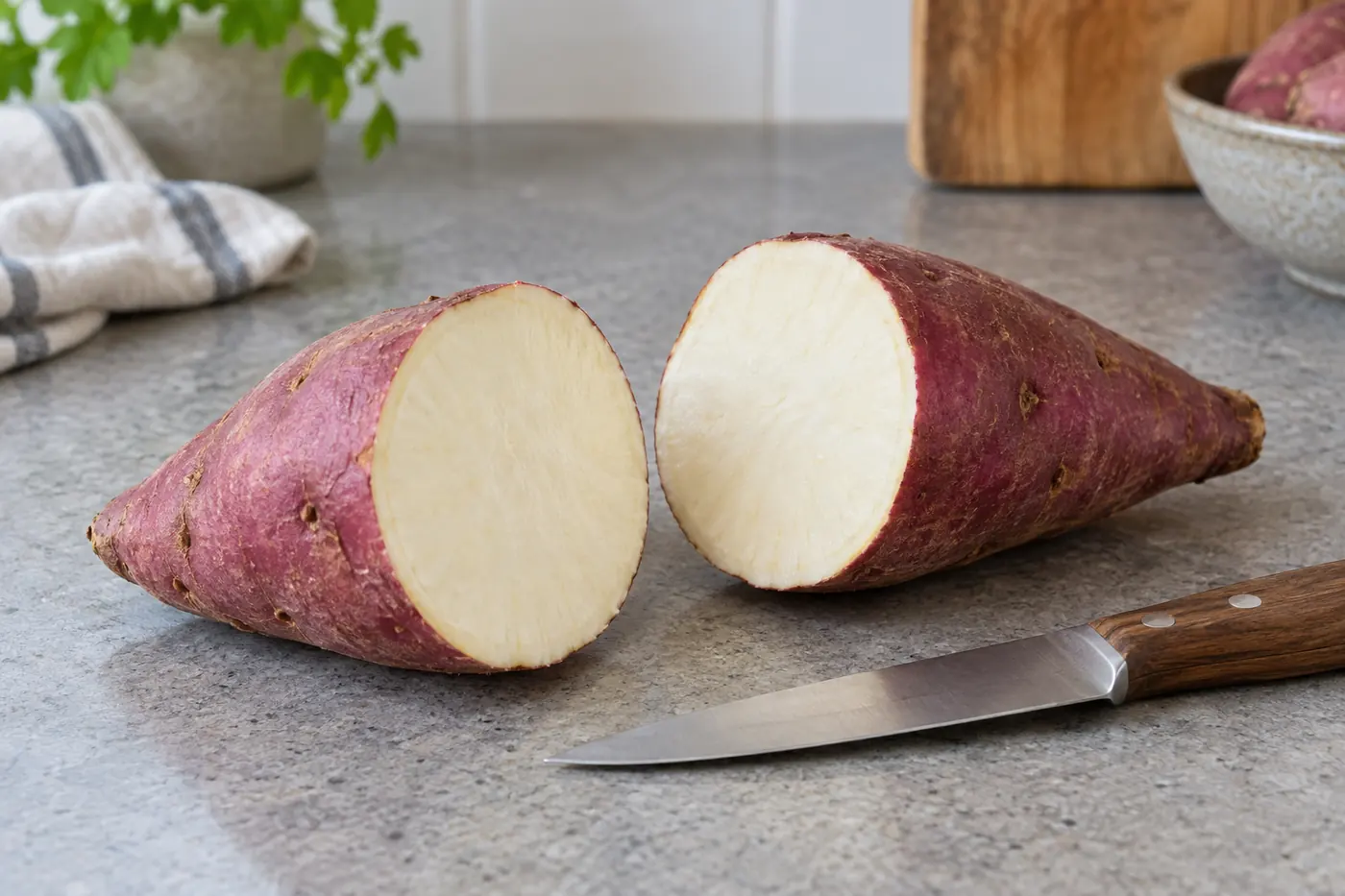
For a meal developer, color affects more than appearance. A white-fleshed sweet potato may change the look of a roasted vegetable mix or mash, but its texture and sweetness cannot be predicted reliably from the color name alone. Identify the botanical ingredient, compare it with an approved cross-section, cook a representative sample by the actual production route, and document the lot decision. This guide shows how to do that without treating every white interior as either a safety problem or an automatic substitution.
White flesh can be normal in sweet potatoes
Sweet potato is Ipomoea batatas. Its flesh can be orange, white, cream, yellow or purple depending on the type. Ordinary potato is Solanum tuberosum, a different plant; true yams are Dioscorea species. In some markets the word "yam" is casually applied to an orange sweet potato, but a product specification should use the actual ingredient identity. A buyer who asks for a "white yam" and receives a white sweet potato may have an identification problem even if both roots look acceptable. Put the botanical or agreed commercial name in the order rather than relying on a colloquial label.
University variety records confirm that white flesh is a normal sweet-potato trait. The LSU AgCenter variety descriptions list Murasaki-29 with dark purple skin and white flesh, O-Henry as a white-fleshed mutation selected from Beauregard, and Bonita as white with a yellow tinge. Oklahoma State University separately lists Bonita as white-fleshed and Beauregard as orange-fleshed. These names demonstrate biological range. They do not establish which cultivars a particular supplier currently grows, freezes, or can offer for a destination market.
Skin color is a poor shortcut to interior color. A purple or copper exterior may surround a pale flesh, while another root with a similar surface may be orange inside. Even within a named commercial type, storage, growing conditions and the stage of processing can influence the shade a buyer observes. When color matters, cut a representative sample and compare the internal flesh under consistent lighting. Do not approve a lot on outer skin color, a catalog thumbnail, or a cultivar name alone. Ask for an agreed raw-flesh and cooked-flesh reference so the word "white" has a practical meaning.
A newly cut white-fleshed root should look like a coherent type: the interior is broadly even, with the natural variation allowed by the specification. That is different from a root whose expected orange tissue contains a single pale, brown or wet zone. This distinction comes before any conclusion about usability. The color of sound tissue identifies a potential cultivar or product type; an isolated unusual area asks for a condition check. A photograph can show where the difference sits, but it cannot make a microbiological release decision. Record firmness, odor, pack history and the supplier's agreed quality limits separately.
For frozen buyers, the botanical distinction remains important even when the original root is no longer visible. A bag of diced sweet potato can look superficially like another frozen root or squash ingredient. Check the product name, ingredient declaration, approved supplier, lot code and the original raw-material specification.
If the dice are pale when an orange lot was ordered, the issue may be a wrong variety, a wrong label, a mixed lot, a different ingredient, or a product reference that was never clear.
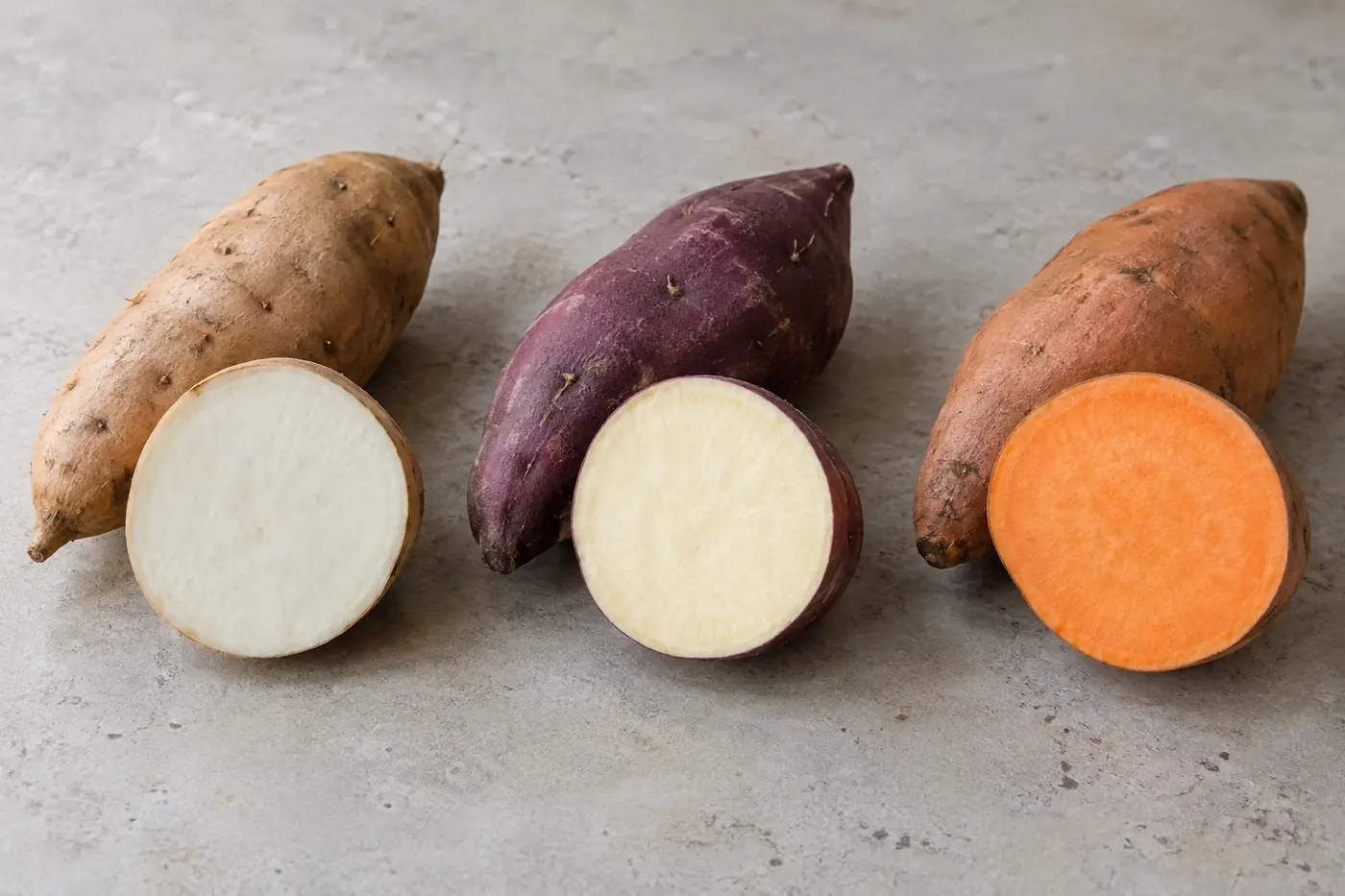
Illustrative white, cream and orange flesh types under the same light.
Start with traceability rather than guessing from a handful of pieces. If the ordered color was white, the same pale appearance may be exactly right.
The practical answer to "why is my sweet potato white inside?" is thus conditional. An evenly white interior can be a normal Ipomoea batatas type. It is acceptable for a commercial order only if that type is the one specified and the lot meets the rest of its quality requirements. The cultivar examples above should guide a technical discussion, not turn into an automatic GreenLand availability list. Confirm the exact form, origin, season and current raw-material supply before a menu or packaging claim names a specific white type.
Compare an even flesh color with a local abnormality
When a customer reports "white inside," request an image of a freshly cut cross-section, the whole root or original frozen pack, and the lot label. Ask whether the pale color extends through the flesh or is limited to a patch, ring, streak, spot or one end. The first observation can support a type question; the second may be a handling or tissue-condition question. The answer still depends on the approved reference and the full condition of the sample. Do not classify a local pale patch as a normal cultivar merely because white-fleshed cultivars exist.
Use the same cut and lighting for comparisons. A cross-section at the stem end, middle and tip can reveal whether the color is distributed consistently. A photograph under yellow kitchen lamps may shift cream flesh toward orange or make a brown area look less obvious. Place an approved sample or color card in the frame, record the camera and light, and label each root with its lot identity. If the vegetable is frozen and diced, inspect an unopened bag first, then a representative frozen sample and a cooked sample. A single attractive cube from the top of a bag is not enough to describe the lot.
Condition indicators should be assessed as a group. Look for soft or water-soaked tissue, unusual odor, visible growth, severe bruising, breakdown after thawing, and damaged packaging. A pale but firm root can still fail a separate specification. A dark spot may be superficial or may extend into the flesh; the applicable quality system determines the next step. This article cannot diagnose a particular specimen from color alone, and it should not encourage trimming around an unknown defect and declaring the remainder safe. Segregate questionable material and use the buyer's hold-and-disposition procedure.
The exact comparison depends on what was contracted. If the order says orange flesh and the received pieces are uniformly white, the lot may be sound as food yet wrong for the purchase. That is a conformance problem, not something to hide by blending it into an orange sauce.
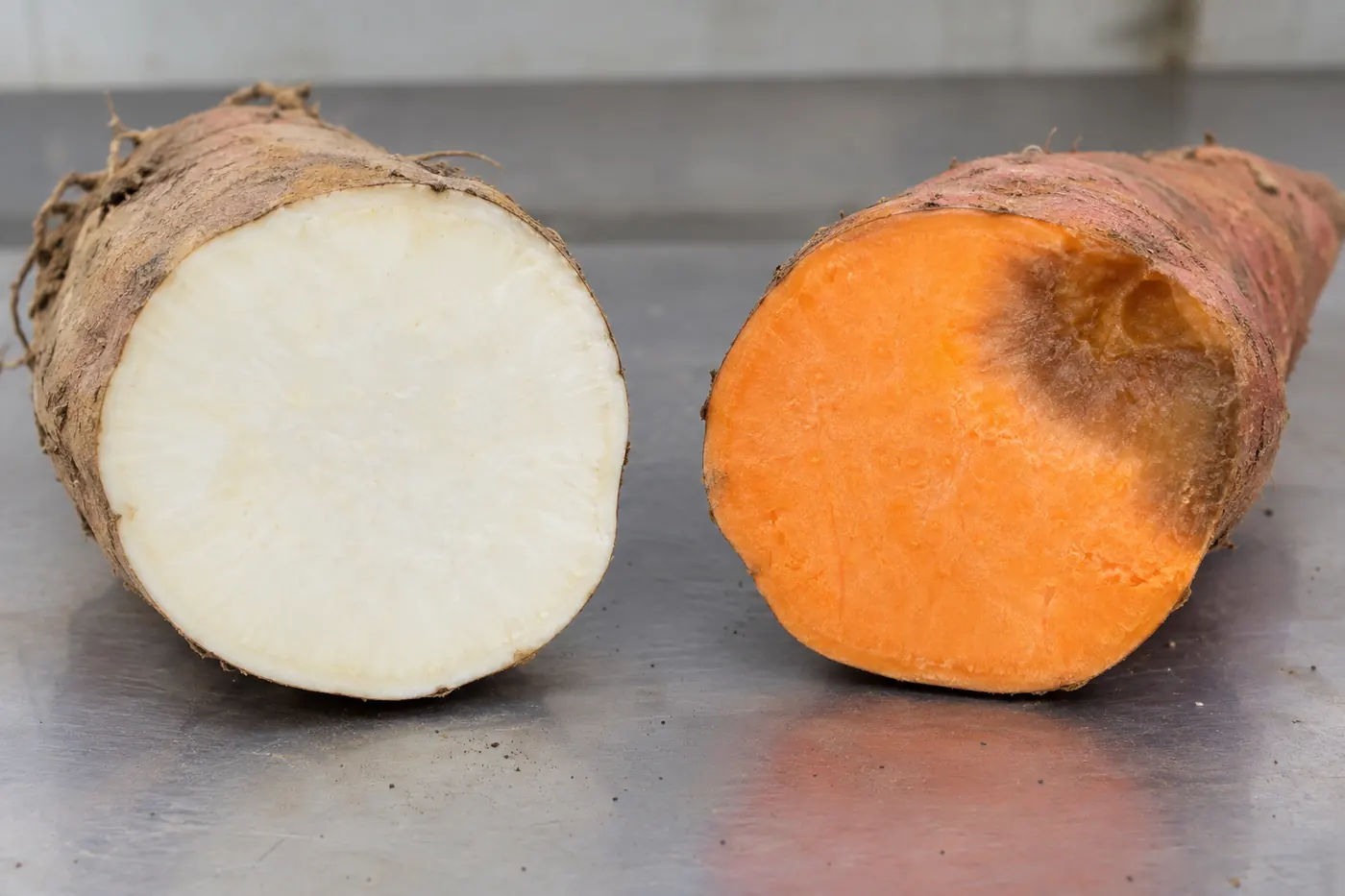
Even flesh color and a localized damaged area call for different investigations.
If the order says cream-white flesh and a few pieces are orange, the lot may reflect an unintended mixture or a different raw-material stream. If the agreed type tolerates a narrow cream-to-yellow range, the buyer needs a documented tolerance rather than a subjective dispute each shipment. Keep identity, condition, and appearance acceptance as separate columns in the receiving record.
| Observation | Main question | Useful evidence | Immediate commercial action |
|---|---|---|---|
| Even white or cream flesh across representative roots or pieces | Is this the contracted sweet-potato type? | Approved cultivar or type description, raw-flesh reference, pack and lot identity | Continue the specified quality checks; confirm color conformance |
| Localized pale, brown, wet or soft area | Is tissue condition abnormal? | Cross-section images, firmness, odor, storage and handling record | Hold the affected lot or portion for quality review |
| Uniformly pale lot when orange was ordered | Is the raw-material or label identity wrong? | Purchase order, approved reference, production and traceability records | Hold for supplier reconciliation and disposition |
| Color changes mainly after cooking | Does the process alter appearance within agreed limits? | Paired frozen and cooked samples under fixed conditions | Run the application test against the cooked standard |
The table is an investigation map, not a universal acceptance standard. A fresh root, an IQF cube, a cooked puree and a finished meal have different opportunities to show color. Define which material is sampled, how many units represent the lot, which side of a cut is measured, and who is authorized to release it. Retain the original pack and sample when a claim is opened. That evidence makes a supplier response possible and reduces the temptation to solve a traceability issue with a vague statement that "white sweet potatoes are normal."
Test texture instead of assuming every white type is dry
Consumer descriptions often call white sweet potatoes drier, starchier, less sweet or more like ordinary potatoes. Those generalizations may fit an individual cultivar in a particular recipe, but flesh color alone does not measure dry matter, sugar profile, fiber, cooking response or perceived sweetness. Compare the actual candidate with the current ingredient under the intended preparation route. A frozen meal developer is interested in whether the piece stays intact after reheating; a mash producer may want smooth body; a bakery may care about water release and sweetness. One color adjective cannot settle all three applications.
Make a paired trial with controlled conditions. Use the same cut size, target weight, cooking vessel, heat setting, time, and final temperature method for both products. Record whether samples began raw, blanched, frozen, thawed, or directly cooked from frozen. An orange product that was pretreated differently from a white one is not a fair cultivar comparison. Include at least one replicate so a single undercooked piece does not define the entire result. Photograph both immediately after cooking and after the planned hold or reheat, because texture can change between those moments.
For cubes or chunks, measure firmness by a consistent method.
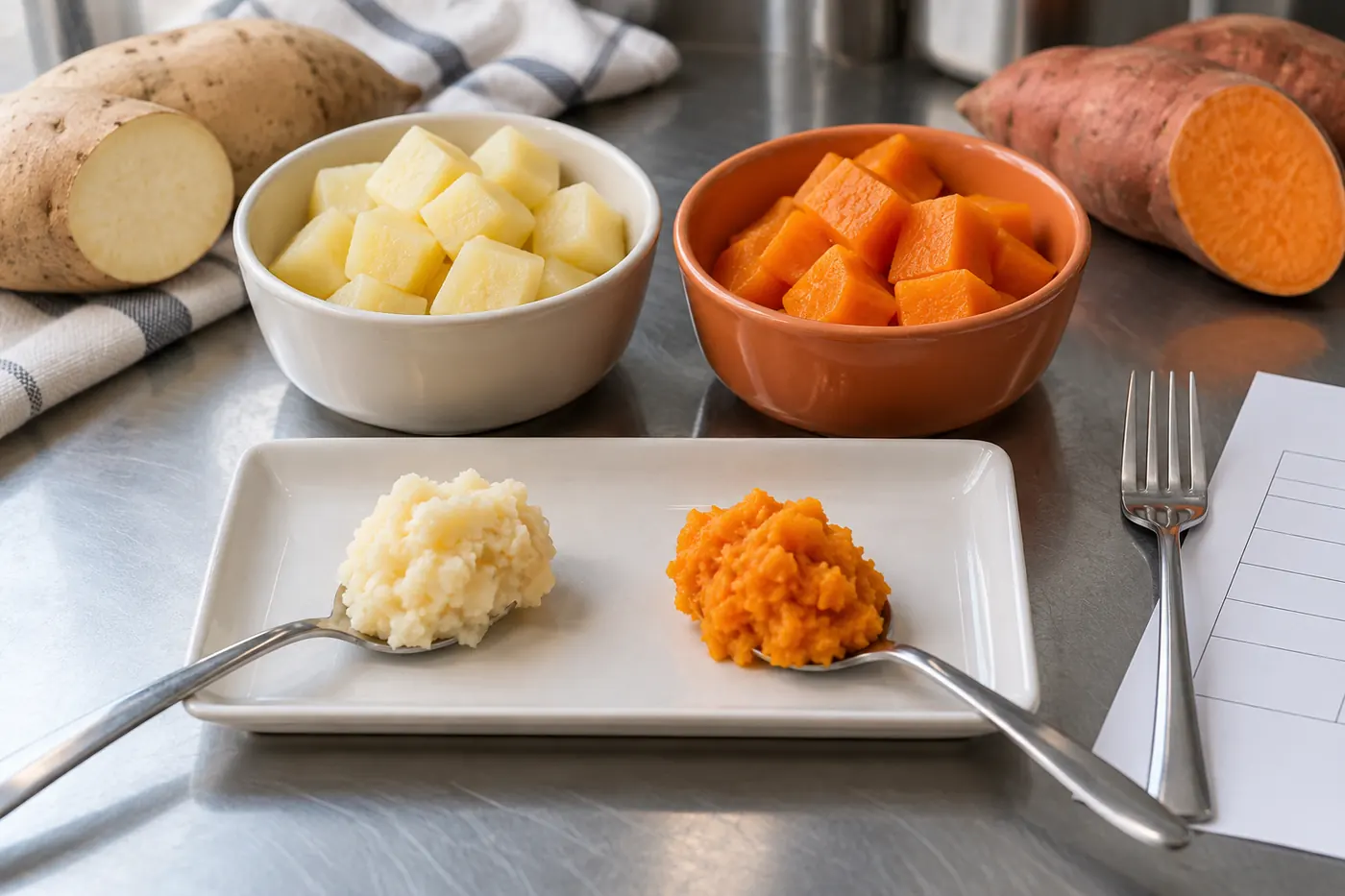
Compare cooked firmness and mash body under one controlled preparation.
A trained panel can use an agreed descriptive scale for fork resistance, edge integrity and graininess; a plant may use instruments if it already has a validated method. Note how many pieces split, collapse or remain hard at the core. For mash, compare water addition, body, smoothness, visible fibers, and how the product behaves after cooling and reheating. For fries or strips, assess the exact cut and process: a baked strip, an air-fried strip and a pre-fried strip do not make the same texture claim. The trial should mimic the customer's equipment as closely as practical.
Taste needs the same discipline. Use a neutral base and blind coded samples where possible. Ask for perceived sweetness, earthy notes, cooked aroma, aftertaste and overall fit, not only a yes/no preference. Recipe ingredients such as salt, fat and spices can amplify or obscure differences. If the proposed substitution will go into a seasoned ready meal, test both the plain root and the finished dish. A type that seems less sweet on its own may still suit a savory blend, while a type that tastes pleasant in a small spoonful may not survive a long hot-hold period without becoming dense or watery.
Do not use a color photo as a proxy for sugar or nutrition. Orange flesh often draws attention because of carotenoid pigments, but the exact nutrient profile is product-specific and can change with cultivar and processing. A white-looking sample may have its own culinary value without matching the color or composition of an orange product. Claims on a retail pack or prepared meal need actual formulation data and applicable label review. The buyer's technical decision can stay narrower: does this lot meet the color, texture, flavor and use-case specification that was agreed?
If the first trial differs from expectation, change one variable at a time. Check whether the root type is correct, then whether dice size, blanching, freezer history, cooking load or hold time caused the difference. A supplier may be able to adjust the cut or packing, but it cannot infer a suitable texture from "white flesh wanted" alone. Put the target dish and acceptance test into the brief. That lets both sides compare evidence and avoids the unsupported promise that every white-fleshed sweet potato will cook in the same way.
Define the color of a frozen lot

GreenLand product photo shows orange frozen sweet-potato dice, not a white cultivar.
Frozen sweet potato changes the inspection surface. Frost can mute orange pigment and make pieces look pale; condensation after opening can shift their apparent brightness; cooking may deepen or soften the shade. Therefore, define at least two viewing points: the frozen piece under a consistent light and the prepared piece after the agreed cooking route. If the intended dish displays the flesh prominently, the cooked reference may matter most to the customer. If the product is mixed into an IQF vegetable blend, visible frozen color may also be a receiving requirement. State both explicitly instead of assuming one photograph covers every stage.
The GreenLand product photograph above shows orange-toned IQF sweet-potato dice in a bowl. It is evidence of a cut form presented on the IQF sweet potato product page, not evidence that the photographed product is a white-fleshed cultivar. The actual contracted color depends on the order and available raw material. GreenLand's frozen sweet potato range discusses color according to variety and confirmed order; it does not list every university cultivar in stock. A buyer seeking white flesh should ask for an offered type and current sample rather than converting the illustrative cultivar list into a sales catalog.
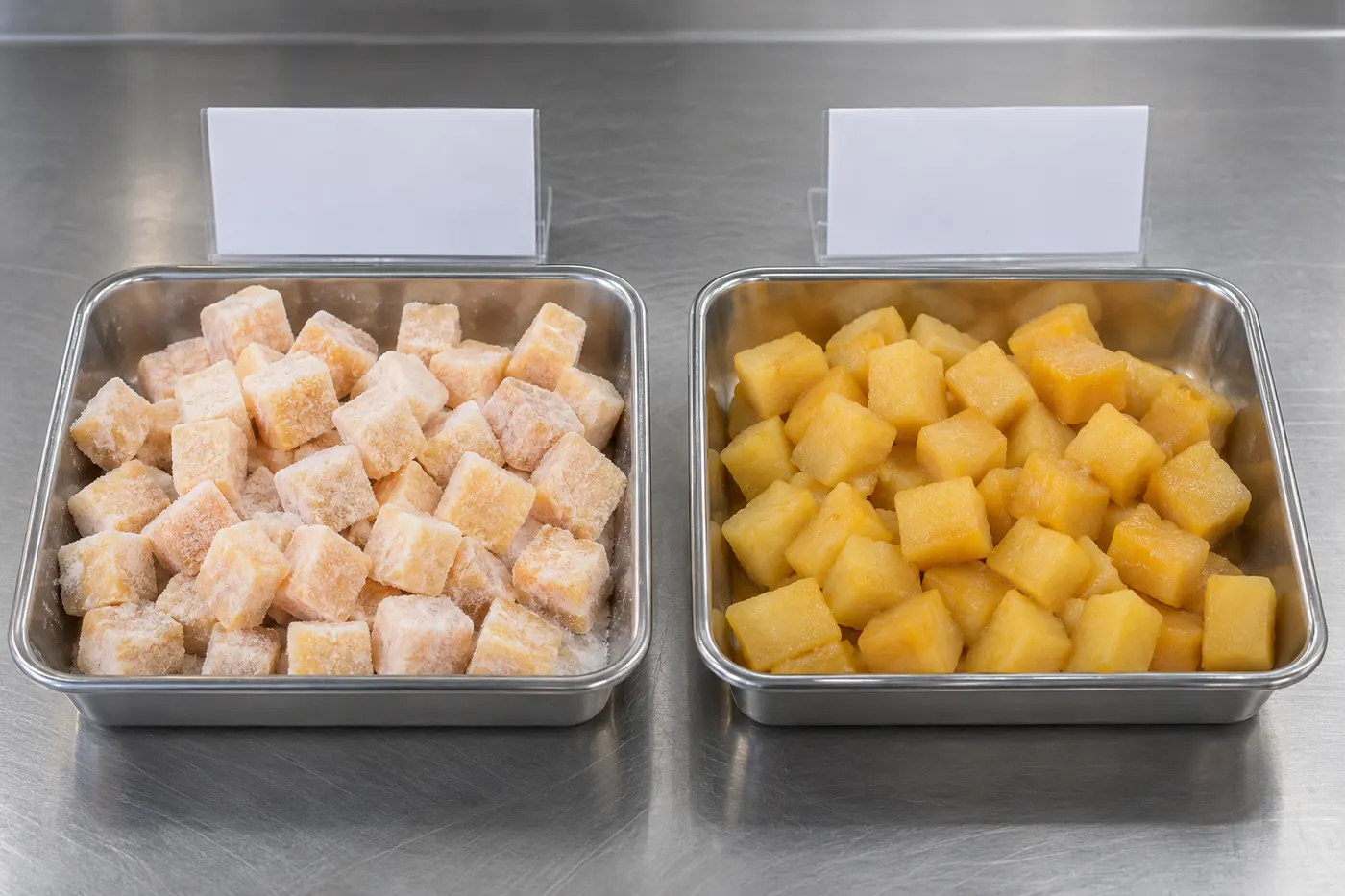
Frozen and cooked samples need separate color references.
Set up a representative sampling plan. Pull pieces from more than one bag and carton, and from different positions within a case if that matters to the pack. Record lot, carton number, bag code, product temperature, pack condition and date. Examine color while frozen without allowing the whole sample to thaw uncontrolled. Cook a separate measured sample using the specified route. Compare it with a retained approved reference under the same light, camera setting and background. If the customer has a formal color instrument and tolerance, specify its method; if not, a well-defined visual standard is better than an unqualified adjective.
The lot decision should distinguish natural type variation from wrong-type material. Some cream-white types may vary slightly toward pale yellow; that does not mean any yellow or orange piece automatically belongs in the agreed lot. Conversely, a strict pure-white reference may be unrealistic for an available raw-material type. Agree on acceptable range and sample size before ordering. Keep the reference current when the growing season or source changes. If a meal's visual identity depends on a particular shade, specify the tolerance and what happens when supply shifts outside it. A flexible recipe can be flexible by design; an unexplained substitution is not flexibility.
Processing details belong in the same record. Dice, chunks, strips, puree and fries expose different amounts of flesh. Blanching, pre-frying and cooking may alter color and texture. A white flesh requirement for a cube cannot automatically be transferred to a coated fry or puree. Specify cut dimensions, skin-on or peeled status, pretreatment, pack size, net weight, and preparation directions. Check whether the product will be cooked from frozen or thawed first in the customer's process. A color reference without a defined sample preparation can cause a dispute even when both parties are looking at the same lot.
When a discrepancy appears, hold the affected stock, preserve the label and sample, and contact the supplier with the agreed reference and images. Ask for the raw-material identity and production trace, not a blanket reassurance. A lot could be technically safe yet wrong for an orange-flesh ready meal; an evenly white lot could be exactly right for a confirmed white-flesh program. The answer is in the order and evidence. Do not let the general fact that white-fleshed sweet potatoes exist override a specific contracted color.
Put the flesh type into the order
Begin the inquiry with the finished use: roasted cubes, frozen meal components, mash, soup, fries, bakery filling or another application. Then state whether white, cream, yellow or orange flesh is required, and whether a particular cultivar is mandatory or simply an example of the target appearance. Provide photographs of an approved raw and cooked cross-section, preferably with a physical color reference and controlled lighting. If cultivar identity is mandatory, request documentary confirmation and discuss seasonal sourcing before the artwork or menu makes that claim. A color preference and a cultivar requirement are different commercial commitments.

GreenLand product photo shows orange sweet-potato strips beside a color reference.
The GreenLand photograph above shows orange sweet-potato strips beside a color chart. It illustrates why a buyer should discuss cut and color together, but it is not a white-type offer. For a quote, give the desired unit dimensions, tolerance for fines and broken pieces, peel status, blanching or other pretreatment, case and inner-pack size, expected quantity, destination market, and forecast. Add the planned cooking and service route, because that determines which texture test matters. If the requested type is unavailable this season, ask which available type can be sampled and whether its cooked appearance fits the dish. Do not silently replace a named white cultivar with another pale root.
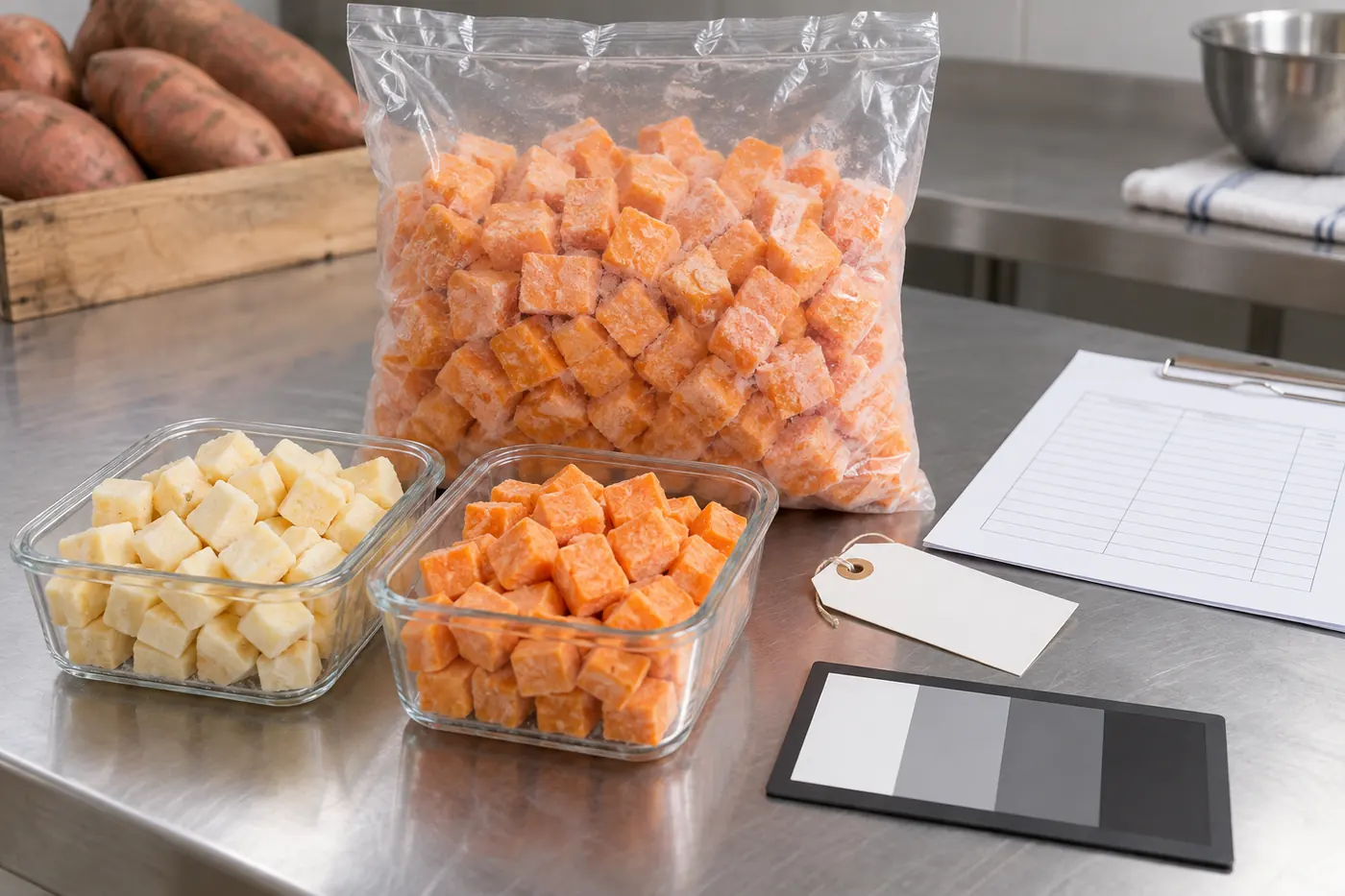
Tie the target color and cut to a real lot and written order.
Ask the supplier to identify what is actually available now. A university record that O-Henry, Bonita or Murasaki-29 exists says nothing about GreenLand's current sourcing or export program. The buyer should receive a product-specific offer, specification, sample, pack images and relevant traceability information before approval. If the project only needs a pale sweet-potato appearance, a supplier may be able to discuss an appropriate available type; that possibility still needs a sample and written color target. If the product must match a named cultivar, availability, origin and continuity become separate due-diligence questions.
Build an approval trial around the decision the factory will make. Compare the offered sample with the reference at frozen receiving, after the agreed cook, and in the final dish. Record cut uniformity, weight, color, firmness, mash behavior where relevant, sweetness perception, and color after the expected hold or reheat. Involve procurement, product development and quality staff in the sign-off. A procurement-only approval of a pale photograph can leave the kitchen discovering that the piece cooks differently; a kitchen-only approval can overlook an unavailable cultivar or unsuitable pack. Capture both technical and commercial acceptance before the first full shipment.
After approval, write the change-control rule. State whether another cultivar, growing region or raw-material season needs a new sample. Decide how the supplier will notify the buyer of a color or cut change, what documentation travels with the lot, and how a nonconforming shipment will be held and resolved. The supplier's and buyer's records should use the same product name and color language. A clear order turns a surprising white interior into a routine identity check rather than a recurring dispute. It also prevents the opposite error: treating a genuinely abnormal patch as acceptable simply because some sweet potatoes are naturally white.
GreenLand-food can discuss frozen sweet potato forms for wholesale, foodservice and prepared-meal applications, with the color and raw material confirmed for the actual order. Send the target flesh color, reference sample, cut, process, packing, quantity, destination and intended dish. We can review which product specification is suitable to sample and what documentation is available. The evidence-based answer remains simple: white flesh is a normal possibility in sweet potato, while acceptance of a frozen lot depends on its contracted type, condition and application test.
Specify Frozen Sweet Potato with GreenLand-food
GreenLand-food is a professional frozen sweet potato supplier and manufacturer in China, supporting factory-direct wholesale programs for food processors, importers and foodservice buyers. Flesh color and variety availability are confirmed for the actual order.
Send your target color reference, cut, intended dish, preparation route, packing, quantity, destination and document list. We can discuss an available product specification and a relevant sample before approval.