Whole frozen strawberries with a caliper and digital temperature probe
Whole frozen strawberries in a blue-lined carton
Hand holding whole frozen strawberries above a blue plastic liner
1/
Frozen Strawberry Chunks
We supply IQF frozen strawberry chunks for importers, bakery manufacturers, dairy and fruit-preparation factories, beverage ingredient programs, foodservice distributors, repackers and retail frozen brands. Our standard unsweetened product contains 100% strawberry and is cut, individually frozen and packed for commercial processing.
We separate irregular strawberry chunks from precision strawberry dice. A 15–25 mm chunk retains natural fruit contours, while a 10×10 mm dice is evaluated as a controlled three-dimensional cut. We write the form, nominal size, in-range percentage, Brix, pH, acidity, defect limits, packing and batch documents into one specification.
Chunks: 15–25 / 25–35 mm
Dice: 10 / 12 / 15 / 20 mm
100% strawberry · unsweetened
24 months at −18°C
IQF Cut Fruit · Bulk · Foodservice · Private Label
Frozen Strawberry Chunks Defined by Cut Geometry, Size Tolerance and Application Performance
We supply IQF frozen strawberry chunks for importers, bakery manufacturers, dairy and fruit-preparation factories, beverage ingredient programs, foodservice distributors, repackers and retail frozen brands. Our standard unsweetened product contains 100% strawberry and is cut, individually frozen and packed for commercial processing.
We separate irregular strawberry chunks from precision strawberry dice. A 15–25 mm chunk retains natural fruit contours, while a 10×10 mm dice is evaluated as a controlled three-dimensional cut. We write the form, nominal size, in-range percentage, Brix, pH, acidity, defect limits, packing and batch documents into one specification.
Actual frozen fruit shows natural whole, halved and irregular piece geometry rather than machine-cut cubes.
Applications & Quality Requirements
We match Frozen Strawberry Chunks to your processing or packing line. Product form to confirm: Chunks. Tell us the intended use and target texture so we can review the relevant size, grade, preparation and packing requirements before quotation.
Application illustrations. Product form, preparation and suitability follow the confirmed specification. Open the overview to inspect the image.
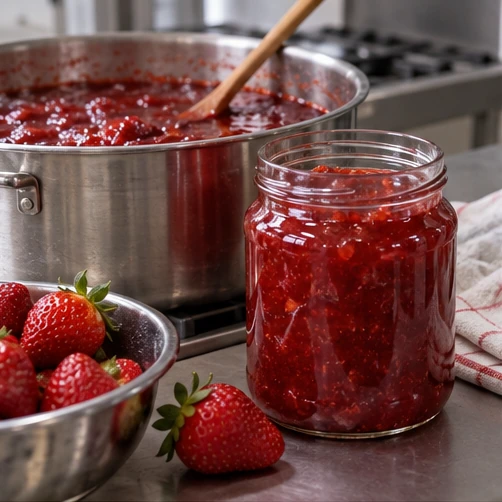
Jam & Fruit Spreads
For: Preserve and fruit preparation manufacturers
Form: chunks
We review chunks for your jam & fruit spreads programme. Confirm Brix-acidity balance, seed or stem control and cooked gel behavior. Pulp or size-reduce as required; validate cooking, gel formulation and filling controls. Your team prepares the required cut or refined component before this application.
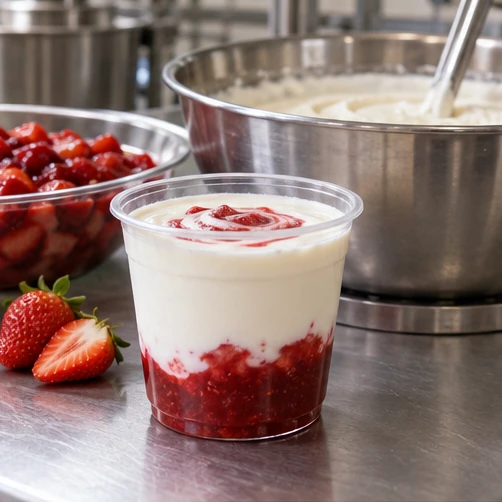
Dairy fruit preparations
For: Fruit preparation and dairy purchasing teams
Form: chunks
We review chunks for your dairy fruit preparations programme. Confirm particle size, color bleed and prepared-fruit texture. Prepare and validate the fruit component before dairy addition; check acidity, enzyme activity and microbiological suitability. Your team prepares the required cut or refined component before this application.
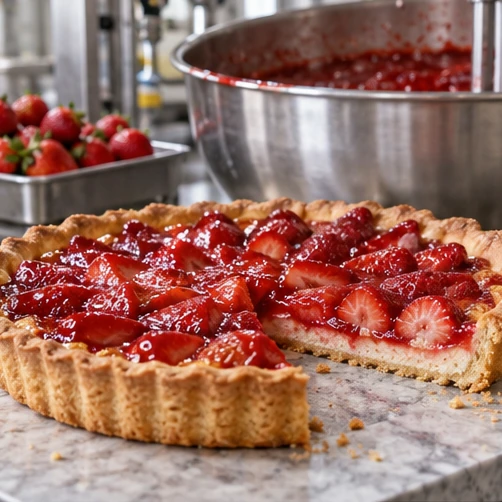
Bakery fillings
For: Bakery ingredient purchasing teams
Form: chunks
We review chunks for your bakery fillings programme. Confirm chunk size, broken-piece tolerance and bake moisture release. Cook or formulate the filling and validate bake performance; freezing is not a kill step. Your team prepares the required cut or refined component before this application.
Beverage Base Processing
For: Juice processors and beverage ingredient manufacturers
Form: chunks
We review chunks for your beverage base processing programme. Confirm Brix-acidity balance, inedible-part removal and pressing or finisher behavior. Buyer must extract/filter as appropriate and validate beverage heat treatment or equivalent safety process. Your team prepares the required cut or refined component before this application.
Ice Cream Inclusions
For: Ice cream ingredient procurement teams
Form: chunks
We review chunks for your ice cream inclusions programme. Confirm inclusion size, freeze texture and ripple consistency. Validate fruit preparation, freezing texture and safe addition stage; raw frozen fruit is not ready-to-eat by default. Your team prepares the required cut or refined component before this application.
Match the Application with the Purchasing Specification
Application
Selected form
Quality points to confirm
Jam & Fruit Spreads
chunks
Brix-acidity balance, seed or stem control and cooked gel behavior
Dairy fruit preparations
chunks
particle size, color bleed and prepared-fruit texture
Bakery fillings
chunks
chunk size, broken-piece tolerance and bake moisture release
Beverage Base Processing
chunks
Brix-acidity balance, inedible-part removal and pressing or finisher behavior
Ice Cream Inclusions
chunks
inclusion size, freeze texture and ripple consistency
Tell us how the strawberry chunks will be used and the piece size you need after processing. We'll check the available cuts and agree what to assess in a sample, including breakage, liquid release or texture in your recipe.
The Five Decisions Behind a Strawberry Chunk Quotation
A product name does not define usable yield. Cut geometry, size distribution, maturity, thaw loss and fines all affect dosing, visible fruit and process cost. We connect each concern to a measurable acceptance field.
Decision
Order risk
Our control
Result
Chunk or dice?
Natural pieces and cubic cuts produce different counts, texture and price.
Form, dimensions, measuring method and reference image are written separately.
The delivered cut matches the tested application.
Nominal size or distribution?
Oversize blocks affect pumps; fines disappear into fillings.
Grade A ≥90% and Premium Grade ≥95% in the named range.
Controlled dosing and visible piece density.
Brix without acidity?
Sweetness alone does not define flavor or dairy balance.
Brix, pH and titratable acidity remain separate fields.
A clearer formulation starting point.
Frozen look or use performance?
A red frozen piece can soften, bleed or release excess liquid.
Thaw, bake, dairy or processing tests use defined conditions.
Repeatable evaluation beyond appearance.
Limit or batch result?
A specification value may be mistaken for laboratory evidence.
Specification Limit and Batch Actual Result use different columns.
Traceable receiving and repeat-order records.
How We Lock the Order Specification
A workable contract needs more than the words "strawberry chunks." We connect the cut description to a measurable size method, an inspection sample and an agreed tolerance. For irregular chunks, the specification states the nominal range, such as 15–25 mm or 25–35 mm, and defines how undersize fines and oversize pieces are counted. For precision dice, it states all three nominal dimensions and the permitted variation. Halves, slices and bits remain separate forms because their dosing, thawing and processing behavior is different.
We identify the application before fixing the grade. A bakery may focus on visible red pieces after mixing and baking. A dairy plant may give more weight to pump clearance, uniform dosing and low fines. A beverage processor may accept small pieces but require a narrower Brix and acidity window. Foodservice and repacking programs usually need strong visual consistency, accurate case weight and dependable carton marking. The order specification records those priorities instead of relying on a general grade name.
Product Identity
IQF strawberry, Monterey variety as the standard offer, China origin, cut form, nominal size, ingredient statement and whether the order excludes added sugar.
Measurable Acceptance
Size conformance, fines, clumps, loose ice, color defects, blemishes, stalks, calyx, extraneous vegetable matter and mineral impurities are written as limits.
Shipment Basis
Pack format, net weight, label language, pallet plan, quantity tolerance, destination, documents and shipment window complete the commercial basis.
The approved specification becomes the reference for production, inspection, COA reporting and claim review. When a buyer requests a tighter value than our standard offer, we quote a custom program with its own raw-material selection, processing control, sampling plan and commercial terms.
Application Validation Before a Volume Order
Trial frozen and thawed pieces for drip loss, color and the intended process. Confirm sample form and quantity, fees and freight, destination and trial purpose before dispatch. Review sample evaluation. Record the approved sample identity, evaluation method and acceptance result with the order file.
Frozen fruit performance changes with piece geometry, thawing method, recipe solids, shear, heating and holding time. We use reproducible trials that procurement and product-development teams can repeat. Use these working conditions to compare samples. Tell us your recipe, equipment and acceptance targets so we can agree the checks for your trial. Your team confirms performance in the finished product on its own line.
Application
Starting Form
Trial and Records
Bakery filling
15–25 mm chunks or 15 mm dice
Add frozen fruit at the normal ratio and production-equivalent shear. Record piece visibility, breakage, red bleed, water release and distribution per portion after baking.
Yogurt and dairy
10 or 12 mm dice
Run the preparation through the smallest pump, valve and filler clearance. Record blockage, piece survival, dosing variation, color migration and texture after storage.
Smoothie and beverage
Bits, 10 mm dice or fully blended chunks
Blend a fixed fruit weight for a fixed time and speed. Record Brix, pH, acidity, seed perception, color, viscosity and sediment after holding.
Jam, sauce and compote
25–35 mm chunks or halves
Cook to target soluble solids at normal load and agitation. Record final piece identity, spread, color, syneresis, yield and fill-weight consistency.
Foodservice topping
15–25 mm chunks or slices
Thaw a sealed pack at 0–4°C. Record drip, gloss, piece integrity, portion count, flavor and appearance at opening and after the intended service hold.
For a comparative thaw-drip test, weigh a representative 500 g frozen sample, thaw it in a covered food-grade container at 4°C for 12 hours, drain through the same screen for the same time and calculate separated liquid as a percentage of initial frozen weight. Our project starting target is no more than 10%, subject to form, crop and contracted method. One method makes trial samples and lots comparable.
Sampling, Release and Deviation Handling
We use representative finished-product samples to check the attributes in the order specification. A 500 g analytical portion is a practical basis for the listed physical defects, while microbiological and chemical sampling follows the contracted method and laboratory requirement. The inspection record identifies the lot, production date, pack format and sampled cartons so the result connects to the shipped batch.
Physical review begins while the product is frozen. We check that pieces remain individually quick frozen, reasonably free flowing and without excessive surface ice. After separating the sample, we determine size conformance and weigh undersize fines, oversize pieces, clumps and loose ice when contractual. Color defects, blemished pieces, stalk fragments, calyx and other extraneous vegetable matter are sorted into defined categories so the same observation is not counted twice.
Release information distinguishes the Specification Limit from the Batch Actual Result. The limit column states the contractual maximum, minimum or range. The actual-result column reports the measured value, count or compliant finding for the corresponding batch. A microbiological limit such as total plate count below 100,000 CFU/g is not presented as though it were the test result; the batch COA carries the laboratory value or agreed reporting format.
If an inspection value falls outside the agreed limit, we isolate the affected lot and review the production and sampling records. Disposition can include additional representative sampling, regrading when technically appropriate, allocation to another approved specification, or rejection from the contracted program. We do not silently replace a contracted size, grade or test schedule. Any disposition changing the order basis is documented with the buyer.
For a delivery claim, retain the outer-carton label, inner-bag code, photographs of unopened and opened packs, storage-temperature records, affected quantity and a representative sample where regulations permit. This evidence links the observation to the batch and helps distinguish a product deviation from thawing, storage or handling damage.
If the received lot has too many small fragments or pieces outside the agreed size range, Start an arrival quality review with the lot code, sample weight and photos of the separated pieces. We'll review the result against the agreed sampling and size rules.
Private Label, Mixed Loads and Export File
Confirm commercial terms for this order
We confirm payment terms, trade basis and lead time in the quotation and order agreement after reviewing the product grade, quantity, packing, destination and required documents. Please send your target shipment window; the schedule is confirmed against the actual production and loading plan. We confirm payment method, invoice currency, due date or payment milestones, and documents required for each payment stage in the signed quotation and order agreement.
We support industrial bulk packs and retail or foodservice private-label formats. Artwork should carry the legal product name, ingredient declaration, net weight, storage condition, date code, lot identification, origin and importer information required by the destination. Barcode, nutrition panel, preparation wording and language versions follow the approved artwork. We check production details such as print position, code area, carton marks and case configuration before packing.
The normal planning basis is 10 metric tons for bulk and 15 metric tons for a private-label program. Mixed-container planning can begin around 3–5 metric tons per SKU when compatible products, packs, production windows and destination requirements allow consolidation. Final minimums depend on film, printed carton and label quantities and changeovers. A 20-foot reefer normally carries about 10–12 metric tons; a 40-foot high-cube reefer normally carries about 23–25 metric tons, subject to pack density, pallets and legal payload.
A 15–18 day production period can be used for initial planning after terms, specification, artwork and packing materials are ready. We confirm the actual production and shipment window in the quotation after crop availability, custom test panels, printed materials and vessel space are checked.
The export file may include commercial invoice, packing list, bill of lading, certificate of origin, health or phytosanitary documentation where applicable, batch COA and contracted reports. Destination-specific certificates, legalized documents, special declarations and third-party laboratory work should be listed in the RFQ so names, lot codes, weights and consignee details can remain aligned.
Cut Forms and Size Programs
Irregular Chunks
15–25 mm and 25–35 mm natural pieces for bakery, fruit preparations, beverage toppings and foodservice. The specification controls longest dimension, fines and large pieces.
Precision Dice
10×10, 12×12, 15×15 or 20×20 mm. A cube tolerance is written in three dimensions; irregular offcuts are counted as nonconforming or fines.
Halves and Slices
Halves preserve recognizable strawberry shape. Slices use 10 or 12 mm thickness for visible topping, dessert and retail applications.
Bits / Crumbles
Smaller mixed pieces for fillings, jam, puree, dairy blending and cost-focused processing. They are a separate grade, not concealed waste from a chunk order.
The visual separates six strawberry forms so chunks, dice, slices and bits are not treated as interchangeable names.
How size is inspected
We inspect a representative frozen sample with a ruler, caliper or sieve appropriate to the form. The record states sample weight, in-range pieces, undersize/fines, oversize pieces and pieces stuck together. Frozen surface frost is not counted as fruit dimension.
For 10×10 mm dice, the contract can use a ±2 mm dimensional tolerance with at least 90% or 95% conforming pieces. For irregular chunks, the longest dimension and fines threshold are more practical than a cube tolerance.
This starting specification covers our standard unsweetened Monterey strawberry chunk program. Dice, slices, processing grade, sweetened fruit and organic orders use separate SKU schedules.
Planning references: 10 MT standard bulk, 15 MT new private label, and 3–5 MT per compatible mixed-container SKU; confirm the practical MOQ from grade, pack, materials and load plan.
Loading
Approximately 10–12 MT/20'RF or 23–25 MT/40'RH, adjusted for pallet and pack format
Shelf Life / Storage
24 months from production at −18°C or below
Lead Time
15–18 days is a standard-pack planning reference only; confirm the actual date after specification, artwork, materials, tests and vessel plan are agreed.
Port / Terms
Xiamen, Qingdao, Dalian or contracted China port; FOB, CFR/CNF or CIF
Grade and Defect Limits
Visual limits use a 500 g sample unless the contract states another basis. "Absent" describes the inspected sample under the agreed plan; it is not an absolute statement beyond that inspection.
Parameter
Grade A
Premium Grade
Basis
Size conformity
≥90%
≥95%
Weight or piece count stated by form
Fines / disintegrated pieces
≤10%
≤5%
Weight after separation
Partially uncoloured pieces
≤5%
≤3%
Weight
Blemished / damaged fruit
≤5%
≤3%
Weight
Stalk parts >3 mm
≤3 per 500 g
≤1 per 500 g
Direct count
Calyces
≤3 cm²/500 g
≤1.5 cm²/500 g
Area
Other harmless vegetable material
≤3 cm²/500 g
≤1.5 cm²/500 g
Area
Non-separable clumps
≤10%
≤5%
Frozen weight
Loose ice
≤2%
≤1%
Weight
Mineral impurities
≤0.1%
≤0.1%
Whole product weight
Mould, decay, insects, hazardous foreign material
Absent
Absent
Inspected sample
The inspection reference distinguishes acceptable red fruit from pale, dark damaged and visibly mouldy fruit.
Defects caused by cutting
Cut surfaces expose pale internal flesh and release juice; this is not automatically an uncoloured defect. We judge natural cut-face color separately from unripe exterior tissue, decay and excessive bruising.
Fines are defined by the named screen or minimum dimension. This prevents normal 10 mm dice from being rejected under a 15–25 mm chunk rule and prevents small fragments from being hidden inside an apparently compliant lot.
Processing and Application Tests
We prepare Frozen Strawberry Chunks to the agreed product form, pretreatment, grade and packing specification. The diagram shows a typical production process; we confirm preparation and step order for your order.
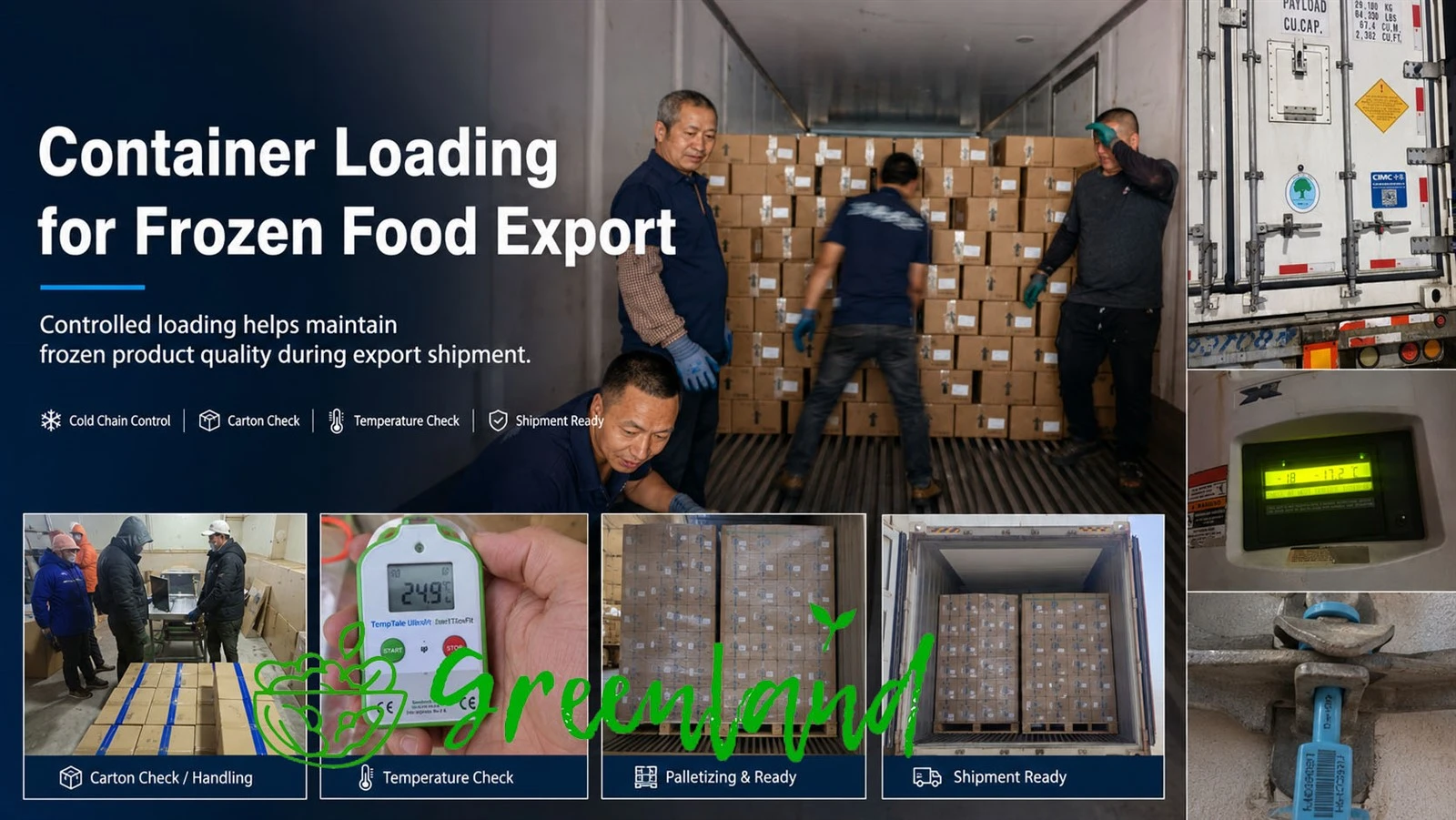
Typical process flow. Cold-storage and loading photos are general frozen-food references. We confirm the process and step order for your product against the agreed specification.
Production and handling stages
Raw Material InspectionWe check identity, condition and the agreed raw-material criteria.
Initial SortingWe remove visible defects and unsuitable material.
WashingWe follow the confirmed cleaning and water-control route.
Hulling & CuttingWe prepare the agreed cut form and remove the specified inedible parts.
Size & Form GradingWe match size and form to the approved specification.
DrainingWe remove excess surface water before freezing.
IQF FreezingWe quick freeze prepared pieces and review separation.
Frozen Product InspectionWe review the agreed defects, form, separation and frozen condition.
Weighing, Packing & Metal ControlWe check net weight, pack integrity and agreed metal controls.
Batch Review & ReleaseWe match lot identity and records to the agreed release checks.
Frozen StorageWe maintain the agreed frozen-storage conditions and lot identity.
Reefer LoadingWe review cartons, lot records and refrigerated shipment arrangements.
Processing and Application Tests
1. Select
Maturity, color, variety and incoming defects
2. Prepare
Wash, hull, inspect and drain
3. Cut
Chunk, dice, half, slice or bits
4. IQF
Individual freezing and clump control
5. Inspect
Size, color, defects, fines and metal detection
6. Pack
Weight, seal, label, carton and frozen storage
Thaw and Drip
A 500 g covered sample is held at 4°C for 12 hours. We record separated liquid, drained fruit, damaged pieces and color. A project target such as drip loss ≤10% is used only with this defined method.
Bakery
We record frozen addition rate, batter temperature, mix time, oven profile, red bleed halo, wet pockets, piece retention and visible distribution after cutting the finished product.
Dairy / Beverage
The trial checks pump or straw clearance, piece suspension, pH after mixing, serum color and hold-time appearance. Ten or 12 mm dice suit smaller openings better than 25–35 mm chunks.
Jam / Fruit Preparation
We compare incoming Brix, pH, acidity, thawed yield, screened waste and final soluble solids under one cooking profile. Processing grade is priced against usable yield rather than gross weight alone.
Actual product evidence shows size measurement and a frozen-product temperature reading as separate inspection points.
Approval record
We retain the approved sample description, cut image, size result, Brix/pH, defect grade, pack and application method. A repeat lot is compared using the same conditions.
Words such as "firm," "low bleed" and "uniform" are replaced by measurements, photos and an acceptance decision tied to the application.
Microbiological, Chemical and COA Controls
Match strawberry-chunk lot COA, test panel and pack marks to the approved grade. Review document verification. For any requested certificate, confirm the supplying factory or holder, covered product, validity period and destination-market relevance; a certificate image is not a lot result.
The following commercial limits are a starting test schedule. Destination law and final use can require additional analytes. The COA reports the corresponding production batch's Actual Result, not a duplicate of the limit.
Item
Specification Limit
Batch Actual Result
Report Basis
Brix / pH / acidity
5.5–9.5° / 3.1–3.5 / 0.6–1.2%
Measured values for batch
Refractometer, pH meter, titration
Total Plate Count
<100,000 cfu/g
Numeric result
Laboratory method on report
Coliforms / E. coli
<100 / <10 cfu/g
Numeric or below reporting limit
Laboratory report
Yeast / mould
<1,000 / <1,000 cfu/g
Numeric results
Laboratory report
Salmonella / L. monocytogenes
Absent in 25 g
Detected / not detected
25 g test portion
EU lead / cadmium
Pb ≤0.10; Cd ≤0.030 mg/kg wet weight
Laboratory values
Heavy-metal report
Pesticide residues
MRL by active substance; EU default 0.01 mg/kg where no specific MRL exists
Analyte result and LOQ
Multi-residue laboratory report
The QA file can include specification, batch COA, microbiological report, pesticide residue report, heavy-metal report, allergen statement, packing list, invoice, traceability records and destination clearance documents. Facility certificates are matched to the production site and are not described as strawberry product certificates.
The general certificate display supports facility-document review only; it is not a batch COA or strawberry-specific certification claim.
COA identity fields
Product name, form, size, batch number, production date, specification version and packing identify the lot before analytical results are reviewed.
Each result is reported with a method or basis. "Pass" can accompany the number, but it does not replace the measured value when a numeric test was performed.
Packing, Traceability and Cold Chain
Bulk
10 or 20 kg liner/carton, 20 or 40 lb case and tote for processors. We specify liner, closure, carton strength, label and pallet pattern.
Foodservice
4×2.5 kg or 10×1 kg gives bakeries and central kitchens controlled issue quantities with batch-coded inner packs.
Retail / OEM
500 g, 1 lb, 2 lb, 1 kg and approved custom bags. We review film, zipper, artwork, language, barcode, date code and case marks.
We link the carton code with raw-material lot, processing date, cut line, final inspection, COA, packing and shipment. Frozen storage and reefer transport remain at −18°C or below. Repeated thawing and refreezing increase clumping, ice, texture damage and carton staining and are excluded from the handling plan.
Actual sealed export cartons show frozen-fruit packing and label placement before storage.
General cold-store evidence supports frozen warehousing and temperature control, not a strawberry-only chamber claim.
General reefer loading evidence supports carton, temperature and shipment handling controls.
Frozen Strawberry Chunks FAQ
1. What is the difference between strawberry chunks and dice?
Chunks are irregular natural pieces measured by a size band such as 15–25 mm. Dice are machine-cut pieces such as 10×10 or 15×15 mm with a dimensional tolerance.
2. Which chunk and dice sizes are available?
Chunks include 15–25 and 25–35 mm. Dice include 10×10, 12×12, 15×15 and 20×20 mm; halves, 10/12 mm slices and bits are separate forms.
3. How much product must be within the stated size?
Grade A targets at least 90% in range. Premium Grade targets at least 95%, with lower fines and defect limits.
4. What are the Brix, pH and acidity references?
Our starting specification is 5.5–9.5° Brix, pH 3.1–3.5 and titratable acidity 0.6–1.2% as citric acid. Batch values appear separately on the COA when tested.
5. Are the strawberry chunks unsweetened?
Yes. The standard product is 100% strawberry without added sugar, syrup, flavor or color. Sweetened fruit requires another ingredient statement and specification.
6. Which defects are inspected?
We inspect fines, uncoloured fruit, blemishes, stalks, calyces, vegetable material, clumps, loose ice, mould, decay, insects and foreign material.
7. Which form fits bakery inclusions?
Ten to 15 mm dice give controlled distribution in smaller products. Fifteen to 25 mm chunks create more visible fruit but require a compatible mixing and depositing process.
8. Can you test thaw loss and color bleed?
Yes. A defined test can use 500 g at 4°C for 12 hours and record separated liquid, drained weight, damaged pieces and color release.
9. What packing formats are offered?
Options include 10/20 kg, 20/40 lb, 4×2.5 kg, 10×1 kg, 20×500 g, 1/2 lb, tote and approved private-label bags.
10. What is the MOQ?
For planning, standard bulk may start around 10 MT, a new private-label program around 15 MT and a compatible mixed-container SKU around 3–5 MT. We confirm the practical MOQ for the selected form, grade, packing materials, quantity and load plan before accepting the order.
11. What is the shelf life?
Shelf life is 24 months from production under continuous storage at −18°C or below. The carton date code and specification use the same shelf-life basis.
12. Which documents are available?
We provide specification, batch COA, packing list and invoice. Test reports, traceability and clearance documents follow the contracted order file.
13. Does the COA contain batch results?
Yes. The Batch Actual Result is the measured or inspected value for the corresponding production batch. It is kept separate from the Specification Limit.
Tell us whether you need irregular chunks, precision dice, halves, slices or bits. Include size, Grade A or Premium Grade, Brix/pH/acidity, fines and defect limits, packing, quantity, destination port and application.
Add your microbiological schedule, residue and heavy-metal panel, COA format, artwork, pallet plan, mixed-container request and target shipment date. We will return one quotation basis connecting product, packing, documents and cold-chain delivery.
We review the selected form, grade, process and packing against the technical schedule below. Published and TDS values are specification references for order review. External benchmarks apply only within their stated scope. Acceptance is governed by the signed SKU specification; the identified lot COA reports actual measured results.
Form: ChunksProduct category: Frozen Strawberry
01 / Physical & Sensory
Parameter
Specification / reference
Verification & order basis
Variety
Monterey; alternative variety named in the order specificationPublished reference
Check raw-material identity and variety/source declaration against the ordered programme.
Origin / Crop
China; main crop reference April–May with frozen supply throughout the yearPublished reference
Confirm method, representative sample and acceptance basis in the signed specification.
Chunk Size
15–25 mm, 25–35 mm or uncalibrated processing piecesPublished reference
Measure a defined frozen sample with caliper or size gauge; report distribution and tolerance.
Dice Size
10 × 10, 12 × 12, 15 × 15 or 20 × 20 mm; ±2 mm starting tolerancePublished reference
Measure a defined frozen sample with caliper or size gauge; report distribution and tolerance.
Appearance
Natural red to deep red fruit, reasonably uniform for grade, free-flowing and not excessively icyPublished reference
Compare with the approved sensory reference using the stated frozen/thawed/prepared condition.
Partially uncoloured pieces - Grade A
≤5%Published reference
Weight. Programme: Grade A.
Partially uncoloured pieces - Premium Grade
≤3%Published reference
Weight. Programme: Premium Grade.
Size-grade inspection
Use the selected diameter, length, piece mass or count-per-weight grade; state the proportion permitted outside the range.
Measure the selected chunk or dice dimensions in a representative frozen sample, then count or weigh in-range, undersize and oversize categories according to the signed conformity basis. Report the same denominator used by the selected grade limit.
Declared product form
Chunks
Match approved sample, pack label and order form. Published page identity; approve selected grade before order.
Sensory acceptance
Characteristic colour, flavour and texture for the declared product; no abnormal odour or visibly deteriorated material.External referenceCodex
Compare an identified frozen sample with the approved grade and defect schedule. External technical reference; confirm SKU and market applicability.
02 / Physicochemical & Residue Controls
Parameter
Specification / reference
Verification & order basis
Brix
5.5–9.5° at 20°C; batch Actual Result on COA when includedPublished reference
Measure representative prepared sample with a temperature-compensated refractometer.
pH / Acidity
pH 3.1–3.5; titratable acidity 0.6–1.2% as citric acidPublished reference
Use calibrated pH meter or titration on the stated sample preparation.
Mineral impurities - Grade A
≤0.1%Published reference
Whole product weight. Programme: Grade A.
Mineral impurities - Premium Grade
≤0.1%Published reference
Whole product weight. Programme: Premium Grade.
Thaw yield / drip loss
For a drip-sensitive grade, define thawing conditions, draining apparatus and duration before setting a numerical target.
Record initial sample mass and drained liquid mass; drip loss (%) = 100 × drained liquid mass / initial sample mass.
Pesticide residue schedule
Named active ingredients and commodity-specific limits are selected for the destination market. EU source
Link farm spray history, laboratory LOQ and batch result to the destination MRL. EU database is one market reference; apply the actual destination rule.
Lead, cadmium and other contaminants
Apply the limit for the exact commodity and processed form in the destination market. EU source
State analyte, preparation basis, method, LOQ and lot result. Do not transfer a fresh-commodity limit to a processed form without the required assessment.
03 / Microbiological Criteria
Parameter
Specification / reference
Verification & order basis
Hygiene-indicator panel
Select aerobic count and relevant Enterobacteriaceae, coliform or E. coli indicators for the declared process and intended use. Codex
Report each quantitative result in CFU/g, method/reporting limit, sample plan and lot identity.
Pathogen acceptance programme
Define Salmonella and Listeria criteria when applicable to the destination, ready-to-eat status and buyer programme. Codex
State analytical portion, sample-unit plan, method and detected/not-detected reporting; identify the treatment and release basis.
Enteric-virus risk programme
For a direct-consumption berry programme, assess hepatitis A and norovirus controls and any buyer-required verification. FDA
Use an appropriate validated method and sampling plan; support testing with farm, worker and water hygiene controls. FDA prevention guidance is a risk-control reference; it does not assign a universal numerical batch limit.
Acceptance schedule
Select the test panel and limits by intended use (ready-to-eat or further processing), product form and destination. EU source
State organism, analytical method, sample mass and n/c plan; report actual lot results. A universal APC, coliform, Salmonella or Listeria limit is not assigned to every frozen product.
04 / Freezing & Cold Chain
Parameter
Specification / reference
Verification & order basis
Frozen storage and transport
≤−18 °CTDS reference
Product core check and logger record. Selected form and grade must match this TDS reference. Applies to: Frozen Strawberry frozen formats.
Shelf Life / Storage
24 months from production at −18°C or belowPublished reference
Verify unopened-pack validation, declared storage condition and production/best-before coding.
Separation & loose-ice assessment
Keep inherent moisture, loose ice and permanently frozen clusters as separate inspection categories.
Weigh separated loose ice and welded clusters against initial sample mass; distinguish natural paired pieces or blocks.
Product thermal centre
−18°C or colder after freezing and thermal stabilization; maintain the agreed frozen distribution condition.External referenceCodex
Probe the thickest representative pack and retain storage/transport temperature records. Codex quick-frozen reference; selected product form and route must be frozen.
Frozen condition at dispatch
Hard frozen, correctly sealed and coded, without thaw/refreeze evidence or excessive loose ice. Codex
Check pack integrity, free-flow or block condition as declared, carton condition and loading temperature.
Check approved pack drawing, calibrated scale and production records.
Declared net contents
Verify each selected pack format against the artwork and applicable quantity-control rule. Codex
Calibrated checkweigher or scale; defined sample and tare.
Shelf-life basis
The labelled period applies only to its validated pack and continuous stated storage condition. Codex
Review stability study or approved shelf-life file and production-date code.
06 / Process Controls
Parameter
Specification / reference
Verification & order basis
Process
Selected, washed, hulled, inspected, cut, drained, IQF frozen, final sorted, metal detected and packedPublished reference
Check the approved product flow, line settings and identified production record; validate numerical critical limits within the site HACCP plan.
Raw-material preparation checks
Separate unsweetened IQF, syrup-packed fruit, puree and freeze-dried styles; hull before the declared processing route.
Verify the selected product flow and the relevant trimming, sorting and pretreatment record.
CCP designation
Use the site-approved HACCP plan to identify true CCPs and their validated critical limits. Codex
Check hazard analysis, monitoring, deviation and corrective-action records. A quality-control step is not automatically a CCP.
07 / Ingredients, Additives & Allergens
Parameter
Specification / reference
Verification & order basis
Ingredient
100% strawberry; no added sugar, syrup, flavor or color in the standard productPublished reference
Verify approved formula, supplier declarations and line-specific allergen assessment.
Added glaze / coating declaration
Declare any intentionally added water glaze, syrup, oil or coating and the measurement basis; loose ice is assessed separately.
Verify formula/addition records; agree a deglazing or coating test and net-content basis where applicable.
Additive use
Declare any colour-protection agent, acidulant or other additive by ingredient and maximum permitted use for the target market. NHC standard
Check approved formula, actual addition record and market-specific additive category. GB 2760-2024 applies to China; export rules are checked separately.
Allergen and cross-contact assessment
Declare inherent allergens and assess shared-line cross-contact from the actual facility schedule. FDA
Review line matrix, cleaning validation and buyer label approval. Do not claim a shared-line allergen or allergen-free status without facility evidence.
08 / Defects & Foreign Matter
Parameter
Specification / reference
Verification & order basis
Size Conformity
Grade A ≥90%; Premium Grade ≥95%Published reference
Measure each piece against the selected cut dimensions using caliper, ruler or sieve. Then classify in-range and out-of-range pieces; calculate ≥90% Grade A or ≥95% Premium conformity by the signed contract basis-mass/initial sample mass or in-range count/total count. Record sample size and chosen denominator.
Size conformity - Grade A
≥90%Published reference
Weight or piece count stated by form. Programme: Grade A.
Size conformity - Premium Grade
≥95%Published reference
Weight or piece count stated by form. Programme: Premium Grade.
Blemished / damaged fruit - Grade A
≤5%Published reference
Weight. Programme: Grade A.
Blemished / damaged fruit - Premium Grade
≤3%Published reference
Weight. Programme: Premium Grade.
Non-separable clumps - Grade A
≤10%Published reference
Frozen weight. Programme: Grade A.
Non-separable clumps - Premium Grade
≤5%Published reference
Frozen weight. Programme: Premium Grade.
Loose ice - Grade A
≤2%Published reference
Weight. Programme: Grade A.
Loose ice - Premium Grade
≤1%Published reference
Weight. Programme: Premium Grade.
Mould, decay, insects, hazardous foreign material - Grade A
AbsentPublished reference
Inspected sample. Programme: Grade A.
Mould, decay, insects, hazardous foreign material - Premium Grade
AbsentPublished reference
Inspected sample. Programme: Premium Grade.
Stalks or stalk parts: Codex reference tolerance
≤3 stalks or parts each >3 mm in one dimension count per 500 g drained fruitExternal referenceCodex
Thaw until practically free of ice crystals; drain on a 3 mesh/cm (8 mesh/inch) screen for two minutes; assess 500 g drained fruit. Recover specified plant material from drained syrup; wash off post-freezing dry sugar before draining whole berries. Codex reference for quick-frozen Fragaria grandiflora L. or Fragaria vesca L. offered for direct consumption. Puree, freeze-dried fruit and products intended for further industrial processing are excluded.
Thaw until practically free of ice crystals; drain on a 3 mesh/cm (8 mesh/inch) screen for two minutes; assess 500 g drained fruit. Recover specified plant material from drained syrup; wash off post-freezing dry sugar before draining whole berries. Codex reference for quick-frozen Fragaria grandiflora L. or Fragaria vesca L. offered for direct consumption. Puree, freeze-dried fruit and products intended for further industrial processing are excluded.
Thaw until practically free of ice crystals; drain on a 3 mesh/cm (8 mesh/inch) screen for two minutes; assess 500 g drained fruit. Recover specified plant material from drained syrup; wash off post-freezing dry sugar before draining whole berries. Codex reference for quick-frozen Fragaria grandiflora L. or Fragaria vesca L. offered for direct consumption. Puree, freeze-dried fruit and products intended for further industrial processing are excluded.
Intrinsic defect classification
Calyx/stem, white immature tissue, mould, damaged fruit and excessive broken pieces.
Record each defect class separately by count or mass; state sample size, denominator and combined-limit rules.
Hazardous foreign matter
No foreign matter detected in the defined inspection sample; reject and investigate any finding.External referenceCodex
Define visual-inspection sample size and detector challenge in the signed quality schedule. "None detected" is a sampling statement, not an absolute guarantee of zero particles.
09 / Packaging Materials & Label
Parameter
Specification / reference
Verification & order basis
Food-contact pack
Specify inner-contact material and obtain the applicable food-contact compliance declaration. NHC standard
Review film structure, supplier DoC, migration evidence and actual intended conditions. GB 4806 series is China-specific; EU export also checks Regulations 1935/2004 and 10/2011.
Carton and seal integrity
Define carton stacking strength, bag seal and puncture resistance for the confirmed net weight and pallet plan. EU source
Inspect pack drawing, compression/seal test and shipment configuration.
Label verification
Match product name, ingredient/allergen statement, net weight, lot/date, shelf life and storage instruction to the destination artwork. Codex
Approve artwork against the signed specification and destination rules.
10 / Detection & Traceability
Parameter
Specification / reference
Verification & order basis
Foreign-body detector
Validate Fe, non-Fe and stainless-steel challenge pieces for the actual product, aperture, pack and line; record the proven sensitivity. Codex
Challenge at defined start, changeover, interval and end points; retain rejection records. Do not copy generic detector sizes into a plant capability claim.
Lot traceability
Link input source lot, processing run, packaging code, test records, frozen storage and shipment to one finished lot. Codex
Trace one sample lot forward and backward in a recorded mock recall. Recall speed is stated only when the site has a validated target and record.
Order approval: Confirm the selected form and grade, ingredient formula, intended use, destination market, packing, sampling plan and test panel. The signed specification controls acceptance; the identified lot COA reports actual results.