


A 20/20/20/20/20 Frozen Blend: Why Individual Bags and Hopper Samples Can Differ
Sep 29, 2026
Leave a message
Research This Article & Topic with AI
Verify key claims, compare reliable sources, and explore GreenLand-food's practical frozen food knowledge.
Article details and research questions are prepared in the links. Sign-in or sending may be required.
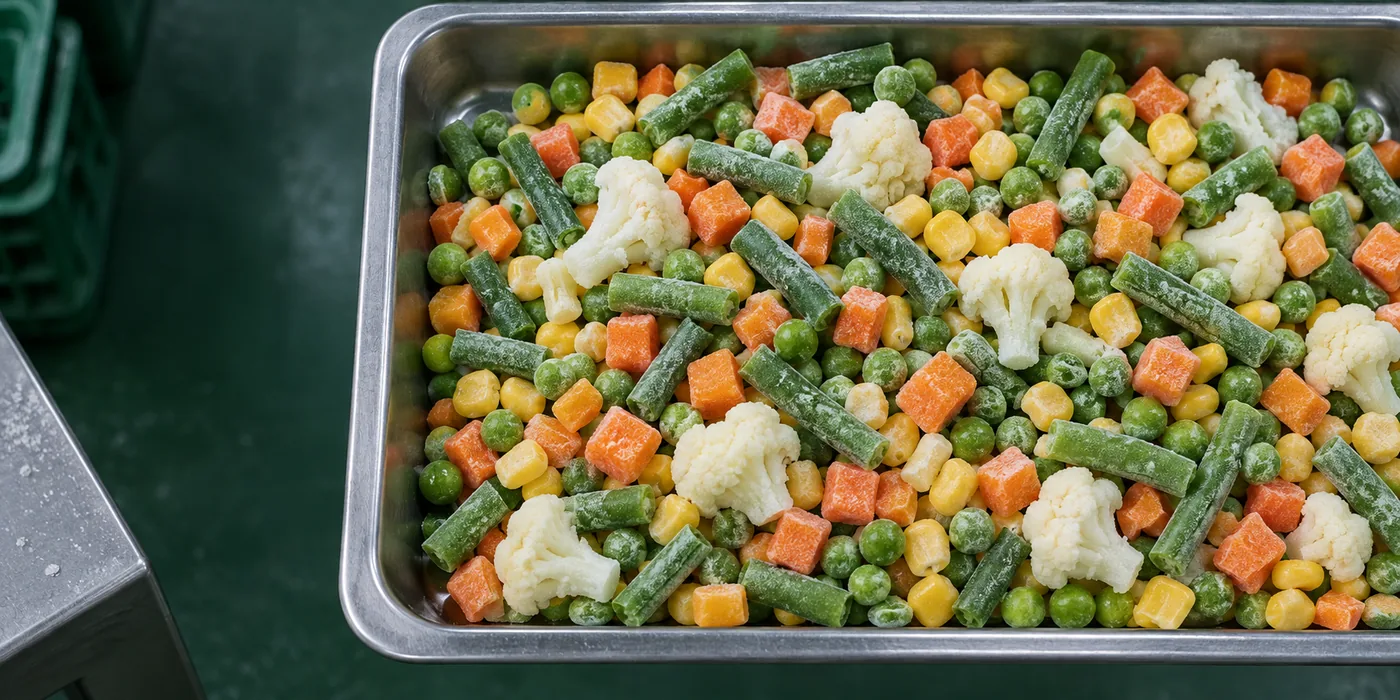
Define the five-way ratio by mass
Write the denominator before discussing the result. A 20% pea target normally means pea mass divided by the total mass of the five classified vegetables on the agreed sample basis. Five equal weights of unlike vegetables will not produce five equal counts of pieces. A cauliflower floret may occupy far more visible area and weigh many times as much as a pea, while a cup of small kernels can appear dense even when its mass share is ordinary. Camera angle, frost and the open face of a bag make a visual judgment even less reliable.
For a transparent illustration, imagine a properly sorted 1,000 g sample containing 200 g of each component. The record is 20% each by mass. It is entirely possible to count far fewer cauliflower florets than peas in that same sample. That does not change the five mass fractions. Conversely, a photo showing roughly equal numbers of visible pieces does not prove equal mass. The example is arithmetic, not a claim about a lot we supplied.

The component definitions deserve as much care as the number. Does a carrot sliver count as carrot? Is a detached cauliflower stem a cauliflower piece, a fine, or a defect? Which vegetable receives a combined pea-and-corn cluster? If the parties sort differently, the resulting percentages differ even when they start with the same physical sample. Agree the classification rules and acceptable piece forms before comparing laboratories or rejecting a shipment.
Ask for the actual recipe basis if the blend is custom. "20% each" may be written against raw component input, finished packed mass or a declared edible-component subtotal. These bases are often close, but they are not interchangeable if there is free ice, a glaze, broken material or documented yield loss between input and packing. A buyer who receives a component sheet should know whether the five declared masses sum to the packed net weight or to a pre-processing charge. This avoids arguing over a percentage while the parties are dividing by different totals.

Frozen condition also changes how a sample can be separated. Loose IQF pieces may be easy to sort while hard frozen, but agglomerates, surface ice or partial thawing can obscure boundaries. Thawing can release water, and discarding that water without an agreed basis changes the denominator. The most useful specification identifies whether the components are sorted frozen or thawed, whether surface glaze or free liquid is handled separately, and how combined or broken pieces are counted. It does not need an elaborate laboratory protocol for every routine check, but it needs enough detail that two competent people would measure the same thing.
The USDA frozen mixed vegetable inspection instructions illustrate why sample preparation matters: for the inspection covered by that document, material from containers is combined and the basic vegetables are separated and weighed. That is a useful methodological reference, not a universal tolerance or an automatic rule for a buyer's individual bag. Contract terms and the actual intended application still control the purchasing decision.
Separate the production recipe from a bag or hopper sample
There are at least four different questions hidden in the phrase "Is the blend 20/20/20/20/20?" First, did production charge the correct mass of each component? Second, was the material mixed and packed so the finished lot has the intended overall composition? Third, does an individual bag fall within whatever pack-level variation was agreed? Fourth, does a processor's use-stage portion from a hopper deliver the composition its recipe needs? One record cannot answer all four.

The input mass sheet addresses the first question. It should identify each component and its lot, net charged mass, the calculation basis and any rework. It is evidence of formulation. It does not, by itself, show how the blend was distributed into bags or through a customer hopper. A later composite or systematic pack sample addresses distribution at a broader level. A single bag has a different sampling unit. A small cup drawn from an outlet is narrower still.
Frozen particles do not all travel alike. Differences in piece size, shape, surface frost, density and the way material enters a chute can create local segregation during transfers or vibration. The direction and size of any shift depend on the real equipment and handling route, so it would be misleading to assert a fixed pattern such as "the florets always come first." In a bag, larger pieces can be visually prominent at one face while smaller pieces occupy spaces behind them. At a hopper, discharge over time may change what a small portion contains. These are mechanisms to test, not diagnoses that can be made from one photo.
Keep identities attached to observations. Record the supplier lot and production run, the bag or bulk container identifier, where in the packing sequence the sample came from, and whether the hopper sample was drawn at filling, mid-discharge or near the end. Add any transport vibration, tipping, rehandling or customer-side blending step that could alter distribution. Without this chain, a true difference between positions can be mistaken for a laboratory error, or a customer handling effect can be attributed to the supplier's recipe.
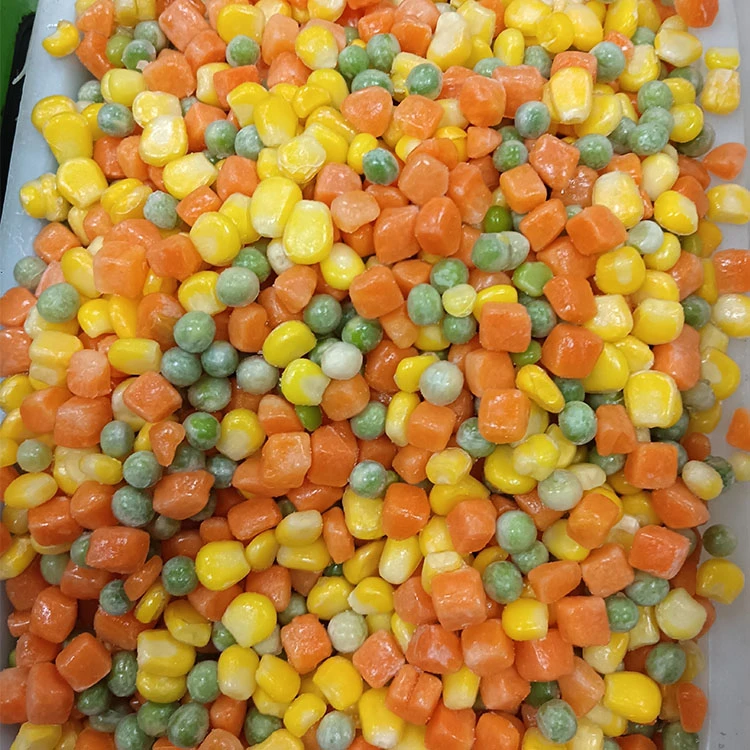
Bag format is part of this chain. A 1 kg bag that is emptied in one charge has a different application risk from a 10 kg bag that is sampled repeatedly through a small opening. Opening orientation and whether the bag is poured, scooped or tipped into a hopper also matter. A useful complaint record describes the actual dispensing action, not simply the product after someone has manually rearranged it for a photograph. This gives the supplier and buyer a common reconstruction of what the process consumed.
Our industrial frozen vegetable guidance treats cut, size and application behavior as purchasing variables. For a five-way blend, those variables belong next to the target mass fractions. If one application pumps through a small inlet and another meters from a bulk hopper, the same nominal blend may require different attention to particle size and local portion consistency.
Sort and weigh a sample on one declared basis
The most defensible first check is simple to describe: take a sample under a recorded plan, separate the five components using written classification rules, weigh each component, and calculate each mass fraction against the declared total. In practice, every step requires discipline. A sample taken only from the visible top of a large bag may overrepresent pieces that are easy to see or reach. A handful from a hopper after a stop may describe a local stagnant zone rather than normal flow. A laboratory subsample drawn from an already segregated container may carry that bias forward.
Set the sample unit and increment pattern before seeing the result. For a shipment-level question, select bags or locations across the identified lot. For a hopper question, take portions at defined discharge stages with a consistent outlet and collection method. Keep increments separate until the decision requires pooling. Pooling is valuable when the question is a broader mean; it destroys the position information needed to diagnose segregation. The GreenLand quality inspection and sampling discussion provides related context, while the actual number of increments and acceptance rule should be settled for the contract and risk level.
Handle fines deliberately. Small carrot fragments, loose pea skins and broken florets should not silently disappear during sorting. Set a rule for each category, or report them as a separate fraction. Likewise, weigh any free ice or separated liquid according to the agreed method rather than allowing one operator to include it and another to discard it. If the purpose is edible-component composition, document the treatment of material that is not one of the five vegetables. The aim is a denominator that can be reconstructed.
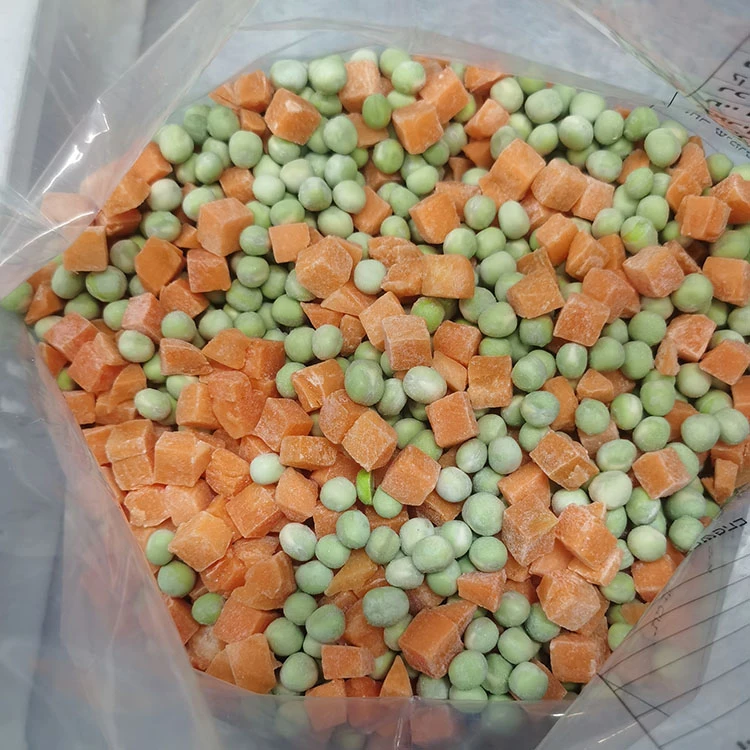
Check the arithmetic and retain the raw masses. For example, if a defined 1,000 g sorted sample yields 180 g peas, 210 g corn, 205 g carrots, 195 g green beans and 210 g cauliflower, the five fractions are 18%, 21%, 20.5%, 19.5% and 21%. Those numbers are an illustrative calculation only. The important question is whether this sample represents the unit to which the contract's tolerance applies. Repeating the same calculation on a better sampling plan may give a different picture; that is precisely why the plan comes before the conclusion.
Where an independent laboratory is involved, send a sealed duplicate or a documented split from the same collected material. Two laboratories that receive different handfuls cannot distinguish analytical disagreement from sampling variation. A retained duplicate also helps when a component boundary is disputed: each party can review the classification of small green-bean fragments or cauliflower stems. If a destructive sort is performed, photographs of the original sample and the sorted component piles, together with raw weights, make the result auditable without turning the photograph into the quantitative test.
The Eurachem guide on uncertainty from sampling is a reminder that sampling contributes its own variation. A precise balance cannot repair a sample drawn from the wrong place. When a dispute is material, compare the observed spread among increments with the spread expected from the agreed collection and sorting method. Do not compress all variation into a single "lab result."
Use time and position samples to test segregation
When the lot-level formulation record looks plausible but use-stage samples differ, run a small, controlled time-and-position investigation along the actual route. The objective is to locate where the composition changes. A practical starting map is the blender discharge, early and late bags, after transport or tipping, hopper top or outlet, and start, middle and end of customer discharge. It is not necessary to sample every point forever; the first diagnostic run tells the team where to narrow the routine control.
Take comparable increments and label them before sorting. Keep sample masses large enough for the largest vegetable pieces to be meaningfully represented. A tiny cup can swing dramatically when one floret enters it. The appropriate increment size depends on particle geometry and the purchasing decision, so no universal gram figure should be copied from another commodity. For each increment, record the five sorted masses and any fines or ice fraction under the same method. If the application uses a dosing cup, include a sample at that real use-stage scale as well as broader samples.

Interpret the sequence rather than only its average. Suppose three hopper increments yield visible differences while their pooled mass fractions are close to the target. The blend may have acceptable overall composition but still pose a dosing problem for a process that uses each small increment without remixing. If the early, middle and late increments are similar but all are far from the target, an input, classification or lot-level issue is more plausible. If bags at the pack line are consistent but customer hopper portions vary after tipping, investigate the transfer and rehandling path. These are conditional interpretations; actual decisions require the measured record.
Preserve the sample trail. A simple table with columns for lot, bag, stage, time, sample mass, each vegetable mass and handling event is usually more informative than a collage of bags. Take photographs to illustrate component form or unusual agglomeration, but do not use a photograph as a substitute for sorted mass. If two parties investigate the same complaint, send both the raw data and the collection plan so they can evaluate the same decision level.
This test is particularly useful where a processor meters the frozen blend directly into meals or kettle batches. An average of 20% per component describes the whole blend. Check how much of each component reaches the recipe in one dosing interval. Discuss the local use-stage requirement openly so the supplier can propose a suitable cut range, packing or handling approach rather than being judged against an unstated target.
Set a tolerance at the right decision level
"20% each" is a target, not a complete acceptance clause. The contract needs to say what variation is acceptable, at what unit and under what sampling method. A lot-level composite limit, an individual bag limit and a hopper-portion limit control different risks. Applying a lot-level average to every handful would create avoidable failures; applying only a pooled average to a portion-critical application could conceal a real performance issue.
For inspection and specification details, see Composite Samples vs Individual Packs: What Frozen-Food Testing Can Miss.
Build the tolerance from use and evidence. For a processor that blends many bags into a large kettle, the broader aggregate may be the decisive unit, provided the loading method reliably averages the material. For a line dosing one bag into each kit, pack-level limits may matter. For a hopper that dispenses small meal portions continuously, time-based local consistency may be the operative measure. Define both target and permitted spread in mass fractions, the number and location of samples, and the rule for an inconclusive or borderline result. Have quality and purchasing agree this before the shipment.

A sensible dispute rule also specifies when an expanded sample is taken. One outside result from a small increment may trigger investigation, whereas several systematic results outside a lot-level limit may justify a different action. The rule should say who collects the expanded sample, whether it is drawn from unopened packs, how many locations are represented and whether the parties witness the sort. This is a commercial decision rather than a tolerance borrowed from a public inspection manual. Defining it while both sides are calm is easier than improvising after production is interrupted.
Consider whether every component needs the same band. Large cauliflower pieces create greater small-sample variation than peas. A technically justified plan may use different practical expectations for different components or require larger samples for the large-piece component. That is a contract and application decision, not something an inspection guide can settle on behalf of every buyer. Also identify whether a deviation triggers rejection, rework, more sampling or an application trial. The response should be proportional to the risk.
If the purchase is a custom blend, ask for a trial run of the actual cut sizes and packing format. The commercial specification should describe each component, cut, expected mass ratio, packaging unit, storage condition, sample basis and action if the result falls outside the agreed rule. Avoid promising that a bag can be visually certified at receiving. A weighed and classified sample is the evidence for a mass-ratio clause.
Turn the findings into a repeatable purchasing specification
After the diagnostic run, convert the lesson into a short specification and evidence package. Include the input recipe or order formulation, approved component and cut descriptions, agreed ratio basis, pack format, lot identity and the exact unit on which compliance is judged. Add the sample collection and sorting rules, including what happens to fines, agglomerates and free ice or liquid. Specify how results will be reported: raw component masses alongside the calculated percentages, not percentages alone.
For a repeat order, request evidence matched to the risk. A standard lot might need an approved formulation and routine pack checks. A portion-sensitive application may need a documented hopper or dosing trial and a handling instruction. A complaint investigation should preserve the affected bag, location and timing, because those details can disappear when a sample is pooled. This is more useful to a factory than a vague requirement to "improve mixing."

Review the agreement after the first commercial run. If the buyer's application averages many bags, a rigid limit on a very small individual sample may create cost without protecting the product. If individual portions visibly matter, a lot average alone may be too permissive. Use the first production and application data to adjust the sample unit and frequency in writing. Keep the target composition stable while making the control method fit the real process.
We can discuss a five-way frozen vegetable specification around your component cuts, pack size and point of use. Send us the intended application, the unit that matters for acceptance and any measured differences you have already seen. As a frozen vegetable supplier, we can then review a practical sample and quotation scope with your team; we would not claim a distribution guarantee from a photograph or an illustrative calculation.
Questions buyers ask
Does a bag that looks heavy on cauliflower fail a 20% blend specification? Not by appearance alone. First determine whether the clause applies to each bag and whether it is by mass. Then collect and sort a defined sample. A large floret can dominate the visible surface while contributing a normal mass share.
Can a correct production recipe still cause a hopper complaint? Yes. Input masses establish the formulation, while transfer, vibration and discharge can affect the composition of local portions. Compare early, middle and late outlet increments with the corresponding pack and lot records to locate the change.
Should we pool all samples before weighing? Pooling can answer a broader-average question. Keep time or position increments separate when the purpose is to detect segregation. Decide the pooling rule before sampling so it follows the acceptance unit.
What should accompany a claim that the blend is equal-part? Ask for the five component definitions, target mass basis, the relevant sampling unit, a classification and weighing method, and an agreed tolerance. That package turns a marketing phrase into a testable purchasing requirement.
Sources: USDA mixed vegetable inspection instructions and Eurachem sampling uncertainty guide. Their methods inform the discussion within their stated scopes; all numeric examples above are illustrative.
For inspection and specification details, see A COA Result at the Limit: Rounding, Uncertainty and the Agreed Decision Rule.
Source frozen vegetables with GreenLand-food
GreenLand-food manufactures frozen vegetables in China. We fill factory-direct wholesale orders for importers, food manufacturers, foodservice distributors, and private-label programs.
Tell us how you'll use frozen vegetables and where you need delivery. We'll review the product form and specification with you, then confirm packing, quantity, private-label details and requested documents.