


How Free-Flowing Is an IQF Lot? Test Clumps Against the Actual Dosing Task
Sep 29, 2026
Leave a message
Research This Article & Topic with AI
Verify key claims, compare reliable sources, and explore GreenLand-food's practical frozen food knowledge.
Article details and research questions are prepared in the links. Sign-in or sending may be required.

The useful evaluation defines the product and pack, documents any allowed handling, compares the candidate with a suitable reference, and records portion variation, interruptions and breakage in the intended task.
This article uses IQF sweet corn kernels as the main example. Their size and shape make a visual clump check useful, while their whole-kernel presentation makes mechanical damage relevant. The approach can be adapted to peas, diced carrots or fruit, but each form needs its own feeder geometry, temperature and acceptance method. A small retail pour and a continuous industrial filling run answer different questions. Neither can be replaced by the sentence "easy to separate" on a specification sheet.
GreenLand-food's frozen corn kernel page identifies a free-flowing frozen condition among the product attributes we discuss with buyers. The method below is a proposed buyer and QA trial, not a claim that GreenLand has measured a particular batch with these endpoints. Before adopting it in a purchase agreement, the parties should confirm the exact kernel form, packing and receiving equipment.
Define free flow against the buyer dosing task
Start with the equipment and the required output. A filling line may feed kernels from a tote into a hopper and then into timed portion cups. A foodservice kitchen may pour from a 2.5 kg bag into a cooking vessel. A retail customer may want a pouch that releases one serving without striking the pack. Each task imposes a different inlet size, feed path, rate and allowable preparation. If the buyer says only that the lot must be "free-flowing," supplier and receiver may each imagine a different test and both believe the specification has been met.

Feeder geometry defines which clumps can interrupt dosing.
Write the operating question in measurable language: can this IQF corn pass through the specified feeder, after the agreed frozen storage and handling, while maintaining portion-weight spread and avoiding more than the permitted stoppages? State the target portion or throughput, the trial duration, the number of consecutive portions, the product temperature at the trial, and what the operator may do before loading. These values belong to the buyer's line and the validated method. There is no universal impact force, shake count or percentage of clumps that fits all IQF vegetables.
The product form is part of the task. Whole corn kernels, cut cob pieces, small peas and broccoli florets have different shapes and interlocking behavior. A hopper that handles round peas may bridge with irregular florets even if both products appear separate on a tray. A corn program with more broken or crushed pieces may generate fines that alter flow and make the portioning result less consistent. The GreenLand frozen-vegetable product-form guide provides the wider format context. For the actual trial, keep variety, kernel size band, pack mass and lot identity aligned with the intended order.
For ingredient format details, see Frozen Corn Kernels vs Corn on the Cob vs Cob Segments.
Separate the trial outcome from the commercial tolerance. A line may continue running but produce too much variation between portions. Another may achieve precise portions only because an operator repeatedly breaks clumps or slows the feed. A useful definition of performance considers both the finished portion and the effort required to obtain it. State whether an intervention counts as a failure, a recoverable event or a separate observation. A line test should not reward a poor frozen lot merely because operators worked around it.
The broad GreenLand industrial-vegetable article already explains why clump size and pour behavior should be specified. Here the narrower decision is whether the offered corn can perform the buyer's exact dosing duty. The application should choose the test rather than the availability of a convenient bench method choosing the application.
The buyer should also distinguish a qualification trial from a routine receiving check. A full production feeder may be available during supplier onboarding but impractical for every incoming container. If a simpler frozen pour or screen test is later used at receiving, first compare it with actual line outcomes across representative lots. The quick check is useful only if it catches the conditions that have caused real dosing trouble. Retain the application trial as the reference for method changes and for disputes where a bench pass conflicts with line performance.
Observe sealed packs and frozen clumps before disturbance
Inspect the delivered condition before opening or squeezing the pack. Record lot and carton codes, where the selected pack sat on the pallet, outer-carton damage, seal integrity and visible surface ice. Photograph each unopened sample. If one carton is wet or torn while adjacent cartons are sound, preserve that distinction. A receiving note that says only "some clumps found" discards location and condition evidence that may later help separate packing, handling or distribution questions.
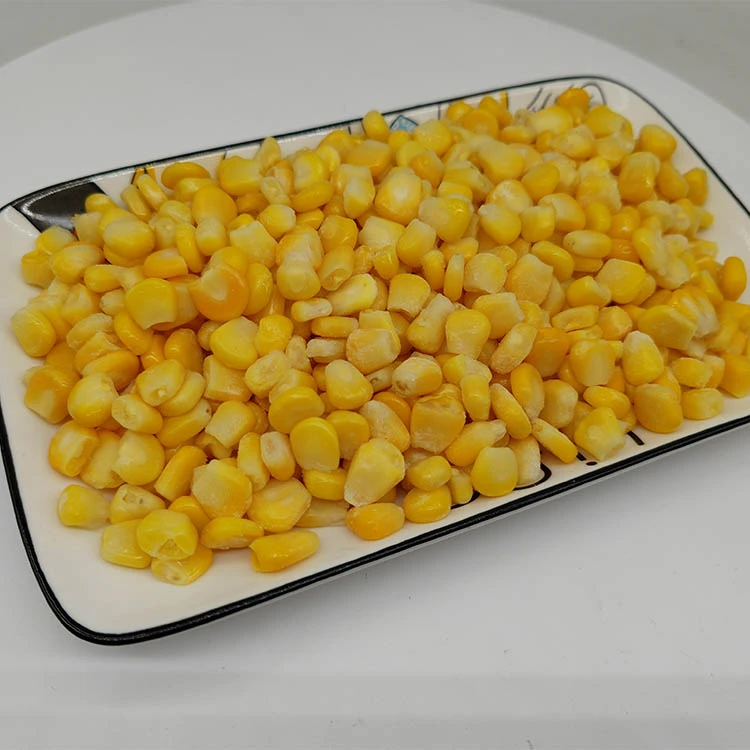
GreenLand corn kernels show the product form before an agreed frozen-state trial.
Keep the sample frozen during the initial check. A warming bag may loosen temporarily, then become sticky as water redistributes. Test temperature should therefore be specified and verified as product condition, not assumed from a freezer display alone. The Codex code of practice for quick-frozen foods treats cold-chain control as the basis for quick-frozen food handling. A portioning trial is not permission to warm the lot until it pours better.
Describe the starting state in terms that different observers can repeat. Distinguish loose ice from product pieces stuck together. Record whether a cluster separates under the agreed gentle action, remains fused, contains visible ice bridges, or includes broken kernels. Weighing or measuring clumps can help, but the definition must be decided before inspecting the offered lot. A heavy mass of intact kernels may block a feeder while loose frost does not; the two observations need different lines in the record.
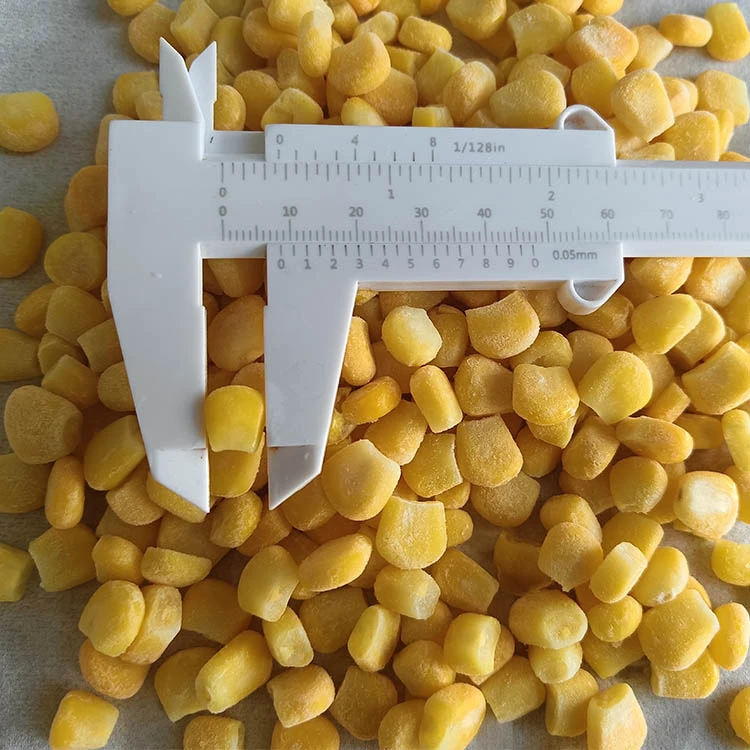
Piece dimensions and integrity can influence passage through a feeder.
Choose packs and carton positions under a representative sampling plan. One attractive top bag does not characterize a pallet, while a single damaged corner carton should not silently become the whole-lot average. If the product is packed in 10 kg cartons with inner bags, name whether the sampling unit is a carton, an inner bag or a portion from one bag. Keep the identities through the later feeder test. Laboratory repeats from one bag cannot substitute for independent packs when the buyer needs to know between-pack consistency.
Photographs of frozen kernels can help agree on form, size and whether pieces are distinct. The pictured GreenLand corn kernels are product evidence, not an inspection result for the candidate lot in the proposed method. Size and integrity matter because a feeder is a physical passage, yet an image alone cannot predict its performance. The test must retain the link between the real pack condition and the outcome on the line.
Recording the initial state protects both sides of a claim. If the material is already fused inside sealed inner bags, a line operator did not create that fusion by opening them. If the product arrived separate but formed clusters after a long wait in a warmer preparation room, the receiving trial does not describe the as-delivered frozen condition. Time stamps, product-temperature checks and pack identity make the difference visible. The record should state which observations were made before opening, after permitted preparation and after the feeder, rather than treating all photographs as interchangeable evidence.
Apply one documented preparation sequence
Many factories take routine steps before feeding frozen ingredients: moving a carton from storage, opening the inner pack, transferring it to a tote, or applying an approved gentle separation action. The trial should reproduce the permitted sequence rather than either pampering the sample or imposing an arbitrary beating test. Record the equipment, sequence, exposure time and product temperature. If the buyer's normal procedure excludes any breakup step, the trial should not add one merely to improve flow.

A retained untouched portion helps separate the initial state from the handling effect.
Keep an untouched retain from the same selected pack when practical. Compare its initial clump condition with the portion that passes through the handling sequence. This shows whether apparent improvement came from an approved routine step. Record the residual fused mass after the step and the new damage it caused. A sharp reduction in clump mass accompanied by many cracked kernels may be unacceptable in a visible retail mix even though the material now travels through the feeder.
Control the sequence sufficiently to make comparison possible. "Shake until loose" gives different operators different endpoints and allows the test method to absorb any level of clumping. A defined handling action should be selected by the plant's technical team and applied to the reference and candidate in the same way. It can be described by equipment and elapsed operation rather than a universal impact force. The method should also record a deviation when an operator has to add extra intervention; it should not simply restart the trial with a better-looking sample.
The XMSD IQF vegetable guide discusses a frozen-state clump test and a downstream application trial. That is useful background, but its specific categories are not a contract for another product or feeder. Likewise, numeric acceptance lines on a supplier page are seller-specific. The buyer should qualify its own preparation and dosing method against the product's end use, then write the agreed version into the inspection plan.
For ingredient format details, see Why the Same Scoop of IQF Vegetables Can Weigh Differently: Bulk Density and Dosing.
Avoid treating the preparation sequence as a disguised cold-chain investigation. A cluster that responds to gentle handling has a different practical effect from a solid fused block, but neither response reveals one unique cause. Production dewatering, freezing, packing, compression and temperature exposure may each contribute. The initial photographs and temperature records should remain available for the separate investigation if the product condition is abnormal.
If the buyer normally transfers corn into intermediate totes, trial that transfer as a defined part of the process. A shallow tote and a deep compacted tote may change the contact load on kernels. The product may also sit for different periods before filling. Report these conditions instead of calling the whole sequence "normal handling." A supplier can then quote the correct pack format and the buyer can see whether a change in work practice would solve the interruption without weakening a product specification that still matters at delivery.
Measure portion variation, interruptions and product damage
Run the product through the relevant feeder under its normal validated configuration, or through a representative test rig whose limits are clear. Record the mass of consecutive portions, not just the combined output. Ten portions that average the requested mass can still include several underfilled and overfilled packs. The line may also stop between readings, require operator tapping, leave material in a hopper corner, or damage kernels. These events belong in the performance record alongside portion weights.

A mean portion weight can hide an interruption or underfilled portion.
Before comparing suppliers, agree on what a stoppage means and when the clock starts and ends. A momentary hesitation that clears without intervention may have a different cost from a blockage requiring the hopper to be opened. Record throughput, interruption count and duration, operator actions and the amount of material left behind. For a retail packer, observe both the product entering the portion cup and the final sealed pouch weight. If check-weighing rejects packs, report that loss; an apparently stable average after rejects does not describe the process input.
Measure breakage on an agreed basis before and after the trial. A frozen kernel damaged by an aggressive feeder may create visible fragments, release water during cooking and affect the blend's appearance. The purpose is to distinguish poor incoming integrity from damage introduced by the buyer's handling. If the candidate has many broken pieces before the trial, the feeder alone cannot be blamed for all fines afterward. If the accepted reference also breaks under the same configuration, the line setting may be part of the problem. These alternatives require paired evidence rather than an immediate supplier conclusion.
Cooked performance can be a final endpoint when the ingredient enters a finished food. Portion weights can be consistent while a few fused masses heat or distribute unevenly. A standard preparation of representative portions can reveal texture or distribution issues that a frozen tray misses. The test should follow the buyer's validated food preparation or manufacturing process. Frozen sweet corn in GreenLand's standard product program is supplied as a not-ready-to-eat ingredient; a line trial does not replace the appropriate cooking step for the finished product.
Use individual pack identity to interpret variation. If one carton repeatedly bridges and others feed smoothly, review its location, pack condition and temperature trace. If every pack shows wide portion spread, compare the feeder design, kernel-size distribution and operating condition. A summary such as "95% free flowing" cannot by itself tell a production manager how often a filler will pause or how much overfill is needed to compensate. The actual task turns a descriptive property into a usable decision.
Compare the candidate with a controlled reference
A buyer-approved reference lot or current production ingredient gives the trial a practical benchmark. Store and condition the candidate and reference alike, use the same product form and pack size where possible, and run them through the same feeder setup. Where the reference has a different kernel size or moisture condition, state that difference and interpret the comparison cautiously. A reference from another product form may show what the machine can handle, but it is not a fair direct lot-to-lot acceptance comparison.

Match feeder conditions for a useful candidate and reference comparison.
Order and carryover can affect the result. If the line is cold and clean for the first material but warmer or coated with ice for the second, the test conditions changed. The technical team can alternate materials, clean or stabilize the rig between runs, and record the order. Do not select only the best run for each lot. A useful report lists all runs, rejected portions, interventions and deviations, allowing the buyer to see whether performance is robust or depends on a favorable setup.
An illustrative comparison might show a candidate and accepted reference with similar overall output mass, yet the candidate requires three feed interruptions while the reference runs continuously. Another candidate might deliver accurate portions but generate more broken kernels. These are possible patterns, not measured GreenLand results. The purchasing decision depends on which effect matters to the actual plant: downtime, giveaway, visual integrity, cooking uniformity or a combination agreed in advance.
When the sample size is small, treat the trial as a qualification screen. A few bags can reveal an obvious equipment problem or a promising form, but may not establish the probability of interruption across a season's production. The production lot, pack positions, natural crop variation and maintenance state can change the observed rate. A standing specification should define representative sampling and a periodic check schedule, with technical review when the ingredient, equipment or packing changes.
The JBT description of fluidized IQF freezing helps explain why separate pieces are an intended output of one common process route. It does not prove that every cluster found at receiving came from a freezer fault. Paired application tests and shipment evidence are needed before attributing a cause or changing a supplier's process specification.
Reference selection deserves care. A long-approved sample held in storage may itself have changed, while a freshly opened pack from current production may better describe normal line performance. Document its production date, storage history and repeated handling. If the accepted reference needs replacement, bridge it against the old record and version the acceptance basis. Otherwise an apparent supplier change could actually be a change in the comparator. This issue is especially important when a visual "golden sample" is used alongside the feeder results.
Write an acceptance and investigation rule without inventing cause
Turn the trial into a short written agreement: identify the corn form and packing, define the frozen sampling condition, name the allowed preparation, describe the feeder or surrogate, and list the outputs that will be recorded. The acceptance lines should correspond to the buyer's production need and the test's repeatability. "No large clumps" is too vague unless "large," the handling step and the sample basis are defined. A mass-only clump limit may need a separate blockage criterion if a small awkward cluster can bridge a narrow throat.

A failed dosing trial triggers the agreed decision and a separate cause investigation.
Keep the commercial decision separate from a root-cause investigation. If the lot fails its agreed dosing test, the buyer may hold, rework under an approved procedure, divert to an application that can use it, or reject it according to the contract and food-safety controls. Determining why the condition arose requires the initial pack photographs, production and packing records, sample positions, seal status and cold-chain evidence. A clump alone does not prove thawing and refreezing, identify the party responsible or establish a pathogen event. It is a reason to look, not a complete diagnosis.
If abnormal packaging, wet cartons, off-odors after controlled preparation, missing traceability or temperature evidence accompanies the clumps, use the designated QA hold and investigation process. Do not rely on a favorable pour result to clear a separate food-safety concern. Conversely, a food-safety test result does not demonstrate that the ingredient will feed correctly in a filling line. The two decision systems answer different questions and require different evidence.
Ask for the sample and document set that makes the method usable: sealed cartons from representative lot positions, the agreed frozen product form and size band, packing details, a current specification, temperature and traceability records, and the buyer's feeder constraints. We can help a purchasing team align the IQF corn offer with those inputs and discuss a trial sample. A useful free-flow specification describes the real task well enough that receiving QA and production staff can reach the same conclusion from the same lot.
The final record should identify who can change that method. A new hopper throat, faster filling rate, different corn size band or new inner-bag mass can make the old qualification less predictive even when the supplier and the words on the contract have not changed. Production should notify purchasing and QA before treating the old trial as a standing guarantee. Repeating a focused comparison under the changed condition is a smaller effort than discovering during a full shift that an approved ingredient no longer feeds reliably. Keep the prior method version with the sample and lot records so a later claim can be judged against the equipment and conditions that were actually agreed.
Source Frozen Corn Kernels with GreenLand-food
GreenLand-food manufactures frozen corn kernels in China. We fill factory-direct wholesale orders for importers, food manufacturers, distributors and private-label programs.
Send the product form, specification, packing, quantity, application, destination, private-label needs and requested documents for a matched offer.