


Are Lingonberries Related to Cranberries?
Sep 24, 2026
Leave a message
Research This Article & Topic with AI
Verify key claims, compare reliable sources, and explore GreenLand-food's practical frozen food knowledge.
Article details and research questions are prepared in the links. Sign-in or sending may be required.
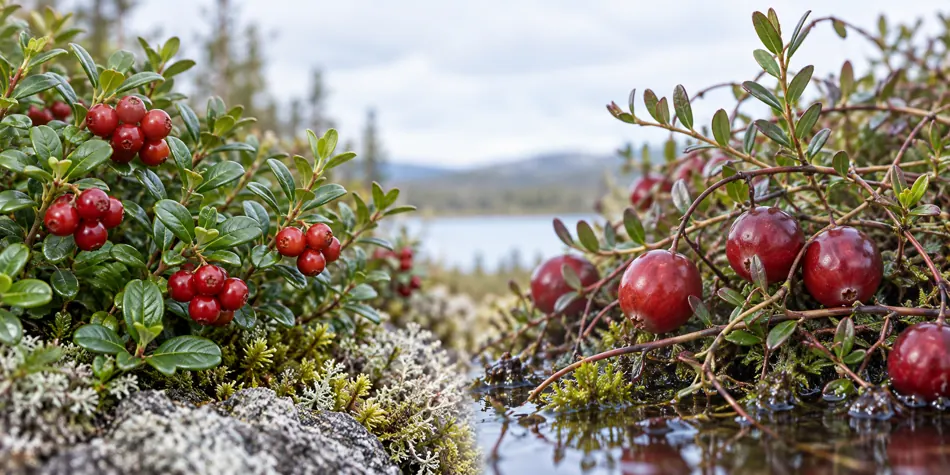
How closely lingonberries and cranberries are related
The shared genus Vaccinium places lingonberries and cranberries among blueberries, bilberries and several other berries. That relationship is closer than simply having the same red color or acid taste. Oregon State University Extension identifies lingonberry as closely related to cranberry and blueberry. The family connection helps explain why both fruits have small leaves, tart fruit and a history in cool climate food traditions. It does not mean the fruit can carry the same ingredient declaration or meet the same size specification. Species identity is the key distinction for trade.
Vaccinium vitis-idaea is the lingonberry. The large-fruited American cranberry used in much commercial cranberry supply is Vaccinium macrocarpon. In Europe and other northern regions, Vaccinium oxycoccos is also called cranberry. A comparison therefore needs to say which cranberry is meant. A photo of a large red cranberry in a supermarket likely represents the American species, but a product name alone cannot prove it. The country of origin and botanical declaration on a supplier sheet help resolve that ambiguity. If a buyer's formula or label is species specific, request documentary confirmation rather than relying on a common name.
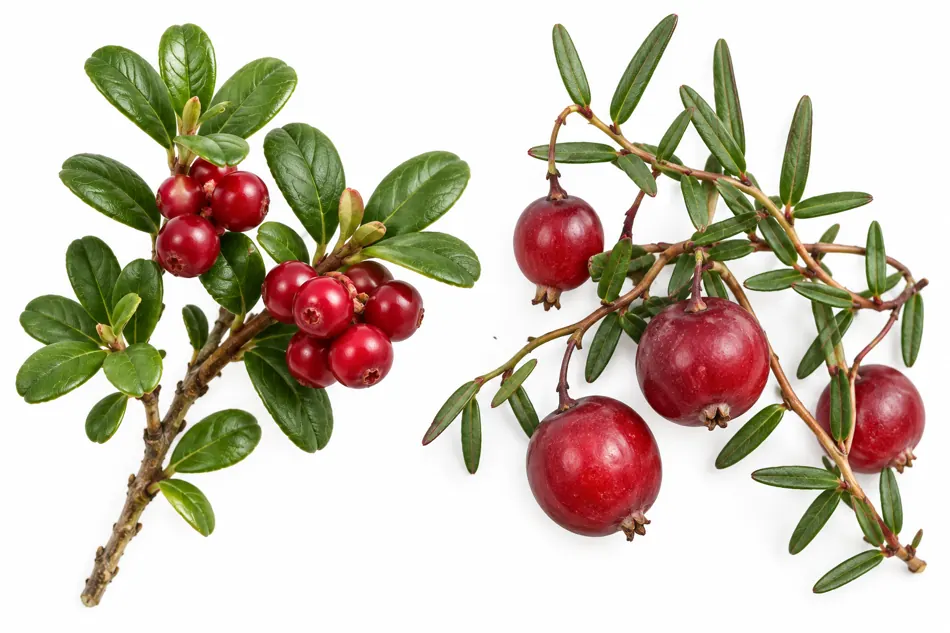
Lingonberry cranberry branches.
Both fruits are borne on low plants adapted to northern conditions, but their growth habits differ. Lingonberry is a small evergreen shrub found across boreal forest and tundra habitats. American cranberry is a trailing vine grown commercially in managed beds, which may be flooded for harvest. European bog cranberry has its own smaller fruit and ecology. These differences influence crop scale, harvest practices and the kind of raw material available for freezing. They do not by themselves set quality; crop, handling and processing must still be judged on the actual lot.
The relationship is useful in culinary brainstorming because both berries can contribute tart red-fruit character. It can also lead to lazy substitution. If a package claims lingonberry, using cranberry without the correct declaration would misidentify the ingredient even when consumers find the finished taste agreeable. The two species also behave differently as visible fruit pieces. A buyer can trial a substitution for a sauce or fruit preparation, but should revise the formula, label and acceptance specification if the fruit changes. A botanical cousin is an option to test, not an automatic equivalent.
The family tree also explains why a casual color based description is inadequate. Vaccinium includes blue and dark purple fruits as well as red ones, and unrelated red berries can resemble these fruits after cooking. A processor accepting frozen raw material should preserve a link between the declared species and the intake lot. That can include supplier identity, origin, harvest or processing date, batch code and receiving checks. The buyer may not need botanical laboratory testing for every shipment, but the document trail should allow a question about species or substitution to be investigated without guessing from a finished sauce.
The species behind the two trade names
Lingonberry has accumulated many regional names, including cowberry, foxberry and mountain cranberry. That last name is especially confusing when a purchaser searches for frozen cranberry. A quote that says only "mountain cranberry" leaves open whether the fruit is Vaccinium vitis-idaea or an actual cranberry species. We prefer to show lingonberry with the Latin name on the specification, carton and supporting records. For cranberry, name the target species where the application or market requires it. The basic document check prevents an avoidable sample mismatch and makes repeat orders more consistent.
The English word cranberry itself can cover more than one Vaccinium species. American cranberry is usually associated with the larger fruit used in North American juice, sauce and dried product industries. Bog or European cranberry can be smaller. A buyer comparing a lingonberry to "cranberry" in a consumer article may see size claims that depend on which cranberry is pictured. We use the actual candidate sample and declared species to set expectations. If size is a core product feature, specify a measured range or approved visual reference rather than importing an internet average into the purchase contract.

Whole frozen lingonberries in a bulk view.
Common names also change with language and channel. A Nordic preserve label may foreground lingonberry, while an ingredient distributor may use a translated regional term. A food manufacturer may request "red berry" for a blend, which is far too broad for sourcing. The safest first line of an RFQ names the exact fruit, species where relevant, frozen form, sugar status and intended product. The quote should reflect those words consistently. Clarifying names before a price comparison is faster than discovering at a production trial that the sample was a different Vaccinium fruit.
Traceability matters when the fruit is processed into puree or sauce because the whole berry shape no longer offers a visual clue. A supplier should connect the incoming raw material, processing batch and packed product. A purchaser may request supporting records or testing when authentication is important. The level of evidence follows the risk: a simple whole frozen fruit purchase needs clear identity and source records, while a high value labeled puree program may need more detailed verification. We do not infer botanical identity from red color, acid taste or a marketing photograph.
This naming control is particularly useful in multilingual purchasing. The same trade team may receive a Scandinavian recipe brief, an English import specification and a local supplier invoice. Each may use a different common name. A short bilingual or multilingual identity line attached to the scientific name can prevent the purchase order from drifting away from the approved sample. If a brand deliberately blends lingonberry and cranberry, state the two components and their intended proportions or allowable ranges. That is a different product from either single-fruit ingredient and should be priced, tested and labeled accordingly.
What size and color reveal
In the common comparison with American cranberry, lingonberries tend to be smaller. Oregon State University Extension describes lingonberries as pea sized and lists cranberry fruit among the larger red berries. The size difference is visible when both fruits are photographed at the same scale, but individual crop lots vary. A product image without a ruler or comparable container can exaggerate the difference. A buyer should inspect the actual sample and set a size range if dosing, visible inclusions or retail appearance require one.
Both fruits range through red tones as they mature. Lingonberries can be bright red to darker red; cranberries likewise show natural variation. Color alone cannot reliably identify the species because lighting, frost and processing change the appearance. For whole frozen fruit, an agreed color standard should focus on acceptable maturity and defects such as pale, brown, blackened or damaged berries. For a sauce or puree, test the color after cooking or blending with the other ingredients. A pleasing raw photo does not guarantee a stable finished shade.

Lingonberry cranberry size comparison.

Whole unsweetened frozen cranberries in a tray.
Size affects line performance. The smaller lingonberry can distribute as numerous distinct pieces in a fruit preparation or sauce. A larger cranberry can create a more visible bite or may need cutting, chopping or longer cooking in a filling. The right choice depends on the intended piece size and the equipment. A depositor designed for fine fruit inclusions may struggle with larger whole cranberries. Conversely, a buyer seeking an obvious whole fruit topping may prefer a larger berry. Record the acceptable whole berry rate and broken tolerance separately from the nominal size.
The visual comparison is most useful when both fruits are in the same condition. Compare frozen with frozen, not a thawed lingonberry beside a glossy fresh cranberry. Frost and surface ice can obscure skin color and make clumps look like oversized fruit. Allow a representative sample to be handled under a consistent inspection method, then note size, shape, color, separation and juice leakage. This provides a more reliable purchase reference than a generic botanical illustration or a single promotional image.
Do not let a single unusually large or small berry decide the grade. A representative sample covers natural variation within the lot. The inspection method can define a sieve or caliper range, percentage outside the agreed range and how damaged fruit is counted. For a sauce line the size distribution may matter little after cooking, but for a retail whole fruit bag it can affect how uniform the pack appears. The point is to measure the attribute that actually changes the finished product. A precise but irrelevant size rule can reject useful fruit while doing nothing for quality.
How acidity changes applications
Both lingonberries and cranberries taste tart, yet the exact acid, sweetness and aromatic balance differs by species, variety, maturity and preparation. Many comparisons describe lingonberry as somewhat less sharply sour than large American cranberry, but that should be treated as a broad culinary impression rather than a fixed specification. A particular lot may behave differently. Taste the offered fruit under the same conditions, and examine Brix and acidity when the finished formula is sensitive to those values. Brix alone does not predict perceived sweetness in such acidic fruit.
Lingonberry's small fruit identity works well in sauces, preserves, fruit preparations and toppings where the berry can remain recognizable. Its tartness can balance savory food, rich dairy or sweet bakery components. Cranberry is well established in sauces, beverage bases, bakery and dried products, with its bright acidity and larger fruit size shaping texture. Either can be used in a blend. The substitution question is practical: what happens to color, sweetness, viscosity, fruit pieces and cost at the intended dose? A small bench trial offers a better answer than a general claim that one berry is sweeter.

Lingonberry cranberry sauce.
Heat and sugar narrow some flavor differences while changing texture. In a heavily sweetened preserve, the berries may both produce an appealing red fruit note, but the piece size and residual aroma can still distinguish them. In a low sugar sauce, the acid profile becomes more obvious. In yogurt, dairy can soften sharpness; the interaction with base pH and color migration needs testing. In a baked filling, look at moisture release, set and post-bake color. A formulation should be judged after its actual processing and storage, not only from a raw berry tasting.
If a recipe was developed with cranberry and the team trials lingonberry, adjust gradually. Do not assume a fixed reduction in sugar because crop lots and cooking conditions vary. Start with equal fruit solids, keep the process constant, then compare acidity, sweetness and sensory character. Note the whole fruit count and distribution in a serving. The reverse swap can make fruit pieces larger and the acidity more pronounced. A documented trial lets the product developer explain the change to purchasing and marketing without reducing it to "similar red berries."
Another useful comparison is the target consumer's expectation. A product explicitly called lingonberry sauce may be judged for its smaller berry pieces and Nordic flavor association. A general red berry filling may allow wider substitution if sensory and label requirements permit it. The same ingredient can be commercially acceptable in one formula and disappointing in another. We ask buyers what the fruit is expected to contribute: named species identity, visible pieces, tartness, natural color, or price stability. The answer determines which attributes belong in the specification and which should be evaluated through a formulation trial.
Explore Frozen lingonberry supply for available forms and order details.
What freezing does to each berry
IQF freezing can preserve the berries as separate pieces for weighing, dosing and packing, but frozen condition must be maintained. Lingonberries and cranberries may both soften and release juice after thawing. The extent depends on raw material, freezing and cold-chain history. A frozen fruit specification should therefore define the product as received: free-flowing condition, acceptable clumps and surface ice, whole berry rate, broken fruit, stems, leaves and foreign matter. A berry that tastes suitable can still be difficult to use if it arrives as a solid block or with excess leakage.
For a visible fruit application, the buyer should inspect both frozen appearance and performance after the planned thaw or heat step. A retail bag may need stronger color and whole fruit consistency. A sauce plant may accept more broken but sound fruit if the approved grade permits it. Beverage processors may prioritize flavor, color and extraction yield over perfect shape. We discuss grade against those uses rather than presenting Grade A as the only useful option. Food safety, contamination control and traceability still apply to every grade.
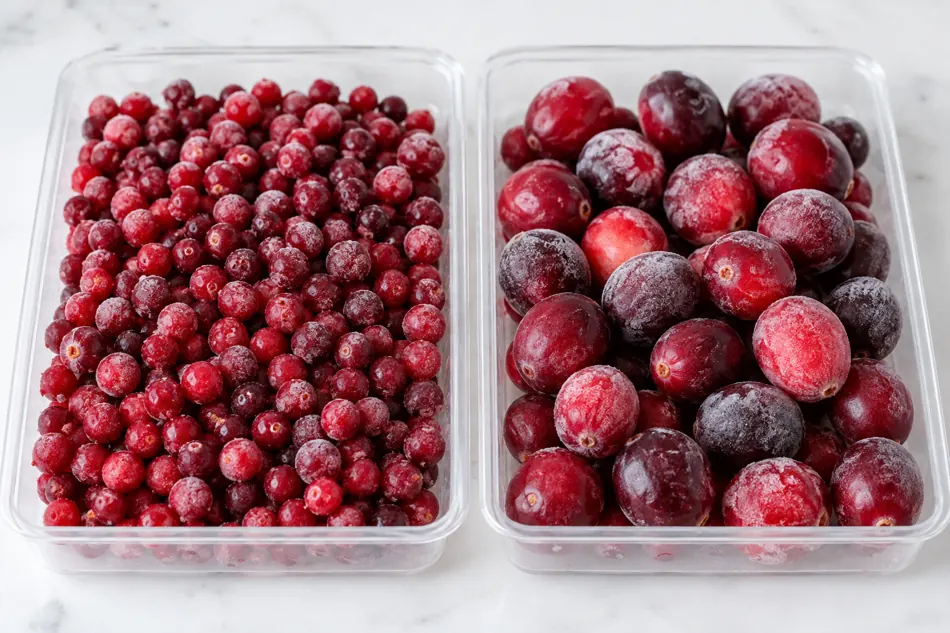
Frozen lingonberry cranberry forms.
Frozen supply also changes seasonality. A buyer can plan production beyond the fresh harvest, but must verify current inventory, crop origin, packed lot, shelf life and available volume. Lingonberry sourcing can differ from cranberry sourcing in both scale and origin. The order plan should state whether mixed containers, foodservice packs or retail private-label packs are required, and whether the two berries must ship together. Lead time should be confirmed against stock and packaging artwork rather than assumed from a catalog page.
For harvest and seasonality details, see When Are Cranberries in Season? Wet Harvest, Processing and Frozen Supply.
We keep frozen fruit at or below the temperature agreed in the product specification, commonly -18°C, through storage and shipment planning. At receiving, check temperature, carton integrity, signs of thaw and refreeze, lot markings and the condition of a representative sample. If an item is intended for a ready-to-eat use, the buyer's microbiological and process controls must suit that application; freezing is preservation, not sterilization. These decisions are relevant to either related berry and should be settled before a bulk order leaves the origin port.
Avoid interpreting every frosted surface as a defect. A light frost can occur during normal frozen handling, while heavy ice, fused blocks and leaked juice deserve investigation. Agree on the inspection conditions before a shipment arrives: how cartons are sampled, whether fruit is evaluated while frozen, and how a thawed test is performed. That makes a claim more objective. It also separates an issue with the fruit from an issue with temperature exposure during storage, consolidation or transport. Both lingonberries and cranberries benefit from this discipline, though their skin and size can make the visual evidence appear different.
How to specify the right frozen fruit
Start by writing the species and use. "IQF frozen lingonberry, Vaccinium vitis-idaea, whole unsweetened fruit for sauce" is far more actionable than "red berry." A cranberry brief should identify the cranberry species when necessary and describe whether the order needs whole, sliced, chopped or puree form. Then add size, color, Brix or acidity target if relevant, whole berry rate, broken fruit and foreign matter tolerances, and the texture expected after processing. The specification must match an application; otherwise a supplier can meet a generic visual grade while missing the formula's needs.
Request a current representative sample of each candidate and test them side by side. Use the same thawing method, fruit solids, sugar addition, heat process and serving temperature. Photograph the result if piece size and color are important, and keep a written sensory comparison. A product developer can choose one fruit, the other or a blend based on that result. Purchasing can then request a quotation against a defined lot standard rather than comparing unlike offers. If the product name changes, review the finished ingredient declaration with the responsible label team.

Close view of frozen lingonberries.
Commercial confirmation includes packing format, carton weight, order quantity, destination, private-label needs and documents. Ask for a product specification and COA linked to the batch, together with the agreed microbiological or residue reports, certificate scope, packing list and invoice. The supplier should confirm any claimed certification against the actual facility and order. We coordinate frozen lingonberry and cranberry inquiries around form, grade, quality targets and cold-chain plan. The relationship between the fruits can inspire a formulation, but the buyer's final choice rests on a tested sample and a precise purchase description.
When comparing supplier offers, normalize the terms before comparing price per kilogram. One quote may include a smaller whole berry grade, another may allow more broken fruit, and a third may specify a different origin or pack size. Ask each supplier to respond to the same acceptance limits and planned shipment volume. If a candidate cannot meet one condition, decide whether the condition is critical to the finished product before changing it. The resulting quote comparison is more useful than a list of prices for berries that happen to share a genus.
Source frozen fruit with GreenLand-food
GreenLand-food is a professional frozen fruit supplier and manufacturer in China, providing factory-direct wholesale supply for importers, food manufacturers, foodservice distributors and private-label programs.
Send the product form, specification, packing, quantity, application, destination, private-label needs and requested documents. We will confirm the proposed lot and terms against your requirements.