


How to Use Mushroom Powder
Sep 24, 2026
Leave a message

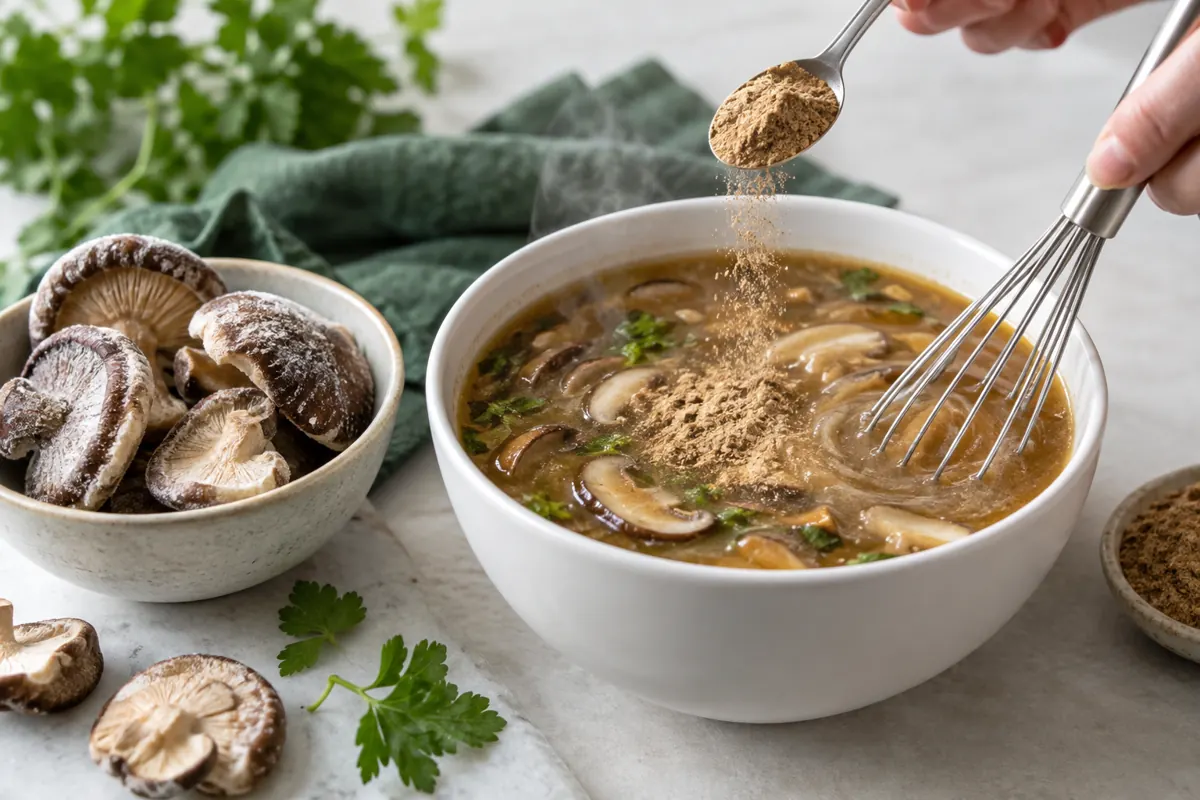
This guide covers both home use and the questions a foodservice or prepared-food buyer should ask. It also distinguishes powder from frozen mushroom pieces. They serve different jobs: powder disperses flavor through a base, while pieces provide shape and bite. GreenLand's verified frozen mushroom range is relevant to the latter; a powder requirement should be sourced and verified as its own ingredient rather than assumed to be part of that range.
What mushroom powder does in food
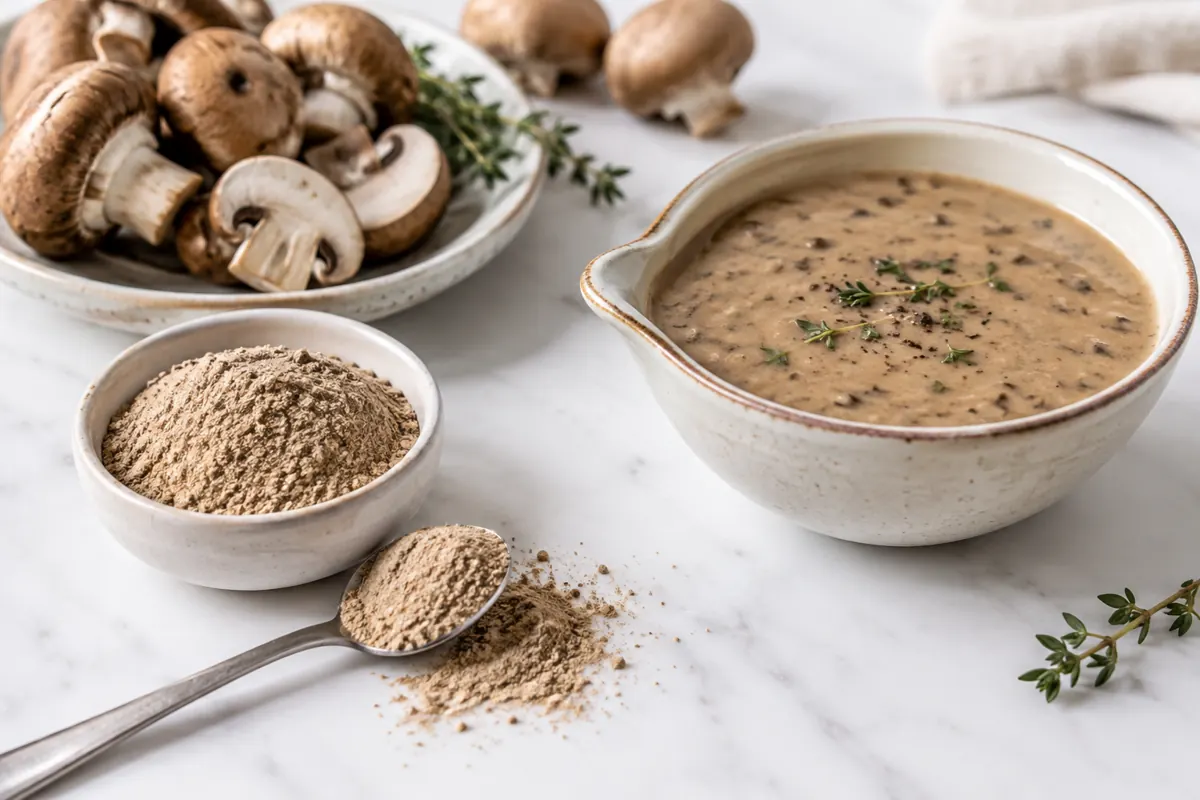
Mushroom powder spreads mushroom flavor through a dish. Dried mushrooms have had much of their water removed, so a small dry dose may give a noticeable savory contribution. The effect is not just "more umami." Species and processing can add earthy, nutty, smoky, or woody notes, and those notes can help or clash with a recipe. A light chicken broth, a dark beef sauce, and a vegetable snack seasoning each need a different target.
Powder is useful when visible mushroom pieces would be unwelcome. In a smooth soup or gravy, it can add depth without changing the cut or the bite. In a dry seasoning, it can distribute mushroom flavor over a surface. In a filling, it can reinforce a mushroom identity when the visible pieces alone are too mild. It is not a universal replacement for a whole mushroom, because it cannot provide the same texture or visual signal.
What mushroom powder does in food
Begin with a small measured amount, mix it thoroughly, cook or hydrate as the recipe requires, and taste the completed dish. The intensity of a powder varies widely. A porcini powder may be strong and earthy; a button mushroom powder may be gentler. Even powders with the same species name can differ because of raw material, drying conditions, roast notes, and storage. A fixed spoonful from one brand is not a reliable specification for another.
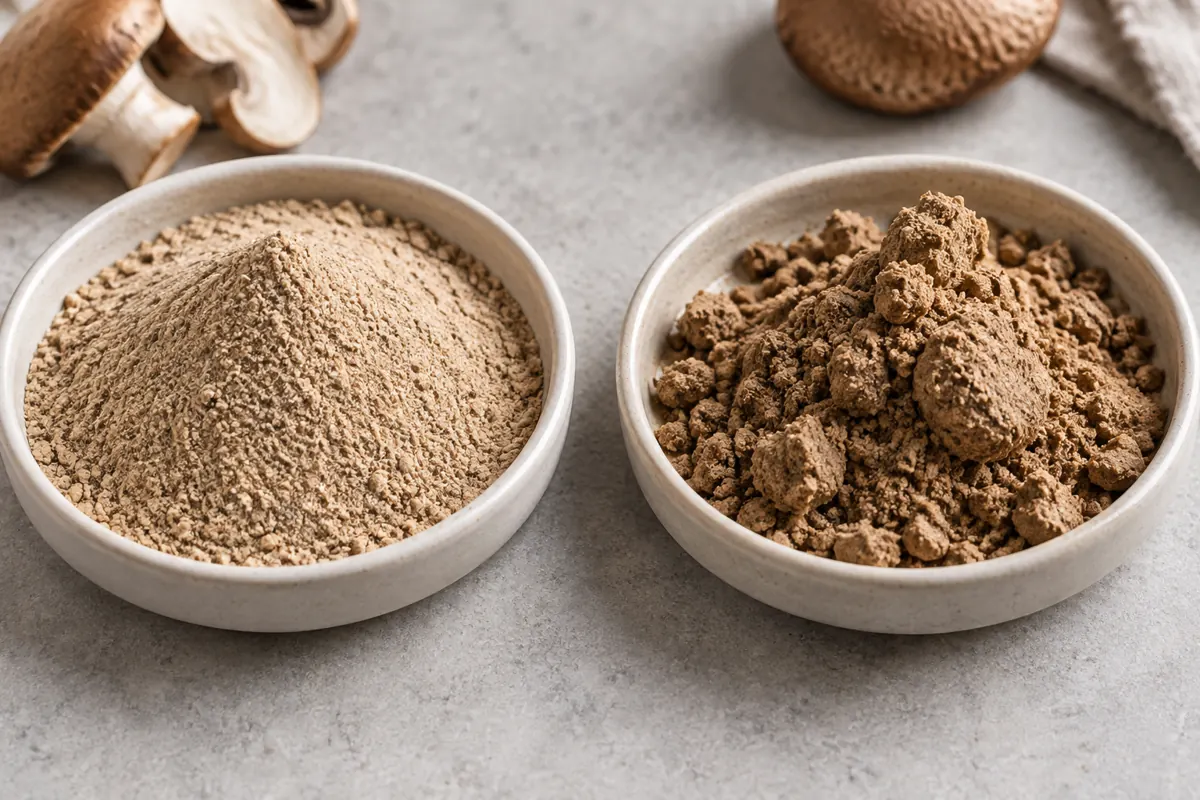
The powder can also change color and mouthfeel. Fine particles may darken a pale sauce or produce specks. Coarser particles can feel gritty if insufficiently hydrated or strained. A high inclusion level may thicken a liquid slightly or make a dry mix clump. These are formulation effects to observe in a pilot batch. The label "natural mushroom powder" does not tell you enough to predict them.
If a product is marketed as "mushroom seasoning," read its full ingredient list. It may contain salt, starch, yeast extract, sugar, carriers, or other flavorings. Such a blend can be useful, but its dose, sodium contribution, allergen controls, and label declaration differ from a pure powdered mushroom. A buyer should avoid comparing the two as if they were gram-for-gram substitutes.
In a home kitchen, start by adding a pinch to a pan sauce or soup, then increase gradually. For commercial production, set a trial range by weight, record the formula, and evaluate the finished product after the actual heat treatment and shelf-life conditions. The flavor observed in a warm test cup may change after freezing, reheating, or long hot holding.
Choose a powder by species and ingredient list
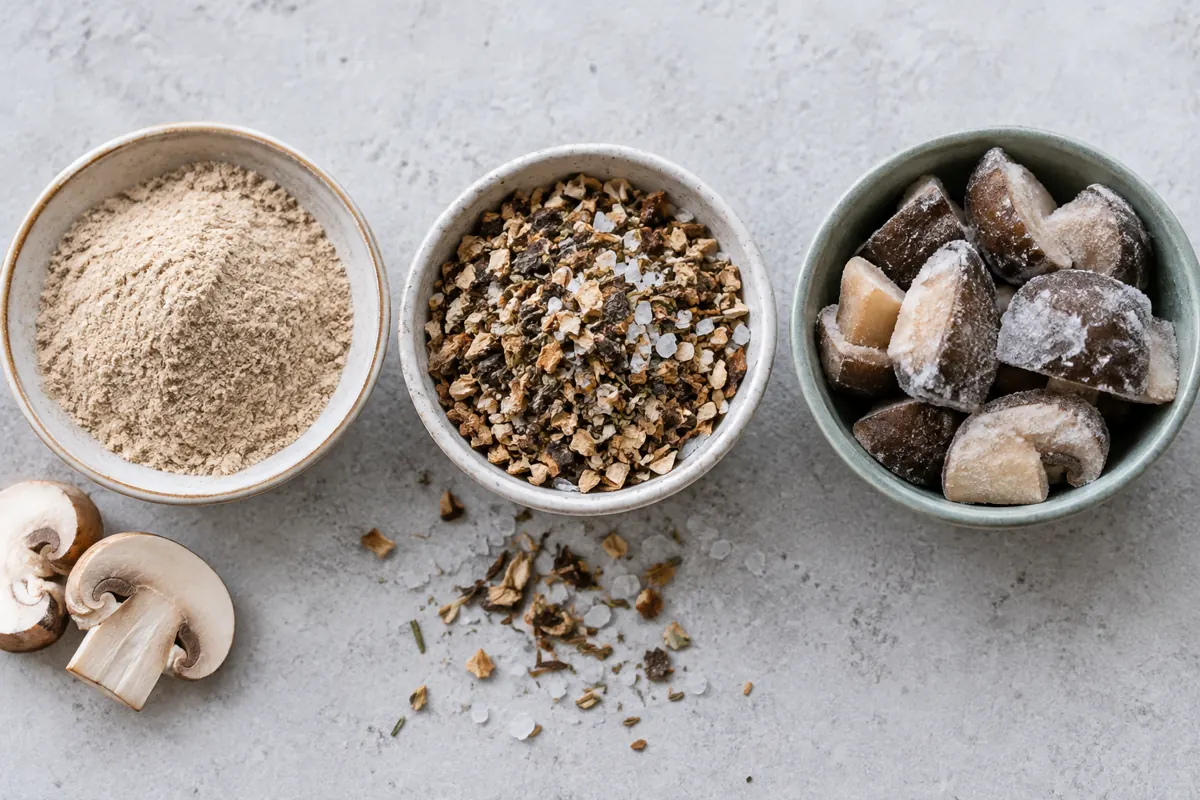
The species is the first choice. Porcini powder often brings a strong forest-like aroma. Shiitake powder can give a distinct savory, sometimes smoky profile. A cultivated button mushroom powder may be milder and easier to blend. A mixed powder can be useful, but ask what is in the mix and whether the ratio is controlled. An ingredient called only "mushroom powder" may be too vague for a product whose front label names a species.
Read the ingredient declaration before setting a dose. A pure powder should declare the mushroom ingredient; a seasoning blend may contain substantial salt or other carriers. If the material is sold as a stock or bouillon powder, the mushroom share may be small. Taste and compare at equal mushroom solids where feasible, not just equal total powder weight. That makes price comparisons more meaningful.
Choose a powder by species and ingredient list
Particle size affects both dispersal and perception. A very fine powder may blend smoothly but become airborne during weighing and transfer. A coarser powder may be less dusty yet visible in a pale sauce. Ask for a particle-size specification or sieve profile if appearance or equipment performance matters. A sample should be tested in the actual mixer, kettle, or dry-blending line, not only in a kitchen cup.
Color should fit the finished food. Dark porcini powder can deepen a gravy attractively but muddy a cream soup. A powder with a different cap-to-stem or species blend can vary in shade between lots. If a prepared food has a tight color standard, request a reference range and test the inclusion level after full processing. Keep the ingredient's natural variability in mind when setting limits.
For commercial buying, request microbiological, contaminant, moisture, and allergen information appropriate to the market and the product. Dry ingredients are not automatically sterile. Ask about drying method, origin, lot traceability, packaging barrier, shelf life, and storage conditions. If the powder is wild mushroom based, species identity and sourcing controls are particularly important. The supplier's documentation should support the ingredient declaration and any marketing claim.
At the small scale, freshness is the practical issue. Powder that smells flat, stale, or musty will not improve a sauce. Buy a quantity that can be used within the supplier's stated life, close the pack after each use, and store it as directed away from moisture. A pantry jar above a steamy stove is a poor place for a hygroscopic powder.
Add powder to soups, broths and sauces
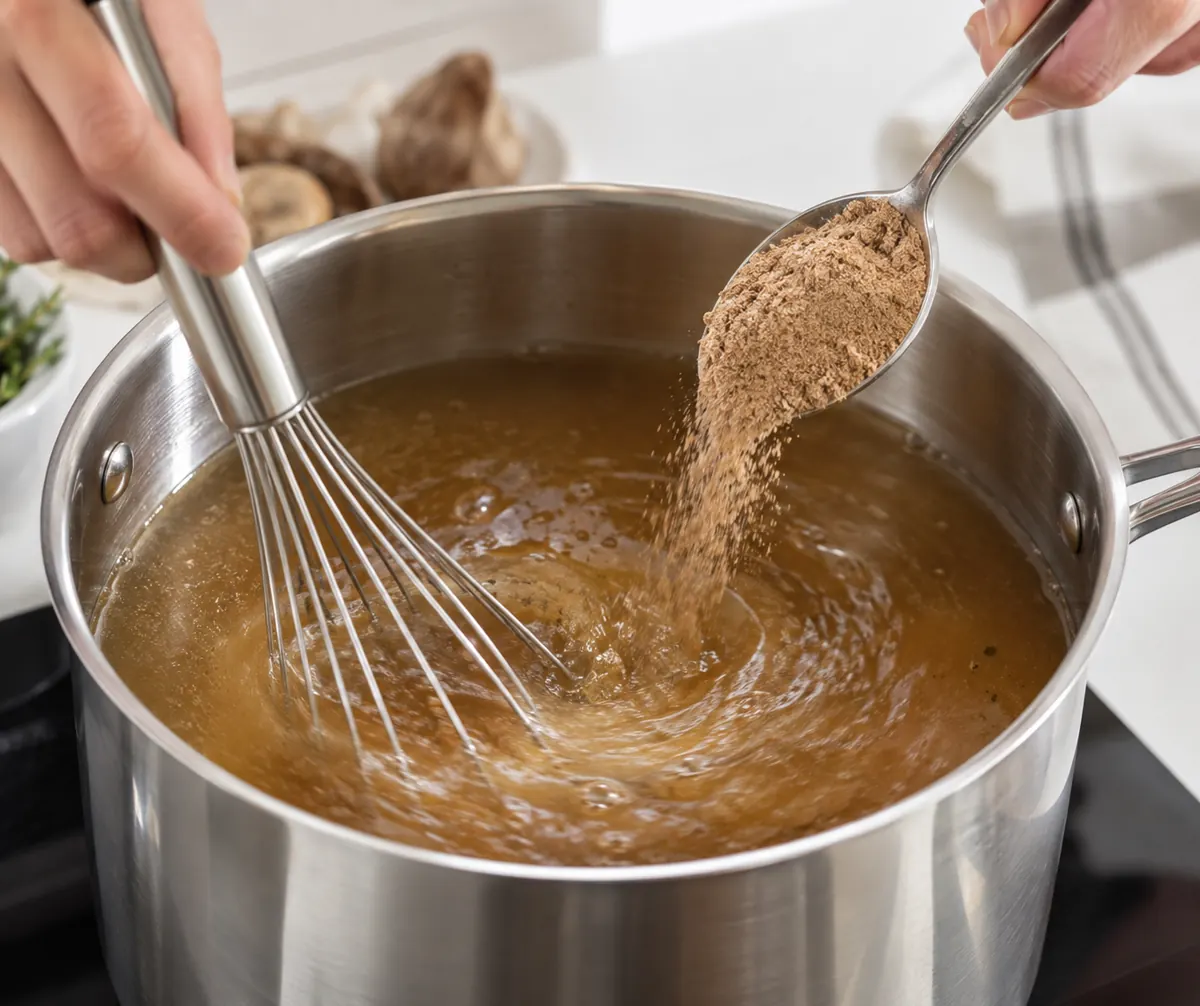
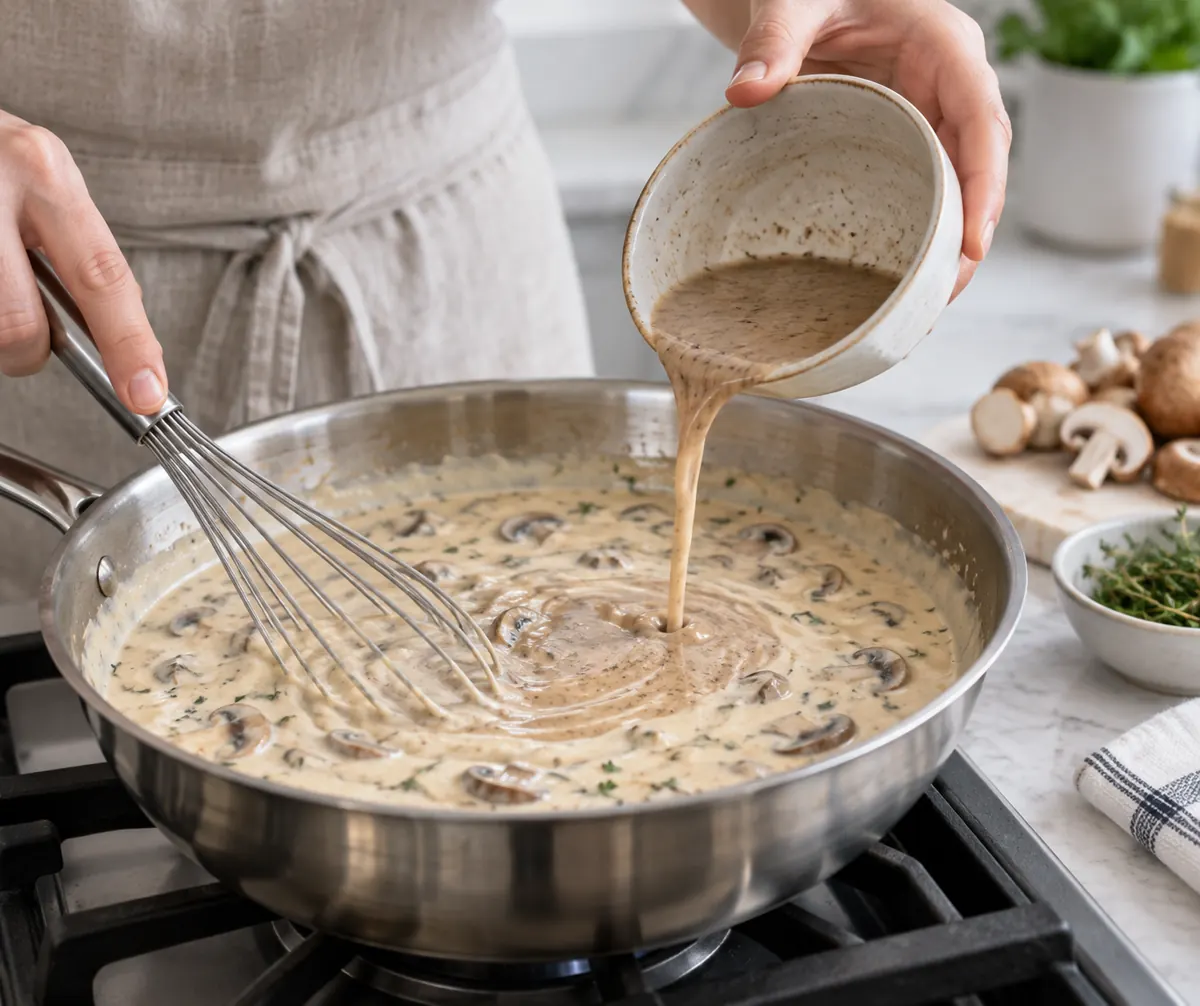
Soup is a natural application because liquid can hydrate the powder and distribute its flavor. Sprinkle a measured amount into a portion of warm liquid while whisking, then add that slurry to the pot. This helps prevent dry pockets and lumps. In a home kitchen, a few minutes of simmering may allow the flavor to integrate. In industrial production, the required hydration time and addition point should be established with the supplier and a process trial.
Add the powder early enough for its flavor to blend, but consider the recipe's heat treatment. Long cooking can soften some aromas and concentrate others as water evaporates. If the formula will be reduced, taste at the final volume rather than immediately after addition. Salt can also change the perception of mushroom savoriness. When the powder is part of a salted seasoning blend, account for its salt before adding the usual amount to the soup.
Add powder to soups, broths and sauces
In a clear broth, appearance may be an issue. Fine particles can make the broth cloudy or leave sediment. If clarity matters, test a lower dose, a different particle size, or an infusion followed by straining, if that process suits the ingredient and food-safety plan. A creamy soup is more forgiving of fine particles and darker color. The same powder can therefore perform very differently in two recipes that are both called soup.
For sauces, build a small comparison series. Make a control without powder and two or three measured doses with powder. Hold the sauces at the intended service temperature and evaluate aroma, color, viscosity, and aftertaste. In a cream sauce, high levels of porcini powder may create a dull grey-brown shade; in a brown sauce, that shade may be desirable. A dose chosen by tasting the dry powder will not predict either result.
Powder can be paired with pieces. A small powder dose can create a continuous mushroom background while sautéed or frozen pieces provide the visible ingredient. In a sauce, add the powder to the liquid phase and handle the pieces according to their own cooking needs. If frozen pieces release moisture, adjust the sauce reduction or thickener after measuring that contribution. Do not expect the powder to absorb all released liquid or replace a controlled cook step.
For a commercial soup or sauce, revisit the formula after freezing, thawing, and reheating if those are part of distribution. Flavor intensity and sediment can change. Test at the actual serving concentration. A concentrated base diluted at the customer site needs a different powder dose than a ready-to-eat sauce. Record the addition point, mixing speed, hold time, and endpoint so that pilot success can be repeated at production scale.
Use it in seasoning and prepared foods
Mushroom powder can be blended into rubs, snack seasonings, breading, noodle seasoning, fillings, and prepared meals. It can add savory depth without a visible mushroom cut. In a dry blend, mix it with the other powders using a process that controls segregation. Ingredients with very different particle sizes and densities can separate during transport, leaving the first and last portions of a batch tasting different.
For a snack coating, check adhesion. A fine powder may dust off a dry surface unless the product has an appropriate oil or binder phase. A high load may look grey or produce a dusty mouthfeel. Taste the coated food after packaging and storage, not only at the seasoning tumbler. In a rub, consider whether high heat will scorch or mute the mushroom note. Apply the powder in a trial that reflects the actual cooking method.
Use it in seasoning and prepared foods
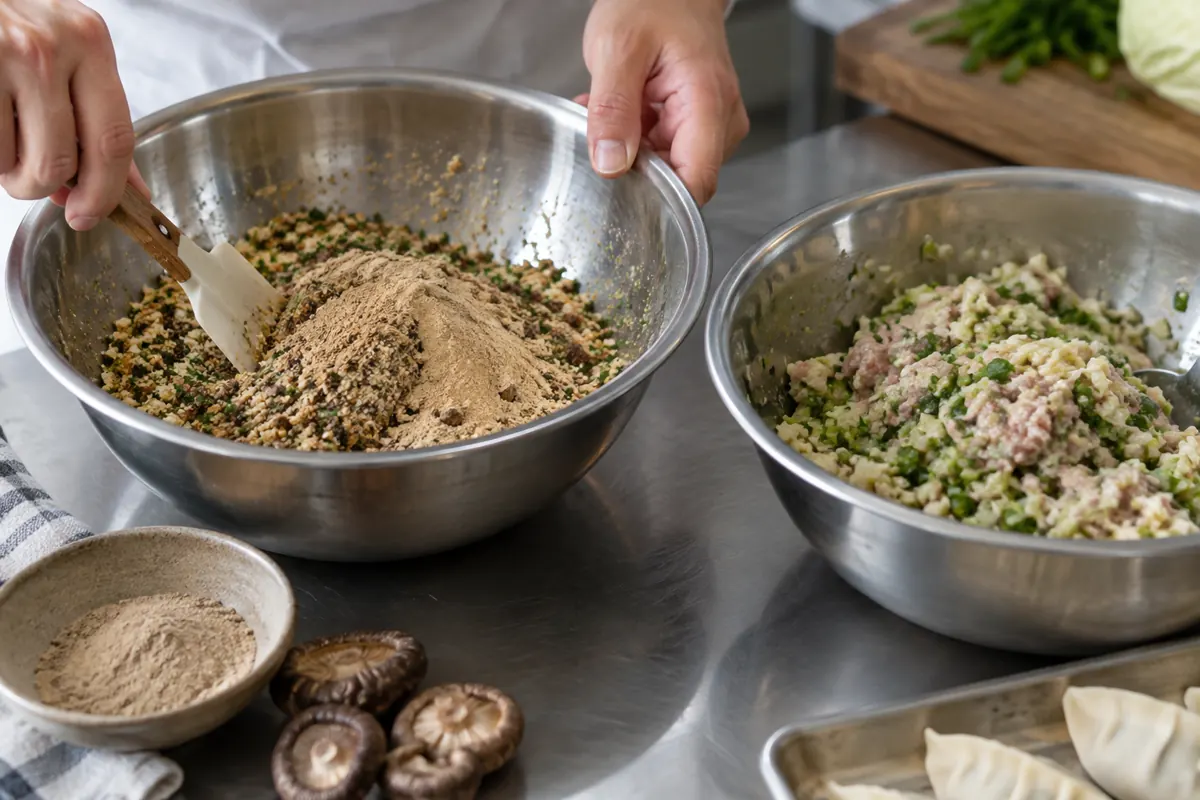
For a filling, add the powder where it can hydrate and distribute. A dry pocket can feel gritty. A measured slurry or premix may be easier to control than adding powder directly to a thick meat or vegetable mass. If visible mushroom pieces are also present, define the job of each. The powder provides a background note; the pieces contribute appearance and texture. That split makes it easier to optimize cost and quality independently.
Prepared foods need consistent ingredient statements. If the powder contains salt, yeast extract, or other ingredients, the finished product's label must account for them under the destination market's rules. If a front-of-pack claim says "porcini," verify the powder species and the amount of actual porcini in the formulation. A generic mushroom blend should not be used to support a specific species claim without evidence.
Dry powder is also a dust-handling issue in larger plants. Transfer methods, operator controls, and cleaning procedures should fit the ingredient and equipment. Humidity may cause caking in hoppers or at dosing points. A small kitchen trial that hand-stirs ten grams will not expose those production issues. Scale the trial in stages and retain samples from beginning, middle, and end of the run to check distribution.
Some products need the savory effect without a prominent mushroom identity. A modest inclusion may round out a vegetable broth or meat alternative. Others are intended to taste clearly of mushrooms. Set the sensory target first, then choose species and dose. If the powder has an unpleasant bitter or burnt aftertaste at the amount needed, switching source or combining with visible mushrooms may work better than simply adding more.
Manage dispersal, moisture and color
Moisture is the main practical enemy of a dry powder. Use clean, dry tools, close the package quickly, and follow the supplier's storage conditions. A lumpy bag may reflect humidity exposure, although some powders naturally cake more readily than others. Do not break up a wet or suspect powder and assume it is fine. Check odor, package integrity, and the operation's acceptance criteria before use.
In liquid applications, make a slurry when direct sprinkling causes clumps. Use a small amount of recipe liquid, whisk or shear to wet the particles, then add to the main batch. If the process uses high-shear mixing, confirm whether the powder foams or changes viscosity. A more finely milled product may disperse faster but produce more dust during weighing. The optimal particle size depends on both eating quality and plant handling.
Manage dispersal, moisture and color
Color should be measured after hydration and heat treatment. Dry powder can look light and become noticeably darker in water or fat. A cream soup, pale pasta sauce, or white filling may need a lower dose or a different species. A dark gravy has more room for color variation. Use the same lighting and serving temperature when comparing samples. An accepted color in a small beaker may look different in a retail tray.
Sediment is another variable. A powder may appear evenly mixed while hot but settle in a bottled sauce or chilled broth. Run a hold test and, if relevant, a freeze-thaw test. Shake the package only if that is a realistic consumer instruction; a restaurant sauce on a hot line should stay acceptable under its normal service pattern. The goal is a formula that performs without special handling the customer was never told to do.
Measure dosage by weight for repeatability. Spoons vary with grind and packing, and a tablespoon of a fluffy fine powder may weigh far less than a dense coarse one. A production recipe should state the target grams per kilogram or percentage by weight, along with an allowed range. Record sensory results against those measured doses. That record makes supplier comparisons possible when a source changes.
If the ingredient is a seasoning blend, monitor salt and other carriers as part of the formula. Increasing the blend for more mushroom flavor may over-salt the food. A pure powder can offer more control, but may cost more per unit or require a separate salt adjustment. The correct choice is a product-level calculation, not a rule that one type is always superior.
Powder versus frozen mushroom pieces
| Recipe need | Mushroom powder | Frozen mushroom pieces |
|---|---|---|
| Distributed flavor | Strong fit after dose and dispersal trial | Possible, but less uniform |
| Visible mushroom identity | Little or none | Clear slices or dices |
| Texture | Fine particles, potential grit | Recognizable bite, variable after thaw |
| Main process control | Moisture, particle size, mixing and sediment | Cut size, released water and cooked yield |
| Primary buyer document | Ingredient list and technical powder specification | Species, cut, pack and frozen product specification |
Powder and frozen pieces are complementary forms. Powder gives broad flavor distribution with little visible structure. Frozen slices or dices bring recognizable mushrooms and bite. A customer buying a mushroom soup may expect visible pieces even when powder supplies much of the aroma. A pizza topping needs pieces; powder alone cannot replace the topping. A smooth gravy may benefit from powder without requiring pieces at all.

GreenLand frozen button product sample

GreenLand frozen shiitake product sample
Frozen pieces contain their natural water. During cooking they may release some of it, so yield and texture need testing. Powder is dry and can absorb or thicken slightly once hydrated, but its behavior depends on grind and formulation. A recipe should balance those effects separately. Replacing 1 kg of frozen mushrooms with 1 kg of powder would be wildly inappropriate in most foods; their moisture, intensity, cost, and visual roles are different.
The specification questions differ too. For frozen pieces, a buyer asks about species, cut, size distribution, free-flowing condition, ice, pack format, and cooked yield. For powder, it asks about species, ingredient list, moisture, particle size, flavor intensity, microbial and contaminant limits, caking, and dispersal. Both need traceability and food-safety documentation. One supplier's capability in frozen mushrooms does not imply a verified powder product.
If the recipe uses both, build the formula in stages. First select the visible piece that gives the desired bite and appearance. Then add powder only if the flavor needs reinforcement. Alternatively, start with a smooth base and use a small piece inclusion for visual identity. Test the finished dish at its actual serving temperature and after any freezing or reheating cycle. This avoids paying for a strong powder that adds no noticeable value or adding pieces that disappear in the final process.
At GreenLand, our verified product pages cover frozen mushroom categories and particular frozen forms, including porcini and shiitake. A buyer looking for visible pieces can discuss cut and pack options for a recipe trial. A powder inquiry would need separate verification of product availability and specification; it should not be inferred from a frozen-mushroom listing. Clear separation of these forms protects the buyer from an incorrect quotation.
The choice may also be logistical. Powder is compact and shelf stable under its specified storage conditions; frozen pieces require frozen distribution and space. Frozen pieces may save fresh prep labor and provide a recognizable ingredient. Calculate value at the finished-food level, including dose, yield, sensory contribution, waste, handling, and customer expectation.
Specification and trial questions for buyers
Start the RFQ with the intended product: species or species blend, pure powder or seasoning mix, target flavor, color tolerance, particle-size range, pack, forecast volume, and destination market. Ask the supplier for the full ingredient statement and technical documents. If the material is wild sourced, request the species identification and origin controls. If it carries a claim such as organic or allergen-free, verify the supporting documentation for the exact lot and market.
Request a representative sample and set a repeatable trial. Weigh several doses into the real recipe, using the actual addition point and process temperature. Evaluate flavor, aroma, color, viscosity, sediment, and aftertaste at the point of consumption. If the product is frozen or shelf stable, test after its intended storage and reheat cycle. Record the dose, supplier lot, and result. A single spoon stirred into warm water is a useful first impression, not a complete application test.
Specification and trial questions for buyers
Ask how the powder is made and packed. Drying and milling affect flavor and particle size. A moisture-barrier pack, lot code, and shelf-life statement help maintain quality through distribution. Check whether an opened pack needs a shorter use window under your conditions. A supplier may offer multiple grinds; choose based on the actual equipment and eating quality, not only on the visual fineness of a sample.
For a prepared-food line, run a small scale-up trial to watch dosing accuracy, dust, caking, and batch uniformity. Take samples at different points in the run. If a dry blend segregates, change the mixing order or ingredient form and test again. If a sauce darkens after holding, adjust dose or source. Each problem should be resolved against a measurable product target rather than masked with extra seasoning.
Finally, compare commercial options on the cost of a successful finished batch. A stronger powder may need less material. A salted blend may simplify a home-style seasoning but complicate sodium targets. Frozen pieces may justify their cost through visible identity and bite. State what each ingredient must do, then buy the form that performs that job consistently.
Mushroom powder is most useful when the recipe needs distributed mushroom flavor. Add it in measured amounts, disperse it properly, and judge it after the full process. Use frozen pieces when the food needs recognizable mushrooms. If a product needs both flavor and texture, test the two forms together while keeping their specifications separate.
GreenLand lists a frozen mushroom category for buyers who need visible pieces. That page is a starting point for discussing frozen cuts; it is not evidence that a mushroom powder is offered.
Source frozen mushrooms with GreenLand-food
GreenLand-food is a professional frozen mushrooms supplier and manufacturer in China, providing factory-direct wholesale supply for importers, food manufacturers, foodservice distributors, and private-label programs.
Send the product form, specification, packing, quantity, application, destination, private-label needs, and requested documents.