


What to Do With Frozen Fruit: Uses Beyond Smoothies
Aug 28, 2026
Leave a message
What to Do With Frozen Fruit: Uses Beyond Smoothies
Choose the fruit state first-frozen, partly thawed, drained or thawed with its juice-then match that state to the recipe or production process.
Key takeaways
- Use fruit directly from frozen when cold and structure help the application.
- Partially thaw large pieces when a blender or knife needs less resistance.
- Thaw and drain for moisture-sensitive crusts, layers and batters.
- Keep the released juice for compote, jam, coulis and other formulas that count all fruit solids and liquid.
Start With the Fruit State, Not a Random Recipe List
What you should do with frozen fruit depends on the process that comes next. Use it directly from frozen for smoothies, sorbet, oatmeal, many muffins and drinks where cold temperature or firm pieces help. Partially thaw it when a weak blender, knife or portioning step needs less resistance. Thaw and drain it for moisture-sensitive crusts, layered desserts and garnishes. Thaw it and keep all the juice for jam, compote, coulis, sauce and formulas that count the entire fruit mass.
That four-way decision is more useful than memorizing twenty unrelated ideas. Frozen fruit releases juice as it thaws and becomes softer because freezing changes cell structure. In one recipe that juice is valuable flavor; in another it makes a lower crust soggy. The fruit has not changed its mind. The application has changed what "good performance" means.
If you only want quick ideas, make a smoothie, overnight oats, sorbet, compote, baked oatmeal, muffins, a cobbler, yogurt layers, pancakes with fruit sauce, popsicles, jam, coulis, barbecue sauce, salad dressing, flavored syrup or a frozen mocktail. The rest of this guide helps you choose the right fruit state and avoid the common moisture mistake in each use.
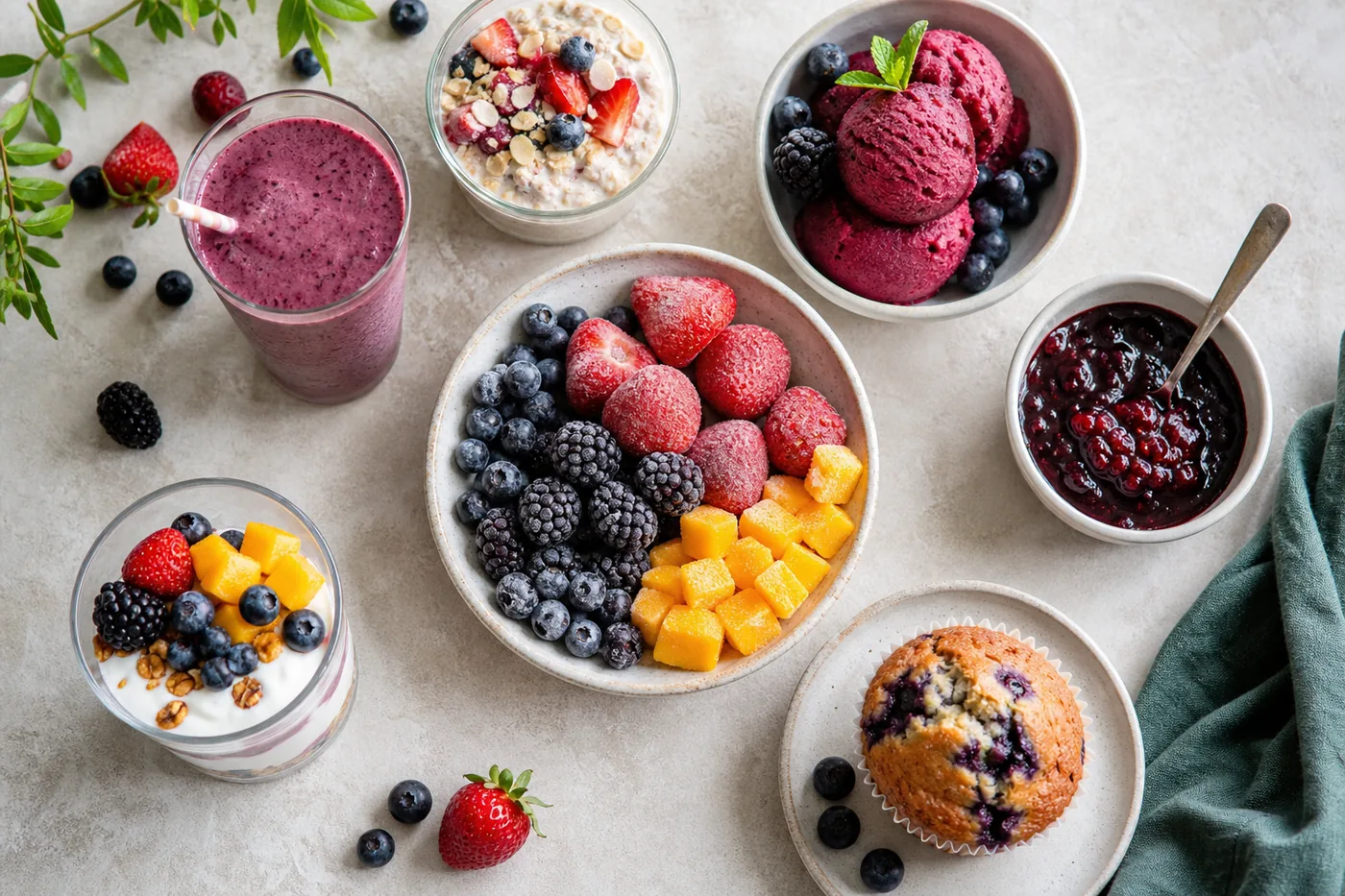
Quick Decision Table
| Use the fruit | Best for | Why it works | Main risk to control |
|---|---|---|---|
| Directly from frozen | Smoothies, sorbet, oatmeal, muffins, pancakes, drinks | Cold and firm pieces support texture and portioning | Large pieces, blender stalls and extra bake time |
| Partially thawed | Low-power blending, chopping, rustic desserts, hand portioning | Surface softens while the center stays cold | Leaving fruit warm too long |
| Fully thawed and drained | Lower-crust pies, layered cakes, parfait garnish, delicate batters | Removes some free liquid before assembly | Draining away flavor or changing measured yield |
| Fully thawed with juice | Jam, compote, coulis, syrup, sauce, fruit filling | Juice belongs in the cooked or measured fruit phase | Failing to count total fruit and juice in the formula |
| Pureed | Drinks, sorbet bases, dairy swirls, sauces, fillings | Uniform flavor and easy dosing | Treating puree like an equal weight of IQF pieces |
The table is a starting map. A blueberry muffin recipe may specify berries straight from the freezer so the batter does not turn purple before baking. A pie recipe may instruct you to cook the frozen fruit with starch, while another requires thawing and draining. Follow a tested recipe for the finished dish, especially when sugar, starch, pectin, acidity and heat treatment determine safety or set.
Uses That Work Best Directly From Frozen
Smoothies and Smoothie Bowls
Frozen fruit provides chill and body, so ice is usually unnecessary. Add liquid near the blades first, then soft ingredients and frozen fruit. Start with 1 cup liquid for about 1½ cups fruit and adjust in tablespoons. Mango and banana build body; berries add color and acidity; pineapple brightens tropical blends. The separate How to Make a Smoothie With Frozen Fruit guide in this publishing series covers blender order, no-banana options and texture corrections.
For application details, see How to Make a Smoothie With Frozen Fruit: Easy Recipe, Ratios and Fixes.
Smoothie bowls use less liquid and need a blender strong enough to move a dense mix. Stop and scrape instead of pouring in a large correction. If the fruit is heavily clumped, portioning becomes inaccurate and the blender load rises. At a cafe, fixed frozen packs and a weighed liquid dose produce a more repeatable result than scooping from an open bag by eye.
Blender Sorbet and Frozen Desserts
For quick sorbet, blend 2 cups frozen fruit with only 2 to 3 tablespoons liquid, optional sweetener and a little citrus. Pulse, tamp and stop when the mixture forms thick mounds. Serve soft or firm it briefly. Mango, strawberry, peach and pineapple are practical choices, while berry seeds need a texture decision. The separate How to Make Sorbet With Frozen Fruit in a Blender guide in this publishing series covers sugar, acidity and ice-crystal troubleshooting.
Nice cream uses frozen banana as the main body and is a different flavor profile from a clean fruit sorbet. Frozen yogurt blends fruit with dairy. Popsicles can use puree, yogurt or juice and require enough headspace for freezing. These applications all begin with frozen fruit, but they do not share one formula. Decide whether the result should be scoopable, lickable, drinkable or spoonable.
Hot Oatmeal and Baked Oatmeal
Frozen berries, cherries, mango or peach can go into hot oatmeal because cooking thaws the fruit. Add large pieces early enough to heat through. Expect berry juice to color the oats. If you want clear fruit identity, stir gently near the end; if you want a fully fruit-flavored bowl, mash some of the fruit as it cooks.
Baked oatmeal is forgiving because the surrounding oats absorb moisture. Scatter frozen berries through the mixture or over the top. A large dose of juicy fruit can still change bake time and center set, so use a tested formula and check doneness in the oat base rather than judging only the browned surface.
Muffins, Quick Breads and Pancakes
Small frozen berries often go into muffin batter without thawing. Toss them with a little of the recipe's flour only when the recipe directs it, fold gently and bake promptly. Thawed berries bleed more color and can make batter streaky. Large strawberries, peach slices or mango chunks should be cut to a size that cooks through and does not create wet cavities.
Blueberries can also go directly into pancakes or waffles. Keep them frozen until the batter reaches the pan so they retain shape. Use moderate heat and ensure the batter around the fruit cooks. A fruit that works in a thin pancake does not automatically suit a small waffle pocket or commercial batter depositor; piece size has to fit the process.
Drinks, Punch and Flavored Water
Frozen fruit can act as both ingredient and chilling element in lemonade, tea, punch, sangria or mocktails. As it thaws, it releases flavor and color without diluting the drink as quickly as plain ice. Whole berries and small mango or peach pieces are easy to portion. Large fruit can obstruct straws or dispensing valves, so match the cut to the glass and service equipment.
Do not treat frozen fruit as a decoration that can sit at room temperature indefinitely. Prepare perishable drinks under a time-and-temperature plan. If the fruit will be eaten, the intended-use and hygiene expectations matter. For juice extraction rather than infusion, the frozen fruit in a juicer guide explains why equipment design and thaw state change the answer.

Uses That Benefit From Partial Thawing
Partial thawing softens the surface while the center remains cold. It is useful when a compact blender cannot process hard pieces, when a knife must cut a large mango chunk, or when fruit must be spread through a rustic dessert without a long puddle of released juice. Five to fifteen minutes may be enough for small portions, but the time depends on piece size and room temperature.
Temper only the quantity you will use. Do not repeatedly warm and refreeze the working bag. Keep the bulk fruit frozen and return it promptly to storage. For foodservice, a controlled refrigerated temper is safer and more repeatable than leaving multiple bags on a prep bench through the shift.
Low-Power Blender Drinks
Large whole strawberries and mango chunks can bridge in a small jar. Brief tempering reduces surface hardness and helps the blades gain purchase. Add liquid first and use a smaller batch. The goal is not to thaw until the fruit leaks heavily; it is to reduce mechanical resistance while preserving cold texture.
Fruit Slush and Granita-Style Desserts
Slightly softened fruit can be chopped or blended with juice, then refrozen in a shallow pan. Scrape the mixture as it freezes to create coarse crystals. This is intentionally different from smooth sorbet. A slush can tolerate more liquid because the desired result is spoonable or drinkable rather than a dense scoop.
Rustic Cobblers and Crisps
Many cobblers and crisps can use fruit from frozen, but partial thawing helps when large pieces need to be mixed evenly with sugar and starch. The fruit will release substantial juice during baking. Use a tested thickener amount and allow the filling to bubble so starch can hydrate. Cooling time is part of the set; a hot filling that looks loose may thicken as it rests.
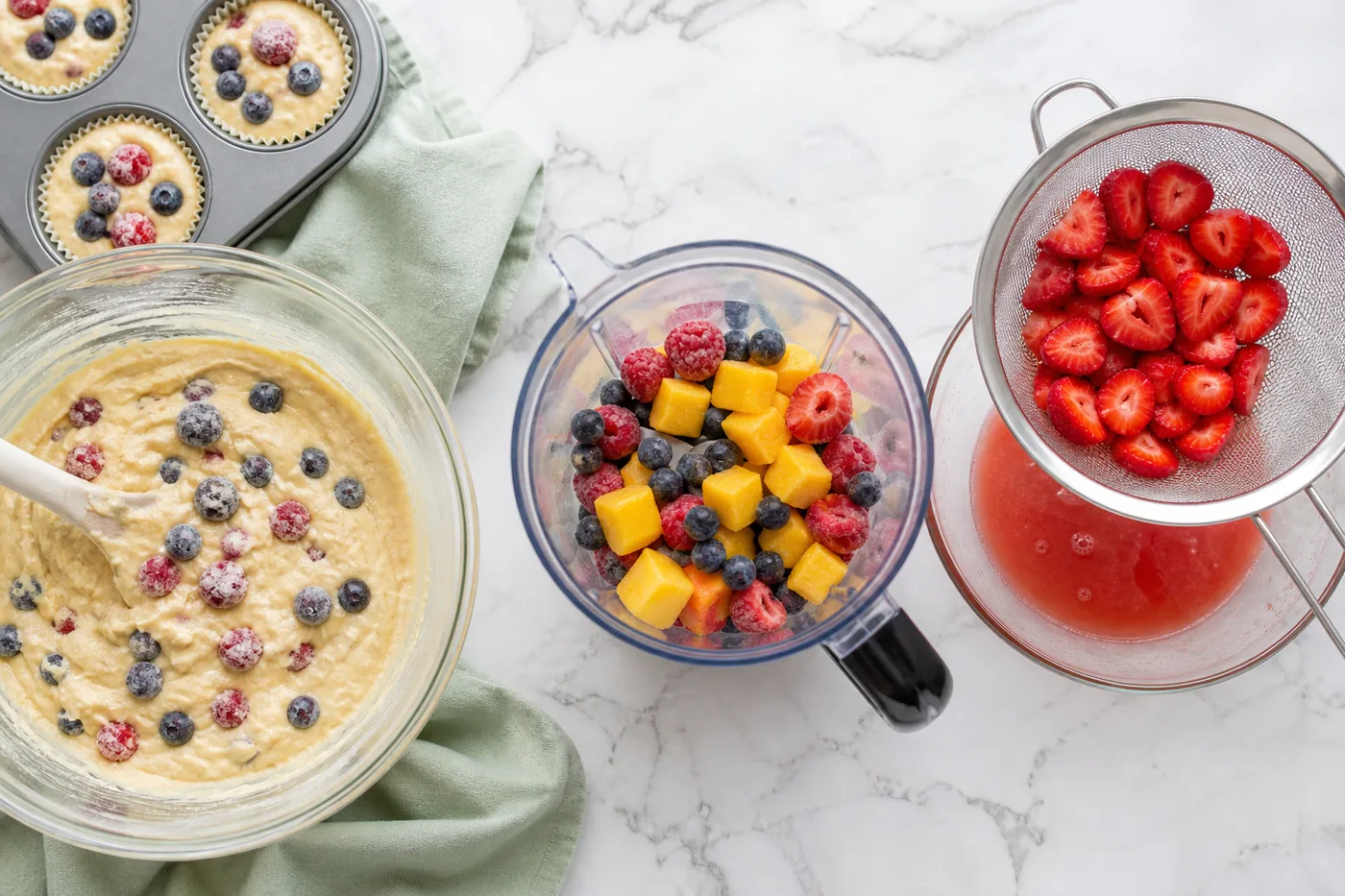
When to Thaw and Drain Frozen Fruit
Drain fruit when free liquid would weaken a crust, soak a cake layer, make a parfait watery or ruin a garnish. Thaw in a covered container or a colander set over a bowl in the refrigerator. Do not leave it on the counter for a long uncontrolled thaw. Once thawed, handle it as a perishable ingredient and use it promptly.
Draining changes yield. If a recipe calls for 500 grams of thawed drained fruit, weighing 500 grams frozen and discarding the juice will produce less than required. If a recipe calls for fruit plus all juice, draining would be wrong. Read the measurement point carefully: frozen weight, thawed total weight and drained fruit weight are different quantities.
Lower-Crust Pies and Tarts
A bottom crust is vulnerable to released moisture before heat sets the structure. Some recipes use thawed and drained fruit; others cook a filling first or add starch to frozen fruit. Follow the formula. Blind baking, filling temperature and venting also affect the result, so draining alone cannot fix an underbaked crust.
Layer Cakes, Cheesecakes and Parfaits
Thawed berries can leak into cream layers and create a watery ring. Drain them, pat carefully when appropriate and place them close to service. For a stable commercial layer, a cooked fruit preparation or controlled puree may be more reliable than loose thawed fruit. Whole IQF fruit is not automatically a ready-made cake inclusion after thawing.
Fruit Salads and Garnishes
Thawed fruit is softer than fresh fruit, so it is rarely the best choice for a crisp premium fruit salad. It can still work in a sauced fruit cup or mixed yogurt preparation. Choose firm whole berries or controlled dice, drain excess juice and accept that texture will be different. If crispness is the main quality cue, use fresh fruit instead.
When the Released Juice Should Stay
The colored liquid under thawed fruit contains water-soluble flavor, sugars, acids and pigments. It is not automatically waste. Keep it for jam, compote, coulis, fruit syrup, sauce and many cooked fillings. Measure fruit and juice together when the recipe defines total fruit mass. If the juice is drained for another use, record the yield and adjust the formula rather than silently reducing fruit solids.
Compote and Pancake Topping
Put frozen fruit and its juice into a saucepan, add sweetener only as needed and cook gently until the fruit softens and the liquid thickens. Leave pieces for compote or mash for a smoother topping. Cornstarch, pectin or chia may be used in different recipes, but they create different textures and require their own handling. A simple reduction thickens as water evaporates and may become much firmer after cooling.
Jam and Fruit Spread
Frozen fruit works for jam, but pectin recipes depend on accurate fruit, sugar and acid ratios. Thaw fruit under refrigeration, crush it as directed and measure fruit together with juice at the stage the tested recipe specifies. Do not improvise sugar reductions in a shelf-stable canned product. The full jam from frozen fruit guide separates refrigerator spreads from tested preservation processes.
Coulis, Dessert Sauce and Syrup
For coulis, simmer fruit with sugar, puree and strain if a smooth seedless result is needed. Raspberry and blackberry yield drops after straining, so record the retained puree. For a savory fruit sauce, vinegar, spice or stock may be added, but the balance should suit the final dish. Fruit syrup can flavor drinks, yogurt and desserts; it is not necessarily shelf-stable just because it contains sugar.
For application details, see How Do You Make a Raspberry Puree?.
Barbecue Sauce, Dressing and Marinade
Peach, cherry, blackberry and raspberry can support savory sauces. Blend thawed fruit and juice with acid, seasoning and the recipe's other ingredients. Heat treatment, pH and storage determine safety; a home sauce that tastes acidic should not be assigned a commercial ambient shelf life. Use a validated process for packaged products.
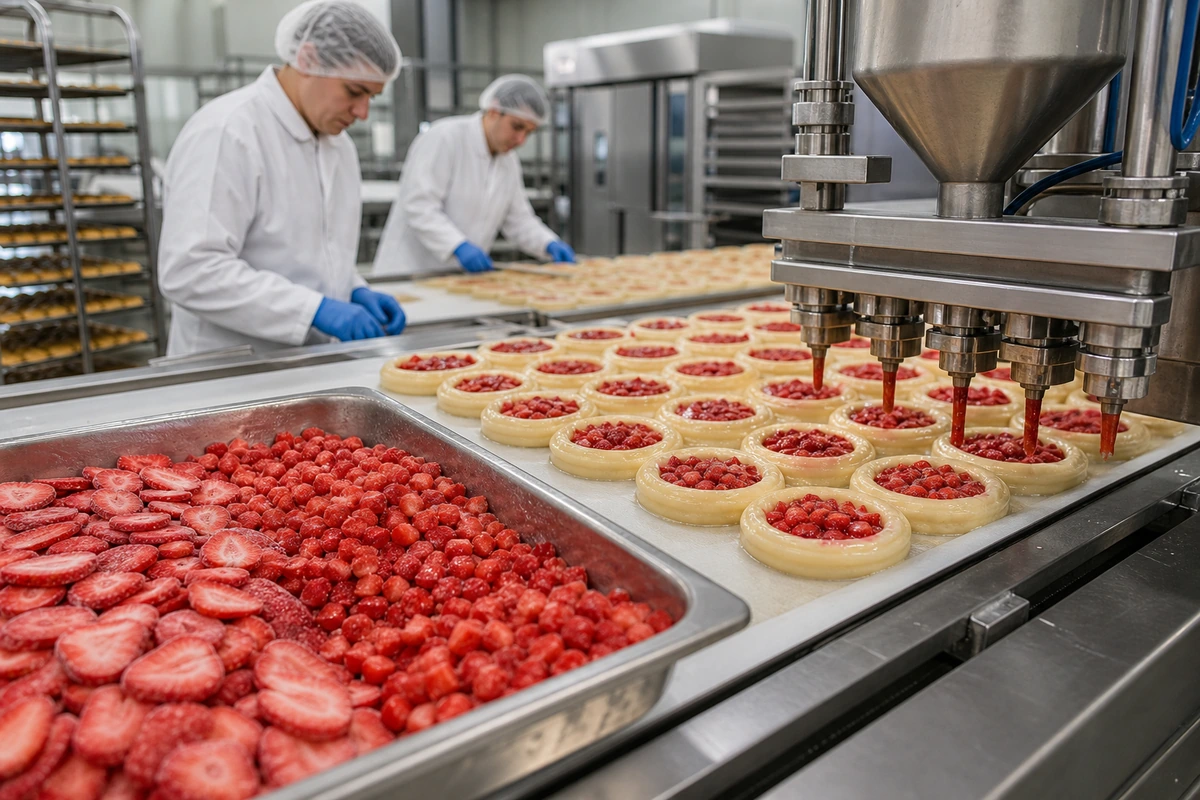
More Than Twenty Practical Frozen-Fruit Uses
- Blend a thick berry or mango smoothie without ice.
- Make a smoothie bowl with less liquid and crunchy toppings added at service.
- Turn mango, strawberry or peach into quick blender sorbet.
- Blend frozen banana into a soft nice-cream dessert.
- Fold blueberries into muffins while still frozen.
- Scatter berries over baked oatmeal.
- Stir frozen fruit into hot oatmeal as it cooks.
- Add frozen fruit directly to overnight oats and refrigerate.
- Layer thawed drained fruit with yogurt and granola.
- Cook berries into pancake or waffle compote.
- Bake peaches or mixed berries under a crisp topping.
- Prepare cobbler with a starch-controlled fruit filling.
- Use thawed fruit and juice in jam or refrigerator spread.
- Puree and strain berry coulis for desserts.
- Build a fruit barbecue sauce or vinaigrette.
- Infuse lemonade, tea, punch or sparkling water.
- Blend fruit with yogurt for popsicles.
- Make a coarse slush or granita in a shallow pan.
- Cook fruit into a bakery filling or dairy swirl.
- Dehydrate a cooked puree into fruit leather using a tested appliance method.
- Mix fruit into a chilled soup or lassi-style drink.
- Portion a tropical fruit blend for retail smoothie kits.
- Use puree in sorbet, dairy desserts or beverage bases.
- Use broken fruit in complete-blend applications where whole appearance is not required.
The list becomes useful only when the fruit form fits the use. Whole strawberries look appealing in a retail bag but are inefficient for a small muffin. Blueberry puree gives even flavor but cannot provide visible whole berries. Mango dice portion well; puree reduces blender load. Broken fruit may be economical for sauce, but only if defects, maturity and foreign-material controls still meet the specification.
How to Choose the Right Form
Whole fruit suits visible retail packs, garnishes, some smoothies and applications where fruit identity matters. It can be difficult to dose evenly and may require more thaw or processing time. Whole does not mean ungraded; diameter, whole-to-broken ratio and defects still need limits.
Halves and slices reduce piece size while keeping recognizable fruit. Strawberry halves work in desserts and foodservice packs. Peach and mango slices suit bakery and toppings. Thickness tolerance matters because thin pieces thaw and cook faster than thick ones.
Dice and chunks are useful for portioning, beverage blending, yogurt, oatmeal and fillings. A defined 10, 15 or 20 mm cut improves dosing, but the allowed range and amount of fines must be clear. Chunks are not automatically cheaper or more flavorful than dice; yield and raw material grade influence the offer.
Bits and pieces work in jam, sauce, puree, complete blending and cost-sensitive formulations. They should still have a declared ingredient, maturity, peel or pit control, defect limits and microbiological plan. "Processing grade" must not mean an undefined mixture of acceptable and unacceptable material.
Puree supplies uniform flavor and easy mixing. Confirm whether it is single strength or concentrate, seeded or seedless, pasteurized or non-pasteurized, sweetened or unsweetened, and what refining screen or flow properties apply. Puree contributes water and solids differently from IQF pieces, so a formula conversion should be tested.

Food Safety and Storage Boundaries
Freezing slows deterioration but is not a universal kill step. Use frozen fruit according to its intended-use statement. A fruit supplied for further processing with a later heat treatment is not automatically suitable for a ready-to-eat smoothie, parfait or garnish. Buyers should align supplier controls, microbiological specifications and destination requirements with the actual process.
At home, follow the package instructions. Keep the freezer at the recommended temperature, close bags tightly and avoid repeated thawing and refreezing. Thaw under refrigeration when a full thaw is needed. Discard fruit with mold, fermentation, off odor or an unknown storage history. Freezer burn mainly affects quality, but severe drying and odor pickup may make the fruit unpleasant.
Thawed fruit does not regain a long refrigerator life because it was once frozen. Use it promptly and keep it cold. If you cannot use it in the original application, cook it into a suitable sauce or compote only while it remains safe and sound. Cooking is not a rescue for spoiled fruit.
For more background, see can you eat frozen fruit and is frozen fruit healthy. Those pages cover direct consumption and nutrition questions; this guide stays focused on choosing an application and handling state.
A Commercial Application Trial
Define the finished product before asking for a sample. State whether the fruit will be blended, baked, cooked, pumped, deposited, layered, packed visibly or consumed without heat treatment. List the target piece identity, color, flavor, seed perception and moisture behavior. This converts "send frozen berries" into a testable brief.
Run the supplier sample in the actual process. For bakery, measure batter or filling yield, color bleed, bake loss and piece integrity. For beverage, measure blend time, seed perception, Brix, acidity and separation. For dairy or oats, score free liquid, color migration and texture across the hold. For jam or sauce, record puree yield, evaporation and finished set.
Compare samples at equal fruit weight and at equal finished-product yield. A low-priced fruit with excessive drip, trimming or seed loss may be more expensive per saleable kilogram. Record labor and equipment time. A free-flowing dice that doses cleanly may reduce preparation cost even if its purchase price is higher than a clumped mixed-piece offer.
Approve a range, not a single attractive bag. Fruit varies by crop. Define acceptable Brix, acidity where relevant, color, form, cut tolerance, defects, foreign material, drip loss, packing and documents. Then test realistic edge samples so the finished formula can tolerate the contracted range without constant emergency correction.
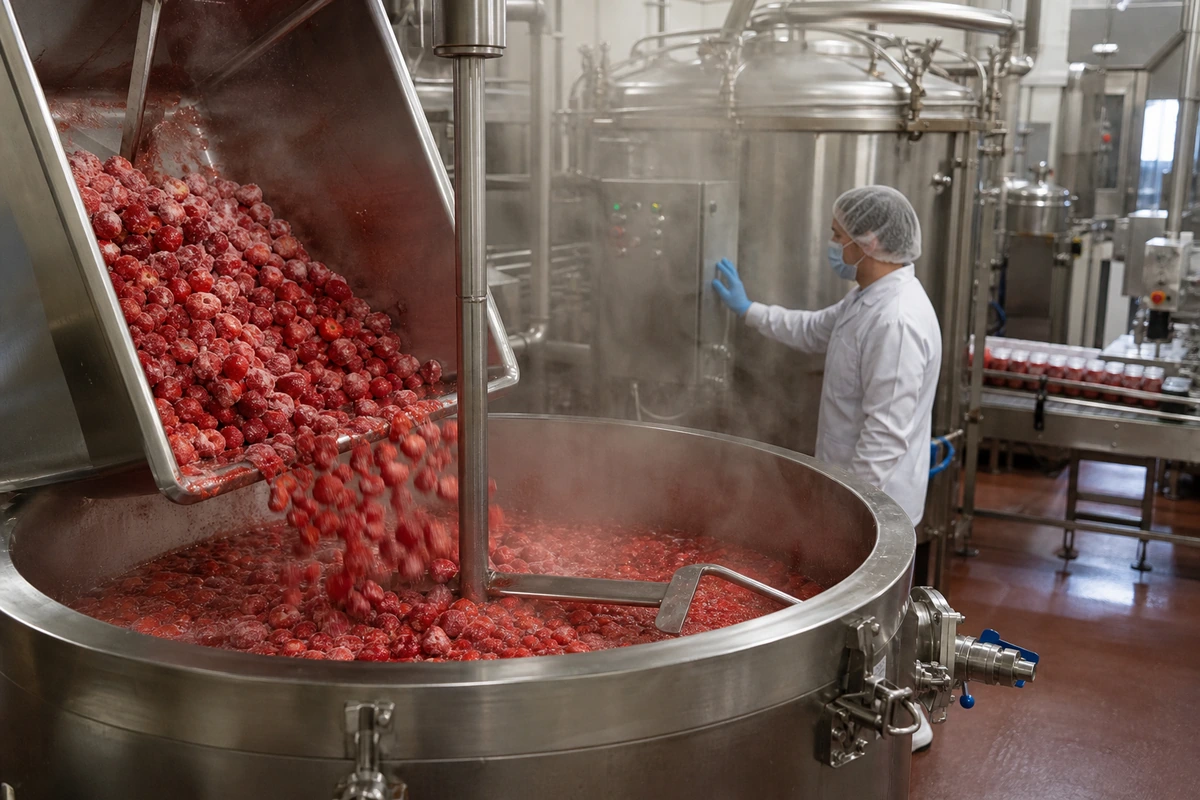
Frozen-Fruit Procurement Checklist
- Product name, fruit species or variety where relevant, and country of origin.
- Whole, halves, slices, dice, chunks, bits, puree or concentrate.
- Cut size and tolerance, whole-to-broken ratio and amount of fines.
- Natural Brix range, pH or titratable acidity when the application needs it.
- Color, flavor, odor, maturity, fiber, seed, peel and pit-fragment expectations.
- Defect and foreign-material limits, residue requirements and microbiological plan.
- Intended use: further processing, validated heat treatment or ready-to-eat program.
- Added sugar, syrup, water, color, flavor or preservative declaration.
- Pack size, liner or bag, carton, label, lot code, pallet and loading requirements.
- Frozen storage and shipping temperature, shelf-life basis and cold-chain records.
- Specification, COA, test reports, certificates and export documents required by the market.
- Sample approval method and change-control expectations for repeat orders.
Our IQF frozen fruit category shows available fruit and form options. If the next step is purchasing, use the where to buy frozen fruit in bulk guide to prepare quantity, packing and destination information. A precise application brief lets us review the useful product format instead of quoting an undefined frozen-fruit mix.
The Bottom Line
Frozen fruit is versatile because you can choose its state. Keep it frozen for cold texture and firm pieces. Temper it briefly when equipment needs help. Thaw and drain it when free moisture damages structure. Keep every drop of juice when the fruit phase will be cooked, pureed or measured as a whole.
That decision map also prevents waste. The juice under thawed berries becomes a sauce ingredient instead of going down the sink. Broken fruit becomes a puree input instead of pretending to be premium whole fruit. Large mango chunks become smoothie or sorbet ingredients after the right temper. Once the process is clear, the best use usually becomes obvious.
Frequently Asked Questions
Can you cook frozen fruit without thawing it?
Yes for many compotes, sauces, oatmeal and baked fillings. Allow extra time for the fruit to heat and account for released moisture. Follow the specific formula when a crust or batter is moisture-sensitive.
What can I make with mixed frozen fruit?
Mixed fruit works well in smoothies, sorbet, compote, overnight oats, baked oatmeal, yogurt layers and sauces. A mixed bag is less suitable when one fruit must keep a defined shape or flavor identity.
Should I drain frozen fruit after thawing?
Drain it when excess moisture would damage a crust, cake layer, parfait or garnish. Keep the juice when making jam, compote, coulis, syrup or a formula that measures total fruit and juice.
Can you use frozen fruit in baking?
Yes. Small berries can often go into muffins or quick breads from frozen. Pies with a lower crust and delicate layered desserts may need thawed, drained or pre-cooked fruit.
What can I do with freezer-burned fruit?
Mild freezer burn is mainly a quality problem. If the fruit has remained safely frozen and has no spoilage signs, use it in blended or cooked applications where dry surface texture is less noticeable.
How long can thawed frozen fruit stay in the refrigerator?
Use the product label and your food-safety plan. As a cautious household practice, use thawed fruit promptly, keep it cold and discard it if storage history is uncertain or it develops mold, fermentation or an off odor.
How do commercial buyers choose the right frozen-fruit form?
Start with the final process. Confirm whole, slice, dice, puree or broken fruit; then set cut tolerance, Brix, acidity, seed or fiber limits, drip loss, defects, packing, intended use and cold-chain requirements.
Build a Frozen-Fruit Trial Around Your Application
Tell us the fruit, form, packing, quantity, application and destination market you need. We will review the practical specification, sample route, documents and cold-chain plan for the order.