


Can You Use Frozen Fruit in Overnight Oats?
Aug 28, 2026
Leave a message
Can You Use Frozen Fruit in Overnight Oats? Best Method
Yes-add it straight from the freezer, refrigerate the jar and account for the juice and softer texture that appear as the fruit thaws.
Key takeaways
- Frozen fruit can go directly into the jar; thaw it under refrigeration with the oats.
- Start with ½ cup oats, ½ cup milk, ¼ cup yogurt and ½ cup frozen fruit.
- Expect softer fruit, color bleed and some released juice, especially from cut berries.
- Change liquid in small measured steps because oat, yogurt, chia and fruit formulas absorb differently.
Yes, You Can Put Frozen Fruit Straight Into Overnight Oats
You can use frozen fruit in overnight oats without thawing it first. Put the fruit into the jar during preparation, cover it and refrigerate it with the oats for at least four hours, preferably overnight. The fruit will thaw safely under refrigeration while the oats hydrate. Expect the fruit to become softer and release some juice, so begin with a slightly conservative amount of milk and adjust the next batch after you see the finished texture.
A dependable single-jar starting formula is ½ cup rolled oats, ½ cup milk, ¼ cup plain yogurt and ½ cup frozen fruit. Add 1 teaspoon chia seeds if you like a thicker result. Mix the oats, milk and yogurt first, fold in the frozen fruit, cover and refrigerate. In the morning, stir before judging the consistency. Add a splash of milk if it is too firm; reduce the starting liquid by one or two tablespoons in the next batch if juice pools at the bottom.
There is no single correct liquid reduction for every frozen fruit and oat recipe. Rolled oats, quick oats, chia, thick Greek yogurt, thin yogurt and plant beverages absorb differently. Whole blueberries release moisture differently from strawberry pieces or fruit puree. Treat any published subtraction as a useful test for that recipe, not a universal rule. Your own jar gives the best evidence after one controlled overnight trial.
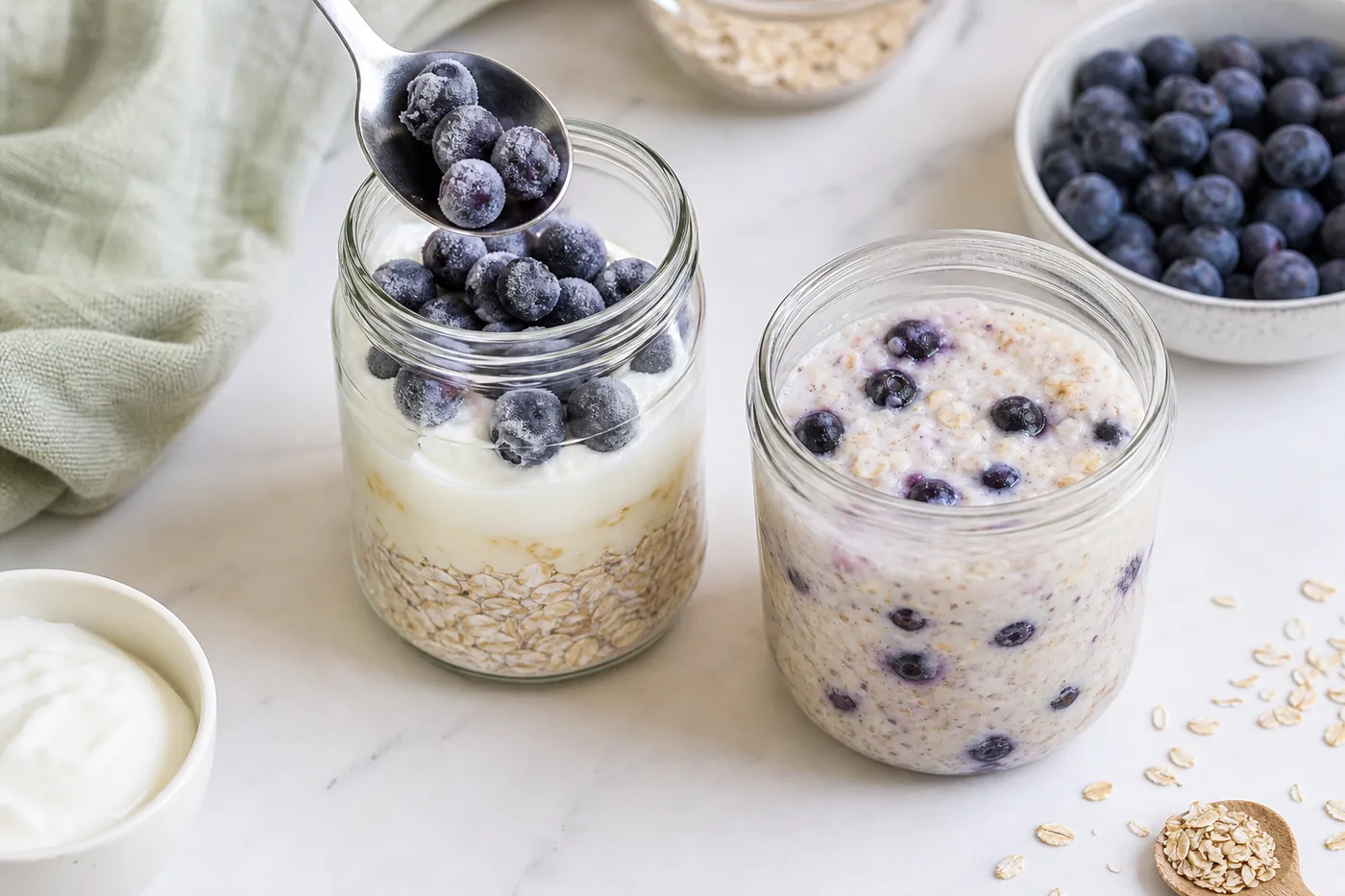
What Changes When Frozen Fruit Thaws in the Jar
Frozen fruit contains water inside cells and between tissues. Freezing forms ice crystals that disrupt some cell structure. As the fruit thaws, part of its juice becomes available to the surrounding oats. This is why thawed strawberries or raspberries may look softer, bleed color and break apart when stirred. That change is not automatically a defect. In overnight oats it can distribute fruit flavor through the entire jar.
Whole small berries often keep more visible shape. Blueberries may remain identifiable even after the surrounding oat base turns purple. Raspberries can collapse into seed-rich pockets. Strawberry halves are large for a jar and may stay cold in the center longer; dice or slices distribute more evenly. Mango dice soften but can retain a pleasant chunk if the fruit was not overripe before freezing.
Released juice changes both hydration and appearance. It can pool at the bottom if the oat base is already thin. It can also be absorbed by oats and chia, producing an attractive pink or purple mixture without any added flavoring. The practical question is not "does frozen fruit release water?" It does. The question is whether your formula has enough absorption and whether you want distinct layers or an integrated fruit flavor.
Temperature also matters. A large amount of frozen fruit added to a small jar temporarily lowers the temperature of the mixture, which is helpful only when the jar immediately returns to refrigeration. Do not leave assembled oats at room temperature to speed thawing. The point of the method is that fruit thaws while the complete product stays cold.

Numbered Method for Balanced Overnight Oats
- Choose a clean container with room for stirring. A 12- to 16-ounce jar suits many single portions, but the exact size should match your ingredients and appetite.
- Add ½ cup rolled oats. Rolled oats hold a more distinct texture than quick oats; steel-cut oats need a different hydration approach and should not be substituted without testing.
- Add ½ cup milk or an unsweetened fortified plant beverage and ¼ cup yogurt. For a yogurt-free version, start with about ⅔ cup liquid and adjust after the first trial.
- Add optional chia, cinnamon, vanilla, nut butter or sweetener. Keep dry additions measured because they change absorption.
- Stir the base thoroughly so no dry oat pockets remain. Scrape material from the bottom and sides.
- Add ½ cup frozen fruit directly from the freezer. Fold it through for even color or place it on top if you want a layered appearance.
- Cover and refrigerate immediately for at least four hours. Six to twelve hours generally gives rolled oats a softer, more integrated result.
- Stir before serving. Check the bottom for free liquid and the center for dry oats. Add milk one tablespoon at a time if it is too thick.
- Record the result if you plan repeated meal prep. Change only one variable-liquid, fruit dose or chia-in the next test.
This method works because it separates the starting formula from the correction. If you reduce the milk too aggressively before seeing the first jar, the oats may be dry even though the fruit later releases juice. If you start with excess milk, no amount of chilling will make a low-absorption formula balanced. A one-tablespoon change is large enough to observe in a single portion and small enough to avoid wasting a batch.
Liquid Adjustment: A Better Test Than a Universal Rule
Prepare two jars with identical oats, yogurt and frozen fruit. In Jar A, use the normal milk amount. In Jar B, reduce milk by one tablespoon. Refrigerate them side by side for the same time. Stir each jar exactly the same number of times and score free liquid, spoonability, fruit integrity and flavor distribution. If both are thick, the fruit may not release as much water as expected or the formula may contain highly absorbent oats and chia.
For a second round, change by another tablespoon only when the difference is clear. One tablespoon is about 15 milliliters, which is meaningful in a small jar. Commercial breakfast cups should be tested by weight because spoon and cup measures introduce unnecessary variation. A five-gram milk change can be repeated precisely across trials; "a little less" cannot.
Do not pour off the berry juice before stirring unless a clean layered appearance is essential. That juice contains flavor and color and may be part of the intended result. If the finished oats are still watery after stirring and a short rest, reduce liquid next time. If you drain fruit as a routine step, record the drained weight because the fruit-to-oat ratio has changed.
Chia is a strong variable. A teaspoon may make a modest difference; a tablespoon can turn the jar into a firm pudding. Ground flax, protein powder and some fibers also bind water. Thick Greek yogurt contributes less apparent free liquid than a drinkable yogurt. Plant beverages vary in solids. The frozen fruit should not be blamed for every watery or dry jar when the base formula changes at the same time.
Fruit Comparison for Overnight Oats
| Frozen fruit form | Expected overnight texture | Moisture and color effect | Best use in the jar |
|---|---|---|---|
| Whole blueberries | Soft but usually still recognizable | Moderate purple bleed; juice often disperses after stirring | Visible berries, portion control and mixed-fruit cups |
| Raspberries | Fragile and likely to collapse | Strong color and seed distribution | Fully fruit-flavored oats rather than clean layers |
| Strawberry halves | Soft, large and sometimes unevenly distributed | Noticeable red juice; large pieces may create wet pockets | Rustic jars with fruit on top |
| Strawberry dice or slices | Softer but more evenly portioned | Faster thaw and more even pink color | Retail cups and consistent spoonfuls |
| Mango dice | Soft, often retains a chunk | Golden color with less dramatic bleed | Tropical oats, yogurt and coconut bases |
| Cherries | Soft, substantial pieces | Deep red juice; confirm pit removal | Chocolate, vanilla and nut-based formulas |
| Peach slices or dice | Tender and mild | Pale juice and subtle color | Cinnamon, vanilla and almond profiles |
| Fruit puree | Fully integrated, no piece identity | Strong uniform color and immediate water contribution | Swirls, layered cups and controlled fruit preparations |
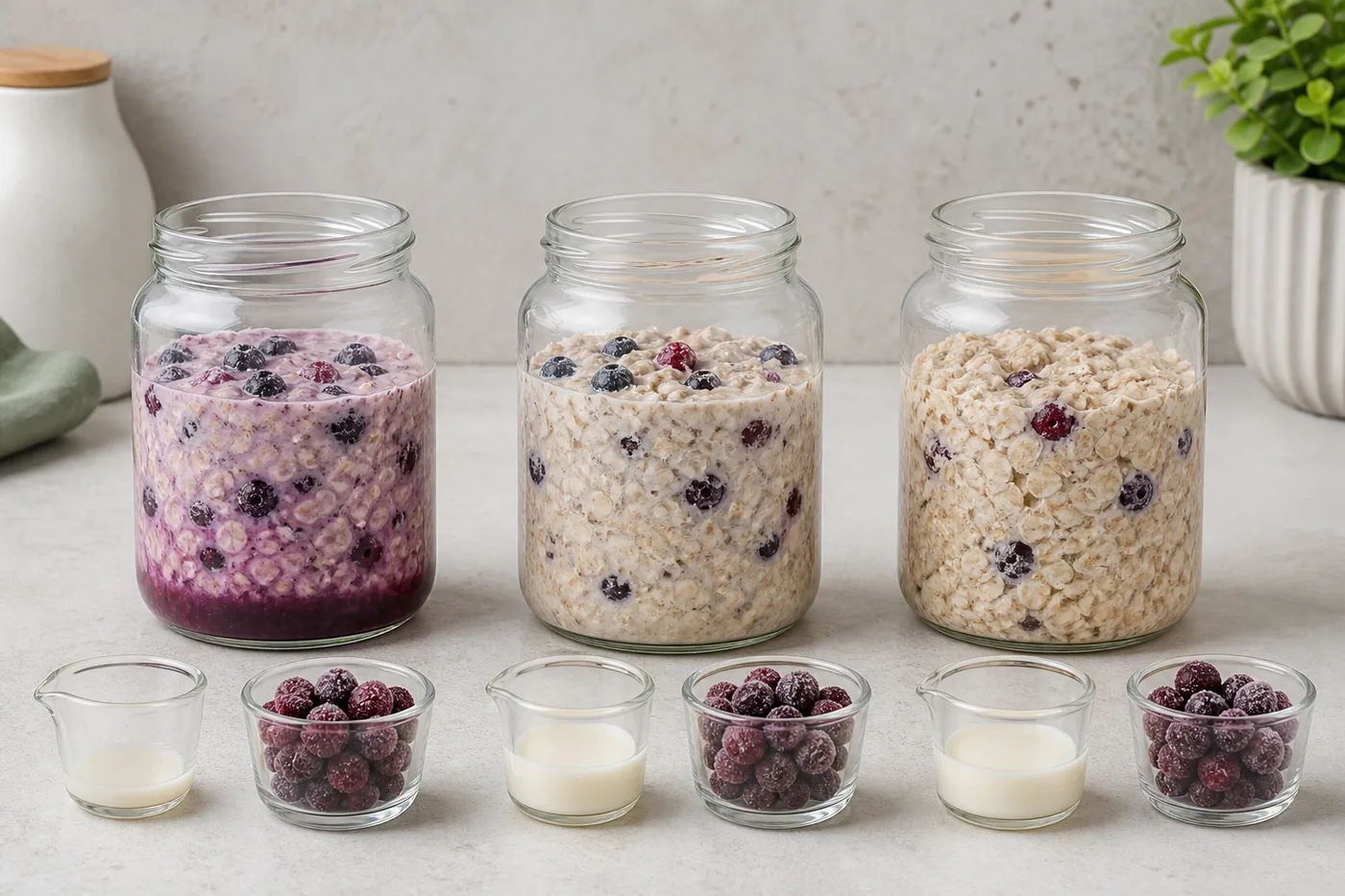
Whole Fruit, Dice and Puree Are Not Interchangeable
Whole fruit makes the ingredient visible but can be awkward in a small jar. A whole strawberry may occupy several spoonfuls and create a cold center. Dice distribute fruit more evenly and help a packing line dose a target weight. Broken fruit and fines thaw faster and may tint the base more strongly. Puree provides the most uniform flavor, but it behaves like part of the liquid phase and should be included in the hydration calculation.
For a home breakfast, use what you have and adjust. For a branded chilled cup, choose the form intentionally. If the label and photograph promise visible blueberry pieces, a puree is not an equivalent substitute. If the target is an even strawberry flavor in every spoonful, whole fruit may be inefficient. The product form should support the eating experience and the dosing equipment.
Cut tolerance matters at scale. A nominal 10 mm strawberry dice can contain fines, irregular pieces and larger chunks depending on the specification. Fines release more color and may settle into the oat base. Large pieces create fill-weight variation. A buyer should define the acceptable distribution and inspect a thawed sample in the actual formula, not only a frozen handful on a white tray.
Troubleshooting Watery, Dry or Uneven Jars
If liquid pools at the bottom, stir first. Oats at the top may not have contacted the base evenly. If the jar remains loose, reduce milk by one tablespoon in the next portion or add a measured teaspoon of chia. Do not add a large amount of dry oats immediately before eating and expect a smooth result; they need hydration time and may remain chewy.
If the oats are dry, add milk one tablespoon at a time and let the jar sit for a few minutes. The likely causes are too little starting liquid, too much chia, very thick yogurt, quick oats that absorbed rapidly, or an inaccurate oat measure. Frozen fruit can release juice and the jar can still be dry when the base contains too many absorbent solids.
If color looks muddy, consider fruit choice and mixing order. Blueberries, blackberries and raspberries can turn a beige oat base purple or gray when stirred. That may be attractive in a fully mixed berry cup. For a clean retail layer, keep the fruit preparation separate until filling, control fines and minimize unnecessary agitation. Color is a design decision as much as a quality issue.
If fruit remains very cold or partially frozen at serving, pieces may be too large, the refrigeration time too short or the fridge temperature unusually low. A four-hour minimum is useful, but large whole fruit may need longer. Do not warm the jar at room temperature for an extended period. Give it more refrigerated time or use a smaller cut next batch.
If the fruit tastes flat, the problem may be weak fruit, too much dairy base or cold serving temperature. A little citrus zest, vanilla, cinnamon or measured sweetener can help, but these should not hide an unsuitable fruit lot. Taste the frozen fruit after controlled thawing and evaluate its aroma, sweetness and acidity before changing the entire oat formula.
Can You Make It Without Yogurt or Chia?
Yes. For a yogurt-free jar, start with ½ cup rolled oats and about ⅔ cup milk or a plant beverage, then add ½ cup frozen fruit. Because yogurt contributes both water and thickness, removing it does not mean replacing it with the same volume of milk automatically. Begin a little low and loosen the jar after chilling if needed.
Chia is optional. It adds a gelled texture and reduces free liquid, but it can dominate if overused. Without chia, rolled oats alone will absorb liquid over several hours. Quick oats produce a softer result. Steel-cut oats remain much firmer and generally need more time or a different recipe. Choose the oat for the desired bite rather than using chia to force every type into one texture.
For a higher-protein base, Greek yogurt, skyr, milk powder or a suitable protein ingredient can be used, but each changes viscosity and flavor. Protein powders may create chalkiness or continue thickening during hold. Run the same overnight test you would use for fruit moisture. Nutrition targets do not remove the need for sensory and process validation.
Cold, Warm and On-the-Go Serving
Overnight oats can be eaten cold because the oats soften by hydration rather than cooking. Stir them and check the texture. If you prefer warm oats, transfer them to a microwave-safe container or confirm that the jar is suitable. Heat in short intervals, stir between intervals and check the center because thawed fruit and oat base can warm unevenly.
For on-the-go use, keep the jar refrigerated until it is packed with a cold source. A sealed jar prevents spills but does not make the food shelf-stable. Dairy and cut fruit formulas require temperature control. Do not leave the jar in a warm car or at a desk for the entire morning. Follow local food-safety guidance for perishable foods.
Toppings such as nuts and granola are best kept separate if crunch matters. Add them just before eating. Nut butter can be mixed into the base or layered, but it changes thickness. Fresh garnish can improve appearance, though it adds another preparation and shelf-life variable. The frozen fruit should do the main flavor work rather than serving only as a background for many uncontrolled toppings.
Batch Meal Prep and Household Storage
Prepare only the number of jars you can refrigerate promptly and consume within the recipe or ingredient guidance. Use clean containers and utensils. Keep frozen fruit frozen until portioning, return the bag to the freezer and avoid repeated thawing. Label jars with the preparation date when several people share the refrigerator.
Texture continues to change. A jar that is balanced after eight hours may be softer after two days because the oats continue hydrating and the fruit breaks down. That does not automatically mean it is unsafe, but it may fall outside your preferred quality window. Test the actual time you plan to hold it instead of judging only the next morning.
If the fruit has thawed separately, keep it refrigerated and use it promptly according to the supplier's instructions and your food-safety plan. Do not add fruit with mold, fermentation, off odor or uncertain storage history. The frozen-fruit shelf-life guide explains the difference between frozen storage safety and declining quality in more detail.

Scaling Overnight Oats for Cafes and Chilled Cups
Move from cups to grams. A trial might begin with 40 grams rolled oats, 90 grams milk, 60 grams yogurt and 70 grams frozen fruit, but the correct weights depend on the target portion and ingredient solids. Record every component, the filled cup weight and the finished weight after hold. Free liquid can migrate without changing total mass, so both weight and texture matter.
Run at least three holds: four hours, the intended overnight period and the end of the proposed service window. Score spoonability, visible free liquid, oat firmness, fruit integrity, color spread, sweetness, acidity and aroma. Measure product temperature. A formula that looks excellent at eight hours may separate or become pasty after 36 hours.
Filling order changes the result. Fruit under the oats may release juice upward. Fruit on top creates an attractive layer but may bleed into a lid. A fruit swirl can be dosed separately. Whole berries may bridge in a depositor while puree pumps easily. The process should be tested with the selected package and equipment, not reproduced only in a hand-filled jar.
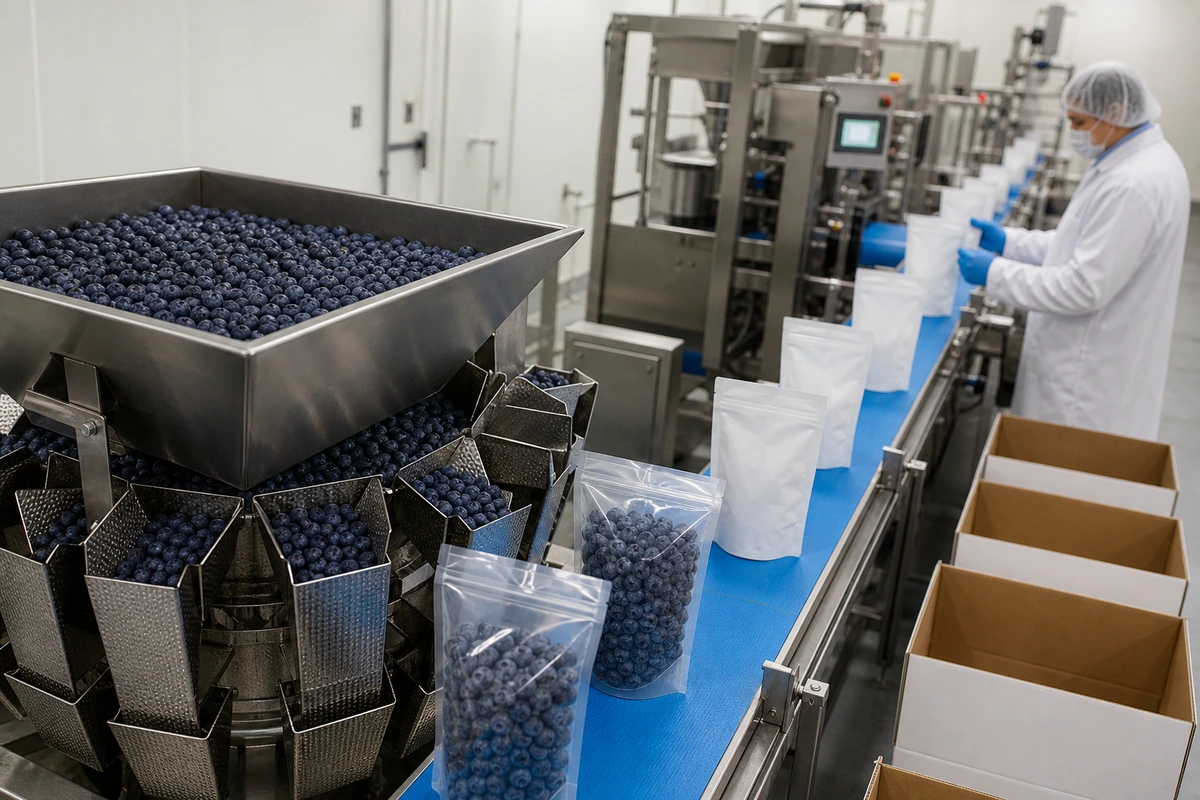
Portion packs reduce weighing at a cafe but require frozen pieces to remain free-flowing. A clumped bag slows service and creates variable fruit doses. Private-label breakfast kits need film, seal, label and allergen review in addition to fruit quality. A frozen-fruit supplier cannot determine the shelf life of the complete oat cup; the finished-product producer must validate it.
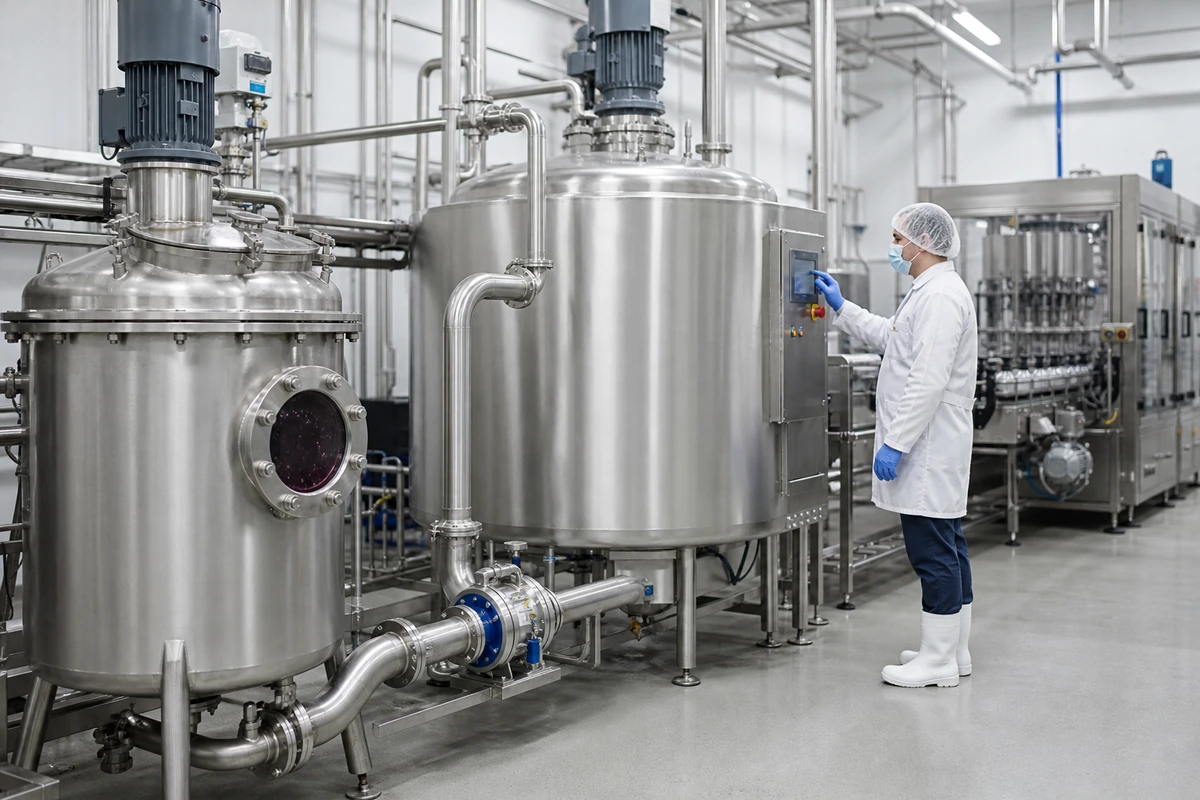
Frozen-Fruit Buying Checklist for Breakfast Programs
State the intended result first: visible whole berries, evenly distributed dice, a fruit layer or a smooth swirl. Then confirm fruit species or variety where relevant, form, cut size, whole-to-broken ratio, Brix, color, flavor, seed or pit control, drip loss, defects and foreign-material limits. The best specification is linked to what the customer sees and eats.
For blueberries, diameter and cultivated or smaller berry type affect dosing and appearance. For strawberries, whole, halves, slices and dice must be quoted separately. For mango, variety, maturity, Brix, color and fiber influence both flavor and retained texture. For puree, confirm added sugar or water, heat-treatment status, refining screen, flow and packing.
The intended-use and microbiological plan must match a chilled ready-to-eat cup. Freezing does not universally eliminate pathogens. Buyers should communicate whether there is a later validated heat treatment or whether the fruit enters a ready-to-eat product. Destination-market requirements, supplier controls, testing and finished-product hygiene should be reviewed together.
Packing may be retail bags, foodservice bags or bulk cartons. Confirm net weight, liner, carton mark, lot code, pallet plan, storage temperature, loading quantity and required export documents. For a multi-fruit breakfast line, a mixed container can be practical only when the SKU quantity and packing remain compatible.
We can review options from our IQF frozen fruit category against a breakfast application. Buyers can also use the bulk frozen fruit sourcing guide to prepare quantity, packing and destination details. Send the oat formula, fruit form, target portion, hold time and market rather than requesting "berries for oats" without a process.
The Practical Bottom Line
Frozen fruit is not a compromise in overnight oats; it is a useful ingredient with predictable behavior. Add it frozen, chill the jar, expect softness and juice, then use a one-tablespoon liquid adjustment to tune the next batch. Choose whole berries when identity matters, dice when portioning matters and puree when uniform flavor matters.
At commercial scale, the same principle becomes a controlled hold test. Weigh the formula, select a fruit specification, test the actual package and filling order, and judge the cup at the end of its service window. That creates a breakfast product that remains consistent instead of asking one generic moisture rule to solve every oat, dairy and fruit combination.
Frequently Asked Questions
Should frozen fruit be thawed before adding it to overnight oats?
No. Add it frozen and let it thaw in the refrigerator while the oats hydrate. Pre-thaw only when you need to drain juice or inspect the fruit separately.
Will frozen fruit make overnight oats watery?
It can. Fruit releases juice as it thaws, but the effect depends on fruit type, cut, quantity, yogurt thickness, oat type and chia. Reduce milk slightly in the next test if liquid pools after stirring.
How long do overnight oats with frozen fruit need in the fridge?
Four hours is a practical minimum for many formulas, while six to twelve hours gives rolled oats more time to soften. Keep the mixture refrigerated throughout.
Which frozen fruit works best in overnight oats?
Blueberries and small mango dice keep more visible shape. Raspberries and strawberry pieces soften and spread flavor. Cherries, peaches and mixed berries also work when the piece size fits the jar.
Can I heat overnight oats made with frozen fruit?
Yes, if the container is microwave-safe. Stir first, heat in short intervals and check the center because cold fruit pockets can remain.
Can I use frozen fruit without yogurt?
Yes. Use milk or a fortified plant beverage and consider chia for body. You may need a different liquid amount because yogurt contributes both water and thickness.
How should a foodservice operator test frozen fruit for breakfast cups?
Run a weighed pilot with the actual oats, dairy base, fruit form and hold time. Score free liquid, fruit integrity, color spread, portion yield, flavor and temperature before approving the specification.
Build a Frozen-Fruit Trial Around Your Application
Tell us the fruit, form, packing, quantity, application and destination market you need. We will review the practical specification, sample route, documents and cold-chain plan for the order.