


Can You Freeze Garlic Scapes? Storage and Texture for Later Cooking
Oct 19, 2026
Leave a message
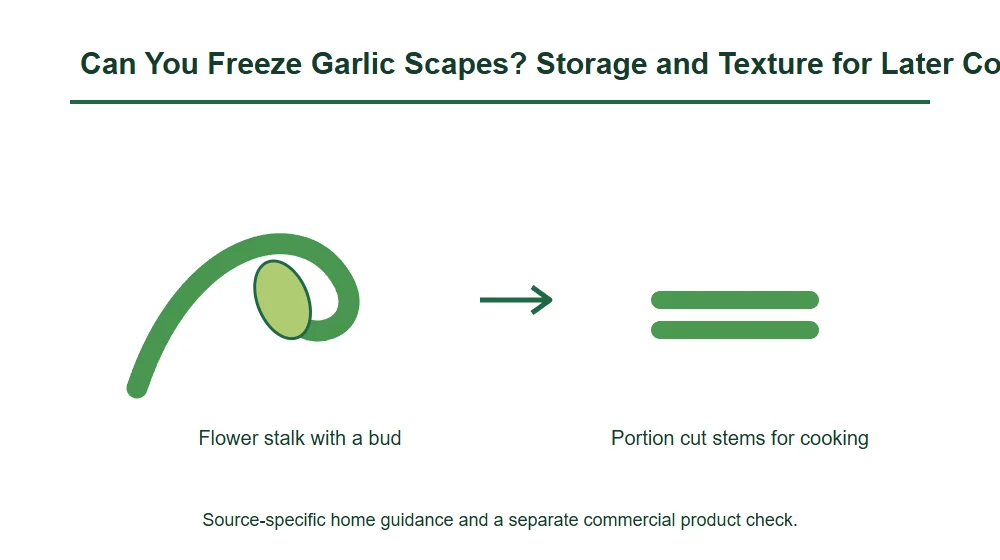
The flavour can remain useful, but the thawed stem will not have exactly the same fresh snap. A cook who wants the bright bite of a raw scape should use a fresh one; a cook who wants a measured garlic-like note in a hot dish has a good reason to keep frozen portions. The preparation choice depends on cut, intended storage and final use.
For a wholesale buyer, the decision has another layer. "Garlic scapes" can mean long curly stalks with buds attached, short tender sections, or a mix containing tougher lower stem and fibrous tips. A product photograph helps establish identity but cannot tell you the fraction of tender usable pieces in every carton. This guide explains home freezing briefly, then shows how to specify and assess a commercial frozen scape ingredient. GreenLand-food can discuss product form, sample, packing and documents; the buyer validates the ingredient in its own cooking process.
- Garlic scapes are developing hardneck flower stalks; a cut piece may not show the bud.
- A food-council home guide allows chopped unblanched scapes in an airtight freezer container for up to one year.
- Judge cooked texture and aroma separately from any commercial SKU shelf-life claim.
Yes, freeze scapes for cooked use
Garlic scapes are the developing flower stalks of hardneck garlic. University of Illinois Extension describes them as immature flowering stems with a gentler garlic character than cloves. Their seasonal appearance is one reason cooks preserve them. Freezing extends the period in which a kitchen can add that green, aromatic note without depending on the short fresh harvest window. The method works best when the next use will involve heat or blending.
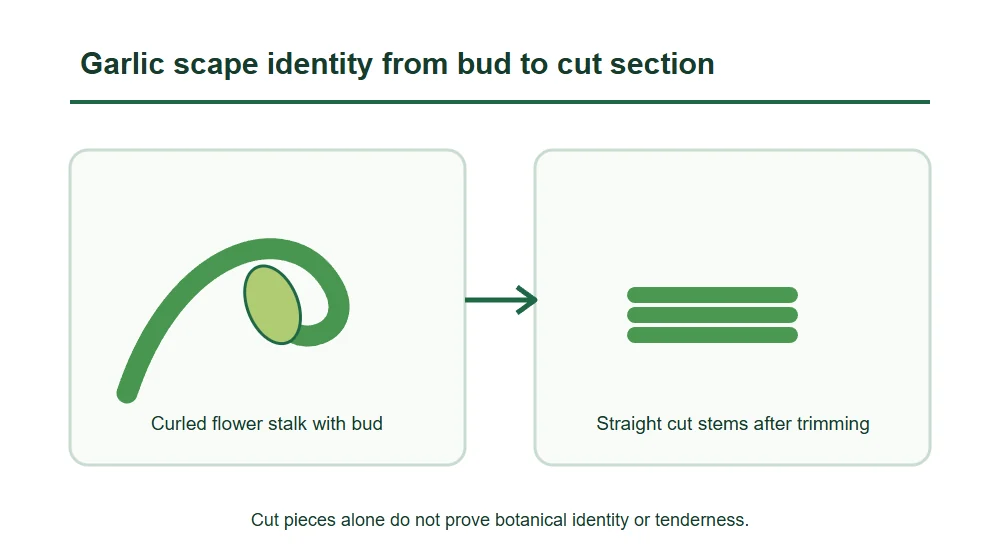
Cut pieces alone do not prove botanical identity or tenderness.
A stir fry, fried rice or soup can take cut scapes from frozen in measured amounts. A sauce or savoury filling can also use them if the cut blends evenly and the cook accounts for any moisture. The frozen ingredient can help a busy line avoid washing and trimming fresh stems for every batch. None of this guarantees a raw garnish result. The same cell damage that softens many frozen vegetables can make a thawed scape less crisp than a fresh one, even if its aroma remains attractive.
Home guides vary in their preparation advice. The NWI Food Council describes chopped scapes stored frozen without blanching; Illinois Extension notes that scapes can be frozen raw or blanched. Le Petit Mas, a Quebec garlic producer, describes a brief blanch and tray-freeze approach. Those examples show legitimate routes, but the differences do not prove that one universal time or method is correct for every cut, freezer or commercial line. Choose a home method from a reliable preservation guide for your intended use; for bulk supply, ask for the actual finished-product specification and process evidence.
The first practical test is simple: cook a small frozen portion in the dish you intend to make. Decide whether the green colour, aroma, tenderness and visible section size still work. If a fresh scape is available, cook a control. Record what changed and what remained useful. A buyer who expects the frozen piece to serve exactly as a fresh salad garnish will be disappointed; a buyer who defines a cooked aroma ingredient can judge it fairly.
Select the tender stem and define the cut
A garlic scape curls above the garlic plant and includes a stem and developing bud. Tender sections can be eaten, while the tip or thicker lower portion may be fibrous. The NWI Food Council notes that some cooks remove the tip and pod for this reason. That is a preference and maturity issue, not a claim that every bud is inedible. A commercial buyer should define the part it wants after cooking the sample, rather than relying on a generic term such as "whole scape."
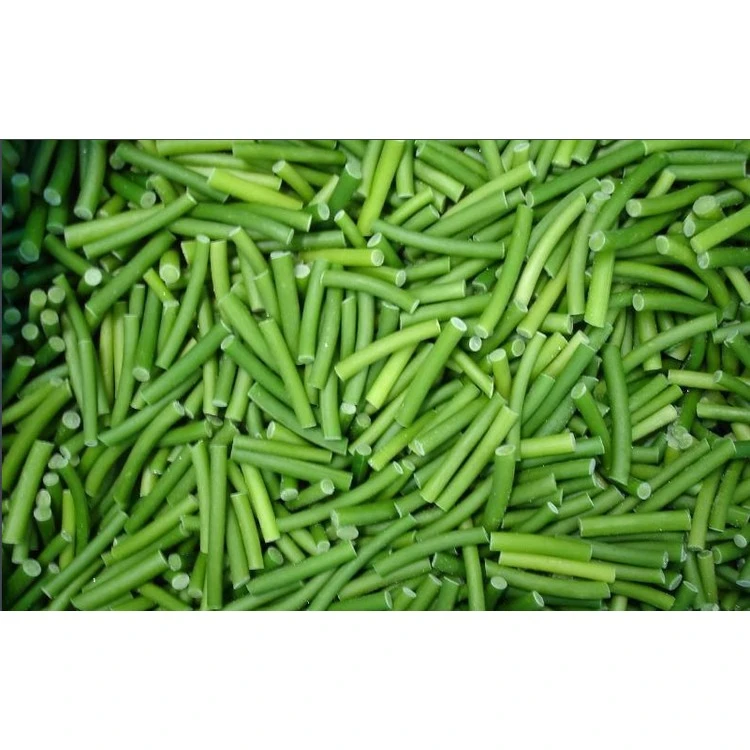
Cut garlic scape sections in a product sample.
Consider the dish. A stir fry that displays short green sections needs reasonably consistent lengths and an agreed tolerance for woody pieces. A sauce that will be blended may accept a smaller chop, but tough fibres can still affect mouthfeel. A foodservice pack may need pieces that separate and pour easily from the bag. If the frozen product contains both tender stem and bud, decide whether the bud's texture and appearance belong in the recipe. The answer should appear in the approved sample and written order description.
The GreenLand-food photograph shows cut scape sections in a product sample. Look at the surface, length and green shade of the pieces. It is a useful conversation starter for cut form, yet it does not measure the average length, tender fraction or defects in a packed lot. Spread a measured sample on a tray, group it by section length if that matters, and cook the largest and thickest pieces. The cooked bite often reveals a fibre issue more clearly than a frozen visual check.
Seasonality deserves mention because fresh raw material can vary through the harvest. Younger scapes may be more tender than later, more mature stalks. A supplier's nominal cut length alone does not remove that variation. Ask how raw scapes are sorted and how the factory excludes unsuitable hard pieces. If a new season's sample has changed, repeat the cooking test before assuming last year's specification guarantees the same sensory result.
Raw or blanched: choose a method for the use
For a small home batch, use sound tender scapes, rinse them, remove any woody base and trim the bud or tip according to the dish. Dry the surface, cut the stalk to the length you intend to cook, arrange pieces in a thin tray layer, then transfer the frozen pieces to an airtight container with the date. The NWI Food Council explicitly describes chopped scapes frozen without blanching in an airtight container. Illinois Extension also says raw or blanched freezing is possible, but neither statement supplies a universal heat time for every scape. These are household approaches. A commercial buyer needs to know the actual SKU's treatment and validated use, not assume the home route describes the factory.
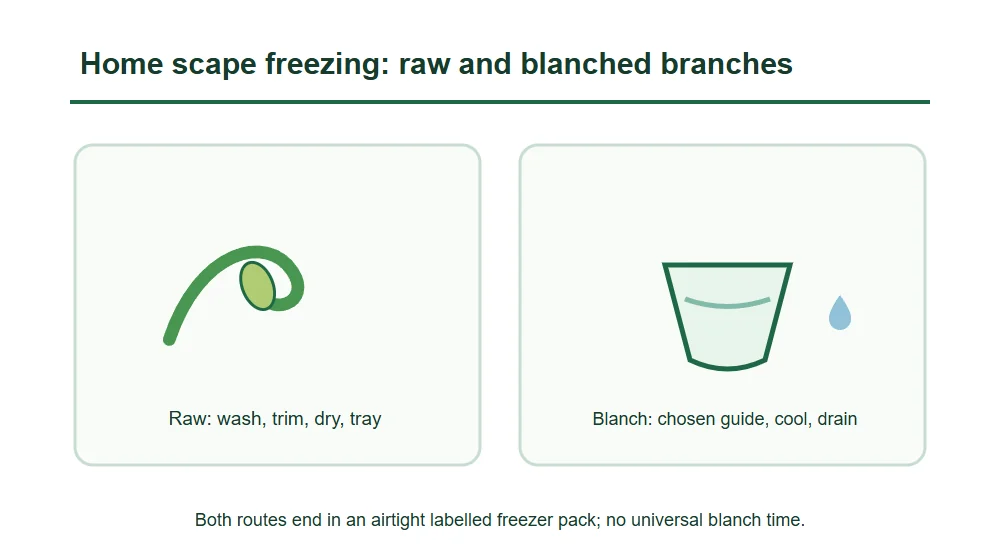
Both routes end in an airtight labelled freezer pack; no universal blanch time.
For a cooked stir-fry ingredient, ask whether the supplied frozen scape is raw or has received heat treatment. That information affects how long the kitchen must cook it and how much fresh-looking green colour remains. In a soup, the distinction may be less visible after a long simmer, but it still belongs in the ingredient specification and food-safety plan. A factory should validate its own treatment for the product, size and line. The buyer should validate the finished dish.
The preservation choice is also linked to pack size. A thin tray layer freezes into separate pieces more easily than a large wet mass. In industrial production, the freezing equipment and loading pattern affect separation, while packaging and cold-chain stability protect it after packing. "IQF" describes an intended individual freezing approach, but a buyer should still inspect how the bag empties after realistic transport and storage. A fused pack can defeat the intended portioning benefit even if it once left the freezer as loose pieces.
Food safety is distinct from texture. Freezing does not sterilise a vegetable. University of Minnesota Extension makes that point for frozen produce generally. A blanching step should not be taken as a universal ready-to-eat claim either. If the next application will be minimally heated or used cold, the buyer needs an explicitly suitable product and validated handling plan. For ordinary frozen scapes supplied as a cooking ingredient, communicate that intended use clearly throughout the supply chain.
Freeze at home in portions
For a household batch, select sound scapes, rinse away soil, remove unwanted tough ends or buds according to the recipe, and dry the surface. Cut the tender stalk to the size you will later add to a dish. Spread it on a tray so the sections are not piled deeply; once frozen, move them to a suitable sealed container or freezer bag. Date the pack. This makes it easier to remove a small amount later without thawing the whole batch.
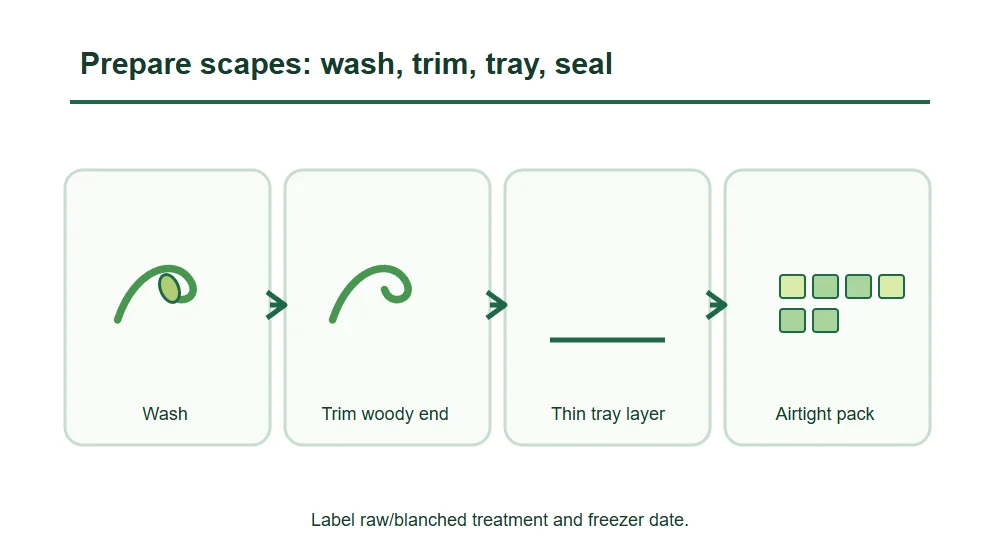
Label raw/blanched treatment and freezer date.
If choosing a blanch-before-freezing home recipe, use that guide's complete heating, rapid cooling and draining instructions as a unit. Le Petit Mas describes one producer's brief hot-water treatment and tray-freezing procedure; it does not establish a universal industrial blanch. Label the resulting pack so it is not confused with a raw-frozen batch. To compare the two home approaches, cook an equal portion from each under the same pan load and seasoning, then judge aroma, colour, fibre and any liquid left in the pan. That small observation helps choose a preferred cooked use, but it is not a microbiological validation or a commercial shelf-life study.
Pack scapes in amounts that match a likely meal or sauce batch. A loosely spread first freeze helps keep sections separable; an airtight final container limits air exposure and odour pickup in a crowded freezer. Label the plant name, raw or blanched preparation, and date. A scape can resemble cut green beans or spring onion once the bud and curl are gone, so a clear label is more reliable than recognising a bag of green sections months later. If a packet shows extensive frost, clumps or dull aroma, examine its storage history and cook quality rather than claiming a single photo can diagnose the cause.
When ready to cook, remove only the portion needed and return the rest promptly to frozen storage. Add the sections to a hot dish according to the recipe. A room-temperature thaw usually offers little benefit for a stir fry and can create a wet, limp pile. If the recipe requires blending or measuring a paste, thaw under controlled refrigerated conditions and note the liquid that separates. This is a kitchen method, not a commercial shelf-life guarantee.
Use frozen scapes without losing their identity
Frozen scape sections can be a recognisable vegetable in a stir fry, not merely a garlic flavouring. To retain that identity, choose a cut that survives tossing and add it at a point that gives tenderness without reducing it to an indistinct soft strand. A large pan load or wet frozen pack can cool the surface and create steam. Test a manageable batch before scaling the recipe. If a sauce is added too early, the vegetable may simmer instead of taking up a light coating.
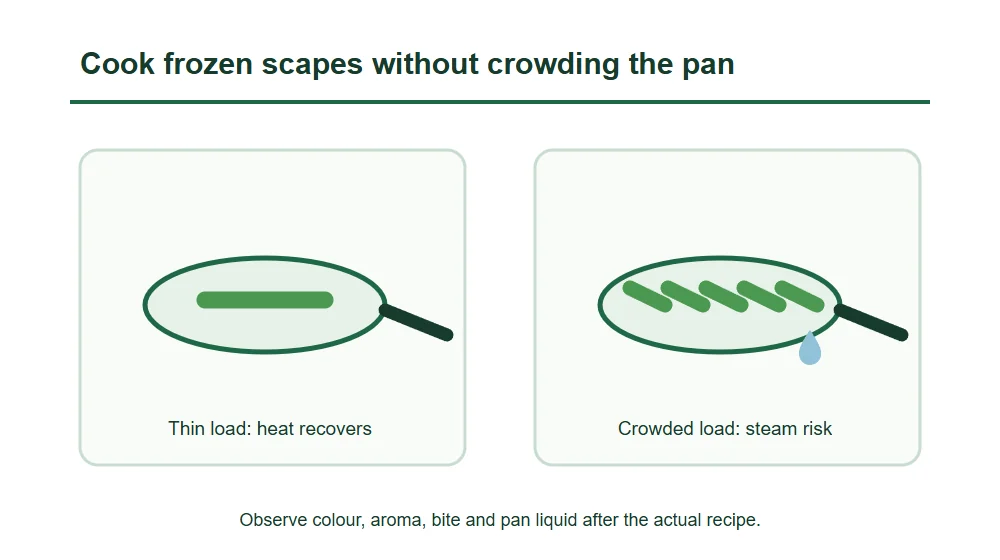
Observe colour, aroma, bite and pan liquid after the actual recipe.
In soup, scapes can provide green pieces and aromatic lift. The desired result may be soft in a long-cooked broth or brighter in a broth finished shortly before service. Check a spoonful after the soup has been held or reheated. An attractive first taste does not show what happens in a central kitchen that cooks, chills, transports and reheats. If the scape pieces become too soft, investigate cut size and addition point before assuming the frozen ingredient itself is unusable.
A sauce or pesto-style preparation places less value on whole-stem texture, but it still needs a clean flavour and manageable fibres. A blender may not remove woody material. Trial the proposed cut with the actual equipment and measure the yield after any sieving. Do not promise that frozen scapes will give the same fresh colour as raw scapes in an uncooked sauce. Storage time, exposure to air and recipe acidity may change the result; the finished product should be tested over its intended shelf life.
For a savoury filling, check water and dispersion. A small section might distribute evenly through a dumpling or pastry; a long piece can make portion weights uneven or tear a wrapper. Thawed moisture can collect in the filling. A measured trial should compare the same batch weight, mixing time, filling yield and cooking method as production. If the loss of water or aroma requires a formula change, record it as part of the approval rather than leaving the kitchen to improvise on every delivery.
Discuss the frozen ingredient for your production
Frozen Garlic Scapes
Cooked stir-fries, fillings and sauces.
Confirm for your order: Stem tenderness and section length; raw or blanched route, cooking use and pack.
View product & supply detailsFor a commercial trial, send your required form, application, pack, quantity and destination. We can discuss the offered sample and the order specification with you.
Request Specifications & QuoteDistinguish scapes from garlic cloves and greens
Garlic scapes are developing flower stalks of hardneck garlic, not peeled cloves. A whole fresh scape often curls and ends in a developing bud; cut straight sections can lose both of those visible identity cues. That is why a photograph of straight green pieces cannot, by itself, prove what plant part was packed. Compare a source record and whole-stalk reference with the proposed cut sample. The flavour is green and garlic-like, while a clove has a different form and concentration. In a pesto or filling, trial the actual scape mass instead of replacing clove mass one for one.
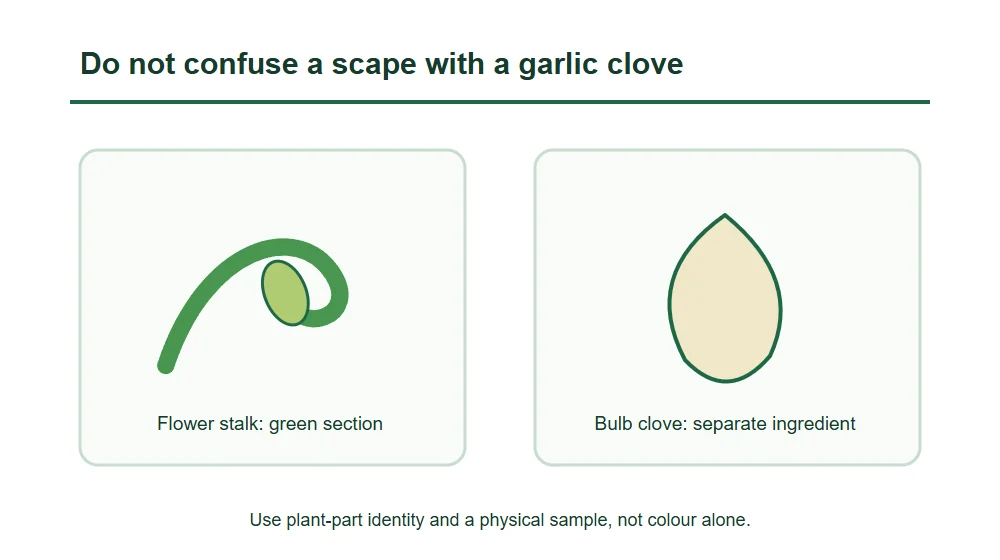
Use plant-part identity and a physical sample, not colour alone.
They are also different from garlic chives and spring onions. All can look like green alliums when cut, but their plant part, flavour and texture differ. A multilingual purchase order or product label should be checked carefully when the English term "garlic stem" is used. Confirm the actual botanical source and product photo before a shipment is booked. If the importer needs an official classification, its customs specialist should assess the exact product and processed state; a general food article cannot decide the destination code.
The second real GreenLand photograph shows long green raw stalks beside cut sections. It is a raw-material form reference, not a frozen-lot measurement, and the visible frame does not clearly show the curled tip or developing bud that identifies a whole scape in the field. Use it to explain the transition from long stalk to packed section. To teach botanical identity, pair it with a separate verified close view of a bud-bearing whole scape; to judge tenderness, bend and cook pieces from a physical sample rather than assigning a woody fraction from this image.
If a supplier substitutes another allium or a different part of garlic, the recipe can change substantially. Set a written no-substitution condition when identity is central to the menu or label. If alternatives are acceptable, trial them separately and revise the ingredient declaration and specifications as needed. Do not let a broad commodity name silently grant substitution rights. That is especially important in a private-label product whose ingredient list and product imagery were approved before procurement.
Specify commercial frozen scape sections
A practical scape specification starts with the part and cut: tender flower stalk, whether the developing bud and thin tip remain, a length range that fits the recipe, and how hard lower pieces are excluded. A stir-fry needs sections that retain a green bite after tossing; a blended sauce can take a smaller chop but still cannot hide woody fibre. Test both uses with a measured mass from the same frozen lot. If the sauce is strained, weigh what stays in the sieve; if the stir-fry loses its shape, compare the thickest and thinnest sections after the same heating. Those results are more instructive than a general request for 'premium scapes'.

Long raw garlic-scape stalks and cut sections; bud is not visible.
Maturity is the variable a cut-length label cannot show. Bend and cook sections from the thick lower stem, the middle and the bud end before accepting a new harvest. The bud can be desirable in one dish and removed in another; the genuinely woody base is different from an edible but firm stem. Write the trim point and whether the bud remains on the sample record. If the sauce has stringy residue, assess which stem zone contributed it. If the stir-fry loses its aromatic note, compare the raw versus blanched treatment and the actual hold before asking for a different cultivar.
For a cut-quality check, spread a weighed frozen portion on a tray and sort tender-looking sections, visibly woody bases, bud/tip pieces and loose fragments into separate groups. Count the pieces and weigh each group; do not mix a piece-count percentage with a mass percentage. Cook a selection that includes the thickest bases and bud-bearing pieces, then note whether a fork meets fibre and whether the flavour is acceptable. A bright green colour is not proof of tenderness. If a new harvest shifts maturity, repeat this side-by-side test against the approved reference before changing the trim point or line settings.
The intended eating state controls the next question. A fully cooked meal can trial a raw-frozen scape, provided its recipe delivers the required finished-food process and acceptable bite. A cold garnish needs a separately suitable ingredient and safety basis; the fact that scapes can be eaten fresh does not make a frozen commercial pack ready to eat. In a pesto-style sauce, check whether the product will be heated later or served without a kill step, then select and document the ingredient accordingly. Keep this safety decision distinct from the consumer's home storage advice.
Inspect, receive and release a bulk lot
Before a first order for a stir-fry line, cook a proposed sample at the planned pan load and compare it with a fresh control if available. Note the section length that remains visible, the thickest piece's bite, how much free liquid remains and whether the garlic note survives seasoning. For a pesto-style sauce, blend a measured portion and check for stringy material after the actual blending/sieving step. These are different acceptance questions; passing one does not imply passing the other. Keep the frozen and cooked photographs associated with the sample code so a later batch can be compared honestly.
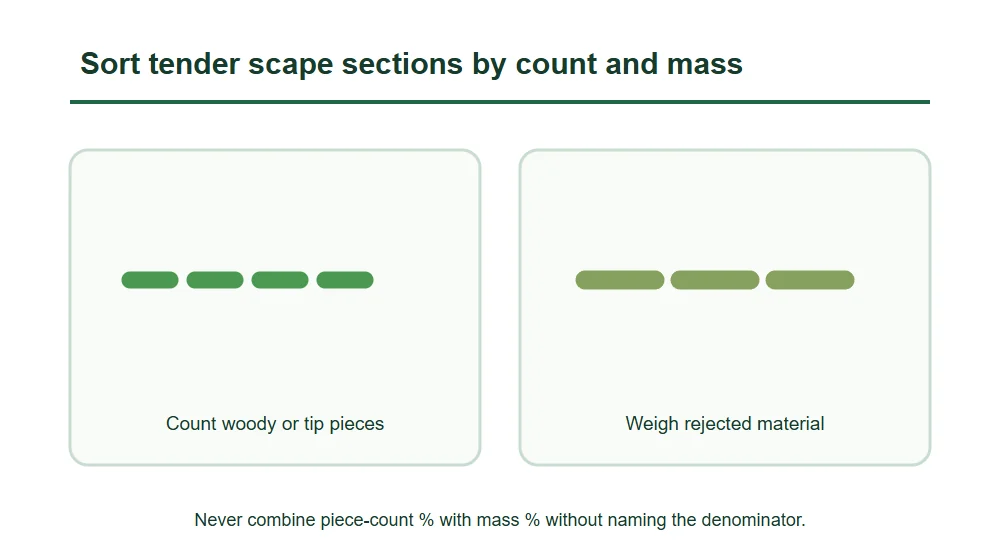
Never combine piece-count % with mass % without naming the denominator.
At receiving, spread some still-frozen sections on a tray and check whether they pour freely or form a wet fused block. Then include the thickest-looking pieces in a small cook test rather than sampling only the tender middle. Record any bud/tip fragments and hard lower bases by count or mass with the denominator stated. The carrier's temperature record helps investigate a clump, but cannot explain a fibrous bite caused by maturity. If the buyer uses scapes in both a stir-fry and a sauce, retain two application results; one test result should not be stretched to cover both recipes.
Hold a lot if it arrives with thaw water, a large fused mass, abnormal odour, foreign material or a cut clearly outside the agreed range. Record the lot and carton codes, photographs, sampling method and available temperature history. Investigate production, packing, transport and warehouse handling before deciding a concession, replacement or rejection. A cook step may reduce some risks in a final dish, but it does not erase a nonconforming ingredient or restore lost traceability.
Across seasons, the proportion of tender stem can change even with the same cutting machine. Compare a current sample with the approved reference using a fork test on the thickest section and the same lightly seasoned stir-fry. If the new lot is tougher, examine trim position and raw maturity before blaming frozen storage. If aroma is dull but the bite is fine, review treatment and storage separately. A repeatable paired cook test is more valuable here than a long generic list of export documents, because it directly addresses the product's defining quality decision.
A retained sample is most useful when the next delivery is cooked beside it using the same batch mass, pan and seasoning. Compare fibre at the thick base, aroma after heating and free liquid, then decide whether a change comes from maturity, trimming or storage. That comparison is a proposed repeatability check, not evidence that an earlier GreenLand shipment already passed such a trial.
Questions about storage, texture and safety
Can garlic scapes be frozen without blanching? Home sources describe that option, and other sources recommend a blanching step. Choose a tested home method for your intended use. For a commercial ingredient, ask the supplier what process was applied and judge the finished sample; do not prescribe one household timing as a universal factory parameter.
How long will frozen scapes keep? The NWI Food Council's home guide says chopped scapes need no blanch and can be kept in an airtight freezer container for up to one year. That is a source-specific household storage example, not a promise that every home freezer preserves best texture for twelve months. Date the pack, avoid repeated warming and opening, and judge aroma, colour and freezer damage when using it. A commercial frozen scape SKU instead needs its own documented shelf life, package and cold-chain conditions; a household guide cannot set its saleable date.
Can frozen scapes be eaten raw after thawing? Do not assume so. Freezing does not sterilise produce, and the texture will be softer. A cold or minimally heated application needs an explicitly suitable ingredient, validated handling and a finished-food safety plan.
What should a buyer include in an RFQ? Send the desired tender-stem cut, bud or tip preference, application, pack size, quantity, destination and requested documents. State whether the product must remain free flowing and what cooked result the line needs. We can then discuss a GreenLand-food frozen garlic scape sample for that defined use.
Compare preservation decisions for cloves and other garlic forms.
Clarify garlic plant parts and product descriptions.
See how harvest stage affects the starting raw material.
Source frozen garlic scapes with GreenLand-food
GreenLand-food is a professional frozen garlic scapes supplier and manufacturer in China, providing factory-direct wholesale supply for importers, food manufacturers, foodservice distributors and private-label programs.
Send us the product form, specification, packing, quantity, application, destination, private-label needs and requested documents.