


How Long Do Mushrooms Last in the Fridge?
Aug 28, 2026
Leave a message
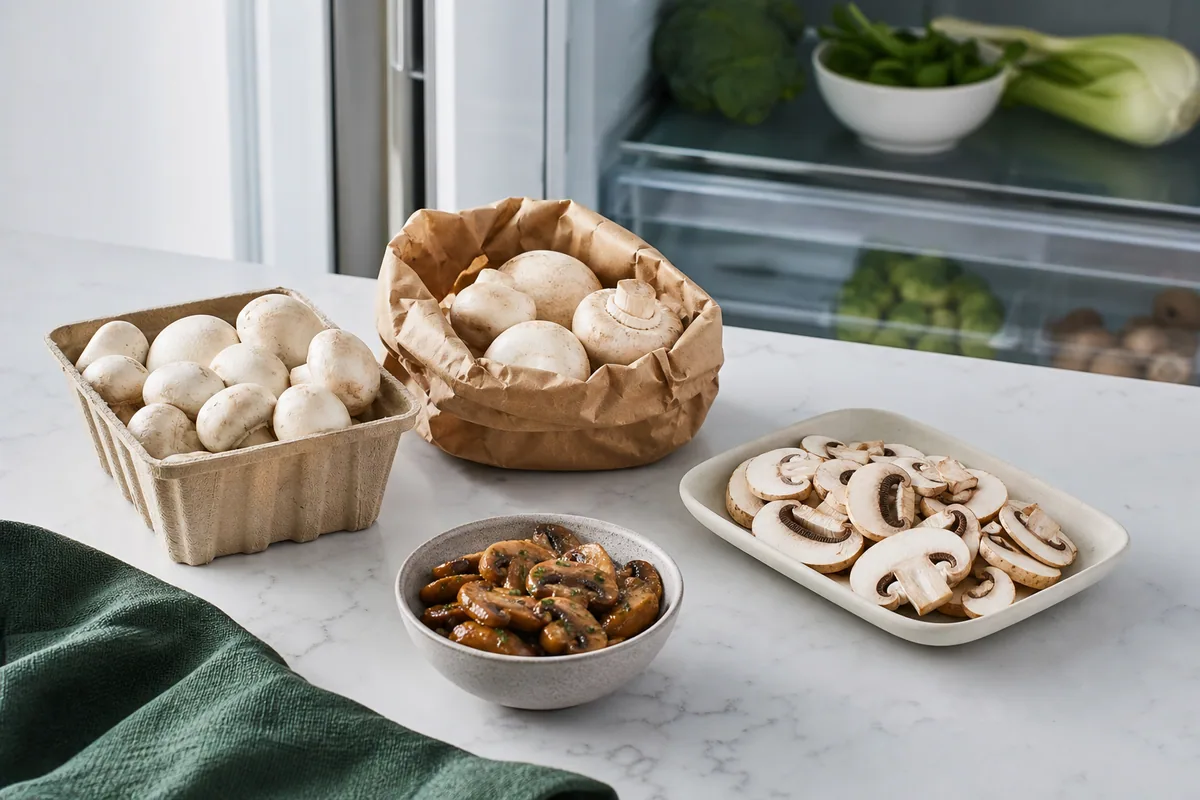
Plan around 4–7 days for whole mushrooms, then inspect the actual batch
If whole mushrooms were firm, dry and recently packed when you bought them, 4–7 refrigerated days is a practical planning range. Pre-sliced mushrooms have more exposed tissue and may become wet or dark within only a few days. Cooked mushrooms are leftovers, so refrigerate them promptly and use them within about 3–4 days. Discard mushrooms with slime, wet breakdown, mold, a strong off odor or doubtful handling; freezing does not rescue a deteriorating batch.
Quality ranges assume sound mushrooms and proper cold storage. A label, destination-market rule, site procedure or documented temperature event can require a shorter decision.
Key takeaways
- Count from condition, not only purchase date: harvest age and retail handling already used part of the shelf life.
- Keep whole mushrooms dry and able to breathe after opening; do not wash them until preparation.
- Sliced mushrooms deteriorate faster, so prepare only what you need and freeze the remainder before quality falls.
- A date cannot overrule slime, wet dark tissue, mold, off odor or an uncertain temperature history.
Quick comparison
| Form and condition | Practical refrigerator plan | Main reason | Best next action |
|---|---|---|---|
| Whole, fresh and dry | Often 4–7 days | Less exposed cut surface and slower moisture loss | Keep refrigerated and inspect before each use |
| Pre-sliced or home-sliced | Usually only a few days; some sources use 1–3 days | More exposed tissue speeds browning, drying and wet breakdown | Use first or cook and freeze promptly |
| Cooked mushrooms | About 3–4 days as refrigerated leftovers | Cooking does not create a new long fresh-life window | Cool promptly, cover and reheat thoroughly |
| Slimy, moldy, leaking or strongly off-smelling | No remaining planning window | Condition has moved beyond a normal quality change | Discard; do not taste to test |
The shelf-life clock starts before the mushrooms reach your fridge
A pack does not become day zero when it passes the checkout. Mushrooms have already been harvested, cooled, transported, held in a distribution center and displayed in retail refrigeration. A pack bought soon after delivery can have far more usable life than an identical-looking pack bought late in its display cycle. This is why two honest sources can publish slightly different day ranges without either one being automatically wrong. The number is a planning guide; the starting condition and temperature history decide how much of that range remains.
When choosing a pack, look for firm caps, a clean natural odor, dry surfaces and an intact container. Condensation under film, pooling liquid, flattened pieces or widespread dark wet marks all reduce confidence. Loose mushrooms should feel firm rather than tacky. If a seller provides a packed-on or use-by date, treat it as useful context, but still inspect the mushrooms. A date is not a substitute for condition, and a visually sound batch is not a reason to ignore a binding use-by instruction in your market.

Why whole mushrooms usually outlast sliced mushrooms
A whole cap has relatively little damaged surface. Once it is sliced, many more cells are exposed to oxygen, handling and moisture loss. Cut faces brown more quickly, edges dry, and liquid can collect where pieces touch. Pre-sliced mushrooms may also have spent more time since cutting before you brought them home. For that reason, use sliced packs early even when the whole-mushroom range on a general storage chart looks generous.
Do not pre-slice an entire pack merely to save a few minutes later. Keep the remainder whole and prepare only the amount needed for the current meal. If the recipe plan changes, cook or freeze sound mushrooms while they still have good structure. Waiting until the final day and then freezing a wet, soft batch locks in poor raw-material quality; it does not reverse it. Commercial kitchens should apply the same principle through receiving dates, opened-pack rules and first-expiry-first-out rotation.
The best refrigerator setup is cool, dry and breathable
Keep the refrigerator at 40°F / 4°C or below and place mushrooms where the temperature is stable. The original tray and film can protect an unopened retail pack, but once opened, a porous paper bag is often more forgiving than a tightly sealed ordinary plastic bag. Paper absorbs some surface moisture while still allowing exchange. A sealed bag that traps condensation can turn the pack wet and slimy. An uncovered tray, however, can dry mushrooms excessively and expose them to refrigerator odors.
Do not wash mushrooms before storage. Brush away loose debris or wait and clean them just before cooking. If rinsing is appropriate for your preparation, make it brief and drain well. Store mushrooms away from raw meat drip and strong-smelling foods. Keep cooked mushrooms in a clean covered container after prompt cooling. Home advice should not be copied directly into a food factory: professional sites need a validated receiving temperature, storage limit, sanitation procedure and opened-pack policy within their own food-safety system.
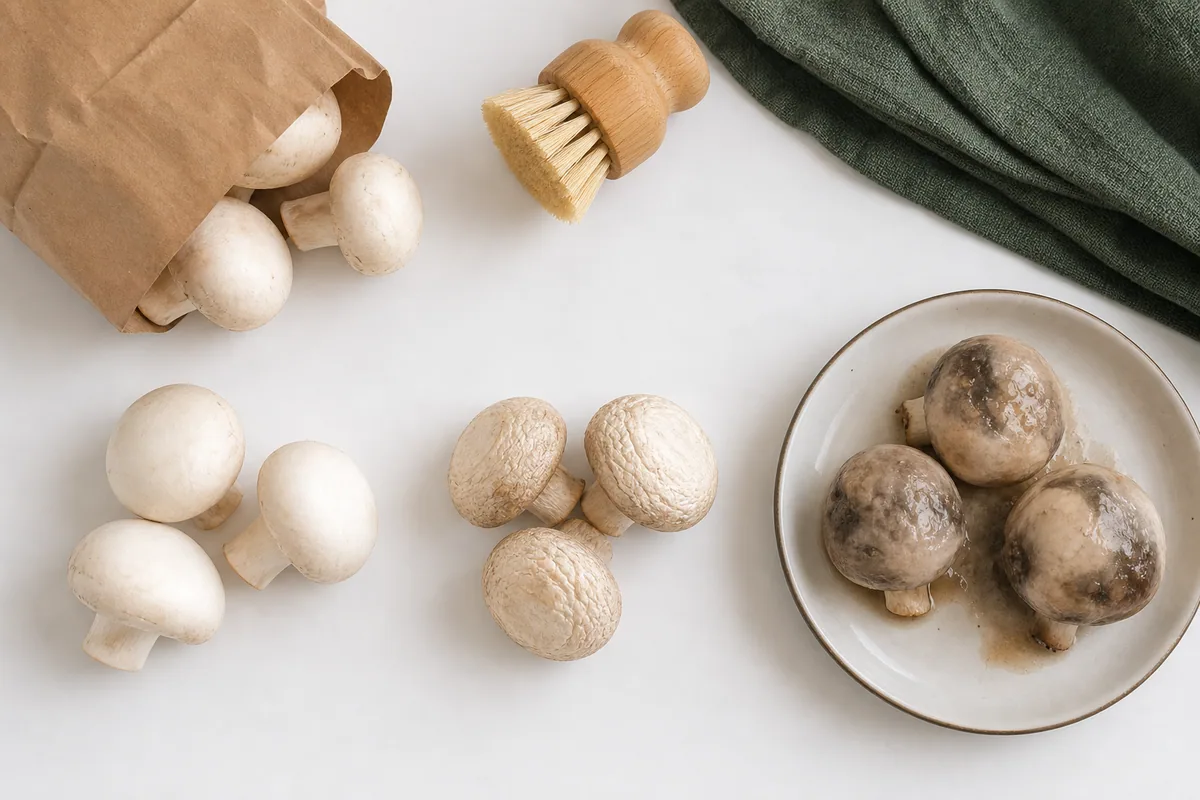
A quick daily inspection is more useful than guessing
Start with the surface. Fresh mushrooms can naturally darken slightly or dry at the edges without becoming dangerous, but wet translucency, spreading soft patches and slippery slime show more advanced breakdown. Then check the structure. A cap that remains firm enough to slice is different from one that collapses under light pressure. Finally check odor. A mild earthy smell is normal; a sour, fermented or strongly unpleasant odor is not. Mold is a clear discard signal.
Do not taste a doubtful mushroom to decide whether it is acceptable. Also avoid trimming one visibly spoiled area from a wet, collapsing pack and assuming the rest is unaffected. When handling history is uncertain-especially after a long warm journey, a failed refrigerator or leaking packaging-the safest action is to discard. Food-safety decisions should never depend only on a blog photograph, because species, contamination and time-temperature exposure cannot be diagnosed from appearance alone.
Cook, freeze or discard: make the decision early
Use mushrooms fresh while they are firm and dry when presentation and bite matter. Cook them soon if they are still sound but approaching the end of their best quality. Freeze them when the batch is sound and you know it will not be used within the next few days. Discard them when slime, mold, wet decay, off odor or temperature abuse creates doubt. This four-way decision prevents the common mistake of using the freezer as a last-minute rescue box.
For home freezing, the National Center for Home Food Preservation recommends choosing mushrooms free from spots and decay, sorting by size, washing and trimming, then steaming or heating small amounts in fat. Its measured steam method uses 5 minutes for whole mushrooms, 3½ minutes for buttons or quarters and 3 minutes for slices, followed by prompt cooling, draining, packing and freezing. Read the full NCHFP mushroom instructions before relying on the process.
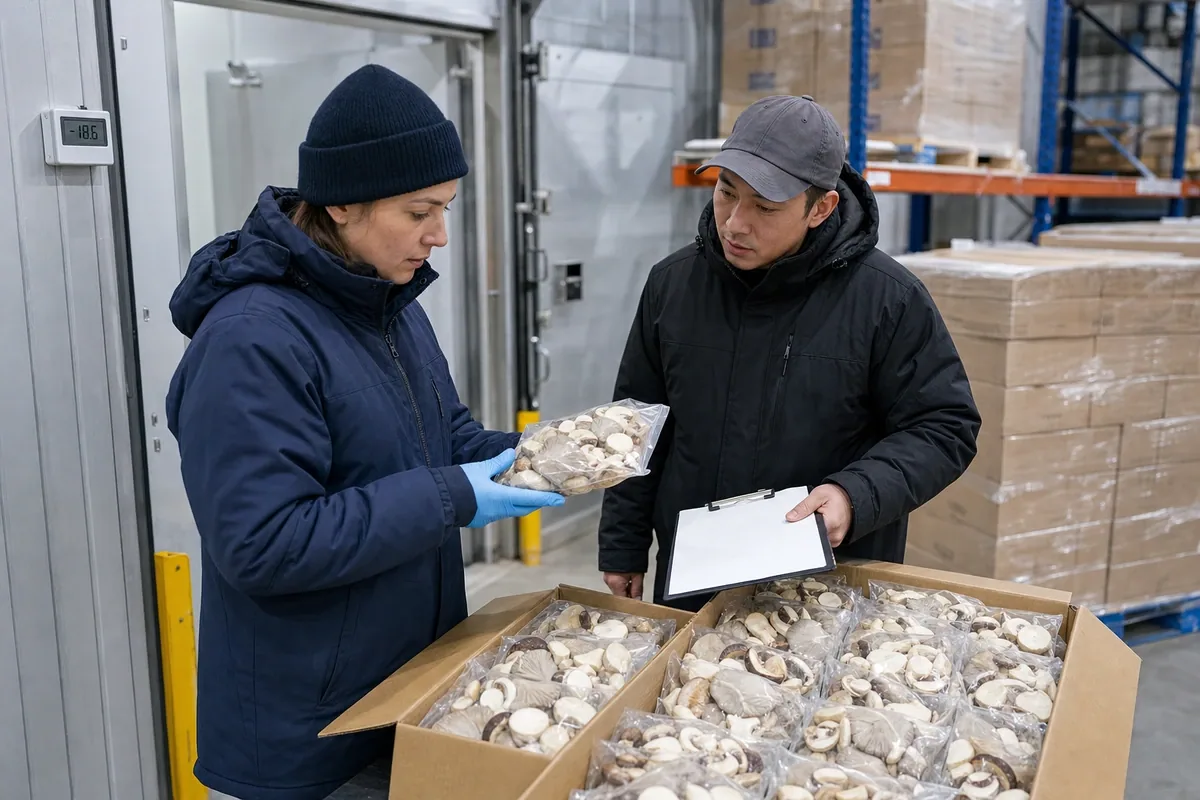
Fresh and frozen mushrooms solve different problems
Fresh mushrooms remain the better choice for raw salads, whole-cap presentation and dishes built around a fresh, resilient bite. Frozen mushrooms are more practical for soups, sauces, pizza, rice, pasta, hot pot and prepared meals, where cooking can manage released moisture. The comparison is not "good" versus "bad." It is short-life flexibility and fresh presentation versus stable frozen inventory and reduced preparation.
A household bag frozen in a domestic freezer is not the same product as commercial IQF mushrooms. Commercial supply is processed to an agreed species, cut, pre-treatment, defect level, pack and shelf life. IQF pieces should be tested in the actual recipe, because free-flowing appearance does not by itself prove acceptable drip loss, color or bite. For background on frozen handling, see our frozen mushroom storage and shelf-life guide.
What professional buyers should check at receiving
Retail storage advice is a useful reminder, but a buyer needs measurable acceptance points. For fresh mushrooms, define species, maturity, cap diameter, stem condition, color, open-veil allowance, soil and foreign matter, decay, broken pieces, net weight, packaging, receiving temperature and minimum remaining shelf life. Record the lot and delivery time, inspect representative packs and separate transport damage from supplier defects. A verbal promise that the product "lasts a week" cannot replace an agreed receiving specification.
For frozen mushrooms, the control set changes. Confirm species and cut, fresh-IQF or blanched route, free-flowing condition, large clumps, surface ice, dehydration, broken-piece percentage, drip loss, storage at or below the declared temperature, production date, best-before date and document consistency. At GreenLand-food, we review the target application first, then match the available mushroom form and packing to the buyer's cooking and handling test. Final availability and specifications are confirmed order by order.

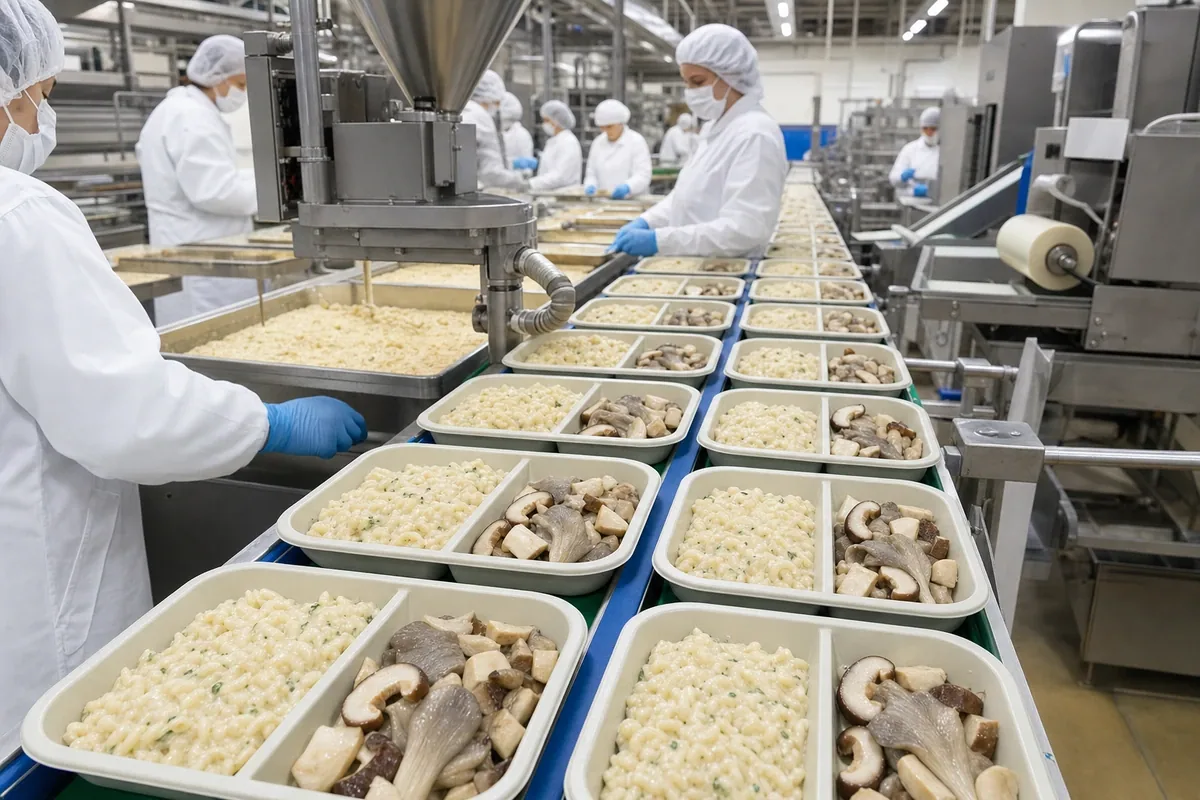
A small kitchen trial gives a more honest buying answer
If mushrooms are an important formula ingredient, compare products under the same conditions. Weigh the frozen sample, cook it in the intended pan or sauce, record the time to release liquid, measure cooked yield and examine identity after heating. A slice that looks attractive while frozen may become too thin after cooking; a slightly darker piece may give better flavor and intact bite. Decide which attributes matter before the trial rather than scoring only appearance.
For recurring orders, retain the approved sample description and trial method. Record slice thickness, cap-to-stem ratio, defect limits, portion size, recipe load, equipment, cooking time and acceptable yield. This turns the vague question "how long will mushrooms last?" into two controlled questions: how long will the stock retain quality under the declared cold chain, and how consistently will the approved form perform in the final dish?
Worked decisions that a short answer cannot cover
A refrigerator problem can erase the calendar
A seven-day planning range assumes the refrigerator was actually cold. A crowded shelf, a door that does not seal, warm leftovers placed beside the mushrooms or repeated power loss can lift product temperature. A domestic display may show the set point rather than the warmest food temperature. If the refrigerator was above 40°F / 4°C for an uncertain period, do not simply subtract a day and continue. Review the event using local food-safety guidance and discard when the exposure cannot be established. The mushrooms' high moisture and delicate structure make quality loss visible quickly, but the absence of slime does not prove safe handling.
For a restaurant or retail operation, calibrate measuring devices, map warm zones and record corrective actions. Put deliveries away promptly and avoid leaving mushroom cases in a receiving area while paperwork is completed. The shelf-life question then becomes operational: when did the lot arrive, at what temperature, how much declared life remained, when was the pack opened and which limit applies after preparation? Those records prevent a manager from making a release decision from memory.
A simple use-first plan cuts waste without stretching safety
Plan the pack before opening. Reserve the firmest whole mushrooms for visible dishes early in the week. Use pieces with light dry wrinkling-still sound and normal in odor-in soup, sauce or sauté where appearance matters less. Cook a portion before the remaining life becomes uncertain, cool it promptly and use it within the leftover-food window. Freeze a sound surplus only when the coming menu will not use it. This sequence protects quality better than waiting for a date, inspecting a deteriorating pack and hoping freezing will make it acceptable.
Keep the portions small. A household can freeze one-meal packs; a kitchen can stage production against forecast demand. Record cooked yield so buyers understand how much usable mushroom reaches the plate. Fresh mushrooms can shrink and release water, so comparing purchase weight alone with a frozen alternative may mislead. Cost per cooked portion, labor, waste, storage and menu identity provide a fairer comparison.
Worked receiving example: two packs with the same date
Imagine two 500 g sliced-mushroom packs with the same printed best-before date. Pack A arrives dry, cold and evenly colored with an intact seal. Pack B arrives with condensation, several broken slices and liquid at the bottom. Treating both as identical because the date matches ignores evidence. Pack B may need rejection, rapid use or further assessment under the agreed specification. A day count cannot compensate for weak arrival condition.
Now compare two whole-mushroom cases. One has tight size distribution and strong caps; the other includes many open veils, long stems and bruised pieces. Both may be safe, but they will not deliver the same retail appearance, sliced yield or cooking behavior. A buyer should define these attributes before the order, photograph representative defects at receiving and connect any claim to batch, carton and temperature records.
What a useful supplier question sounds like
"How long do mushrooms last?" is too broad for a quotation. A better fresh-mushroom request asks for species, harvest or packing evidence, form, size, maturity, defect tolerance, packaging, receiving temperature and minimum remaining life at arrival. A better frozen request asks for species, cut, pre-treatment, free-flowing condition, clumps, ice, broken pieces, drip loss, packing, declared shelf life and minimum remaining life. Add the actual dish and cooking method so the supplier can discuss a relevant format.
For storage and handling details, see How Long Do Frozen Mushrooms Last?.
The supplier's answer should show boundaries. Availability may change with crop, facility and order plan. A sample approved for soup may not be approved for retail display. Certificates belong to named facilities and current scopes. At GreenLand-food, we confirm these items against the selected product and order rather than turning a general website day range into a guarantee.
What to confirm before approving volume
A useful inquiry describes the mushroom and the job it must do. Send the product identity, form or cut, target application, packing, quantity, destination and the quality points your team will measure. We will review current availability and match an appropriate product and facility route where possible. Final size, process, ingredients, defect limits, microbiology, documents, shelf life, lead time and commercial terms remain subject to the approved specification and order confirmation.
- State whether the project uses fresh, home-prepared frozen or commercial IQF mushrooms.
- Define species and market name; do not treat every mushroom as interchangeable.
- For fresh supply, confirm receiving temperature, pack date evidence and remaining-life expectation.
- For frozen supply, confirm cut, pre-treatment, clumps, ice, drip loss and declared shelf life.
- Run the same cooked-yield trial on every approval sample.
- Align carton marks, specification, COA and lot code before release.
Frequently asked questions
Can whole mushrooms last seven days in the fridge?
Often they can, if they started firm and dry and stayed at 40°F / 4°C or below. Four to seven days is a useful planning range, not a guarantee. Inspect the pack before use and follow any applicable use-by instruction.
How long do sliced mushrooms last in the fridge?
Plan to use sliced mushrooms within only a few days; some storage references use about 1–3 days. The exposed cut surface browns and becomes wet faster than a whole cap, so use the actual pack condition as the deciding evidence.
For storage and handling details, see How Long Do Mushrooms Keep in the Fridge?.
How long do cooked mushrooms last in the fridge?
Treat them as refrigerated leftovers. Cool and cover them promptly, keep them at 40°F / 4°C or below and plan to use them within about 3–4 days. Ingredients in the finished dish may require a shorter limit.
Should mushrooms be stored in a paper bag?
After opening, a paper bag can absorb excess moisture while allowing the mushrooms to breathe. An unopened retail pack may stay in its original packaging. Avoid trapping wet mushrooms in an ordinary airtight plastic bag.
Should I wash mushrooms before refrigerating them?
Usually no. Extra surface moisture speeds wet breakdown. Keep them dry in storage, then brush or rinse briefly just before preparation and drain well.
Are wrinkled mushrooms bad?
Light dry wrinkling is mainly a quality change. Wet collapse, slime, spreading dark soft areas, mold or a strong off odor are more serious discard signals. When the handling history is doubtful, do not rely on appearance alone.
Can I freeze mushrooms on the last refrigerator day?
Only if they are still sound, firm enough to prepare and free from decay. Freezing preserves the condition you start with; it does not repair slime, mold, odor or wet breakdown. Earlier freezing gives a better result.
Can I eat mushrooms after the date on the pack?
Follow legally relevant use-by instructions. A best-before date may describe quality, but local label rules differ. Never let a date overrule mold, slime, off odor, damaged packaging or a poor temperature history.
Why do mushrooms get slimy in plastic?
Mushrooms release moisture. When an ordinary sealed bag traps humid air and condensation, surfaces stay wet and deterioration accelerates. Breathable storage and a cold, stable refrigerator reduce that problem.
Are commercial frozen mushrooms the same as home-frozen mushrooms?
No. Commercial products are supplied to a defined species, cut, pre-treatment, freezing method, defect tolerance, pack and declared shelf life. A buyer should approve them through documents and a cooking trial, not assume household results apply.
Reference points
- Utah State University Extension mushroom guide
- NCHFP freezing mushrooms
- FoodSafety.gov cold storage chart
These sources support the measured methods and quality-versus-safety boundaries. The applicable product label, specification, food-safety plan and destination-market rules still control a real batch.
Confirm the mushroom format against your real cooking process
We supply frozen mushroom ingredients for importers, distributors, food manufacturers, foodservice operators and private-label programs. Send us the species, cut, application, packing, quantity, destination and trial method. We will review an available specification and next step.