


How to Blanch Bean Sprouts
Sep 24, 2026
Leave a message

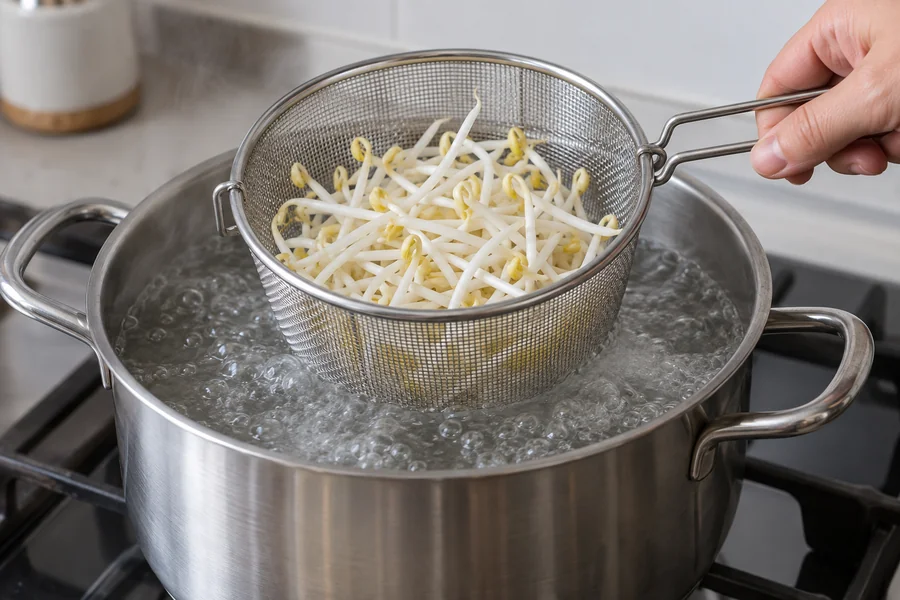
The exact method depends on the sprout and the finished dish. Thin mung sprouts used in a hot stir-fry can receive a short blanch and complete their cooking in the wok. Thick soybean sprouts need a separate assessment because their larger bean heads and firmer stems behave differently. Frozen commercially processed sprouts may already have been blanched, yet their final cooking instructions still govern the meal. Good blanching preserves a useful texture and controls excess water; sound food safety requires more than a stopwatch.
Prepare the sprouts and the cooking station
Identify the product before heating it. Common white bean sprouts for noodle dishes are usually mung bean sprouts: slender pale stems with small bean heads. Soybean sprouts have more prominent yellow heads and thicker stems. Their cooking times and intended dishes can differ. GreenLand's mung bean sprout product page treats mung and soybean sprouts as distinct products, which is the right starting point for a kitchen recipe or a commercial specification.
For fresh sprouts, inspect the pack while it is still cold. Discard a pack that shows spoilage, excessive slime or an unacceptable odor. Sort out damaged, heavily browned or visibly contaminated pieces. Rinse under running potable water and drain. Rinsing removes loose debris but cannot be relied upon to remove bacteria that may have multiplied during sprouting. The FDA explains why sprouted seeds require care: contamination can be associated with the seed and grow during germination, even when sprouts look clean.

Close separated mung bean sprouts rinsed in a colander, damaged and dark pieces excluded.
Set up the pot, a perforated basket or strainer, a clean receiving vessel, and a place for the sprouts to drain before you heat the water. A large mass of sprouts dropped into a small pot will cool the water and produce uneven results. Work in batches that can move freely. This matters particularly for the thin stems: some may collapse against the pot edge while others remain in a compact clump. Gently separating the shoots before adding them helps expose them to the hot water more evenly.
Decide what happens immediately after blanching. If the sprouts will go into a hot wok or soup, leave space to drain them and finish the cook in the next step. If they are destined for a cold seasoned side dish, they need a complete cooking procedure suitable for that use, followed by hygienic cooling and prompt refrigeration. A short blanch chosen to keep a raw-like crunch is not automatically enough. The handling plan should begin before the first batch enters the pot.
Use the image of rinsed mung sprouts as a visual check of identity and condition: thin white stems, small heads and loose separation. It does not reveal their microbiological status. A visually clean lot may still need thorough cooking, while a visibly spoiled lot should be rejected rather than rescued with heat. Keep preparation surfaces and hands clean so the cooked product does not touch utensils used for raw sprouts.
Blanch mung bean sprouts in small batches
Bring enough potable water to a vigorous boil that will recover quickly after each batch. Lower the sprouts into the water in a basket or add them loose and stir gently with a clean utensil. The stems should be immersed, not piled above the waterline. Start assessing texture once the water returns to a steady boil. A small batch gives the cook a visible, controllable process; a tightly packed batch makes a nominal "one minute" misleading because the center of the mass may see less heat.
- Sort and rinse the fresh mung sprouts; reject spoiled material.
- Bring ample potable water to a steady boil and add a small, loose batch.
- Stir gently so the stems are immersed and the water recovers its boil.
- Check texture after roughly a minute, then drain promptly; follow the product's full-cooking requirement for the final use.
- Finish cooking in the dish when needed, or cool a thoroughly cooked batch hygienically for a cold preparation.
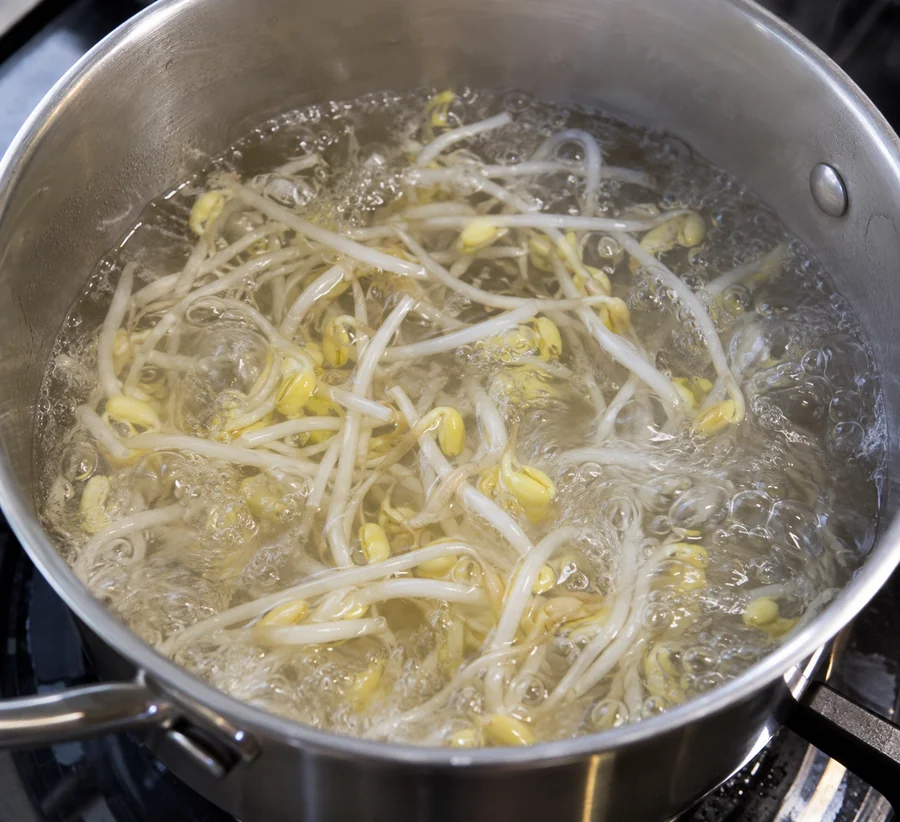
Small batch of mung bean sprouts fully immersed and moving in a pot of boiling water, no oversized crowded pot.
Several current recipes use about 60 seconds for a kitchen texture target. Nyonya Cooking uses roughly a minute in a finished side dish, while Sudachi Recipes uses one minute for a ramen topping. Just One Cookbook describes about 1–1½ minutes for its salad. Those examples show a practical range for delicate mung shoots, but they do not prove a universal safe cooking time. Pot size, batch mass, starting temperature and final use all differ.
Watch the physical change as well as the clock. The sprouts soften slightly, lose some raw bean aroma and become a little more translucent. They should still retain an intact stem for dishes that need structure. A limp, waterlogged pile indicates that the blanch has gone beyond a light texture treatment. If the recipe will heat the sprouts again, stop the first stage before the final texture is reached so the second stage can complete the cook without turning them mushy.
The image of sprouts circulating in boiling water illustrates full immersion. It is a visual target for even contact, not a claim about bacterial reduction. Surface bubbles alone cannot tell you that every part of every sprout has reached a specified temperature for a specified time. For a ready-to-eat commercial product, validation belongs in a documented process designed for the product and plant, with appropriate monitoring and testing. A home recipe cannot stand in for that control.
Avoid adding sprouts so early that they sit in warming water. That extends time in a temperature range that does little for texture and makes the final result hard to repeat. Also avoid adding a large quantity of oil or seasoning to the blanching pot: seasoning belongs mainly in the finished dish, where its concentration is controlled. Plain boiling water makes it easier to see and reproduce the sprout condition.
Cool, drain and use the sprouts
Lift the sprouts promptly when the planned blanch is complete and let water run off in a clean strainer. A few firm shakes help remove water trapped between the stems. Draining matters because wet sprouts dilute a dressing, lower the temperature of a wok, and add free liquid to a noodle bowl or ready meal. The photo of water falling from the sieve shows the step more clearly than a timing instruction alone.
Cooling depends on the next use. For immediate hot stir-frying, the drained sprouts can go straight into a sufficiently hot pan for final cooking. For a cold side dish, cool the thoroughly cooked sprouts quickly using a hygienic method, then refrigerate promptly. Some recipes rinse or shock sprouts in cold water to stop texture change; others drain them hot into a seasoning bowl. Either method introduces a handling step, so use clean water, clean tools and a controlled time before service. Do not leave a wet bowl of sprouts at room temperature while other ingredients are prepared.
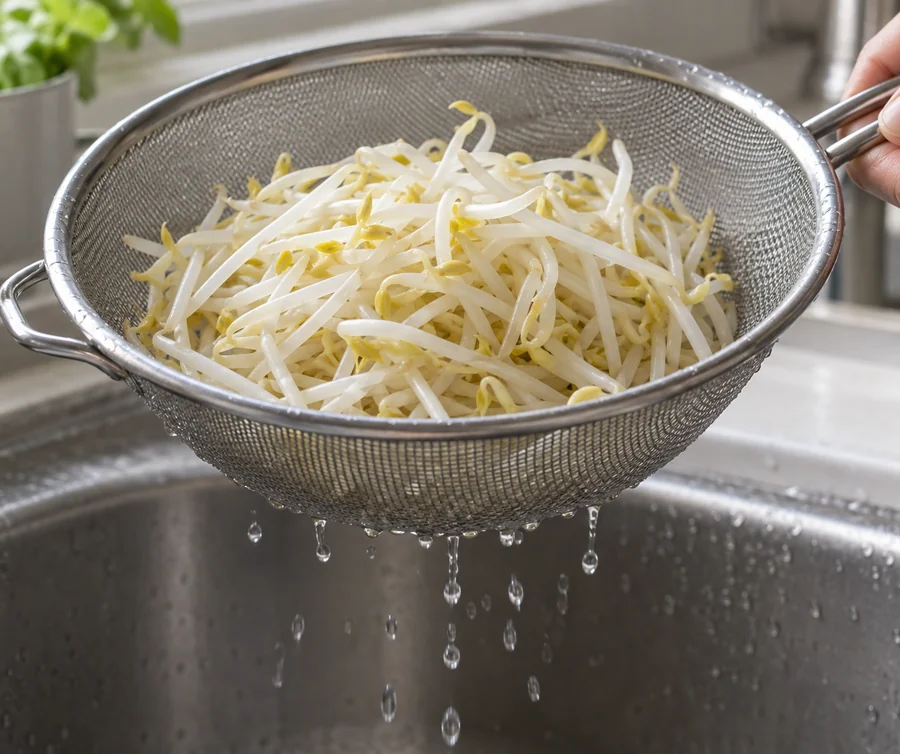
Blanched sprouts draining through a metal sieve above a sink, visible water release, no ice bath imposed as a universal step.
Texture often deteriorates during holding rather than during the brief blanch itself. Residual heat can continue softening a deep pile. Excess water collects under the product and makes the bottom layer soggy. A loosely spread, well-drained batch cools more evenly than a thick mound. If sprouts are included in a refrigerated prepared food, the formulation and shelf life need their own evaluation; the blanching step alone does not establish a safe storage period.
For a wok dish, add drained sprouts when the other ingredients are ready and give them enough heat to complete the dish. For soup, add them in a way that allows the broth to return to a boil and heat the sprouts through. For a spring roll filling, drain especially well because trapped moisture can weaken wrappers and change frying performance. A cold dressed salad requires particular care: the sprouts must be cooked adequately before cooling and handled hygienically afterward. The same "blanch" word can hide different final cooking obligations.
Never mix the cooked batch with raw sprouts to restore crunch. That reverses the separation achieved by cooking. Use distinct utensils or wash and sanitize them between raw and cooked handling. If a batch has been standing out of temperature control or shows spoilage, the answer is not another brief dip in hot water. Follow the food operation's discard and time-temperature rules.
Adjust for soybean sprouts and frozen product
The comparison image shows why one timing instruction cannot cover all bean sprouts. Mung sprouts are thin, with small bean heads; soybean sprouts have larger heads and firmer stems. A soybean sprout side dish often needs longer cooking to soften the bean head and remove raw flavors. Begin with a recipe or package instruction written for soybean sprouts, then evaluate doneness at the thickest head and stem. Do not borrow a delicate mung-sprout blanching time simply because both items are sold under the phrase "bean sprouts."
Frozen sprouts add a second distinction: the supplied product may be raw, briefly blanched, or otherwise prepared. The manufacturer should declare the processing status and the final cooking requirement. GreenLand's frozen bean sprout range is designed for hot dishes such as noodles, soups, stir-fries, spring rolls and ready meals; order details such as sprout type, length, blanching condition and packing are confirmed against the buyer's application. "Frozen" does not mean "ready to eat."

Side-by-side true mung sprouts with small seed heads and soybean sprouts with larger bean heads, same scale and plain background.
For frozen IQF sprouts, test a small representative portion using the intended final process. Adding them directly from frozen to a hot soup or wok can protect convenience, but the cold mass will reduce pan or broth temperature. Allow the dish to recover heat and cook through according to product instructions. Thawing in a colander may release a great deal of liquid and soften the stems; whether that is acceptable depends on the dish. A spring roll or dumpling filling may need a more aggressive drainage target than a soup ingredient.
Mung sprout length and breakage also affect a frozen product's performance. Long intact shoots can be desirable in a noodle topping but less convenient in a portioned filling. Excessive broken pieces increase wet surface area and can change the appearance after reheating. A buyer can ask for a defined length distribution, color tolerance, root and hull tolerance, moisture or drip-loss expectation, and acceptable free-flowing condition. These are measurable purchasing terms, unlike "perfectly crisp."
Our existing guide on whether bean sprouts can be frozen deals with preservation and texture after freezing. This article addresses the heating stage. A buyer needs both: what the frozen product is, and how the final kitchen or factory process will cook it. Tests should use the actual pack size and batch load to avoid approving a small sample that performs differently in service.
Understand what blanching does for safety
Blanching is a controlled exposure to hot water or steam. In vegetable processing it is often used to change texture, reduce enzymatic activity before freezing, remove raw flavors or prepare a product for a later cooking stage. The word does not specify a particular temperature at the coldest point or a validated pathogen reduction. A recipe's "one minute" may produce a good texture without proving that the sprouts are safe to serve as a cold ready-to-eat food.
This distinction is especially important for sprouts. Seeds can carry pathogens into the warm, humid growing conditions used for sprouting. FDA guidance advises avoiding raw sprouts in higher-risk contexts and cooking sprouts thoroughly; the CDC's safer-food choices likewise identifies raw or undercooked sprouts as a risk. Washing or freezing does not erase that concern. Thorough final cooking and prevention of recontamination are the consumer-facing controls.

Mung sprouts with caliper show size selection.
Food manufacturers need to distinguish a quality blanch from a validated lethality step in the process description. The latter requires a defined time-temperature profile, equipment control, product loading assumptions, monitoring, corrective actions and evidence appropriate to the hazard and market. The details depend on the specific product and regulatory setting. We do not assign an unsupported universal minute count or claim that a quick blanch sterilizes sprouts. That would give a false sense of certainty to foodservice and ready-meal buyers.
Even after a sound heat step, handling matters. A clean receiving container, protected cooling, cold storage and separation from raw material are part of the final product condition. If a supplier sells a frozen sprout ingredient for a meal that will be cooked later, the label and commercial documents should state that intended use and cooking requirement. If a buyer needs a ready-to-eat component, that is a materially different request that needs its own validated process and acceptance criteria.
The safest practical phrasing for a home cook is simple: brief blanching can be useful for texture, and sprouts should be thoroughly cooked when served. The exact recipe can still be delicious. The food safety message should not be softened to preserve a fragile idea of maximum crunch, especially for pregnant people, older adults, young children and people with weakened immune systems.
Specify blanching for commercial frozen sprouts
A purchasing brief should begin by naming mung or soybean sprouts and describing the dish. For a hot noodle product, the target may be recognizable stems that withstand a second heat step. For a frozen stir-fry mix, the buyer may prioritize low free water and even portioning. For a spring roll filling, the key concern may be moisture release inside the wrapper. These different outcomes require different blanching and drainage targets; one adjective such as "lightly blanched" cannot carry the entire specification.
The photographed GreenLand sprouts beside this section show true product shape, size and color. A measured sprout image helps discuss length; a close product photo helps discuss stem and head condition. Neither image proves blanching time, microbiology or the result of a cooked application trial. Confirm those points through the process record, lot-linked documents and a test in the buyer's own food. The image is evidence of appearance only.

Close product photo shows white mung-sprout stems and yellow heads.
We discuss blanching condition, cut or natural length, defect tolerance, broken rate, moisture management, packing and frozen transport with buyers. The purchase sheet should state whether the sprouts are IQF and free flowing, the agreed pack size, storage condition, destination, final cooking instruction and document needs. Where a buyer requests a microbiological specification, the test panel, methods and release limits need agreement before production. A lot certificate should report the actual tested lot, rather than repeat a marketing claim from a web page.
In a sampling trial, cook the proposed frozen product in the exact sequence planned for service. Record pan or broth load, recovery time, drainage, final texture and water release. Compare color and sprout integrity after holding and reheating if those steps occur in the real workflow. Approve against a clear reference sample and then keep the same acceptance checks for later lots. That approach lets a frozen ingredient support consistent meals without treating a brief blanch as a substitute for final cooking.
At GreenLand-food, we can review the product form, packing, quantity and destination with a buyer's purchasing team. If the intended dish must be served cold, state that early so the process and food-safety requirements can be evaluated explicitly. If the dish receives a final high-heat cook, describe that sequence as well. The commercial decision is grounded in the completed meal, not in an isolated blanching time.
To compare two proposed frozen sprout lots, use the same mass in the same equipment and take observations at more than one point. Photograph the frozen product when the pack opens, measure the liquid released during a controlled thaw or cook, then assess the finished dish immediately and after the expected hold. Note whether thin stems collapse, yellow heads detach, or the white color shifts toward dull gray. A single attractive spoonful from one bag cannot represent a shipment. Repeating the trial on several cartons makes the approved range more credible.

Fresh white mung bean sprouts, visible shoots and seed heads.
For a noodle kit, the sprout may be packed with other vegetables and heated by the consumer. The buyer should test the entire kit because dense noodles and sauce can change heat transfer to the sprouts. A hot pot application receives sustained boiling broth, while a quickly warmed topping may not. The wording on the retail pack should match the actual cooking route. "Ready to cook" and "ready to eat" carry different implications for validation and consumer instructions, so the commercial specification should use them precisely.
Fresh sprouts for a restaurant need a different receiving rhythm from frozen IQF sprouts. Fresh packs are highly perishable and should be kept refrigerated, protected from raw-food contamination and cooked promptly. The separate GreenLand storage guide covers the fresh handling question. Frozen packs need stable frozen storage and a plan for final heating. In both cases, the cooks need a clear distinction between cleaning, a quality blanch and the final food-safety cook. A neatly drained colander is a useful visual cue for texture control; it is not a certificate of safety.
In factory discussions, specify whether the target is a visibly crisp stem after one heat cycle or an ingredient that survives a second cook in the consumer's kitchen. Those targets can pull blanching conditions in different directions. We can arrange a sample and compare it with the buyer's approved reference under the intended process. If the buyer changes from soup to a cold salad, the earlier approval should be revisited because the final use and safety obligations have changed. This discipline keeps the term "blanched bean sprouts" attached to a defined process and a defined use.
The final instruction should also state how the buyer handles leftovers from a trial or production run. A cooked sprout ingredient may still be exposed to contamination during mixing, portioning or packing. Prompt cooling, protected storage and a defined use period belong to the finished-food program. A supplier's frozen ingredient shelf life does not become the shelf life of a thawed salad or assembled noodle box. Documenting that handoff helps kitchen staff use the ingredient as intended and helps purchasing teams judge a sample against the right service conditions.
Source Frozen Bean Sprouts with GreenLand-food
GreenLand-food is a professional frozen bean sprouts supplier and manufacturer in China, providing factory-direct wholesale supply for importers, food manufacturers, foodservice distributors and private-label programs.
Send your product form, specification, packing, quantity, application, destination, private-label needs and requested documents so we can discuss a relevant sample and quotation.