


What Are Long Beans?
Sep 24, 2026
Leave a message


Despite "yardlong," a marketable pod is often well short of a full yard. Length varies by variety, growing conditions and harvest stage; tenderness matters more than reaching a dramatic measurement. A young pod bends, has a relatively smooth wall and little seed swelling. Older pods can become coarse or fibrous even while they grow longer. For a buyer, the relevant question is therefore which botanical crop and maturity level the supplied product represents, followed by the desired whole or cut format for the finished dish.
Identify a long bean
The fastest visual clue is the pod: very long, narrow, flexible and usually green, though purple and pale varieties exist. Long bean vines climb supports and produce hanging pods that may occur in pairs. The field image shows this growth habit. It helps explain how the pods develop and why their length is characteristic of the crop, rather than a result of leaving an ordinary green bean unpicked. The University of Florida extension guide identifies the crop as Vigna unguiculata subsp. sesquipedalis and lists yardlong, asparagus, Chinese long bean and snake bean among its common names.
The names are useful, but each can cause confusion if used alone. "Asparagus bean" does not make the pod asparagus; it is a bean-type legume. "Yardlong" does not guarantee a one-yard pod. "Chinese long bean" points to a familiar culinary market, while the crop is used across Asia, Africa and the Caribbean. "Cowpea bean" may refer to this vegetable form or to other cowpea products, including mature seeds. A purchase order should identify the exact pod vegetable and the intended cut, rather than rely on a name that different markets use differently.

Single long bean pod beside normal-sized green snap bean on a plain surface, distinct pod lengths and thickness shown without ruler labels.
Botanically, the pod is the immature fruit of a legume. Inside are developing seeds. When harvested for vegetable use, those seeds remain small and the pod wall stays tender enough to cook and eat. If the plant is left longer, seeds enlarge and the pod becomes less suitable for a tender vegetable dish. Ontario's specialty-crop guide notes that market preference determines harvest stage and quality; there is no single universal grade covering every buyer.
Long beans can grow in warm conditions and are usually trained on trellises. The growing details matter commercially because crop timing, harvest frequency and field sorting influence size uniformity. A lot made from pods harvested at mixed maturity will cook unevenly. Young pieces soften while older fibrous pieces resist the same heat. A frozen product cannot repair that raw-material difference, so maturity control must begin before trimming, blanching and freezing.
When reading a product listing, check whether the image really shows yardlong pods. Some websites place ordinary cut green beans under a "long bean" category. A close photo should reveal the crop's pod shape, but a formal species description and representative sample are stronger. GreenLand's frozen long bean product page names IQF yardlong/asparagus beans and offers whole and cut forms; that defined product identity is more useful than a broad tag.
How long beans differ from green beans
The side-by-side image sets a yardlong pod beside a common snap bean at the same scale. Both are edible immature pods, and both can be cut for stir-fries or vegetable sides. Their botanical lineages differ: yardlong belongs to Vigna and the common green bean to Phaseolus. The University of Florida extension account makes that genus distinction explicit. It prevents a buyer from treating "long green bean" as merely the longest grade of a standard green bean SKU.
| Check | Yardlong bean | Common snap bean |
|---|---|---|
| Botanical group | Vigna unguiculata subsp. sesquipedalis | Usually Phaseolus vulgaris |
| Typical vegetable form | Long, slender immature pod | Shorter immature round or flat pod |
| Purchase description | Yardlong or asparagus bean, whole or cut | Green/snap bean with its own cut grade |
| Best confirmation | Pod identity plus cooked sample | Variety/cut identity plus cooked sample |

Close cutaway of immature yardlong pod showing thin pod wall and small undeveloped seeds.
Shape affects use. A yardlong pod is slender and flexible, with a somewhat different pod wall and seed pattern. It is commonly cut across into short lengths for stir-fries, curries or soups. Some cooks leave tender pods long for grilling or a dramatic presentation. Common snap beans are usually shorter and can have a more familiar crisp snap. Neither crop is inherently superior; the finished recipe determines which texture, appearance and flavor profile works. A substitution should be tested rather than assumed from color alone.
Names can also collide in frozen-food catalogs. "Green beans" may describe Phaseolus vulgaris round pods, flat beans, French cuts or other presentations. "Long beans" ideally identifies yardlong cowpea pods, but a listing should still show the actual ingredient. GreenLand's green frozen beans page identifies its green-bean product as Phaseolus vulgaris and treats yardlong beans as separate. For a tender Asian-style long-bean dish, that separation avoids receiving the wrong cut simply because both products are green.
Their cooking behavior can diverge. A long bean cut may retain a slightly chewy, substantial bite after a quick sauté, while a snap bean may give a brighter snap. Different harvest maturities, blanching histories and frozen storage conditions can outweigh the botanical average, however. Compare representative lots after the same intended cook and judge the actual result: color, tenderness, strings, seed size, water release and flavor. A label cannot tell the full texture story.
For a ready meal, the distinction also affects visual recognition. Yardlong pieces may be thinner and more curved. Whole long pods offer an unmistakable appearance, but may be awkward to portion mechanically. A standard green bean cut can be easier to measure in some filling operations. Product choice should consider both the eating quality and the equipment that handles the piece. The correct purchasing language reflects the desired species and workable dimensions.
Recognize tenderness and maturity
The most valuable raw-material decision is when to harvest. The National Academies' long-bean chapter describes pods picked while slender, before the seeds fill out; older pods can become tough. The comparison image places a smoother younger pod beside one with obvious swelling. It shows the change buyers and sorters should recognize, without pretending that one photograph defines a universal acceptance limit.
Length alone can mislead. A long pod grown under favorable conditions may still be tender, while a shorter pod left past its desired stage can be coarse. Diameter, seed bulge, skin condition and bending behavior all help, but a cooked sample is decisive. Pulling a cooked pod wall can reveal an undesirable string or fibrous seam. A representative sample should include pieces from across the lot, including thicker or less attractive pods, rather than only the best-looking handful.
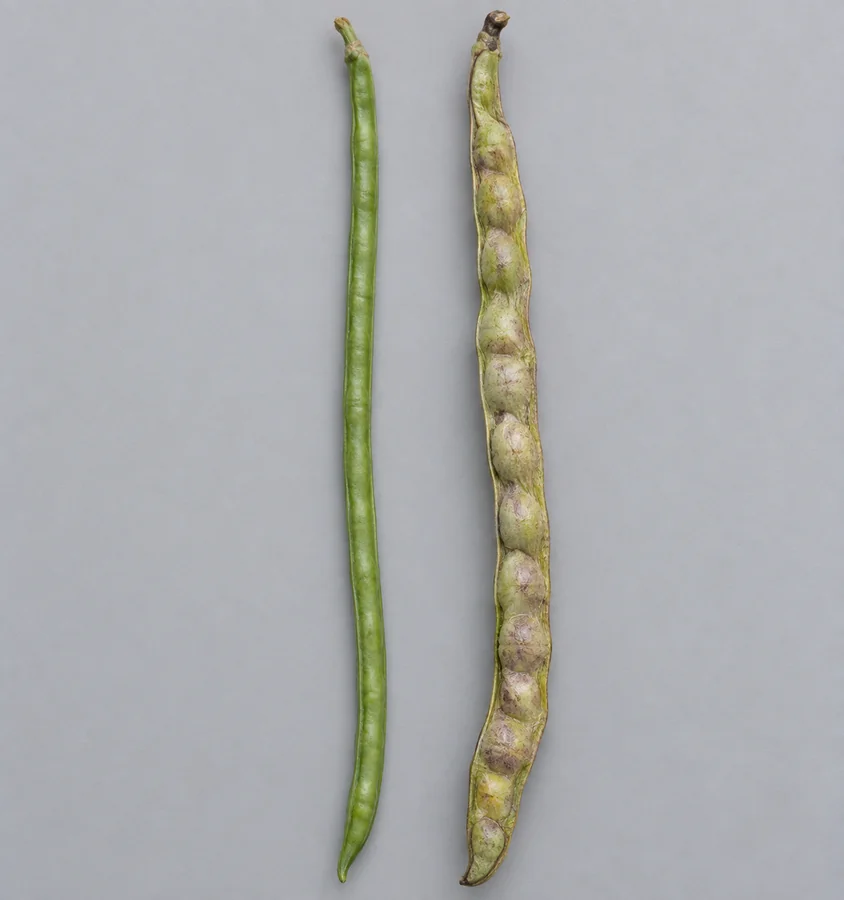
Young smooth tender long pod beside overmature bulging fibrous pod, visibly different seed swelling.
Color is another useful but incomplete signal. Fresh young pods are often green, yet varieties range from pale green to deep green or purple. Yellowing, dark defects, bruising and dehydration can indicate unsuitable material. Once frozen, surface frost and packaging glare can obscure the natural color. Evaluate a thawed or cooked sample against an approved standard in controlled light. A specification may set a range for color and defect tolerance, but it should not reject a legitimate variety merely because it differs from a stock photograph.
Harvest and preparation also affect waste. Ends and damaged parts are trimmed before freezing. If a buyer wants long whole pieces, crooked pods, breaks and variable lengths become more visible. For short cut pieces, trimming can recover more usable material, but the finished dish loses the whole-pod look. These are yield and application choices. A lower quoted price per carton means little if the cooked usable portion contains more fibrous rejects or broken fragments.
We inspect the raw-material description and the cooked condition when discussing a frozen long bean specification. If a customer needs a tender bite in a quick wok process, we need that requirement at sampling. A heavier stew can accept a different texture or cut. Define tolerances in terms that can be checked at receiving and after cooking, not only broad words such as "young" or "premium." The article on how to cook yard-long beans covers the kitchen method in more detail; maturity explains why that method works better on some lots than others.
Cook long beans for their texture
Long beans are normally used as a cooked vegetable. Trim the ends, wash fresh pods and cut them into similar lengths so the pieces reach a similar tenderness. For a wok dish, heat the pan, add the beans in a batch that can be moved, and cook them fully with enough time and moisture to soften the pod wall. Aromatics and sauce can be added to suit the dish. The wok image shows recognizable cut long beans rather than a generic green vegetable pile.
The desired finish changes the method. A quick stir-fry can retain some bite; a curry or braise gives the pods time to absorb sauce and become softer. A soup needs the beans to cook through without dissolving. Cooking directions should describe the end condition as well as an approximate time, because pod thickness, harvest age, cut length and starting temperature vary. If a frozen product is used, its own preparation and final-cook instructions should take priority over a recipe written for fresh pods.

Cut long beans in a hot wok with garlic, pieces visibly cooked but intact, no raw-looking pod claim.
One common failure is relying on surface color. A bright green piece can still be unpleasantly firm inside. Another is a crowded wok: the beans steam in released water rather than heat evenly, and some pieces remain underdone while others soften excessively. Cook a sensible load, stir, and test the thickest pieces. A tender pod should have no harsh raw flavor or persistent string that catches in the mouth. A sauce can hide visual flaws but does not remove a fibrous texture.
Frozen long beans may already be blanched for quality before IQF freezing. That processing step is not necessarily the final cook. Add the frozen pieces to a sufficiently hot pan or appropriate cooking medium and allow temperature recovery. Draining or evaporation may be needed if the product releases water. Whole frozen pods and short cuts are not interchangeable in the same timing: the cross-section, surface area and pan load differ. Test the format actually proposed for the menu or factory line.
A ready-meal developer should also assess the bean after the whole product has been chilled, frozen, reheated and held. A piece that tastes right immediately after sautéing may soften in sauce during the next heat cycle. Conversely, a mature pod that barely softens in the first cook may remain fibrous after reheating. Choose a target texture at the consumer's eating point, then work backward to the ingredient cut and first-cook stage.
Use whole and cut frozen long beans
Whole frozen long beans preserve the recognizable shape that some foodservice dishes need. Cut forms portion more easily into stir-fry mixes, rice dishes, noodles, curries and ready meals. GreenLand's frozen long green bean product page lists whole lengths and several cut ranges by agreement. These are examples of a supply program, not a promise that every length or pack is available for every order; the buyer should confirm current feasibility and the tolerance attached to the chosen range.
The real product photographs show three different views: frozen cuts, longer pods, and a caliper used to judge pod thickness. They help a buyer see that cut length and diameter are distinct dimensions. A short cut from a coarse, thick pod will still be coarse. An attractive long pod can break during downstream handling. A useful acceptance test checks length distribution, diameter or maturity, broken rate and cooking performance together.

Long whole pods with a caliper show pod thickness.
IQF condition matters when portions are weighed or blended. Free-flowing pieces are easier to dose than a block of clumped beans, but the pack must stay under stable frozen conditions to preserve that behavior. During receiving, inspect carton integrity, bag seal, frost or evidence of thawing, and the lot code. Open a representative pack and check for unusual ice accumulation, dehydration, foreign matter and a high share of fragments. Then cook the sample as the customer will cook it. A visual inspection of frozen pieces alone cannot establish the finished bite.
For private-label retail, a whole-pod bag and a short-cut bag make different promises to the consumer. The pack front should show the actual product and any preparation requirement. For food manufacturing, the ingredient statement and product code should distinguish Vigna long beans from ordinary green beans when the distinction matters. A distributor may stock both products; accurate SKU naming prevents substitution in a repeated order.
We can confirm bulk cartons, foodservice or retail packing according to the agreed product and order plan. Quantity, destination, application and required documents affect the quotation and logistics. A buyer should send the intended use and the minimum cooked quality alongside the physical cut size. That gives the supplier a basis for selecting a suitable lot and producing a meaningful sample.
Specify long beans for wholesale supply
A clear specification begins with identity: yardlong bean or asparagus bean, Vigna unguiculata subsp. sesquipedalis, in the agreed green or other variety. Then state whole or cut form, target length and tolerance, thickness or maturity preference, acceptable color, seed development and string tolerance. The pack format, net weight, frozen condition, storage temperature, application and destination follow. If the purchase is for a particular finished food, attach a cooked sample standard where possible.
The quality discussion should include defects that matter in use. Fibrous pods affect eating quality; overmature seed bulges change appearance and cooking; many short or broken pieces affect portioning; freezer damage or excessive loose ice can change yield. Set an inspection method and sample size so the supplier and buyer judge the same thing. Terms such as "tender," "low breakage" and "natural green" become useful only when linked to an agreed sample or measurable tolerance.

Long green pods in a distinct bulk product shot.
Documentation can be planned early. Ask for the product specification, lot-linked certificate of analysis where required, traceability details, packing list, invoice, origin documentation and destination-market tests or declarations relevant to the order. An export document should refer to the shipped lot and correct product name. A generic web listing or certificate image cannot substitute for a current shipment record. We can review the requested document set with the purchasing team before production.
Commercial acceptance should include a cooking trial. Compare the proposed frozen long beans in the buyer's real application: stir-fry, sauce, ready meal or retail instruction. Record piece integrity, time to tenderness, color after holding, water release and any fibrous rejects. If the customer switches from whole pods to cuts, repeat the trial because the shape change affects process and portion appearance. A practical specification protects the finished food as well as the carton count.
At GreenLand-food, we supply frozen long beans for importers, food manufacturers, distributors and private-label programs. Tell us whether the priority is an intact long-pod look, an even cut for mixing, or a defined bite after reheating. Include the required size, packing, quantity, destination and documents. We can then align the proposed frozen form and sample with the job the beans must perform.
For a procurement trial, use a consistent sample preparation. Cook the proposed long beans in the same pan, water or sauce load used by the customer, and compare them with an approved reference. Record the number of fibrous pieces rather than saying only that a batch feels "slightly tough." Measure the spread of cut lengths in a small random sample and count fragments below the minimum useful size. If the product will be mixed into a ready meal, inspect a tray after reheating and holding, because oil, sauce and a second heat cycle can change the pod's bite.

Close product photo of cut frozen long beans.
Whole-pod and cut programs also create different expectations for packaging. Whole pods can kink or break in a small bag; cut pieces can clump if moisture is poorly controlled. A foodservice carton may tolerate a different cosmetic range from a retail bag with a clear window. These tradeoffs should be settled in the purchasing brief, then checked on actual frozen samples. An image of beautiful whole pods is useful for identifying the crop, but it cannot establish the breakage rate in a packed shipment.
Mixed-container orders need product identity to remain clear. A buyer may also purchase standard green beans, flat beans or other frozen vegetables. Similar carton colors and broad "beans" descriptions increase the chance of a warehouse or ordering error. Use distinct product codes, English and local market names as required, and lot-linked packing lists. The term yardlong bean can appear alongside the botanical name in a specification when the customer needs to distinguish it from Phaseolus green beans. That small amount of precision prevents a recipe change from being made accidentally at receiving.
If a supplier proposes a different harvest stage or cut to improve availability, it should be evaluated as a new sample rather than treated as a silent equivalent. A thicker pod can alter tenderness and cooking time. A shorter cut can change the visual balance in a noodle dish. A different pre-blanch may affect color and water release. The buyer may accept the alternative, but the decision belongs in a documented product change, with an updated instruction if the final cook changes. That is how a definition article becomes useful after the vocabulary question has been answered.
Long beans can be a compelling ingredient in a regional menu because their shape remains recognizable even after cutting. That recognition is also a quality obligation. A packet containing ordinary green bean pieces under a yardlong-bean name may pass a superficial color check and still disappoint a customer expecting the characteristic pod. Keep a representative reference sample with the approved product description. When a new crop lot arrives, compare the frozen appearance and the cooked result against it, and record any agreed seasonal variation. The name, species, cut and eating quality then stay connected across repeat orders.
Source Frozen Long Beans with GreenLand-food
GreenLand-food is a professional frozen long beans supplier and manufacturer in China, providing factory-direct wholesale supply for importers, food manufacturers, foodservice distributors and private-label programs.
Send your product form, specification, packing, quantity, application, destination, private-label needs and requested documents so we can discuss a relevant sample and quotation.